
Seattle’s skyline is instantly recognizable, but the city’s standout architecture goes well beyond its tallest towers. Some landmarks dominate the view from miles away. Others make their biggest impression once you step inside.
These 15 Seattle landmarks include Space Age icons, gleaming glass towers, a restored train station, a historic cathedral, and a library that makes studying feel far more dramatic than it has any right to.
1. Space Needle
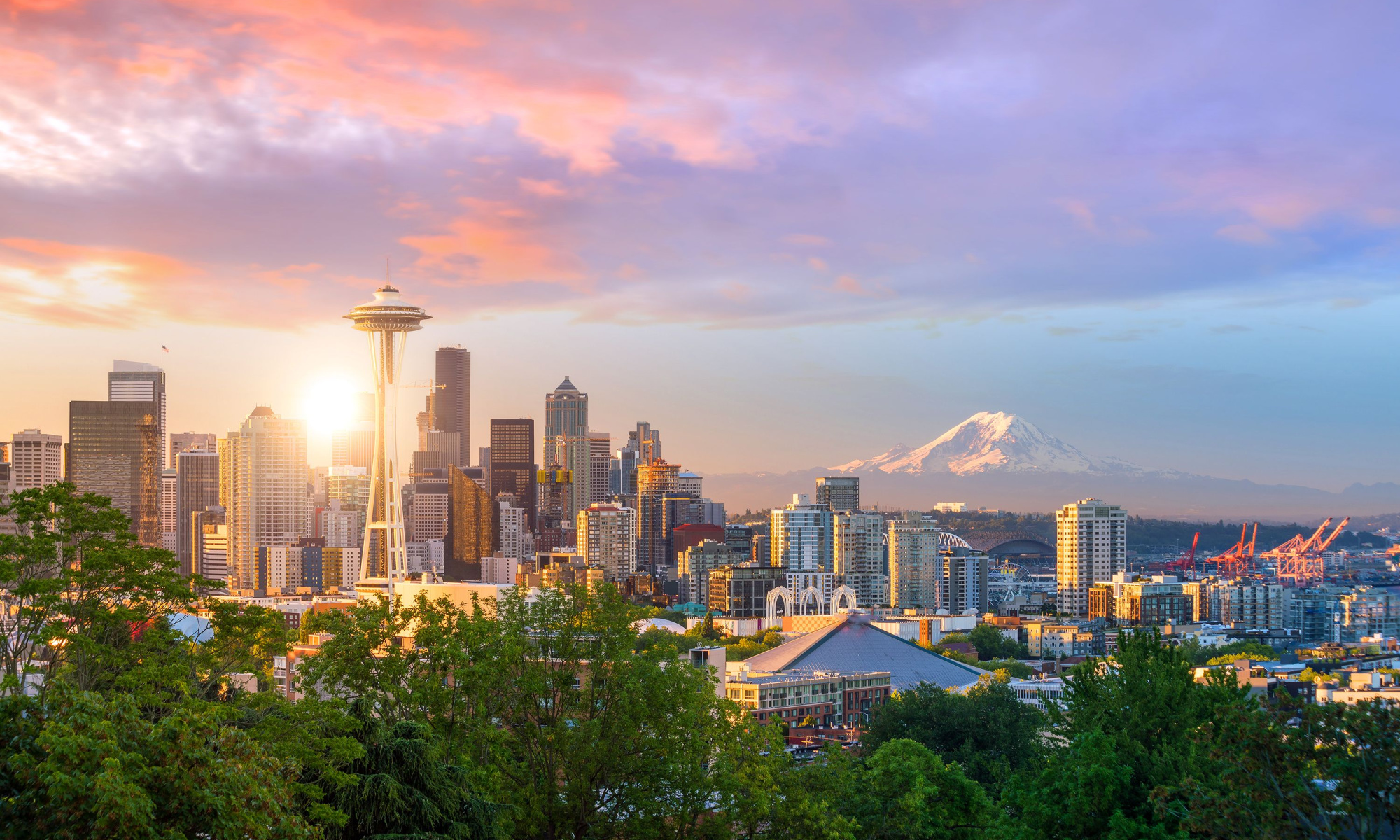
- Height: 605 feet
- Opened: April 21, 1962
- Built for: The 1962 Seattle World’s Fair
Any list of famous Seattle buildings has to begin with the Space Needle. Photos taken from Kerry Park often make it look like the tallest thing in town, but that is a neat bit of perspective. At 605 feet, the Needle is 328 feet shorter than Columbia Center.
Space Needle (continued)

The Space Needle opened for the 1962 Seattle World’s Fair, formally called the Century 21 Exposition. It was designed as a symbol of Space Age optimism and quickly became the city’s signature landmark. Its observation levels still deliver broad views of downtown, Elliott Bay, Lake Union and the surrounding mountains.
2. Seattle Central Library
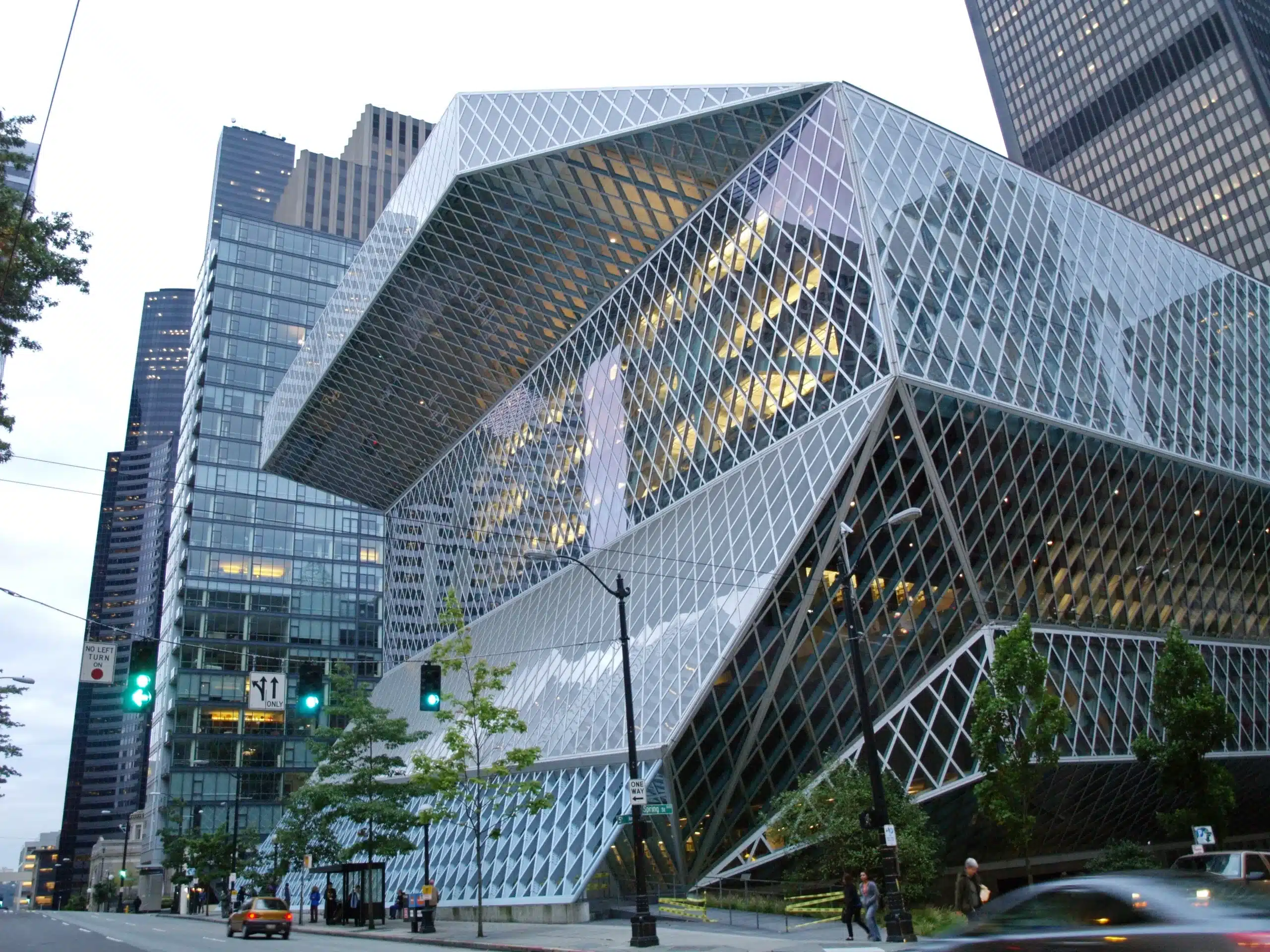
- Opened: May 23, 2004
- Levels: 11
- Area: 362,987 square feet
A library surrounded by downtown skyscrapers should be easy to overlook. Seattle Central Library solved that problem by looking like almost nothing else in the city.
The current building opened in 2004 and has 11 levels covering 362,987 square feet. Rem Koolhaas and Joshua Prince-Ramus designed it with LMN Architects. Its glass-and-steel skin wraps a stack of offset platforms organized around the library’s different uses, including the four-story Books Spiral.
The layout can take a minute to understand, but the building rewards a look inside. Nearly 10,000 windows, a 50-foot-high living room and that continuous spiral of nonfiction stacks turn a normal library visit into an architectural tour.
3. Rainier Tower
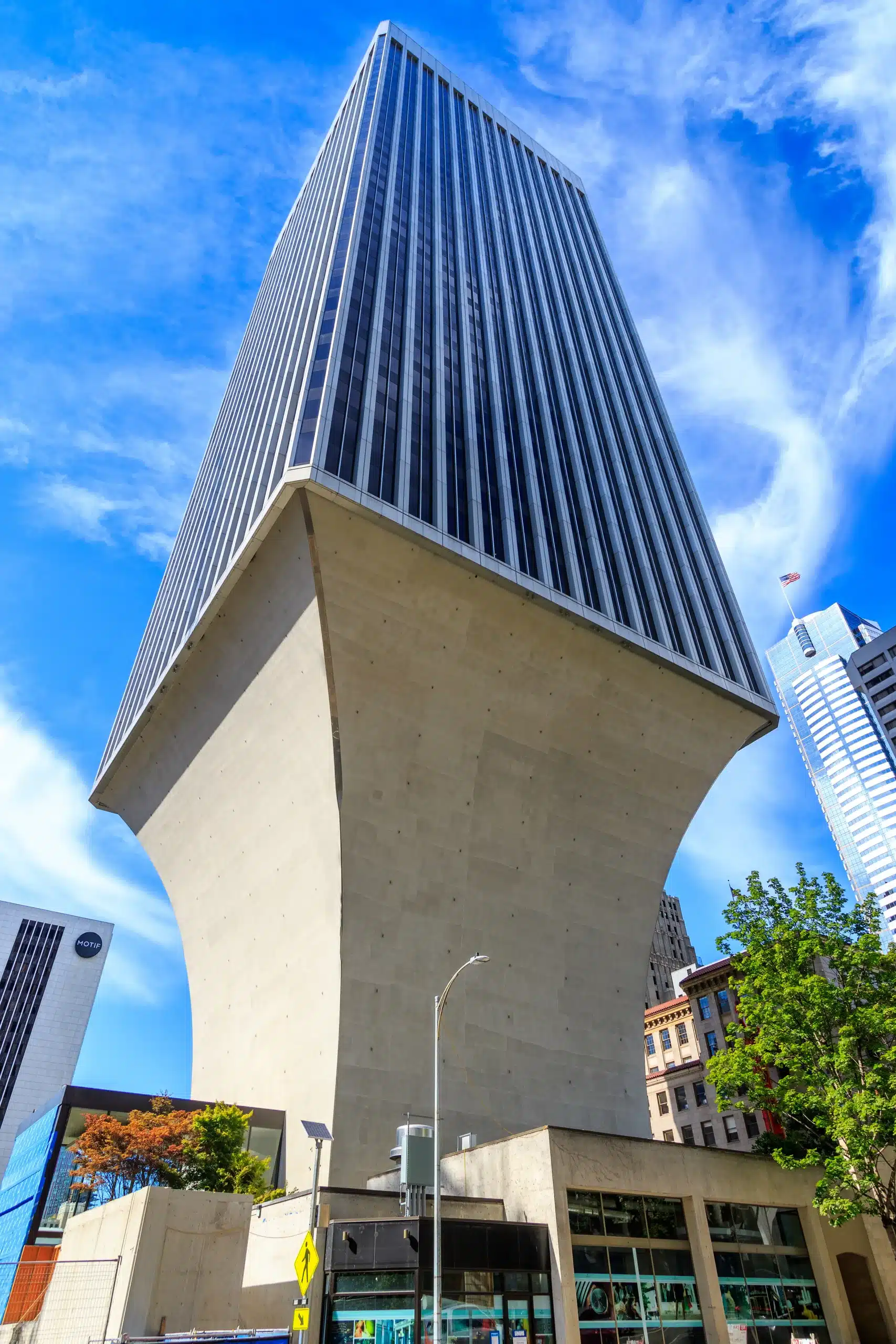
- Height: 514 feet
- Office floors: 29 above an 11-story pedestal
- Area: About 538,000 square feet
From a distance, Rainier Tower can look like a fairly conventional office slab, especially beside the much taller Rainier Square next door. Street level is where the building reveals why it belongs on this list.
The 514-foot tower rests on a 121-foot concrete pedestal that narrows toward the ground and then flares outward. Architect Minoru Yamasaki used the unusual base to support 29 office floors while leaving more room for open space, landscaping and retail below.
The design has inspired several nicknames. My family called it the “golf tee” building when I was a kid, and you can see the resemblance immediately. It is odd, clever and much more memorable up close than it is in a skyline photo.
4. Smith Tower

- Height: 462 feet to the roof; 484 feet to the pinnacle
- Floors: 38
- Area: 304,350 square feet
Smith Tower opened on July 4, 1914, and immediately became Seattle’s dominant skyscraper. It remained the city’s tallest structure until the Space Needle arrived in 1962 and its tallest building until the 630-foot Seafirst Building, now Safeco Plaza, opened in 1969.
The tower was also the tallest building west of the Mississippi until Kansas City Power & Light Building surpassed it in 1931. Even more defensible than the old superlatives is the simple fact that Smith Tower was among the tallest buildings in the country outside New York when it opened.
Smith Tower (continued)

Today, Smith Tower remains primarily an office building, with a public observatory and bar on the 35th floor and a private residence in the pyramid at the top. Its white terra-cotta exterior, ornate lobby and old Otis elevators give it more personality than several newer towers combined.
5. Starbucks Center

- Height: Nine main stories
- Current use: Starbucks’ headquarters and other offices
- Area: Nearly 1.4 million square feet in the main office building
Starbucks’ headquarters sits in SoDo, about a mile south of downtown. It is low and sprawling rather than tall: three connected nine-story office buildings contain nearly 1.4 million square feet. That is a lot of building to hide behind a coffee logo.
The complex grew from Sears buildings completed in 1912 and 1915, then expanded several times over the following decades. Sears used the property for mail-order distribution and later opened a department store there. Starbucks first leased space in 1993, made the complex its headquarters in 1997 and gave the former SoDo Center its current name. The crowned siren above the central tower handles the rest of the introduction.
6. Columbia Center

- Height: 933 feet
- Floors: 76
- Area: About 1.5 million square feet
Columbia Center has dominated Seattle’s skyline since it opened in 1985. The 76-story, 933-foot tower remains the tallest building in both Seattle and Washington state. Early plans called for a tower just over 1,000 feet, but the design was shortened to satisfy federal aviation limits associated with Seattle’s airports.
Columbia Center (continued)

You can pick Columbia Center out from Beacon Hill, the stands at T-Mobile Park and ferries crossing Elliott Bay. For a closer look, Sky View Observatory & Bar occupies the 73rd floor, 902 feet above the street. It is the highest public viewing area in the Pacific Northwest.
7. Climate Pledge Arena

- Hockey capacity: 17,100
- Latest redevelopment: $1.15 billion, completed in 2021
Climate Pledge Arena has lived several lives. Paul Thiry designed the original Washington State Pavilion for the 1962 Seattle World’s Fair, where it housed the “World of Century 21” exhibit. After the fair, the pavilion became the Washington State Coliseum.
The Seattle SuperSonics began playing there in 1967, with a seven-season stretch at the Kingdome beginning in 1978. A major 1994–95 rebuild lowered the arena floor and reopened the building as KeyArena. The Sonics left for Oklahoma City in 2008 after attempts to secure public funding for another renovation failed.
From 2018 to 2021, the interior was rebuilt again in a privately financed project that ultimately cost about $1.15 billion. The new Climate Pledge Arena became home to the NHL’s Seattle Kraken and remains home to the WNBA’s Seattle Storm.
The historic roof and exterior were preserved, and the former Coliseum became a Seattle landmark in 2017. A huge window on the north side lets people outside see into the seating bowl. The designers carefully blocked the view of the ice or court, however, so it is an architectural peek rather than a free ticket.
8. The Amazon Spheres
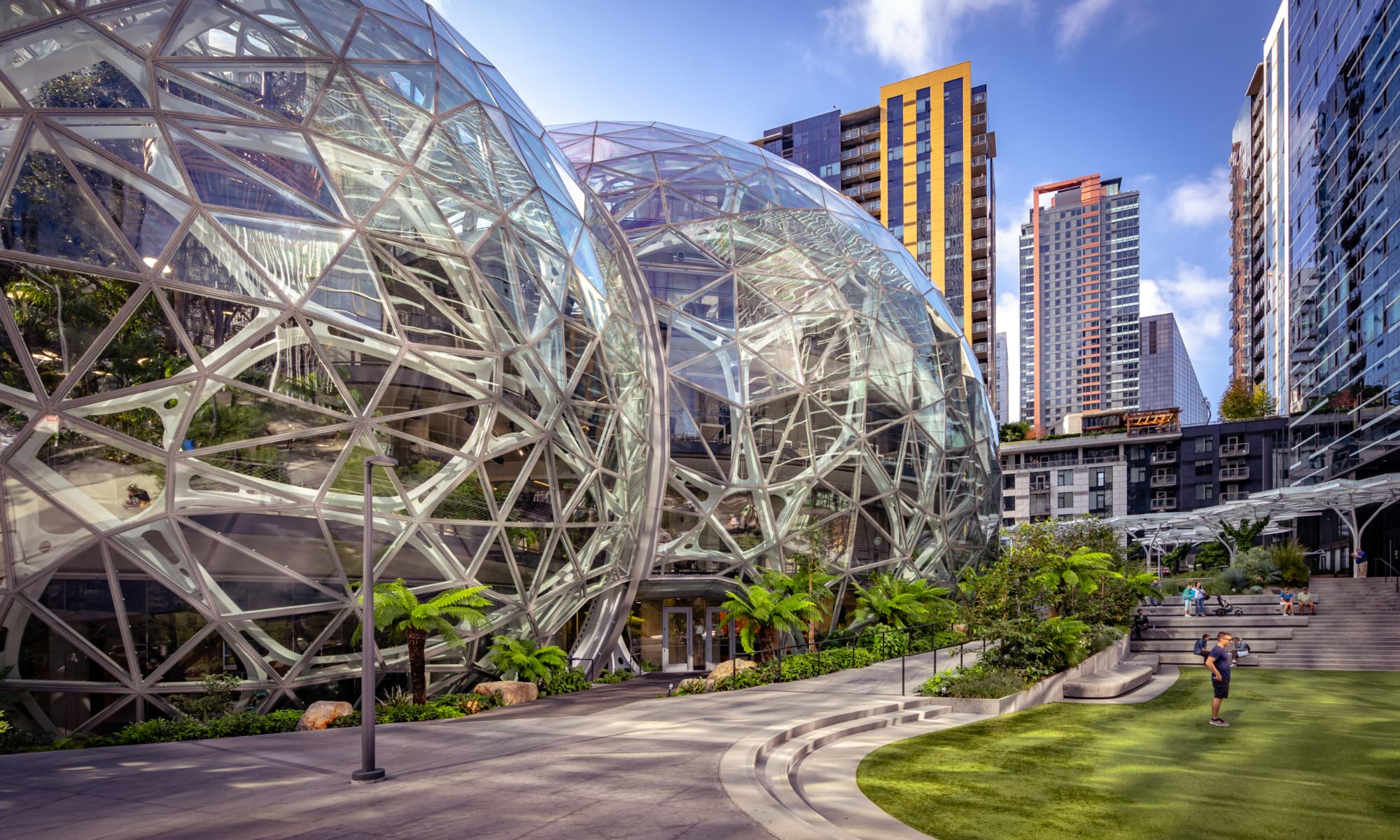
- Height: More than 90 feet at the largest sphere
- Plants: More than 40,000
- Area: 58,828 square feet
The Amazon Spheres are among Seattle’s newest architectural landmarks. Amazon began moving its headquarters from Beacon Hill to South Lake Union in 2010, then broke ground on the Spheres in 2015. The three glass domes opened in January 2018.
Inside are more than 40,000 plants from cloud-forest regions around the world, along with waterfalls, meeting areas and a four-story living wall. The Spheres are primarily an Amazon workplace, but the public can visit on selected dates with a reservation. Our full guide to visiting the Spheres explains how it works.
9. Museum of Pop Culture
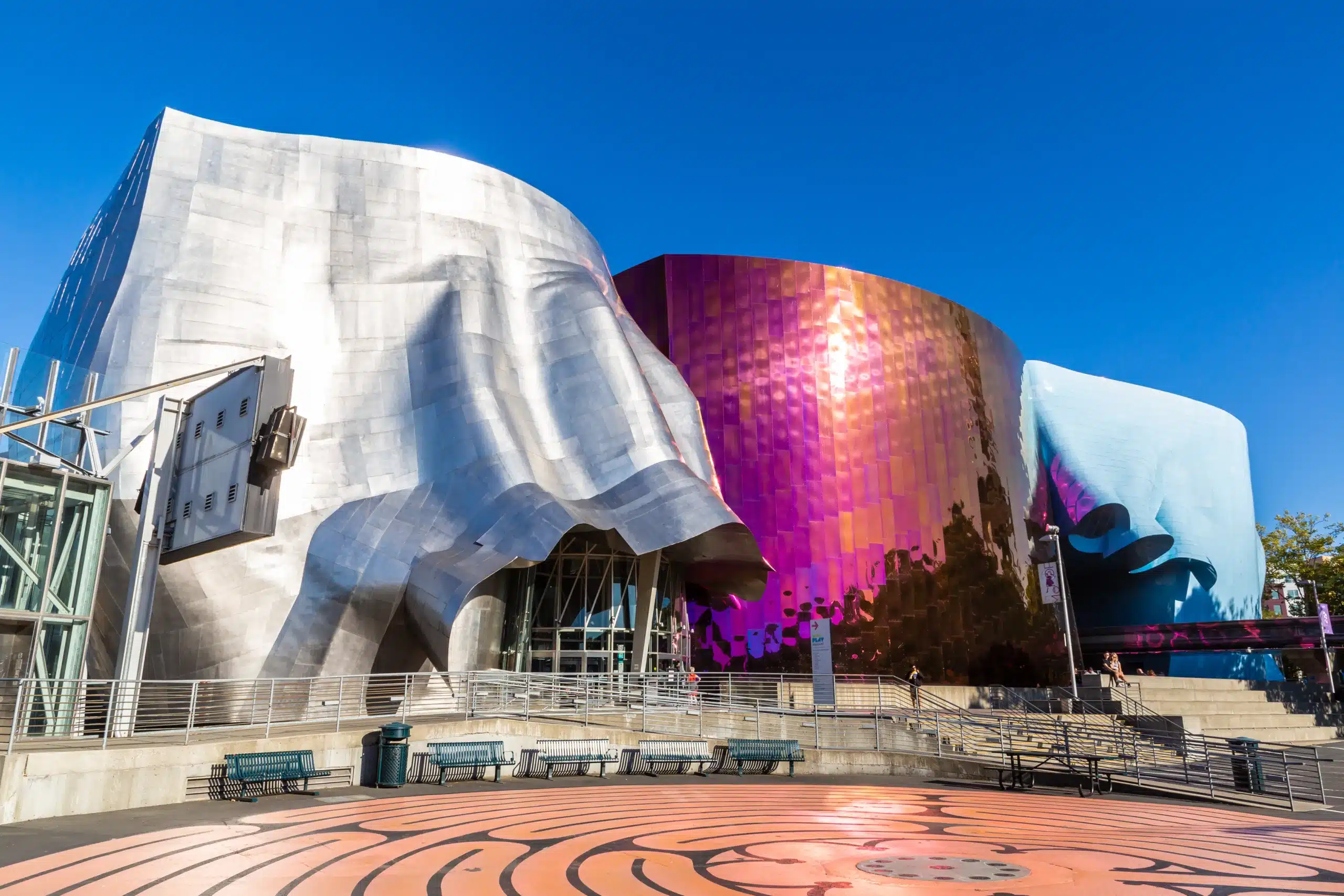
- Highest point: 85 feet at Sky Church
- Exterior: 3,000 panels made from 21,000 metal shingles
- Area: 140,000 square feet
The Museum of Pop Culture, better known as MoPOP, is a strong candidate for Seattle’s most unusual building. Frank Gehry designed it after studying electric guitars and drawing on their curves, colors and movement. Thousands of stainless-steel and painted-aluminum pieces cover the exterior.
It is unusual. No point pretending otherwise.
The design has been praised, mocked and compared with everything from a smashed guitar to a metallic blob. Whatever you see in it, the building refuses to disappear into the background. The Seattle Center Monorail passing directly through it only adds to the effect.
MoPOP opened in 2000 as the Experience Music Project and has since broadened far beyond its original music focus. Its collections now cover music, film, television, science fiction, fantasy, horror, fashion and games, with Seattle’s music history still given plenty of room.
10. Suzzallo Library
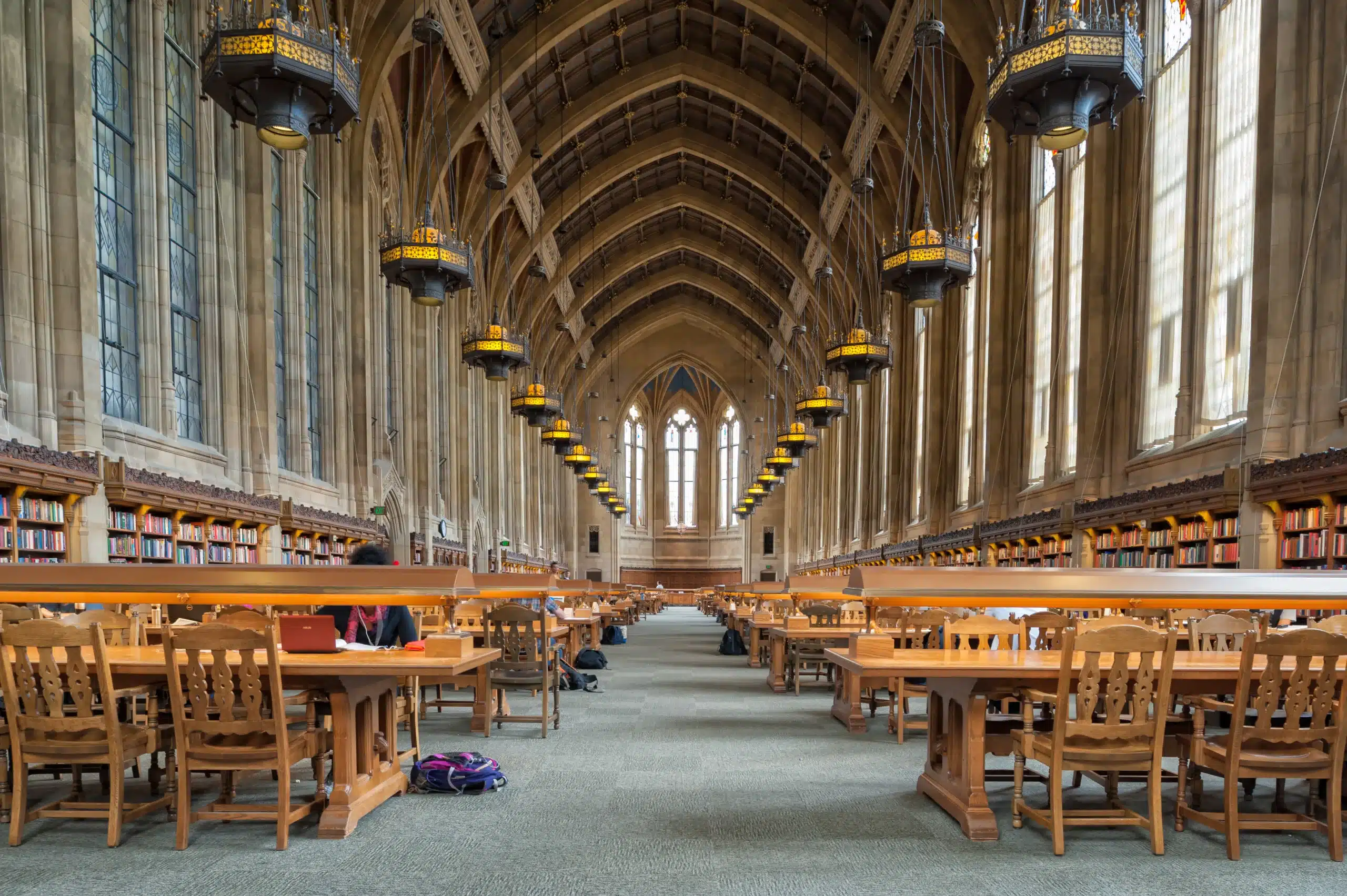
- Reading room: 65 feet high and 250 feet long
- Architectural style: Collegiate Gothic
- Opened: 1926
Suzzallo Library is the architectural centerpiece of the University of Washington’s Seattle campus. Carl F. Gould Sr. and Charles H. Bebb designed the Collegiate Gothic building, which broke ground in 1923 and opened in 1926.
The original plan called for an octagonal carillon tower more than 300 feet tall, but it was never built. The room everybody remembers is the 65-foot-high, 250-foot-long reading room, with a vaulted, painted ceiling and tall leaded-glass windows. I spent countless hours there as a UW undergraduate, and it never stopped being impressive.
If you tour the University of Washington campus, compare Suzzallo with the more modern buildings nearby. Concrete has its uses, but it does not exactly make the old reading room look worse.
11. Husky Stadium

- Seating capacity: 70,138
- Renovation cost: $280.6 million for the project completed in 2013
Husky Stadium sits above Union Bay on Lake Washington, with views toward downtown, Mount Rainier and both the Cascade and Olympic mountain ranges. Fans can arrive by boat and “sailgate” before a University of Washington football game, which is a fairly convincing answer to the usual parking-lot cookout.
The building is known for its two enormous cantilevered roofs. They cover much of the sideline seating without interior columns and help send crowd noise back toward the field.
During Washington’s 1992 game against Nebraska, an ABC sideline sound meter reportedly peaked at 133.6 decibels. It was not an official record, but the reading has become part of Husky Stadium lore. The noise, the lake and those sweeping roofs make the place unmistakable.
12. Safeco Plaza

- Height: 630 feet
- Floors: 50
- Office space: About 762,000 square feet
Safeco Plaza is a big black office tower, and in today’s skyline it can blend in more than the buildings with stranger shapes. When it opened as the Seattle-First National Bank Building in 1969, however, it changed the scale of downtown.
At 630 feet, it became Seattle’s tallest building and the first to rise above the 605-foot Space Needle. Its plain rectangular shape inspired the nickname “the box the Space Needle came in.” Seattle does enjoy architectural understatement.
The tower held the city’s height record for 16 years, until Columbia Center opened in 1985. It remains one of Seattle’s tallest buildings, even if newer towers now draw more attention.
13. King Street Station
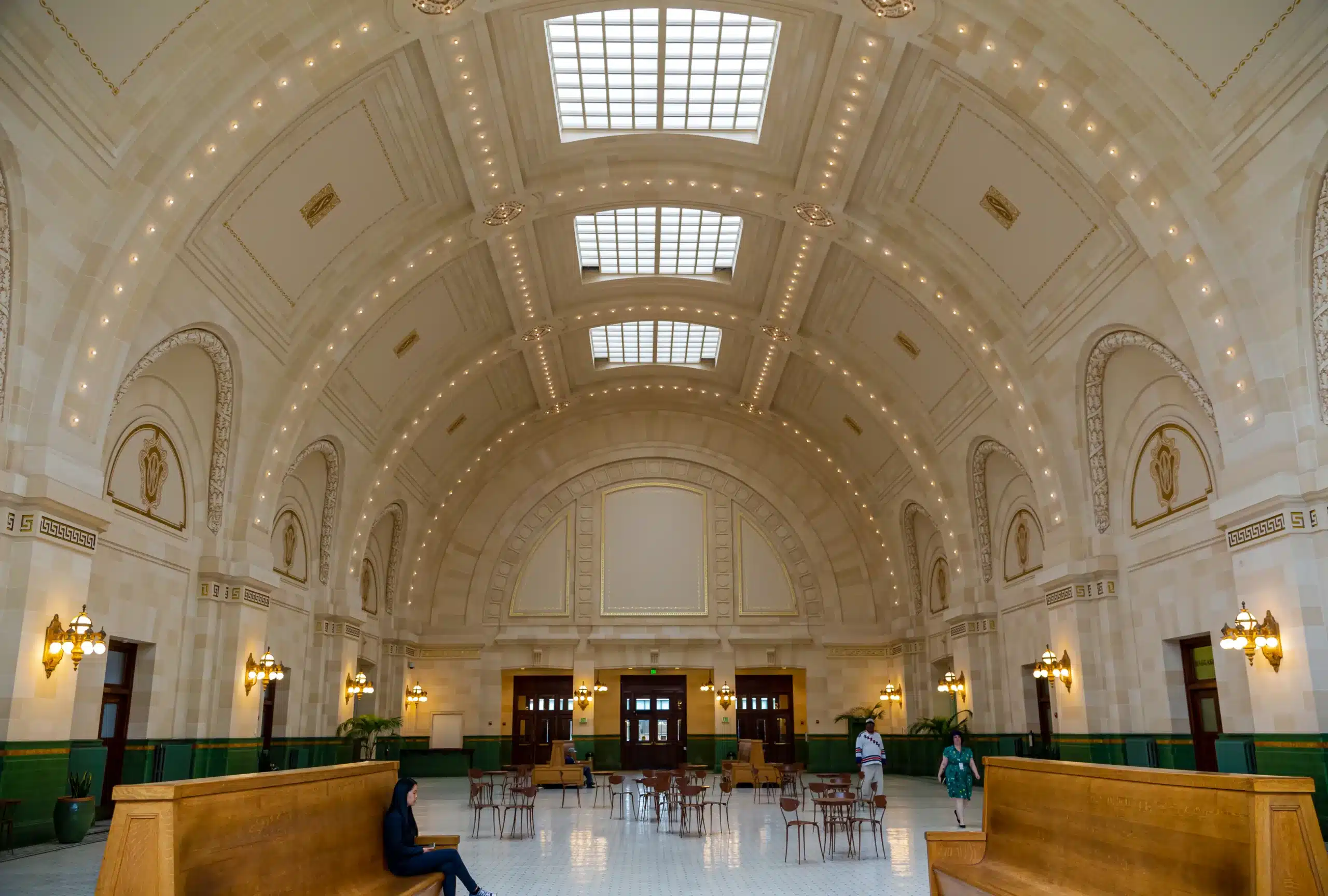
King Street Station (Image Credit: Shutterstock / CineCam)
©CineCam/Shutterstock.com
- Opened: May 1906
- Annual passengers: More than 2.7 million across Amtrak, Sounder and Amtrak Thruway services
The West Coast has fewer grand historic train terminals than the East Coast, but Seattle’s King Street Station holds its own. Reed and Stem, the firm later associated with New York’s Grand Central Terminal, designed it with a clock tower modeled on the Campanile di San Marco in Venice.
The station opened in 1906, then lost much of its interior character to renovations and neglect during the mid-20th century. The City of Seattle bought it from BNSF Railway for $10 in 2008 and completed a $50 million restoration in 2013. The work uncovered and repaired the ornamental plaster ceiling, restored the clock tower and upgraded the building for earthquakes. It remains an active station beside Pioneer Square, the Chinatown-International District and Seattle’s stadiums, so you do not need to be catching a train to justify a look inside.
14. F5 Tower

- Height: 660 feet
- Floors: 44
- Uses: Offices and a hotel
F5 Tower joined Seattle’s skyline in 2017. The 660-foot building combines offices with a hotel and stands beside the preserved First United Methodist Church, now an event venue called the Sanctuary.
The tower rises on large columns beside the church, while an angular glass curtain wall gives the upper floors a sharply folded profile. The design preserves the historic sanctuary and keeps the two buildings visually distinct.
ZGF Architects has said the tower’s silhouette was inspired by Audrey Hepburn in Breakfast at Tiffany’s. I do not personally see it, but the building is striking even without the movie reference.
15. St. James Cathedral
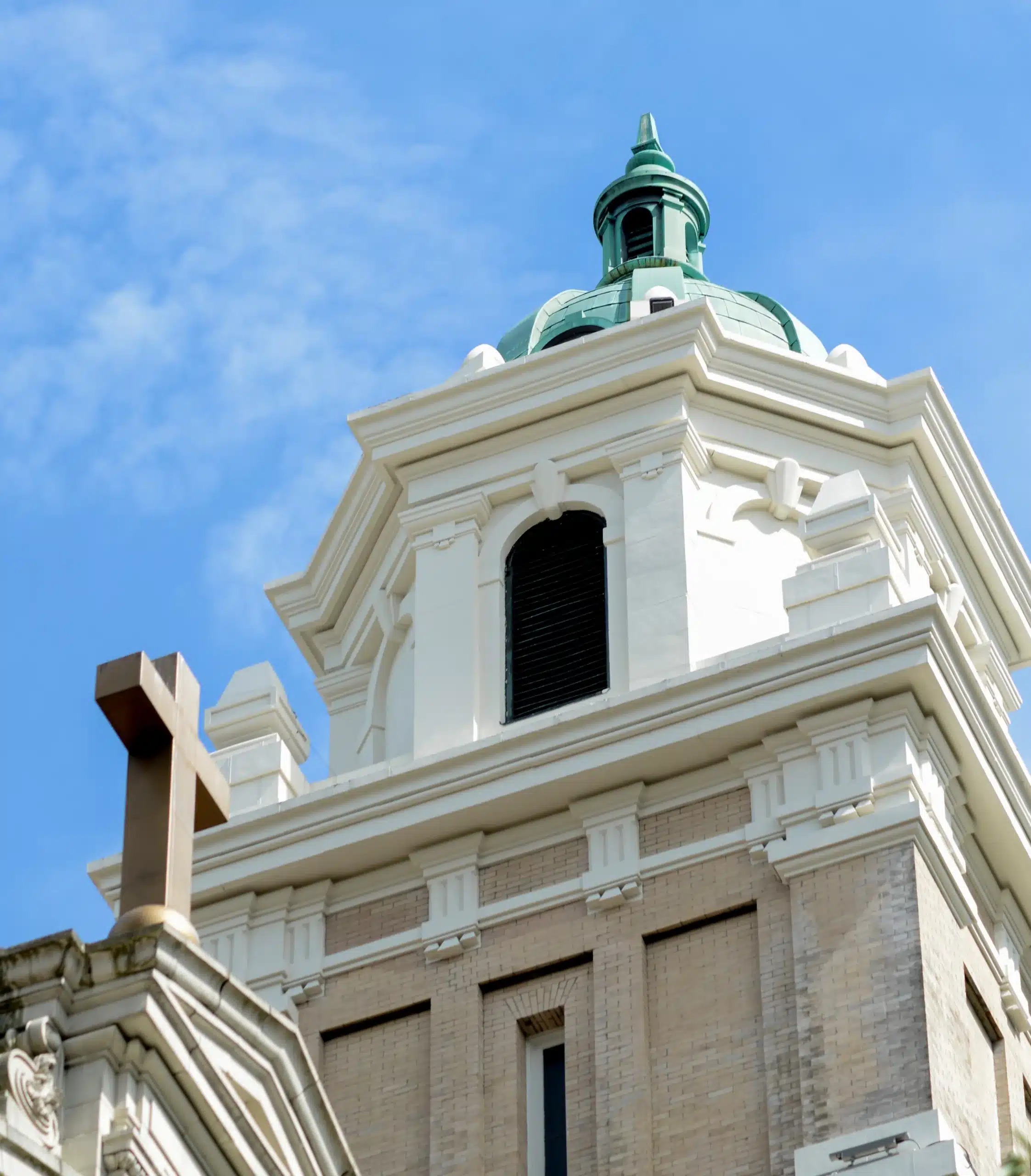
- Dedicated: 1907
- Tower height: About 165 feet
Seattle is young by European standards, so its skyline is not exactly crowded with medieval cathedrals. St. James Cathedral still gives the city a grand religious landmark of its own.
The Roman Catholic cathedral stands in the First Hill neighborhood just east of downtown. Designed by Heins & LaFarge and dedicated in 1907, its twin towers rise about 165 feet above a monumental west facade.
Inside, look for stained glass installed during the building’s reconstruction after its original dome collapsed in 1916. The ceremonial bronze doors at the west entrance were installed in 1999 and sculpted by German artist Ulrich Henn, who had previously created bronze gates for Washington National Cathedral.

