
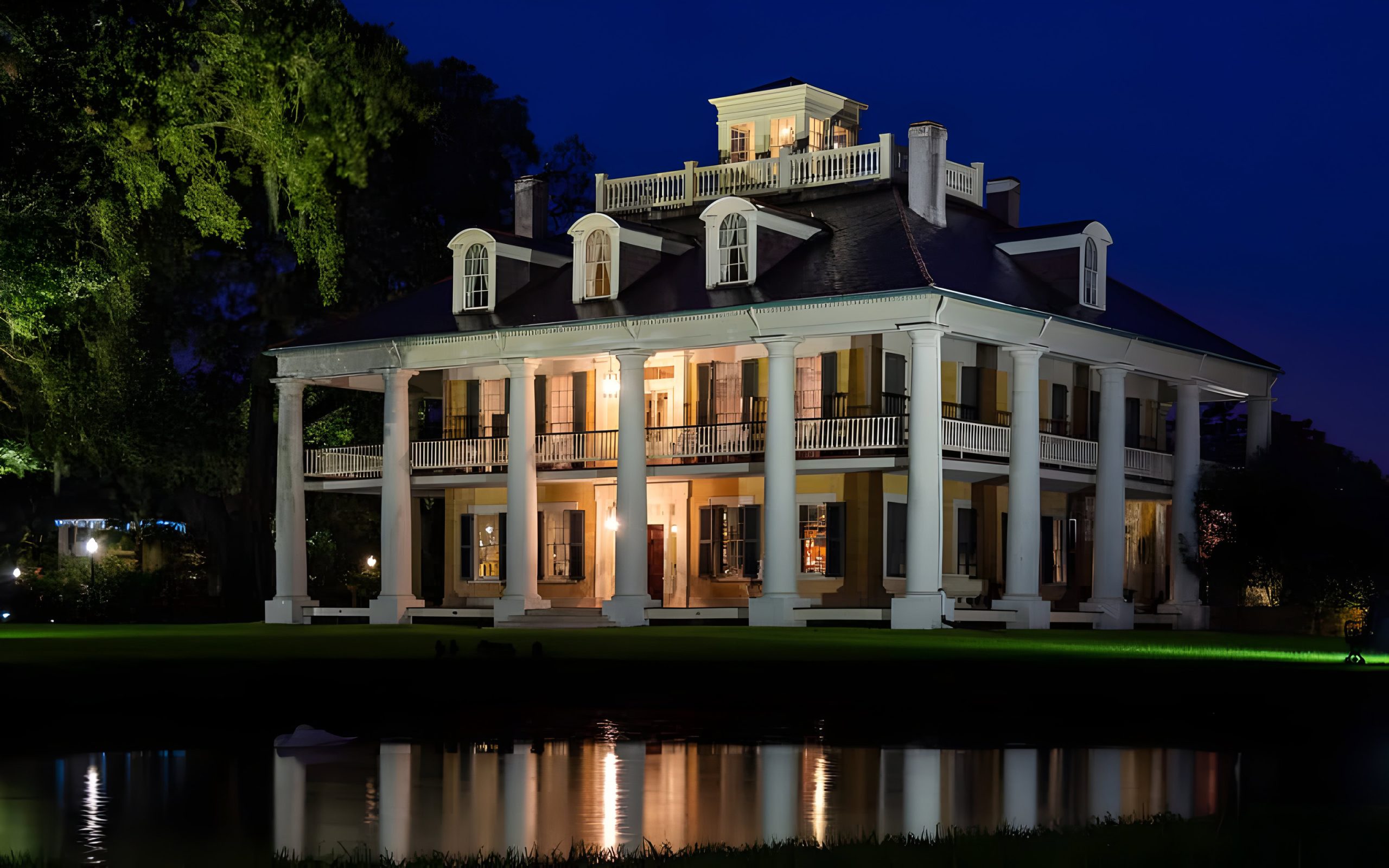
There is a familiar way to photograph a plantation site: frame the columns, center the oak allée and crop out the labor landscape. The result may be pretty. It is also nowhere near the whole picture.
These eight places demand a wider frame. The useful question is not simply, “How grand is the house?” It is, “Who created the wealth, what evidence survives and whose story is being told now?” The answers vary enormously. Whitney Plantation centers the people held in slavery. Oakland preserves a remarkably complete working landscape. Nottoway lost its mansion to fire and is now a reconstruction site. The others fall somewhere between museum, memorial, working farm and tourism business.
Go as a student, not a spectator. Read past the architecture, listen for individual names and notice what is missing as carefully as what remains. Hours, tours and accessible routes can change, so confirm the latest details with each site before traveling.
1. Whitney Plantation – Louisiana
©"Whitney Plantation HDR" by Corey Ann is licensed under BY-ND 2.0. - Original / License
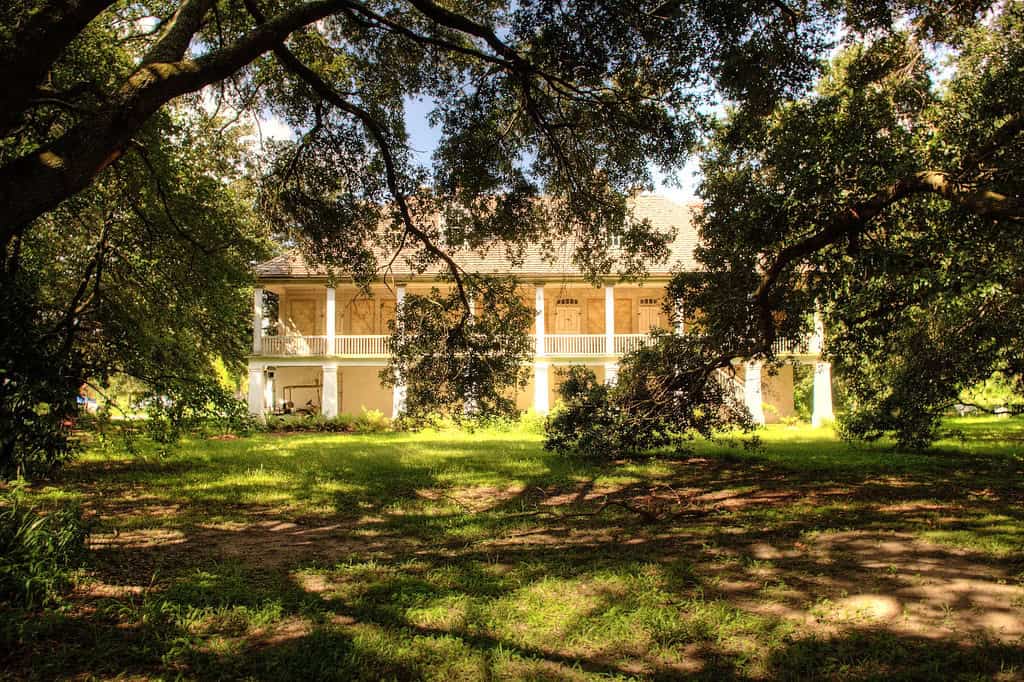
If one stop sets the standard for this kind of visit, it is Whitney. The nonprofit museum is the only plantation museum in Louisiana devoted exclusively to the history of slavery. Its story begins in 1752, when German immigrant Ambroise Heidel bought the property and established an indigo operation with the forced labor and agricultural knowledge of about 20 enslaved Africans. As the family adapted to French Louisiana, Heidel became Haydel. Around 1800, his son Jean Jacques shifted the plantation toward sugar, a punishing crop that required still more labor.
1. Whitney Plantation – Louisiana
©"Whitney Plantation-9509" by MSMcCarthy Photography is licensed under BY-ND 2.0. - Original / License
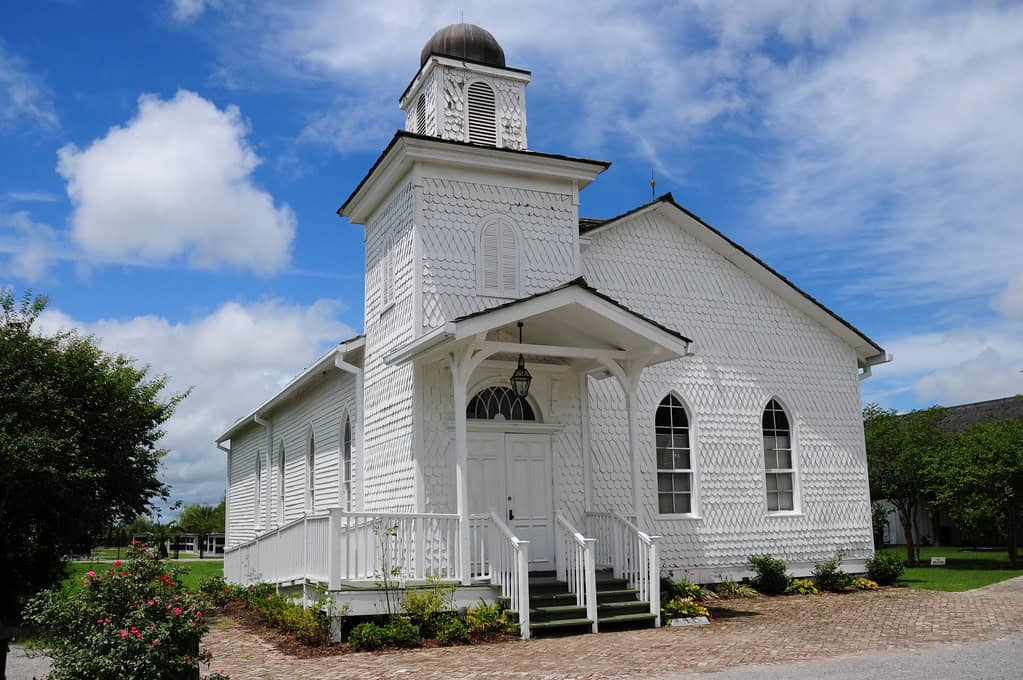
Jean Jacques Haydel’s sons took over in 1820, but debt and a court-ordered partition broke up their partnership. After Marcelin Haydel died, his widow, Marie Azélie Haydel, acquired full control in 1840. More than 100 people were enslaved here during her ownership, producing more than 400,000 pounds of sugar in a year at the plantation’s peak. Whitney’s interpretation restores names and family ties that property records tried to erase, including Anna, an enslaved woman sexually assaulted by Azélie’s brother, and Anna’s son Victor, whose descendants became prominent civil-rights leaders.
1. Whitney Plantation – Louisiana
©"Whitney Plantation-9463" by MSMcCarthy Photography is licensed under BY-ND 2.0. - Original / License
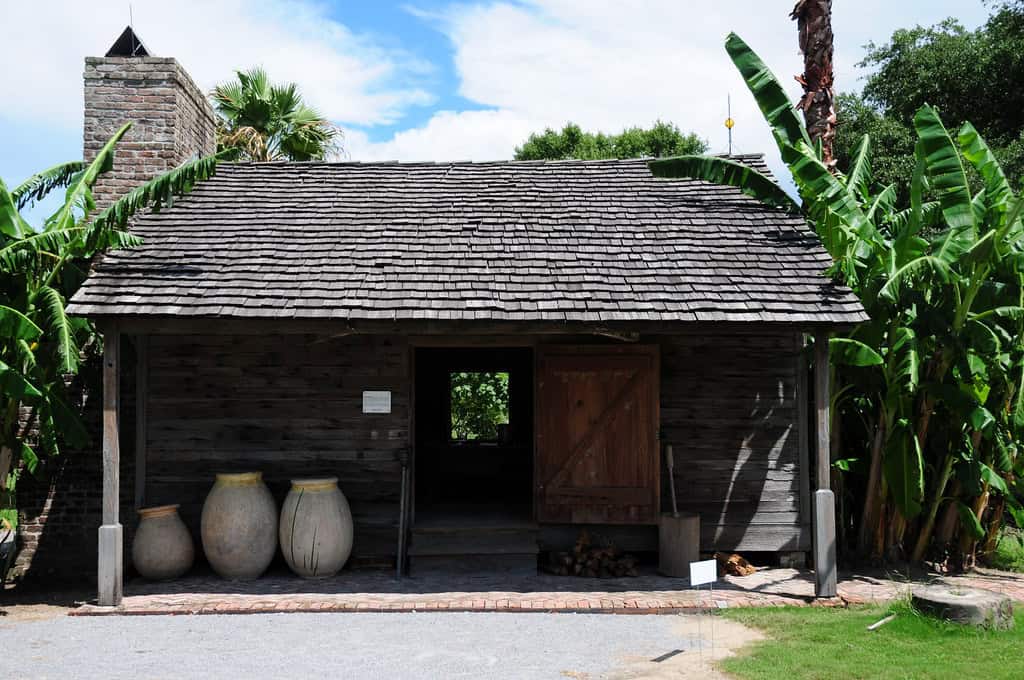
The property was sold in 1867—two years after the Civil War ended—to Bradish Johnson, who renamed it Whitney for his daughter’s new family. Agricultural operations continued with resident workers until 1975. John Cummings bought part of the property in 1999, invested in its restoration and opened the museum in 2014; in 2019, he donated it to the nonprofit that runs it today. Allow at least two hours for a guided or self-guided audio tour. The museum is generally closed on Tuesdays, and its visitor-center exhibits can be seen without paid site admission.
2. James Madison’s Montpelier – Virginia
©"James Madison's Home at Montpelier (Orange County, VA) June 2018" by Ron Cogswell is licensed under BY 2.0. - Original / License
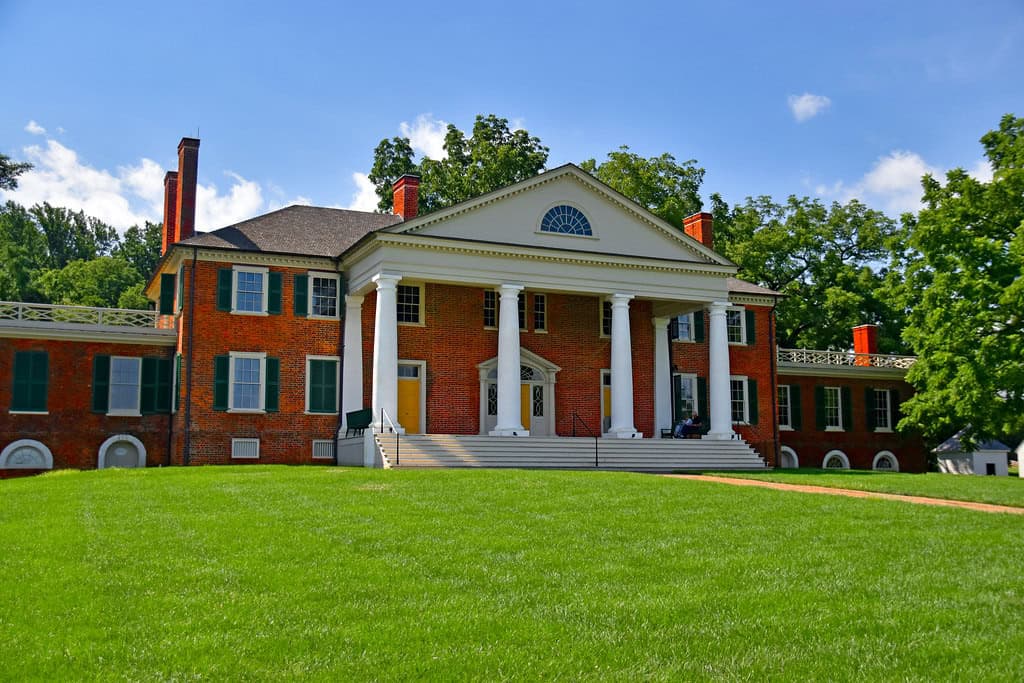
Montpelier puts one of the country’s sharpest contradictions in plain view: James Madison helped shape a republic based on self-government while his family’s wealth—and the time that made his political career possible—depended on slavery. More than 300 Black men, women and children lived in bondage here between 1723 and 1844. Today the foundation manages roughly 2,650 acres, and its research, archaeology, reconstructed South Yard dwellings and Descendants’ Project give the enslaved community a presence the old house tour once denied. A property pass covers the grounds and exhibitions; entry to the mansion requires a guided tour. Core paths are wheelchair accessible, but the route includes an incline and only the first floor and cellar of the house are step-free. Seasonal hours make advance planning worthwhile.
3. Oakland Plantation – Louisiana
©"Oak entryway Oakland Plantation Cane River Creole National Historical Park Louisiana" by amanderson2 is licensed under BY 2.0. - Original / License
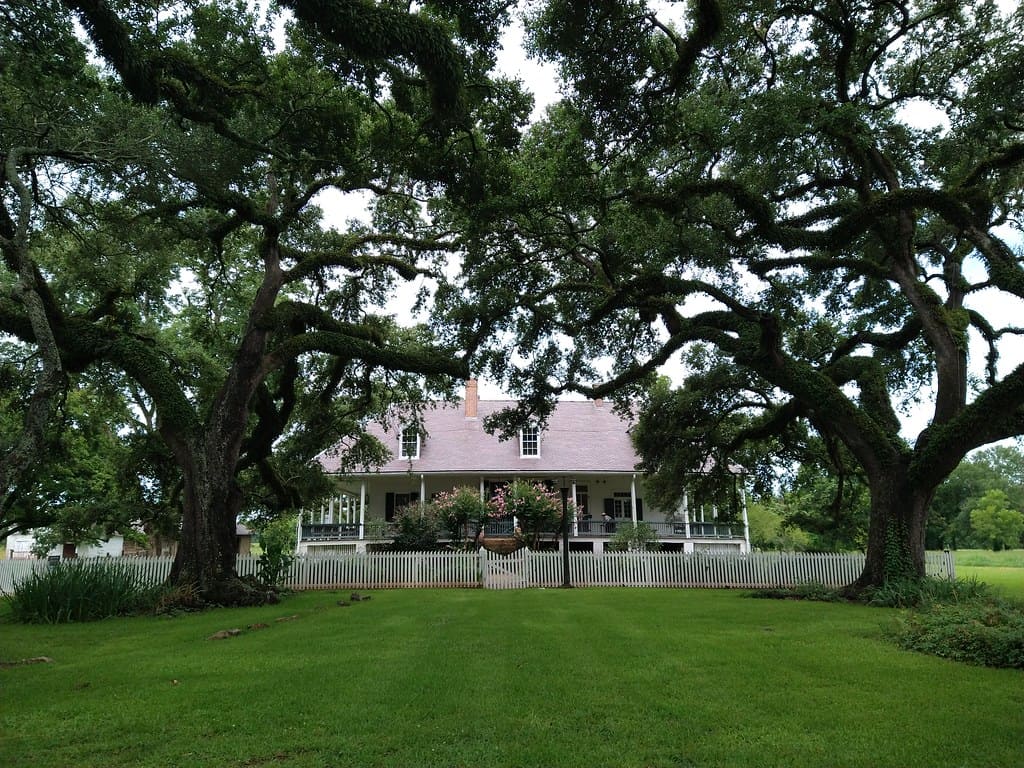
Oakland traces its beginnings to a Spanish-era land grant in the 1780s to Jean Pierre Emanuel Prud’homme and Catherine Lambre. A relatively small enslaved workforce first raised tobacco and indigo; cotton became the dominant crop after the mechanical gin made large-scale processing more profitable. The human consequences are visible in the numbers. National Park Service research counts 38 enslaved people in 1795, roughly 145 less than 50 years later and nearly 160 on the eve of the Civil War.
3. Oakland Plantation – Louisiana
©"Oakland Plantation-1966" by MSMcCarthy Photography is licensed under BY-ND 2.0. - Original / License
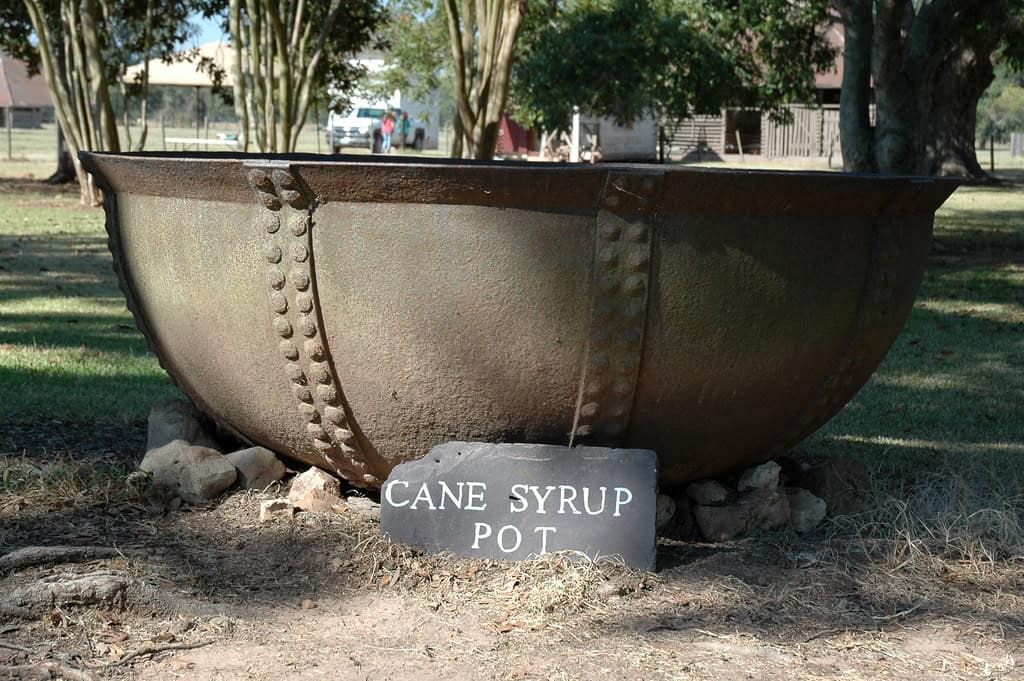
The raised Creole main house, built in 1821, is not simply a Prud’homme family monument. Enslaved carpenters framed it in cypress, and records identify Dominique Toussaint and Solomon Wilson among the craftspeople. Blacksmiths, masons, agricultural workers and domestic workers sustained the wider operation. That fuller landscape is Oakland’s great strength: the quarters, overseer’s house, store, barns, workshops and tools make it possible to see a plantation as a system of forced labor, not a lone mansion with attractive trees.
3. Oakland Plantation – Louisiana
©"Oakland Plantation, Natchez, LA" by TexasExplorer98 is licensed under BY 2.0. - Original / License
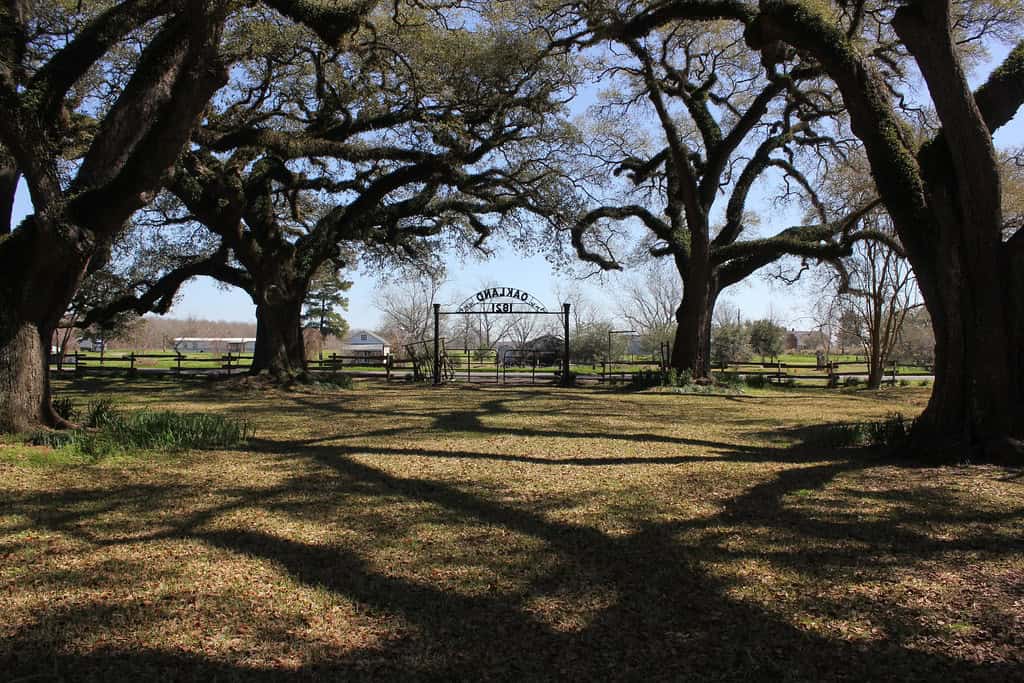
Emancipation did not end exploitation. Formerly enslaved people and their descendants remained as sharecroppers, tenant farmers and day laborers, often trapped by crop shares and store debt. The last tenant family left in the early 1960s. Nearly 60 historic buildings survive today within Cane River Creole National Historical Park. Admission is free; the grounds and outbuildings are typically open Wednesday through Sunday, while the main house is generally open only on weekends. Some routes are rough, muddy or uneven, although several key buildings have chair lifts and the pavilion has accessible restrooms.
4. Oak Alley Plantation – Louisiana
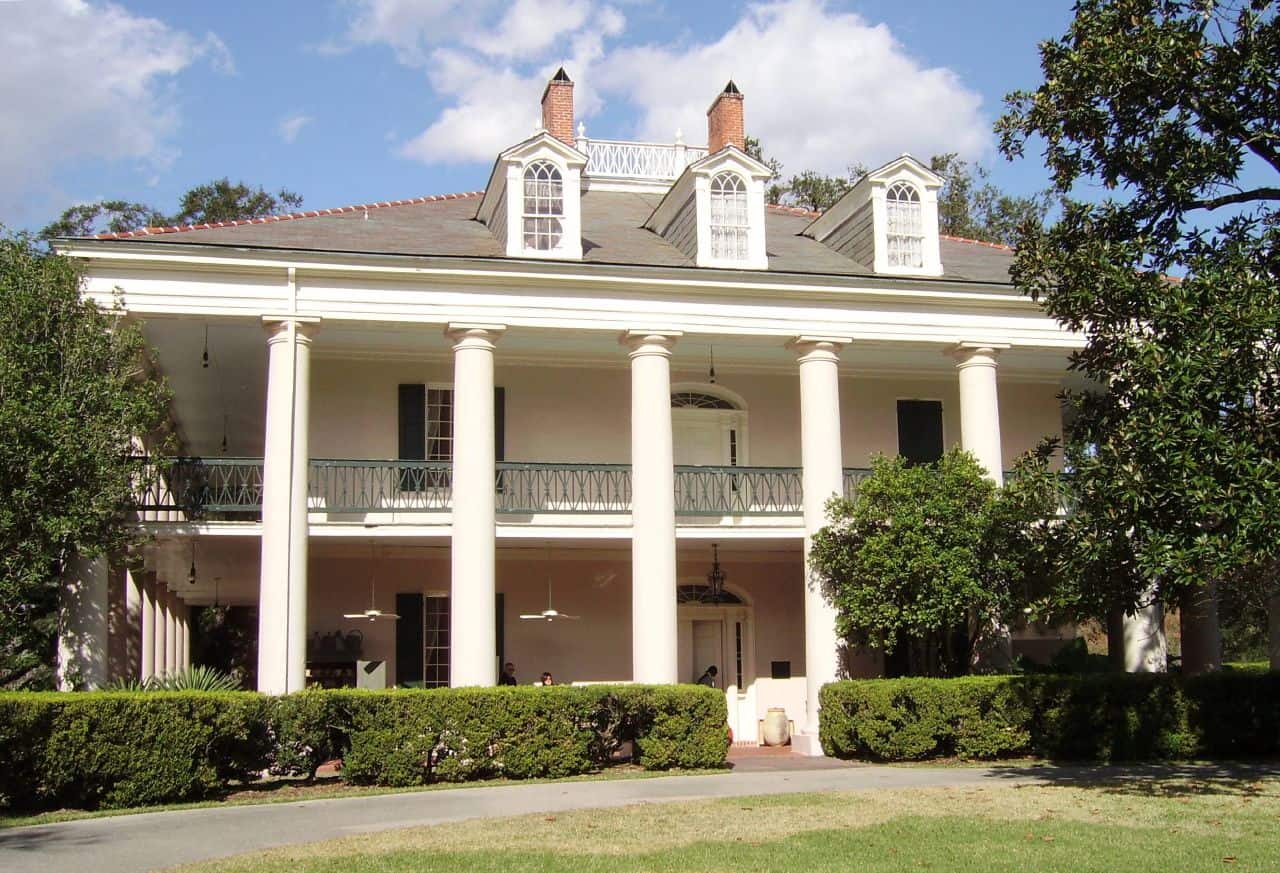
©"Oak Alley Plantation, Louisiana (Scott Oldham)" by Scott Oldham is licensed under BY-SA 2.0. - Original / License
Oak Alley’s symmetry is so polished that it can hide the work behind it. Originally called Bon Séjour, the house was built from 1837 to 1839 for Jacques Thélesphore Roman under contractor George Swainey, with enslaved people performing the labor. Its signature is a full ring of 28 colossal Doric columns—not Tuscan columns—echoing the 28 live oaks in the river-facing allée. Even that landscape was work: research indicates that enslaved people transplanted 22 mature trees to extend six older oaks into the alignment visitors photograph today.
4. Oak Alley Plantation – Louisiana
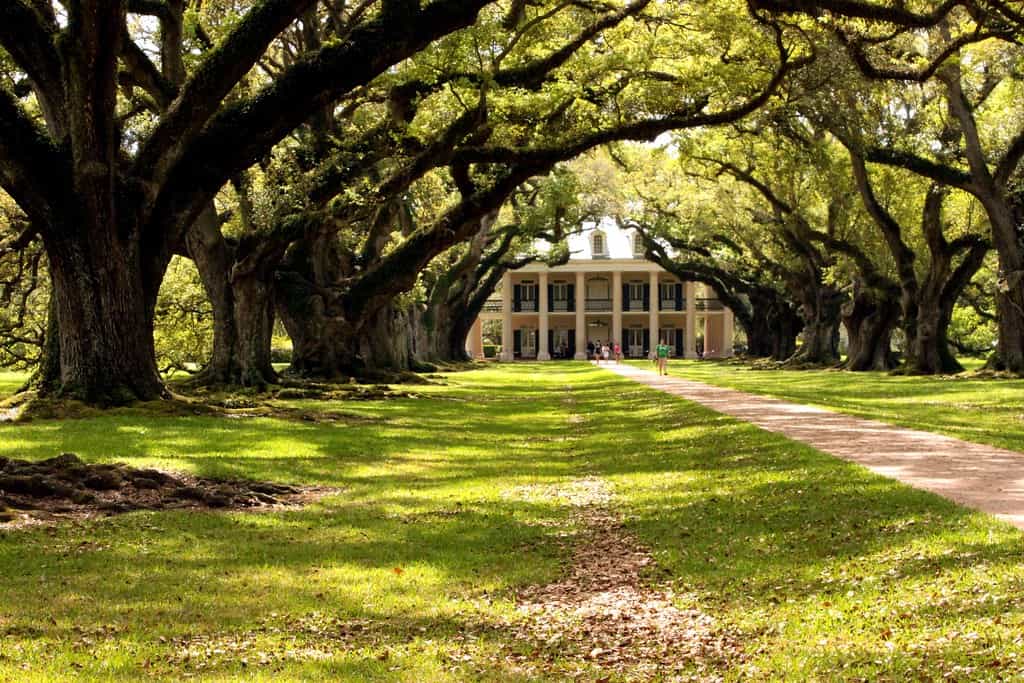
©"Oak Alley Plantation" by Prayitno / Thank you for (12 millions +) view is licensed under BY 2.0. - Original / License
An average of roughly 110 to 120 people were enslaved at Oak Alley, most housed in 20 double cabins between the mansion and sugar mill. Those original dwellings were demolished around the 1920s. The six cabins visitors see now are reconstructions used for an exhibit about slavery and life after emancipation—a distinction the old draft missed. The historic site is open daily and recommends at least two hours. The mansion’s second floor requires stairs, but a tablet presentation is available for visitors who cannot make the climb. Photography is allowed on the grounds, not inside the “Big House.”
5. Boone Hall Plantation & Gardens – South Carolina
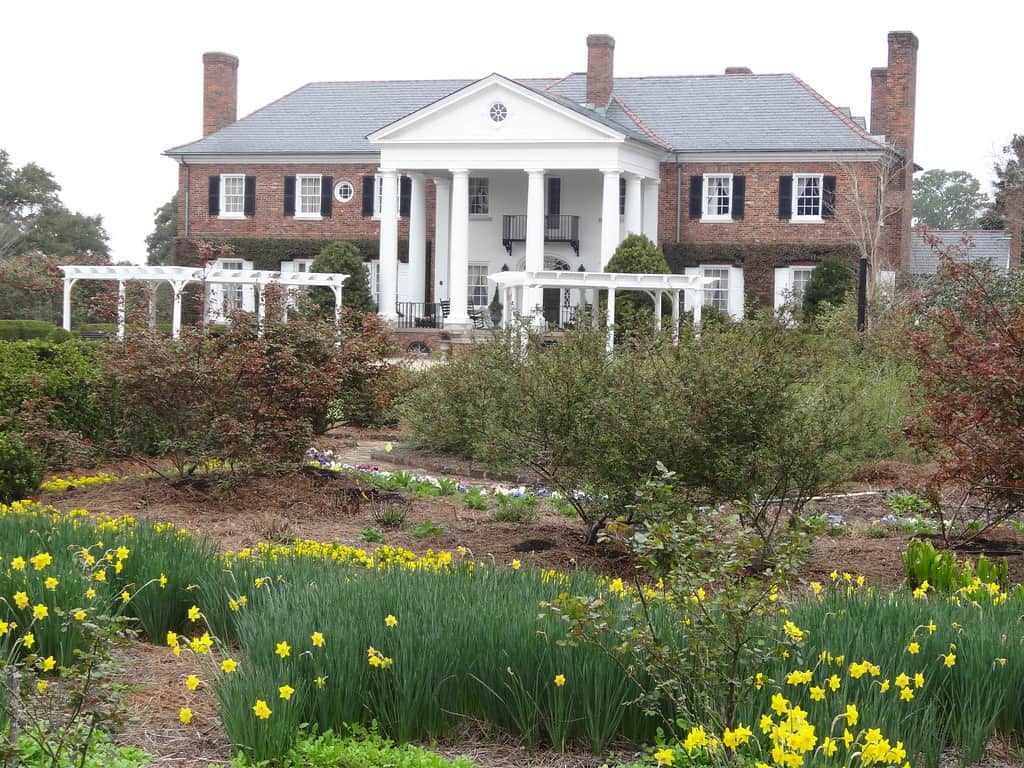
©"Daffodils and Boone Hall Plantation." by denisbin is licensed under BY-ND 2.0. - Original / License
Boone Hall dates its agricultural story to 1681, when land passed to Elizabeth Patey and her husband, John Boone. The house in front of you, however, is not 340 years old. It is a Colonial Revival mansion built in 1936 and believed to be the fourth house on the site. That correction matters: the property’s strongest historic evidence is not the movie-ready mansion but the working landscape, especially its oak allée, smokehouse, gin house and surviving row of brick cabins.
5. Boone Hall Plantation & Gardens – South Carolina
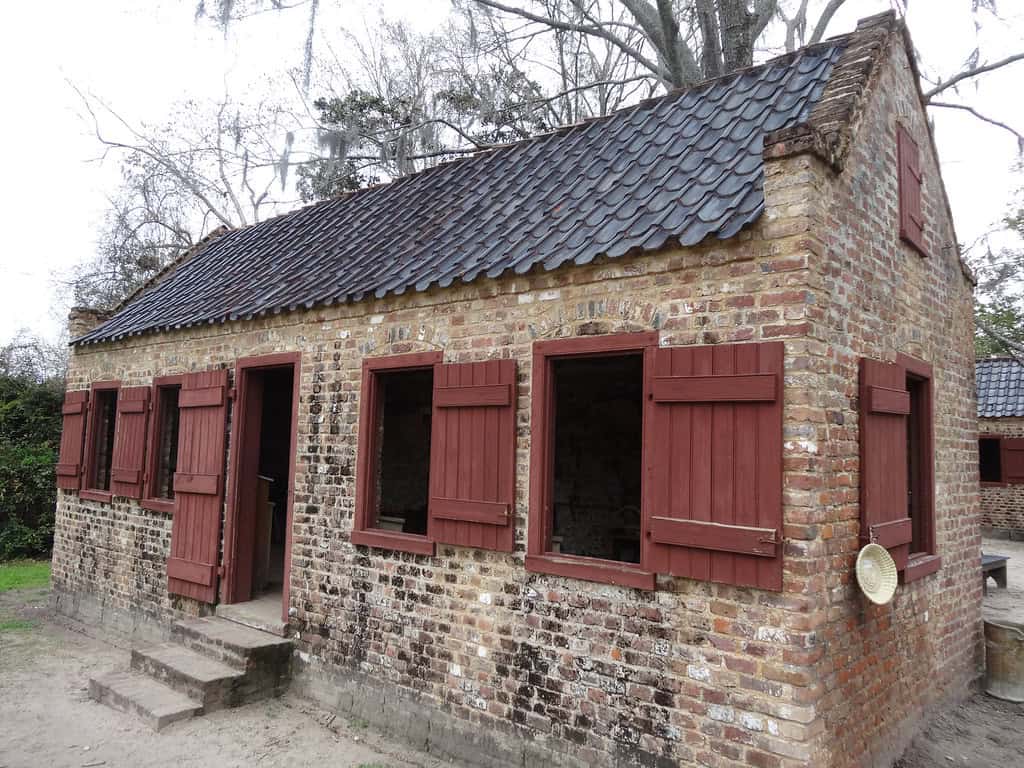
©"Slave cabin on Boone Hall Plantation. Most intact slave street in the South." by denisbin is licensed under BY-ND 2.0. - Original / License
After the Horlbeck brothers acquired Boone Hall in 1817, brickmaking became its major industry. The 1850 census counted 85 enslaved people—35 women and 50 men—connected to production of an estimated 4 million bricks that year. Nine cabins built from about 1790 to 1810 survive along “Slave Street.” General admission now includes the Black History in America exhibit in those cabins, outdoor history talks and a live Gullah culture presentation, along with a first-floor house tour and farm tour. Boone Hall remains a working farm, so daily offerings can shift with weather and operations.
6. Pebble Hill Plantation – Georgia
©"Pebble Hill Plantation, Thomas County, GA, US (28)" by Bubba73 is licensed under BY-SA 3.0. - Original / License
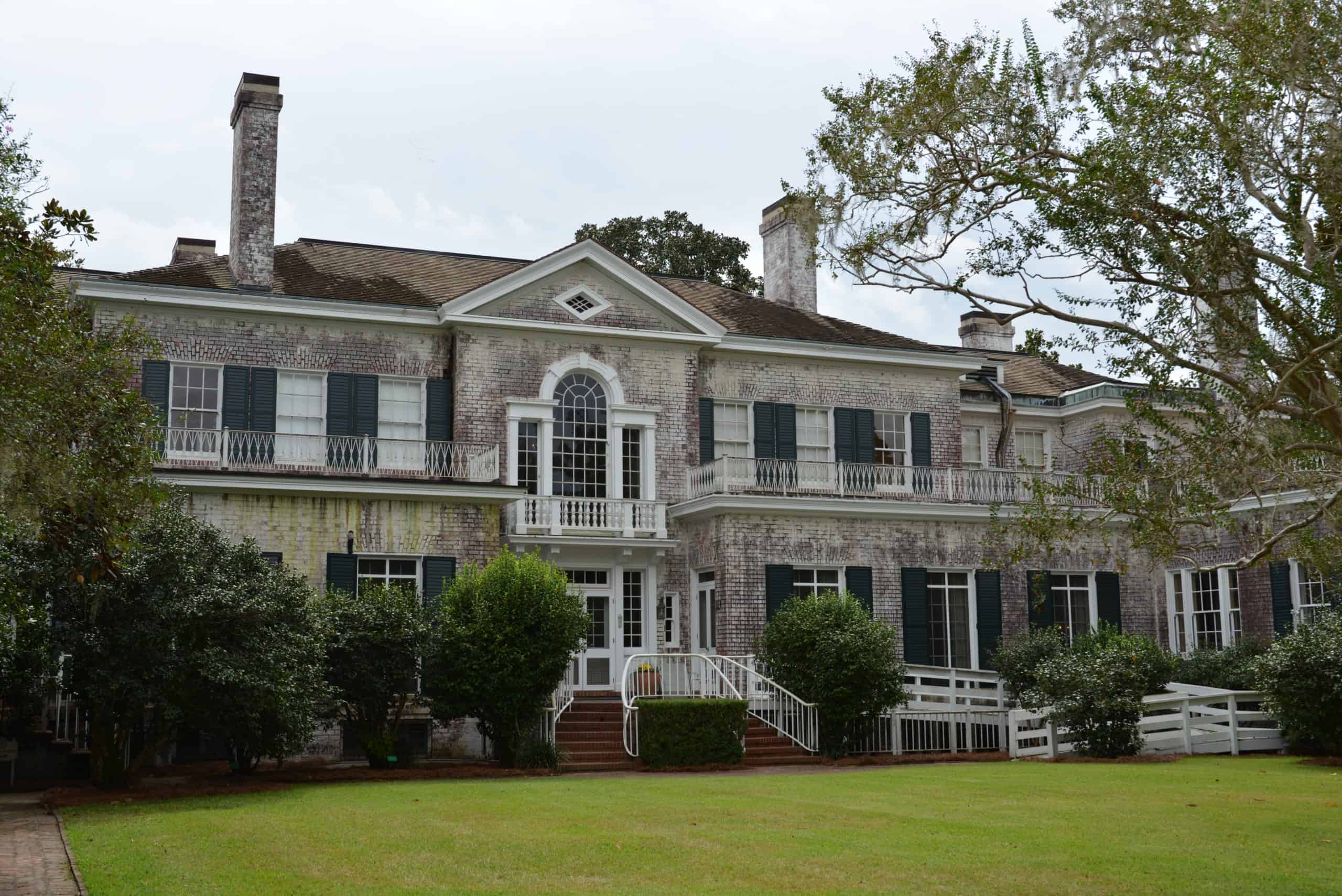
Pebble Hill requires a careful label. Thomas Jefferson Johnson assembled the property beginning in 1825, and the 1830 census recorded 21 enslaved people working a farm that produced cotton, sugar cane, corn and tobacco. None of the buildings from that era survives. What visitors see is chiefly a 20th-century sporting estate: Cleveland businessman Howard Melville Hanna bought it in 1896, his daughter Kate oversaw most of today’s complex, and the present main house was completed in 1936 after a fire. Kate’s daughter, Elisabeth “Pansy” Ireland Poe, left instructions to open the estate to the public; it has welcomed visitors since 1983. House tours run Tuesday through Saturday, Sunday is grounds-only and the site closes for August. Most public buildings are wheelchair accessible, though the estate does not supply wheelchairs.
7. Houmas House Estate & Gardens – Louisiana
©"Houmas House Plantation and Gardens #1" by Romtomtom is licensed under BY 2.0. - Original / License
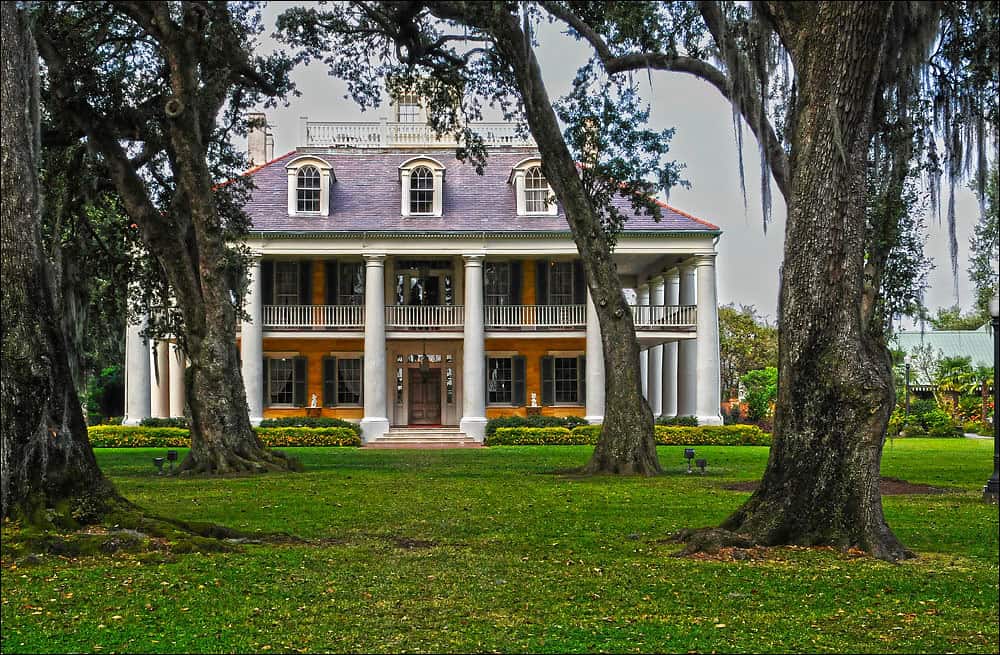
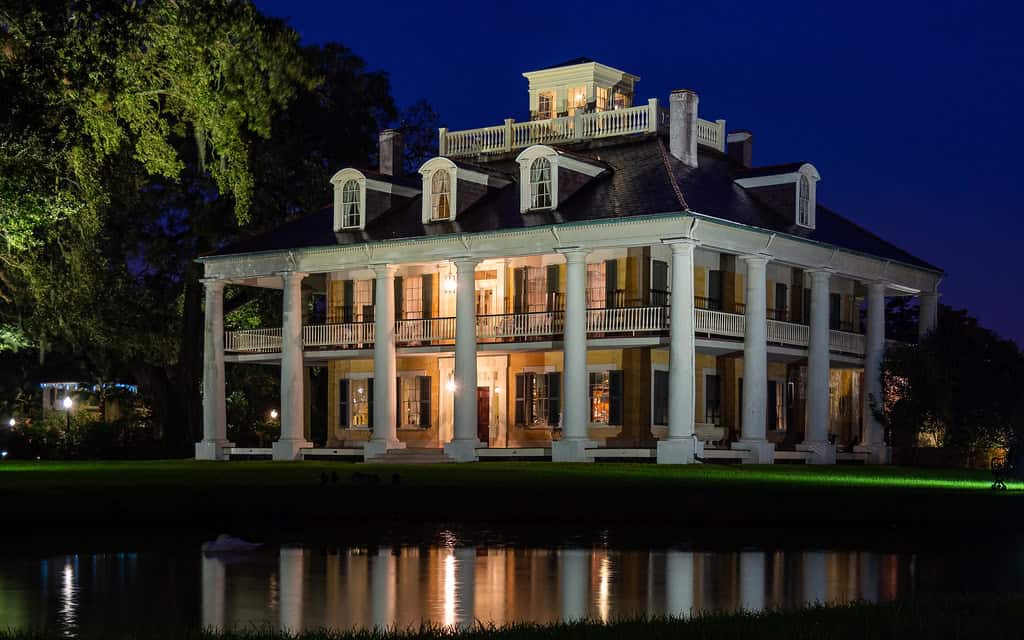
Houmas House sits on land associated with the Houma people and grew through multiple construction campaigns rather than one neat origin story. An older brick house was expanded by the Greek Revival mansion completed around 1840. John Burnside bought the estate in 1858 for $1 million; the sale included more than 12,000 acres and a forced workforce of more than 550 people. Burnside’s wider sugar holdings soon made him Louisiana’s largest enslaver, with National Register records citing more than 800 people held in bondage.
7. Houmas House Estate & Gardens – Louisiana
©"The main house at night - Houmas Plantation, Louisiana" by bvi4092 is licensed under BY 2.0. - Original / License
Dr. George Crozat bought the property in 1940 and substantially remodeled both the house and grounds. A later owner restored it again and reopened tours in 2003; the mansion remains a private residence within a 38-acre visitor complex that also includes gardens, restaurants and an inn. This is an architecture-and-estate experience, not a museum devoted to slavery, so arrive ready to supply the questions the luxury setting may not. The site is open daily. Smooth garden paths, nearby parking, ground-level restaurant access and an elevator serving the mansion make it one of the more mobility-friendly properties on this list.
8. Nottoway Plantation House Site – Louisiana
©"Nottoway Plantation HDR" by Corey Ann is licensed under BY-ND 2.0. - Original / License
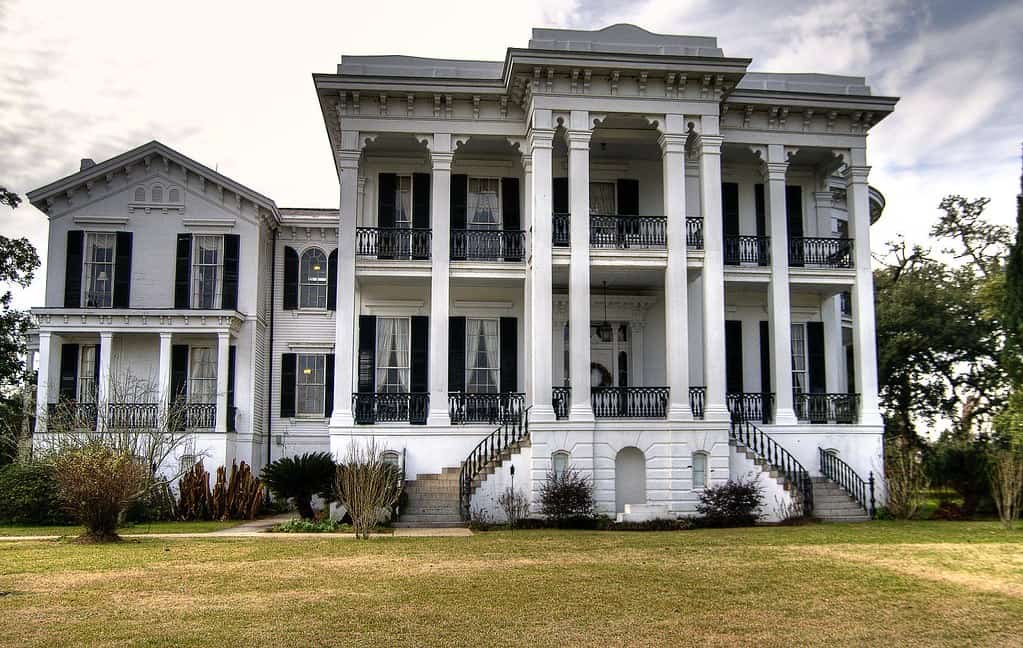
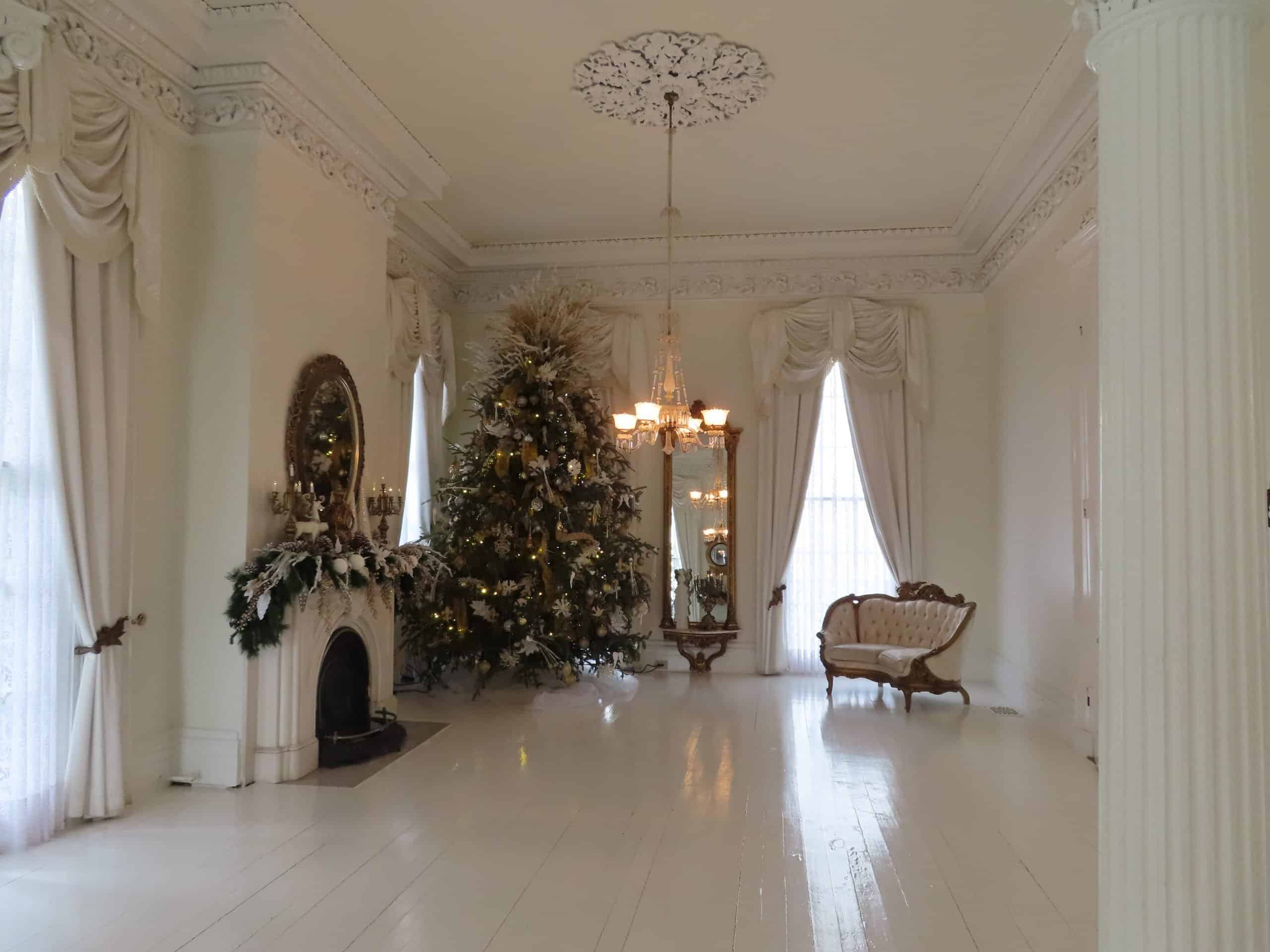
This photograph is now a historical record. Architect Henry Howard designed Nottoway’s 64-room Italianate mansion for sugar planter John Hampden Randolph, and construction was completed in 1859. By 1860, Randolph held 155 people in slavery across 6,200 acres. On May 15, 2025, a catastrophic fire destroyed the 53,000-square-foot mansion. State and federal investigators spent more than a week examining the scene; the original house was declared a total loss, although other structures on the property survived.
8. Nottoway Plantation House Site – Louisiana
©"USA Tour 2019 P057 Nottoway Plantation House interior" by Fallaner is licensed under BY-SA 4.0. - Original / License
The first phase of a privately funded reconstruction began in February 2026. The owner has described a two-to-three-year plan for a replica of the lost house, plus a memorial to the people enslaved there and a “unification center.” Those are plans, not finished interpretation. Parts of the resort property and a restaurant have continued operating, but the historic mansion in these images no longer exists and cannot be toured. Anyone considering a stop should call ahead, expect an active rebuilding site and understand that Nottoway is presently a case study in memory and reconstruction—not an intact antebellum house.

