
Oregon may not have an NFL team, but the state is hardly short on stadium culture. From a century-old soccer landmark in Portland to two of the Pacific Northwest’s best-known college football venues in Corvallis and Eugene, Oregon’s biggest stadiums can easily anchor a sports-focused road trip.
Based on their current listed capacities, these are the three largest major stadiums in Oregon, along with the history and traditions that make each one worth knowing before your next PNW game day.
Providence Park: 25,218 Seats
©"2-3 :(" by frozenchipmunk is licensed under BY 2.0. - Original / License
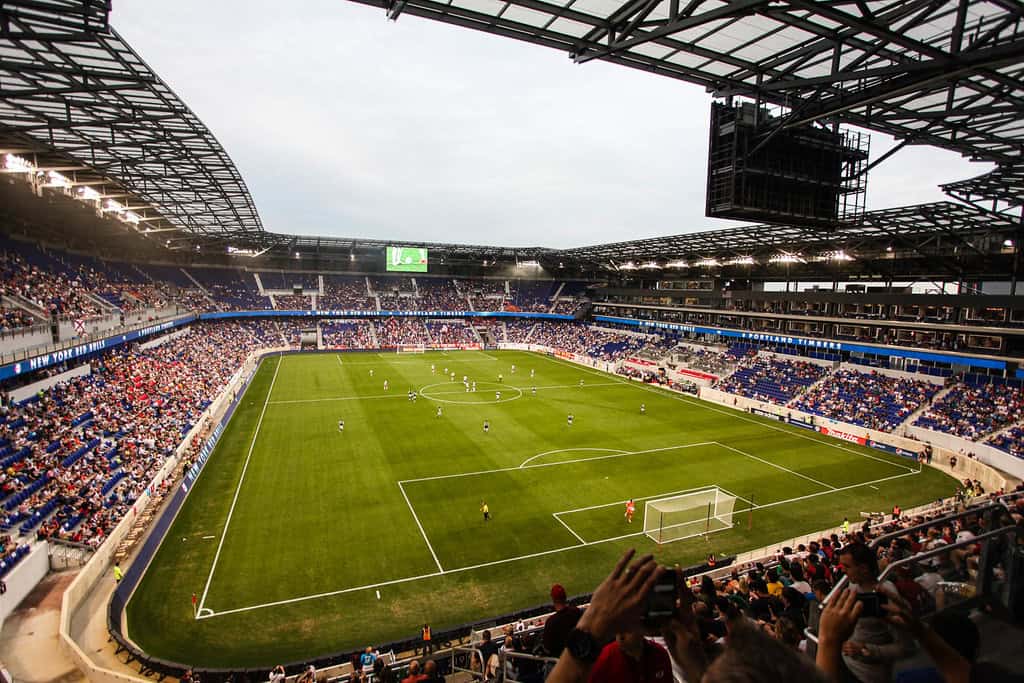
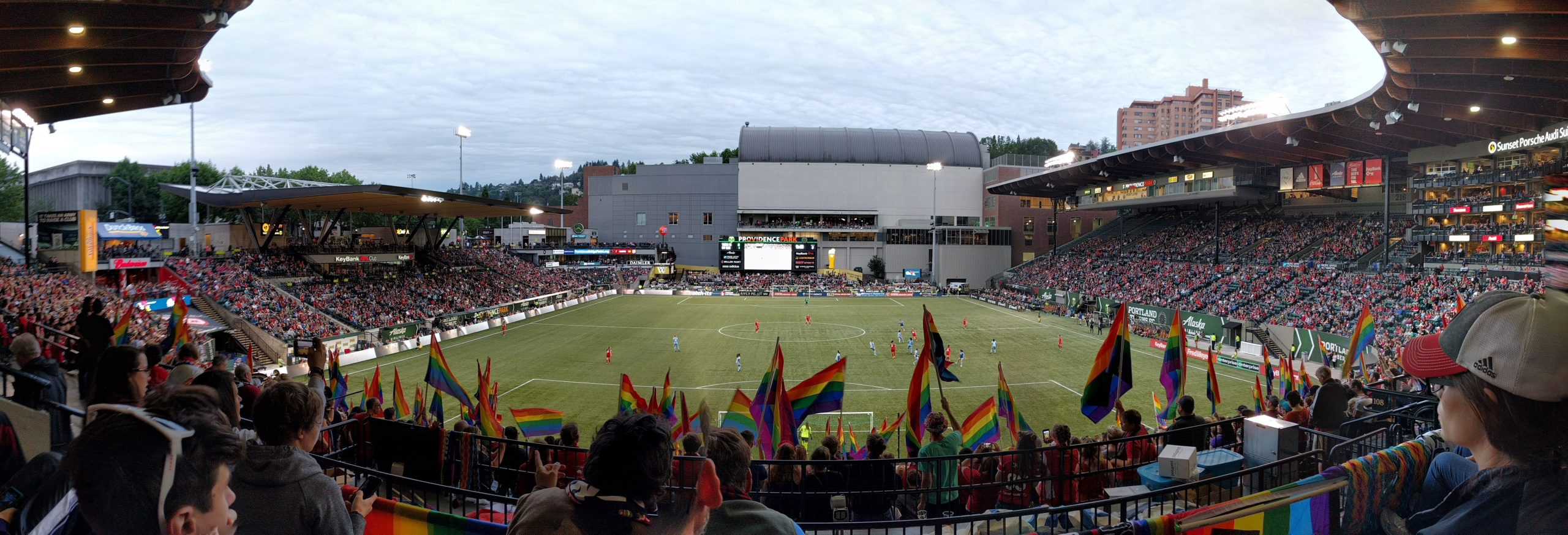
Coming in third is Providence Park in Portland, home of Major League Soccer’s Portland Timbers and the NWSL’s Portland Thorns. Its official MLS capacity is 25,218, but its history is even more impressive than its size. The stadium dates to 1926, making 2026 its 100th year as one of Portland’s signature sports venues.
Providence Park (continued)
©"Portland Thorns FC mid-game at Providence Park 20170617" by Oznogon is licensed under BY-SA 4.0. - Original / License
The site’s sports history actually predates the stadium. The Multnomah Athletic Club built Multnomah Field in 1893 in Tanner Creek Gulch. In 1926, the club spent $500,000 to transform the field into a full stadium, adding an upper seating bowl and wooden benches, some of which remain part of the venue today.
Providence Park (continued)
©"File:LGBT rainbow pride flag at professional soccer game.jpg" by sarahmirk is licensed under CC0 1.0. - Original / License
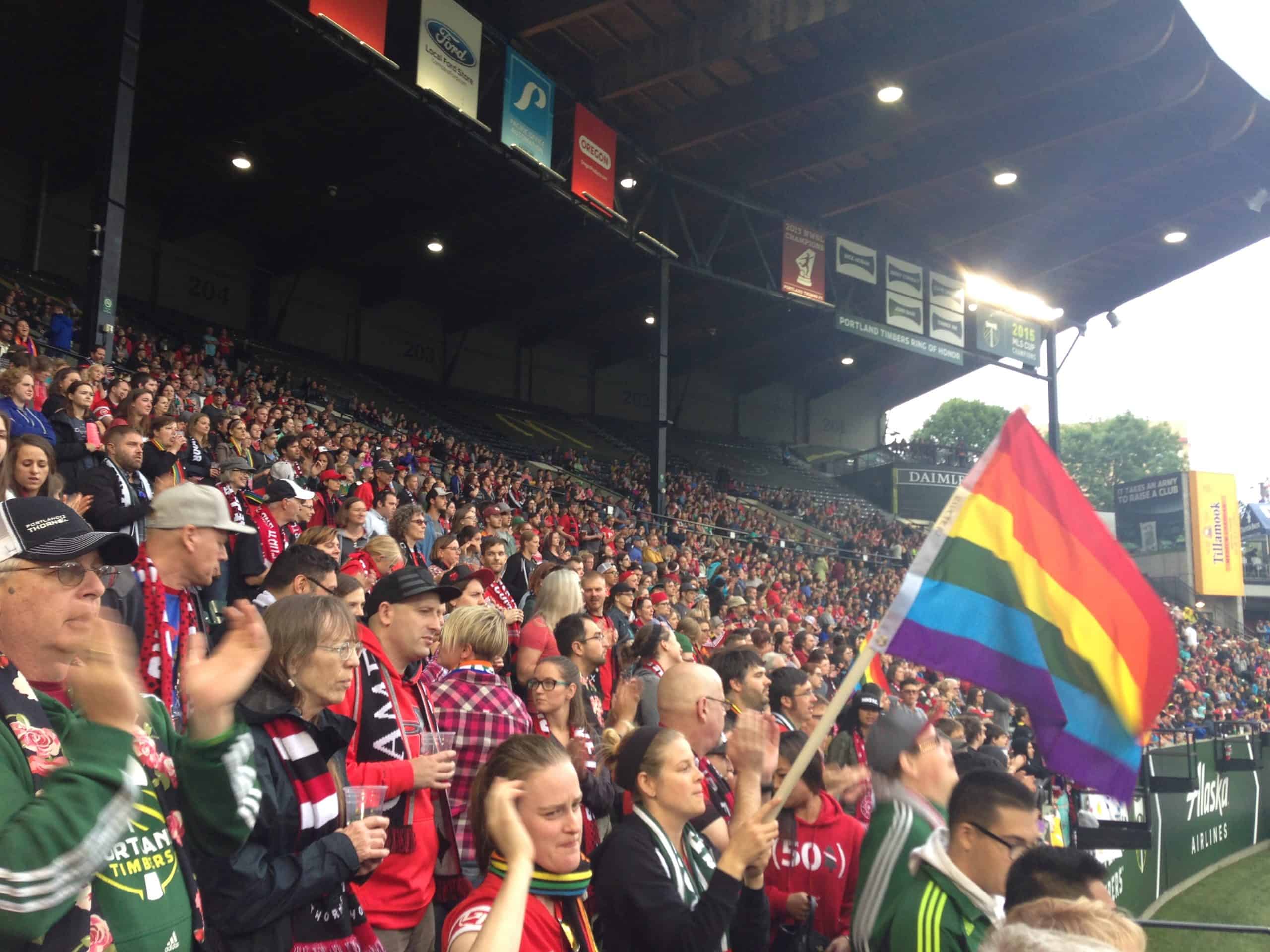
Soccer is only part of the story. The Portland Beavers moved into the stadium in 1956 and played there through 1972 before later versions of the team returned. The independent Portland Mavericks called Civic Stadium home from 1973 through 1977, while Portland State football used the venue for decades before playing its final games there in 2018. The building has bounced between baseball, football and soccer more than most stadiums ever will.
Providence Park (continued)
©"Portland Timbers vs. Seattle Sounders - Desert Friendlies 2017" by FlâneurFloyd is licensed under BY-ND 2.0. - Original / License
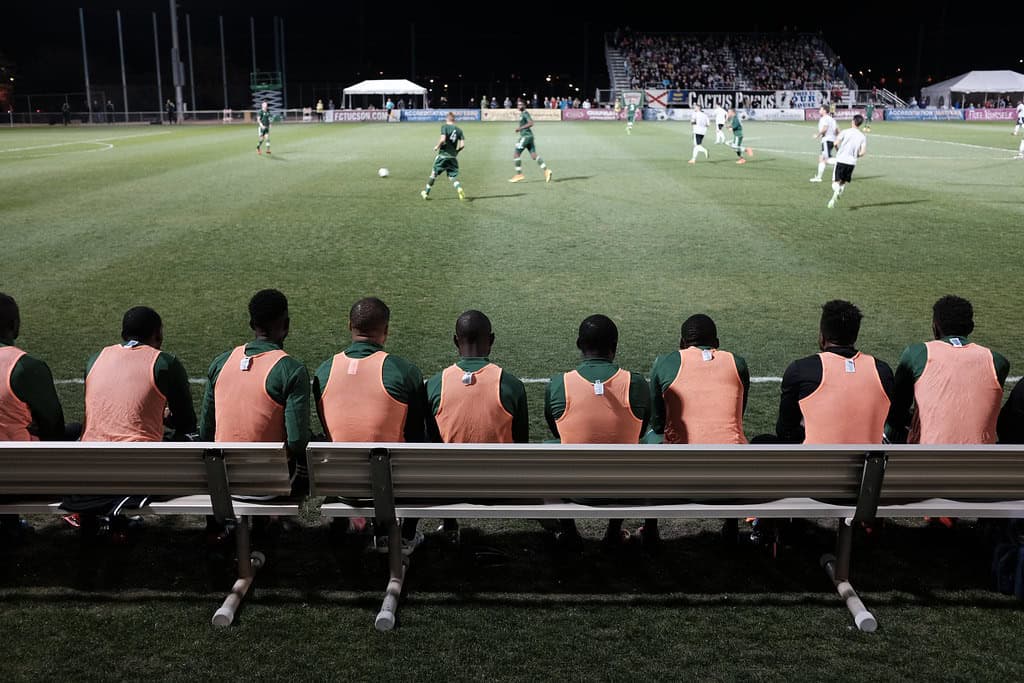
The City of Portland purchased the stadium in 1966 and renamed it Civic Stadium. Ahead of the Timbers’ move into Major League Soccer in 2011, a $31 million renovation converted it into a soccer-focused venue. It took the Providence Park name in 2014.
An $85 million privately funded expansion in 2019 added a multi-level east-side structure and increased capacity to today’s 25,218. Providence Park still stretches beyond soccer, hosting concerts and other special events in the heart of Portland.
Reser Stadium: 35,548 Seats
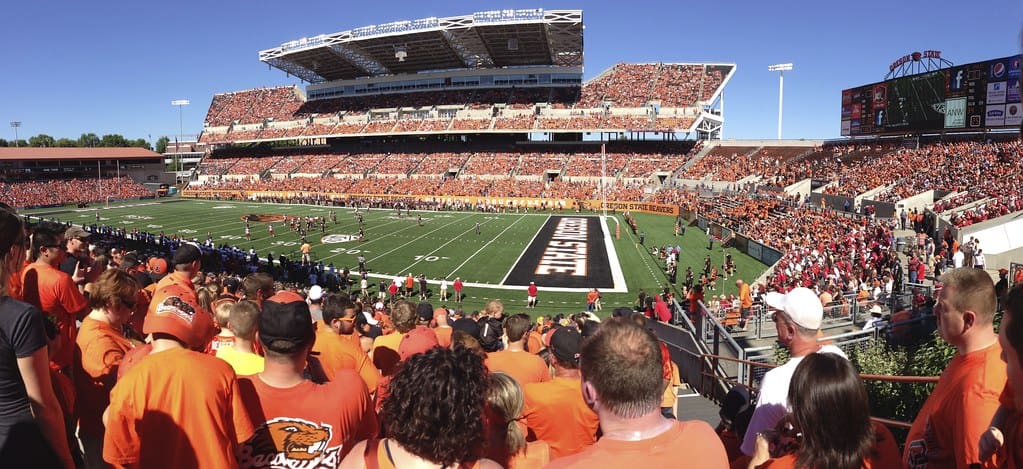
©"Reser Stadium on Beavers Gameday" by Ryan Harvey is licensed under BY-SA 2.0. - Original / License
Reser Stadium sits on the Oregon State University campus in Corvallis and is Oregon’s second-largest stadium. It originally opened as Parker Stadium in 1953 with 28,000. After decades of additions and renovations, including the major west-side redevelopment completed for the 2023 season, Oregon State now lists its capacity at 35,548.
Reser Stadium (continued)
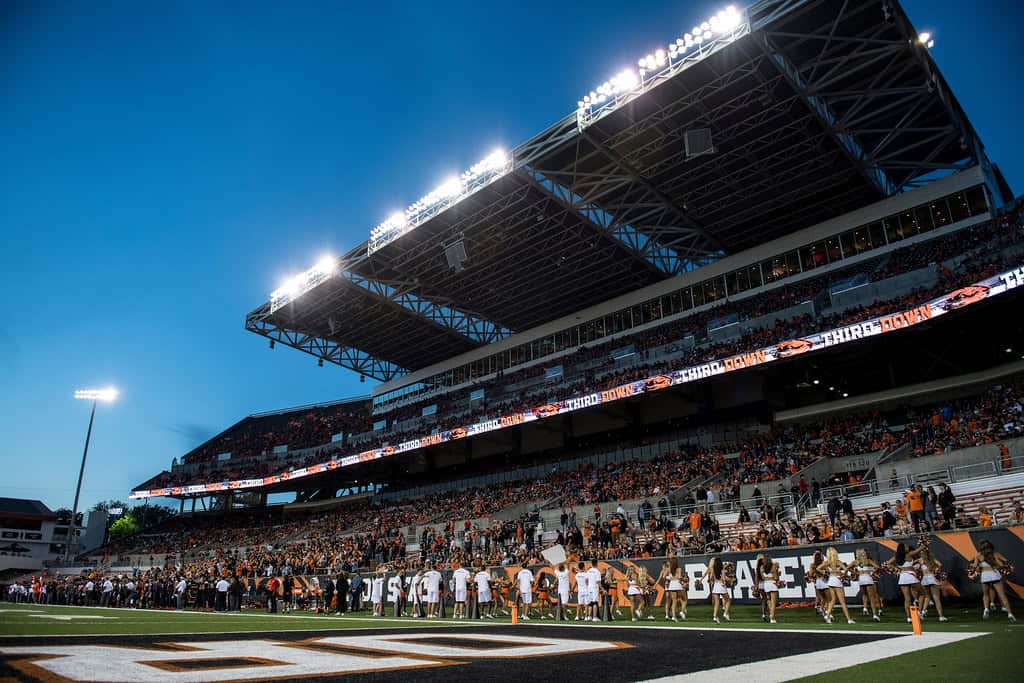
©"Reser Stadium" by Oregon State University is licensed under BY-SA 2.0. - Original / License
The original stadium was named for Charles T. “Charlie” Parker, a Portland businessman and Oregon State graduate who played a major role in raising the money to build it. The name changed in 1999 after Al and Pat Reser made a major gift to Oregon State athletics. Both Resers graduated from Oregon State in 1960.
Parker’s name didn’t disappear. Parker Plaza, directly outside the stadium, remains a gathering place for pregame events, university activities and other campus functions.
Reser Stadium (continued)
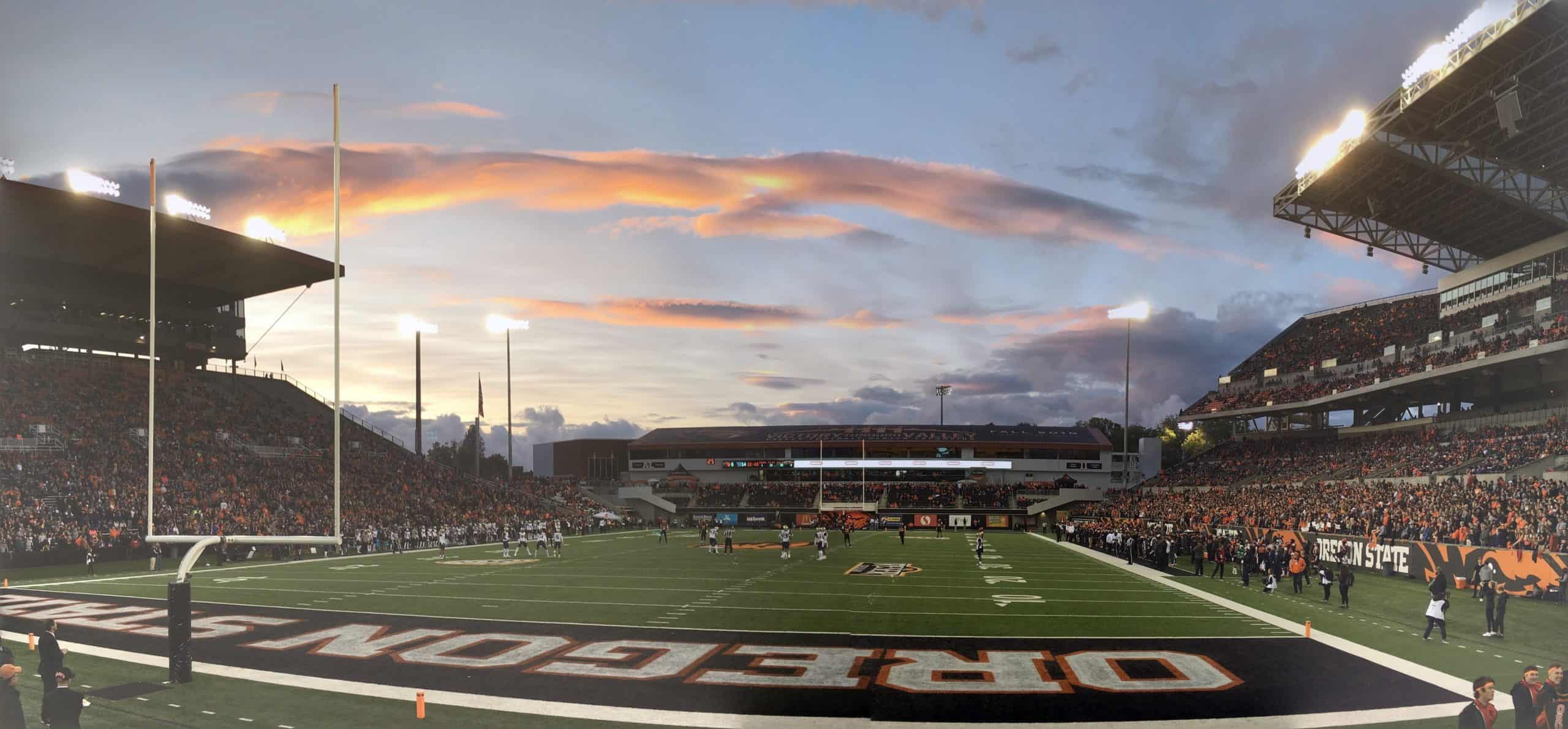
©"Reser Stadium - September 30 2017" by Jacob A. Church is licensed under BY-SA 4.0. - Original / License
Before Parker Stadium opened, Oregon State played at Bell Field, a wooden venue that once stood where Dixon Recreation Center is today. The Beavers opened their new stadium against Washington State on Nov. 14, 1953, and gave the home crowd exactly what it wanted: a 7-0 Oregon State victory.
Reser Stadium (continued)
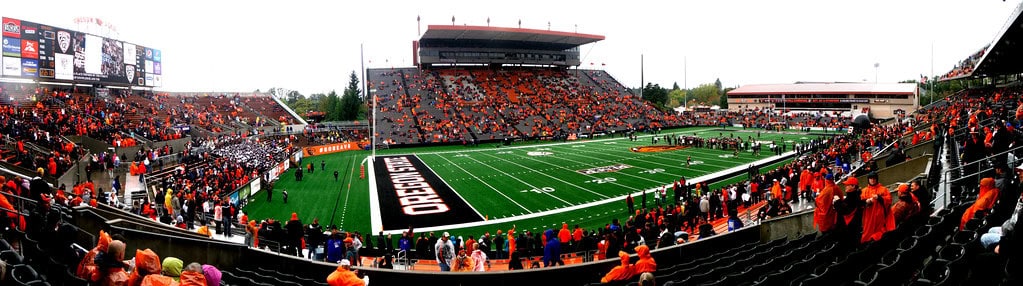
©"Oregon State University Reser Stadium" by Kirt Edblom is licensed under BY-SA 2.0. - Original / License
Football isn’t Reser’s only big event. Oregon State holds its university-wide commencement at the stadium, and past speakers have included astronaut and former U.S. Sen. John Glenn and former first lady Michelle Obama. It has also hosted the student-run Dam Jam concert. The event moved to Reser Stadium in 2018 with KYLE and Alison Wonderland headlining, while the 2019 lineup featured Akon and Jesse McCartney.
Autzen Stadium: 54,000 Seats
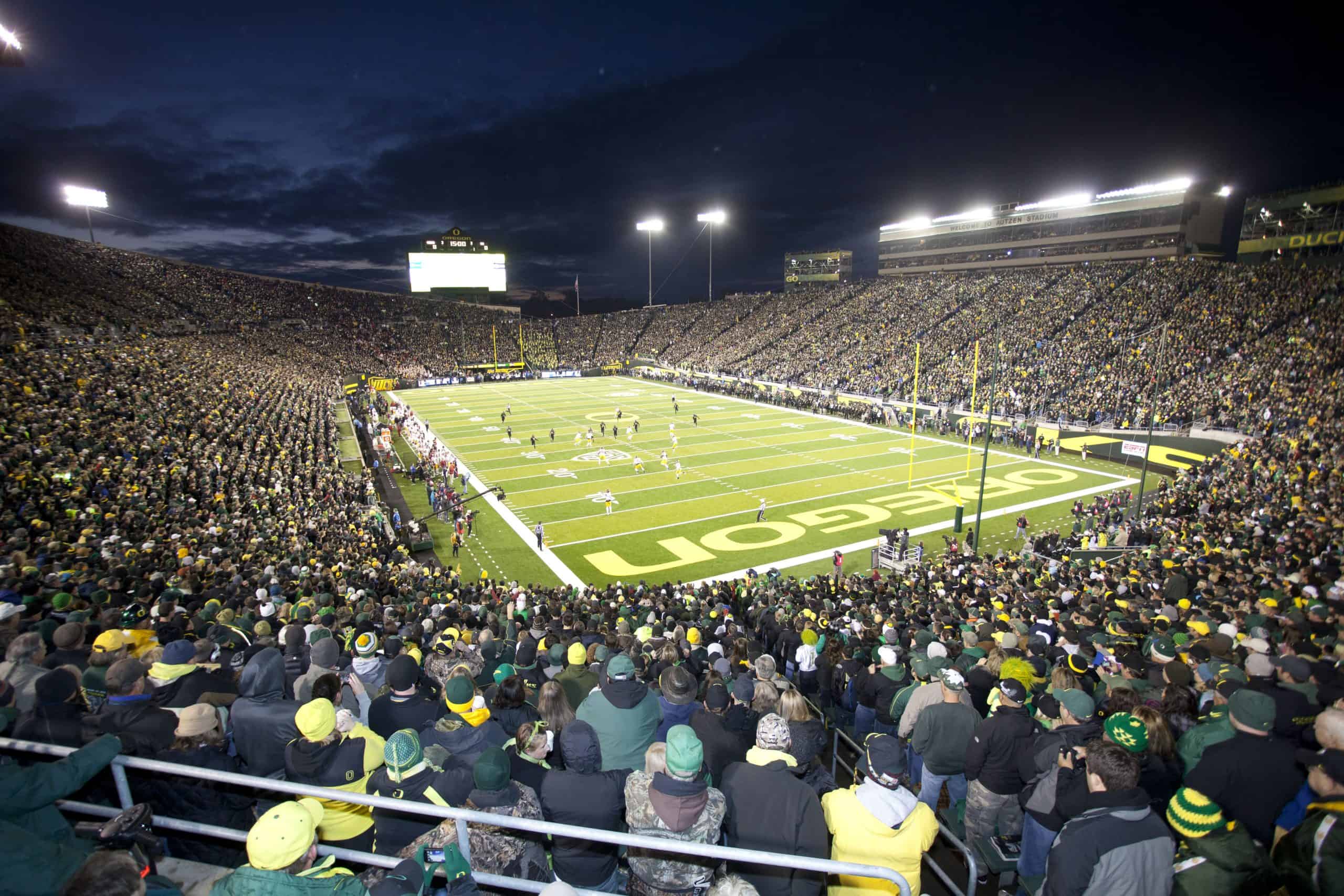
©"Autzen Stadium at night" by Ray Terrill is licensed under BY-SA 2.0. - Original / License
At No. 1 is Autzen Stadium, the Eugene home of the Oregon Ducks. The University of Oregon lists its seating capacity at approximately 54,000, although standing-room areas can push a packed house beyond 60,000. Despite being smaller than many other major college football stadiums, its bowl design has helped give Autzen a reputation as one of the loudest venues in the sport.
Autzen Stadium (continued)
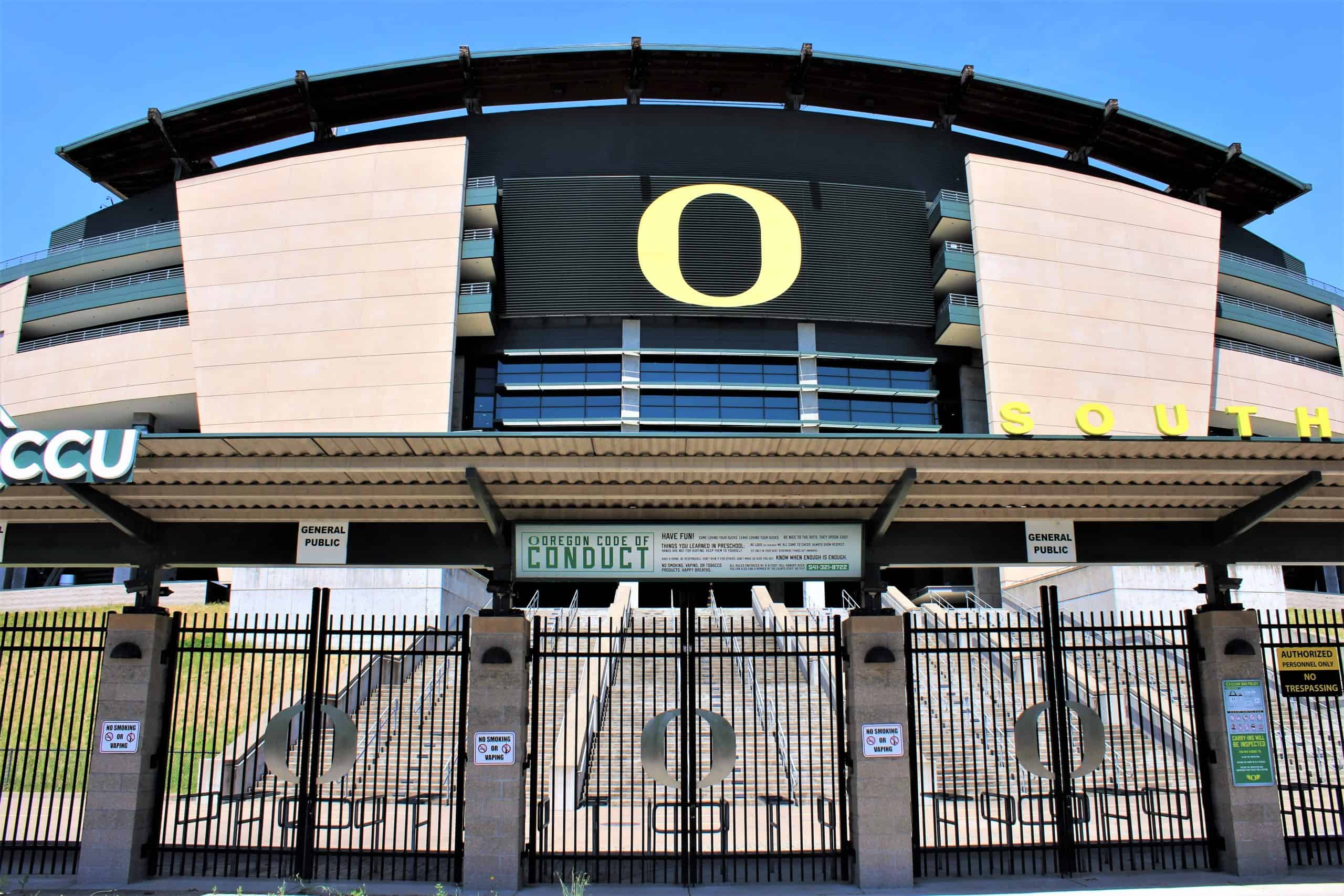
©"Autzen Stadium Exterior" by Rickymouser45 is licensed under BY-SA 4.0. - Original / License
Autzen Stadium is named for Portland lumberman, sportsman and philanthropist Thomas J. Autzen. The stadium was built to give Oregon football a modern home and allowed Hayward Field, where the Ducks had previously played football, to become a dedicated track-and-field venue.
Autzen sits north of the Willamette River beside Eugene’s Alton Baker Park and roughly a quarter-mile north of the university’s main campus. For many fans and students, walking across the river and through the park is part of the game-day experience before the stadium even comes into view.
Autzen Stadium (continued)
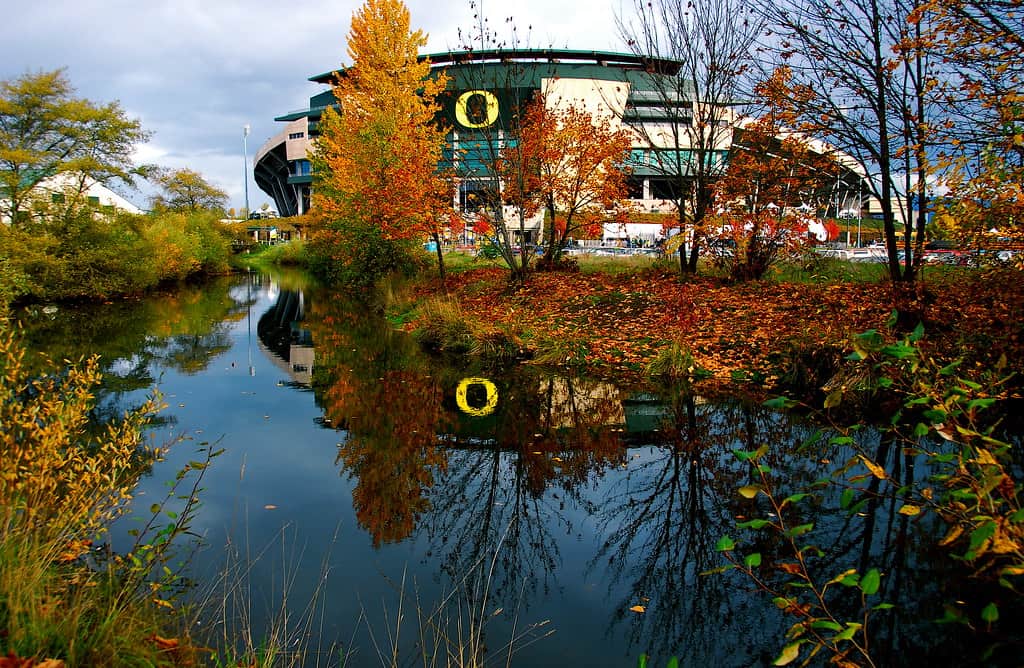
©"Reflection Of Fall At Autzen Stadium" by Don Hankins is licensed under BY 2.0. - Original / License
Oregon football moved from Hayward Field when Autzen opened in 1967 with a capacity of 41,078. The biggest transformation came in 2002, when a major expansion added seating and luxury boxes and pushed the stadium to its current 54,000-seat capacity.
Autzen’s relatively compact bowl helps keep fans close to the action and traps crowd noise inside the stadium. That combination has turned a venue that isn’t enormous by Big Ten standards into one of college football’s most recognizable home-field environments.
Autzen Stadium (continued)
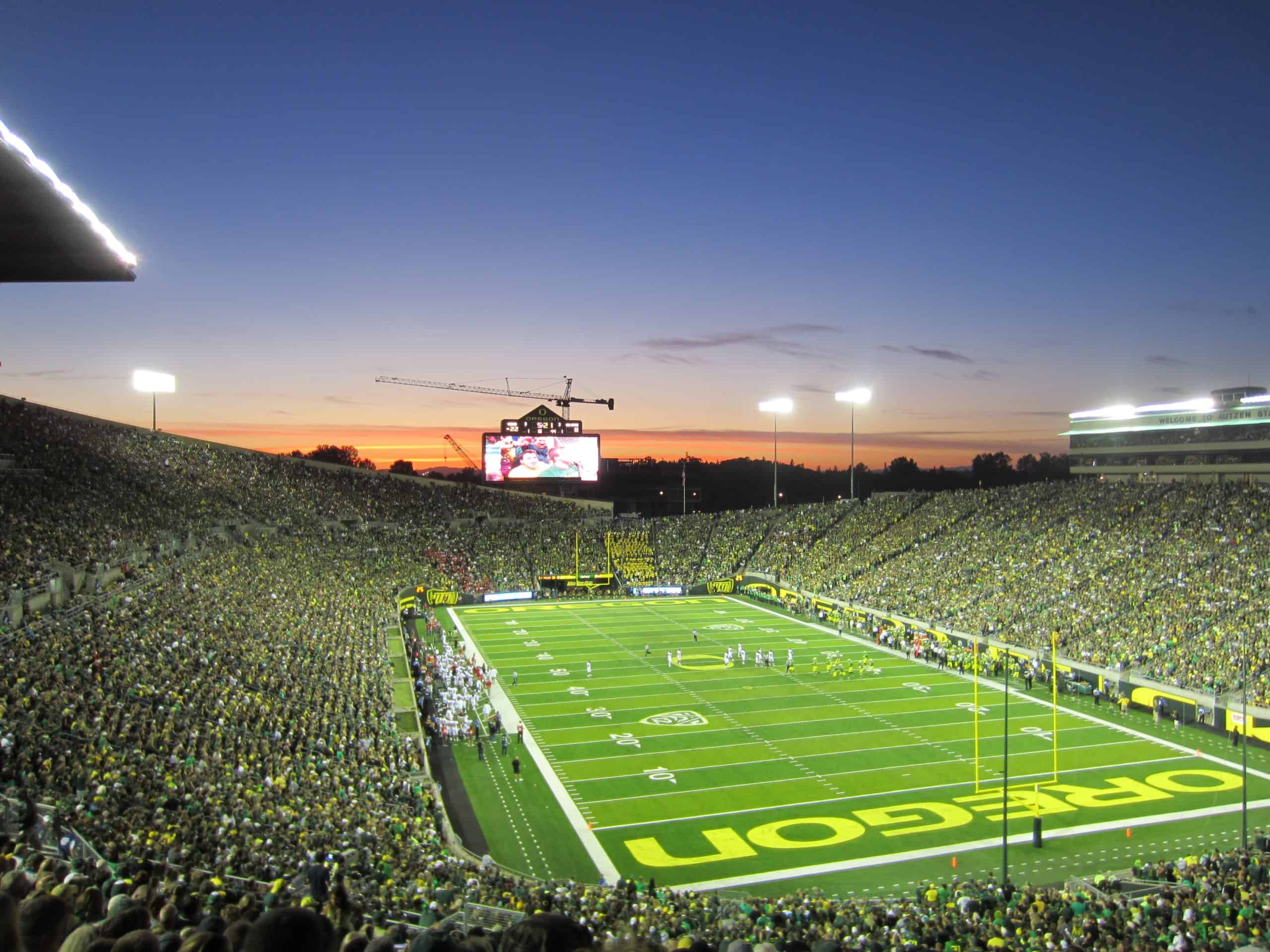
©"Autzen Stadium, Eugene, Oregon - 24 (2012)" by Another Believer is licensed under BY-SA 3.0. - Original / License
The first game at Autzen Stadium took place on Sept. 23, 1967, with Oregon hosting Colorado. The Ducks didn’t get the storybook opening they wanted, losing 17-13 in front of 27,500 fans. That proved to be only the beginning for a stadium that would become one of the defining pieces of Oregon football.
Autzen has continued to evolve, including a major 2002 expansion, upgrades on the north side in 2013 and a redesigned east end zone before the 2020 season.
Autzen Stadium (continued)
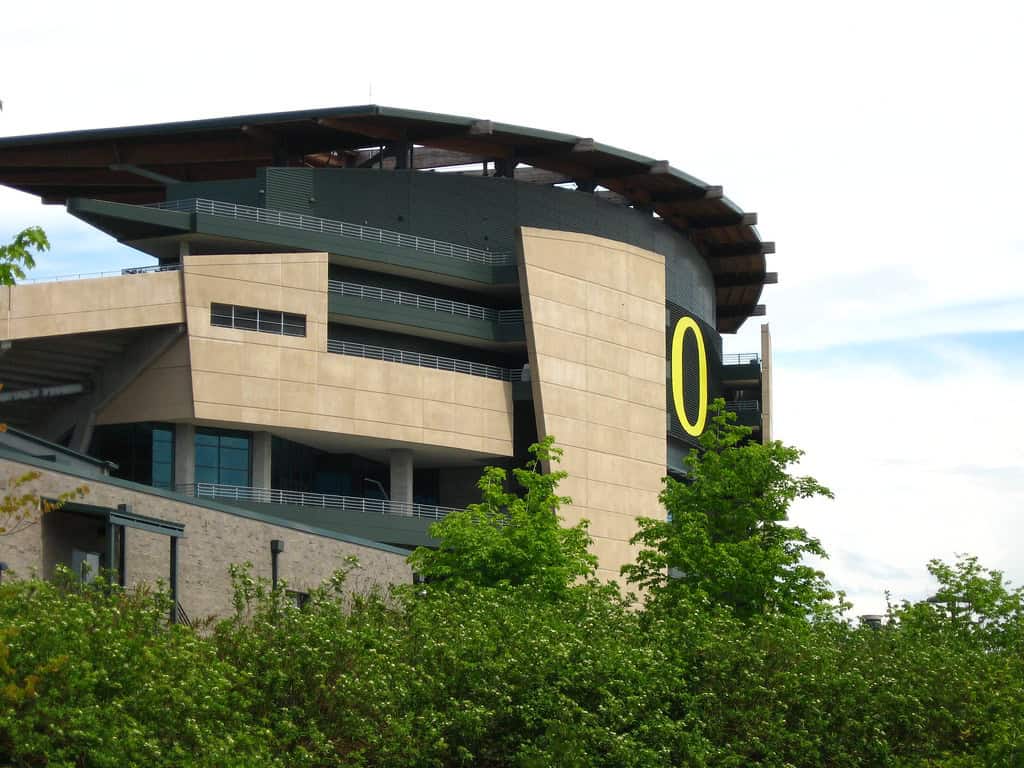
©"Autzen Stadium" by functoruser is licensed under BY 2.0. - Original / License
One of Autzen’s most obvious modern additions arrived in 2020: a massive east-end videoboard measuring roughly 186 feet wide by 66 feet tall. At more than 12,000 square feet, it was the largest videoboard in college football when it debuted.
The stadium has plenty of traditions that don’t involve a screen. For 23 years, from 1999 through 2022, longtime Oregon supporter Doug Koke famously rode a Harley-Davidson onto the field while leading the Ducks out of the tunnel. The motorcycle roar became such a recognizable piece of Autzen game day that Oregon Athletics still celebrates the tradition today.

