
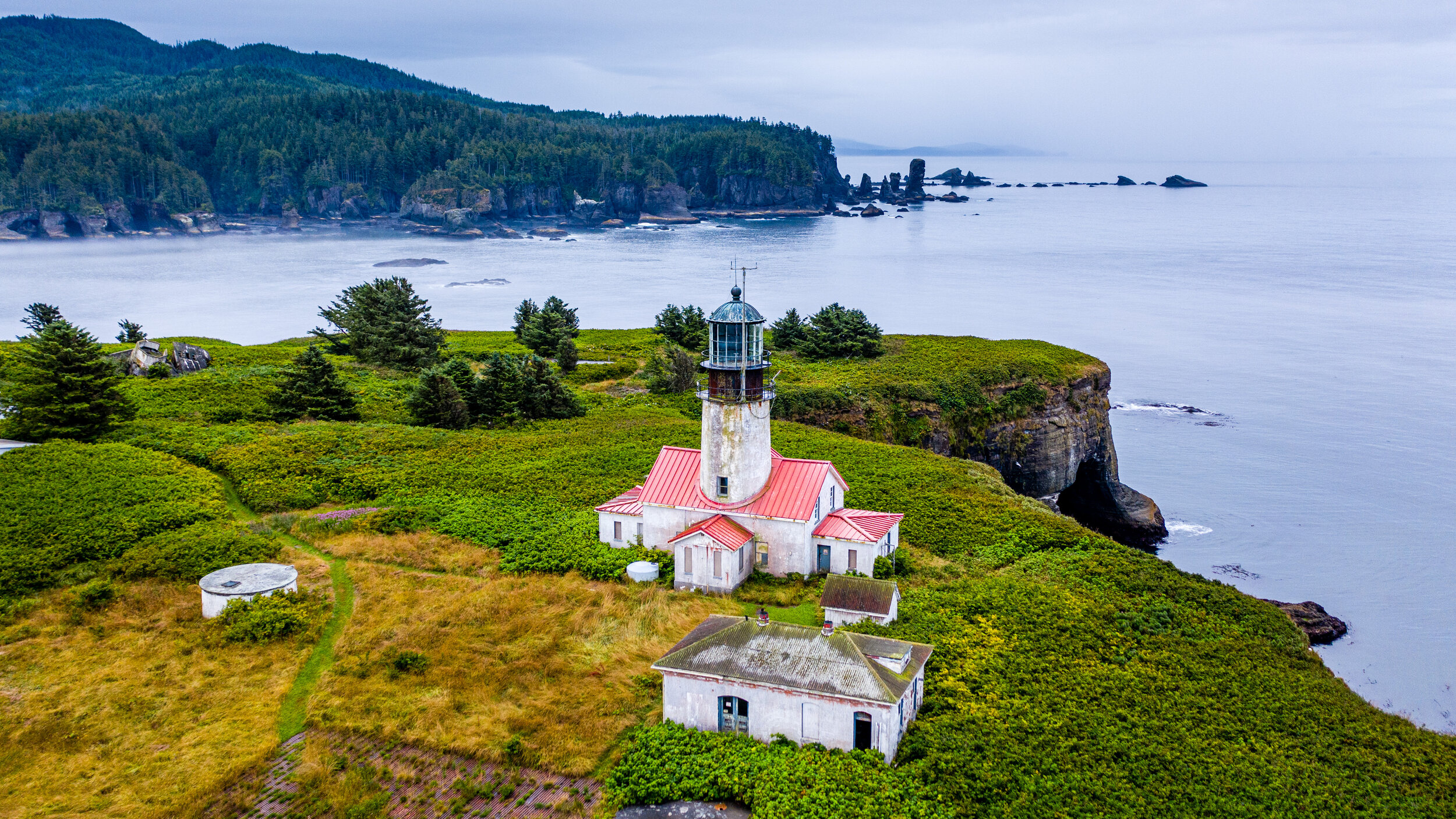
Washington State has numerous lighthouses scattered along its coastline, islands, and tidal spits. Most are scenic, but a select few feel truly cinematic, and there is a difference. Scenic means having a beautiful view on a clear day. Cinematic is when you stop halfway through a walk because the light, water, weather, and structure suddenly come together in a way you did not expect.
For a moment, the entire scene looks less like a real place and more like a carefully composed film still. You do not need the perfect camera angle or special timing. The lighthouse, landscape, and atmosphere do all the work for you, creating a scene that feels ready for the big screen.
Cape Disappointment Lighthouse
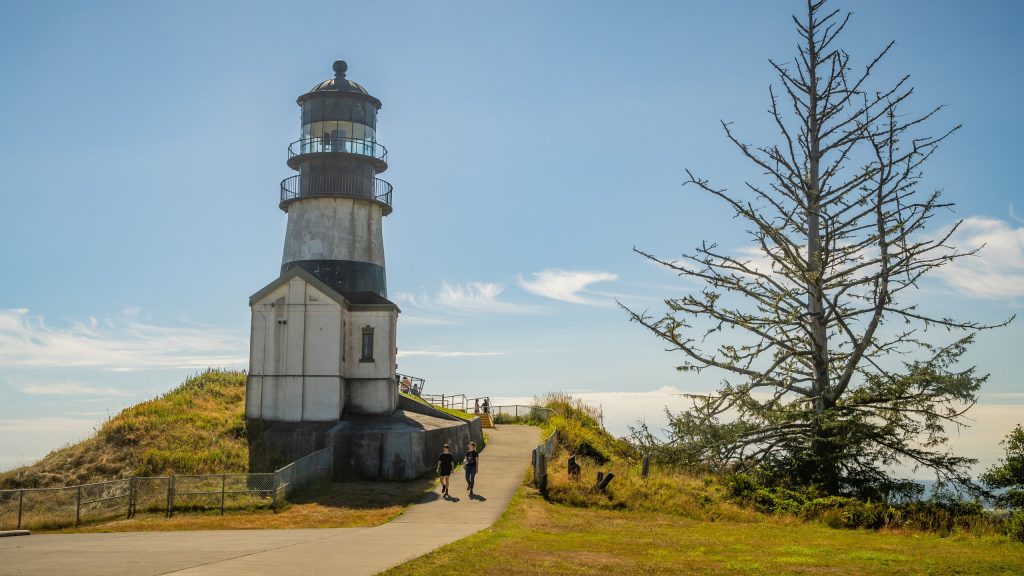
The name does a lot of the work, but the place backs it up. Cape Disappointment Lighthouse is the oldest operating lighthouse in the Pacific Northwest, marking the confluence of the Columbia River and the Pacific Ocean since 1856. You’ll need to hike 1.5 miles through coastal forest from the Lewis and Clark Interpretive Center trailhead, past a trail leading down into Deadman’s Cove, before the lighthouse finally appears on the bluff above you.
What you’re arriving at is the edge of what sailors called the Graveyard of the Pacific, an area where over 2,000 ships have run aground where the Columbia River meets the ocean, and on a rough day the force of that collision is visible from the trail. You’ll find the 53-foot masonry lighthouse in full use today. The trail is unpaved at the start and gets muddy, but manageable for most visitors. You’ll need a Discover Pass to park in Cape Disappointment State Park.
North Head Lighthouse
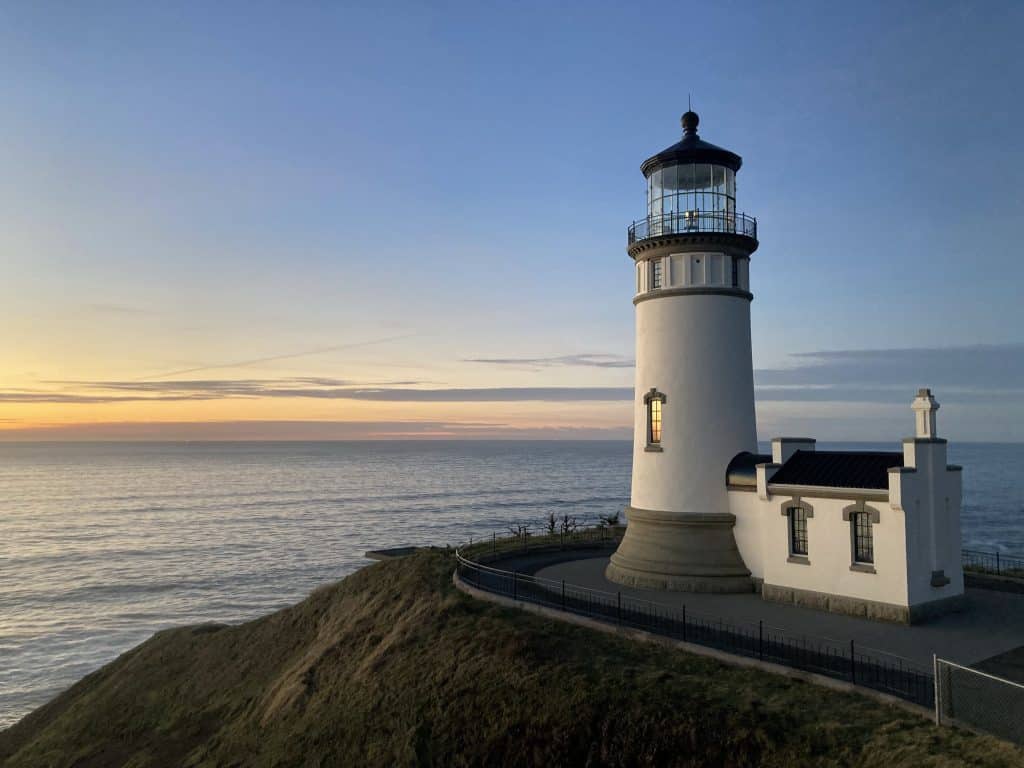
©"North Head Lighthouse at Cape Disappointment" by Mattsjc is licensed under BY-SA 4.0. – Original / License
Two miles north of Cape Disappointment lies one of the most exposed lighthouse settings in the state. North Head was built in 1898 for one reason only: ships approaching from the north didn’t have the opportunity to see the Cape Disappointment lighthouse until they were in danger. The wrecks kept adding up. Thus, the Lighthouse Board commissioned another lighthouse, located on a 130-foot cliff facing the open Pacific directly.
The 65-foot lighthouse itself, the keeper’s quarters, and the auxiliary buildings can be seen clearly nowadays. It’s also the site of one of the more unsettling true stories in Washington lighthouse history. Mary Pesonen, the wife of the first head keeper, served at this lighthouse for 25 years, but then the isolation and the everlasting winds became too much. In 1923, she died by suicide, jumping from the cliffs. Her husband retired and died one year later. People still report seeing a figure close to the keeper’s house. North Head was recently handed over to Washington State Parks and is now undergoing restoration. Tower climbs are available seasonally.
Cape Flattery Lighthouse, Tatoosh Island
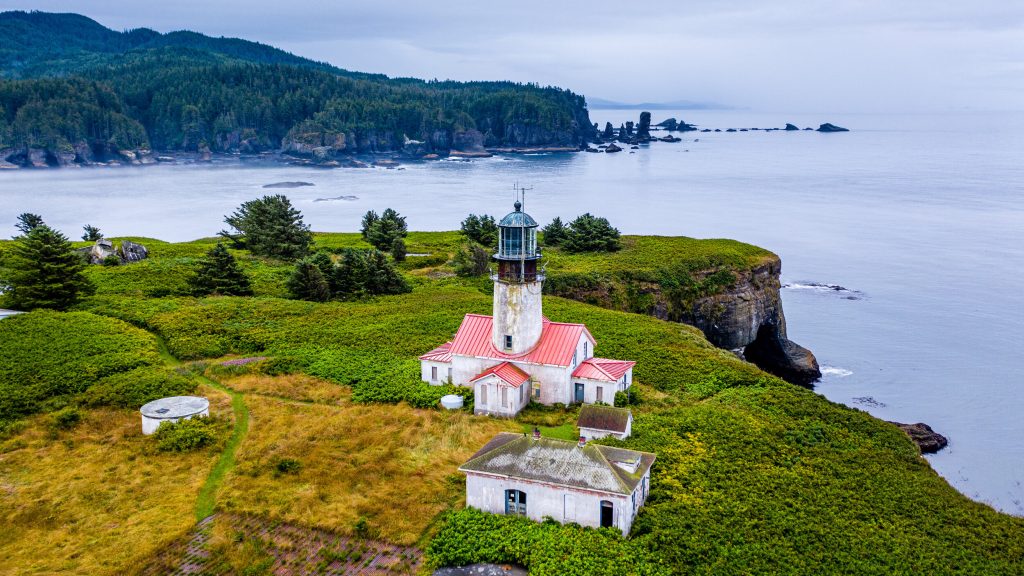
©National Park Service
This one you cannot visit, but it’s still worth knowing about.
The Cape Flattery Lighthouse is located on Tatoosh Island, which is right outside the northwesternmost point of the contiguous United States. The island was returned to the Makah Tribe in 2009 by the Coast Guard when the lighthouse was decommissioned in 2008, and it is no longer accessible to outside visitors. It can be viewed only from the mainland coast, roughly a quarter mile away.
You get to it via the 0.75-mile Cape Flattery Trail in Neah Bay, Olympic Peninsula. That route takes you through old-growth cedars to four observation platforms that overlook sea caves and sea stacks. On the last platform, you will be able to spot the lighthouse across the water. A white tower erected in 1857 on the dark island surrounded by waves, with Vancouver Island visible behind it on a clear day. A recreation permit issued by the Makah Nation is required to access Cape Flattery, and it can be obtained at the Makah Museum in Neah Bay.
Lime Kiln Lighthouse, San Juan Island
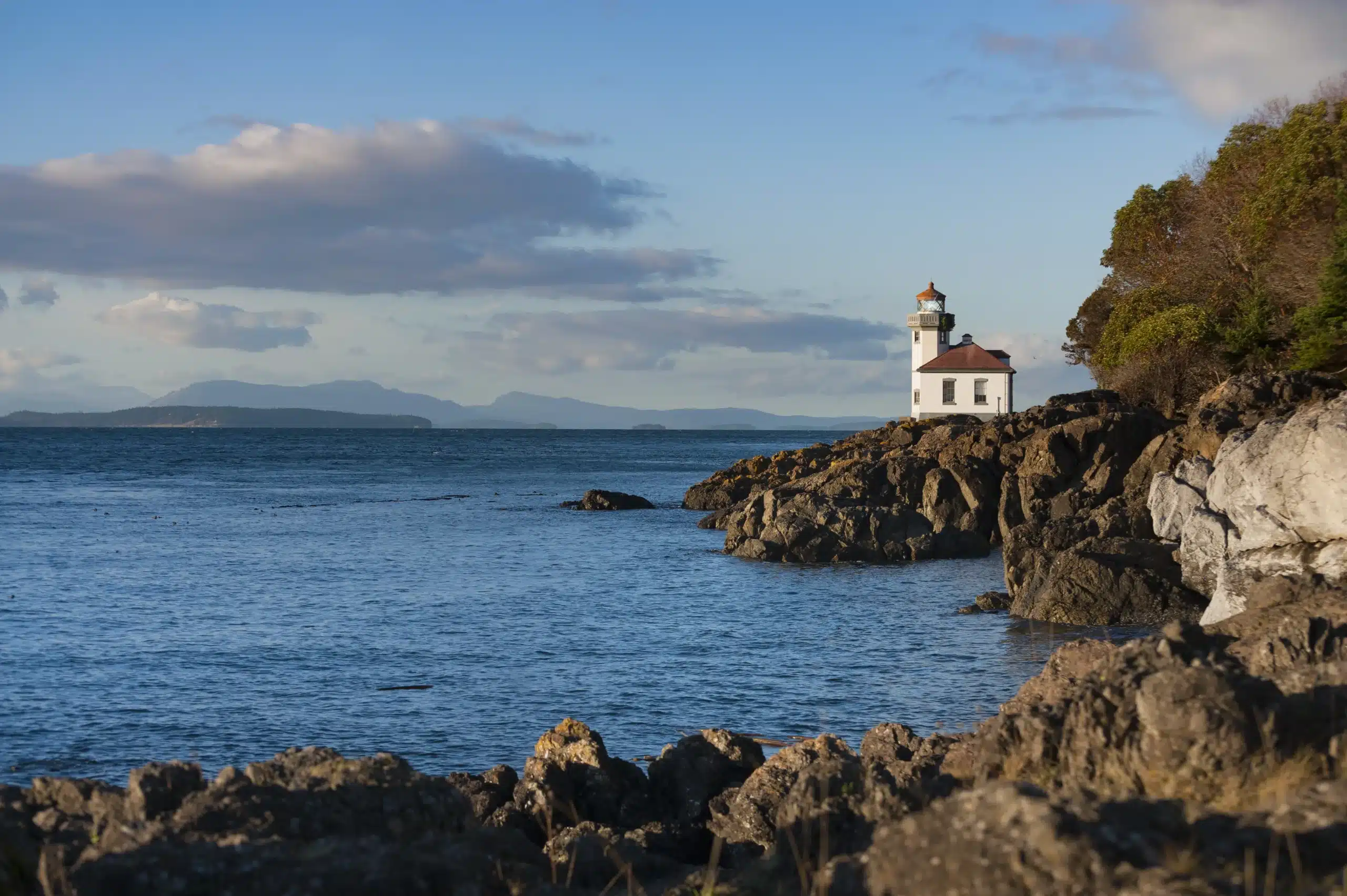
©Edmund Lowe Photography/Shutterstock.com
Lime Kiln is not a visually imposing lighthouse. It was built in 1919, and its white frame structure stands low on the rocky bluff on the west coast of San Juan Island. It’s so small and inconspicuous that you could easily miss it walking to the shoreline. Most people do. But Lime Kiln Lighthouse is important because of what swims past it.
Lime Kiln Point State Park is one of the top spots in the world for watching orcas from the land. Three pods of southern resident orcas frequent the Haro Strait between late spring and early fall, drawn by the salmon that the underwater cliff just offshore funnels close to the surface.
The lighthouse still houses hydrophone equipment, streaming live underwater sound around the clock as part of an ongoing research program. Being next to the hundred-year-old lighthouse while an orca surfaces thirty feet offshore is not an arranged experience. It just happens sometimes if you show up in the right season. Peak viewing runs May through September. A Discover Pass is needed for parking, and San Juan Island is accessible via Washington State Ferry from Anacortes.
Point Wilson Lighthouse, Port Townsend
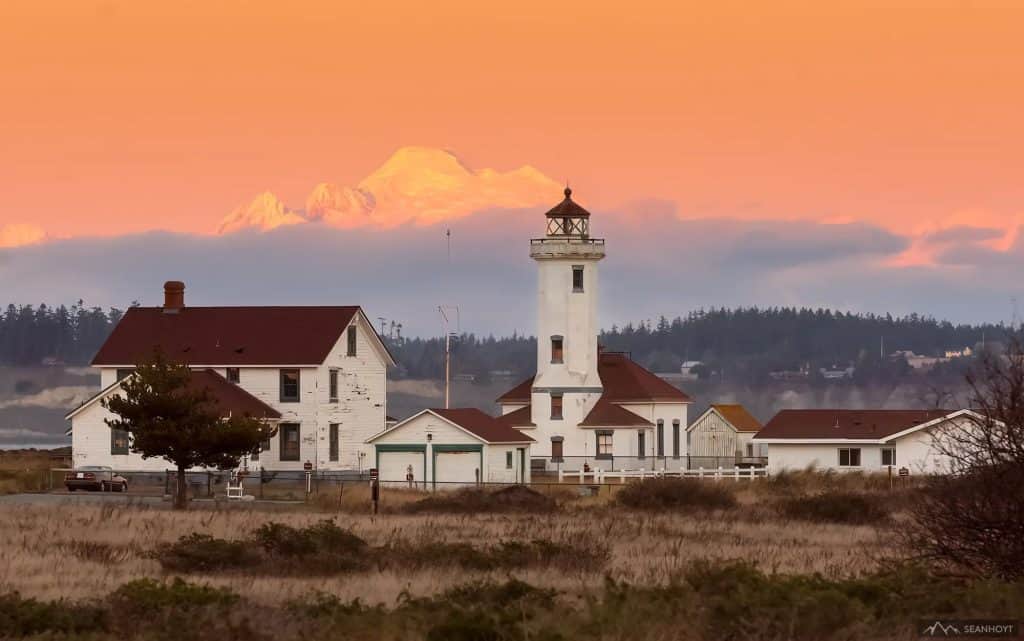
The beach training scenes in An Officer and a Gentleman were shot right here, with Point Wilson Lighthouse in the background and Richard Gere running drills in the sand. The lighthouse is located at the northeast tip of the Olympic Peninsula at Fort Worden State Park, where the Strait of Juan de Fuca meets Admiralty Inlet. On a clear day, you’ll be able to see Mount Baker to the northeast, Whidbey Island across the water, and ferries rounding the point below.
The current tower dates to 1914 and stands at 51 feet, the tallest on Puget Sound. It serves as an active Coast Guard navigation aid, so the compound is closed, but the beach approach gets you close and gives you a clean photography angle. Fort Worden itself is worth the time. Port Townsend is one of the better-preserved Victorian seaport towns on the West Coast, and Fort Worden offers rental housing, trails and a performance center if you’re planning to spend more than a day there. The lighthouse tours are held every Saturday afternoon from May through September when the volunteers are on-site.
Admiralty Head Lighthouse, Whidbey Island
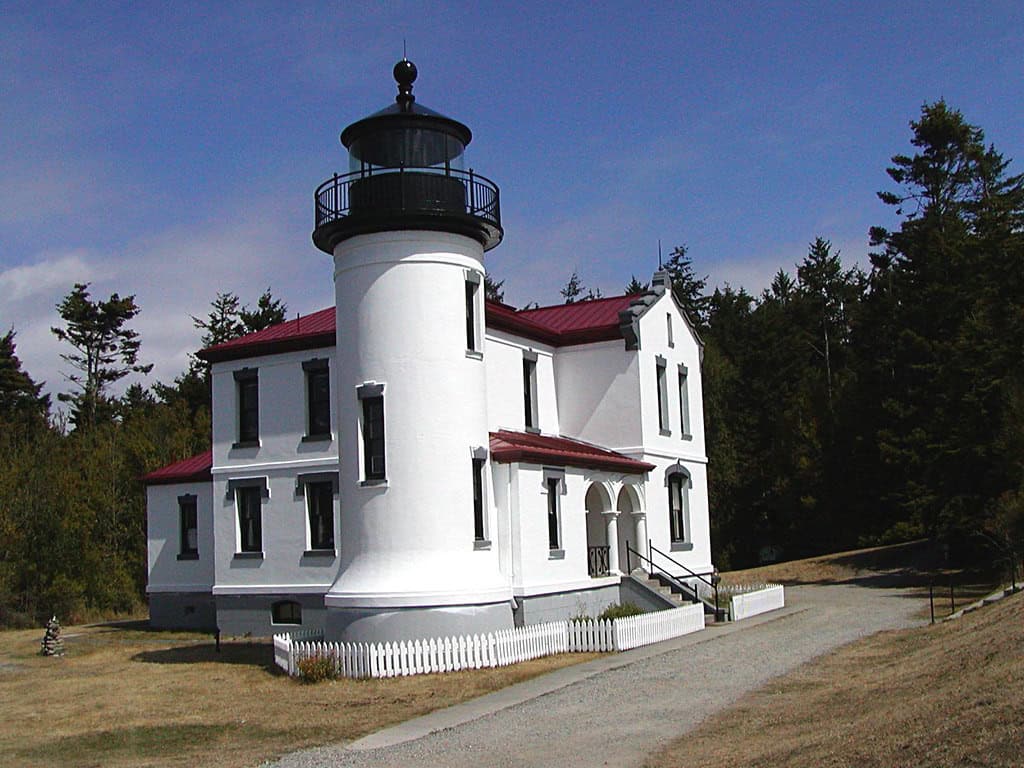
©"Admiralty Head Lighthouse" by Damian Gadal is licensed under BY 2.0. – Original / License
Admiralty Head surprises people who are expecting a regular lighthouse. It was built in 1903 in the Italianate Revival style, with arched windows and a stucco exterior that turns pink in late-afternoon light. It sits on an 80-foot bluff at Fort Casey Historical State Park on the western edge of Whidbey Island, overlooking Admiralty Inlet toward the Olympic Mountains, and it looks less like a navigation aid and more like something you’d find on the Amalfi Coast.
It has been deactivated since 1922, serving now as a museum and a gift shop. Visitors can climb the top of the tower for a view of the Port Townsend ferry crossing, marine traffic at Admiralty Inlet, and Mount Rainier to the south, depending on the weather. There are also Civil War-era military batteries scattered across the grounds of Fort Casey, and they’re strange and quiet in a way that the lighthouse alone isn’t. Whidbey Island can be reached via Washington State Ferry from Mukilteo or via Deception Pass to the north. A Discover Pass is required for parking.
New Dungeness Lighthouse
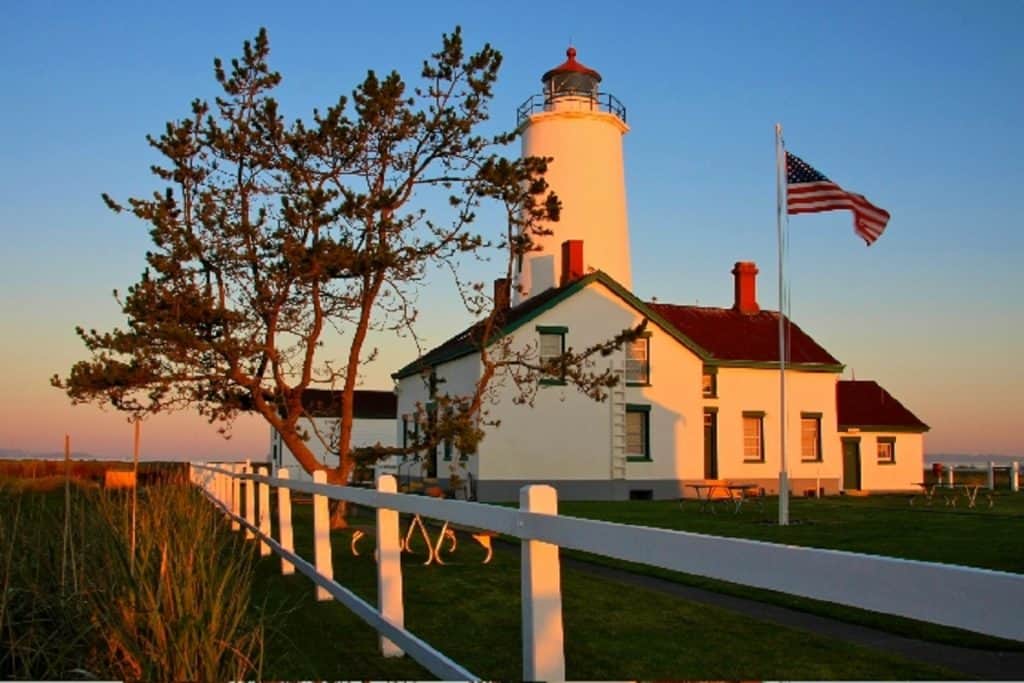
©New Dungeness Lighthouse, New Dungeness Light Station Association, Copyrighted, All Rights Reserved – Used by Permission, https://www.fws.gov/media/new-dungeness-lighthouse-0
Getting to the New Dungeness Lighthouse is not an easy task. You walk five miles from the parking area of the Dungeness National Wildlife Refuge to the lighthouse along the northern edge of Dungeness Spit. It’s a ten-mile round trip and takes about five hours. Low tide is key. You’ll need firm sand, because when the tide is high, the spit becomes flooded and you’ll be walking on driftwood. There’s no place to eat or take shelter along the way and no way back except on foot.
What you’ll find is a lighthouse that has been in operation since 1857, staffed by volunteer keepers who run free tours daily. The spit curves into the Strait of Juan de Fuca with the Olympic Mountains behind you and the Canadian shore ahead. Climb the 74 steps, and you can see both. The New Dungeness Lighthouse Association also has a keeper program where you can stay at the lighthouse for a week while maintaining the grounds and conducting tours. A $3 refuge permit is good for a group of four adults. Children under 16 are free.

