
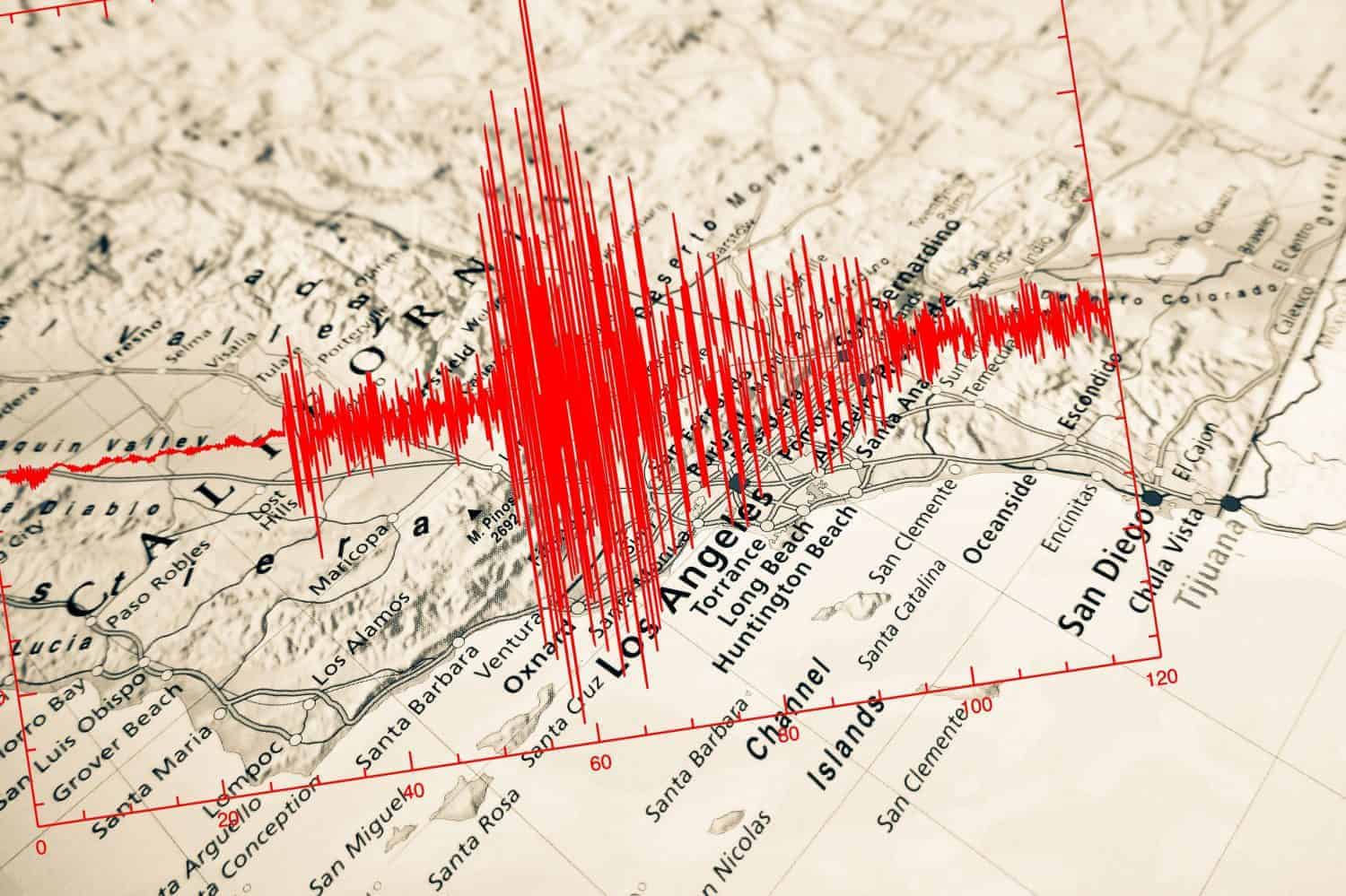
California is going to have another major earthquake someday. That part is not Hollywood fiction. The idea that the state will crack off and fall into the Pacific, however, is. California sits across the Pacific and North American tectonic plates, which are slowly sliding past each other rather than pulling the state toward some giant hole in the ocean. So what actually happens when the next truly big earthquake hits? We looked at the U.S. Geological Survey and other authoritative sources to separate the real earthquake risk from the disaster-movie version.
Geology 101

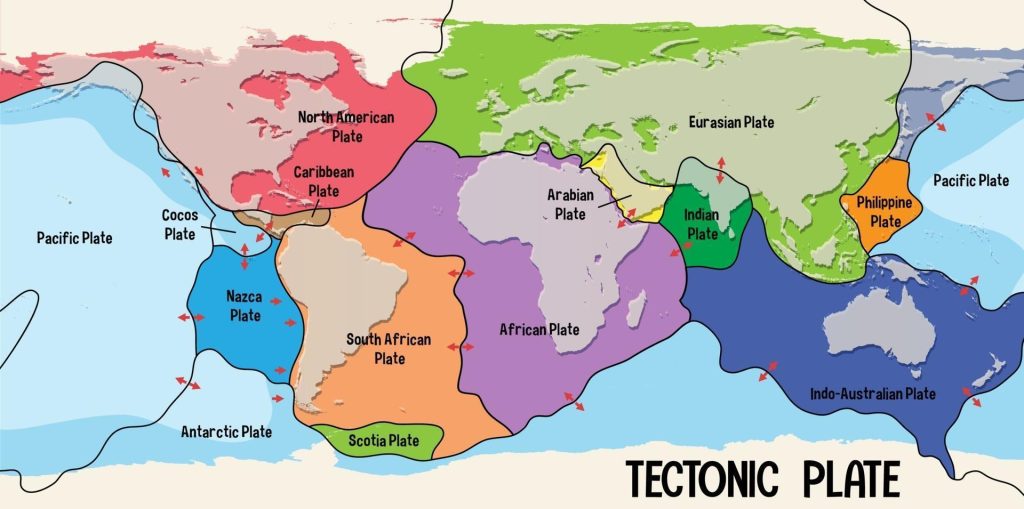
First, one common misconception needs clearing up. Earth’s tectonic plates are not floating on an ocean of molten magma. They rest on the asthenosphere, a hot layer of the upper mantle made mostly of solid rock. Over enormous spans of time, that rock can slowly deform and flow.
The San Andreas Fault system marks a major part of the boundary between the Pacific Plate and the North American Plate. Unlike a subduction zone where one plate dives beneath another, the plates here mostly slide horizontally past each other. Geologists call this a transform boundary.
How a Fault Produces an Earthquake
©Edu-Resources
The Pacific Plate is moving northwest relative to the North American Plate at roughly 46 to 50 millimeters per year, close to two inches. That motion is spread across the broader San Andreas Fault system rather than occurring entirely on one crack in the ground.
Parts of a fault can remain locked by friction even while the surrounding crust continues moving. Stress gradually builds until the fault slips suddenly, releasing energy as an earthquake. Other sections creep more steadily and release some of that strain without producing a major quake.
California Has a Lot More Than One Fault
The San Andreas gets nearly all the attention, but California has hundreds of known active faults. The California Geological Survey considers about 200 potentially hazardous based on evidence of movement in relatively recent geologic time. More than 70% of the state’s population lives within 30 miles of a fault capable of producing strong ground shaking.
Southern California alone records roughly 10,000 earthquakes in a typical year, although most are far too small to feel. Across California, two or three earthquakes of magnitude 5.5 or greater generally occur each year, large enough to potentially cause moderate structural damage.
California Has Been Through the Big One Before
Two of California’s most famous earthquakes ruptured the San Andreas Fault during the 19th and early 20th centuries. On January 9, 1857, the magnitude 7.9 Fort Tejon earthquake ruptured roughly 225 miles of the fault. In places on the Carrizo Plain, the ground shifted horizontally by as much as about 30 feet.
Then, at about 5:12 a.m. on April 18, 1906, a roughly magnitude 7.8 to 7.9 earthquake struck Northern California. Severe shaking swept through the San Francisco Bay Area for roughly a minute, and the earthquake and subsequent fires killed an estimated 3,000 people. Shaking was felt from southern Oregon to Southern California and as far inland as central Nevada.
Modern Earthquakes Have Kept the Threat Fresh
©Everett Collection/Shutterstock.com
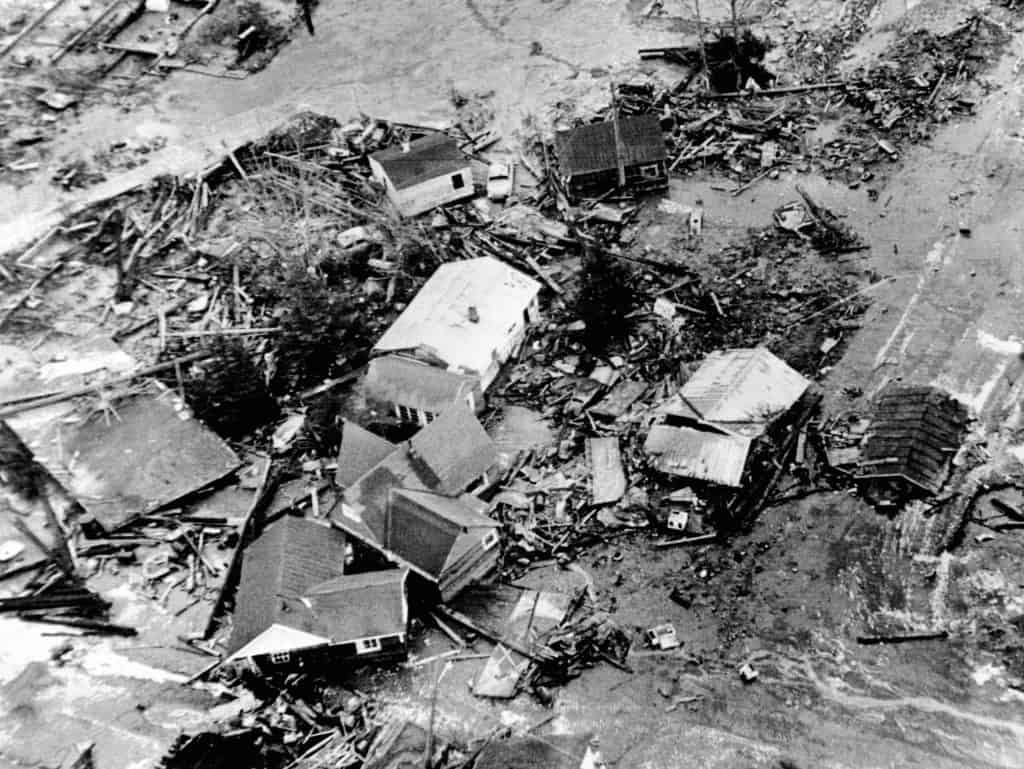
California’s earthquake history did not end in 1906. The magnitude 6.9 Loma Prieta earthquake struck the San Francisco Bay region in 1989. Five years later, the magnitude 6.7 Northridge earthquake hit the Los Angeles area, damaging buildings and freeways and demonstrating that a destructive California earthquake does not have to occur directly on the San Andreas.
Another reminder came in July 2019, when a magnitude 6.4 earthquake near Ridgecrest was followed the next day by a magnitude 7.1 event. Millions of people across Southern California and beyond felt the larger quake.
What’s Shaking at the San Andreas Fault?
©"California Aqueduct Crossing the San Andreas Fault" by Michael R Perry is licensed under BY 2.0. - Original / License
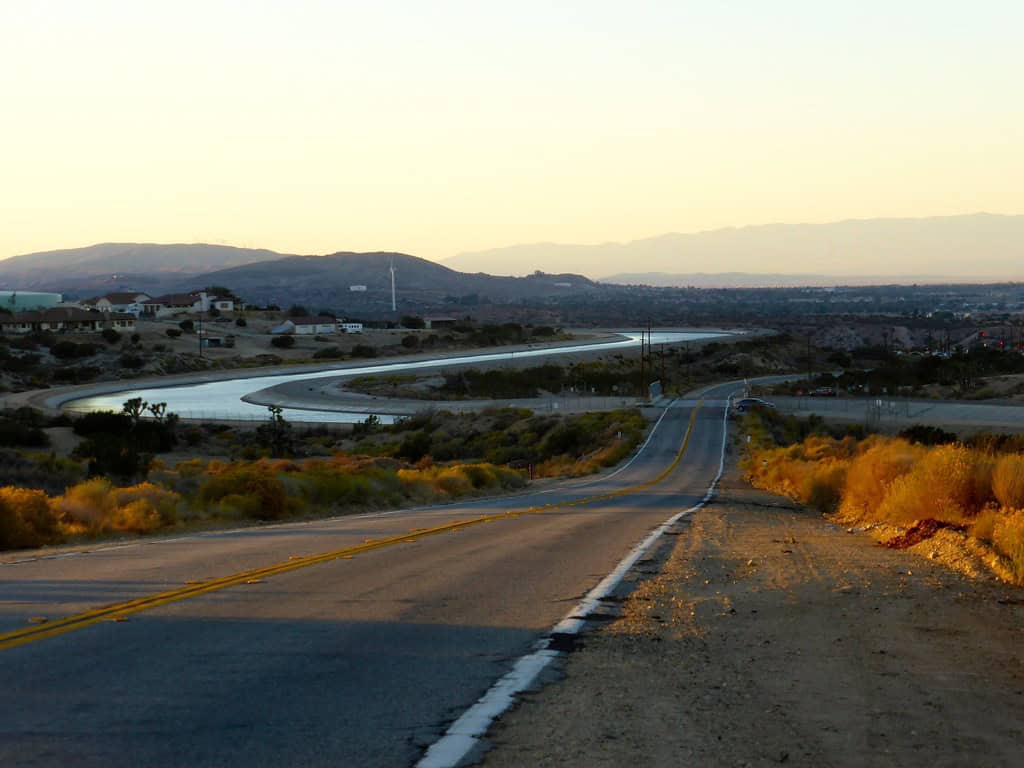
The San Andreas Fault system stretches roughly 800 miles from the Salton Sea area in Southern California to Cape Mendocino in the north. From ground level, the fault is not always an obvious giant crack. Geologists instead look for features including offset streams, linear valleys, displaced rock formations, and other signs that blocks of crust have moved past each other.
From the air, some sections are much easier to recognize. The Carrizo Plain is one of the best examples, where movement along the fault has left a remarkably clear line across the landscape.
How Big Could a San Andreas Earthquake Get?
A magnitude 9 or 10 earthquake ripping California apart makes for a good disaster movie, but the San Andreas Fault is not large enough to produce something on that scale. According to the USGS, computer models indicate the fault could potentially generate an earthquake up to about magnitude 8.3.
That is still an enormous earthquake. For comparison, the great California earthquakes of 1857 and 1906 were both around magnitude 7.9. The difference between earthquake magnitudes is also much larger than the numbers make it look because the magnitude scale is logarithmic.
Can Scientists Predict the Big One?
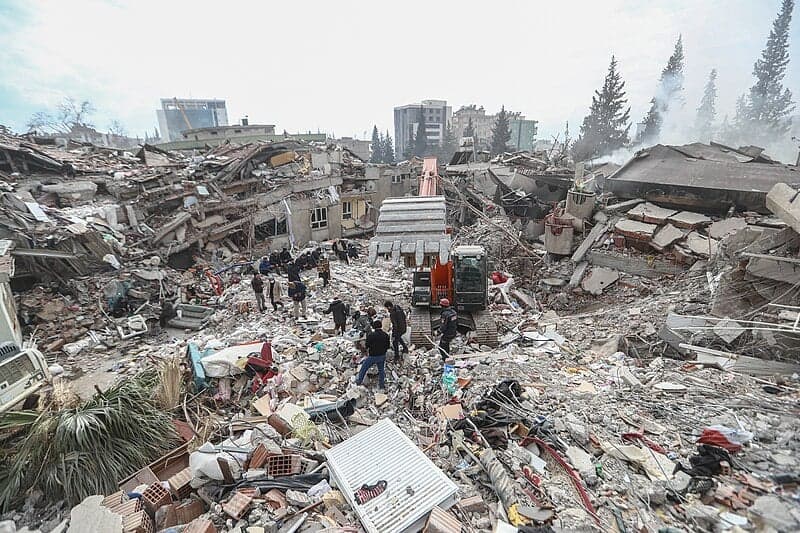
©Public Domain / Wikimedia Commons
No one knows the date when California’s next major earthquake will arrive. The USGS says neither it nor any other scientists can currently predict a major earthquake by giving its exact time, location, and magnitude.
What scientists can do is estimate long-term probabilities. They study how faults have behaved in the past, measure present-day movement with instruments such as GPS, examine prehistoric earthquake deposits, and use that information to estimate how likely different earthquake scenarios are over a period of years or decades.
What Are the Odds?

©"Los Angeles, California Skyline as seen from Dodger Stadium" by Ken Lund is licensed under BY-SA 2.0. - Original / License
The third Uniform California Earthquake Rupture Forecast, or UCERF3, estimated a 60% probability of at least one magnitude 6.7 earthquake in the Los Angeles region during its 30-year forecast period. The estimate was 46% for magnitude 7.0 and 31% for magnitude 7.5.
The corresponding estimates for the San Francisco Bay region were even higher at magnitude 6.7 and 7.0: 72% for at least a magnitude 6.7 earthquake, 51% for magnitude 7.0, and 20% for magnitude 7.5. Those figures are probabilities from a long-term scientific forecast, not predictions that an earthquake will strike on a particular day or year.
The Southern San Andreas Has Been Quiet for Centuries
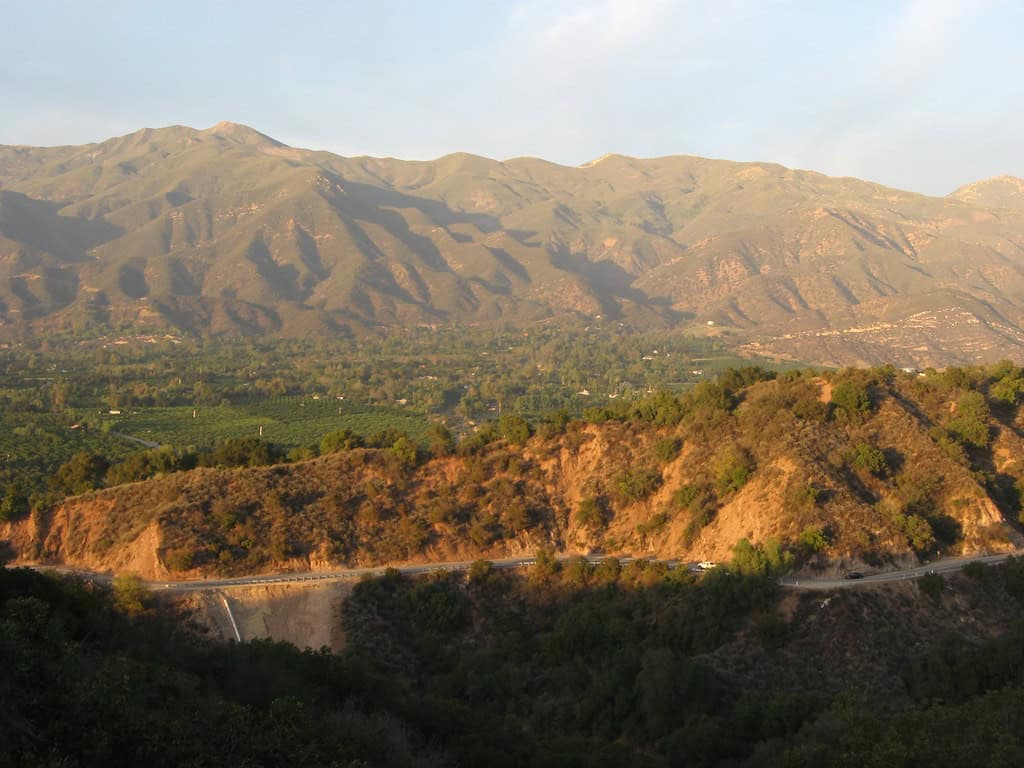
©"Ojai, California (26)" by Ken Lund is licensed under BY-SA 2.0. - Original / License
One of the most closely watched sections lies near the Coachella Valley at the southern end of the San Andreas. A USGS-supported paleoseismic study found evidence of at least five and possibly seven major earthquakes there during roughly the previous 1,100 years. The study’s best estimate put the average interval between major events at about 180 years.
The most recent major rupture identified in that study occurred around 1690, leaving more than three centuries without another comparable event on that stretch. That does not mean the fault is operating on a countdown clock, but it does mean substantial tectonic strain has had a long time to accumulate.
What Could the Big One Actually Do?
In 2008, scientists developed the ShakeOut Scenario to explore what a plausible magnitude 7.8 earthquake on the southern San Andreas Fault could do. The modeled rupture extended for roughly 186 miles and produced damaging shaking across a large part of Southern California.
The scenario estimated about 1,800 deaths, tens of thousands of injuries, and roughly $213 billion in economic losses. Those are not predictions of what the next earthquake will cause. They are estimates from one carefully modeled scenario designed to show where the region is vulnerable and how preparation and retrofitting could reduce the damage.
The Danger Goes Beyond the Shaking
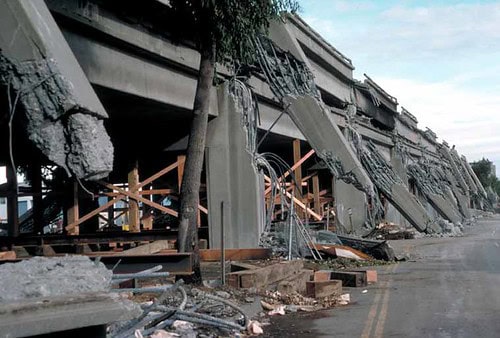
©"Loma Prieta earthquake damage in Oakland, 1989" by CIRonline is licensed under BY 2.0. - Original / License
Earthquakes can trigger problems well beyond buildings shaking. Landslides can block roads, saturated soil can lose strength through liquefaction, utility lines can break, fires can start, and damaged transportation and water systems can complicate emergency response long after the ground stops moving.
A major San Andreas earthquake is not expected to generate the kind of enormous tsunami associated with subduction-zone earthquakes in places such as Japan or Alaska because San Andreas movement is primarily horizontal. California can still experience tsunamis, however. Offshore faults, underwater landslides, and distant earthquakes elsewhere around the Pacific can all send tsunami waves toward the coast.
So, Will California Fall Into the Ocean?

©iStock.com/Christine944
No. California is firmly attached to Earth’s crust, and there is no giant void for it to fall into. The Pacific Plate and North American Plate are sliding horizontally past each other, so southwestern California is gradually moving northwest rather than sinking into the Pacific.
If that plate motion continues, the geography will look very different on a timescale no human needs to put on the calendar. The USGS estimates that Los Angeles and San Francisco could eventually become neighbors in roughly 15 million years. So California is definitely moving. It just is not going anywhere Hollywood promised it would.

