

The Pacific Northwest has a way of making even people who swear they are “not outdoorsy” reconsider their position. Snowcapped mountains rise behind small towns, enormous rivers cut through deep green gorges, and beaches are framed by sea stacks, forests, and cliffs that look almost unfairly photogenic.
If landscapes and natural beauty are part of the reason you travel, there are places here you owe it to yourself to see at least once. Some put you on the edge of the wilderness. Others give you mountains, rivers, coastline, or trails within minutes of downtown. These eight Pacific Northwest towns are different from one another, but they all have one thing in common: the scenery alone is enough to justify the trip.
Stehekin, Washington
©iStock.com/jmacarthur
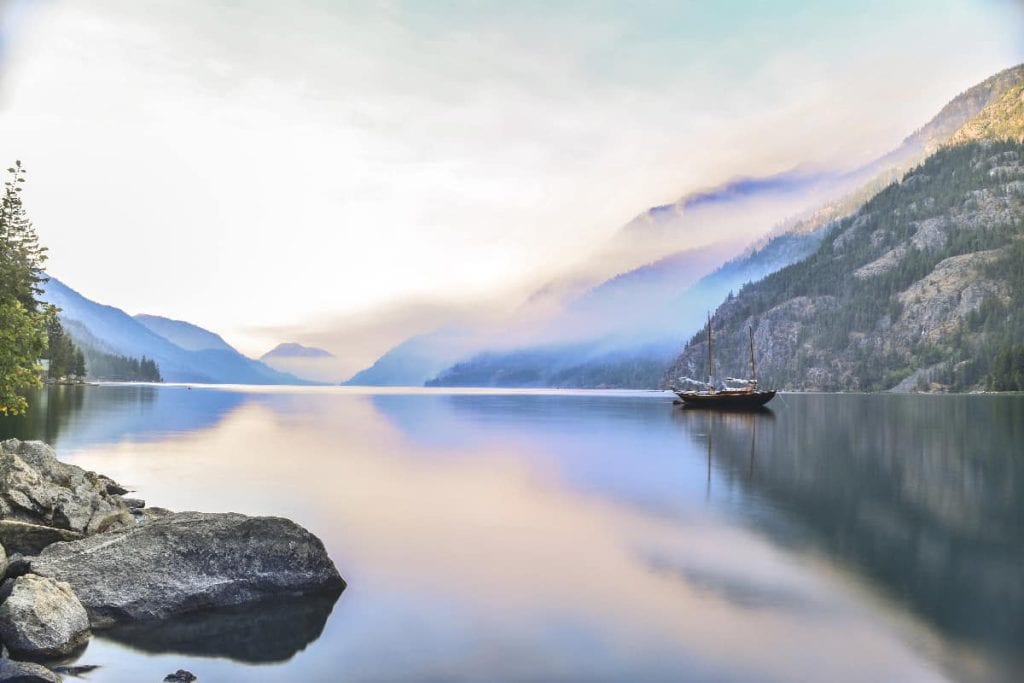
There are no roads leading to Stehekin. You arrive across Lake Chelan by boat, fly in, or hike your way there, which immediately tells you what kind of place this is. The tiny community sits at the head of Lake Chelan, surrounded by the enormous peaks and forests of the North Cascades.
Stehekin has only a small year-round population, limited connectivity, and very little of the noise that follows you almost everywhere else. That isolation is not an inconvenience here. It is most of the appeal.
Trails disappear into the surrounding wilderness, Rainbow Falls drops through the forest nearby, and Lake Chelan is right outside your door for kayaking and boating. Few towns in the Northwest make civilization feel so far away while still giving visitors a comfortable base to explore from. If your ideal view includes mountains, water, and almost nothing man-made in between, Stehekin is hard to beat.
Port Townsend, Washington
©Dene' Miles/Shutterstock.com
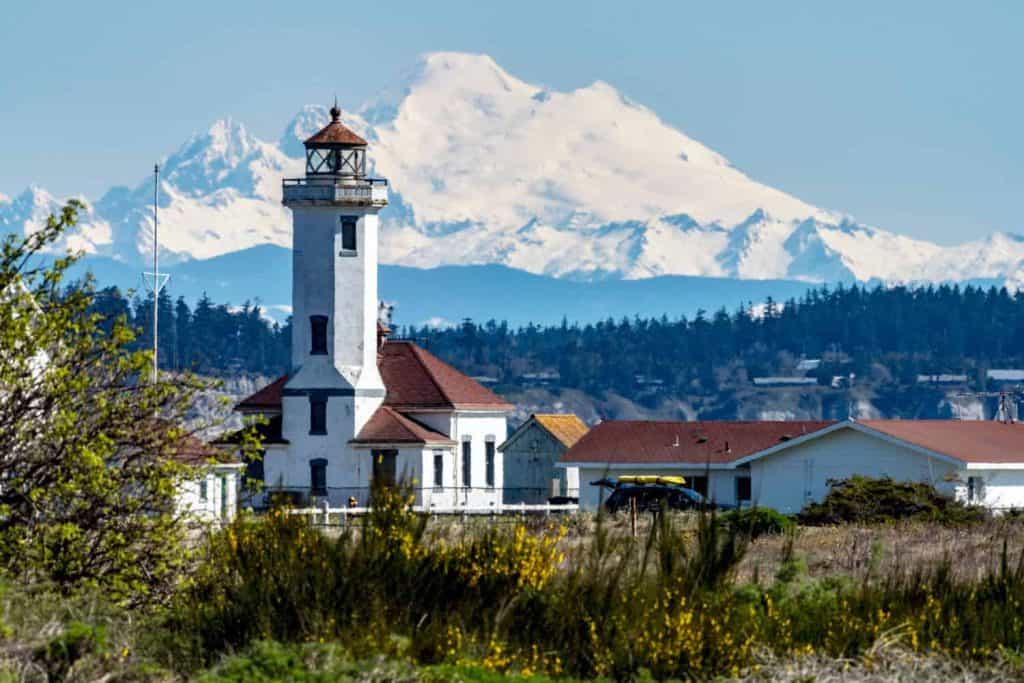
Port Townsend gets plenty of attention for its Victorian architecture, but the setting deserves just as much credit. The town sits where Puget Sound meets the Strait of Juan de Fuca, with water on multiple sides and mountain views that can stretch all the way to Mount Baker and the Olympic Mountains on a clear day.
Fort Worden State Park begins right on the edge of town, combining beaches, forests, bluffs, old military batteries, and wide-open views across the water. You can spend the morning walking through historic downtown and be standing on a windswept beach a few minutes later. Add the boats moving through the strait and the mountains stacked along the horizon, and Port Townsend manages to deliver history and scenery without making you choose between the two.
Roslyn, Washington
©"2009-05-23, Roslyn, Washington, 114304 - Canon PowerShot S3 IS" by Steven Pavlov is licensed under BY-SA 4.0. - Original / License
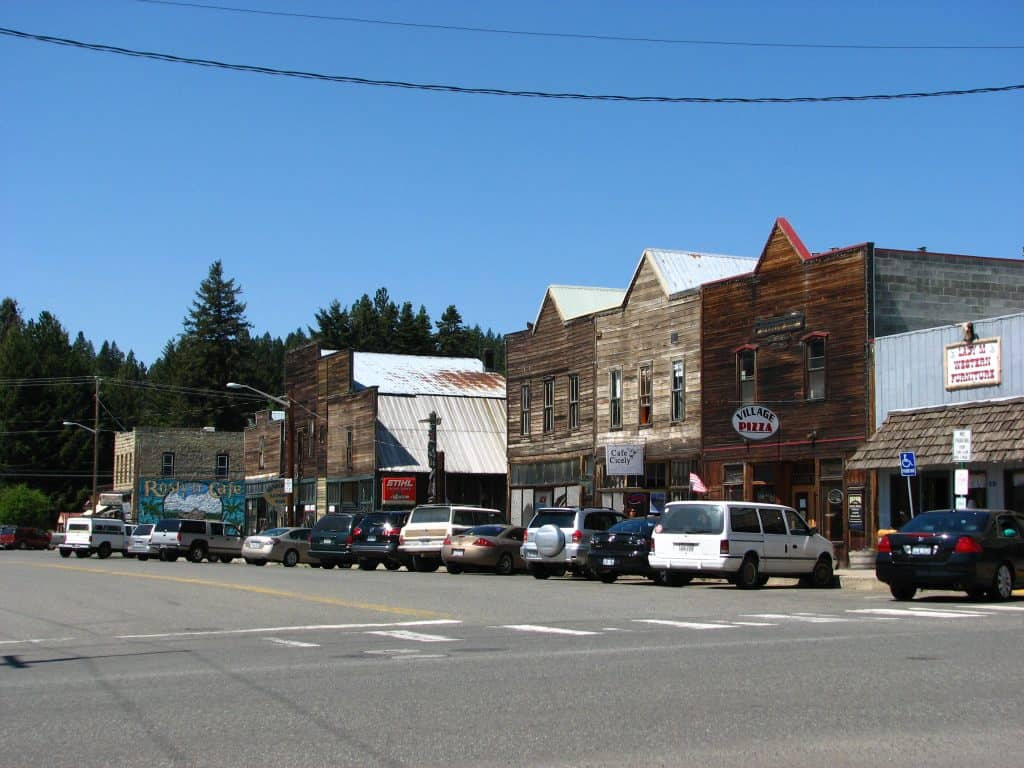
Roslyn may be familiar to fans of Northern Exposure, but the real reason to linger is everything surrounding it. This former coal-mining town sits on the eastern side of the Cascades, where thick forests, mountain valleys, rivers, and lakes begin almost as soon as the streets end.
Cle Elum Lake is nearby, while the Teanaway River Valley opens into some of Central Washington’s most impressive mountain country. Depending on how ambitious you are feeling, you can take an easy walk beside the water or head deeper into trails with dramatic Cascade views. Roslyn itself is small enough that the mountains never feel like background scenery. They feel like part of the town.
Astoria, Oregon
©"Astoria, Oregon" by TomCollins is licensed under BY-ND 2.0. - Original / License
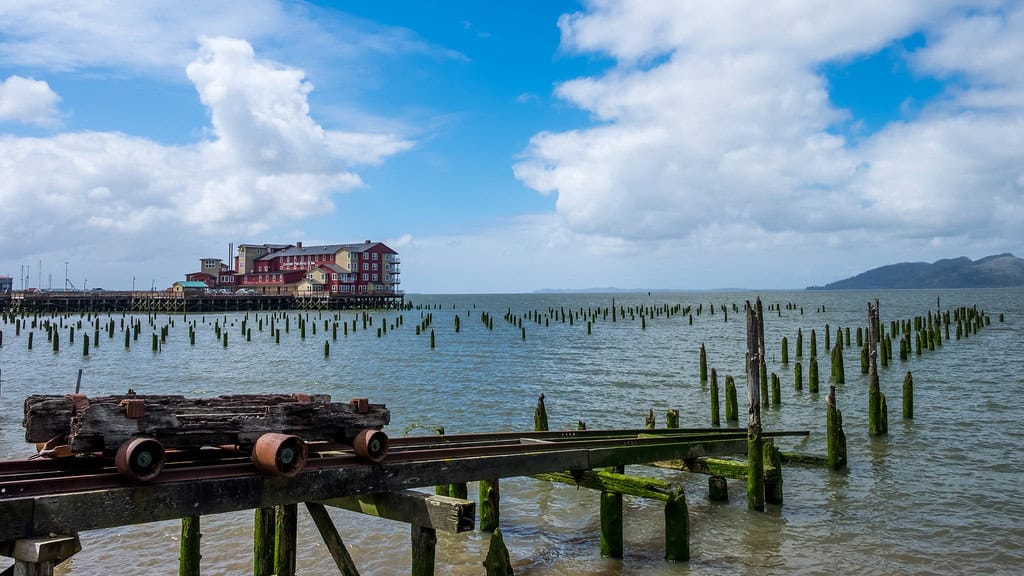
Astoria occupies one of the most dramatic locations in the Northwest, where the enormous Columbia River finally reaches the Pacific. Water seems to dominate the view in nearly every direction, while steep hills rise behind the waterfront and forested headlands frame the river’s entrance to the ocean.
The Astoria Column sits high above town on Coxcomb Hill and gives visitors a panoramic look across the river, coastline, and distant mountains. The four-mile Astoria-Megler Bridge stretches toward Washington like part of the scenery itself. Just southwest of town, Fort Clatsop adds forests and walking trails to the mix. Astoria has plenty of history, restaurants, and museums, but you could ignore all of that and still come away impressed by where the town happens to sit.
Cannon Beach, Oregon
©Marisa Estivill/Shutterstock.com
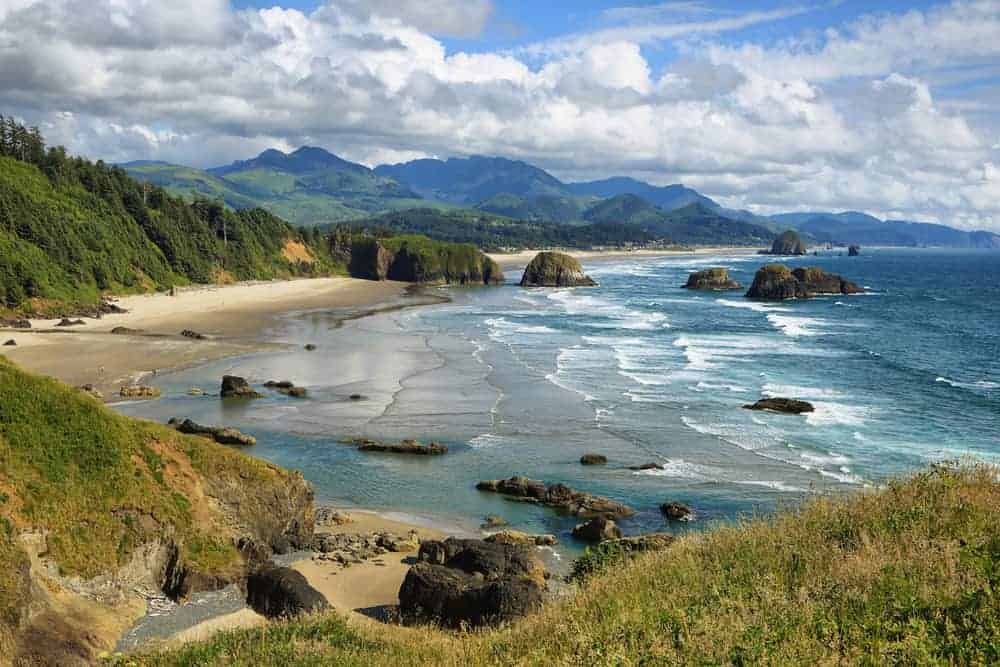
Cannon Beach is hardly an undiscovered corner of Oregon, but some places are popular because they really are that beautiful. Haystack Rock rises 235 feet from the shoreline, surrounded by a broad sandy beach, smaller sea stacks, forested headlands, and the constantly changing Pacific Ocean.
The scale is difficult to appreciate until you are standing beneath it. At low tide, tide pools around Haystack Rock can reveal sea stars, anemones, crabs, and other marine life, while the beach itself seems to stretch forever in either direction. Nearby Ecola State Park adds coastal forest and elevated views of the shoreline. If you want one destination that captures the rugged beauty people picture when they think of the Oregon Coast, Cannon Beach makes a very convincing argument.
Ashland, Oregon
©Jesse Stephens/ via Getty Images
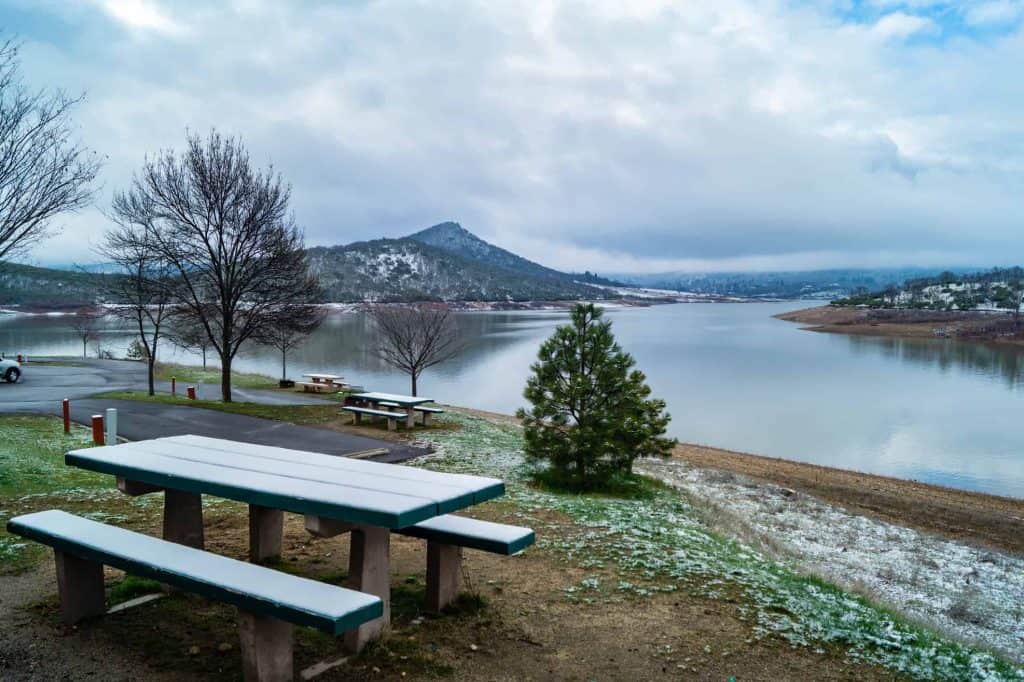
Ashland is best known nationally for the Oregon Shakespeare Festival, but its location in southern Oregon deserves equal billing. Hills rise almost immediately behind downtown, Ashland Creek runs straight through Lithia Park, and the surrounding Rogue Valley opens into mountains, lakes, vineyards, and forests.
Lithia Park alone gives visitors more than 90 acres of green space stretching from the center of town into the foothills, with trails following the creek beneath tall trees. Farther out, Emigrant Lake and the Rogue River add even more reasons to get outside, while the surrounding valleys offer a completely different landscape of farms and vineyards. Ashland works especially well for travelers who want serious scenery without giving up good food, culture, and a walkable downtown at the end of the day.
Stevenson, Washington
©"Lost Lake, Hood River County, Oregon" by Bonnie Moreland (free images) is licensed under PDM 1.0. - Original / License
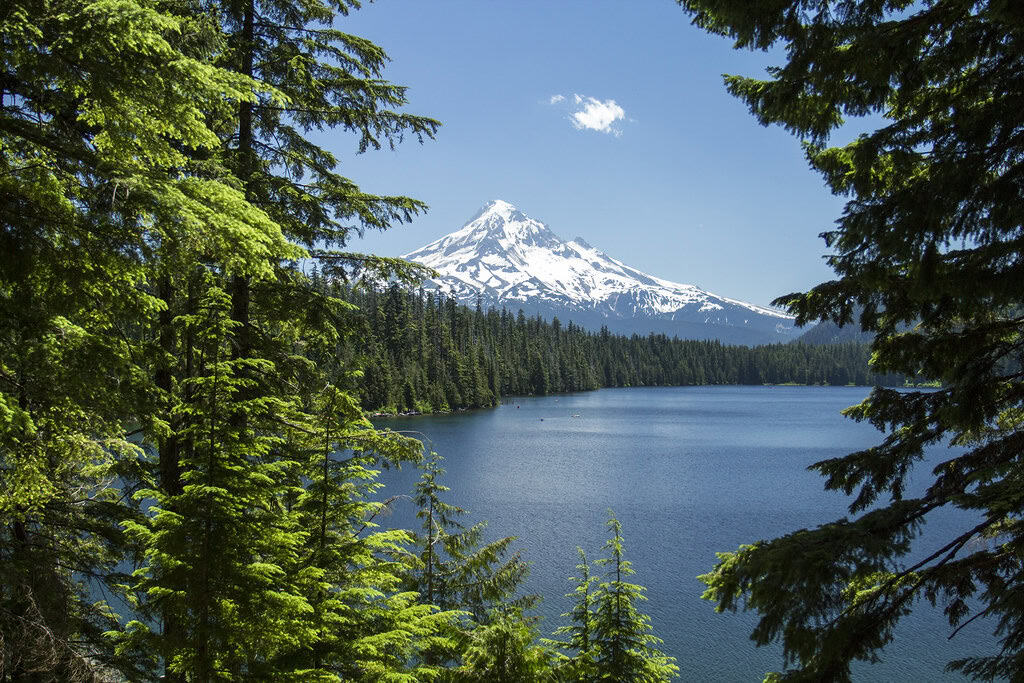
Stevenson sits inside the Columbia River Gorge, which gives it something most towns would happily build their entire tourism industry around: an enormous river cutting between steep, forested mountains. The landscape is the attraction before you even decide what to do with your day.
Beacon Rock rises 848 feet above the surrounding landscape, while Wind Mountain offers another elevated look across the Columbia and the Gorge. Riverfront parks keep the water within easy reach, and waterfalls, forests, and trails continue in nearly every direction. Hood River across the Columbia gets more attention, but Stevenson is a quieter base for exploring one of the Northwest’s defining landscapes. Fair warning: ordinary river valleys look a little underwhelming afterward.
Bend, Oregon
©halbergman / E+ via Getty Images
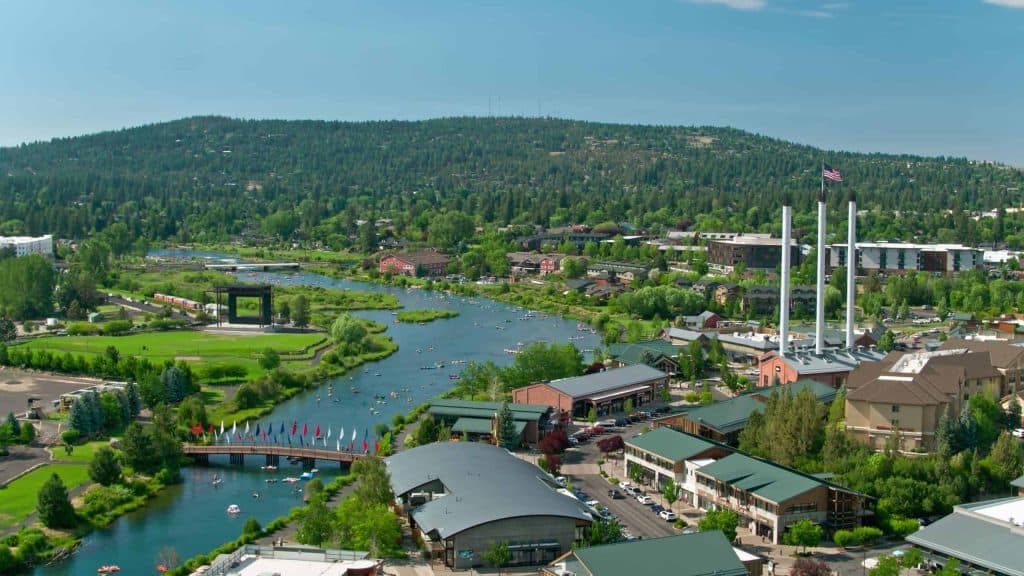
Bend is no secret, but there is a reason people keep moving there, vacationing there, and talking about moving there after vacationing there. The Deschutes River runs directly through town, while the Cascade Mountains rise to the west and the high desert stretches east. You can change landscapes almost completely without driving very far.
Smith Rock State Park is about 25 miles northeast of Bend and is famous for rock climbing, but you do not need a harness to appreciate the towering cliffs and deep Crooked River canyon. In the other direction, the Cascade Lakes, Mt. Bachelor, and miles of forest trails put alpine scenery within easy reach. Then you can come back into town, sit beside the Deschutes, and wonder why your neighborhood at home does not have a snowcapped volcano behind it.

