
Seattle is one of the most geographically gifted cities in America. Drive two hours out, and you can be standing on a bluff overlooking tidal waters churning through Deception Pass or driving across a mountain pass through a forest so thick the sky is blocked out. If you know where to look, you can also find yourself descending from a mountaintop into a quaint Bavarian-style town.
These are nine drives worth making, each offering its own reward that makes the fuel and time feel well spent. Some may take you a few hours, while others require taking the day off and packing a meal. The trips that get you there are, in many ways, the whole point.
Chuckanut Drive
©"Samuel H. Boardman State Scenic Corridor, Near Pistol River, Oregon" by Ken Lund is licensed under BY-SA 2.0. - Original / License
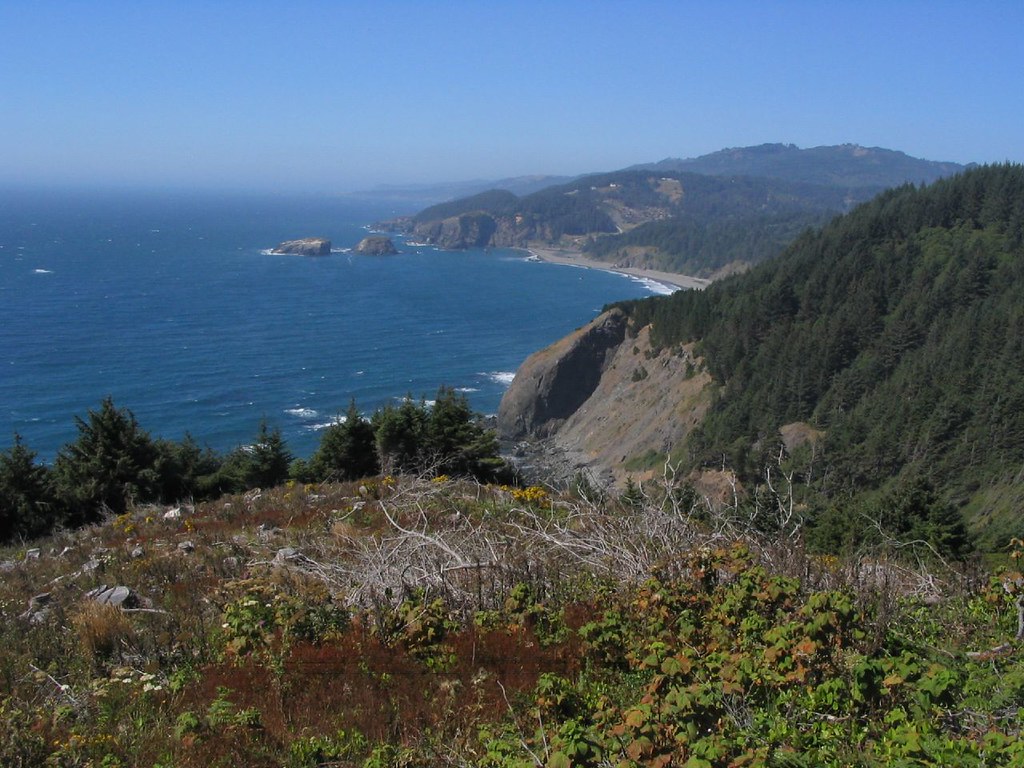
Chuckanut Drive is a serpentine 21-mile route along the shores of Puget Sound, cutting through wooded cliffs and opening into views of the San Juan Islands. While driving along the narrow road, you’ll be met with a dense forest that still lets in glimpses of the water along the coast. Chuckanut connects Burlington to Bellingham, but people drive it to take in the view, not to save time.
Be sure to stop at Larrabee State Park for a stroll along the trails and to grab some shellfish from the nearby Taylor Shellfish Farms. If you’re starting from the Burlington end, the town of La Conner is just a short detour and worth the stop. While the best time to visit is late spring through early summer, the trip can be done all year round.
Stevens Pass to Leavenworth
©"Fall colors on US Highway 2 near Stevens Pass, WA - 03" by SounderBruce is licensed under BY-SA 4.0. - Original / License
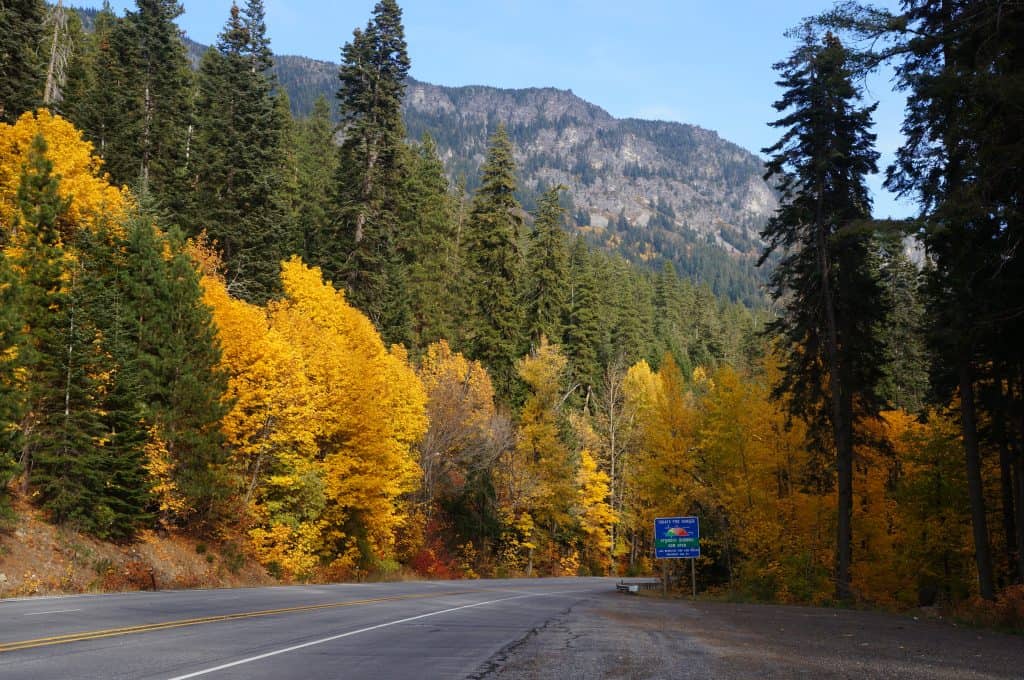
This National Forest Scenic Byway traverses 70 miles between Gold Bar and Leavenworth, crossing Stevens Pass at roughly 4,000 feet through the Snoqualmie and Wenatchee National Forests. Heading east through the Skykomish River canyon, you’ll come across waterfalls that can be seen from the road and small towns that look like they haven’t changed much since the logging days.
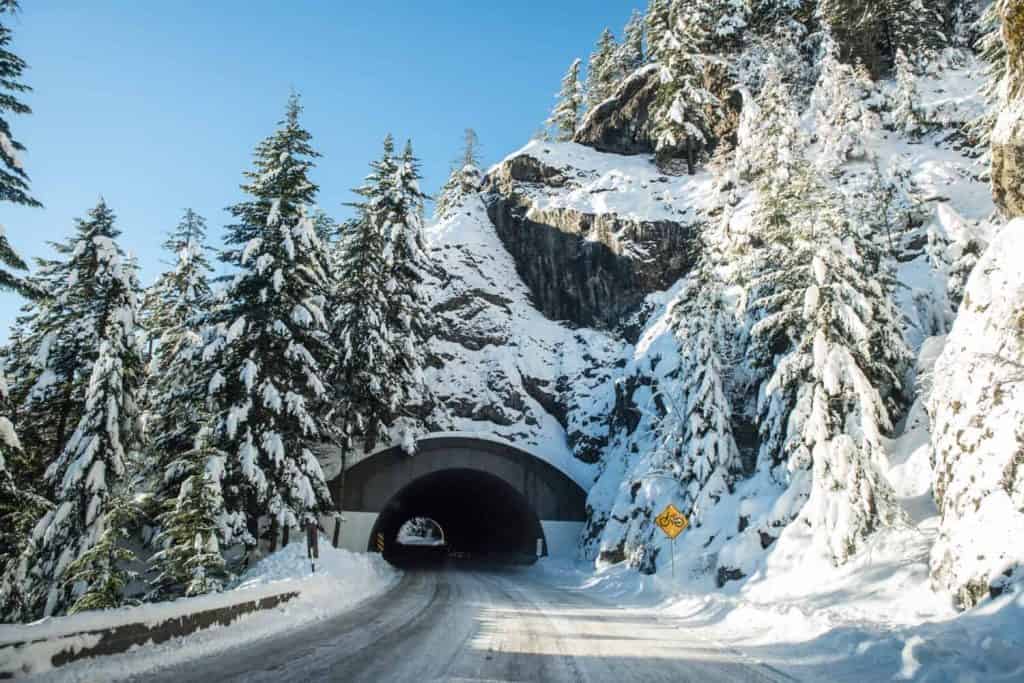
After Skykomish, the highway climbs to the pass, where snowfall is substantial from fall through spring, then drops into open forest and a noticeably drier climate. At the eastern terminus is the town of Leavenworth, built around a Bavarian theme that is either charming or exhausting, depending on your tolerance for lederhosen and Christmas ornaments sold in July.
Either way, the journey is made worthwhile by Tumwater Canyon just before town, with its steep walls, the Wenatchee River below, and a twisting road that cuts right through the canyon. Check road conditions before heading out in winter. The pass closes during storms.
Mountain Loop Highway
©Dene' Miles/Shutterstock.com
The Mountain Loop Highway was originally built by miners in 1891 and later developed by loggers and federal workers. The road runs between the cities of Granite Falls and Darrington in the western Cascade Range. While there is a “loop” in the name, it is actually a U-shaped road that passes around some of the largest Cascade peaks like Mount Dickerman, Mount Forgotten, Three Fingers, and Whitehorse Mountain.
The route is paved from Granite Falls up to Barlow Pass, then unpaved for another 13 miles before becoming paved again for the final 9 miles to Darrington. It’s worth slowing down on the gravel, especially after a wet winter. There is a road that used to lead to the town of Monte Cristo, a former silver mining town near Barlow Pass. You can only reach it by foot, but it’s worth the walk.
Whidbey Island and Deception Pass
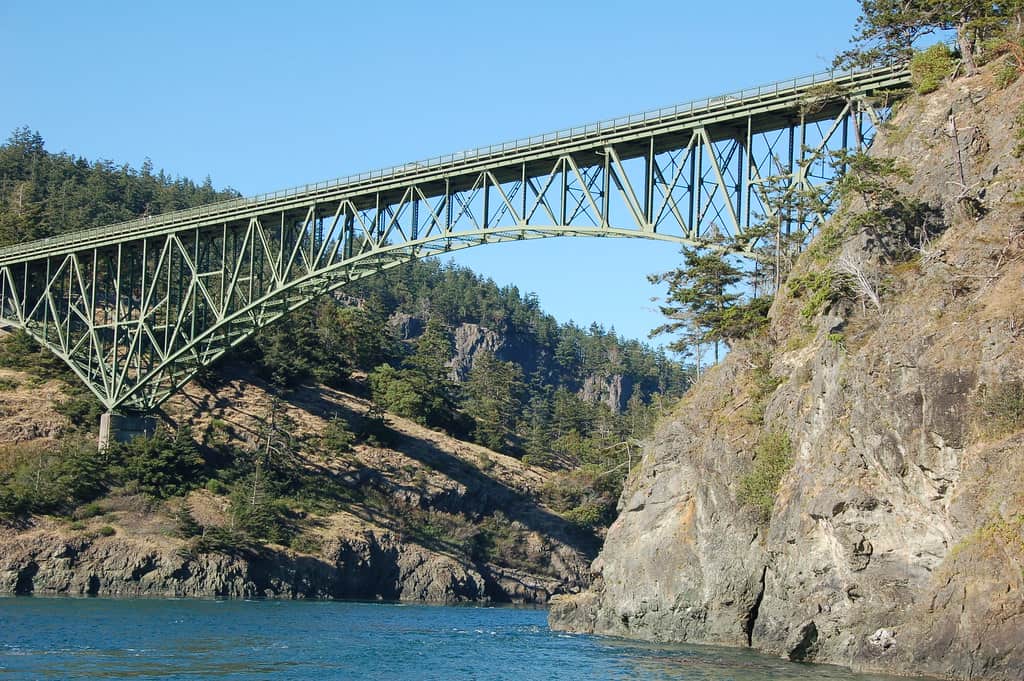
©"Deception Pass Bridge Washington State" by PatrickMcNallyMolokai is licensed under BY 2.0. - Original / License
To get to Deception Pass Bridge from Seattle, you’ll drive about 60 miles up Interstate 5 to State Route 20 West, which goes straight to the bridge’s south end. The bridge over the tidal channel separating Fidalgo Island from Whidbey Island is worth a stop on its own. Pull off and cross it. The current surges through the gap, and the views down the strait toward the San Juan Islands are hard to forget.
Down the island, a 55-mile drive takes you past open countryside, forested lands, and coastal villages. Your best stop along the way is Coupeville, a small town on Penn Cove, home to the oldest commercial mussel farm in North America. You can also head to Langley at the southern tip for a good cup of coffee or a meal before heading back.
From Langley, you can catch the Mukilteo ferry back to the mainland with your car, which gives you a clean loop without backtracking. Factor in ferry wait times, especially on summer weekends.
North Cascades Highway
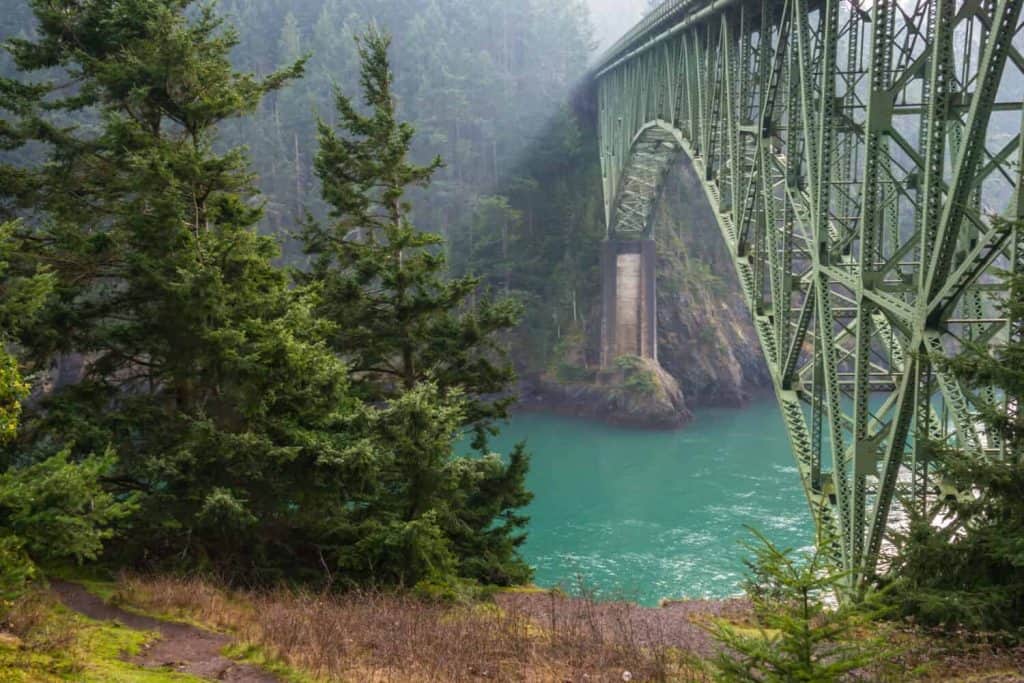
©Denise Lett/Shutterstock.com
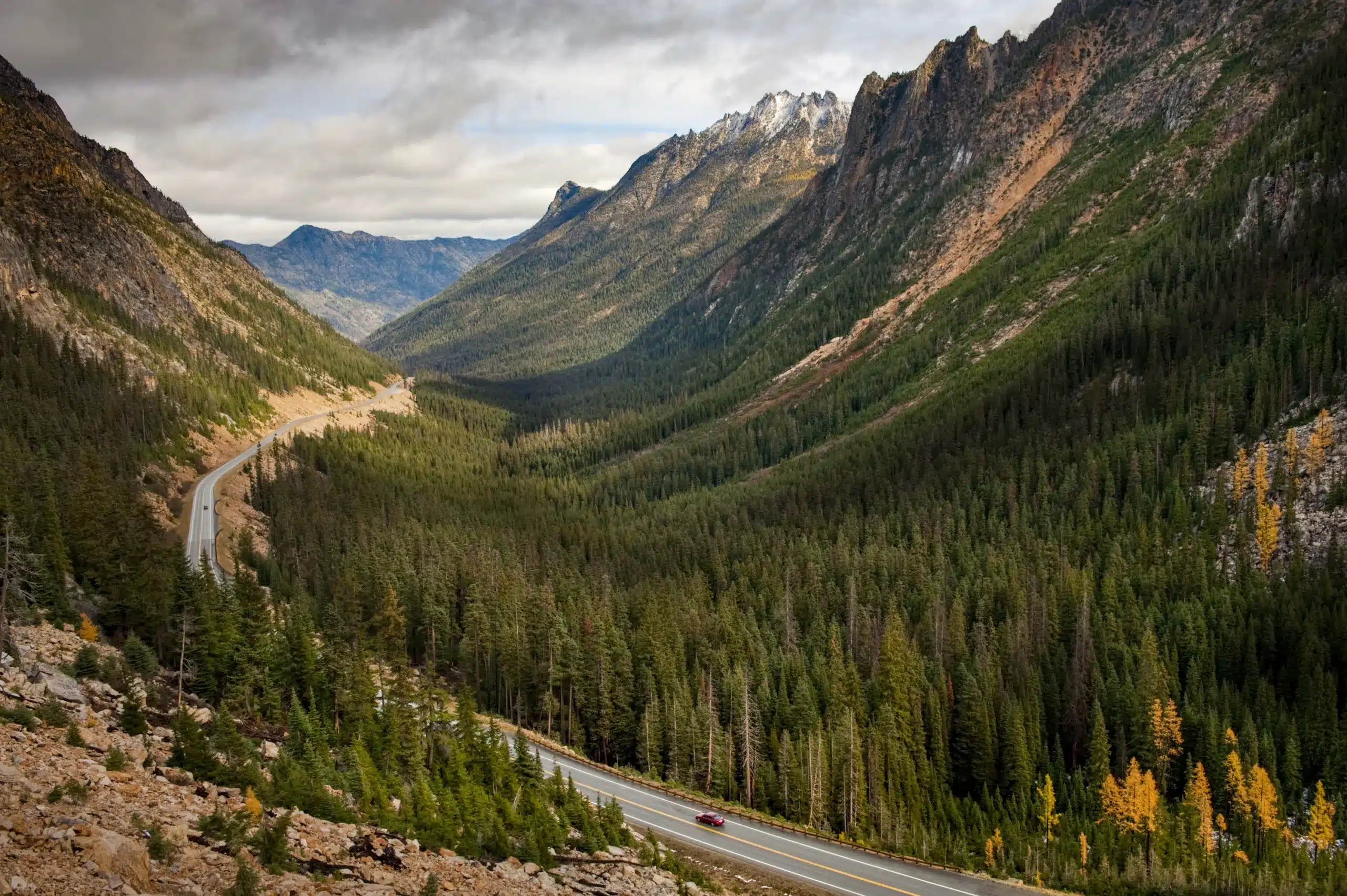
North Cascades Highway (SR 20) extends eastward from Sedro-Woolley into the heart of the Cascades and boasts expansive mountain meadows and several viewpoints along the way. Sitting at roughly 5,480 feet, Washington Pass has a short paved trail to a viewpoint overlooking Liberty Bell Mountain and the Early Winters Spires, two granite formations that appear in nearly every North Cascades photo you have ever seen. The parking lot fills up by mid-morning on summer weekends, so be sure to come early.
The route traverses Glacier, Washington Pass, and Rainy Pass before dropping down into the Methow Valley on the eastern side. It’s the longest drive on this list, and it’s the one you can only do between spring and fall. The road closes from late November to April due to avalanche risk. If you are planning on crossing the entire route all the way to Winthrop or Twisp, get an early start and budget the full day.
Snoqualmie Pass Corridor
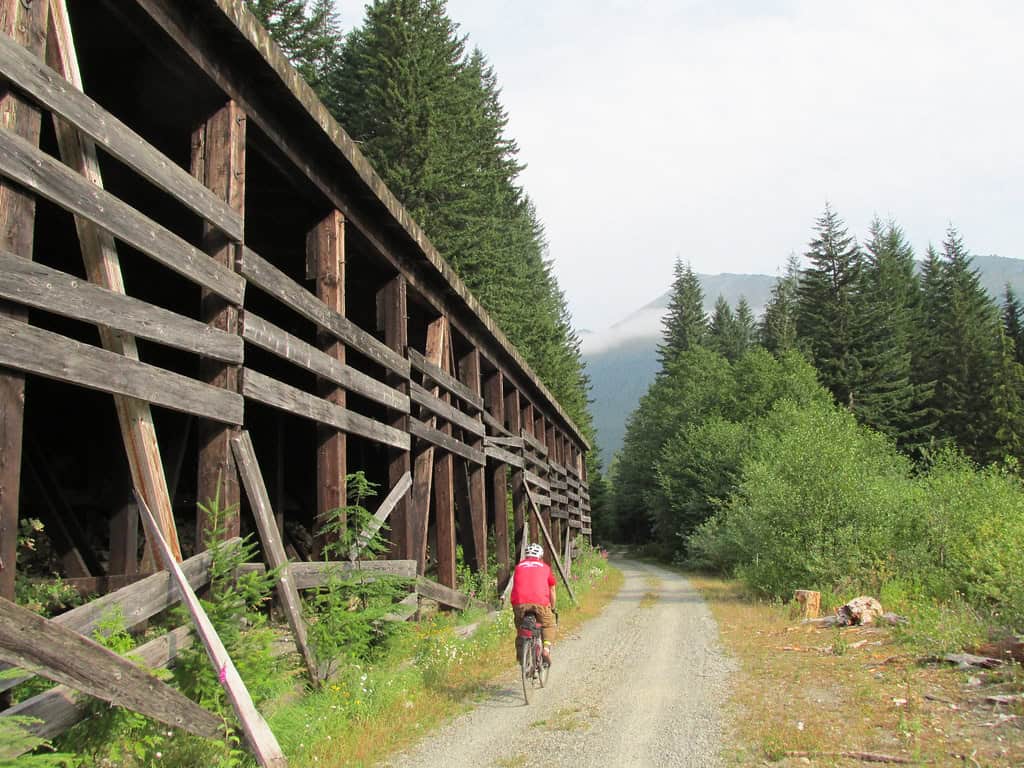
©"Iron Horse Trail east of North Bend, WA. Bicycling alternative to Snoqualmie Pass." by theslowlane is licensed under BY 2.0. - Original / License
While I-90 east is certainly not the most common definition of a scenic drive, the stretch from North Bend to Snoqualmie Pass gives you a new perspective on what a freeway can look like. The first views come almost immediately: the crossing of Lake Washington on the Lacey V. Murrow Bridge, with city and water visible in both directions. The road then climbs into the Cedar River valley, and the Cascades close in on both sides.
Make sure to visit North Bend before or after the drive. The town has a diner culture that predates the Twin Peaks tourism the area is now known for. Snoqualmie Falls is a few miles off the highway and is only 20 minutes out. The falls drop 268 feet, more than 80 feet taller than Niagara. Most long-time drivers of I-90 have never stopped. For how close it sits to Seattle, it may be the easiest entry on this list to underestimate.
Port Townsend and Hood Canal
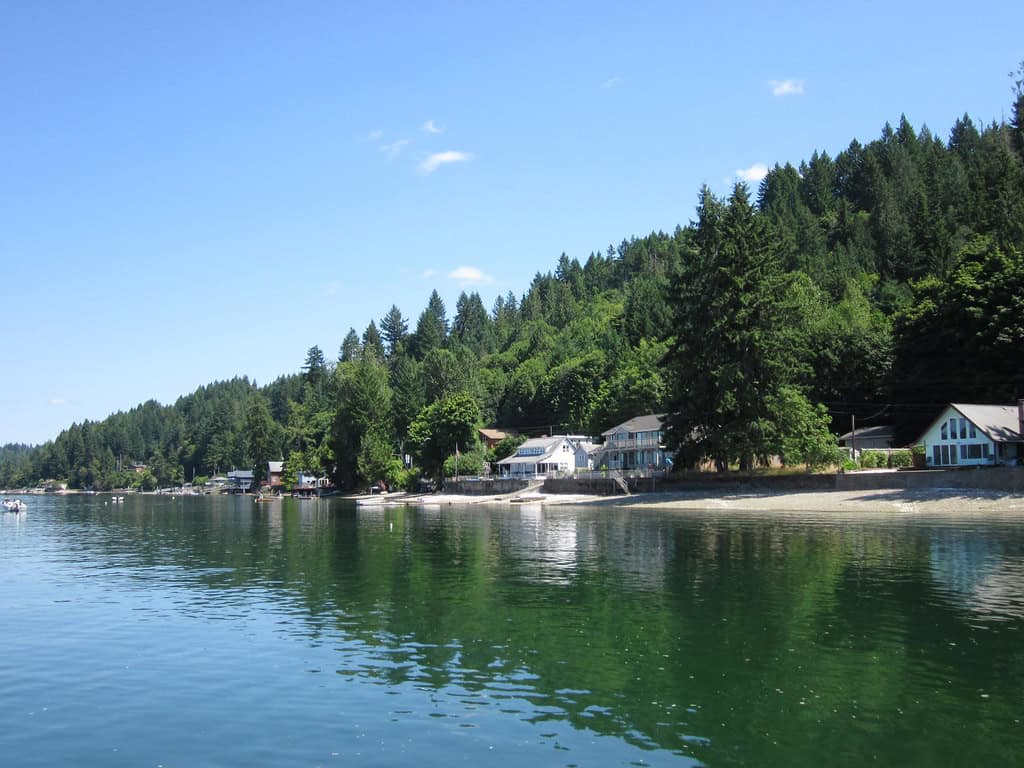
©"Hood Canal - Washington" by Dougtone is licensed under BY-SA 2.0. - Original / License
This drive begins with the Edmonds to Kingston ferry, then follows SR 104 west to Hood Canal before turning onto US 101 north through Quilcene and up to Port Townsend. The Hood Canal segment is the best kind of strange. It’s a long, narrow glacially-carved inlet lined with oyster beds and waterfront cabins. It feels out of place in the Pacific Northwest aesthetic. It is quiet, flat, and slightly eerie, especially when the fog sets in.
Port Townsend itself is worth the trip. It is a Victorian seaport town at the northeastern tip of the Olympic Peninsula. It’s home to a concentration of intact 19th-century commercial buildings that you won’t find easily anywhere else in the state. The town has character: independent bookshops, a working marina, and restaurants that have been around for quite some time.
If timed correctly, the ferry back from Port Townsend to either Coupeville or Keystone lands you on Whidbey Island, which is also worth driving through. The ferry schedules vary by season in this part of the state, so check Washington State Ferries before planning this one.
Mount Rainier via SR 706
©KYPhua/Shutterstock.com
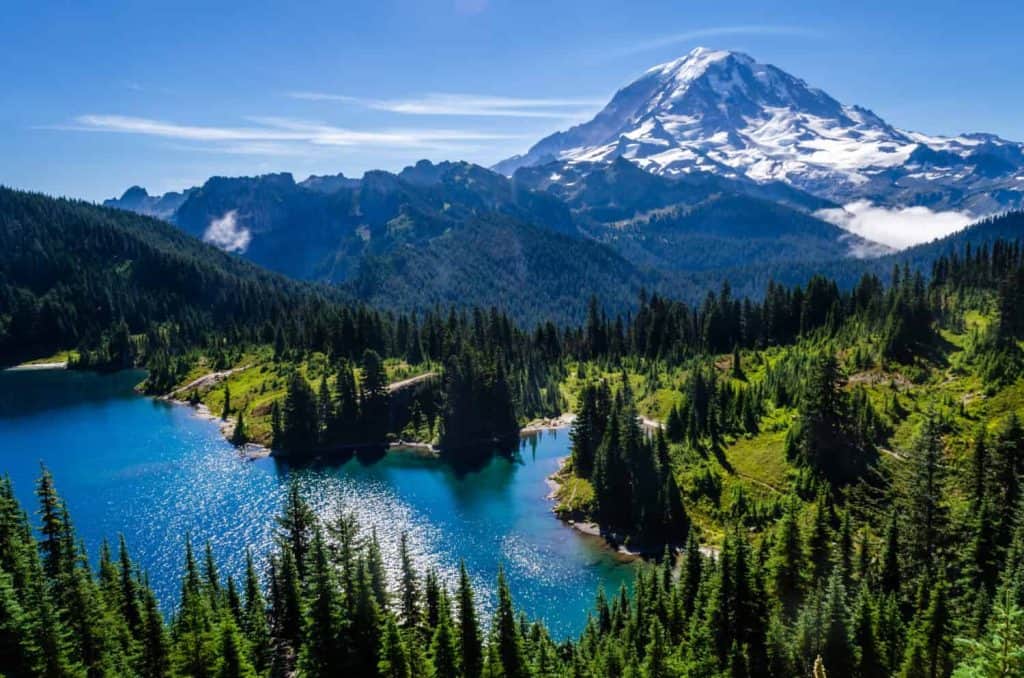
Starting from Ashford, State Route 706 travels through dense forests toward Mount Rainier National Park. The road into the park is an attraction in itself, with the mountain appearing and disappearing behind ridgelines and Christine Falls visible from a stone bridge built in 1928.
Paradise sits at around 5,400 feet, and on a clear day, it’s one of the most striking spots in the state. The wildflower meadows are a reliable sight from mid-July through late August. Snow lingers into June at this elevation, and the mountain is not always visible, so go when the schedule allows rather than waiting for the perfect conditions.
For a completely different experience, the Carbon River entrance on the northwest side of the park sees far fewer visitors and takes you through one of the only temperate rainforests in the continental United States. A National Parks Pass or day entry fee is required.
Skagit Valley Loop

This entry is different from the rest of the list because there is no defined scenic road. The landscape itself is the point. This flat agricultural valley between the Cascades and Puget Sound looks more like the Netherlands than the Pacific Northwest, particularly when the tulips are blooming in spring. The Skagit Valley Tulip Festival takes place throughout April, and there is quite a lot of traffic. If you want to avoid it, plan your visit on a weekday.
The tulip farms around Mount Vernon are what most people come for, with La Conner sitting a few miles southwest on the Swinomish Channel. It is worth the detour in any season, not just tulip time. The Trumpeter swans that winter in the valley fields from November through February make for an impressive and underrated sight.
The loop from Conway to Mount Vernon to La Conner and back via Chuckanut Drive makes for a full day out with real variety. No hiking boots or permits required.

