
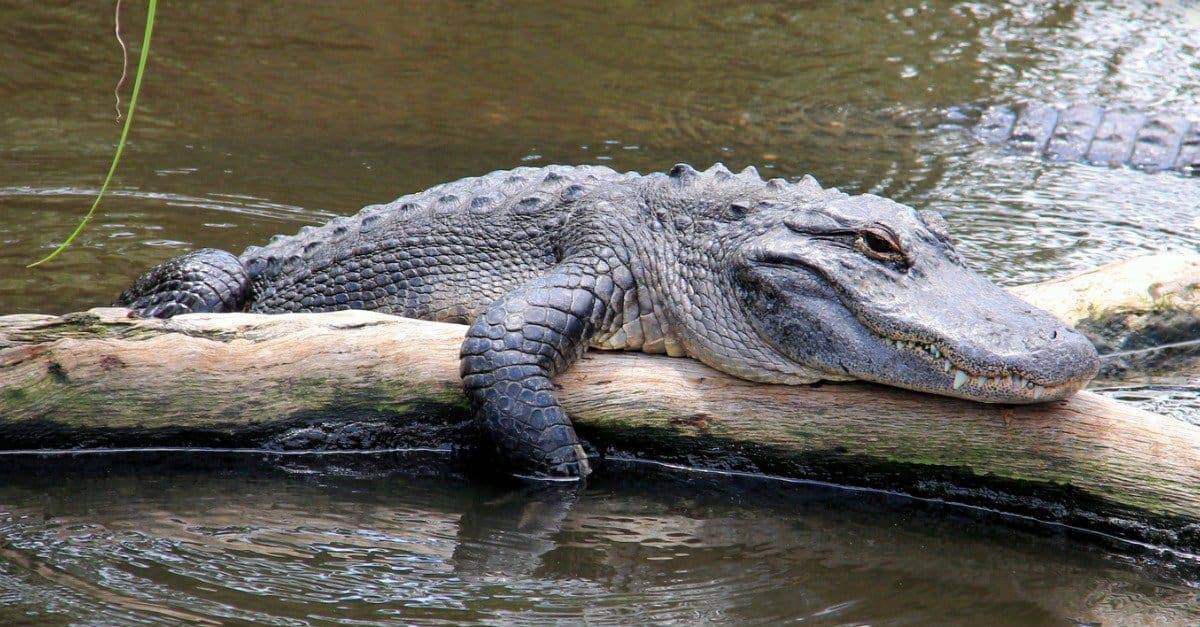
Florida is one of the best places in the country to see some truly enormous reptiles. American crocodiles and alligators patrol its waterways, the longest native snake in the United States still survives in parts of the Southeast, and some of the world’s largest sea turtles come ashore along U.S. beaches.
That does not mean every animal on this list is dangerous. Eastern indigo snakes are nonvenomous, and sea turtles pose little threat to people. Alligators and crocodiles are a different story and should always be given plenty of space. These five reptiles are among the most impressive native species found in the United States, and some can grow much larger than most people realize.
1. American Crocodile – Up to 20 Feet Long!
©iStock.com/CStorz
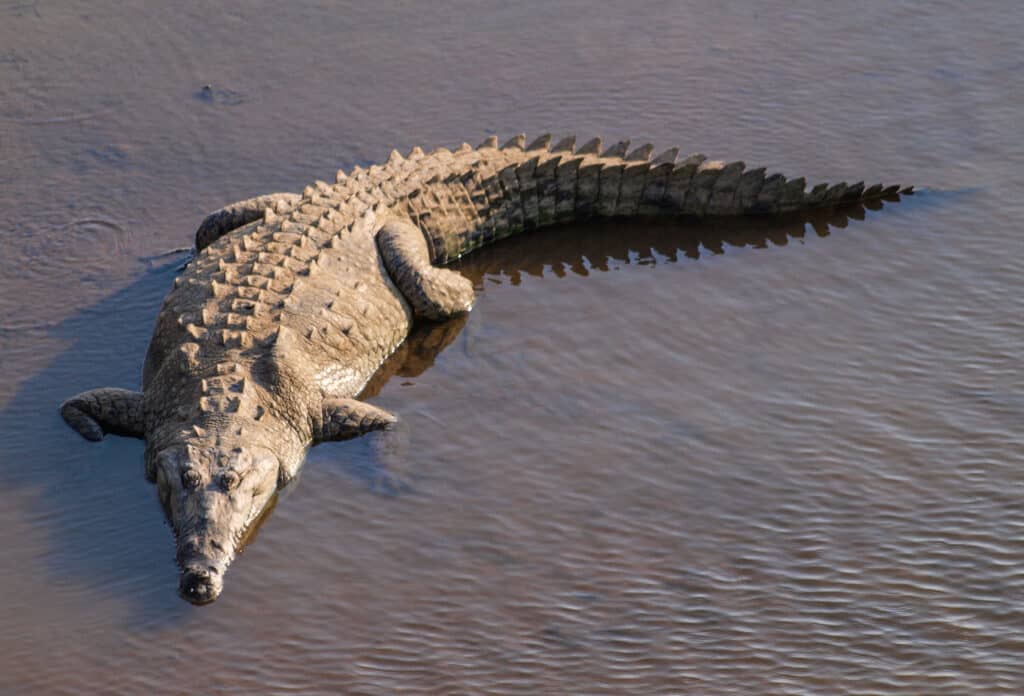
The American crocodile is one of the largest reptiles found in the United States. Adult males can potentially reach around 20 feet, but that would be an exceptional animal. The National Park Service notes that wild American crocodiles rarely exceed about 14 feet, while breeding females are typically around 8 to 12 feet long. Very large adults can weigh well over 1,000 pounds, with exceptional individuals capable of approaching 2,000 pounds.
American Crocodile (continued)
©"Crocodile has a big mouth-01+" by Sheba Also 18 Million Views is licensed under BY-SA 2.0. - Original / License
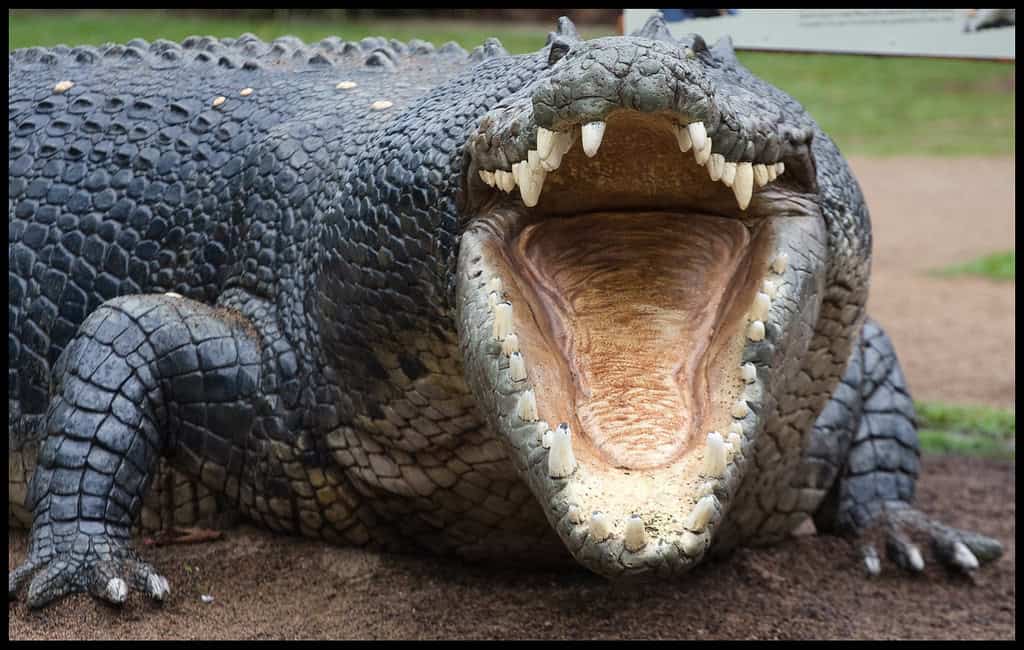
American crocodiles and American alligators can look pretty similar from a distance, but there are a few reliable ways to tell them apart. Crocodiles tend to have a slimmer build and a narrower, more triangular snout. When an American crocodile closes its mouth, the fourth tooth on each side of its lower jaw remains visible. On an alligator, those lower teeth are largely hidden by the upper jaw.
American Crocodile – (continued)
©Jesus Cobaleda/Shutterstock.com
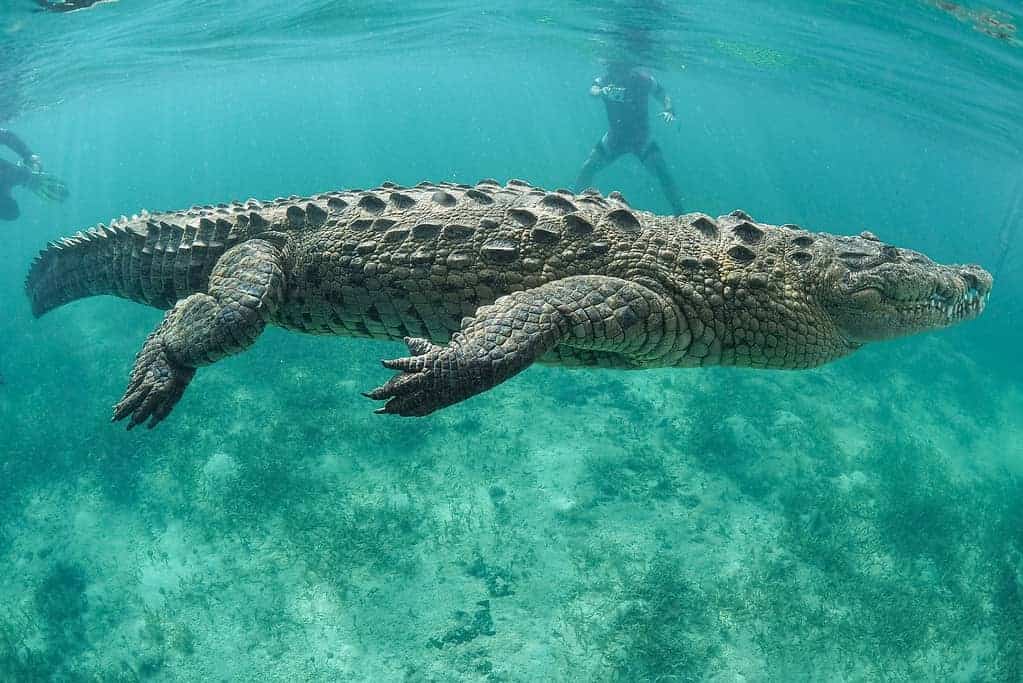
Adult American crocodiles eat fish, crabs, birds, turtles, snakes, and small mammals, although like other crocodilians, they are opportunistic enough to take whatever prey they can catch and overpower. Within the United States, wild American crocodiles occur naturally in southern Florida, where they favor coastal brackish and saltwater habitats including mangrove areas, ponds, creeks, and protected coves. South Florida is also the only part of the country where native American crocodiles and American alligators live alongside one another.
2. American Alligator – Up to 15 Feet, 9 Inches
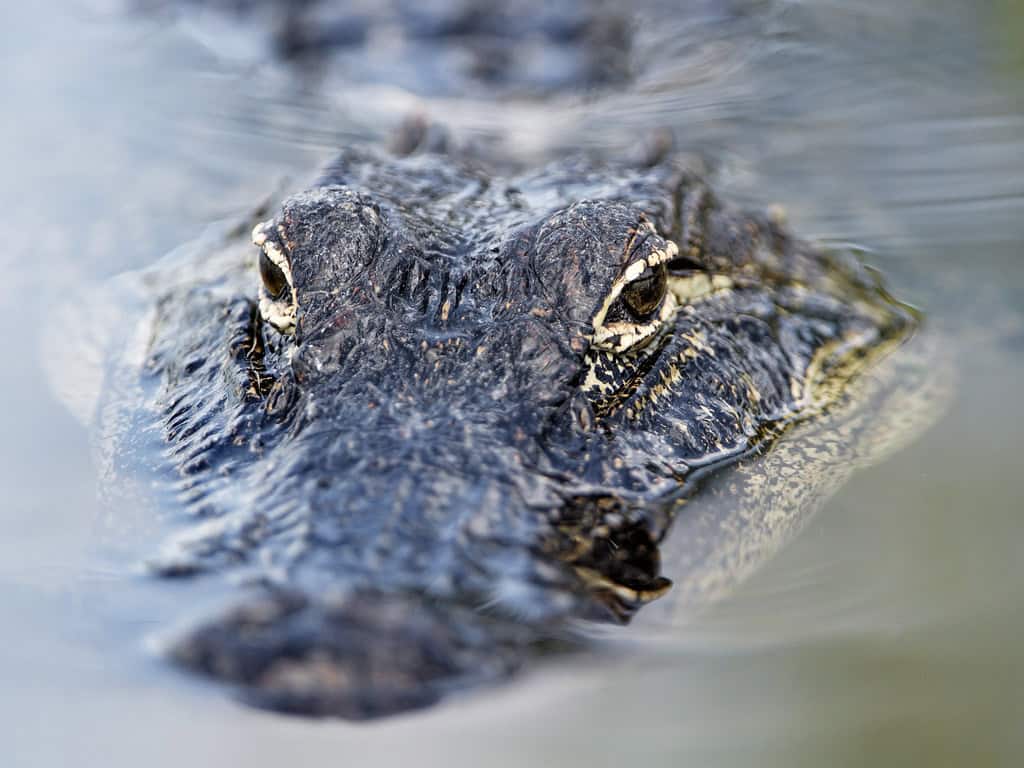
©"Menacing alligator" by Tambako the Jaguar is licensed under BY-ND 2.0. - Original / License
The American alligator is another heavyweight native crocodilian. Females rarely grow beyond 10 feet, but males can get considerably larger. Florida’s official length record is 14 feet, 3.5 inches, while its weight record is a 1,043-pound male measuring 13 feet, 10.5 inches. An even larger alligator harvested in Alabama in 2014 measured 15 feet, 9 inches and weighed 1,011.5 pounds. Alligators are opportunistic predators that eat fish, amphibians, snakes, turtles, birds, and mammals depending on what is available.
American Alligator – (continued)
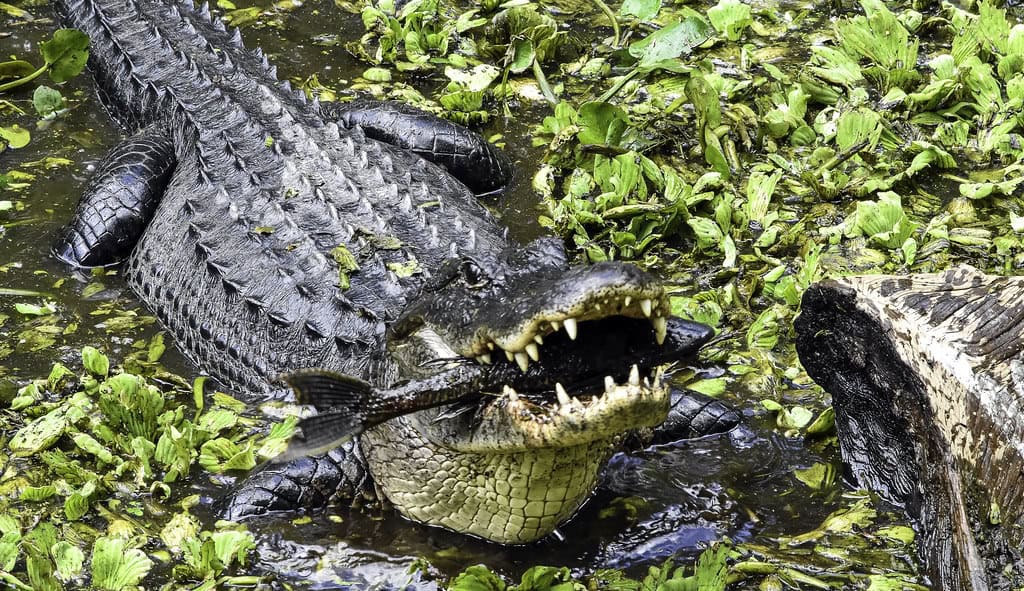
©"See You Later, Alligator . . ." by Charles Patrick Ewing is licensed under BY 2.0. - Original / License
American alligators range across the southeastern United States, from southeastern Oklahoma and eastern Texas through the Gulf Coast states and east to North Carolina and Florida. They are primarily freshwater animals and are commonly found in lakes, slow-moving rivers, marshes, swamps, and other wetlands. They can tolerate brackish water and occasionally enter saltwater, but they are much better adapted to freshwater than American crocodiles.
3. Eastern Indigo Snake – Up to 8.6 Feet
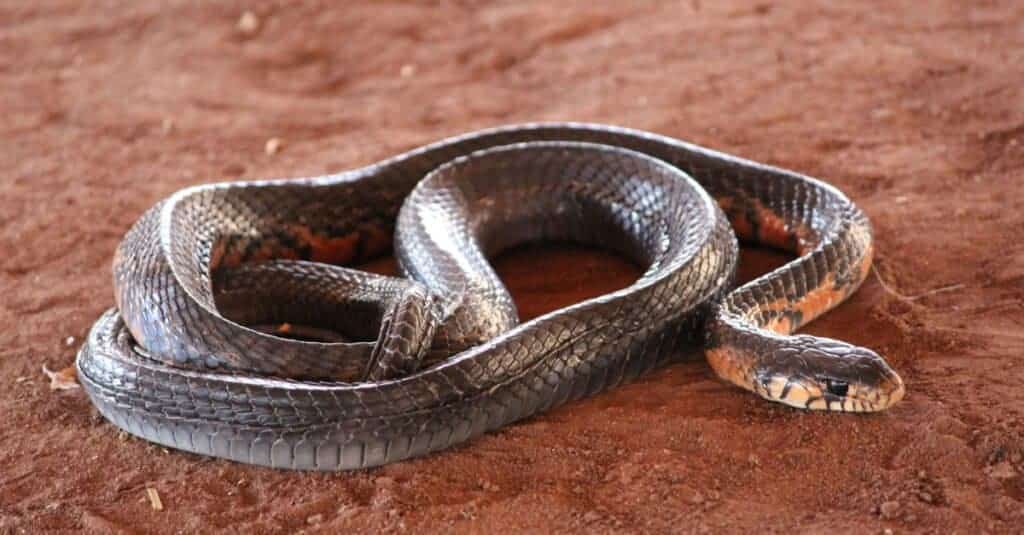
©Alan Jimenez G/Shutterstock.com
The eastern indigo is the longest snake species native to the United States, with exceptional adults reaching about 8.6 feet. Despite that size, this is not a snake people need to panic over. Eastern indigo snakes are nonvenomous and are generally considered docile. Adults are usually easy to recognize by their smooth, glossy blue-black scales and the reddish, orange-brown, or cream coloring that can appear around the chin, throat, and sides of the head.
Eastern Indigo Snake – (continued)
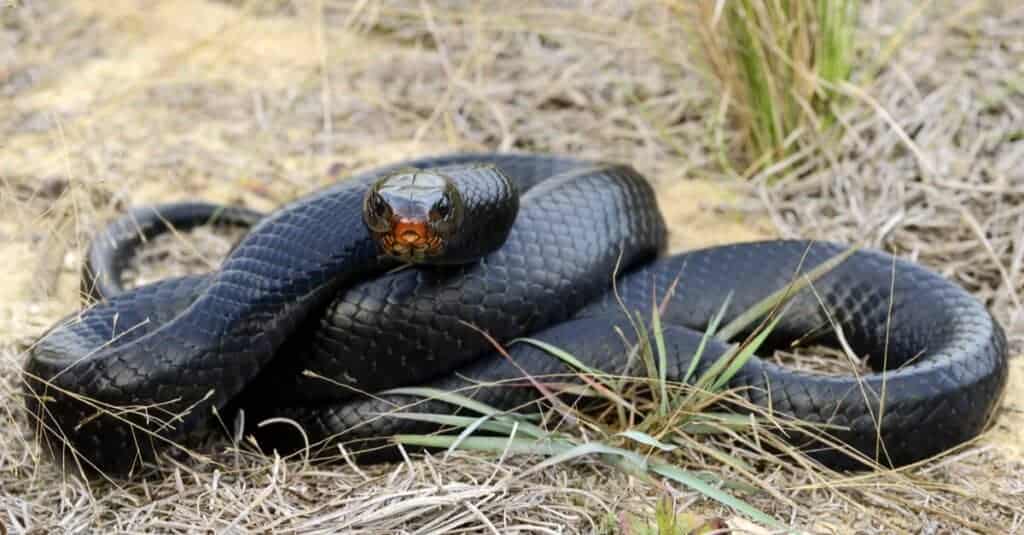
©Patrick K. Campbell/Shutterstock.com
Today, eastern indigo snakes survive in portions of Florida and southern Georgia, with reintroduction efforts also restoring populations in Alabama. Historically, their range extended across more of the southeastern coastal plain, including Mississippi. They use a surprisingly wide variety of habitats, including longleaf pine sandhills, scrub, pine flatwoods, tropical hardwood hammocks, and coastal dunes. Gopher tortoise burrows are especially important shelter sites in the northern part of their range.
4. Leatherback Sea Turtle – About 6 Feet
©iStock.com/YasserBadr_Beenthere
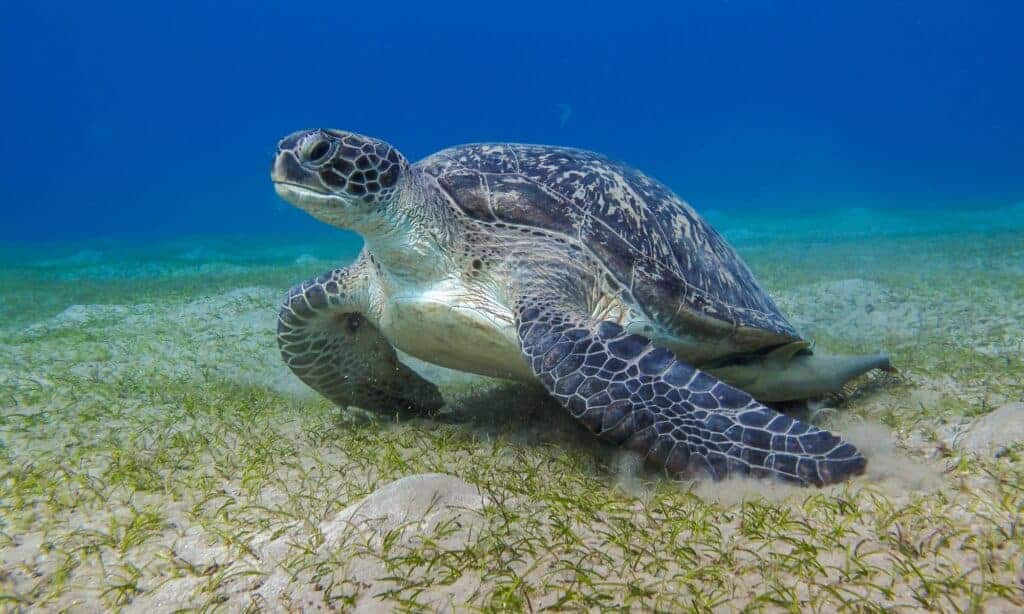
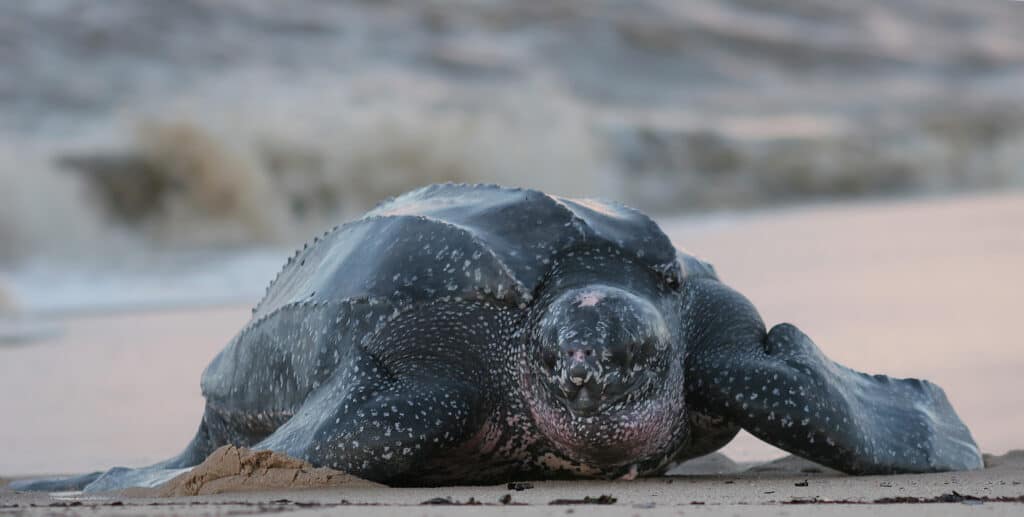
The leatherback is the largest living turtle in the world, and it looks a little different from every other sea turtle. Instead of a hard, scaly shell, leatherbacks have tough, rubbery skin covering a flexible shell structure. Adults are typically about 5 to 6 feet long and weigh around 750 to 1,000 pounds, although exceptional individuals can approach 2,000 pounds. If you were picturing a slow little pond turtle, this is very much not that.
Leatherback Sea Turtle – (continued)
©Stephanie Rousseau/Shutterstock.com
Leatherbacks roam enormous stretches of the Atlantic and Pacific, including U.S. waters on both coasts. Within the United States and its territories, most nesting occurs in Florida, Puerto Rico, and the U.S. Virgin Islands. The species remains listed as endangered under the federal Endangered Species Act. NOAA estimates that the global population has declined by about 40% over the past three generations, with some Pacific populations suffering far steeper losses.
5. Loggerhead Sea Turtle – Up to 3.5 Feet
©iStock.com/naturepics_li
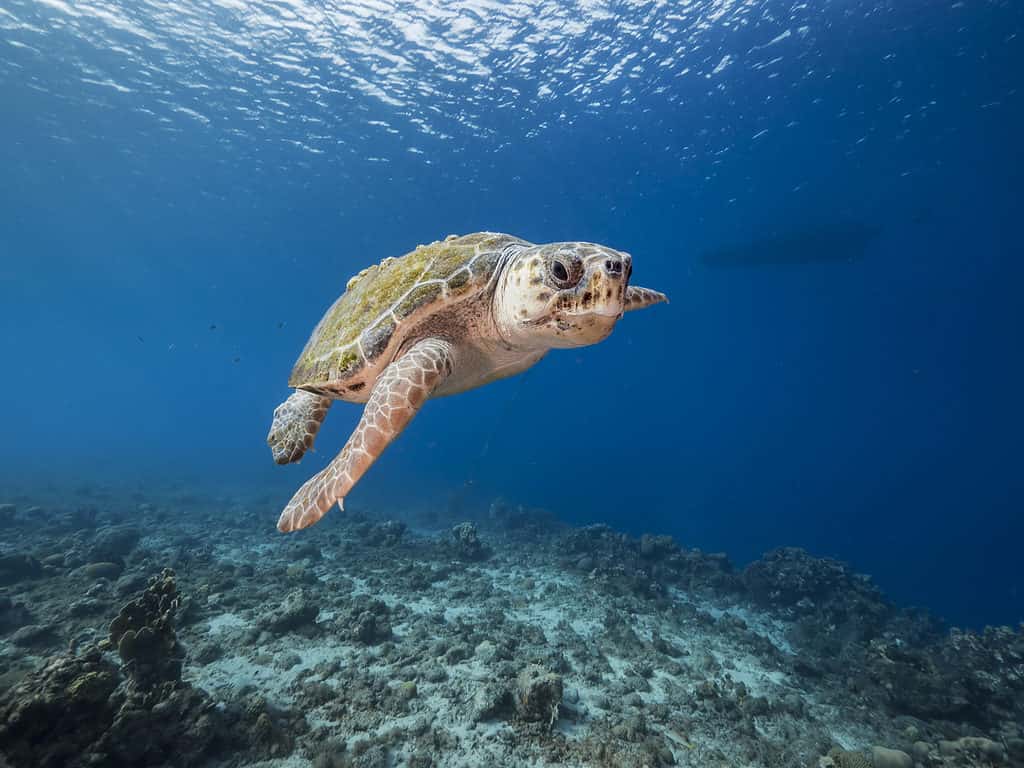
Loggerheads look almost modest next to a leatherback, but they are still substantial animals. Adult loggerhead sea turtles generally measure about 2.5 to 3.5 feet long and weigh between 200 and 350 pounds. Their name comes from the species’ unusually large head, which supports powerful jaws used to crush hard-shelled prey such as mollusks and crustaceans.
Loggerhead Sea Turtle – (continued)
©Grace Thoma/Shutterstock.com
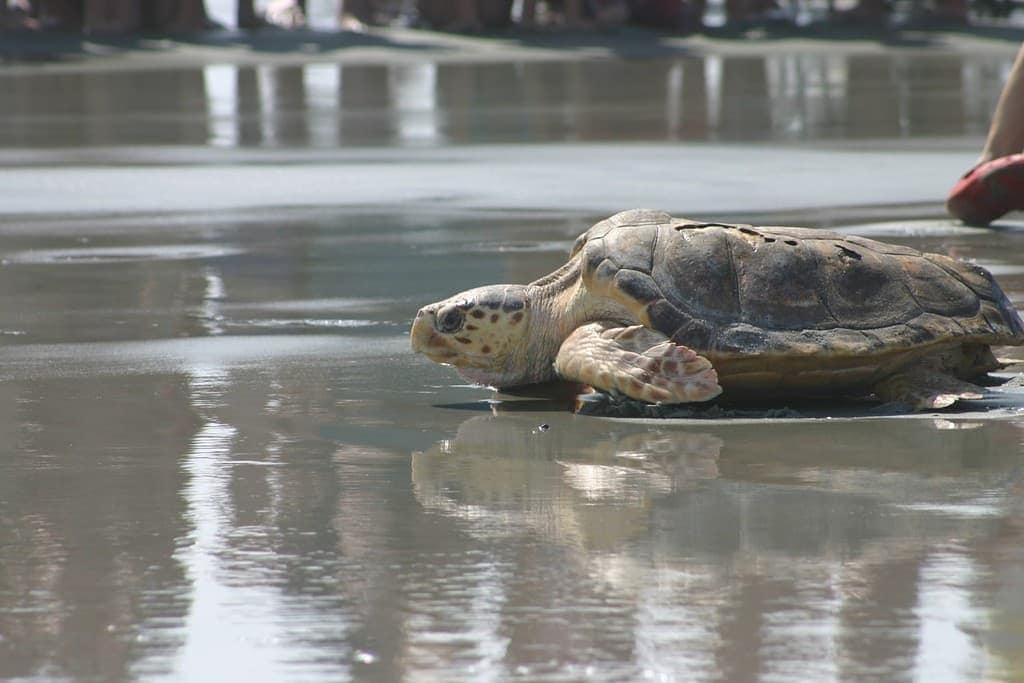
Loggerheads are the most abundant sea turtle species that nests in the United States. The Northwest Atlantic population nests primarily along the Atlantic coasts of Florida, South Carolina, Georgia, and North Carolina, as well as along the Gulf coasts of Florida and Alabama. Loggerheads also spend much of their lives far offshore or in coastal waters, including bays, lagoons, salt marshes, and the mouths of large rivers.

