
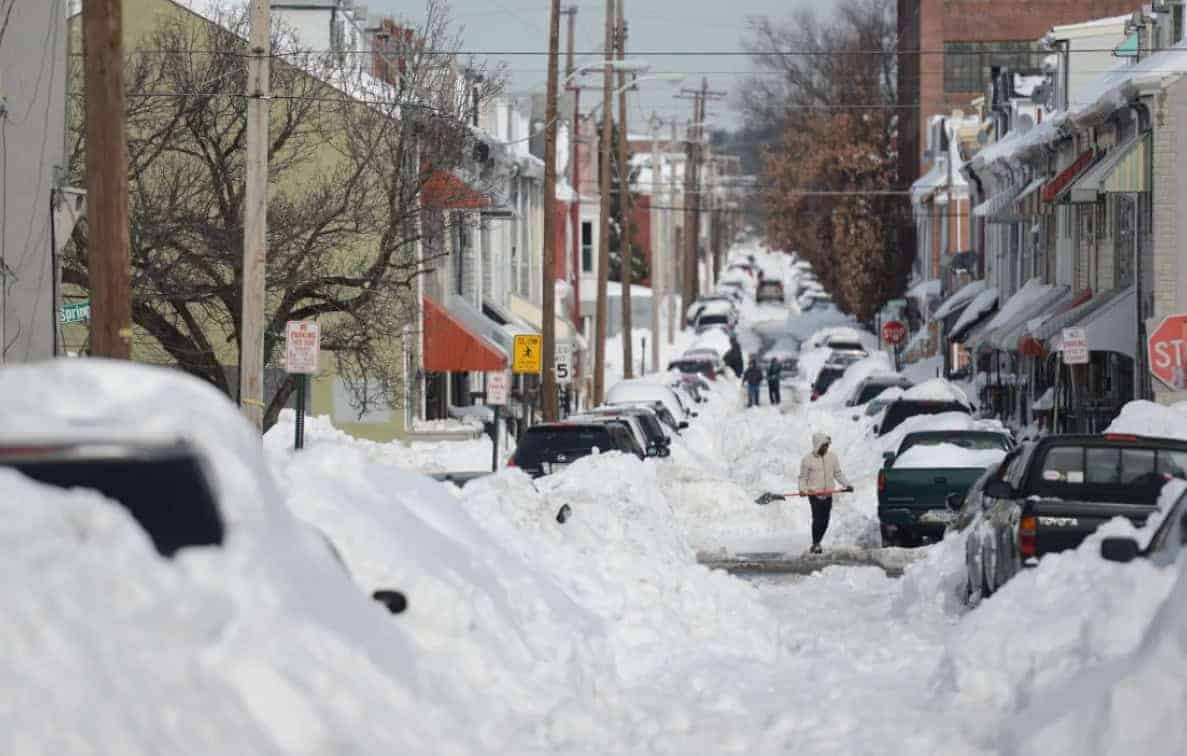
Weather can wreck a trip in a matter of hours, but the real cost can stretch far beyond a canceled flight or closed highway. Seattle and the Pacific Northwest saw that firsthand in January 2024, when a winter storm brought damaging ice, wind, power outages, and dangerous cold to Western Washington and Oregon.
This slideshow looks at 39 U.S. weather and climate disasters from late 2022 through May 2024 that each caused at least $1 billion in damage. The events are ranked using NOAA’s final CPI-adjusted estimates in 2024 dollars. NOAA retired its Billion-Dollar Weather and Climate Disasters product in 2025, but the agency’s archived 1980 to 2024 dataset remains the authoritative source for these figures.
One important thing to keep in mind: a bigger dollar figure does not automatically mean a storm was stronger or more dangerous. Losses also depend on where an event hits, how much property and infrastructure are exposed, and how long the impacts last. From hailstorms that lasted a few hours to a drought that stretched across months, these disasters show how quickly the price of extreme weather can climb.
39. Southern Severe Weather (February 2024)

- Duration: February 10 to 12, 2024
- NOAA final CPI-adjusted cost: $1.072 billion
- Deaths: 0
- Type: Severe Storm
A multi-day severe weather setup brought damaging hail and wind from Texas into parts of Louisiana, Alabama, Georgia, Florida, and North Carolina. Central and eastern Texas took some of the hardest hits, with golf-ball-sized hail damaging roofs, vehicles, and businesses. This was one of the lower-cost events in the group, but NOAA’s final estimate still crossed the billion-dollar threshold, which says a lot about how quickly widespread hail and wind damage can add up.
38. Fort Lauderdale Flash Flood

©KSwinicki / iStock via Getty Images
- Duration: April 12 to 13, 2023
- NOAA final CPI-adjusted cost: $1.144 billion
- Deaths: 0
- Type: Flooding
South Florida got a brutal reminder that a thunderstorm does not need a hurricane name to become a billion-dollar disaster. More than 25 inches of rain fell in parts of the Fort Lauderdale area in less than 24 hours, flooding roads, homes, vehicles, and businesses. Fort Lauderdale-Hollywood International Airport shut down as water covered access roads and parts of the property. The event was exceptionally localized compared with many disasters on this list, but the concentration of rain over a densely developed area drove losses above $1 billion.
37. East Coast Storm and Flooding (December 2023)

- Duration: December 16 to 18, 2023
- NOAA final CPI-adjusted cost: $1.314 billion
- Deaths: 5
- Type: Flooding
This powerful East Coast storm stretched from Florida to Maine, combining heavy rain, strong winds, flooding, and coastal erosion. In the Northeast, unusually warm conditions and snowmelt added even more water to rivers and streams. The storm knocked out power, damaged roads and property, and disrupted travel across a huge portion of the East Coast just before Christmas. NOAA ultimately associated five deaths with the event and put the CPI-adjusted damage above $1.3 billion.
36. Southern Severe Weather (April 2023)

©Viktor Ketal / iStock via Getty Images
- Duration: April 25 to 27, 2023
- NOAA final CPI-adjusted cost: $1.373 billion
- Deaths: 0
- Type: Severe Storm
Severe storms hit Texas, Georgia, and Florida with damaging wind and large hail over several days in late April 2023. The losses were spread across homes, vehicles, businesses, and other infrastructure rather than coming from one headline-grabbing tornado or flood. That is one reason severe thunderstorm events show up so often in NOAA’s billion-dollar database. When hail and wind hit multiple metro areas in the same system, thousands of smaller claims can pile into a massive total.
35. Central and Southern Severe Weather (April 2023)

©welcomia / iStock via Getty Images
- Duration: April 15, 2023
- NOAA final CPI-adjusted cost: $1.402 billion
- Deaths: 0
- Type: Severe Storm
A one-day outbreak on April 15, 2023, produced tornadoes, hail, and damaging wind across a broad swath of the central and southern United States. Missouri, Arkansas, Illinois, Texas, Louisiana, and the Florida Panhandle were among the areas affected. No deaths were attributed to the event in NOAA’s dataset, but damage to homes, vehicles, and businesses pushed the final inflation-adjusted cost above $1.4 billion. It is a good example of how a fast-moving severe weather event can still leave a very expensive footprint.
34. North Central and Eastern Severe Weather (July 2023)

- Duration: July 28 to 29, 2023
- NOAA final CPI-adjusted cost: $1.527 billion
- Deaths: 2
- Type: Severe Storm
Severe storms swept across parts of the Midwest on July 28 and 29, 2023, with Nebraska, Missouri, Illinois, Indiana, and Wisconsin among the hardest-hit states. High winds, large hail, and tornadoes damaged buildings, vehicles, crops, trees, and power infrastructure. NOAA associated two deaths with the event. The system did not dominate national headlines for long, but the final cost topped $1.5 billion, which is a recurring theme with widespread summer severe weather.
33. Central and Eastern Severe Weather (February 2024)

- Duration: February 27 to 28, 2024
- NOAA final CPI-adjusted cost: $1.534 billion
- Deaths: 0
- Type: Severe Storm
Two dozen tornadoes, along with damaging wind and hail, struck parts of northern Illinois, southern Michigan, central Ohio, northern Kentucky, and northern Georgia in late February 2024. The outbreak damaged homes, vehicles, businesses, and infrastructure across several states. NOAA did not attribute any deaths to the event, but the economic impact still reached more than $1.5 billion after inflation adjustment. February is not usually the month people associate with major tornado activity in the Midwest, which made this system especially notable.
32. Southern Derecho (May 2024)

©U.S. Army Corps of Engineers / Public Domain / Flickr - Original / License
- Duration: May 16 to 17, 2024
- NOAA final CPI-adjusted cost: $1.551 billion
- Deaths: 8
- Type: Severe Storm
A rare southern derecho tore from Texas toward the Gulf Coast on May 16 and 17, 2024. Wind gusts in parts of central and eastern Texas topped 100 mph, and downtown Houston was hit hard enough to blow windows out of skyscrapers. Louisiana, Alabama, and Florida also reported damaging winds, downed trees, power outages, and property damage. NOAA associated eight deaths with the event. Derechos can lack the visual drama of a major tornado, but a long corridor of destructive straight-line wind can produce enormous losses.
31. Northeastern and Eastern Severe Weather (August 2023)

- Duration: August 5 to 8, 2023
- NOAA final CPI-adjusted cost: $1.680 billion
- Deaths: 4
- Type: Severe Storm
More than a thousand reports of damaging wind, hail, or tornadoes were logged during this multi-day severe weather event across the eastern United States. August 7 was especially active, with damage reported from Georgia into New York. Homes, businesses, vehicles, agriculture, and infrastructure were all affected. NOAA associated four deaths with the outbreak and estimated the final CPI-adjusted damage at about $1.68 billion. The size of the affected area helped turn what might look like a collection of regional storms into a billion-dollar disaster.
30. Texas Hail Storms (May 2023)

©Lauren Anderson / Getty Images
- Duration: May 18 to 19, 2023
- NOAA final CPI-adjusted cost: $1.690 billion
- Deaths: 0
- Type: Severe Storm
North-central Texas was pounded by large hail on May 18 and 19, 2023, with Collin County among the areas suffering the most damage. Reports included hail ranging from golf-ball size to around tennis-ball size, which is more than enough to destroy roofs, dent vehicles, shatter glass, and damage outdoor equipment. No deaths were attributed to the event, but NOAA’s final inflation-adjusted loss estimate reached $1.69 billion. Hail can be incredibly expensive because it can damage thousands of insured properties in minutes.
29. Southern Hail Storms (September 2023)

©Neurone89 / iStock via Getty Images
- Duration: September 23 to 24, 2023
- NOAA final CPI-adjusted cost: $1.695 billion
- Deaths: 0
- Type: Severe Storm
Central Texas took another major hit from hail in September 2023. Storms affected Texas, Oklahoma, and Missouri, but the most costly damage was concentrated around communities including Austin, Georgetown, Round Rock, and areas north of Austin. Some reports included baseball-sized hail. NOAA recorded no deaths from the event, yet the final CPI-adjusted cost reached roughly $1.695 billion. That puts this two-day hail episode almost level with a major multi-state tornado outbreak in economic terms.
28. Central and Southern Tornado Outbreak (April 2024)

©Arlington County / CC BY-SA 2.0 / Flickr - Original / License
- Duration: April 26 to 28, 2024
- NOAA final CPI-adjusted cost: $1.698 billion
- Deaths: 3
- Type: Severe Storm
More than 140 tornadoes developed across Nebraska, Iowa, Kansas, Missouri, Oklahoma, and Texas from April 26 through 28, 2024. Eastern Nebraska saw multiple strong tornadoes, including destructive tracks around the Omaha area, while an EF-4 struck near Marietta, Oklahoma. Eppley Airfield near Omaha also suffered heavy damage. NOAA attributed three deaths to the outbreak and put the final CPI-adjusted cost near $1.7 billion. The sheer tornado count made this one of the most prolific outbreaks of the year.
27. Northwest Winter Storm (January 2024)

©Bonnie Moreland / Public Domain / Flickr
- Duration: January 12 to 14, 2024
- NOAA final CPI-adjusted cost: $1.724 billion
- Deaths: 20
- Type: Winter Storm
This one hits closer to home for Seattle Travel readers. An Arctic front pushed into Western Washington and Oregon in January 2024, bringing subfreezing temperatures, freezing rain, ice, and strong winds. Southwest Washington and Oregon’s Willamette Valley were hit especially hard, with tree damage, power outages, dangerous roads, and property losses. NOAA associated 20 deaths with the storm and estimated more than $1.7 billion in inflation-adjusted damage. It was a sharp reminder that Pacific Northwest winter weather can become deadly and expensive very quickly.
26. Minnesota Hail Storms (August 2023)

©NASA Goddard Photo and Video / CC BY 2.0 / Flickr - Original / License
- Duration: August 11, 2023
- NOAA final CPI-adjusted cost: $1.828 billion
- Deaths: 0
- Type: Severe Storm
A concentrated hail event across south-central Minnesota on August 11, 2023, produced hail ranging from golf-ball size to baseball size. That meant widespread damage to roofs, siding, windows, vehicles, and other exposed property across the region. NOAA did not attribute any deaths to the storms, but the final CPI-adjusted cost climbed above $1.8 billion. This is another case where one day of hail generated a loss total comparable to disasters that lasted much longer.
25. Northeastern Winter Storm and Cold Wave (February 2023)

©NASA Goddard Photo and Video / CC BY 2.0 / Flickr - Original / License
- Duration: February 2 to 5, 2023
- NOAA final CPI-adjusted cost: $1.839 billion
- Deaths: 1
- Type: Winter Storm
A blast of bitter cold, snow, and strong wind swept the Northeast in early February 2023. Massachusetts experienced widespread power outages, while Mount Washington in New Hampshire recorded a wind chill of minus 108 degrees Fahrenheit, one of the lowest wind chills ever observed in the United States. NOAA associated one death with the event. Frozen pipes, wind damage, outages, and other cold-weather impacts pushed the final inflation-adjusted cost to roughly $1.84 billion.
24. North Central and Southeastern Severe Weather (July 2023)

©NOAA Satellites / Public Domain / Flickr - Original / License
- Duration: July 19 to 21, 2023
- NOAA final CPI-adjusted cost: $1.887 billion
- Deaths: 1
- Type: Severe Storm
Severe storms hit parts of the Great Lakes, Midwest, and Southeast between July 19 and 21, 2023. Michigan, Wisconsin, Ohio, Tennessee, and Georgia saw damaging winds and hail, including stones ranging from ping-pong-ball to golf-ball size. The storms damaged homes, businesses, vehicles, trees, and infrastructure across multiple states. NOAA associated one death with the event and estimated the final CPI-adjusted loss at nearly $1.9 billion.
23. Central, Southern and Northeastern Winter Storm (January 2024)

©NASA Goddard Photo and Video / CC BY 2.0 / Flickr - Original / License
- Duration: January 14 to 18, 2024
- NOAA final CPI-adjusted cost: $1.948 billion
- Deaths: 41
- Type: Winter Storm
A long-duration cold wave affected a huge section of the central, southern, and northeastern United States in January 2024. Illinois, Missouri, Kansas, Texas, Mississippi, Arkansas, Tennessee, and Georgia were among the hardest-hit states. Sleet, freezing rain, high winds, and dangerously low wind chills caused travel problems, property damage, and widespread exposure risks. NOAA associated 41 deaths with the event, many in Tennessee, and estimated the final CPI-adjusted cost at about $1.95 billion.
22. Central Severe Weather (June 2023)

- Duration: June 28 to July 2, 2023
- NOAA final CPI-adjusted cost: $1.977 billion
- Deaths: 3
- Type: Severe Storm
From late June into early July 2023, severe storms repeatedly crossed the central United States. Missouri, Illinois, and Indiana saw some of the heaviest losses, with additional damage across surrounding states. Straight-line winds and hail caused much of the destruction, although scattered tornadoes also occurred. NOAA linked three deaths to the event and put the final CPI-adjusted cost just under $2 billion. The multi-day nature of the outbreak allowed damage to build across a broad region.
21. Central Severe Weather (May 2023)

- Duration: May 6 to 8, 2023
- NOAA final CPI-adjusted cost: $2.223 billion
- Deaths: 1
- Type: Severe Storm
Severe weather struck Missouri, Illinois, Iowa, and Indiana from May 6 through 8, 2023, with additional impacts in Kentucky, Tennessee, South Carolina, and Texas. Large hail, damaging wind, and tornadoes hit homes, businesses, vehicles, farms, and infrastructure. NOAA associated one death with the event and estimated the final inflation-adjusted cost above $2.2 billion. The broad geographic spread is a big reason these severe weather outbreaks can become so costly even without a single dominant tornado.
20. Northeastern Flooding and North Central Severe Weather (July 2023)

©NASA Goddard Photo and Video / CC BY 2.0 / Flickr - Original / License
- Duration: July 9 to 15, 2023
- NOAA final CPI-adjusted cost: $2.230 billion
- Deaths: 10
- Type: Flooding
Heavy rain and severe storms triggered destructive flooding across the Northeast in July 2023. Vermont experienced flooding comparable in some areas to the impacts of Hurricane Irene in 2011, while West Point, New York, sustained more than $100 million in damage. Roads, bridges, farms, homes, and businesses were hit across the region. Severe weather also caused damage farther west in Wisconsin, Minnesota, and Illinois. NOAA associated 10 deaths with the event and estimated total CPI-adjusted losses above $2.2 billion.
19. Central Tornado Outbreak and Eastern Severe Weather (April 2024)

©Michael B. Thomas / Getty Images News via Getty Images
- Duration: April 1 to 3, 2024
- NOAA final CPI-adjusted cost: $2.466 billion
- Deaths: 3
- Type: Severe Storm
More than 85 tornadoes were documented during a three-day outbreak stretching from Oklahoma to West Virginia in early April 2024. NOAA’s summary counted 19 EF-0, 52 EF-1, and 14 EF-2 tornadoes, with especially heavy activity around the Ohio Valley. The storms damaged homes, businesses, vehicles, and infrastructure across multiple states. NOAA attributed three deaths to the event and estimated the final CPI-adjusted cost at roughly $2.47 billion.
18. Southern and Eastern Severe Weather (April 2024)

©NOAA Satellites / Public Domain / Flickr - Original / License
- Duration: April 8 to 11, 2024
- NOAA final CPI-adjusted cost: $2.725 billion
- Deaths: 0
- Type: Severe Storm
A broad severe weather system moved from Texas to Virginia between April 8 and 11, 2024. The event began with major hail and wind damage in central and eastern Texas, then produced more than 20 tornadoes along parts of the Gulf Coast in Louisiana, Mississippi, Alabama, and Florida. North Carolina and Virginia also saw tornado and wind impacts. NOAA recorded no deaths in its dataset for this event, but the final inflation-adjusted loss estimate reached about $2.73 billion.
17. Southern Tornado Outbreak and East Coast Storm (January 2024)

©Viktor Ketal / iStock via Getty Images
- Duration: January 8 to 10, 2024
- NOAA final CPI-adjusted cost: $2.780 billion
- Deaths: 3
- Type: Severe Storm
A powerful system produced a southern tornado outbreak and then swept up the East Coast from January 8 through 10, 2024. At least 39 preliminary tornadoes were concentrated from the Florida Panhandle into the Carolinas, while hundreds of damaging-wind reports stretched farther north. An EF-3 tornado caused major damage around Panama City Beach after an intense waterspout moved onshore. NOAA associated three deaths with the event and estimated roughly $2.78 billion in CPI-adjusted losses.
16. Southern and Eastern Severe Weather (March 2023)

©welcomia / iStock via Getty Images
- Duration: March 24 to 26, 2023
- NOAA final CPI-adjusted cost: $2.956 billion
- Deaths: 23
- Type: Severe Storm
More than 40 tornadoes developed across Mississippi, Alabama, Georgia, and Tennessee from March 24 through 26, 2023, while damaging winds extended into parts of Ohio, West Virginia, and Pennsylvania. The outbreak included devastating tornadoes in Mississippi, where entire communities were hit. NOAA associated 23 deaths with this disaster and put the final CPI-adjusted cost at about $2.956 billion. The human toll makes this one of the deadliest severe storm events in the slideshow.
15. Central and Eastern Severe Weather (April 2023)

©john finney photography / Moment via Getty Images
- Duration: April 4 to 6, 2023
- NOAA final CPI-adjusted cost: $2.956 billion
- Deaths: 5
- Type: Severe Storm
Just days after the deadly late-March outbreak, another major severe weather system crossed the central and eastern United States. Large hail, damaging winds, and more than 35 tornadoes affected Illinois, Kentucky, Iowa, Indiana, Ohio, Missouri, Michigan, and neighboring states. NOAA associated five deaths with the event. Its final CPI-adjusted cost came in at roughly $2.956 billion, almost identical to the March 24 to 26 outbreak.
14. Central Severe Weather (April 2023)

©Public Domain / Wikimedia Commons
- Duration: April 19 to 20, 2023
- NOAA final CPI-adjusted cost: $3.108 billion
- Deaths: 1
- Type: Severe Storm
Severe hail, high winds, and scattered tornadoes hit Oklahoma, Texas, Missouri, Nebraska, Kansas, Iowa, Illinois, and Wisconsin on April 19 and 20, 2023. Central Oklahoma was struck by a cluster of tornadoes, while hail and straight-line winds produced widespread damage across the larger region. NOAA associated one death with the event and estimated the final CPI-adjusted loss at just over $3.1 billion.
13. Hurricane Idalia

- Duration: August 29 to 31, 2023
- NOAA final CPI-adjusted cost: $3.560 billion
- Deaths: 5
- Type: Tropical Cyclone
Hurricane Idalia made landfall near Keaton Beach in Florida’s Big Bend on August 30, 2023, as a Category 3 hurricane with maximum sustained winds near 125 mph. Storm surge inundation reached roughly 7 to 12 feet in parts of the Big Bend, and the storm brought damaging winds and flooding into Georgia and the Carolinas. NOAA associated five deaths with Idalia and estimated the final CPI-adjusted cost at about $3.56 billion. The relatively low population density around the landfall zone helped keep losses below what a similar storm could produce in a larger metro area.
12. Central and Eastern Tornadoes and Hail Storms (May 2023)

©Joe_Potato / iStock via Getty Images
- Duration: May 10 to 12, 2023
- NOAA final CPI-adjusted cost: $3.563 billion
- Deaths: 1
- Type: Severe Storm
Dozens of tornadoes and severe hailstorms struck the central United States from May 10 through 12, 2023. Colorado suffered some of the most expensive hail damage, while tornadoes hit western Kansas, central Oklahoma, and eastern Nebraska. Texas and North Dakota also saw combinations of hail, wind, and tornado damage. NOAA associated one death with the event and estimated the final CPI-adjusted cost at roughly $3.56 billion, just slightly higher than Hurricane Idalia’s total.
11. Central and Southern Severe Weather (June 2023)

©Public Domain via National Weather Service / Wikimedia Commons
- Duration: June 15 to 18, 2023
- NOAA final CPI-adjusted cost: $3.919 billion
- Deaths: 5
- Type: Severe Storm
A multi-day severe weather outbreak hit Oklahoma, Texas, Mississippi, Georgia, Florida, Arkansas, Ohio, and surrounding areas in mid-June 2023. More than 70 preliminary tornado reports were logged, including an EF-3 tornado near Louin, Mississippi. Oklahoma suffered especially heavy damage, but destructive hail and winds were widespread. NOAA associated five deaths with the event and estimated the final CPI-adjusted cost at about $3.92 billion.
10. Southern Severe Weather (June 2023)

- Duration: June 11 to 14, 2023
- NOAA final CPI-adjusted cost: $4.193 billion
- Deaths: 0
- Type: Severe Storm
From June 11 through 14, 2023, repeated severe storms produced large hail, tornadoes, and damaging winds across several southern states. Homes, vehicles, businesses, farms, and infrastructure took losses over a wide area. NOAA did not attribute any deaths to the event, but the final inflation-adjusted price tag still exceeded $4.19 billion. That makes it one of the clearest examples on the list of how widespread hail and wind damage can rival more famous disasters in economic cost.
9. Typhoon Mawar

©Elen11 / Getty Images
- Duration: May 24 to 25, 2023
- NOAA final CPI-adjusted cost: $4.420 billion
- Deaths: 2
- Type: Tropical Cyclone
Typhoon Mawar became the equivalent of a Category 4 Atlantic hurricane before passing just north of Guam on May 24, 2023. The storm brought hours of typhoon-force winds, torrential rain, widespread utility failures, and major damage to buildings, vehicles, infrastructure, and military facilities. NOAA noted that the eyewall passed across northern Guam, with more than two feet of rain falling in some areas. The billion-dollar disaster dataset associates two deaths with the broader event and puts the final CPI-adjusted cost at about $4.42 billion.
8. California Flooding

©David McNew / Getty Images
- Duration: December 26, 2022 to March 19, 2023
- NOAA final CPI-adjusted cost: $4.725 billion
- Deaths: 22
- Type: Flooding
A relentless series of atmospheric rivers battered California from late December 2022 into March 2023. The storms produced flooding, landslides, extraordinary mountain snowfall, levee problems, and repeated damage to homes, businesses, farms, roads, and other infrastructure. California desperately needed water after years of drought, but getting so much of it so quickly created a different kind of disaster. NOAA associated 22 deaths with the event and estimated the final CPI-adjusted cost at roughly $4.73 billion.
7. Rockies Hail Storms and Central and Eastern Severe Weather

©Astrid860 / iStock via Getty Images
- Duration: June 21 to 26, 2023
- NOAA final CPI-adjusted cost: $5.454 billion
- Deaths: 8
- Type: Severe Storm
Colorado was hammered by destructive hail in June 2023, while the broader severe weather outbreak produced more than 60 tornadoes across parts of Wyoming, Colorado, Minnesota, Indiana, Kentucky, and Arkansas. Around 100 people were injured when hail struck a large outdoor concert in Colorado. Homes, vehicles, businesses, crops, and infrastructure also suffered major losses. NOAA associated eight deaths with the multi-day event and estimated the final CPI-adjusted cost at about $5.45 billion.
6. Hawaii Firestorm

©flukesamed / iStock via Getty Images
- Duration: August 8, 2023
- NOAA final CPI-adjusted cost: $5.665 billion
- Deaths: 100
- Type: Wildfire
The August 2023 Maui wildfires devastated Lahaina and surrounding areas, destroying homes, businesses, historic structures, and critical infrastructure. Dry conditions and strong winds helped the fires spread rapidly, leaving residents with very little time to escape. NOAA’s billion-dollar disaster dataset associates 100 deaths with the firestorm and estimates the CPI-adjusted economic cost at about $5.67 billion. It was the deadliest U.S. wildfire in more than a century and one of the most devastating disasters in modern Hawaii history.
5. Central Tornado Outbreak and Eastern Severe Weather (March 2023)

©Public Domain / Wikimedia Commons
- Duration: March 31 to April 1, 2023
- NOAA final CPI-adjusted cost: $5.910 billion
- Deaths: 33
- Type: Severe Storm
A historic tornado outbreak unfolded from March 31 into April 1, 2023, producing at least 145 tornadoes across a wide section of the central and eastern United States. Illinois, Indiana, Ohio, Missouri, Iowa, Arkansas, Tennessee, and Pennsylvania were among the states with major damage. The outbreak destroyed homes and businesses, damaged vehicles and farms, and caused widespread infrastructure losses. NOAA associated 33 deaths with the event and estimated the final CPI-adjusted cost at roughly $5.91 billion.
4. Central and Southern Severe Weather (March 2024)

©tibu / iStock via Getty Images
- Duration: March 12 to 14, 2024
- NOAA final CPI-adjusted cost: $6.152 billion
- Deaths: 3
- Type: Severe Storm
Large hail, tornadoes, and damaging winds swept across the central and southern United States from March 12 through 14, 2024. Kansas, Oklahoma, and Missouri saw hail up to baseball size, while tornadoes hit Illinois, Indiana, and Ohio. A deadly EF-3 tornado struck northwest Ohio. NOAA associated three deaths with the event and estimated the final CPI-adjusted cost at about $6.15 billion, making it one of the costliest severe weather outbreaks in this group.
3. Southern and Eastern Severe Weather (March 2023)

©Julie Bennett / Getty Images News via Getty Images
- Duration: March 2 to 3, 2023
- NOAA final CPI-adjusted cost: $6.170 billion
- Deaths: 13
- Type: Severe Storm
A powerful early-March 2023 storm system hit Texas, Alabama, Mississippi, Tennessee, Kentucky, Indiana, Ohio, and surrounding areas with tornadoes and destructive straight-line winds. Homes, businesses, vehicles, government buildings, and infrastructure sustained widespread damage. NOAA associated 13 deaths with the event and estimated the final CPI-adjusted loss at about $6.17 billion. It narrowly edges the March 2024 outbreak in this ranking.
2. Central, Southern and Southeastern Tornado Outbreak (May 2024)

©Fertnig / iStock Unreleased via Getty Images
- Duration: May 6 to 9, 2024
- NOAA final CPI-adjusted cost: $6.571 billion
- Deaths: 3
- Type: Severe Storm
More than 165 tornadoes developed from May 6 through 9, 2024, across the central, southern, and southeastern United States. Oklahoma, Kansas, Nebraska, Michigan, Indiana, Ohio, Kentucky, Tennessee, Alabama, the Carolinas, Georgia, and Florida all saw impacts. An EF-4 tornado struck the Barnsdall and Bartlesville area of Oklahoma, causing extensive damage. NOAA associated three deaths with the outbreak and estimated the final CPI-adjusted cost at roughly $6.57 billion, the largest severe storm total among these 39 events.
1. Southern and Midwestern Drought and Heat Wave

©JJ Gouin / iStock via Getty Images
- Duration: April 1 to September 30, 2023
- NOAA final CPI-adjusted cost: $14.787 billion
- Deaths: 247
- Type: Drought
The most expensive event in this group was not a hurricane or tornado outbreak. A long-running drought and heat wave affected large parts of the South and Midwest from spring through early fall 2023, hammering crops, stressing livestock, and driving up feed costs. Low Mississippi River levels also disrupted commercial shipping and contributed to water-quality concerns in southern Louisiana. NOAA associated 247 deaths with the event, largely from extreme heat, and estimated the final CPI-adjusted cost at nearly $14.79 billion. Slow-moving disasters can be every bit as destructive as a storm that arrives in a single afternoon.

