
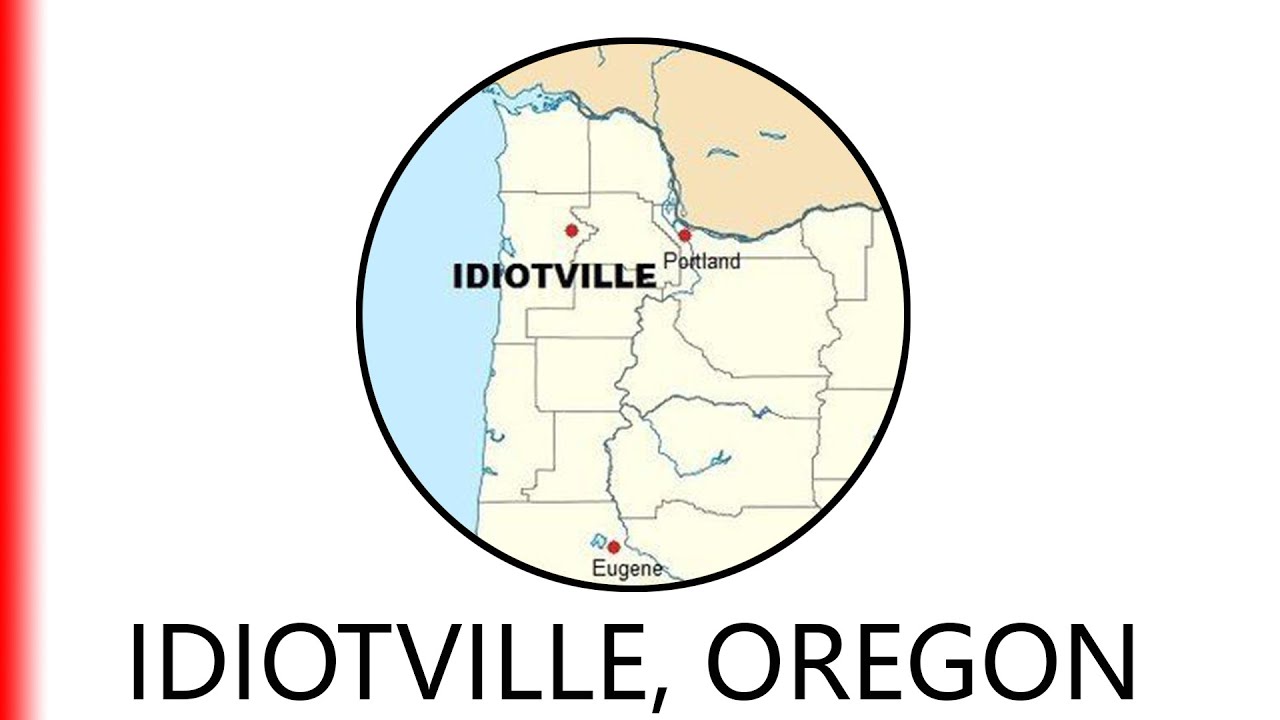
Oregon and Washington have no shortage of interesting places to visit, but some of their town names are almost as memorable as the scenery. Take Boring, Oregon, for example. Or Humptulips, Washington. And somewhere in the Oregon Coast Range, there’s even a place historically known as Idiotville. You have to admit, those are names that tend to catch your attention when you’re looking at a map.
Of course, there’s usually more to these names than a good laugh. Some honor early settlers and railroad workers, while others reflect the languages and histories of Indigenous peoples who lived in the region long before Washington and Oregon became states. A few were inspired by local landmarks, and others seem to have resulted from mistakes that nobody bothered to correct.
We’ve collected 23 unusually named places across Oregon and Washington, including incorporated towns, small communities, and a few historic localities. Some have well-documented origins, while others come with competing explanations or local legends that have been passed down for generations. Either way, they’re an interesting reminder that the Pacific Northwest’s history can be just as colorful as its geography.
Boring, Oregon
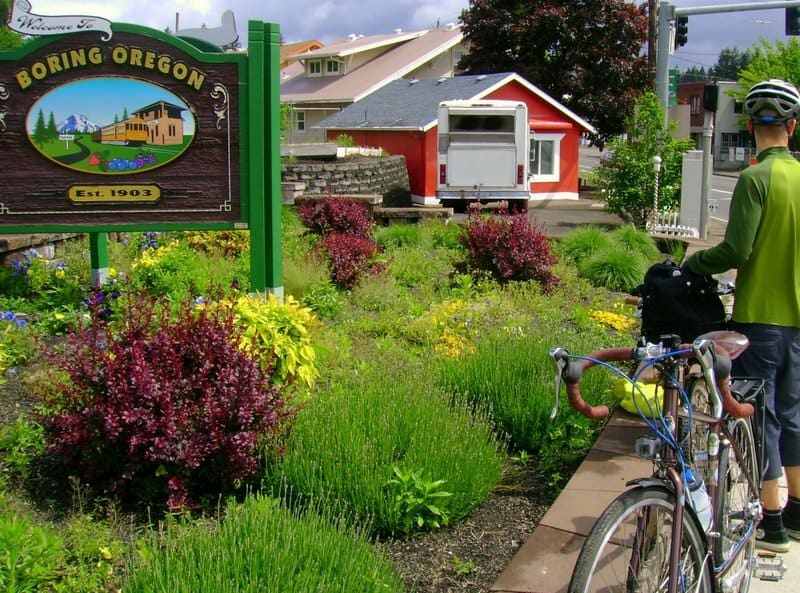
©"Boring, Oregon, US" by incommunicado is licensed under BY 2.0. - Original / License
Of all the places in Oregon, Boring might have the most unfortunate name from a tourism perspective. Fortunately, it has absolutely nothing to do with the quality of life in the community. The unincorporated town in Clackamas County was named after William Harrison Boring, a Union Army veteran and early settler. The area was initially known as the Boring neighborhood before a townsite called Boring Junction was established in 1903. The name was eventually shortened to Boring.
Rather than fight the jokes, residents have embraced them. The community developed a relationship with Dull, Scotland, and the two places have celebrated their similarly unfortunate names through events and publicity. Boring is also located near the Springwater Corridor and the Mount Hood region, giving outdoor enthusiasts plenty to do. So despite what the name might suggest, visiting Boring doesn’t necessarily mean you’ll have a boring afternoon. The joke practically writes itself, but at least the residents seem to have a pretty good sense of humor about it.
Humptulips, Washington
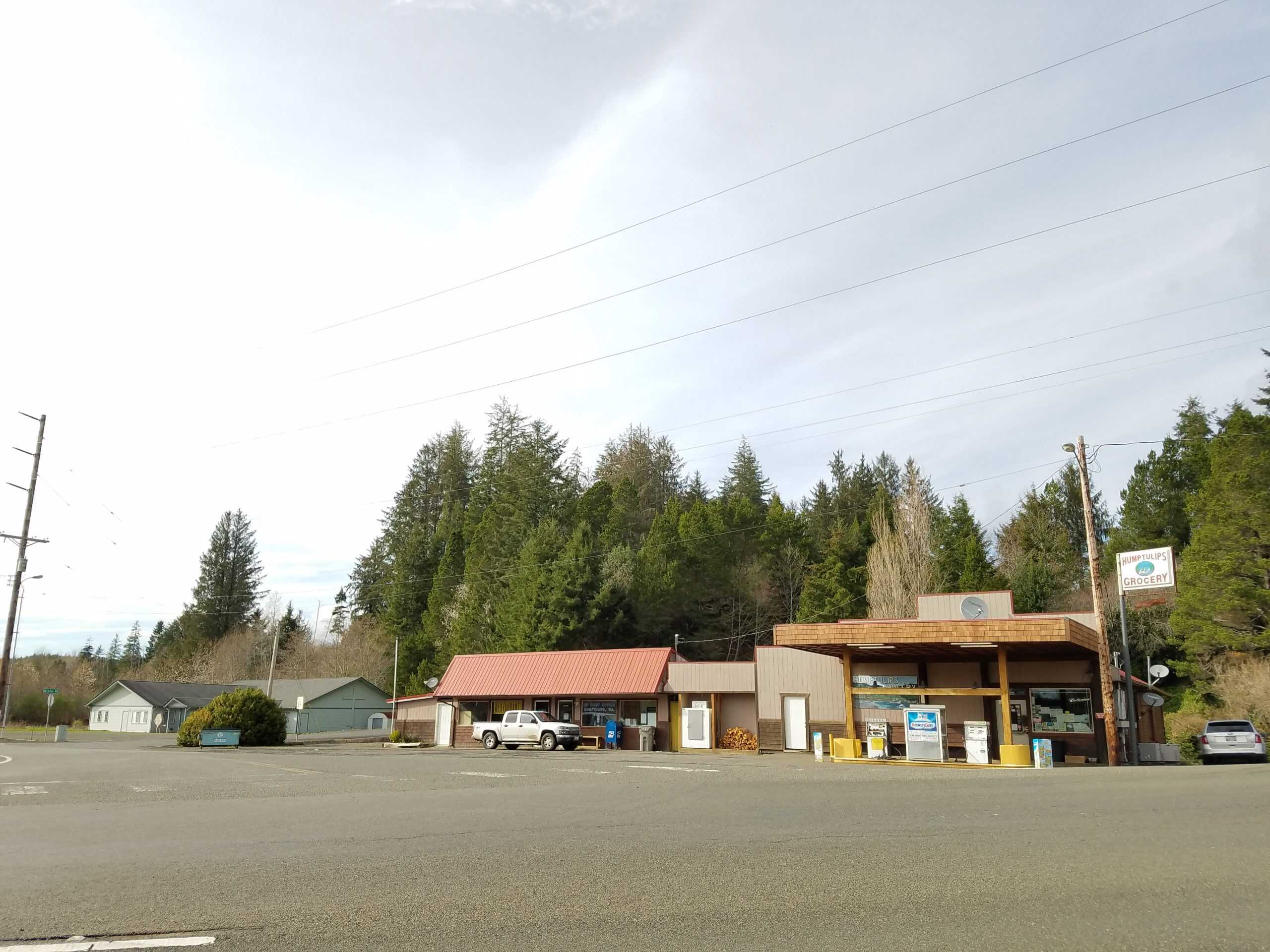
©"Humptulips" by ECTran71 is licensed under BY-SA 4.0. - Original / License
Humptulips might sound like somebody invented the name during a particularly entertaining conversation, but it has a much older history. Located in Grays Harbor County, the small community takes its name from the Humptulips River and an Indigenous place name associated with the region. One commonly documented explanation traces it to a Quinault expression meaning “hard to pole,” a reference to the difficulty of moving canoes upstream using long poles.
Not every historical source agrees on the exact translation. Some older accounts interpret the name as meaning “chilly region,” making its precise linguistic origins a little more complicated than most roadside trivia suggests. The area was once an important logging center, and timber harvesting helped shape its early economy. Today, Humptulips is a small rural community surrounded by forests and rivers. It’s also a place that regularly appears on lists of America’s most unusual names. Visitors might chuckle at the roadside signs, but there’s a genuine piece of regional and Indigenous history behind those memorable letters.
Zigzag, Oregon
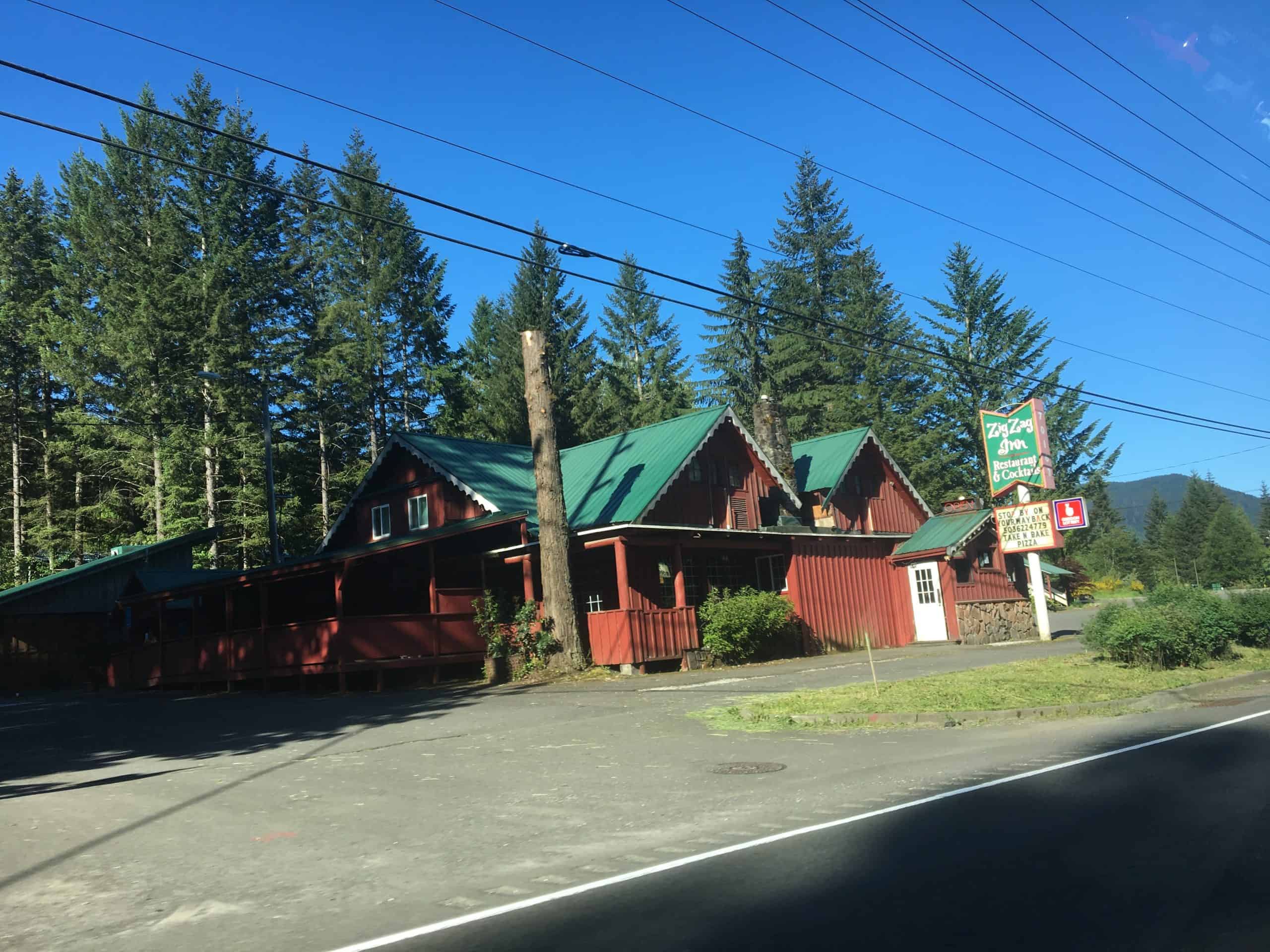
©"Zigzag Inn - Zigzag, Oregon" by Kingofthedead is licensed under BY-SA 4.0. - Original / License
Zigzag sounds more like something you’d do while trying to avoid a pothole than the name of a community near Mount Hood. But there’s a perfectly reasonable explanation behind it. In October 1845, pioneer Joel Palmer described a difficult descent along a steep mountainside, where travelers had to repeatedly change direction to make their way down. The route followed a zigzagging pattern, and the description eventually became associated with nearby geographic features.
Over time, the name was applied to Zigzag Canyon, Zigzag Glacier, the Zigzag River, and eventually the community itself. A local post office received the name Zigzag in 1918. The area later became a popular stopping point for travelers exploring Mount Hood, with historic landmarks including the Zigzag Inn. Today, the community sits along U.S. Highway 26 near Rhododendron, surrounded by mountain scenery and outdoor recreation opportunities. It’s a good example of a place name that sounds ridiculous until you learn the geography behind it. Considering how winding some of the roads around Mount Hood can be, Zigzag actually seems pretty appropriate.
Yelm, Washington
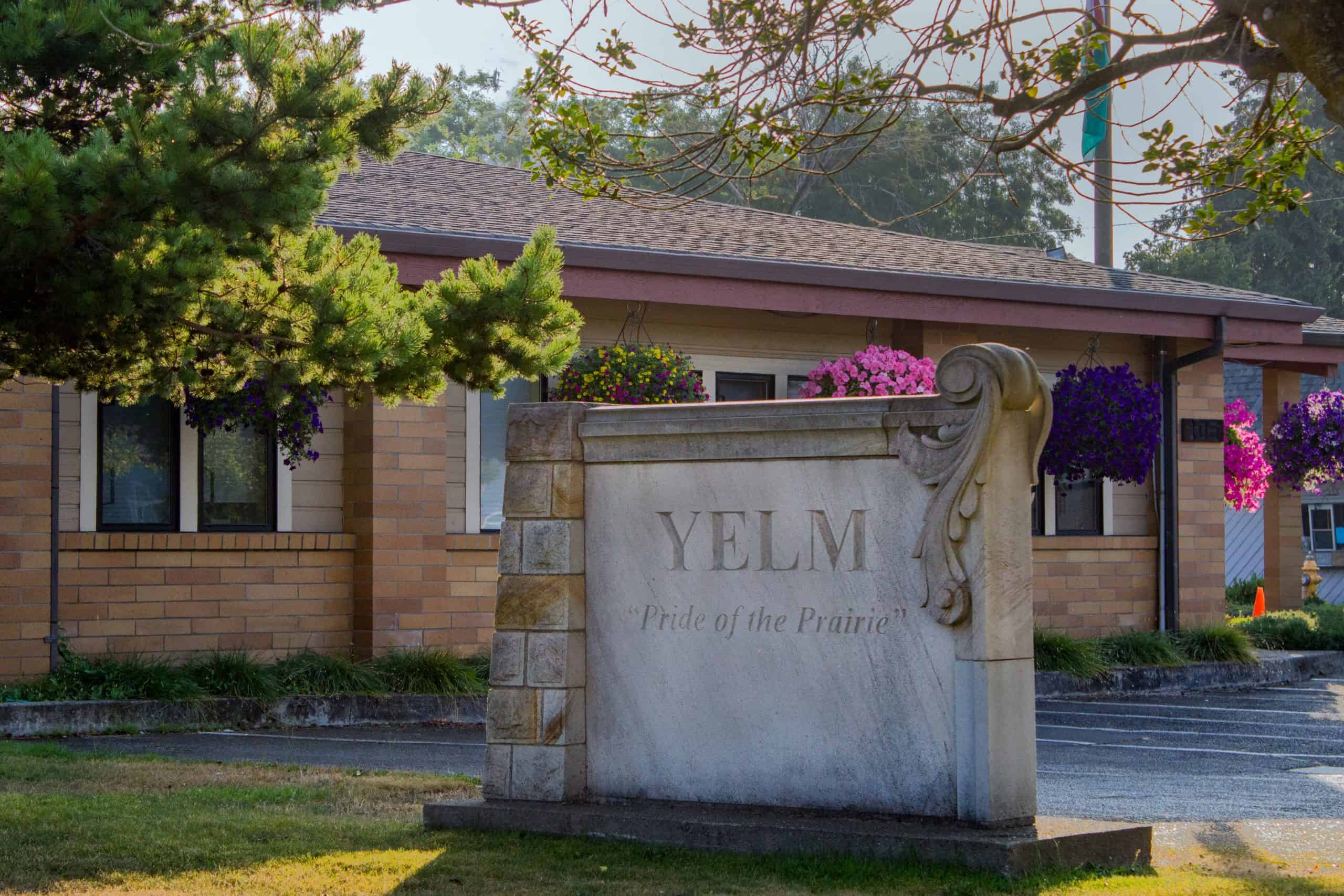
©"City Hall in Yelm, Washington" by Rising*From*Ashes is licensed under BY-SA 4.0. - Original / License
Yelm is one of those Washington place names that probably doesn’t look particularly unusual until someone from out of town tries to pronounce it. Located southeast of Olympia in Thurston County, the city has a name rooted in the Indigenous history of the region. Local historical accounts commonly trace Yelm to a Coast Salish expression associated with heat rising from the land, sometimes translated as “heat waves from the sun.” The precise linguistic form and interpretation vary between sources, so it’s better understood as a traditional explanation than a completely settled translation.
The Yelm Prairie was an important landscape long before modern development transformed the surrounding area. Over time, farming, transportation routes, and the nearby military presence at Joint Base Lewis-McChord contributed to the city’s growth. Today, Yelm is considerably larger than many of the tiny communities featured in this collection. Its unusual name remains a connection to the people and landscapes that shaped the region long before Washington became a state. And unlike some of the names on this list, Yelm isn’t particularly difficult to pronounce once you’ve heard a local say it.
Drain, Oregon
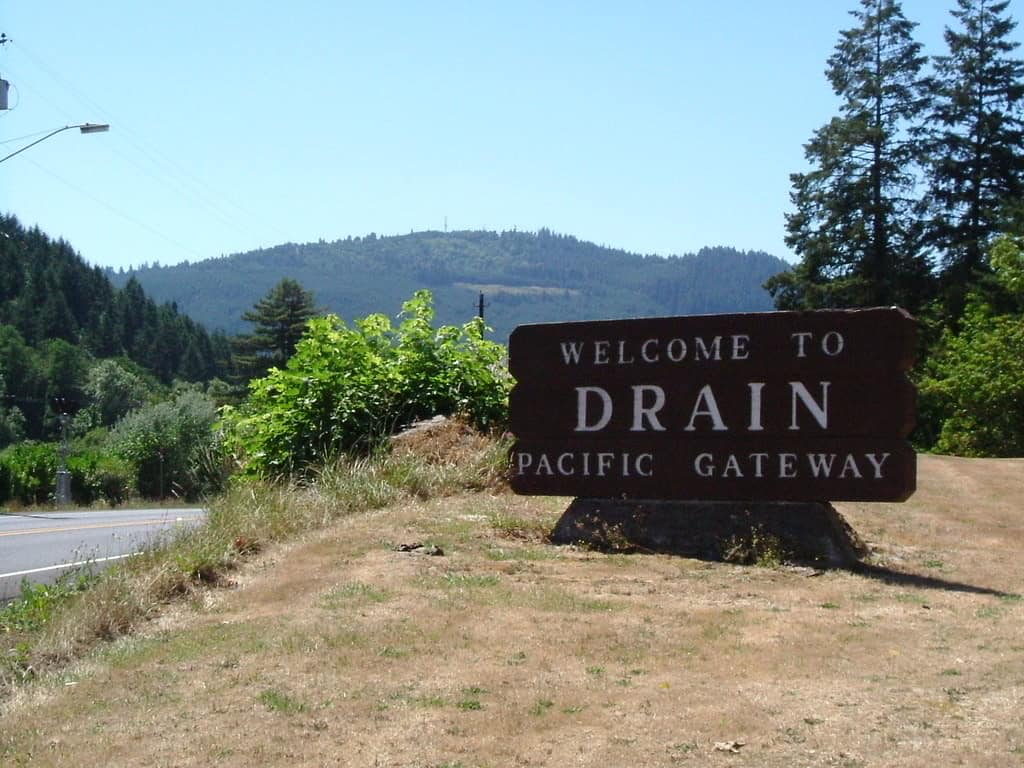
©"Welcome to Drain, Oregon" by theslowlane is licensed under BY 2.0. - Original / License
Drain certainly isn’t the most flattering name for a town, but the community’s founders weren’t trying to make a statement about plumbing. Located in Douglas County, Drain was named after Charles Drain, an early settler and businessman who helped develop the community during the 19th century. His involvement in local land development and railroad expansion helped establish the town as a transportation center.
The railroad played an important role in Drain’s early development, connecting the community to other parts of western Oregon. The city also became associated with education, including the establishment of a state normal school during the late 1800s. Today, Drain remains a small community near Interstate 5, surrounded by the wooded hills and agricultural landscapes of Douglas County. Its name may inspire a few jokes from passing motorists, but it’s ultimately a family name that became part of Oregon’s geography. I suppose that’s a good reminder to think carefully before naming a town after yourself. You never know how future generations might interpret it.
Concrete, Washington

©"Cement Silos in Concrete, Washington" by Steven Pavlov is licensed under BY-SA 3.0. - Original / License
Concrete might sound like a place where trees are unwelcome and everything is covered in pavement, but this little Skagit County town is surrounded by some of Washington’s most impressive mountain scenery. The name comes from the cement industry that helped establish the community during the early 20th century. Two neighboring settlements, Baker and Cement City, eventually combined under the name Concrete, reflecting the importance of local cement manufacturing.
The industry became a major employer, and the town’s historic cement silos remain among its most recognizable landmarks. Concrete also served as a gateway to construction projects and transportation routes in the North Cascades. Today, visitors can explore the Upper Skagit Valley, follow the North Cascades Highway, and enjoy nearby hiking and recreation areas. The town has also made appearances in popular culture, including the novel and film This Boy’s Life, based on Tobias Wolff’s experiences growing up in Washington. Despite its industrial-sounding name, Concrete is considerably more scenic than you might expect. In fact, the mountains surrounding it are probably a lot more memorable than the pavement.
Wankers Corner, Oregon
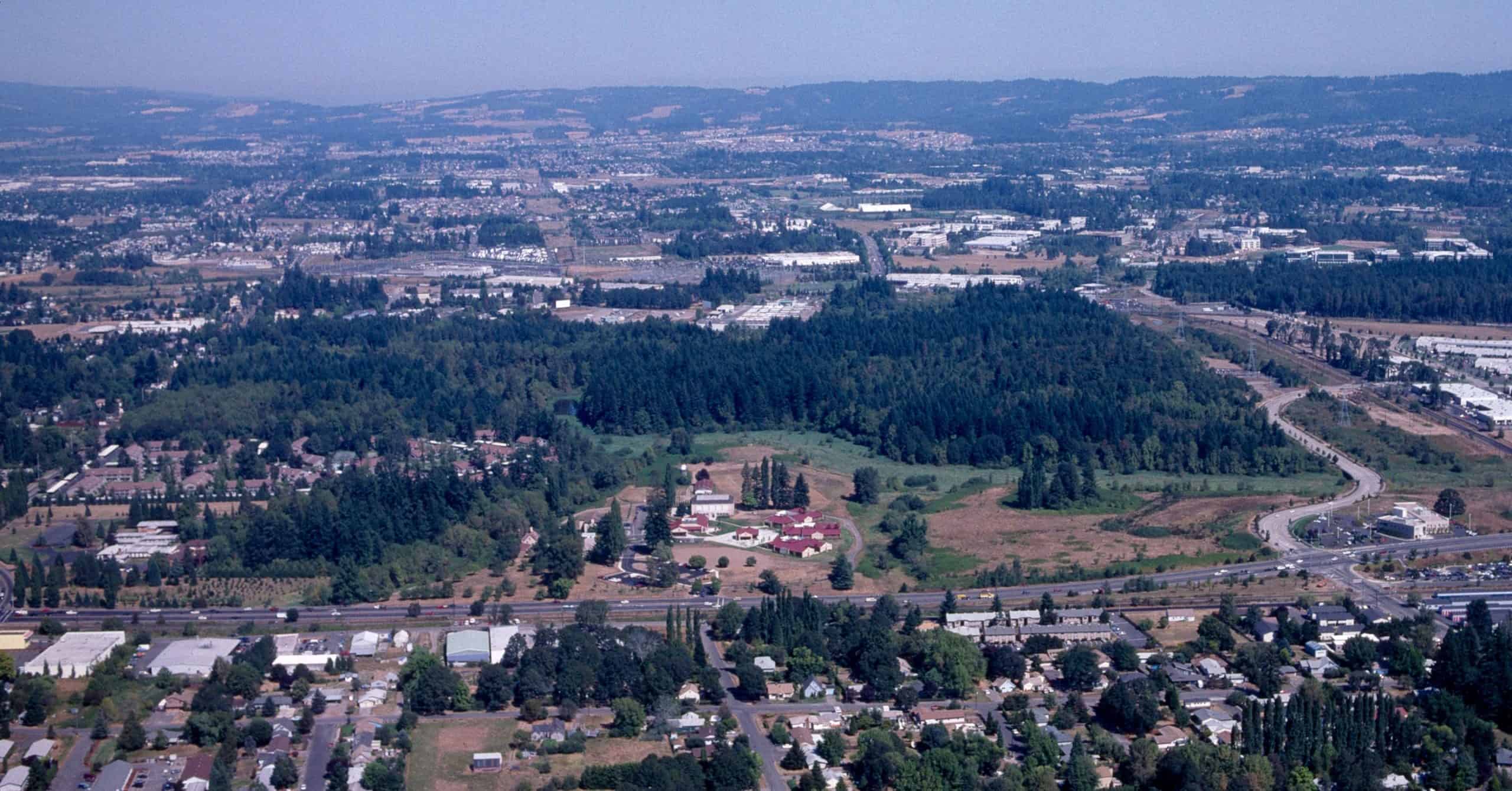
©"Aerial view Tualatin Hills Nature Park 1998" by Steve Morgan is licensed under BY-SA 3.0. - Original / License
Well, this one probably doesn’t need much explanation as to why it makes people laugh. Wankers Corner is a historic crossroads locality near the Tualatin and Stafford area in Clackamas County. The name is associated with the Wanker family, early residents whose surname became attached to the intersection and surrounding neighborhood. Despite the unfortunate modern interpretation of the name, there’s no indication it was originally intended as anything other than a geographic reference to a local family.
Wankers Corner isn’t an incorporated city, and visitors shouldn’t expect to find a traditional downtown with a welcome sign and souvenir shops. It’s better described as a locally recognized place name associated with a rural crossroads that gradually became part of the broader suburban landscape south of Portland. The name has nevertheless developed a life of its own, regularly appearing in collections of unusual American place names. It’s one of those situations where a completely ordinary family surname took on an entirely different meaning over time. The photograph here shows scenery elsewhere in the greater Portland area rather than the actual crossroads, so it should be treated as a regional illustration.
Vader, Washington
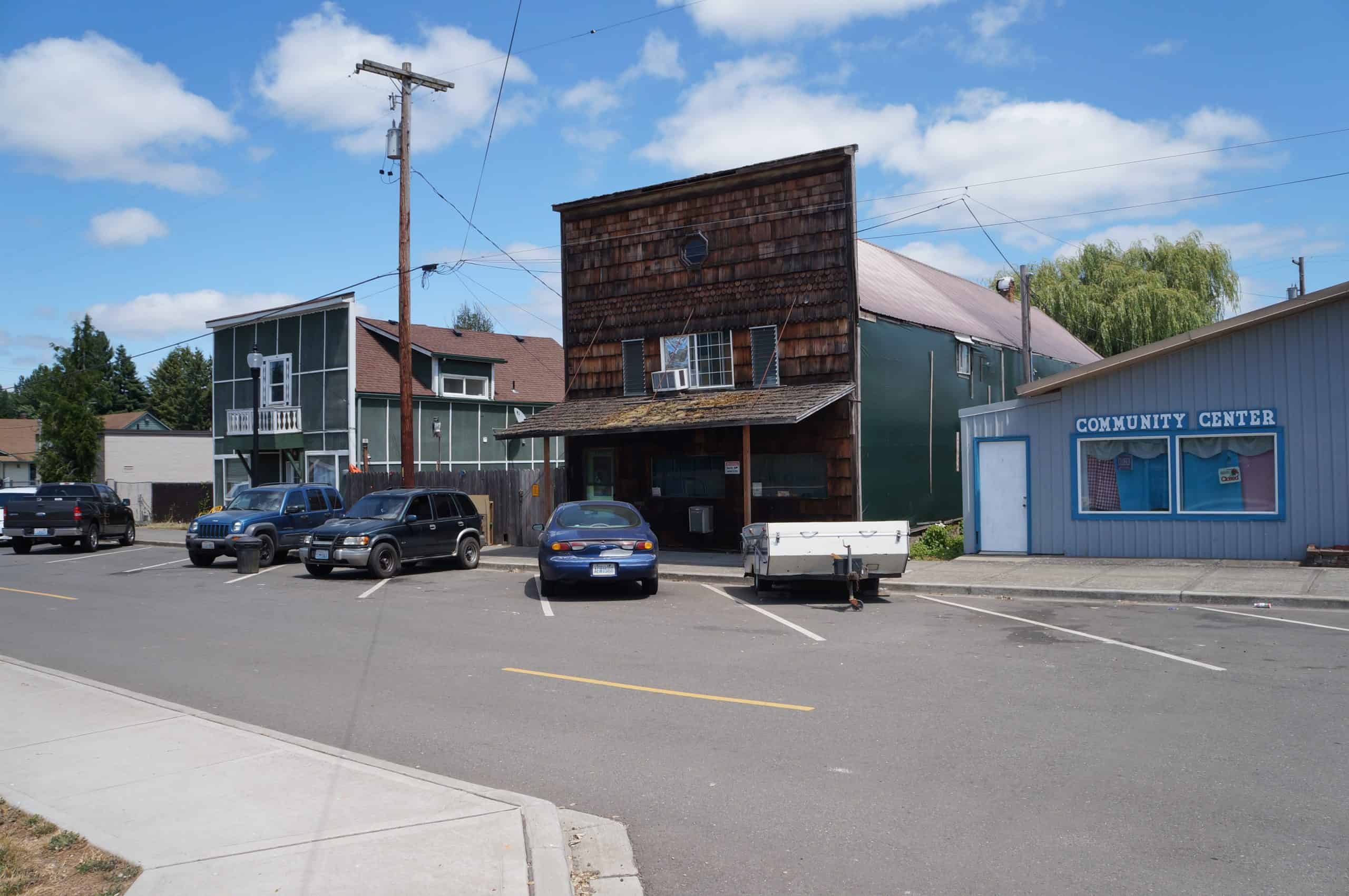
©"A Street in Vader, Washington" by SounderBruce is licensed under BY-SA 4.0. - Original / License
Long before Darth Vader became one of cinema’s most recognizable villains, Washington already had a town with the same name. Located in Lewis County, Vader was originally known as Little Falls, a reference to a nearby waterfall. The community later adopted the name Vader in the early 20th century, decades before the first Star Wars film arrived in theaters in 1977.
The precise story behind the change is a little more complicated than simply naming the town after a German immigrant. Historical accounts connect the name to railroad officials and a local resident, Martin Vader, but versions differ on the exact decision-making process. What’s certain is that the name existed long before George Lucas introduced his famous character. Today, Vader remains a small community along the railroad corridor of southwest Washington. The town has occasionally embraced its unexpected connection to science fiction, although its history is rooted in logging, transportation, and regional settlement rather than the Galactic Empire. If nothing else, it probably has one of the more entertaining names to announce when telling someone where you live.
Nimrod, Oregon
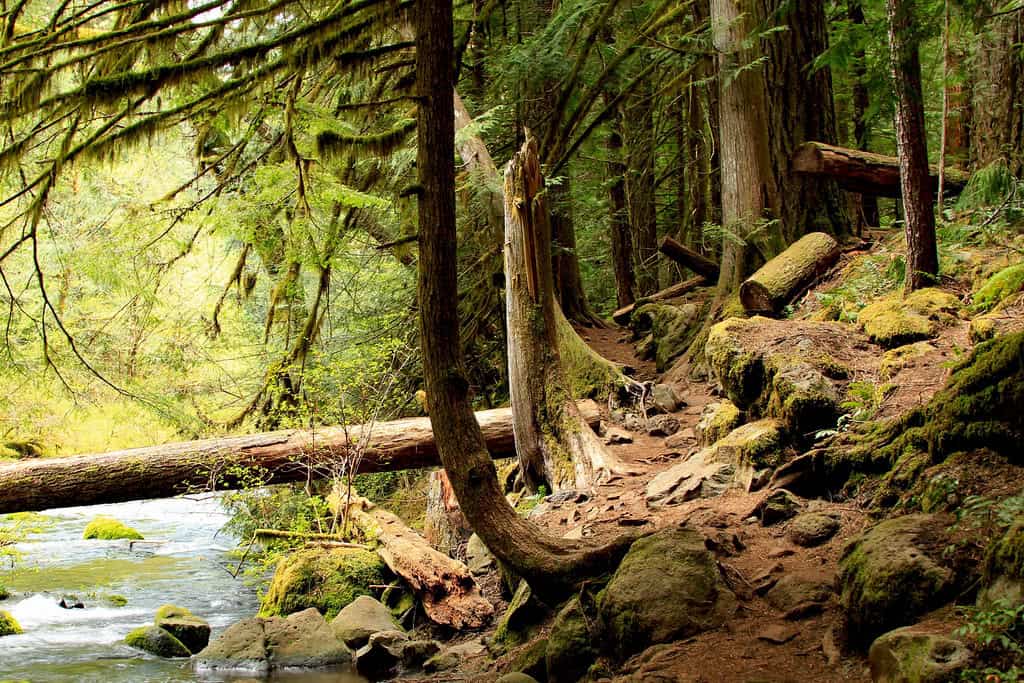
©"McKenzie River Hiking Trail, Oregon" by Bonnie Moreland (free images) is licensed under PDM 1.0. - Original / License
These days, calling someone a nimrod usually isn’t intended as a compliment. But that wasn’t always the case. In the Bible, Nimrod is described as a mighty hunter, and the name historically became associated with hunting ability rather than foolishness. That’s particularly relevant to the small Oregon community of Nimrod, located along the McKenzie River in Lane County.
The community’s name is commonly associated with the biblical hunter, although local accounts differ about whether it referred directly to the biblical figure or to an early resident who earned the nickname. The exact naming circumstances aren’t firmly established. The surrounding McKenzie River area has long attracted anglers, outdoor enthusiasts, and travelers exploring the western Cascades. Today, Nimrod is better understood as a small locality than a developed town with a traditional commercial center. As for how the name became an insult, that shift occurred much later in popular usage. So while modern visitors might find it funny, the original meaning was considerably more flattering than the one most people recognize today.
Forks, Washington

©Maks Ershov/Shutterstock.com
Forks probably wouldn’t appear on many lists of unusual town names if it weren’t for one rather famous vampire franchise. Located on Washington’s Olympic Peninsula, the community became internationally recognizable through Stephenie Meyer’s Twilight novels and their film adaptations. But the name itself has nothing to do with vampires, werewolves, or an unusually large collection of silverware.
The name reflects the area’s geography, particularly the nearby forks and tributaries of rivers flowing through the western Olympic Peninsula. Forks developed as a logging community, with the surrounding forests playing an important role in its economy for generations. Today, the town is a popular base for exploring Olympic National Park, the Hoh Rain Forest, and Washington’s wild Pacific coastline. Twilight tourism also remains part of its identity, with fans visiting locations associated with the fictional story. Interestingly, much of the film production took place outside Forks, including locations in Oregon and British Columbia. It’s a pretty remarkable transformation for a small logging town whose name originally described the rivers surrounding it.
Idiotville, Oregon
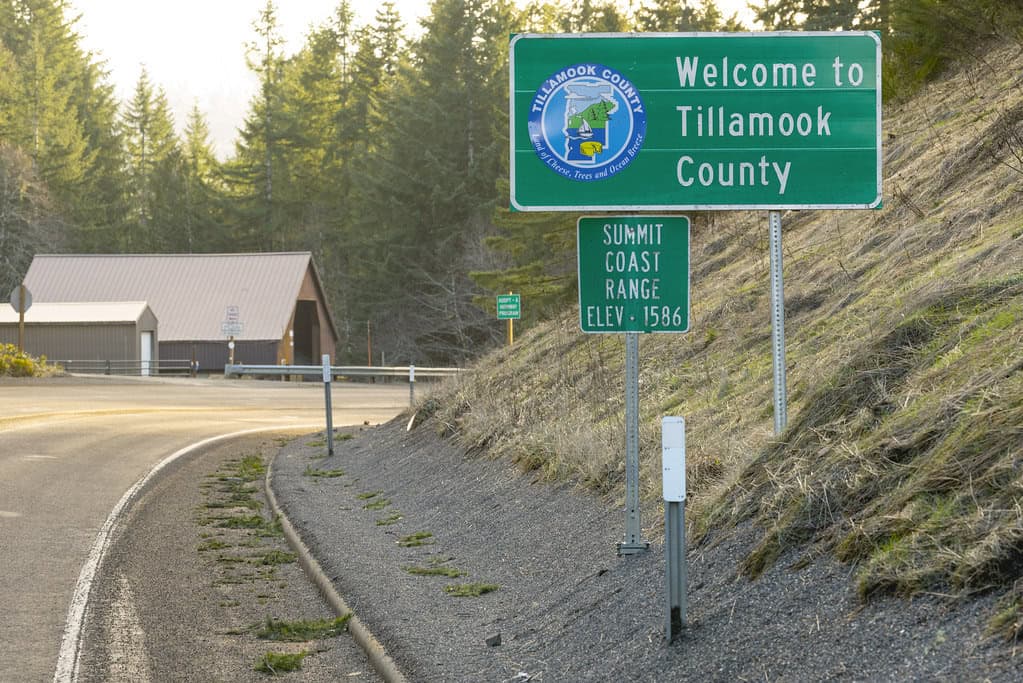
©"Welcome to Tillamook County" by OregonDOT is licensed under BY 2.0. - Original / License
If you’re wondering whether there really was a place called Idiotville, the answer is yes, although you shouldn’t expect to find a busy town there today. Idiotville is a historic locality in the Coast Range of northwestern Oregon, associated with logging activity in the remote forests of Tillamook County. The name appears in geographic records and has become something of a local curiosity, largely because it sounds like an insult somebody turned into a place name.
According to a commonly repeated local explanation, the name came from the isolation of a logging camp in the area. The work was difficult, the location was remote, and the joke was that only an idiot would choose to live or work so far from civilization. It’s an entertaining story, although the precise circumstances behind the naming aren’t conclusively documented. Today, Idiotville isn’t an active incorporated town, and much of the surrounding landscape consists of forest roads and timberland. Travelers should also remember that the photograph accompanying this entry represents the broader Tillamook County area rather than a surviving Idiotville town center. Still, it’s one of those names that’s almost impossible to forget once you’ve heard it.
Stehekin, Washington
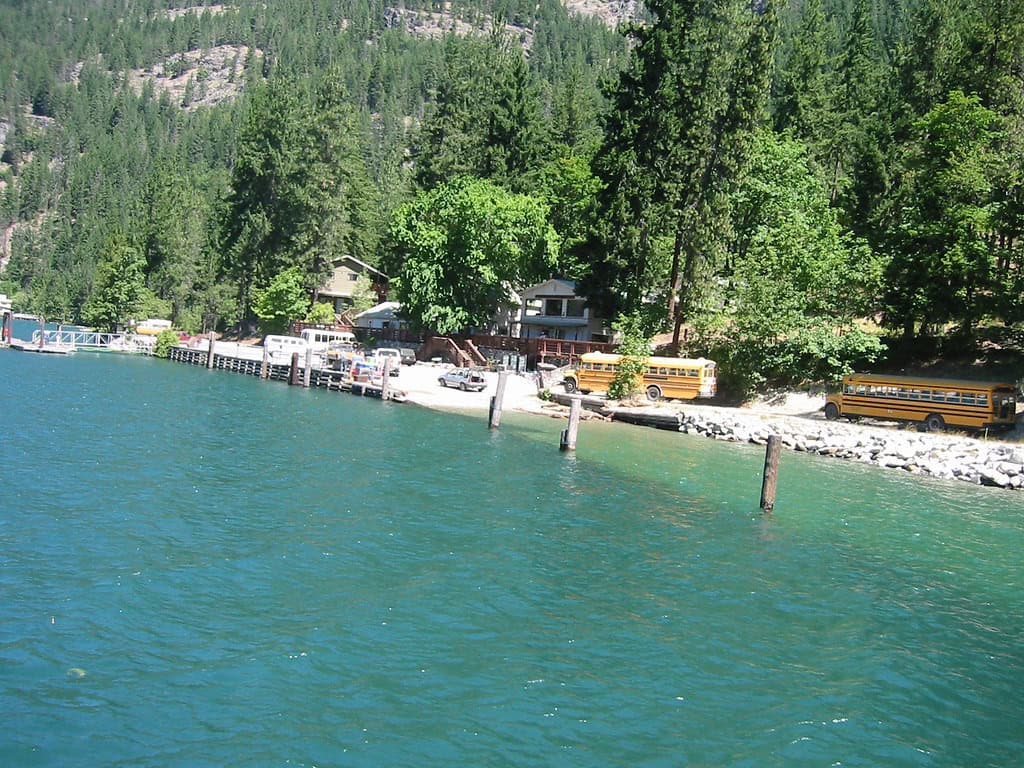
©"Stehekin, WA" by JBColorado is licensed under BY-ND 2.0. - Original / License
Stehekin has one of the more beautiful settings of any community on this list. Located at the northern end of Lake Chelan in the North Cascades, the remote settlement is surrounded by mountains and wilderness. Its name is commonly traced to an Indigenous word interpreted as “the way through,” reflecting the valley’s historical importance as a travel route through the mountains. The region has long been connected to Indigenous communities and their transportation networks.
One of the most interesting things about Stehekin is how difficult it is to reach compared with most modern American communities. There’s no public road connecting it directly to the outside highway system. Visitors typically arrive by boat, floatplane, or on foot using established trails. The community serves as a gateway to the Lake Chelan National Recreation Area and nearby North Cascades National Park wilderness. It’s also a popular destination for hikers, anglers, and travelers seeking a quieter experience. Stehekin’s name may be unfamiliar to outsiders, but its history makes considerably more sense when you consider the importance of the valley as a route through otherwise rugged terrain.
Christmas Valley, Oregon
©"Baker County Tourism – basecampbaker.com 11712" by TravelBakerCounty is licensed under BY-ND 2.0. - Original / License
Christmas Valley sounds like the kind of place where it should snow every December and somebody should be selling hot chocolate on every corner. In reality, this unincorporated community sits in Oregon’s high desert, surrounded by sagebrush, volcanic landscapes, and some of the driest scenery in the state. The modern town developed during the 1960s as part of a real estate promotion, but the Christmas name was associated with the larger valley well before the community itself was established.
The Oregon Encyclopedia notes that the origin of the earlier Christmas Lake Valley name is uncertain and may have involved a spelling error in early geographic records. Developer M.L. “Doc” Holliday later helped establish the modern community, using festive street names as part of the marketing effort. The result was an unusual combination of holiday imagery and eastern Oregon desert scenery. Today, Christmas Valley attracts visitors interested in outdoor recreation, including nearby sand dunes, volcanic formations, and wide-open landscapes. It’s definitely not the traditional Christmas-card setting you might imagine from the name, but that contrast is part of what makes the place interesting.
Bucoda, Washington
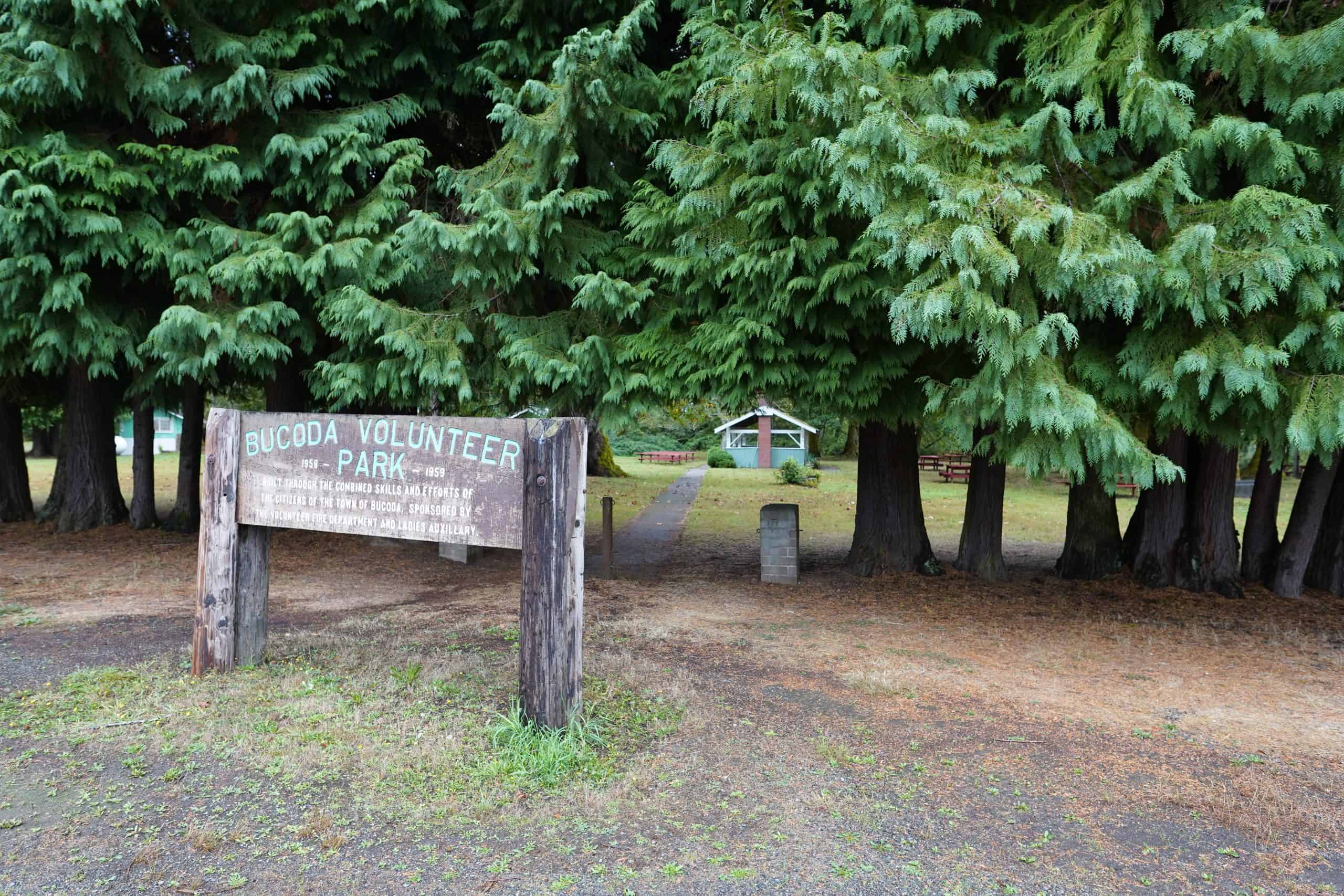
©"Bucoda Volunteer Park, September 2020" by Steven Baltakatei Sandoval is licensed under BY-SA 4.0. - Original / License
Bucoda sounds like it might have come from an Indigenous language, but the name is actually an unusual combination of three surnames. Located in Thurston County, the small Washington town was originally known as Seatco. In 1890, the community adopted the name Bucoda, combining portions of Buckley, Coulter, and David, three men associated with local coal and railroad development.
What makes Bucoda especially interesting is its earlier history. The community was home to Washington Territory’s first penitentiary, a facility that developed a notoriously harsh reputation during the 19th century. Prisoners were used as laborers in nearby industries, and the arrangement became controversial enough that the penitentiary eventually moved to Walla Walla in 1887. The original Seatco name was associated with an Indigenous expression sometimes interpreted as referring to spirits or ghosts, although historical translations vary. Today, Bucoda is a quiet small town that has embraced some of its spooky associations, particularly through seasonal Halloween activities. Considering its history, the cheerful-sounding modern name might actually be the least unusual thing about the place.
Dufur, Oregon
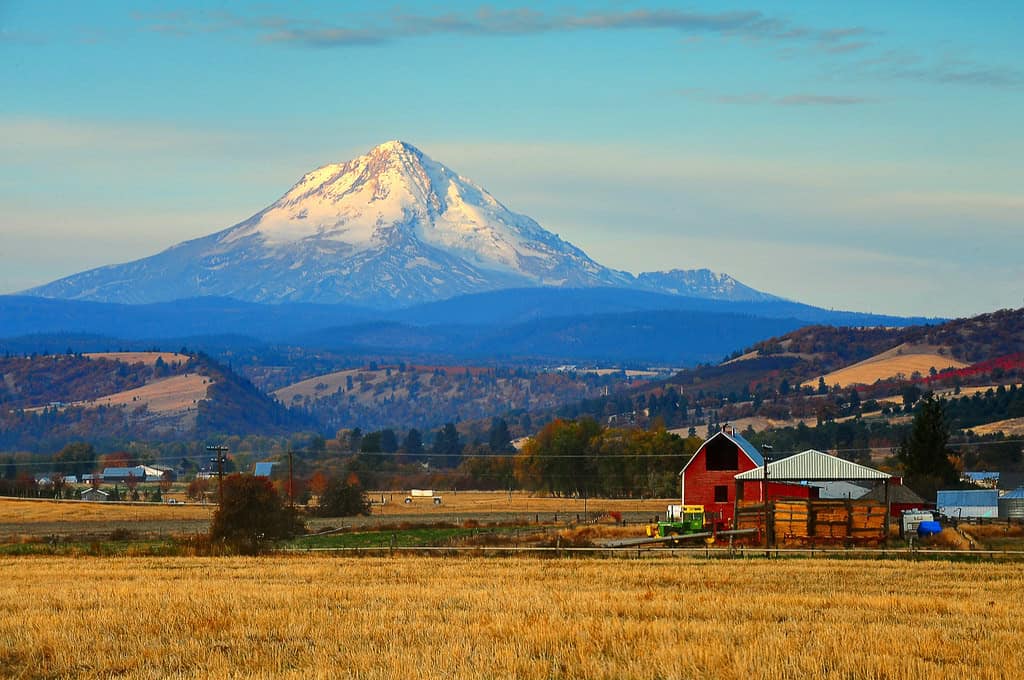
©"Mt Hood and Dufur Oregon-Mt Hood" by Forest Service Pacific Northwest Region is licensed under PDM 1.0. - Original / License
Dufur might look like somebody forgot a few letters while filling out a town-name application, but it’s another Oregon community named after an early settler family. Located in Wasco County southeast of The Dalles, the town takes its name from the Dufur family, who helped establish the area’s agricultural community during the 19th century. The surrounding landscape is dominated by rolling farmland, with Mount Hood visible in the distance on clear days.
Although small, Dufur has a rich agricultural history and remains closely associated with the farming communities of north-central Oregon. Its historic buildings and rural setting offer a different kind of experience from the state’s larger tourist destinations. The town is also located along routes that connect the Columbia River Gorge with the interior of Oregon. As for the name, visitors unfamiliar with the region may need a moment to figure out the pronunciation, generally rendered as “DOO-fur.” It may not be quite as ridiculous as Idiotville or Wankers Corner, but it’s distinctive enough to make people glance twice at a road sign.
Tenmile, Oregon
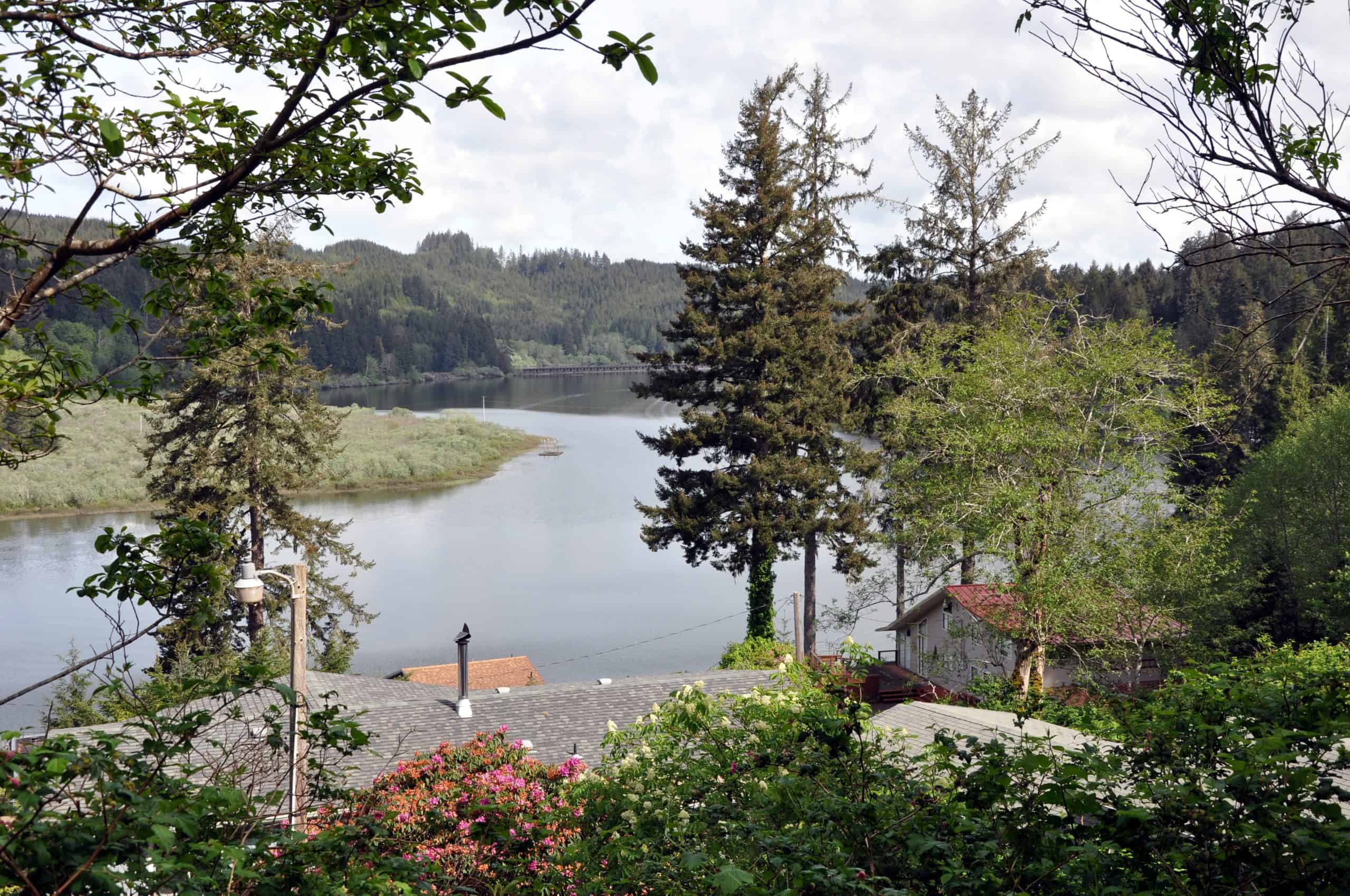
©"North Tenmile Lake in Oregon" by Finetooth is licensed under BY-SA 3.0. - Original / License
Sometimes the simplest explanation really is the correct one. Tenmile, an unincorporated community in Douglas County, received its name from a distance measurement. But the original story is a little different from the often-repeated claim that the community sits exactly ten miles from Roseburg. According to the historical reference Oregon Geographic Names, the name originated when a man living in Happy Valley drove cattle to graze at a location approximately ten miles away.
That grazing area eventually became known as Tenmile, and the name remained associated with the surrounding community. Oregon actually has several geographic features bearing the Tenmile name, including lakes and streams in other parts of the state, so it’s easy to confuse their histories. The photograph shown here depicts North Tenmile Lake near Lakeside, which is not the same location as the Douglas County community. The original naming story is a good reminder that early settlers often favored straightforward geographic descriptions over elaborate names. When a place was about ten miles away, calling it Tenmile apparently seemed reasonable enough. Sometimes there’s no need to overcomplicate things.
Poulsbo, Washington

©"Front Street NE, Poulsbo, Washington" by Steven Pavlov is licensed under BY-SA 3.0. - Original / License
Poulsbo is one of the more recognizable communities on Washington’s Kitsap Peninsula, particularly for travelers who enjoy waterfront towns with a little personality. Its Norwegian heritage is a major part of its identity, and the downtown area reflects that history through architecture, businesses, and seasonal celebrations. The town’s name also has an interesting story, one involving an early immigrant and what may have been a simple postal mistake.
Local historical accounts credit Norwegian immigrant Jørgen Eliason with proposing the name Paulsbo, inspired by a place in Norway. According to the familiar story, postal officials misread or misspelled the proposed name, and Poulsbo became the official version. The details of the error have been repeated for generations, although historical accounts differ about precisely how it happened. Today, Poulsbo proudly celebrates its Scandinavian connections, earning the nickname “Little Norway.” Visitors can explore its waterfront, shops, bakeries, and restaurants along Liberty Bay. It’s a charming destination, regardless of whether the original spelling mistake happened exactly as the story suggests. Sometimes the best-known detail about a town’s name is also the one that deserves a little historical caution.
Lookingglass, Oregon
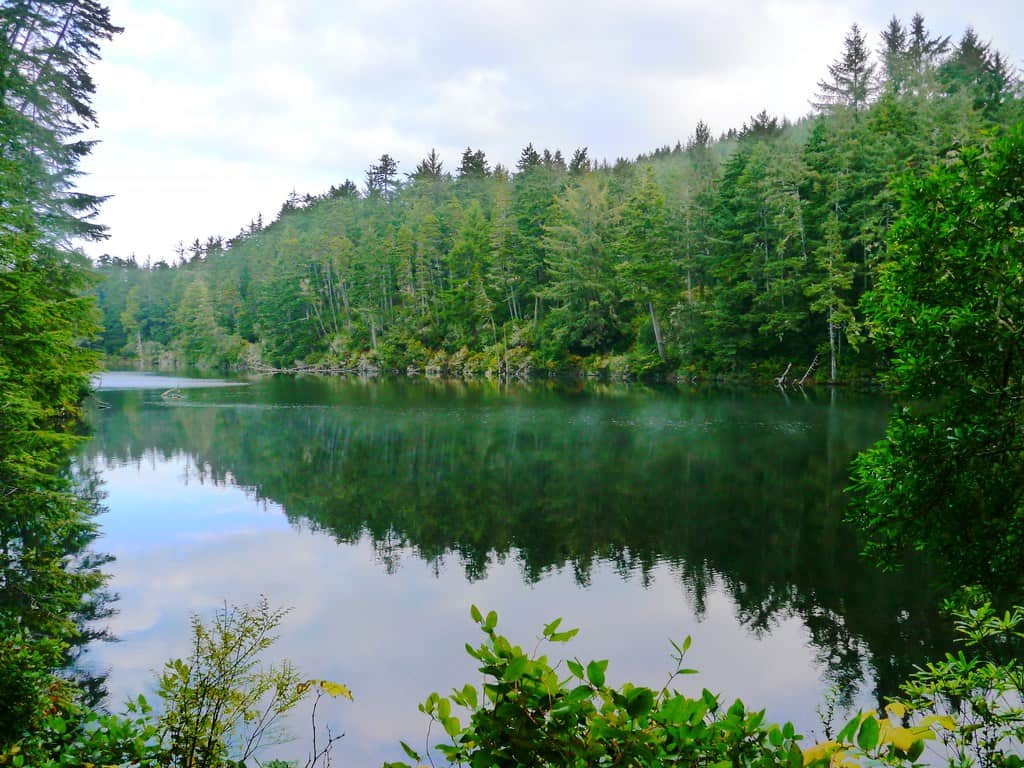
©"Lake Marie in Umpqua Lighthouse State Park, Douglas County, Oregon" by Only in Oregon is licensed under BY 2.0. - Original / License
Lookingglass sounds like a place borrowed from a fairy tale, but this small Douglas County community has a more complicated history. Located southwest of Roseburg, Lookingglass sits in a rural valley surrounded by farmland and wooded hills. The name has been linked to Lookingglass Creek and the surrounding valley, although different explanations have circulated about its original meaning.
One traditional explanation connects the name to the reflective appearance of water in the area, while another associates it with a person known as Looking Glass. However, the evidence for these accounts is not equally strong, and the precise origin should not be presented as settled fact. The community itself developed during the 19th century and became associated with agriculture and local transportation routes. Today, Lookingglass remains a small rural locality rather than a major tourist destination. Its name is probably more poetic than most on this list, but it still demonstrates how easily a geographic description or personal association can become a permanent part of a landscape. And frankly, Lookingglass sounds considerably more inviting than Drain.
Klickitat, Washington
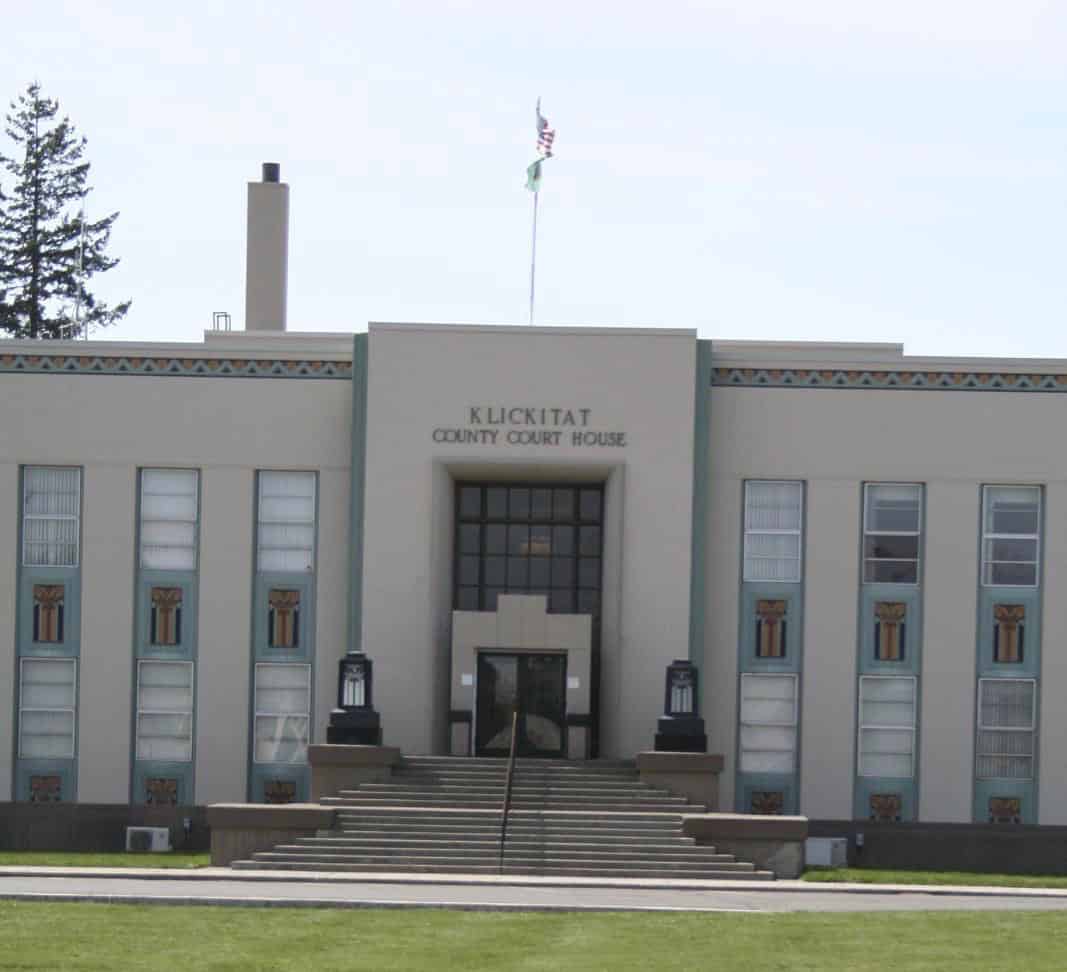
©"Goldendale WA - county courthouse" by bmaryman is licensed under BY 2.0. - Original / License
Klickitat is a name that appears across south-central Washington, including a river, a county, and a small community. Its origins are connected to Indigenous peoples of the Columbia River region, particularly the Klickitat or Klickitat-speaking people whose history is closely associated with the area. Historical linguistic explanations vary, with some sources tracing the term to a Chinook expression associated with the land beyond the Cascade Mountains.
The name is now closely associated with the Klickitat River, which flows south toward the Columbia River through scenic canyon country. The former railroad corridor along the river has also become the Klickitat Trail, a popular route for hiking, cycling, and horseback riding. Visitors interested in regional history can explore communities throughout Klickitat County, although the photograph shown here depicts the county courthouse in Goldendale rather than the community of Klickitat itself. The name represents far more than an unusual collection of syllables. It’s also a reminder of the region’s Indigenous history and the way older geographic names have survived through centuries of settlement and change.
Tiller, Oregon
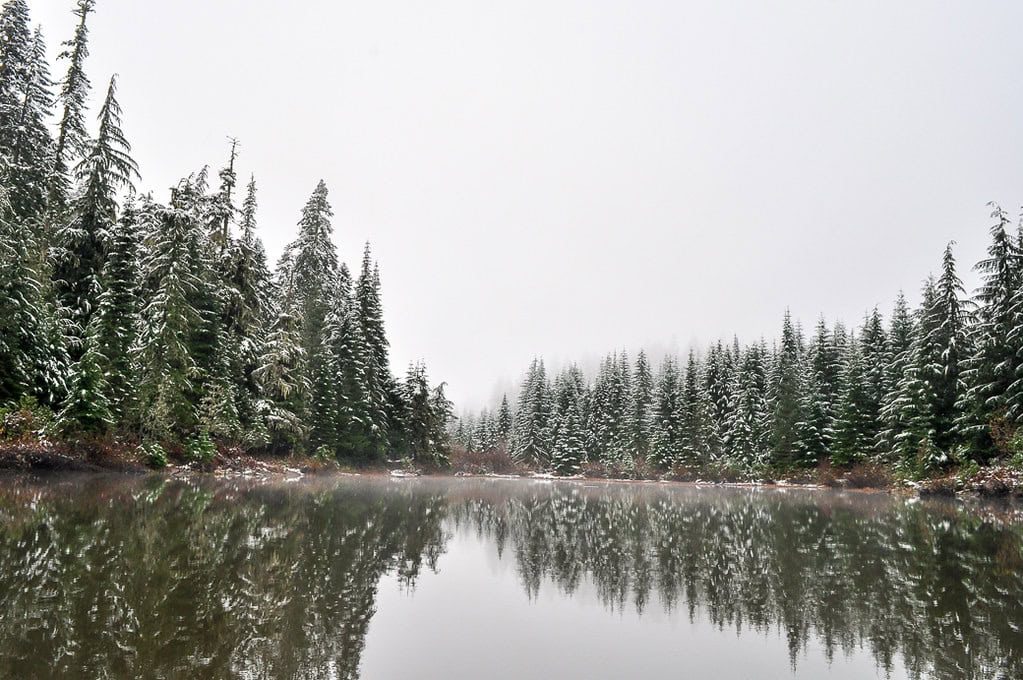
©"Tiller Ranger District, Umpqua National Forest" by Forest Service Pacific Northwest Region is licensed under PDM 1.0. - Original / License
Tiller sounds like a community that should be surrounded by farmland, but its name actually comes from a person rather than a farming implement. Located in Douglas County along the South Umpqua River, the small community was named after Aaron Tiller, an early settler associated with the area during the 19th century.
For years, Tiller served as a small commercial center for surrounding ranches, timber operations, and residents living in the South Umpqua Valley. The area’s economy was closely tied to logging, agriculture, and rural commerce. Today, the community is tiny, with much of its former commercial activity having disappeared or moved elsewhere. The surrounding region remains attractive to travelers interested in rivers, forests, and outdoor recreation. Tiller’s name is one of the less bizarre entries on this list, but it demonstrates a recurring pattern in Pacific Northwest history: a settler’s surname becomes attached to a crossroads, post office, or community, and eventually the original person fades from public memory while the name remains. At least in this case, the result sounds perfectly appropriate for a rural Oregon town.
Pe Ell, Washington
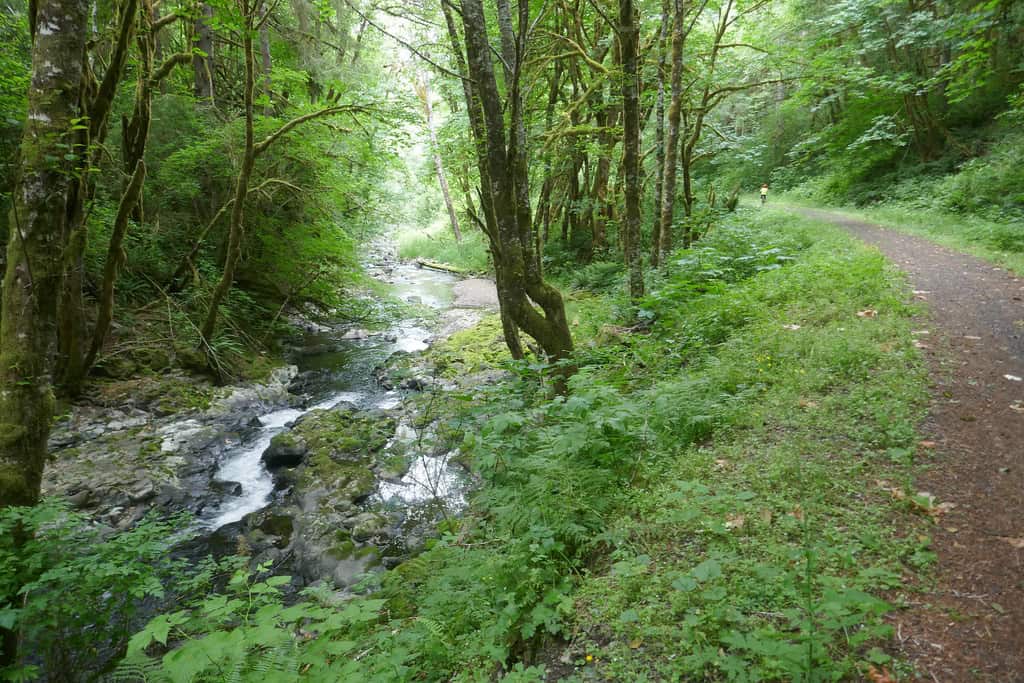
©"2021--1-2 July--Phil & Yuna bike on the Willapa Hills trail from Pe Ell, Washington" by LittleRoamingChief is licensed under BY 2.0. - Original / License
Pe Ell might be one of the shortest and most unusual town names in Washington, especially when you consider that it looks more like two initials than the name of an actual community. Located in Lewis County, the town developed during the late 19th century as logging and railroad activity expanded across southwest Washington. Its unusual name has inspired several competing explanations, none of which has been established beyond doubt.
Some local accounts suggest the name evolved from the pronunciation of a settler’s initials, while others connect it to attempts to pronounce a French name or surname. The original article’s explanation involving two settlers named Pierre and Ella is another version of local lore, but it shouldn’t be treated as a documented fact. Whatever the precise explanation, Pe Ell became an established community with a history tied to the region’s timber industry. Today, it remains a small town surrounded by forests and rural landscapes. For visitors, the name might initially look like a typo on a road sign, but it’s a genuine Washington place with more than a century of history behind it.
Yachats, Oregon
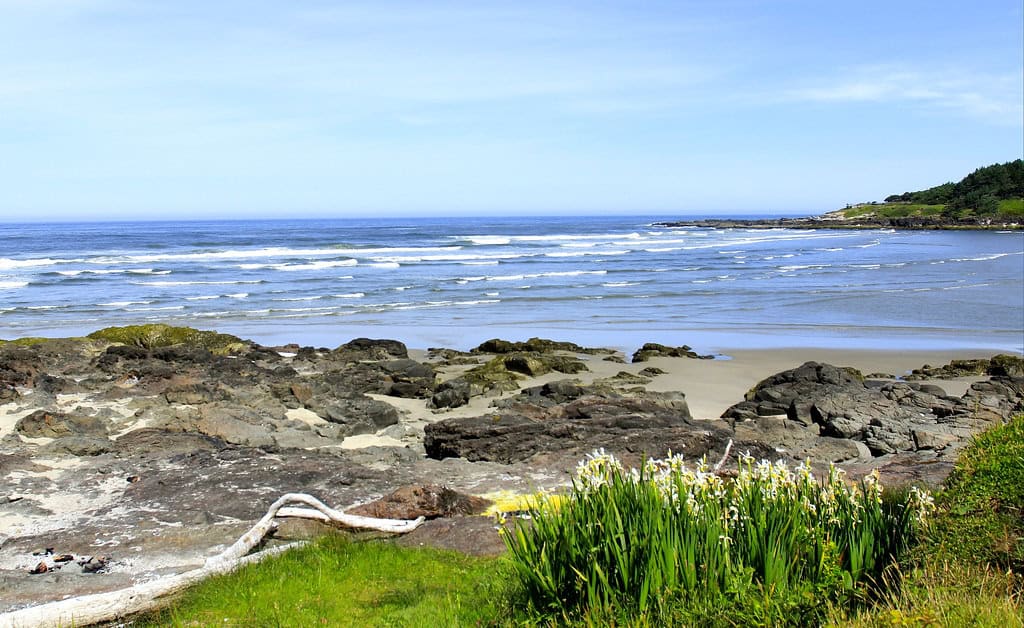
©"Yachats, Oregon" by Bonnie Moreland (free images) is licensed under CC0 1.0. - Original / License
Yachats is one of Oregon’s most scenic coastal communities, although its name regularly causes confusion among visitors who have never heard it spoken aloud. Pronounced approximately “YAH-hots,” the name has Indigenous origins and is associated with the river and coastal landscape of the area. Historical explanations of its meaning vary, with some accounts translating it as a reference to dark water near the foot of a mountain. As with many Indigenous place names recorded by early settlers, the precise original wording and translation deserve some caution.
The community itself is located along the central Oregon Coast, where the Yachats River meets the Pacific Ocean. Visitors can explore dramatic rocky shorelines, tide pools, nearby hiking trails, and the Cape Perpetua Scenic Area. Yachats has developed a reputation as an appealing destination for travelers who appreciate coastal scenery without the scale of Oregon’s larger resort towns. Its name is certainly memorable, but the location is probably an even better reason to visit. And once you’ve learned how to pronounce Yachats correctly, you can enjoy the small satisfaction of watching other tourists struggle with it for the first time.
Skamokawa, Washington
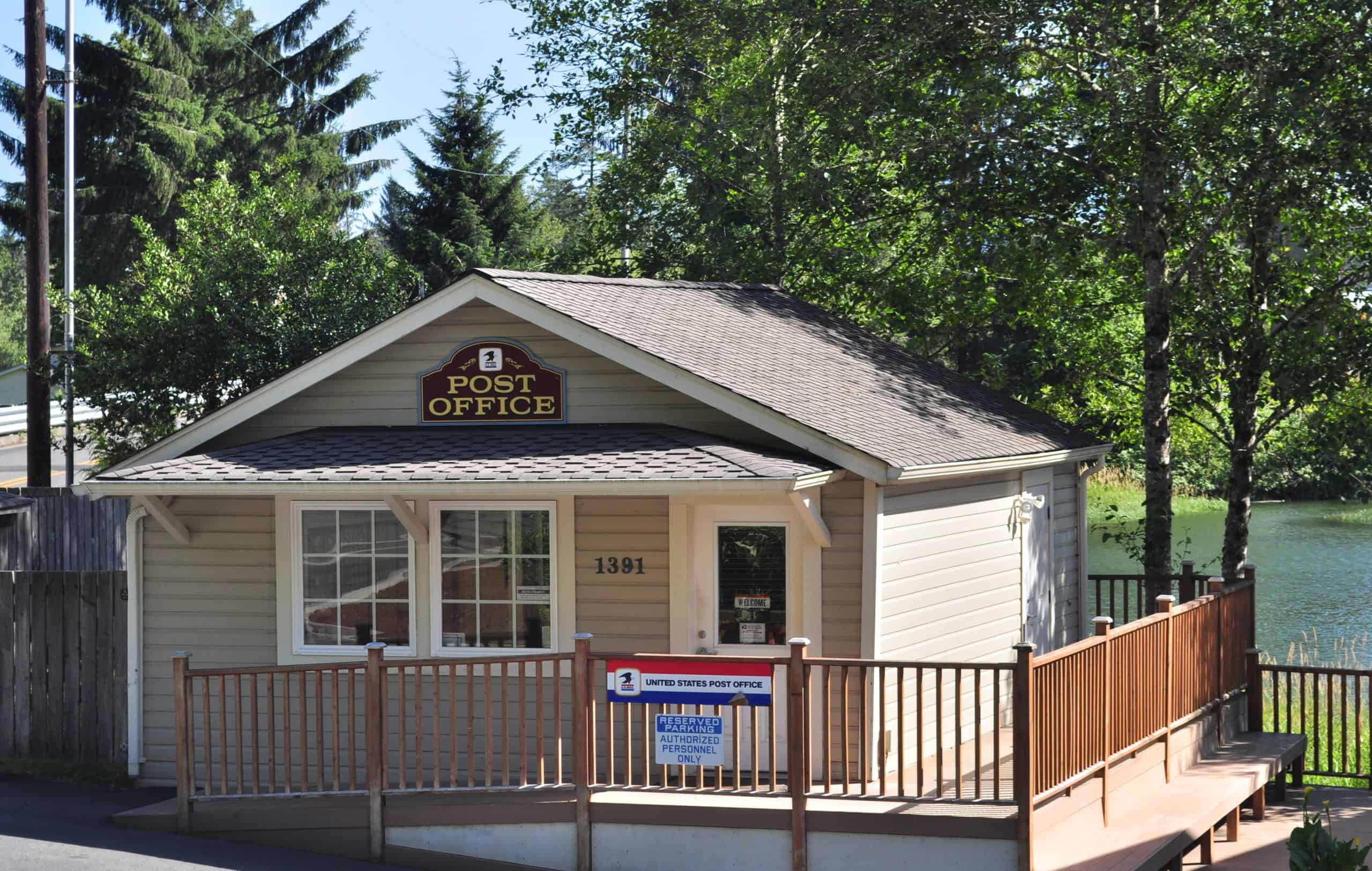
©"Skamokawa, WA - post office 01 (19879230645)" by Joe Mabel (on Flickr as Joe Mabel from Seattle, US) is licensed under BY-SA 3.0. - Original / License
Skamokawa is another Washington place name that can be a challenge for anyone seeing it for the first time. Located along the Columbia River in Wahkiakum County, the small community is associated with the area’s Indigenous history and the Chinookan-speaking peoples who lived along the lower river. The name has been given several interpretations in historical accounts, including explanations involving smoke, mist, or fog over the water. Those interpretations aren’t entirely consistent, so it’s more accurate to acknowledge the name’s Indigenous origins without treating any single translation as definitive.
Skamokawa developed into a riverfront community connected to fishing, logging, and transportation along the Columbia. Its historic waterfront buildings and surrounding scenery remain reminders of the region’s early industries. Today, visitors can explore the lower Columbia River, nearby wildlife areas, and quiet backroads through southwest Washington. The community also has historic structures associated with its maritime and commercial past. While the name might initially look intimidating, the place itself is remarkably peaceful. And considering the number of unusual place names scattered across this part of the state, Skamokawa fits right in with its neighbors.

