
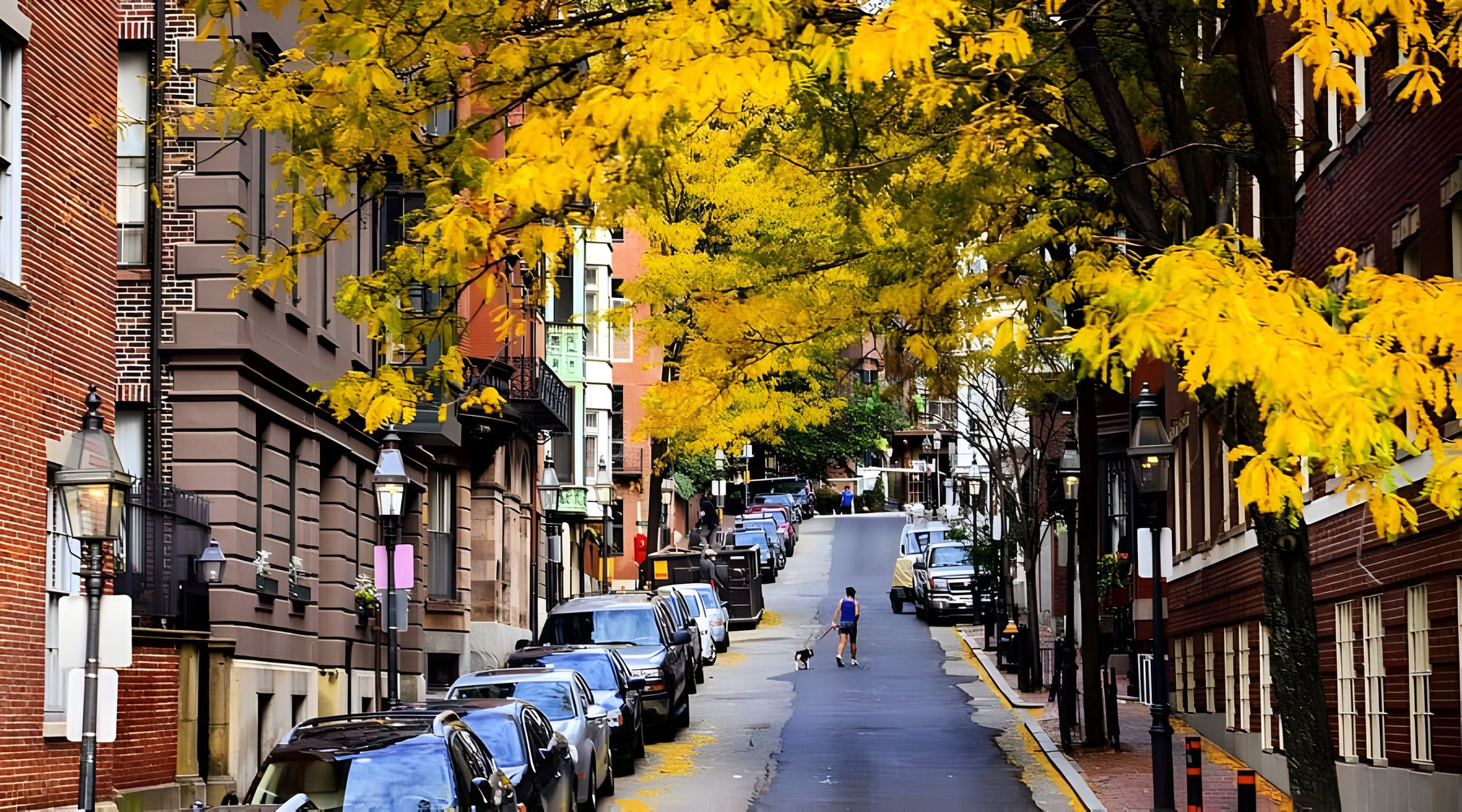
Boston has a knack for making centuries of history feel surprisingly close. You can go from cobblestone lanes and gaslit row houses to Revolutionary meeting halls, grand public parks, and a landmark library without spending your entire day in a car. Beacon Hill’s Acorn Street may be one of the city’s most recognizable photo stops, but it is only the beginning.
These seven historic Boston destinations offer a little of everything: beautiful architecture, important American history, and plenty of reasons to slow down and look around. Several are an easy walk from one another; Bunker Hill, across the Charles River in Charlestown, makes a worthwhile separate leg of the trip.
1. Beacon Hill and Acorn Street
©Sean Pavone/ via Getty Images
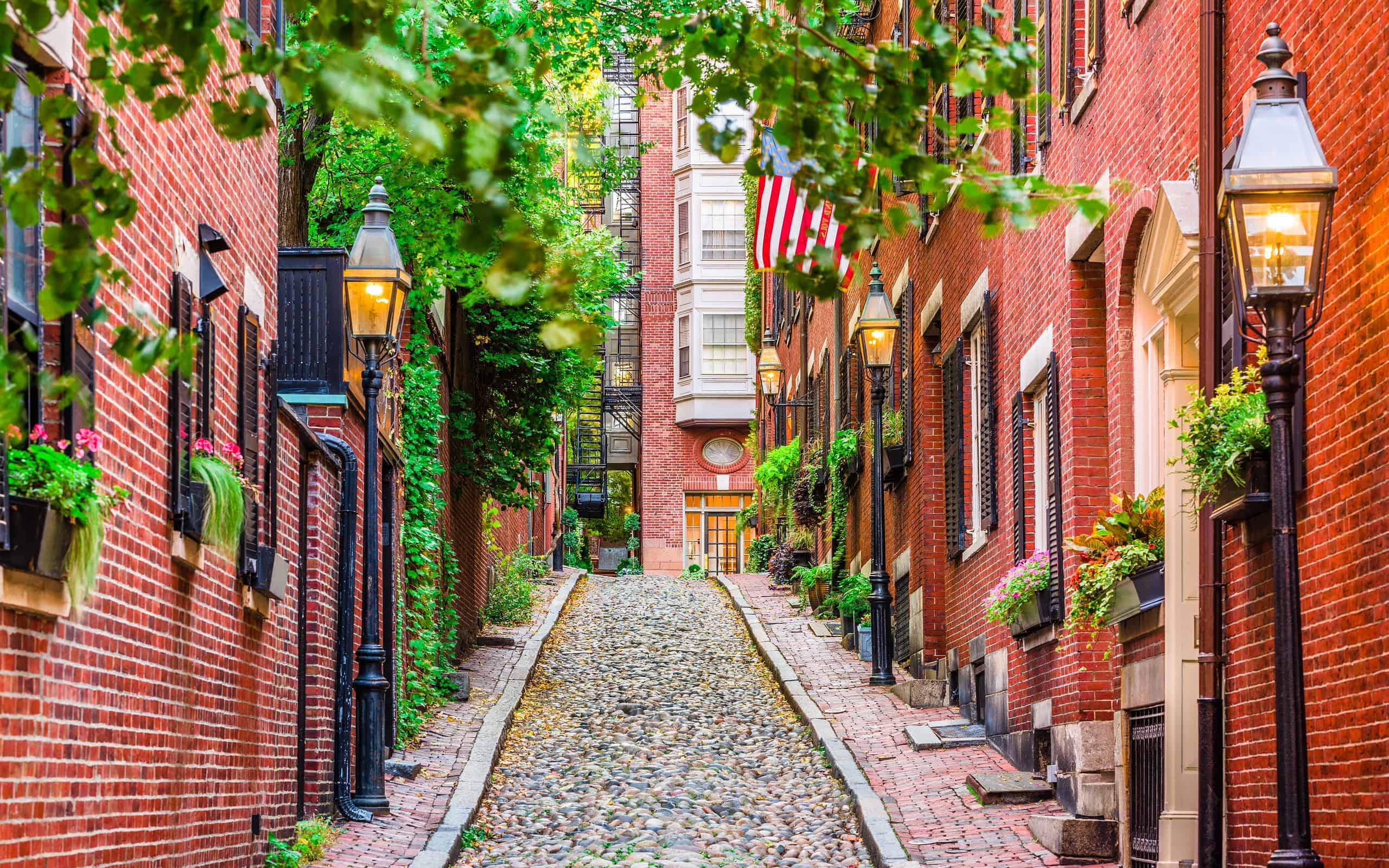
Boston has no shortage of historic neighborhoods, but Beacon Hill makes an impression before you even reach its best-known street. Brick row houses, traditional gas lamps, iron railings, and steep, narrow sidewalks give the area a character that newer neighborhoods cannot easily imitate. The Massachusetts State House overlooks the southern slope, while Charles Street offers an easy place to stop for coffee or browse independent shops.
Just north of Boston Common, the neighborhood is an appealing place to explore on foot, provided you wear comfortable shoes. Those lovely brick sidewalks and uneven grades can be less charming when the weather turns wet or icy. Beacon Hill is also a living residential neighborhood, not an outdoor museum, so enjoy the architecture without treating someone’s front steps like a public photo set.
Beacon Hill and Acorn Street (continued)
©"Acorn Street, Beacon Hill, Boston" by *rboed* is licensed under BY 2.0. - Original / License
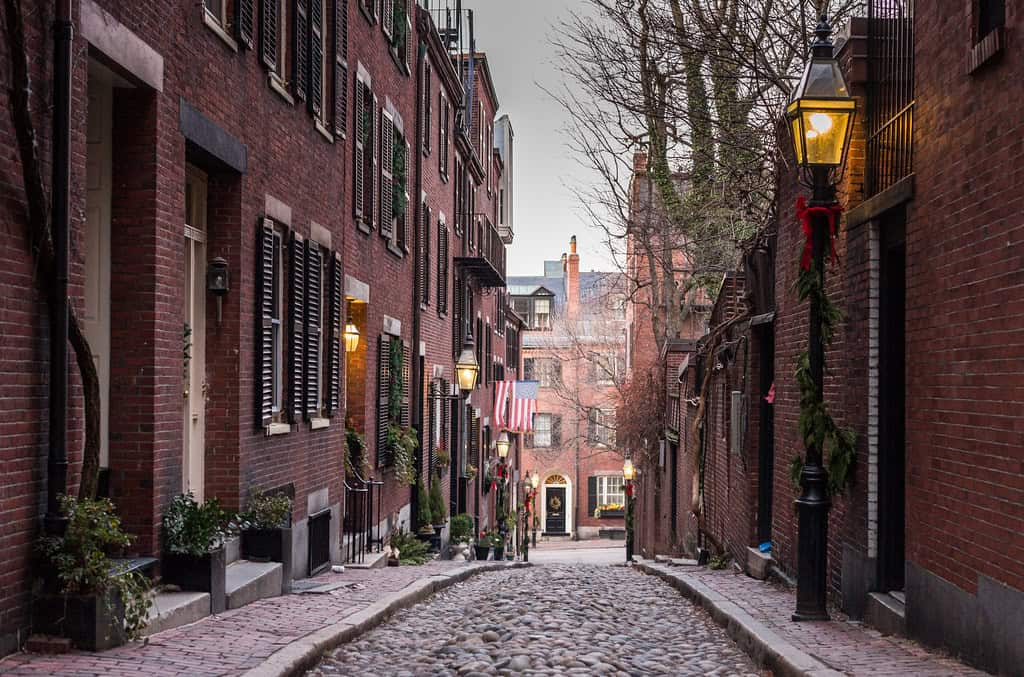
Acorn Street is the postcard shot that puts Beacon Hill on so many Boston itineraries. Running one short block between Willow and West Cedar streets, the cobblestone lane is framed by old brick homes, shutters, and gas lamps. It is frequently described as one of America’s most photographed streets, although that is a popular description, not an official national ranking. The appeal is easy to understand: the scene looks remarkably different from the busy downtown just a few blocks away.
But Beacon Hill’s history goes well beyond picturesque real estate. Its north slope became a center of Boston’s free Black community and abolitionist movement. The National Park Service’s Black Heritage Trail passes historic sites including the Lewis and Harriet Hayden House, an Underground Railroad refuge, and the African Meeting House, an important gathering place. Several trail stops are private homes, so follow posted guidance and respect residents’ privacy.
2. Boston Common
©Asa Ari Rodriguez/ via Getty Images
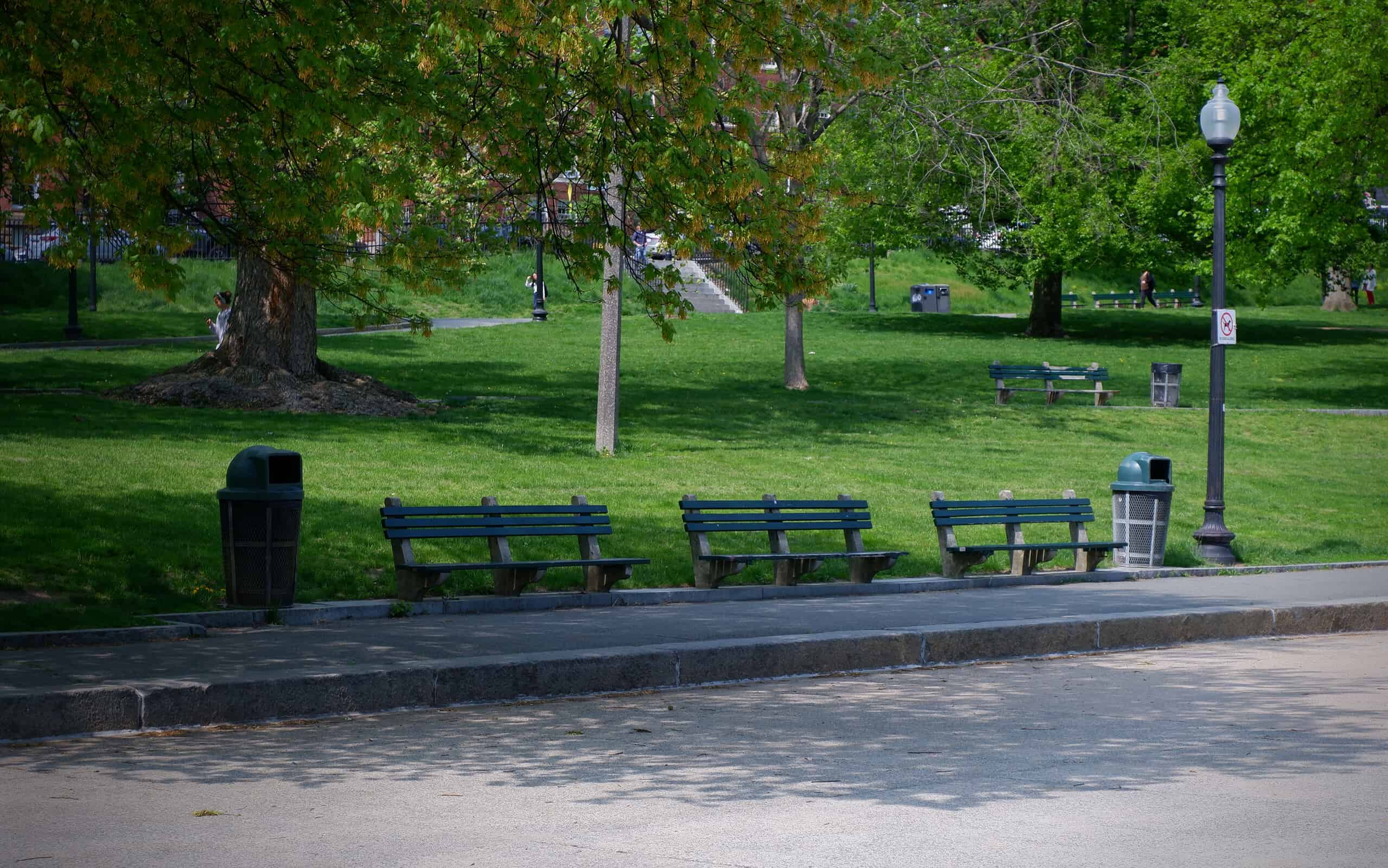
Founded in 1634, Boston Common is widely recognized as America’s oldest public park. What began as shared land for grazing animals became a military gathering ground, a setting for political debate, and eventually the green heart of downtown Boston. Today, its paths, lawns, and shade trees make it a natural break between sightseeing stops. You can cross it on the way from Beacon Hill to the Public Garden, or simply find a bench and watch the city go by.
The Common has also witnessed events that changed American history. British troops occupied the area before the Revolution, and generations of Bostonians later gathered here to protest injustice. On April 23, 1965, Martin Luther King Jr. addressed a civil rights rally after more than 20,000 demonstrators marched through Boston. Dogs are welcome, but off-leash play is restricted to designated areas rather than permitted across every lawn.
Boston Common (continued): Monuments and Nearby Icons
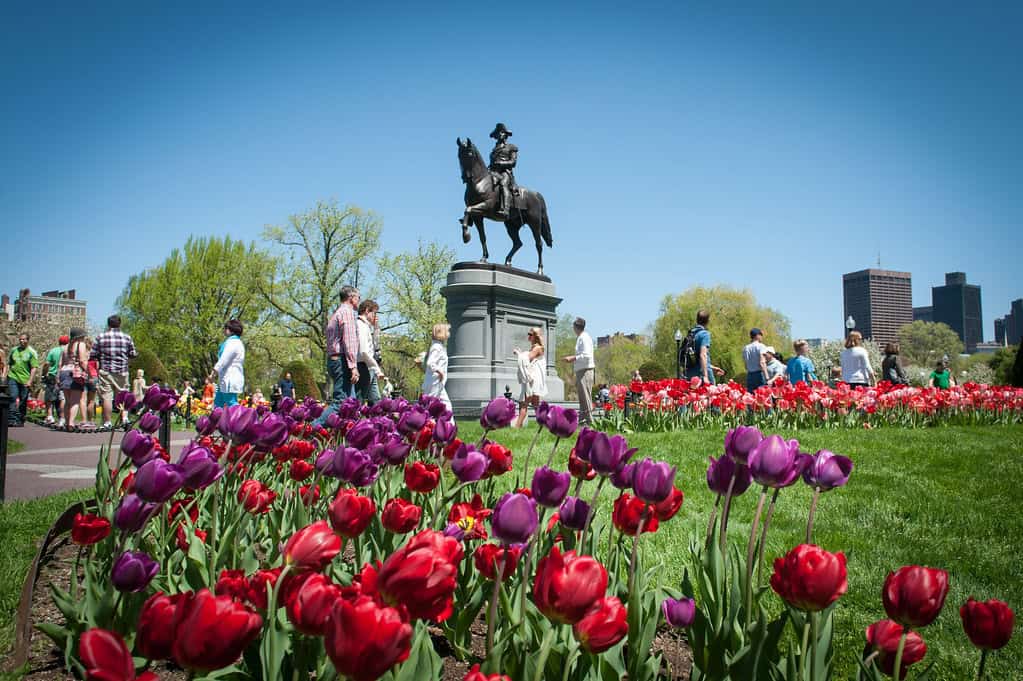
©"George Washington Statue in Spring, Boston Common" by Massachusetts Office of Travel & Tourism is licensed under BY-ND 2.0. - Original / License
A walk through Boston Common doubles as a tour of public memory. The Soldiers and Sailors Monument, dedicated in 1877, honors Bostonians who served in the Civil War. Its sculpted bronze panels depict scenes including troops departing for battle and returning home; they are not simply lists of soldiers’ names. Along the Beacon Street edge, the Robert Gould Shaw and 54th Massachusetts Regiment Memorial honors one of the first Black regiments raised in the North during the Civil War.
The photograph on this slide shows the equestrian George Washington statue, which stands across Charles Street in the neighboring Boston Public Garden, not on the Common itself. That distinction matters because several famous memorials are spread across the surrounding district. The Boston Women’s Memorial, for example, is farther west on Commonwealth Avenue Mall. Give yourself time to explore both parks rather than assuming all of Boston’s best-known sculptures share one address.
3. Boston Public Garden
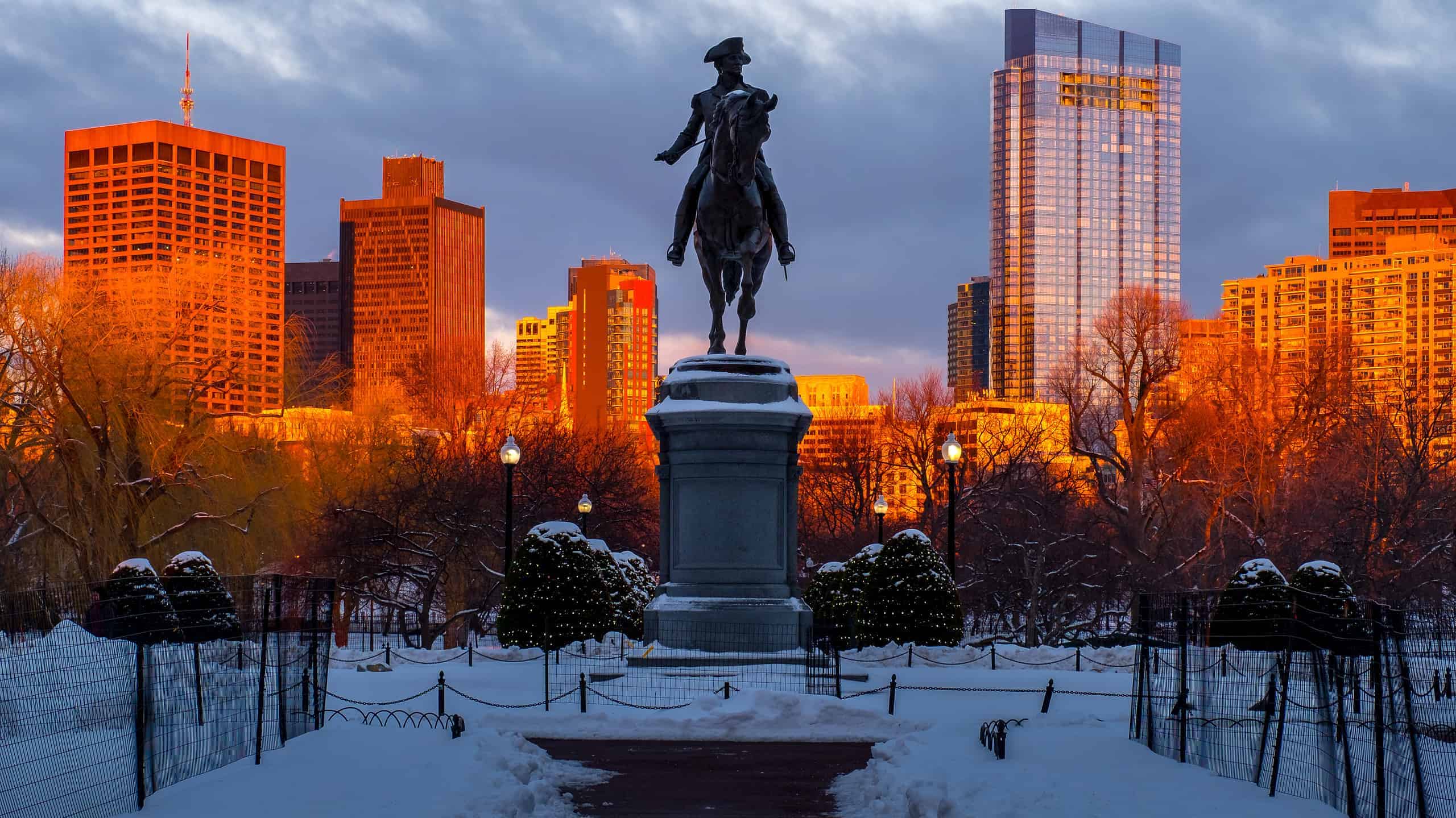
©Cherdchai Chiengwong/Shutterstock.com
Cross Charles Street from the Common and the atmosphere changes almost immediately. Boston Public Garden is the city’s more formal, flower-filled counterpart to the open lawns next door. Established in 1837, it is recognized as the first public botanical garden in the United States. Carefully arranged beds, mature trees, winding paths, and a lagoon give it a distinctly Victorian feel, even as modern Boston rises beyond the greenery.
The central lagoon and its graceful footbridge are among the prettiest places to photograph, particularly when spring flowers are blooming or fall foliage starts showing off. The park is also home to Thomas Ball’s equestrian statue of George Washington, one of its major landmarks. Unlike a museum with a single exhibit, the Garden rewards an unhurried visit: walk the paths, look for seasonal plantings, and appreciate how different the same landscape can appear from one month to the next.
Boston Public Garden (continued)
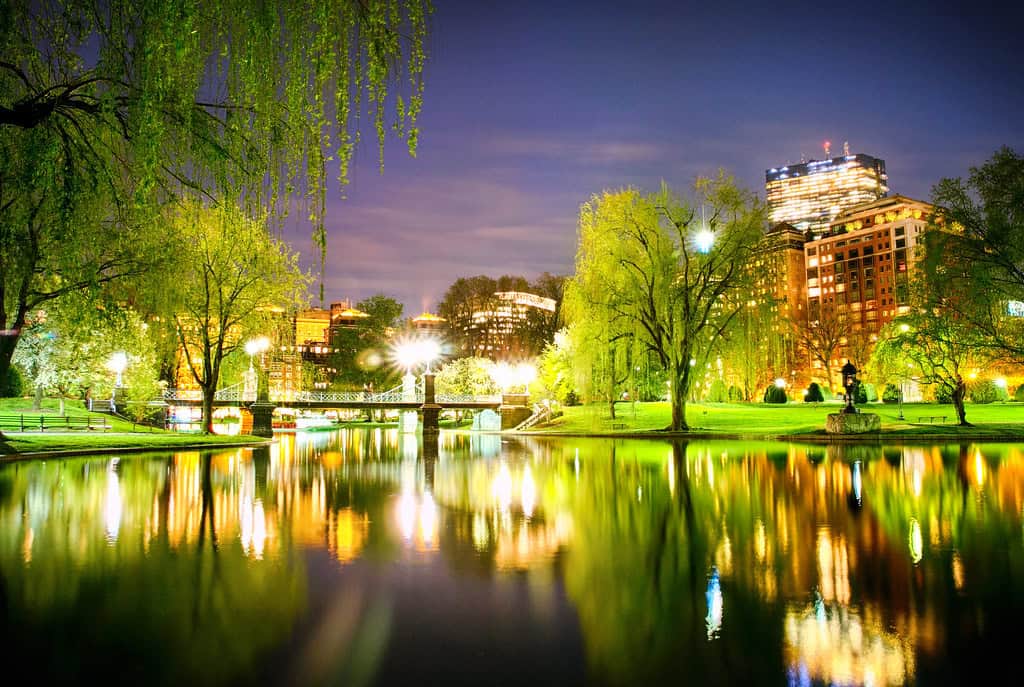
©"The Boston Public Garden at Night – Kyle Klein Photography" by Massachusetts Office of Travel & Tourism is licensed under BY-ND 2.0. - Original / License
The Swan Boats are one of Boston’s best-loved traditions. First launched in 1877, these distinctive boats are pedaled by an operator while passengers enjoy a slow trip around the lagoon. They generally operate from spring into early fall, so travelers visiting in the colder months should not assume rides will be available. Even without a boat trip, the lagoon and footbridge offer plenty of scenery, especially on a clear morning when the water reflects the trees and surrounding buildings.
Families should also look for the bronze Make Way for Ducklings sculpture, installed in 1987. Created by Nancy Schon, it depicts Mrs. Mallard and her eight ducklings from Robert McCloskey’s classic children’s book, set partly in this very park. It is easy to miss the little figures if you are rushing between attractions, but that would be a shame. These are among the Garden’s most recognizable residents, and they require considerably less patience than the real ducks.
4. Boston Public Library
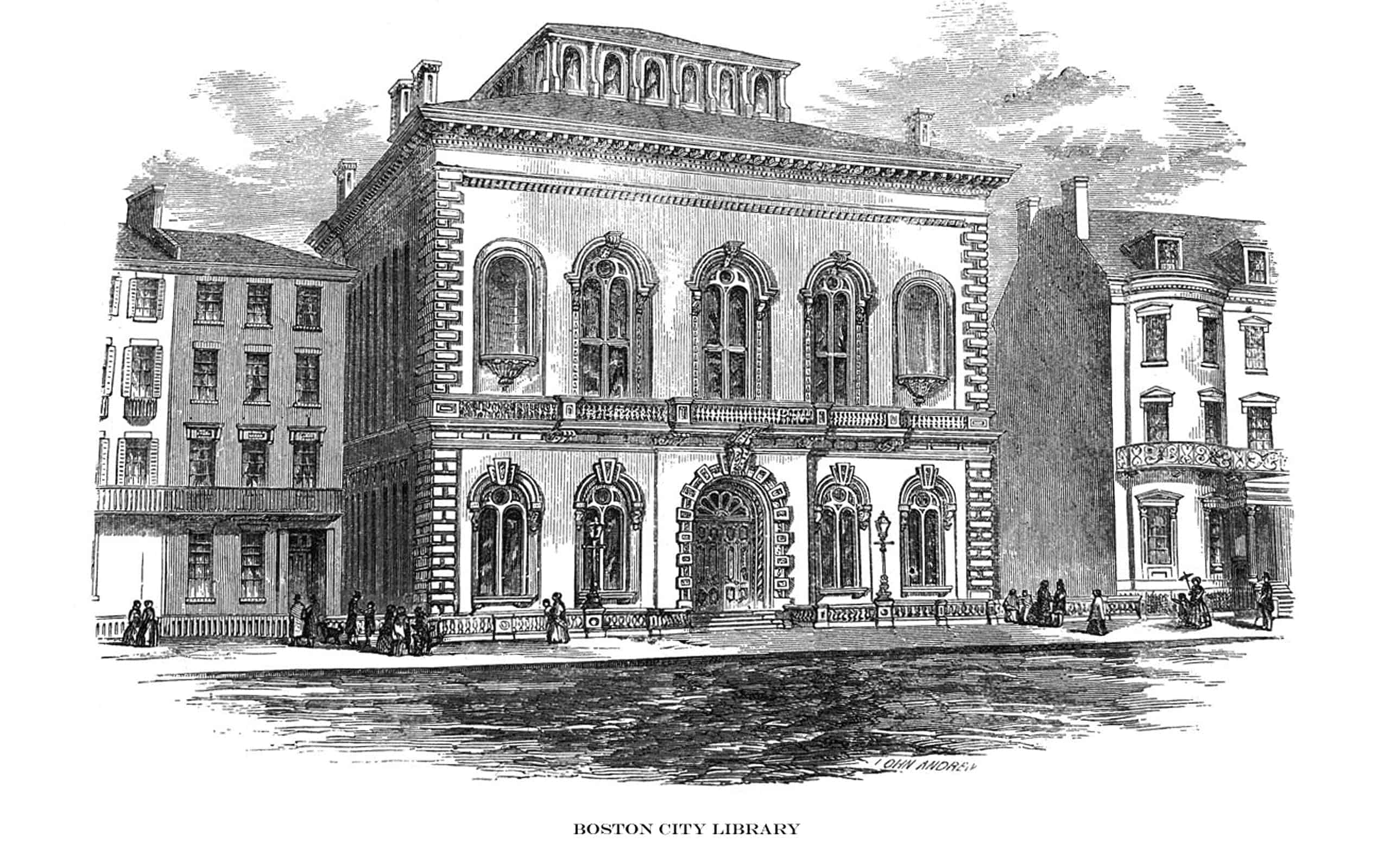
©Campwillowlake/ via Getty Images
A public library might not be the first place on your sightseeing list, but Boston Public Library’s Central Library deserves a spot. The institution was established in 1848 and became a pioneer of free, municipally funded library service in the United States. Its historic McKim Building, opened in 1895, sits in Copley Square at Dartmouth and Boylston streets. From the grand facade to the decorative interior, it feels more like a European cultural landmark than a place where people quietly return overdue books.
Architect Charles Follen McKim helped create a building intended to make art, learning, and beautiful public space available to everyone. Its marble details, sweeping staircases, and murals are worth seeing even if you have no intention of checking out a book. The library remains an active public institution, so visitors should respect reading areas and check current access or tour information before arriving.
Boston Public Library (continued)
©"Boston Public Library" by R..D is licensed under BY 2.0. - Original / License
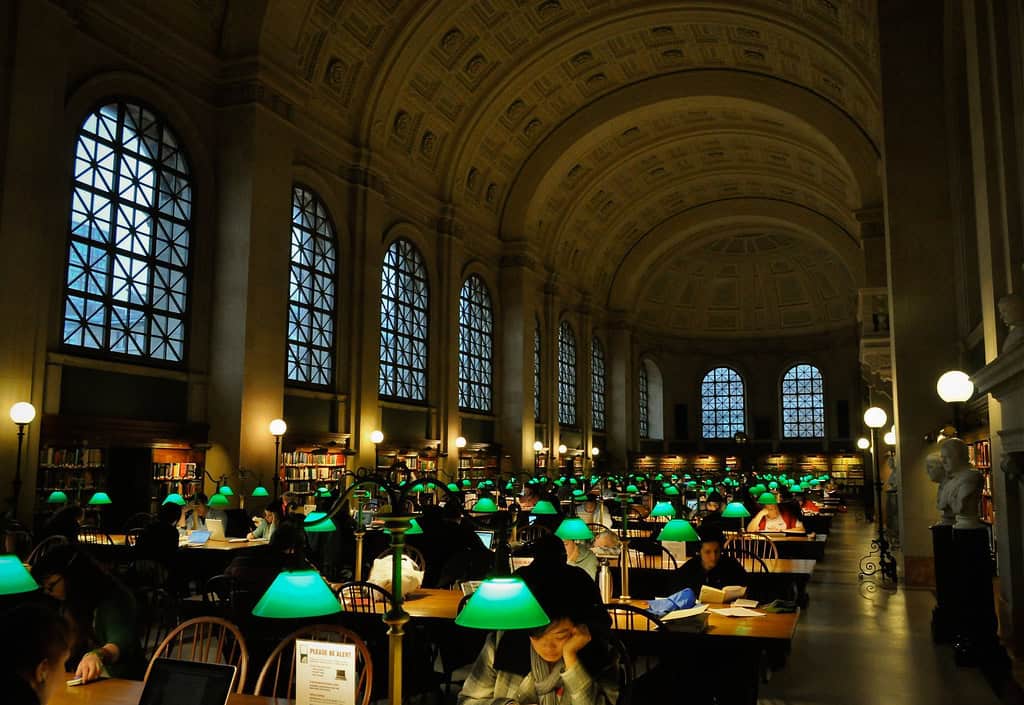
Inside the McKim Building, Bates Hall is a standout. The grand reading room stretches beneath a lofty barrel-vaulted ceiling, with long tables and the familiar green lamps that make the room instantly recognizable. Elsewhere, the historic building contains important artworks, including murals by John Singer Sargent and Edwin Austin Abbey, along with a peaceful courtyard that provides a welcome escape from the traffic outside.
The Central Library is not frozen in 1895. Its adjoining Boylston Street building supports modern library services and public programming, while branches across the city continue the system’s mission. That mixture of historic architecture and everyday civic life is part of what makes this stop interesting. You can admire the art and then see how the building still serves Boston today. Admission to the public library is free, although certain tours or special programs may have their own arrangements.
5. Bunker Hill Monument
©Medioimages/Photodisc/ via Getty Images
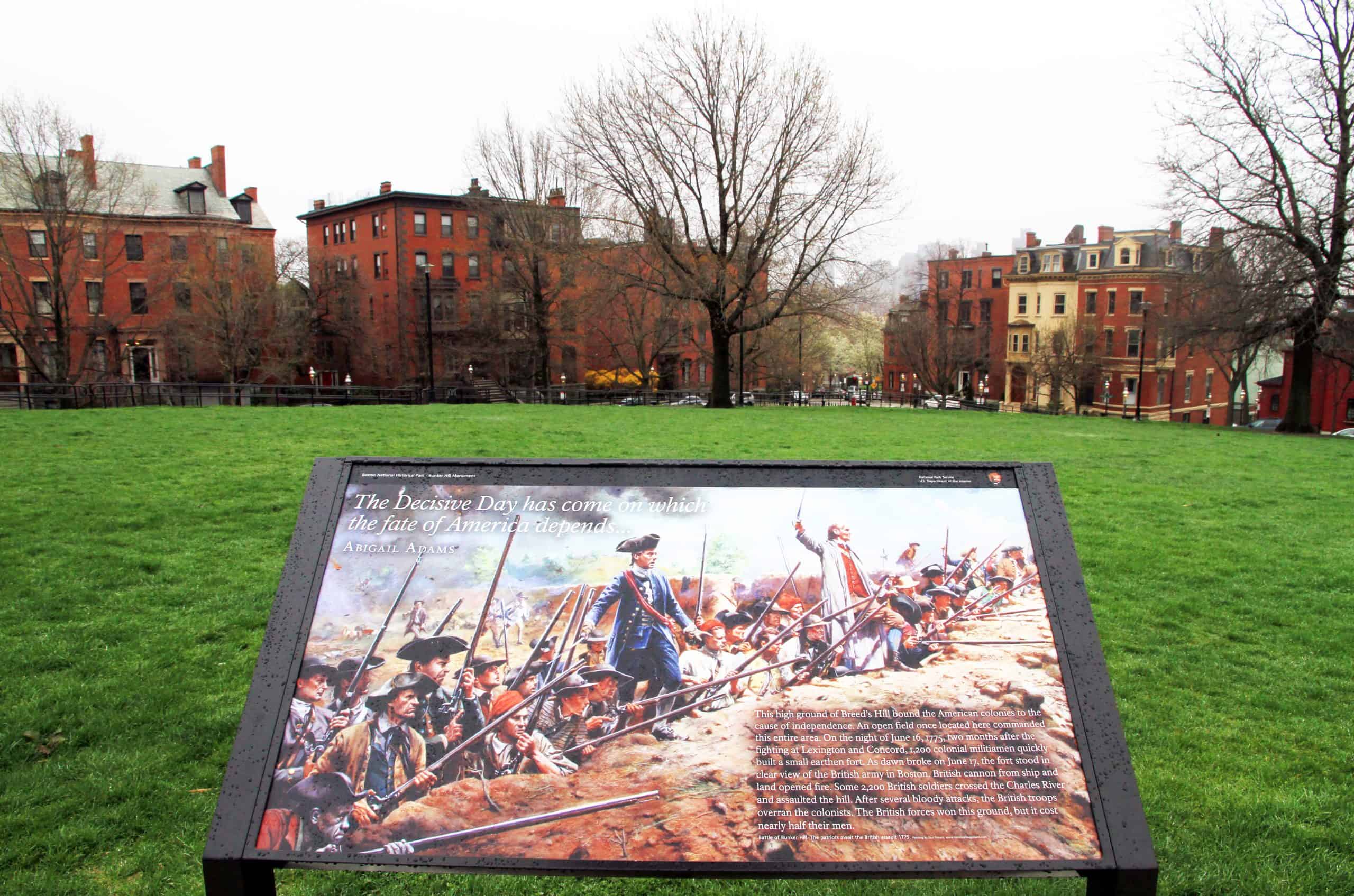
Across the Charles River in Charlestown, the Bunker Hill Monument marks one of the Revolution’s first major battles. British and colonial forces clashed here on June 17, 1775, in a fight that ended in a British victory but came at a heavy cost. Despite the familiar name, much of the fighting took place on nearby Breed’s Hill, where the monument stands today. It is an important reminder that the battle’s geography is a little more complicated than the shorthand taught in school.
The granite obelisk rises approximately 221 feet above Monument Square and was dedicated in 1843 after years of construction and fundraising. Its stark shape makes it easy to spot from several parts of Boston. The neighborhood around it is worth exploring as well, with historic streets and houses that offer a different view of the city from the crowded downtown attractions.
Bunker Hill Monument (continued)
©"USA-Bunker Hill Monument Park0" by Ingfbruno is licensed under BY-SA 3.0. - Original / License
If your legs are up for it, the observation area at the top of Bunker Hill Monument offers sweeping views of Boston and its surroundings. Reaching it requires climbing 294 narrow steps on a spiral staircase. There is no elevator to the top, so this is not an accessible climb for everyone. The monument is free to visit, but entry is limited and climbs can be suspended because of weather, safety conditions, or seasonal schedules.
The nearby Bunker Hill Museum is a worthwhile alternative, or an excellent follow-up if you do make the climb. Exhibits explain the 1775 battle, the building of the monument, and Charlestown’s changing history. It is a good place to separate the famous Revolutionary slogans from the complicated events on the ground. Check the National Park Service’s current hours before going, especially during the off-season, when the monument is not open every day.
6. Faneuil Hall and Quincy Market
©Susana del Pozo/ via Getty Images
Few places capture Boston’s mix of commerce and political history quite like Faneuil Hall. The original building opened in 1742 as a market and public meeting place, and it later became a prominent setting for debates about British rule. The nickname ‘Cradle of Liberty’ reflects its role in the years leading up to the American Revolution, but its story did not stop there. Abolitionists, suffragists, and labor organizers also used the hall to challenge the status quo.
Today, Faneuil Hall is a historic site and visitor center associated with Boston National Historical Park, with its Great Hall upstairs. It is also a place to consider the contradictions of early American freedom: merchant Peter Faneuil, whose name the building bears, profited from slavery. The surrounding marketplace is busy and tourist-oriented, but the history here is substantial. This is one stop where it pays to look beyond the souvenir shops.
Faneuil Hall and Quincy Market (continued)
©"Quincy Market- Boston" by Massachusetts Office of Travel & Tourism is licensed under BY-ND 2.0. - Original / License
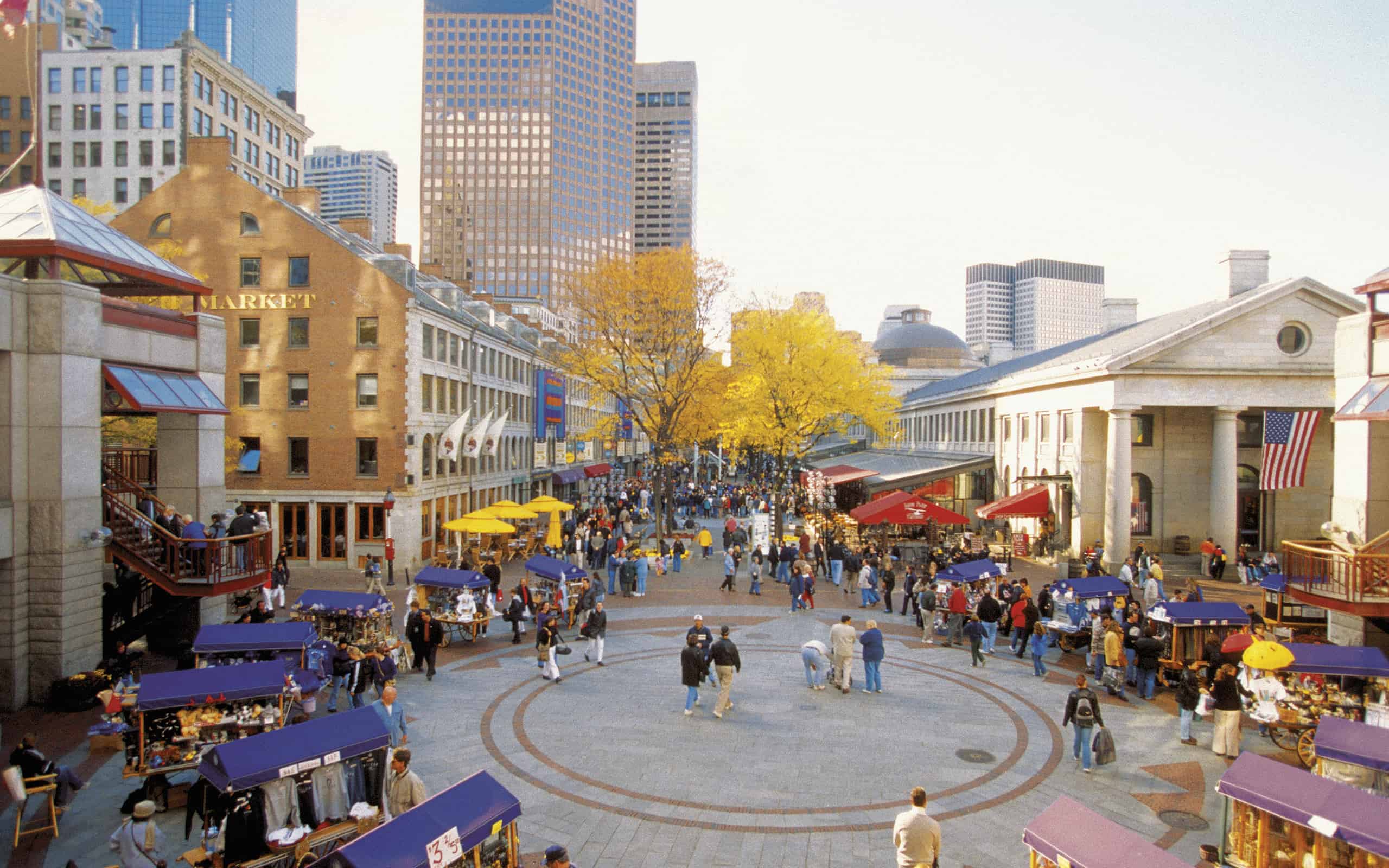
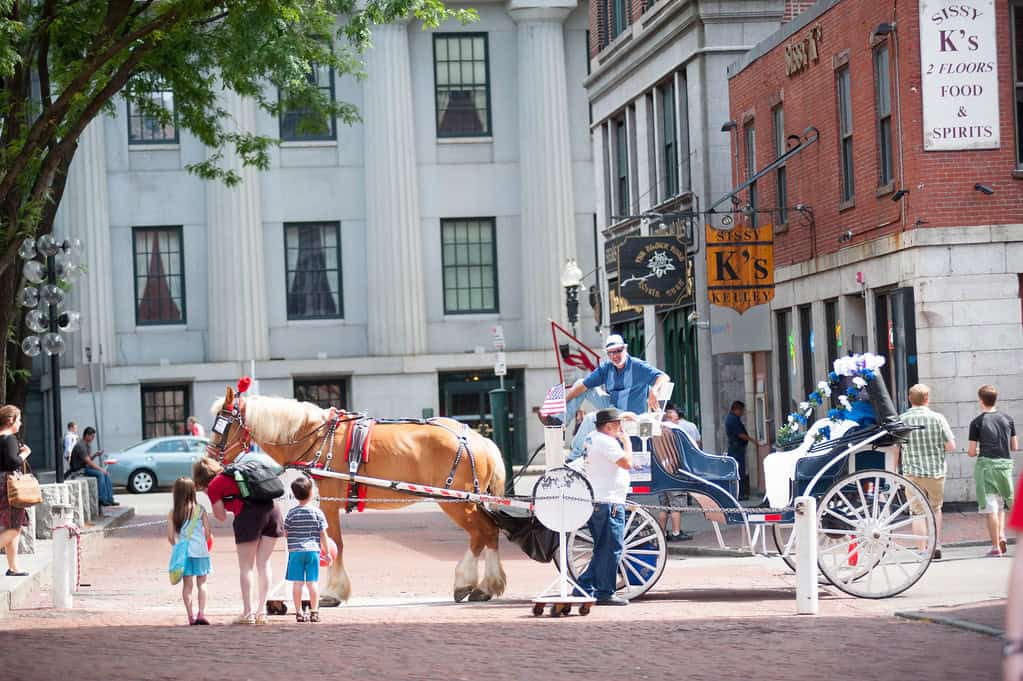
Just behind Faneuil Hall, Quincy Market gives visitors a very different kind of Boston history lesson, preferably with something to eat. The market building opened in the 1820s as the city expanded its commercial district, and its long hall now contains food vendors and places to grab a quick bite. The surrounding Faneuil Hall Marketplace adds more shops and restaurants, making this an easy stop between Freedom Trail landmarks.
It is undeniably a tourist destination, and the busiest periods can feel crowded. That does not mean you should skip it, but it helps to arrive with realistic expectations. Browse the food counters, step outside to admire the historic architecture, and keep in mind that the city’s dining scene extends far beyond this one block. If you want a quieter meal or a less packaged Boston experience, leave time to explore nearby neighborhoods after your visit.
7. Old South Meeting House
©Vladone/ via Getty Images
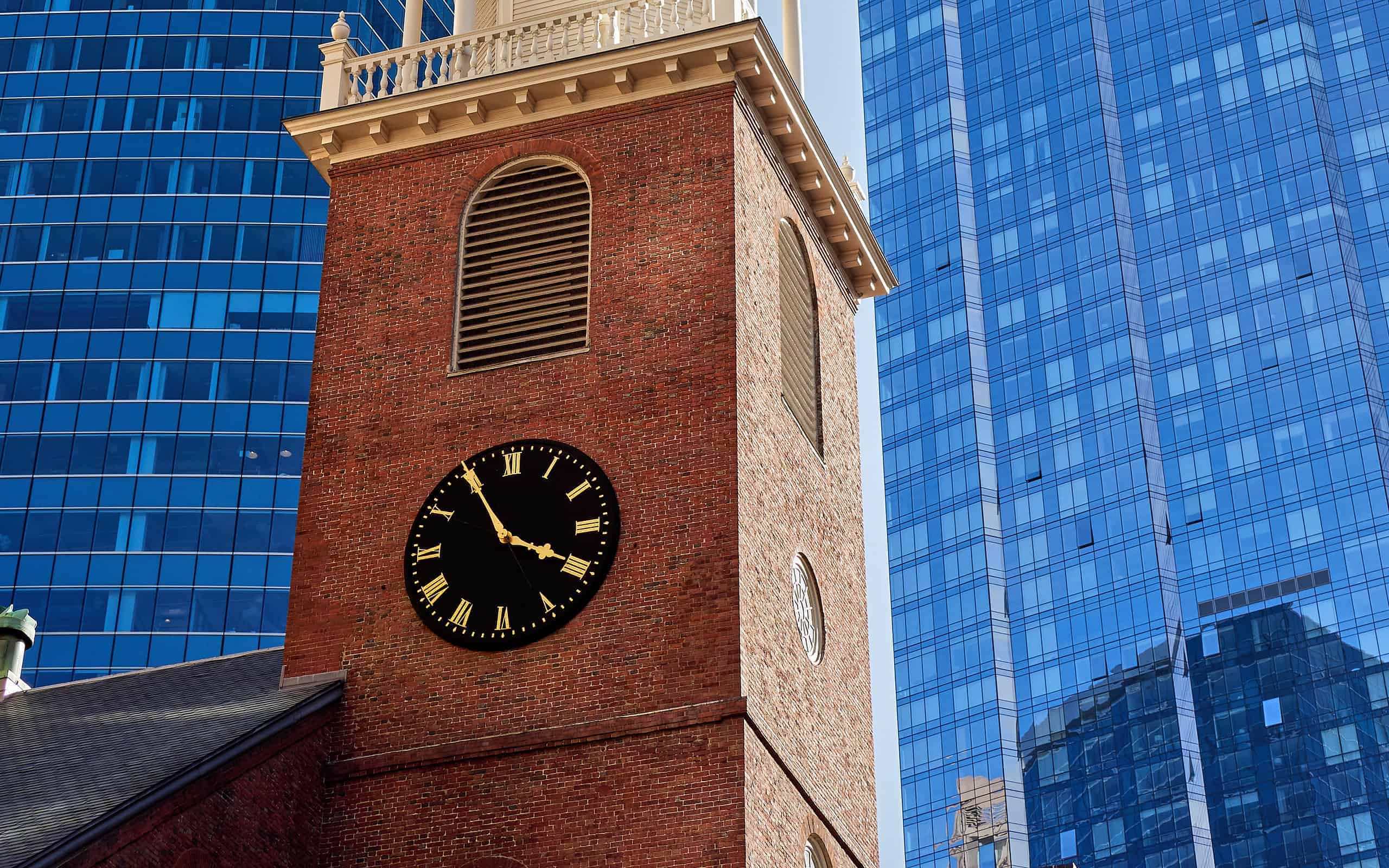
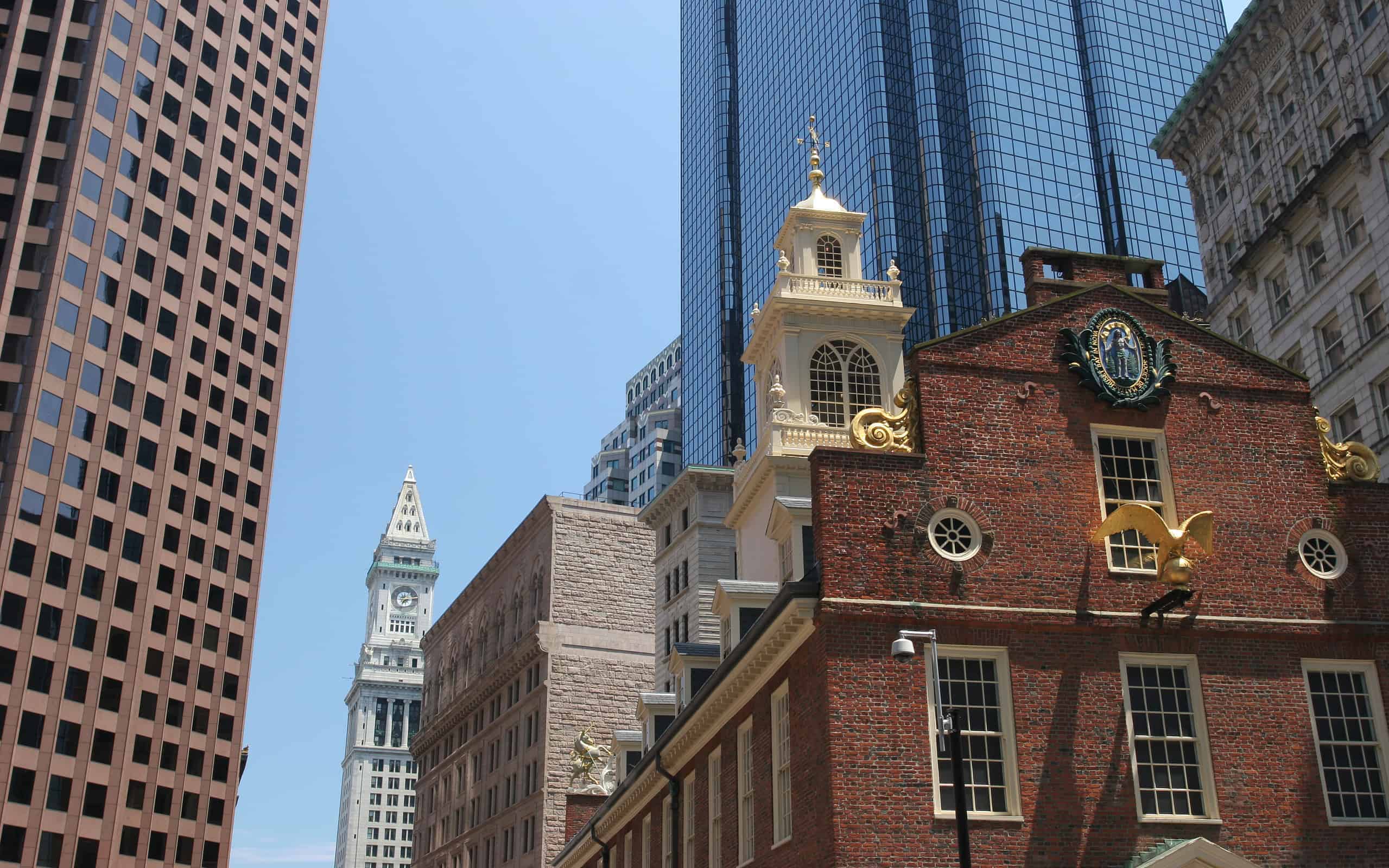
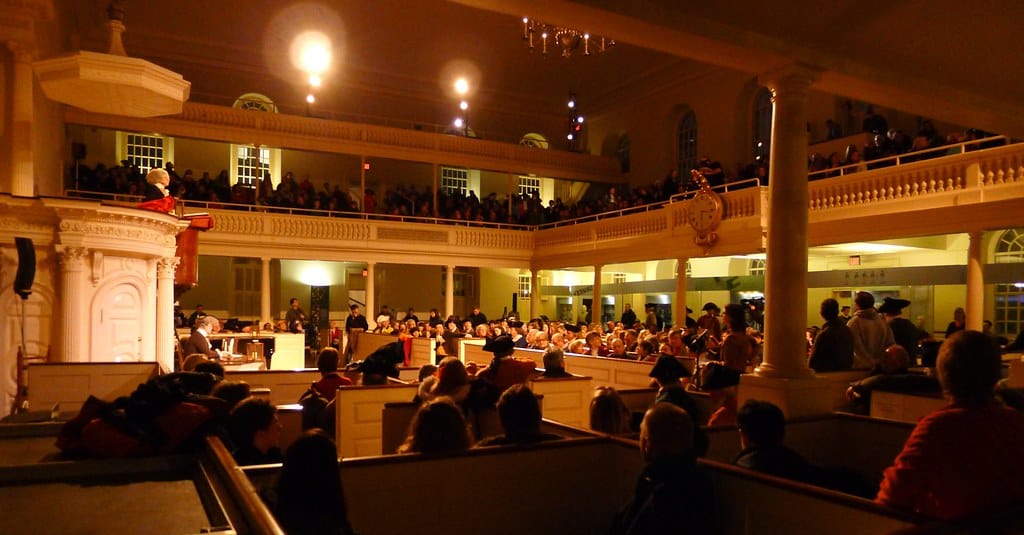
The Old South Meeting House looks restrained compared with some of Boston’s grander landmarks, but its walls witnessed one of the most consequential gatherings in colonial America. Built in 1729, the Puritan meeting house became a center of political debate as tensions grew between local colonists and British authorities. On December 16, 1773, thousands gathered here to protest the tax and trade policies surrounding shipments of British tea.
After attempts to resolve the dispute failed, protesters headed toward the waterfront, where participants dumped 342 chests of tea into Boston Harbor. That act became known as the Boston Tea Party, a defining event in the movement toward American independence. The building’s role makes it far more than another old church on the Freedom Trail. It is a place where the arguments of the Revolutionary era became direct action, with consequences that reached far beyond the city.
Old South Meeting House (continued)
©"Town Meeting in Old South Meeting House. The Boston Tea Party came next." by leewrightonflickr is licensed under BY-SA 2.0. - Original / License
The survival of the Old South Meeting House is a story in its own right. By the 1870s, the building was threatened with demolition, and a group of Boston women helped lead the effort to preserve it. The campaign succeeded, and the meeting house has operated as a public historic site since 1877. What could have become another lost piece of colonial Boston instead helped demonstrate why historic preservation matters.
Today, visitors can explore the landmark, learn about the debates that led to the Boston Tea Party, and appreciate its Georgian-era design. The site is managed by Revolutionary Spaces, which also operates the Old State House. Admission arrangements, tours, and hours can change, so check the current visitor information before planning your day. Paired with nearby Faneuil Hall, it offers a revealing look at how ordinary meeting spaces became stages for extraordinary events.

