
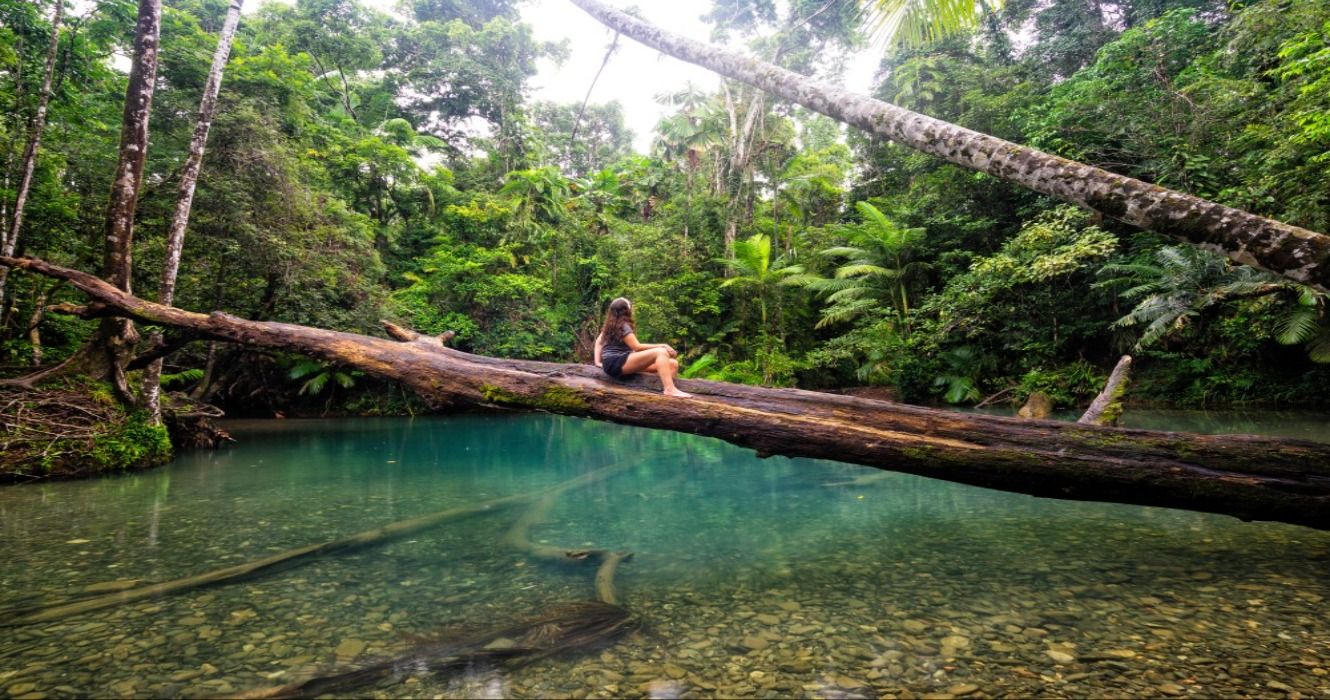
Anyone who’s explored Washington’s Hoh Rain Forest or wandered beneath the moss-covered trees of the Quinault Valley knows that rainforests can feel like another world. But while the Pacific Northwest is home to some of America’s most spectacular temperate rainforests, Australia has a tropical rainforest with roots reaching back an astonishing 180 million years.
The Daintree Rainforest, located along Queensland’s northeastern coast, is widely recognized as the oldest surviving tropical rainforest on Earth. It’s a place where ancient plants grow alongside unusual wildlife, enormous trees tower over the forest floor, and thick tropical vegetation stretches all the way to the Coral Sea.
And unlike some remote natural wonders, you can actually explore the Daintree without organizing a major expedition. A rental car, a few days in northern Queensland, and a willingness to get a little sweaty are enough to experience one of the planet’s most remarkable ecosystems.
What Makes a Rainforest Different From Other Forests?
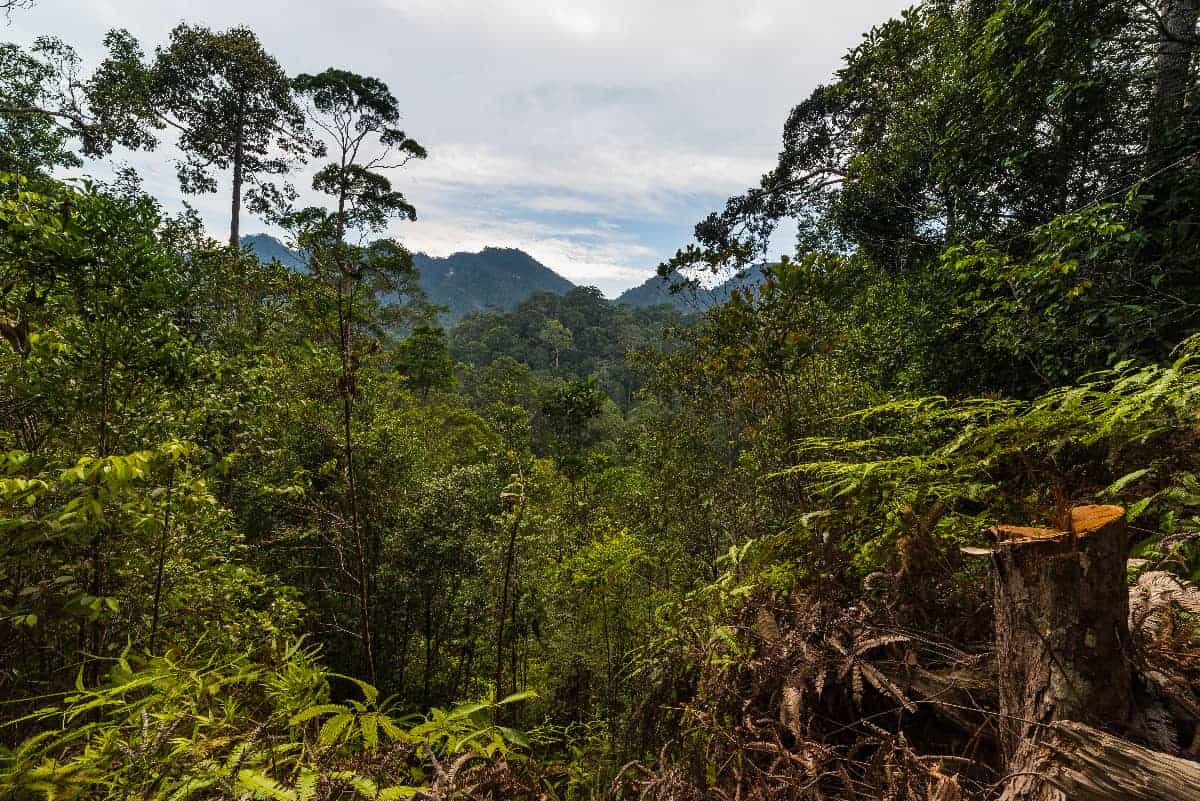
Rainforests receive abundant rainfall, supporting dense vegetation and complex ecosystems.
©Fabio Lamanna/Shutterstock.com
The biggest requirement for a rainforest is right there in its name: rain, and plenty of it. These forests receive substantial precipitation throughout the year, although the exact amount varies by climate and location.
Tropical rainforests generally have warm temperatures, dense vegetation, and multiple layers of plant life. Their towering trees create a canopy that blocks much of the sunlight from reaching the ground. Below that canopy, smaller trees, ferns, vines, and specialized plants compete for whatever light they can find.
Despite the enormous amount of vegetation, many tropical rainforests have surprisingly nutrient-poor soils. Warm, wet conditions help organic material decompose quickly, and nutrients are often absorbed by plants almost as soon as they’re released. Many rainforest trees develop extensive shallow root systems to take advantage of nutrients near the surface.
Not all rainforests are tropical, however. Washington’s Hoh and Quinault rainforests are temperate, with cooler temperatures, towering conifers, mosses, and ferns. The Olympic Peninsula’s rainforests receive approximately 140 to 167 inches of precipitation annually, proving you don’t need tropical heat to create an incredibly lush landscape.
How Old Is Australia’s Daintree Rainforest?
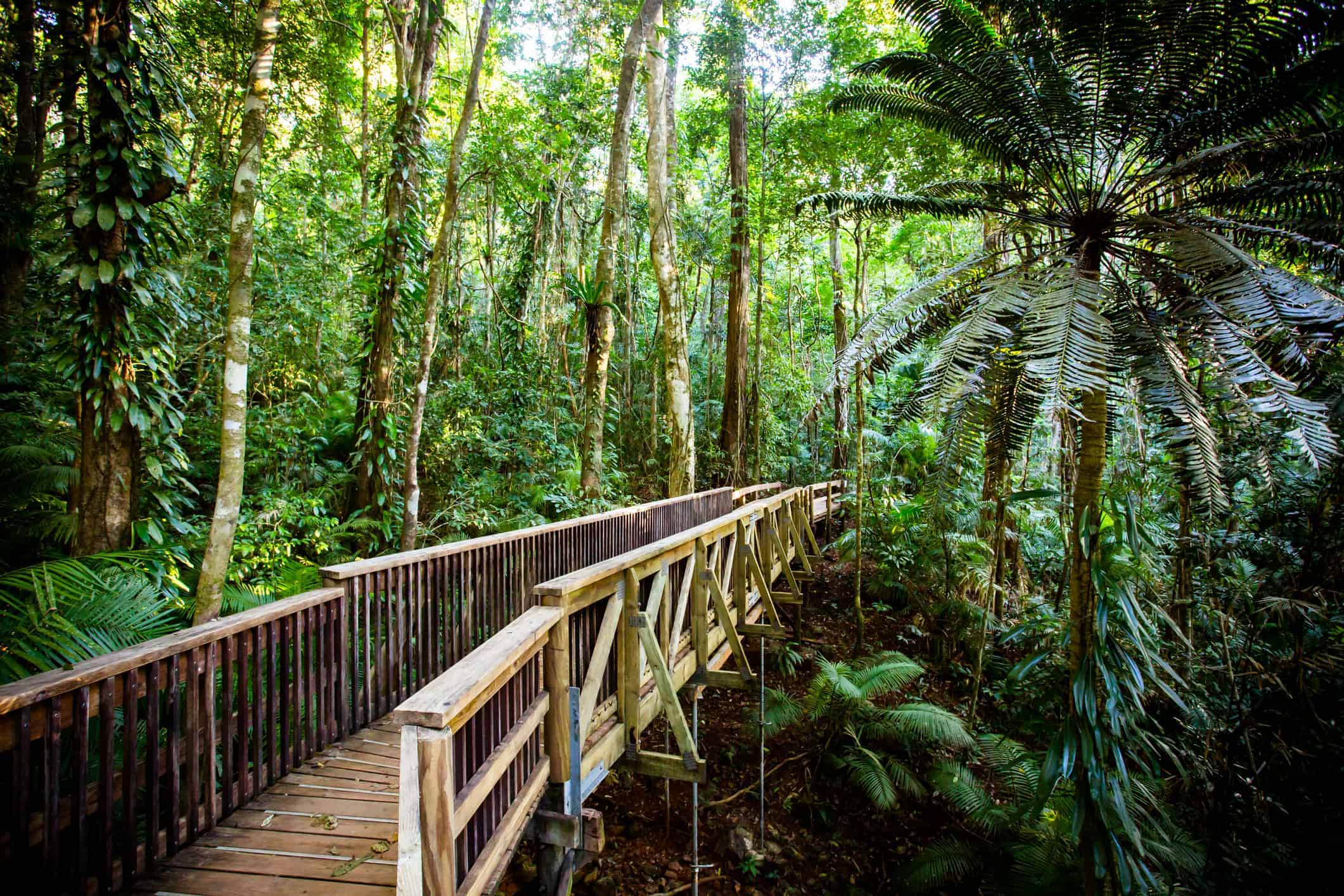
The Daintree Rainforest in northeastern Australia is commonly estimated to be around 180 million years old.
©iStock.com/FiledIMAGE
The Daintree Rainforest is commonly estimated to be approximately 180 million years old, making it one of the world’s oldest surviving tropical rainforest ecosystems. For perspective, that takes its evolutionary history all the way back to the Jurassic Period, when dinosaurs still roamed the planet.
That doesn’t mean the same trees have been standing here for 180 million years. The estimate refers to the area’s ancient rainforest history and evolutionary origins. Over that extraordinary period, the climate, vegetation, and individual species have changed considerably.
The Daintree covers approximately 463 square miles and forms part of the much larger Wet Tropics of Queensland World Heritage Area. That protected region extends roughly 280 miles along Australia’s northeastern coast and was added to UNESCO’s World Heritage List in 1988.
What makes the Daintree especially remarkable is the survival of ancient plant lineages. Many of these plants have evolutionary connections to the forests of Gondwana, the prehistoric supercontinent that once included Australia, Antarctica, Africa, and South America.
In other words, a walk through the Daintree offers a glimpse into a world that existed long before humans, modern mammals, or most of the landscapes we recognize today.
What Animals Live in the Daintree Rainforest?
If you’re coming from the Pacific Northwest, forget looking for black bears, elk, and Roosevelt elk tracks. The Daintree has an entirely different lineup of wildlife, including animals that seem almost too strange to be real.
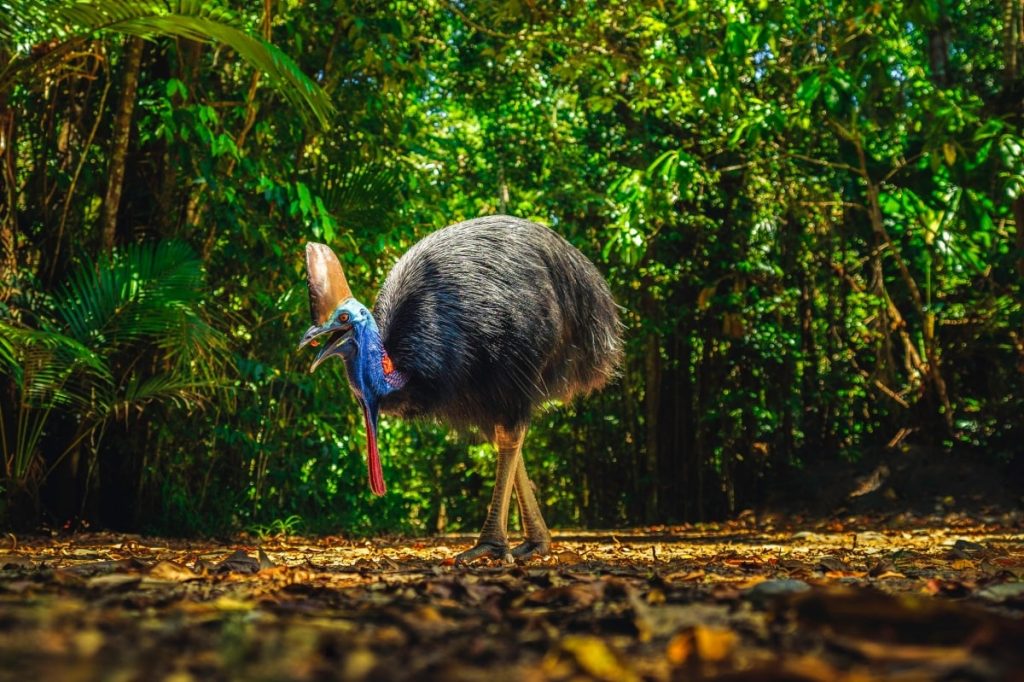
One of its most recognizable residents is the southern cassowary, a large, flightless bird with a bright blue head, colorful neck, and a prominent helmet-like structure called a casque. These powerful birds are important seed dispersers, helping rainforest plants reproduce by eating fruit and spreading seeds across the forest.
Cassowaries can be dangerous if approached or provoked, so visitors should keep their distance, avoid feeding them, and drive carefully through areas where they live. Seeing one along a rainforest trail would be memorable enough without getting any closer.
©VisitAustralia.com
The Daintree is also home to Bennett’s tree-kangaroo, an unusual marsupial adapted to life in the treetops. Unlike the kangaroos most people picture bounding across open grasslands, these animals spend much of their time climbing through rainforest vegetation. They’re secretive, making sightings relatively uncommon.
Another fascinating resident is the musky rat-kangaroo, a small marsupial that forages on the forest floor. It’s considered one of the most evolutionarily distinctive surviving members of the kangaroo family.
Birdlife includes colorful kingfishers, fruit-doves, honeyeaters, and various rainforest specialists. Reptiles, frogs, butterflies, and countless insects add even more variety.
The larger Wet Tropics World Heritage Area supports an extraordinary share of Australia’s wildlife, including approximately 30% of its marsupial species and 60% of its butterfly species, despite covering only a tiny fraction of the continent. Those percentages apply to the broader protected region, not exclusively to the Daintree itself.
Ancient Plants That Make the Daintree Special
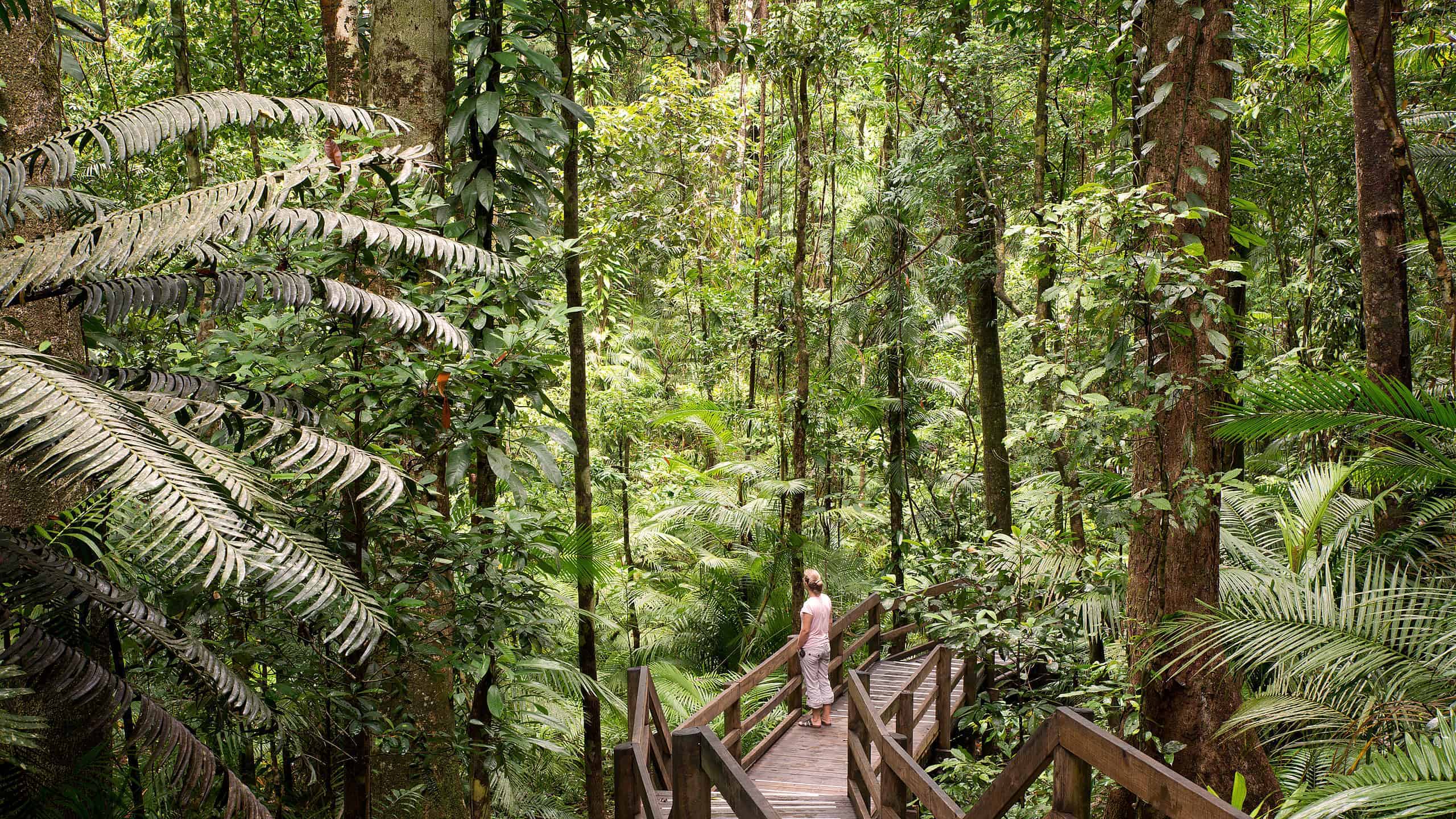
The Daintree contains plants descended from ancient evolutionary lineages, including giant ferns and primitive flowering plants.
©iStock.com/AustralianCamera
The plants are arguably the real stars of the Daintree. The larger Wet Tropics region contains thousands of plant species, including hundreds found nowhere else on Earth. Some belong to evolutionary groups with histories stretching back hundreds of millions of years.
Among the most impressive are giant king ferns, which can produce fronds more than 20 feet long. These massive plants belong to an ancient fern lineage, with related forms appearing in the fossil record more than 300 million years ago. That’s not the age of the individual plants growing here today, but it certainly puts their evolutionary heritage into perspective.
Another unusual resident is the idiot fruit tree, scientifically known as Idiospermum australiense. This rare flowering tree was rediscovered by scientists in 1972 and belongs to a highly distinctive ancient plant family. Its unusual seeds and evolutionary history make it particularly valuable to botanists studying the development of flowering plants.
The forest also contains basket ferns, climbing vines, orchids, palms, and trees that support entire communities of smaller organisms. Many epiphytes grow on the trunks and branches of other plants without taking nutrients directly from their hosts.
Walk slowly enough and you’ll notice that almost every available surface seems to support something green. Mosses cover fallen logs, ferns emerge from shady corners, and vines climb toward small openings in the canopy. It’s dense, tangled, and wonderfully alive.
How to Explore the Daintree Rainforest
Fortunately, visiting the Daintree doesn’t require the survival skills of an Outback explorer. Daintree National Park includes two main sections, Mossman Gorge and Cape Tribulation, both accessible from the popular tourist destinations of Cairns and Port Douglas.
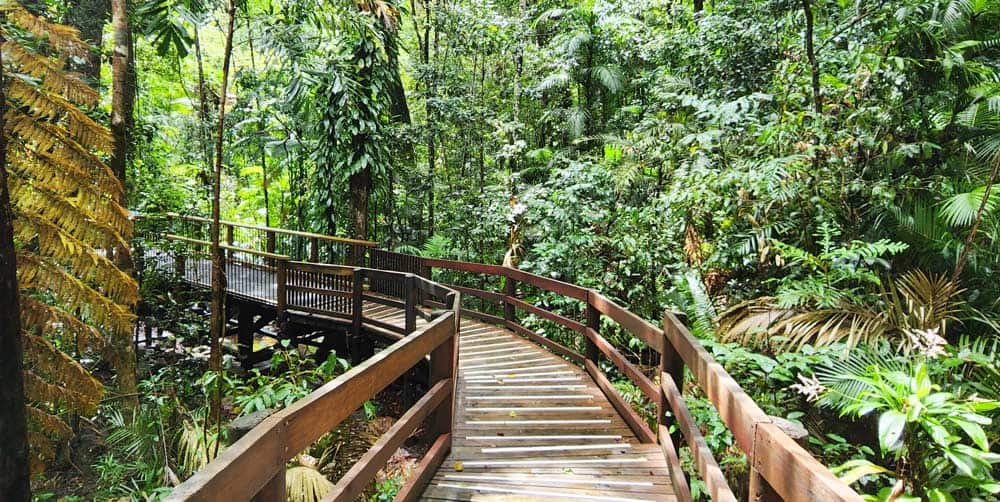
©VisitAustralia.com
Visitors can explore the area through guided walks, scenic drives, short boardwalks, and wildlife cruises. Several of the best experiences are accessible without committing to strenuous hikes.
Explore Mossman Gorge
Mossman Gorge is one of the most accessible places to experience the Daintree. Located approximately 50 miles north of Cairns, it’s known for enormous granite boulders, clear flowing water, and walking paths through dense tropical vegetation.
The Mossman Gorge Centre serves as the main visitor gateway, with shuttle transportation available to the park’s day-use area. The Baral Marrjanga boardwalk provides an accessible introduction to the rainforest, while other trails offer additional opportunities to explore the surrounding landscape.
Visitors can also join cultural experiences led by Eastern Kuku Yalanji guides. The Eastern Kuku Yalanji people are the Traditional Owners of the area, and their knowledge provides a perspective on the rainforest that goes far beyond identifying plants or pointing out wildlife.
Walk the Jindalba and Madja Boardwalks
For a more immersive rainforest experience, head north of the Daintree River to the Cape Tribulation section of the park.
The Jindalba Boardwalk is a relatively easy 650-meter return walk through dense lowland rainforest near Mount Alexandra. The trail passes small creeks and offers opportunities to look for birds, unusual plants, and occasionally even tree-kangaroos.
Another excellent option is the Madja Boardwalk, a 1.2-kilometer circuit that winds through rainforest before entering a mangrove-lined creek environment. The transition between ecosystems makes it especially interesting for photographers and anyone curious about how tropical forests interact with coastal wetlands.
Both walks provide an excellent introduction to the area’s biodiversity without demanding an entire day of hiking. As always, check park notices before visiting because heavy rain and maintenance can temporarily close trails.
Visit Cape Tribulation, Where Rainforest Meets the Reef
One of the Daintree’s most striking destinations is Cape Tribulation, where thick rainforest vegetation extends almost to the sand along the Coral Sea.
This stretch of coastline is remarkable because the Wet Tropics World Heritage Area sits alongside the Great Barrier Reef World Heritage Area. Few destinations offer such an impressive combination of ancient rainforest and tropical marine scenery.
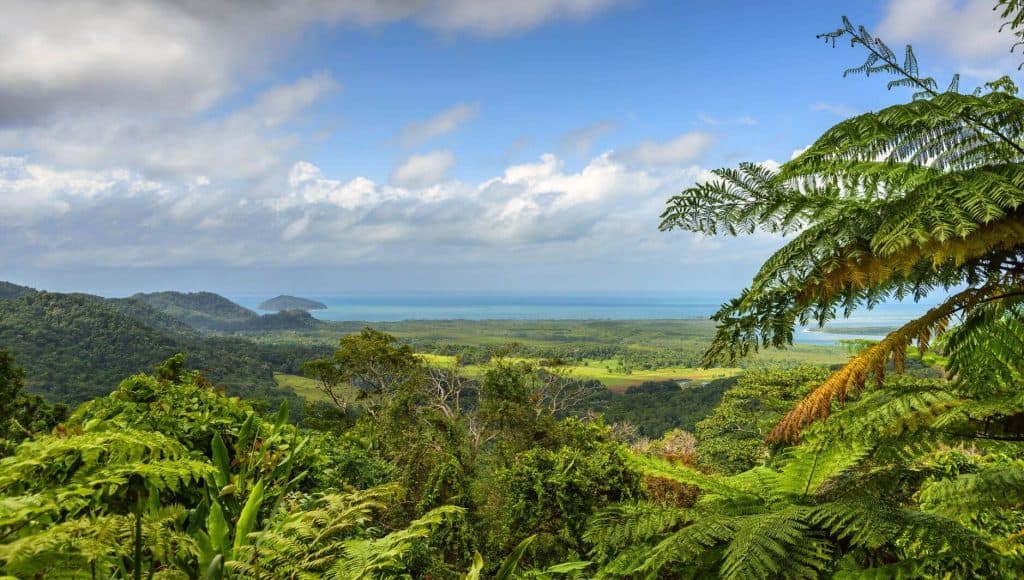
©VisitAustralia.com
Visitors can explore beaches, follow short coastal boardwalks, join guided nighttime wildlife walks, or simply enjoy the view of forest-covered mountains rising beyond the shoreline.
One important warning: don’t assume those inviting tropical waters are safe for swimming. Estuarine crocodiles inhabit the region, and dangerous marine stingers can occur along the coast. Follow local signs and guidance rather than treating an empty beach like a swimming invitation.
Take a Wildlife Cruise on the Daintree River
A guided cruise along the Daintree River offers a different perspective on the rainforest. Instead of looking up through the canopy, you’ll be traveling alongside mangroves and riverbanks where birds, reptiles, and other wildlife may appear.
The region is famous for its saltwater crocodiles, which inhabit freshwater and estuarine environments as well as coastal waters. Sightings aren’t guaranteed, but an experienced local guide can help visitors understand the animals and the complicated ecosystem they occupy.
When Is the Best Time to Visit the Daintree?
The Daintree is a year-round destination, but the cooler, relatively dry months from May through September generally offer the most comfortable conditions for sightseeing and walking.
During this period, daytime temperatures are typically warm without the extreme humidity associated with the wet season. It’s also a popular time for visitors, so booking accommodations and guided experiences ahead of time is a good idea.
The wetter months, particularly December through April, bring frequent downpours, higher humidity, and occasional flooding. The rainforest can look particularly spectacular during this period, but road closures, ferry interruptions, and trail restrictions become more likely.
Travelers should also bring insect repellent, sturdy walking shoes, rain protection, and plenty of drinking water. The tropics have a way of reminding visitors that a short hike can feel considerably longer when the humidity climbs.
Getting to the Daintree From Cairns or Port Douglas
For travelers coming from Seattle or elsewhere in the Pacific Northwest, Cairns is the most practical gateway to the Daintree. Most visitors reach Cairns through connecting flights from major Australian cities before continuing north by rental car or guided tour.
Mossman Gorge is approximately 50 miles from Cairns, while Cape Tribulation is roughly 87 miles away by road. Travel times depend on traffic, weather, and delays at the Daintree River ferry.
The cable ferry is the only road crossing into the Cape Tribulation section of the park and operates daily, generally from 5 a.m. until midnight. A regular passenger vehicle can travel along the main road to Cape Tribulation, but the rougher Bloomfield Track farther north requires a four-wheel-drive vehicle.
While it’s possible to visit parts of the Daintree on a day trip, spending two or three days in the region makes for a much better experience. That gives you time to explore the boardwalks, take a river cruise, visit Cape Tribulation, and hopefully encounter some of the area’s wildlife without spending the entire trip watching the clock.
How Does the Daintree Compare to the Amazon Rainforest?
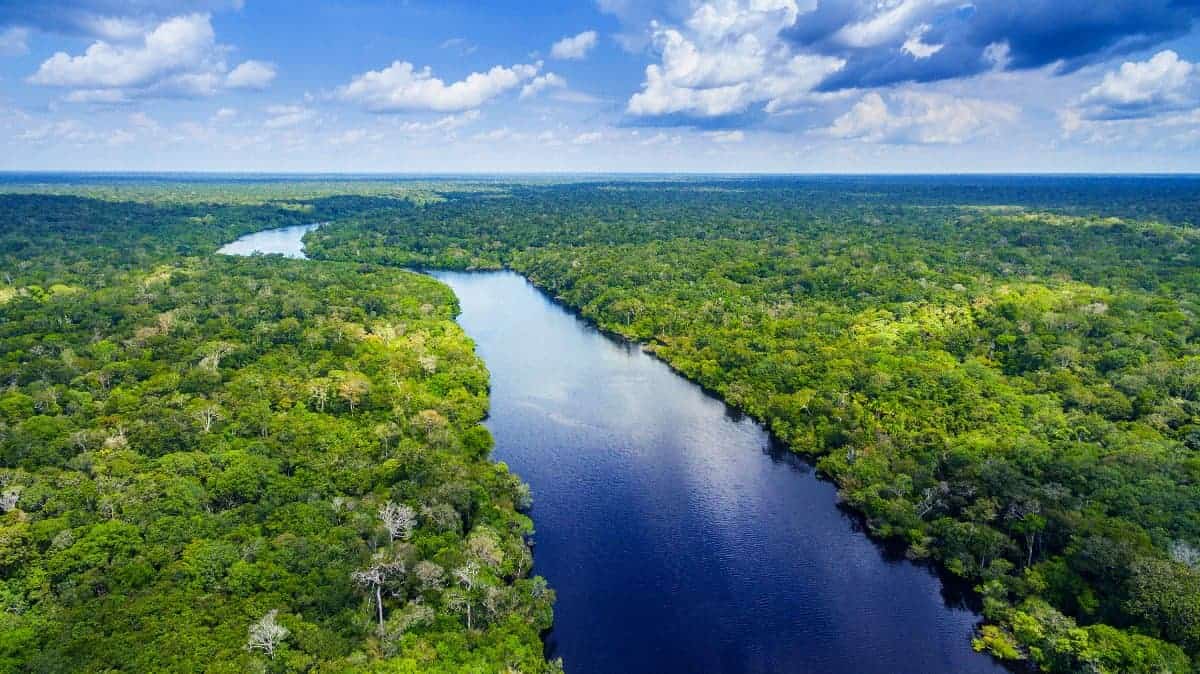
The Amazon is the world’s largest tropical rainforest, with an evolutionary history stretching back tens of millions of years.
©worldclassphoto/Shutterstock.com
Although the Daintree is commonly recognized as the oldest tropical rainforest, the Amazon is by far the largest. Spanning an enormous portion of South America, the Amazon rainforest contains one of the richest collections of plants and animals on Earth.
The Amazon’s evolutionary history extends back tens of millions of years, with tropical forest ecosystems developing and changing as South America’s climate and geography evolved. Scientists have traced its rainforest history to the early Cenozoic Era, around 66 million years ago.
The modern Amazon River is much younger than the forest’s earliest ancestors. Geological research places the development of the great transcontinental river system roughly 9 to 10 million years ago, although scientists continue to study the complicated history of the region’s waterways.
Both the Amazon and Daintree contain plants descended from ancient evolutionary lineages, and both have experienced enormous environmental changes over time. Neither forest should be thought of as a completely unchanged snapshot of prehistoric Earth.
For travelers accustomed to the misty forests of Washington and Oregon, the Daintree offers a chance to see an entirely different version of the rainforest experience. Instead of towering Sitka spruce, moss-covered maples, and chilly Pacific weather, you’ll find tropical palms, giant ferns, cassowaries, and a forest that reaches right down to the ocean.
It’s a long way from the Pacific Northwest, but for anyone who loves exploring the world’s extraordinary forests, Australia’s Daintree is worth putting on the travel list.

