
If you’ve ever driven through the wide-open country east of Washington’s Cascades or across Oregon’s high desert, you know the appeal of a landscape where one enormous landmark seems to own the horizon. Western Australia takes that idea to another level with Mount Augustus, a massive rock formation rising from the red plains of the Australian Outback.
Most travelers have heard of Uluru, Australia’s famous red rock. Far fewer know about Mount Augustus, which covers roughly twice as much area and sits hundreds of miles from the nearest major city. It’s one of Australia’s most impressive natural landmarks, but getting there takes considerably more effort than pulling off the highway for a quick photograph.
For travelers who enjoy remote road trips, remarkable scenery, and destinations that haven’t been overrun by tourists, Mount Augustus deserves a closer look. Just be prepared to put some miles on the rental car.
Is Mount Augustus Really the World’s Largest Rock?
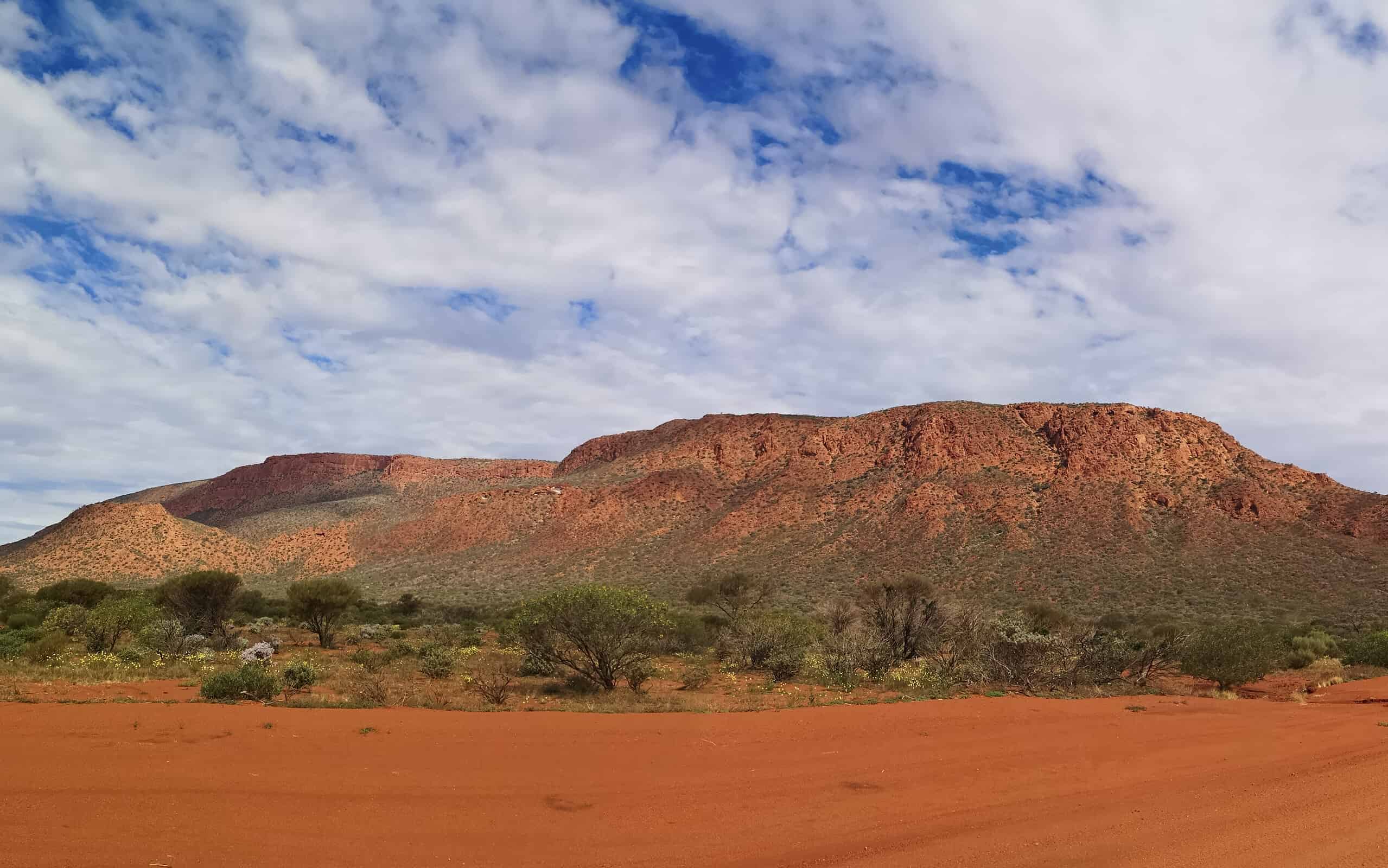
Mount Augustus is a massive rock formation in Western Australia, with a footprint roughly twice the size of Uluru.
©Samantha Haebich/ via Getty Images
Mount Augustus is frequently described as the world’s largest rock, although that title comes with an important geological distinction. Unlike Uluru, which is widely recognized as an enormous monolith, Mount Augustus consists of multiple rock layers that were folded, uplifted, and exposed over an extraordinary stretch of geological time.
Western Australia’s tourism authority promotes Mount Augustus as the world’s largest monocline, while geologists have also described its folded structure as an anticline. Either way, this is one seriously impressive geological landmark.
Mount Augustus rises approximately 2,350 feet above the surrounding plain, with its summit reaching around 3,625 feet above sea level. Its central ridge stretches roughly five miles, and the larger formation covers approximately 11,850 acres.
The rocks here tell a story stretching back more than a billion years. Many of the sandstone layers were deposited around 1.6 billion years ago, long before the landscapes we recognize today began taking shape.
And while it’s considerably larger than Uluru, Mount Augustus doesn’t have quite the same instantly recognizable shape. Its broad slopes, scattered vegetation, and enormous footprint make it look more like an isolated mountain than a single towering boulder.
Where Is Mount Augustus, and How Do You Get There?
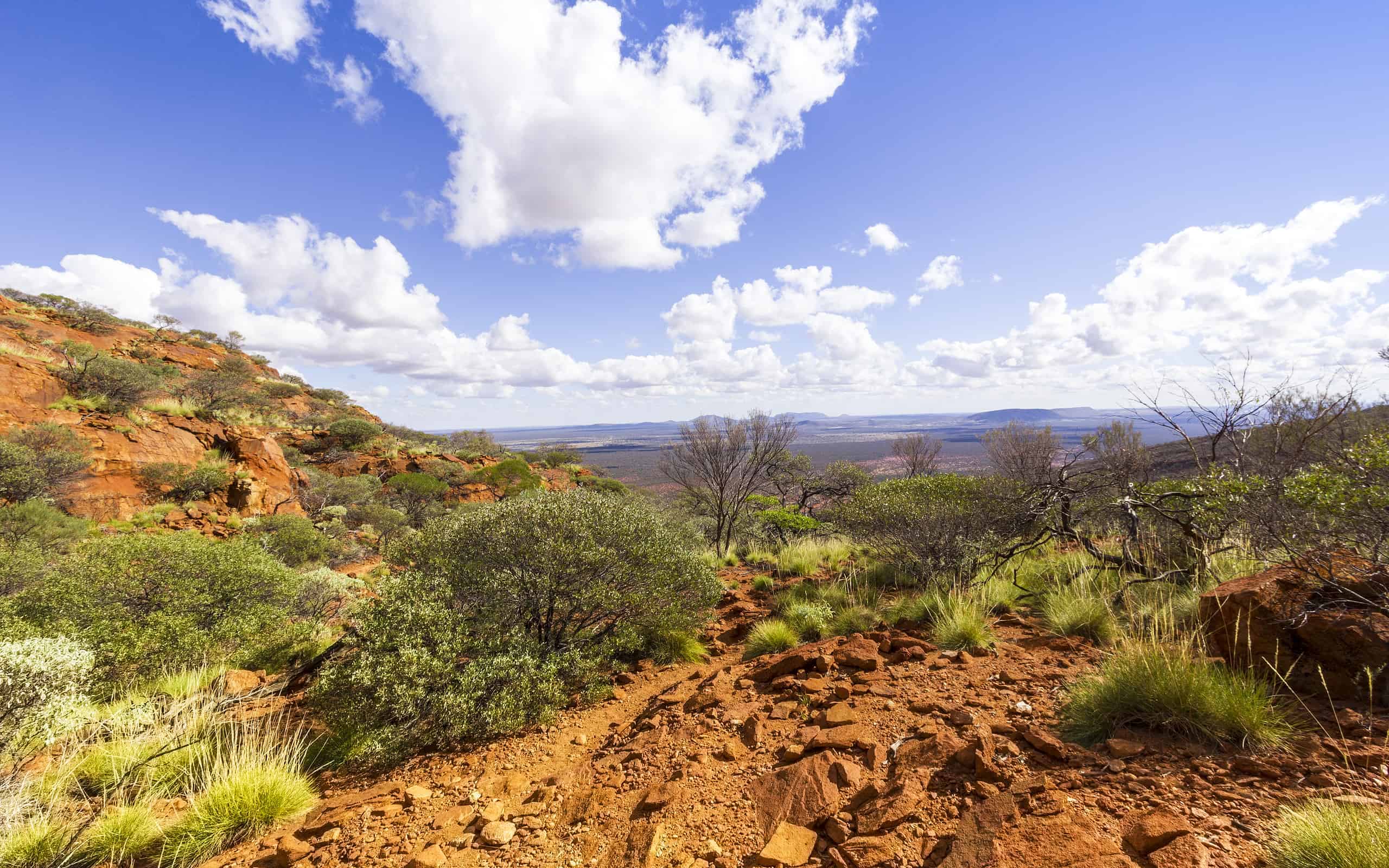
Mount Augustus lies approximately 620 miles northeast of Perth, making it a destination for a dedicated Outback road trip.
©JoshuaWells_Photography/ via Getty Images
Mount Augustus sits within Mount Augustus National Park in Western Australia’s remote Gascoyne-Murchison region, roughly 620 miles northeast of Perth. Driving from Perth generally takes two days, depending on your route, road conditions, and how often you stop along the way.
Travelers typically approach through Carnarvon and Gascoyne Junction or via the inland route through Meekatharra. From Carnarvon, Mount Augustus is approximately 289 miles away by road through Gascoyne Junction.
Here’s where the trip gets interesting. While sections of the journey follow sealed highways, the roads approaching the national park are largely unsealed. They’re generally suitable for two-wheel-drive vehicles in good conditions, but heavy rain can make travel difficult or close roads entirely.
Anyone renting a vehicle should confirm that their rental agreement permits travel on unsealed roads. You’ll also want to check local road reports, plan fuel stops, and bring enough food and water for unexpected delays. This isn’t the sort of destination where you can count on finding a convenience store around the next bend.
An Ancient Landscape With Deep Aboriginal Roots
Long before European explorers arrived, Mount Augustus was known as Burringurrah to the Wajarri people, the Traditional Owners of the area. The mountain and surrounding landscape hold deep cultural significance, with stories passed down through generations.
Visitors can see Aboriginal rock engravings, also called petroglyphs, at designated locations including Mundee and Ooramboo. These ancient markings are among the most meaningful features of the park and provide a connection to the people who have known this landscape for countless generations.
The formation received its English name in 1858, when explorer Francis Thomas Gregory named it in honor of his brother, Augustus Charles Gregory. Today, both Mount Augustus and Burringurrah are used when referring to this remarkable landmark.
Wildlife Around Mount Augustus
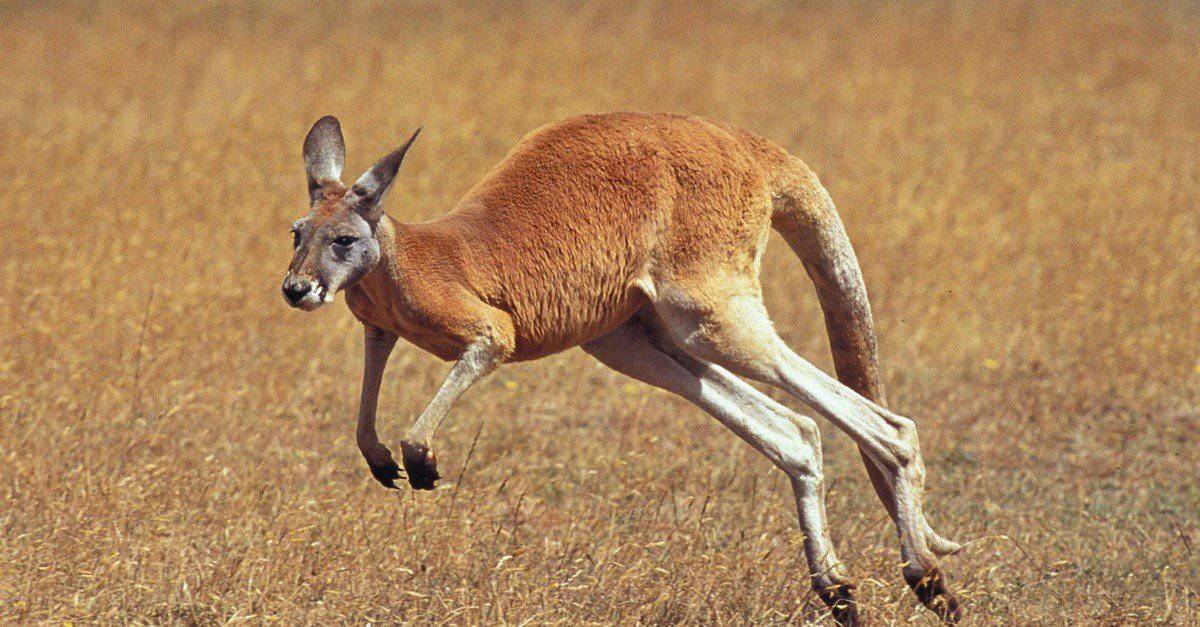
Red kangaroos are among the native animals found on the plains around Mount Augustus, along with reptiles and numerous bird species.
©iStock.com/slowmotiongli
You might expect an isolated mountain surrounded by dry scrubland to be fairly lifeless. Mount Augustus proves otherwise.
The surrounding plains support red kangaroos, while euros, a type of wallaroo, can be found closer to the rocky slopes. Large monitor lizards, including goannas and perenties, also inhabit the region.
Birdwatchers have plenty to look for, particularly around the area’s permanent water sources. Emus, honeyeaters, parrots, birds of prey, and various waterbirds are among the species associated with the park and its surroundings.
Vegetation includes mulga, wattles, river red gums, and other hardy plants adapted to the region’s dry conditions. The patches of green around watercourses provide an especially interesting contrast to the surrounding red earth.
Early mornings and evenings generally offer the best opportunities to look for wildlife, particularly when temperatures are lower and animals are more active.
The Best Ways to Experience Mount Augustus
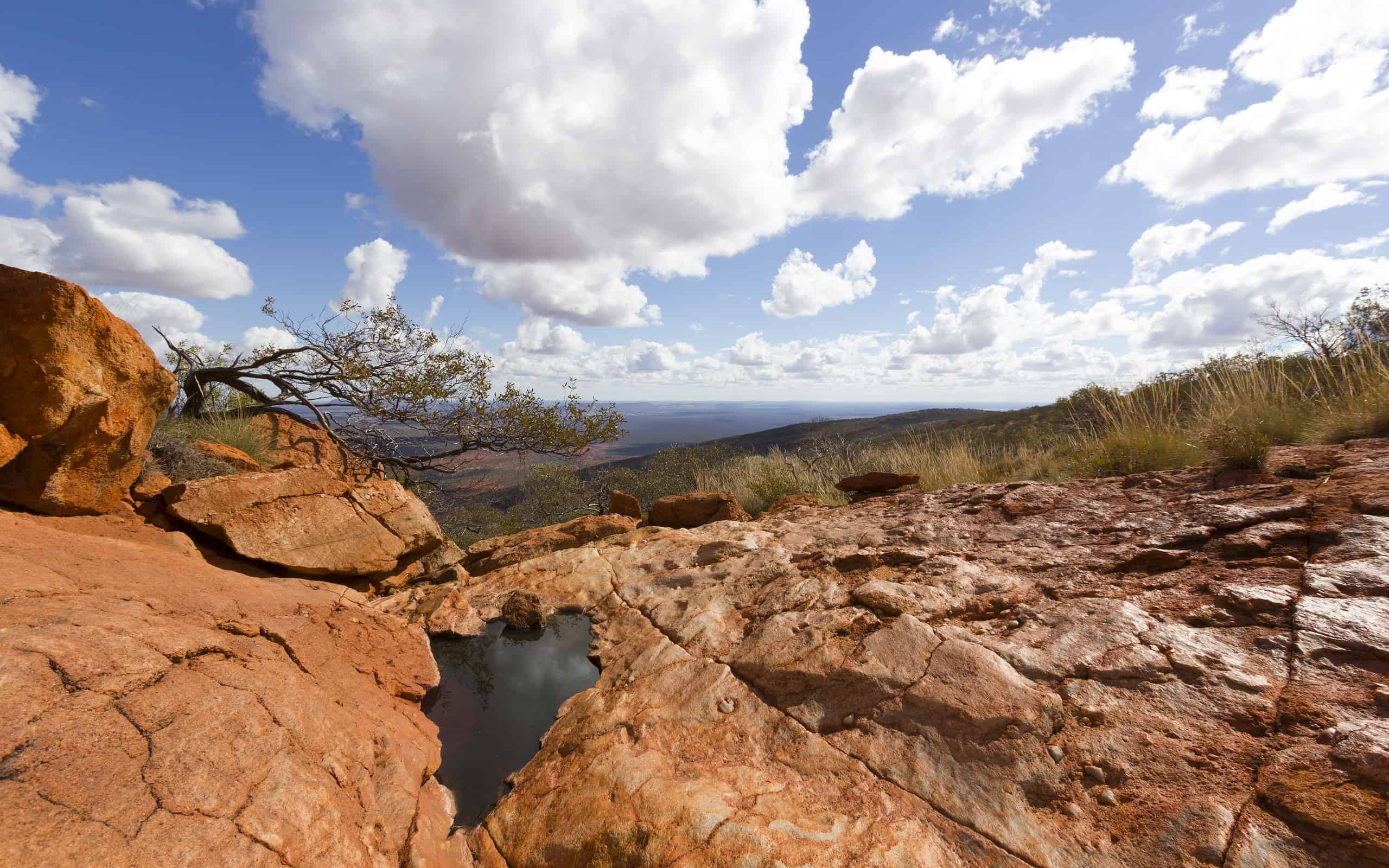
Travelers can explore Mount Augustus by scenic drive, short walking trails, or a challenging hike to the summit.
©JoshuaWells_Photography/ via Getty Images
You don’t need to be a serious hiker to appreciate Mount Augustus. In fact, some of the best experiences require little more than a vehicle, a camera, and enough time to enjoy the scenery.
Drive Around the Base of Mount Augustus
The park’s scenic Loop Drive runs roughly 30 miles around the base of the mountain, offering access to viewpoints, short walking trails, gorges, and Aboriginal cultural sites.
One of the most interesting things about the drive is how dramatically the mountain changes depending on your position. Some sections are covered in vegetation, while others expose long stretches of weathered rock. It’s almost like looking at several different mountains as you make your way around.
The drive itself can be completed relatively quickly, but allowing several hours makes far more sense if you plan to stop for photographs and explore some of the shorter trails.
Hike the Trails Around Mount Augustus
Mount Augustus National Park offers walking trails for different experience levels. Visitors looking for something relatively easy can explore the shady river red gums along Gum Grove Trail, while more adventurous hikers can tackle the rocky Goordgeela Trail or Saddle Trail for views across the surrounding country.
The biggest challenge is the Mount Augustus Summit Trail, a demanding 7.8-mile round-trip hike involving steep climbs, uneven terrain, and rock scrambling. The route gains more than 2,100 feet of elevation and should be attempted only by very fit, experienced hikers who are properly equipped.
Importantly, the summit trail has seasonal restrictions because of extreme heat. It is open from May through August, closed from November through February, and subject to a 7 a.m. start cutoff in March, April, September, and October. Visitors should check current park notices before planning a hike.
The views may be extraordinary, but this is no place to underestimate the conditions. Summer temperatures can exceed 104 degrees Fahrenheit, mobile coverage is extremely limited, and emergency assistance may take hours to arrive.
Visit Cattle Pool at Goolinee
One of the area’s more peaceful attractions is Cattle Pool, also known as Goolinee, a permanent pool along the Lyons River surrounded by river red gums.
The water attracts birds and other wildlife, making it a worthwhile stop for photography, birdwatching, or simply enjoying a break from the open Outback landscape. Swimming and paddling are among the activities described by the park authority, although visitors should always check current conditions and take appropriate precautions around natural water.
Even if you never get into the water, the contrast between the shady pool, green vegetation, and enormous rocky backdrop makes this one of the more memorable stops around Mount Augustus.
©Visit Australia
Watch the Sunset From Emu Hill Lookout
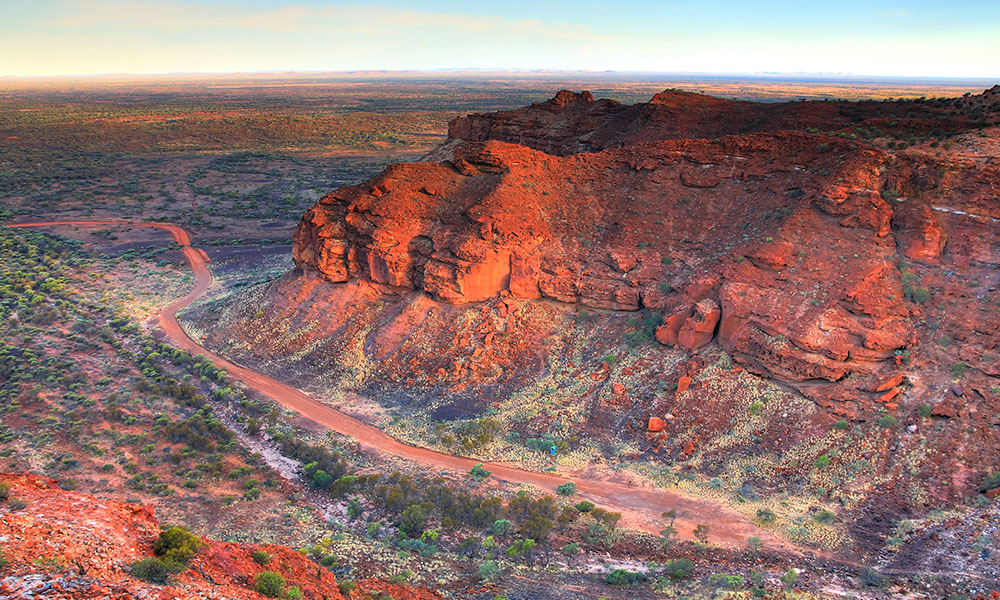
For photographers, Emu Hill Lookout is one of the best places to appreciate the mountain’s size and changing colors. Located west of the park, the lookout offers a broad view of Mount Augustus, especially as the late-afternoon sunlight moves across its rocky slopes.
Depending on the light, the mountain can shift from muted brown and orange to shades of red, pink, and purple. It’s the sort of scene worth lingering over rather than snapping one photograph and immediately heading back to the car.
When Is the Best Time to Visit Mount Augustus?
The cooler months, particularly May through August, are generally the best time to visit Mount Augustus. Temperatures are more manageable for walking, the summit trail is seasonally open, and the conditions are better suited to spending extended periods outdoors.
Spring can bring colorful wildflowers, but rising temperatures make outdoor activities more demanding. Summer is particularly unforgiving, and the summit trail remains closed during the hottest months.
Visitors should plan on carrying plenty of drinking water. The national park has no potable water supply, and park authorities recommend carrying and drinking at least one liter per person per hour when hiking, with additional water in hotter conditions. A satellite phone or personal locator beacon is also strongly recommended for remote travel and challenging walks.
Where to Stay Near Mount Augustus
Given the long journey required to reach the park, an overnight stay is a much better option than trying to rush through the highlights.
Mount Augustus Tourist Park, located near the national park, offers accommodation and camping options along with fuel and basic supplies. Booking ahead is a smart move, especially during the cooler travel season when visitors are more likely to make the journey.
For travelers coming from Seattle, Portland, or elsewhere in the Pacific Northwest, Mount Augustus is best treated as part of a longer Western Australia itinerary rather than a standalone side trip. The journey from Perth alone is substantial, and nearby destinations such as the Gascoyne region and Kennedy Range can make the extended drive more rewarding.
Mount Augustus isn’t Australia’s easiest attraction to reach, and that’s part of its appeal. If your idea of a memorable trip includes remote landscapes, wide-open roads, and natural landmarks that make you feel incredibly small, this giant of the Australian Outback certainly fits the bill.

