
Most tunnels are designed to get you from one side of an obstacle to the other without thinking much about what is around you. These 15 are different. Some were blasted through mountains long before modern tunneling equipment existed. Others carry cars beneath rivers, bays, and entire neighborhoods. One makes automobiles take turns with trains. Another sends you through a dark Washington mountain on foot or bicycle. And one ends with arguably the most dramatic reveal of any road tunnel in America.
From Alaska to Virginia, these are some of the coolest tunnels in the United States, whether the appeal comes from the view, the history, the engineering, or simply wondering how anyone decided to build the thing in the first place.
Anton Anderson Memorial Tunnel, Alaska
©Dept of Transportation
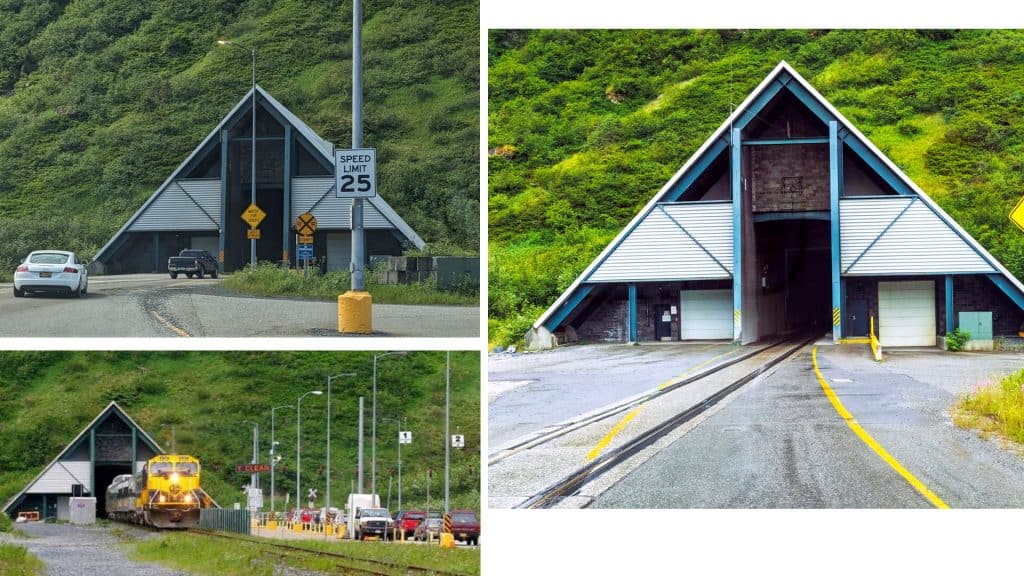
The road to Whittier does something most highways never do: it shares a tunnel with a railroad. Alaska’s Anton Anderson Memorial Tunnel runs about 2.5 miles through Maynard Mountain and was completed as a rail tunnel in 1943. It was later converted so cars and trains could use the same single-lane passage, taking turns according to a controlled schedule. The Alaska Department of Transportation describes it as the longest combined vehicle-railroad tunnel in North America. Drivers roll directly over rails embedded in the roadway, then emerge near Whittier and Prince William Sound. It is part transportation link, part engineering oddity, and very Alaska in the best possible way.
Snoqualmie Tunnel, Washington
©Wikimedia Commons
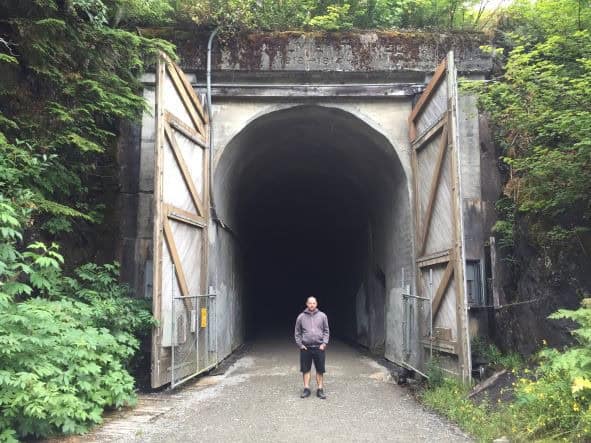
The Snoqualmie Tunnel turns an old railroad crossing of the Cascades into one of Washington’s strangest bike rides and walks. The tunnel is about 2.3 miles long and was completed for the Milwaukee Road in 1915. Today it is part of the Palouse to Cascades State Park Trail, and hikers and cyclists can travel straight through the mountain on the former rail grade. There is no sightseeing window halfway through and no dramatic lighting system. Much of the experience is simply dark, cool, echoing tunnel until daylight finally appears at the other end. Washington State Parks recommends visitors bring their own light, and the tunnel is closed seasonally during winter conditions.
Mount Baker Ridge Tunnel, Washington
©"Westbound Mount Baker Tunnel portal" by SounderBruce is licensed under BY-SA 2.0. - Original / License
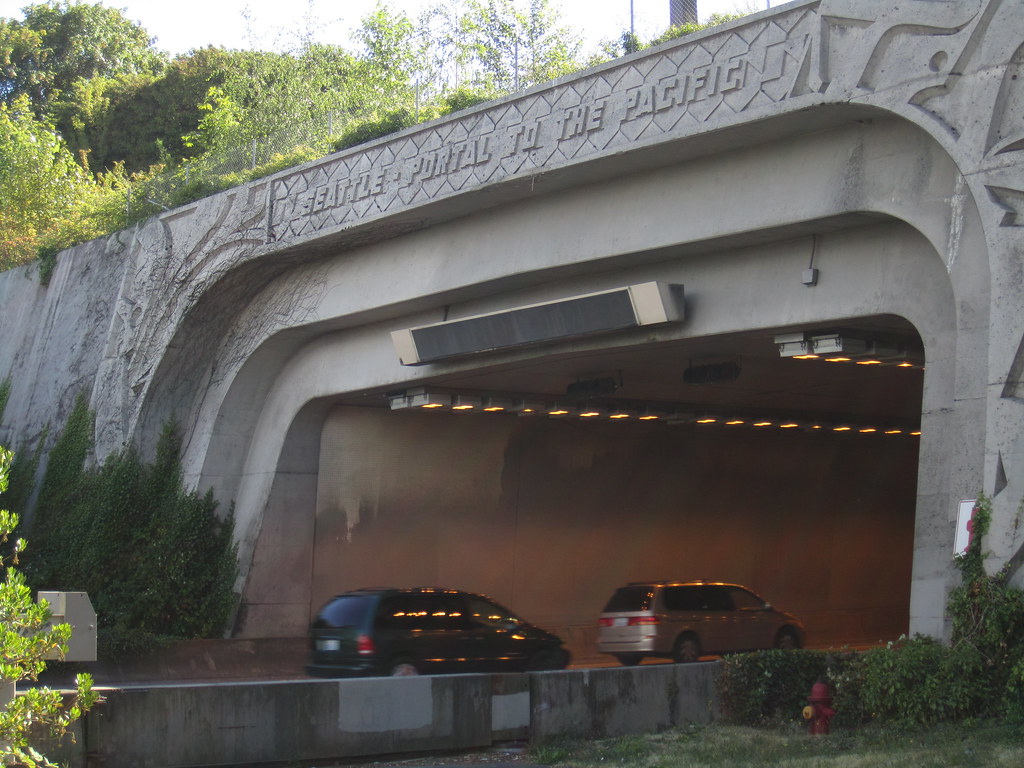
Seattle managed to hide one of its most unusual pieces of infrastructure beneath a neighborhood. The bored section of the Mount Baker Ridge Tunnel on Interstate 90 is about 1,500 feet long and has a net interior diameter of 63.5 feet. That enormous opening was designed to fit traffic on two levels, plus a bicycle and pedestrian corridor on another level. Work began in 1983 and the project was completed in 1988. Washington State Department of Transportation engineering documents describe the bored section as the world’s largest-diameter tunnel built in soft ground. Most commuters probably see it as just another part of I-90. Structurally, it is anything but ordinary.
Zion-Mount Carmel Tunnel, Utah
©"Zion Tunnel (the short one)" by BDUngard is licensed under BY-SA 2.0. - Original / License
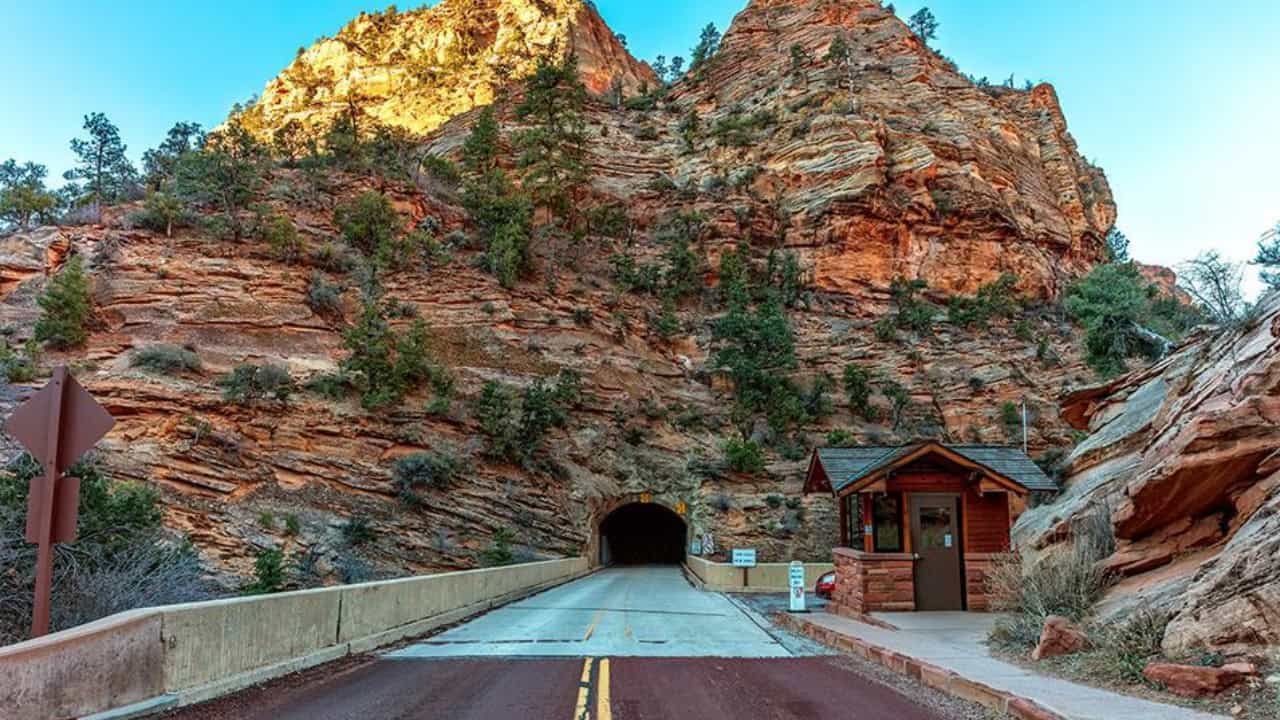
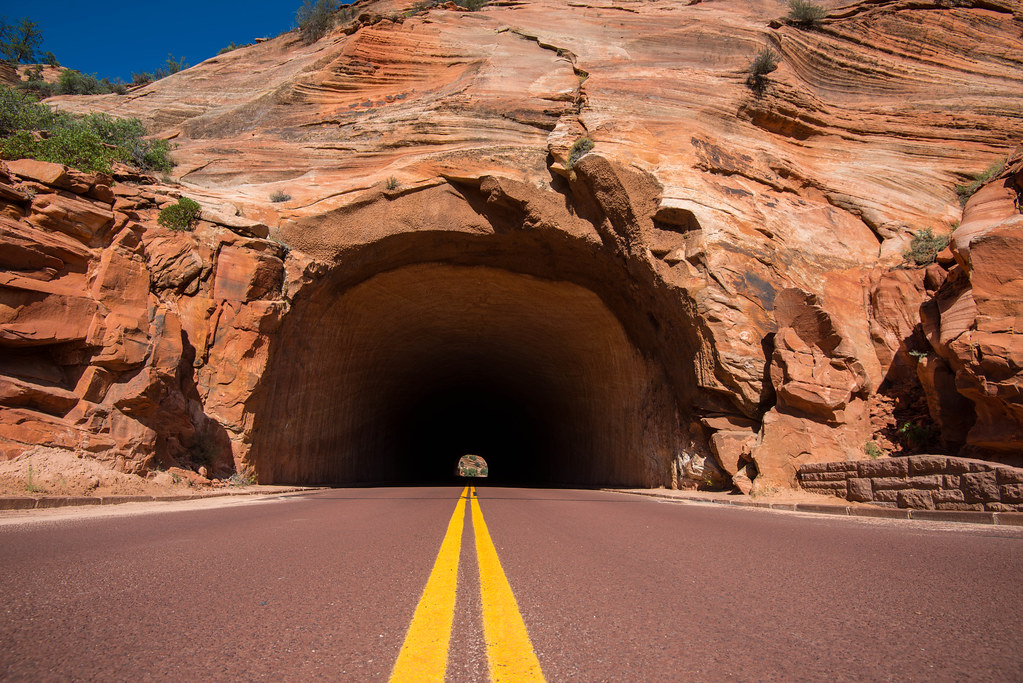
The Zion-Mount Carmel Tunnel feels less like a shortcut and more like somebody carved a road directly through the scenery. The 1.1-mile tunnel was built from 1927 to 1930 through Zion National Park’s sandstone cliffs. Its most memorable features are the large gallery windows cut into the cliff face, which provide sudden flashes of Zion Canyon while you are still inside the mountain. Those openings were not just decorative. During construction, crews used them for ventilation, light, access, and removing blasted rock. The highway and tunnel opened in July 1930 and helped create a direct automobile route linking Zion with the broader Grand Circle region. Nearly a century later, the drive still feels wonderfully improbable.
Eisenhower-Johnson Memorial Tunnel, Colorado
©Wikimedia Commons
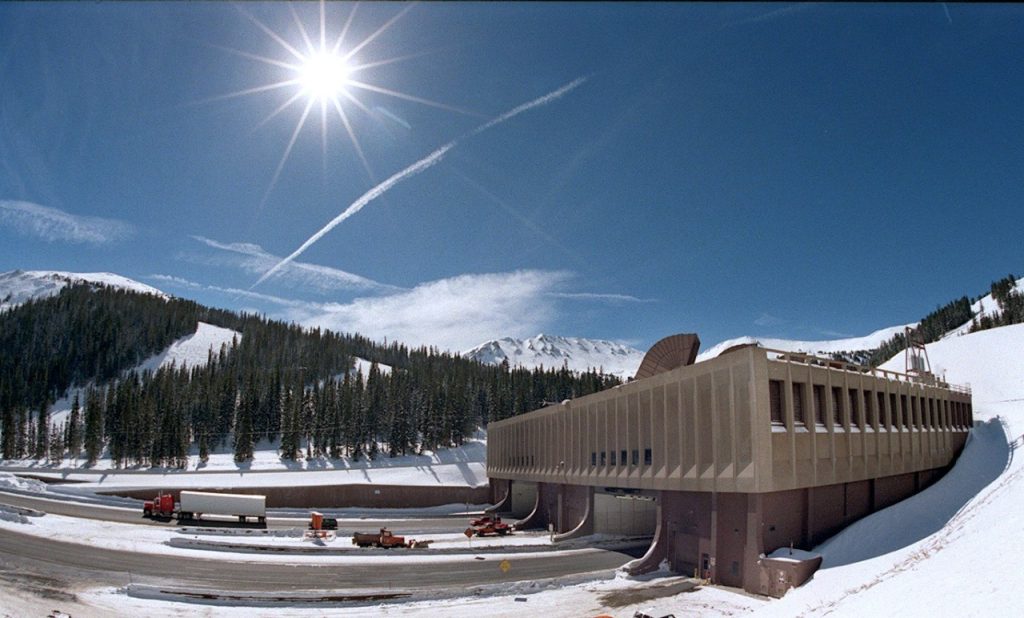
Interstate 70 does not politely go around the Continental Divide. It goes through it. The Eisenhower-Johnson Memorial Tunnel sits about 60 miles west of Denver at an average elevation of 11,112 feet. Its two bores are each roughly 1.7 miles long, with the westbound Eisenhower Bore opening in 1973 and the eastbound Johnson Bore following in 1979. When the first bore opened, it was the highest vehicular tunnel in the world, according to the Colorado Department of Transportation. Today it remains one of America’s highest major road tunnels. The drive itself is quick, but there is something satisfying about disappearing into the Rockies on one side of the Continental Divide and popping out on the other.
Wawona Tunnel, California
©"Wawona Tunnel View" by Prayitno / Thank you for (12 millions +) view is licensed under BY 2.0. - Original / License
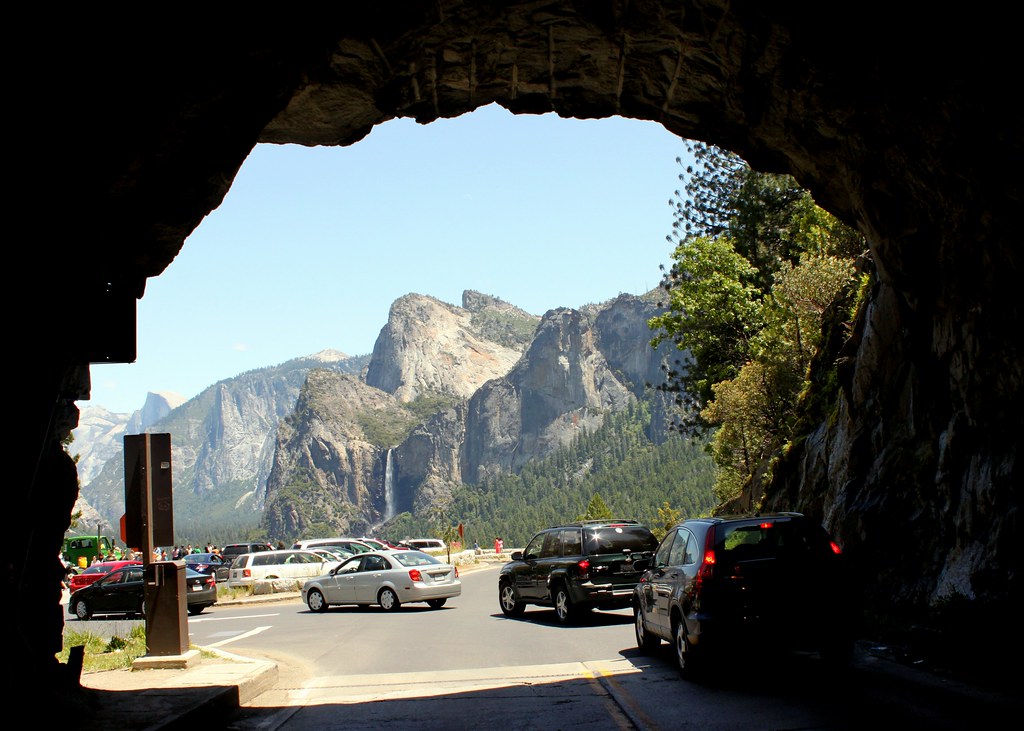
Plenty of tunnels have impressive entrances. Wawona Tunnel has an impressive exit. The 4,233-foot tunnel was bored through solid granite in Yosemite National Park and opened to public travel in 1933. Drive east through it and the darkness suddenly gives way to Tunnel View, one of the most recognizable panoramas in the National Park System. El Capitan rises on the left, Bridalveil Fall sits to the right, and Half Dome appears farther up Yosemite Valley. The National Park Service calls Wawona the longest highway tunnel in California. The engineering is impressive on its own, but the real trick is the reveal at the end. Few tunnel exits in America have better timing.
Nada Tunnel, Kentucky
©"Nada tunnel, Powell county, Ky." by M Floyd is licensed under BY 2.0. - Original / License
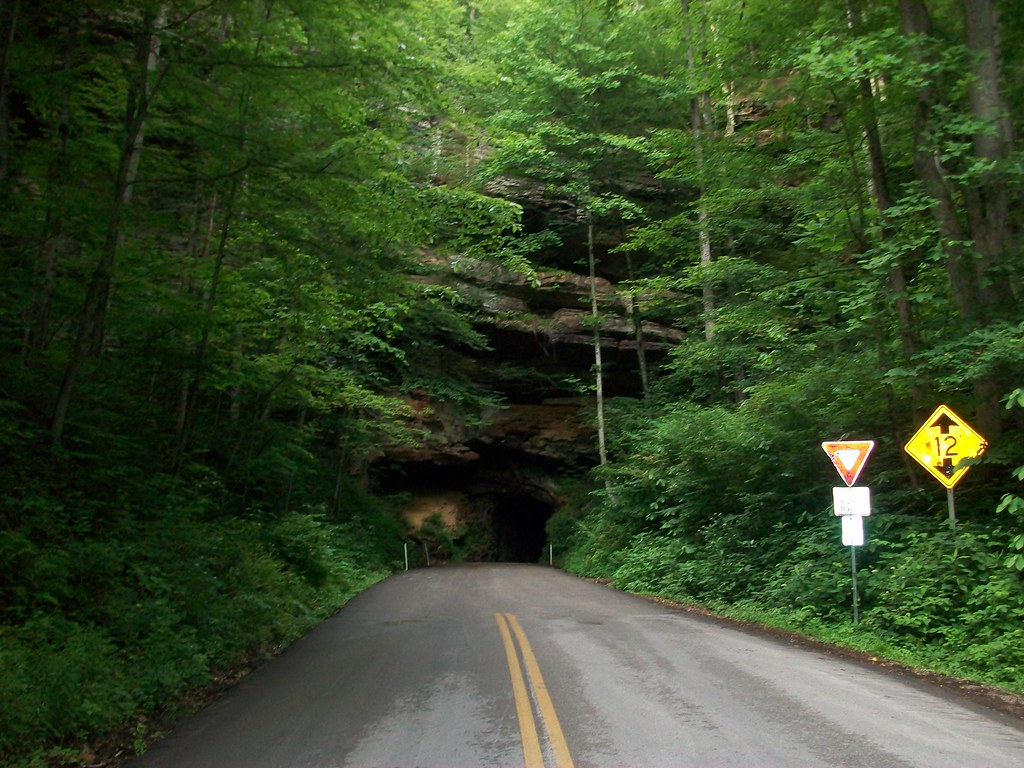
Nada Tunnel is only about 900 feet long, but it has more personality than some tunnels ten times its size. Built in 1910 and 1911 for a narrow-gauge logging railroad, the hand-cut passage now carries Kentucky Route 77 into the Red River Gorge area. It is only about 12 feet wide and 13 feet high, so modern traffic has to treat it as a one-lane bottleneck. Drivers are warned to turn on their lights and yield to vehicles already inside. The tunnel is listed on the National Register of Historic Places and has become an unmistakable gateway to the gorge. It looks less like modern highway infrastructure and more like somebody found a hole in the mountain and decided, correctly, that the road should use it.
Cumberland Gap Tunnel, Kentucky and Tennessee
©Wikimedia Commons
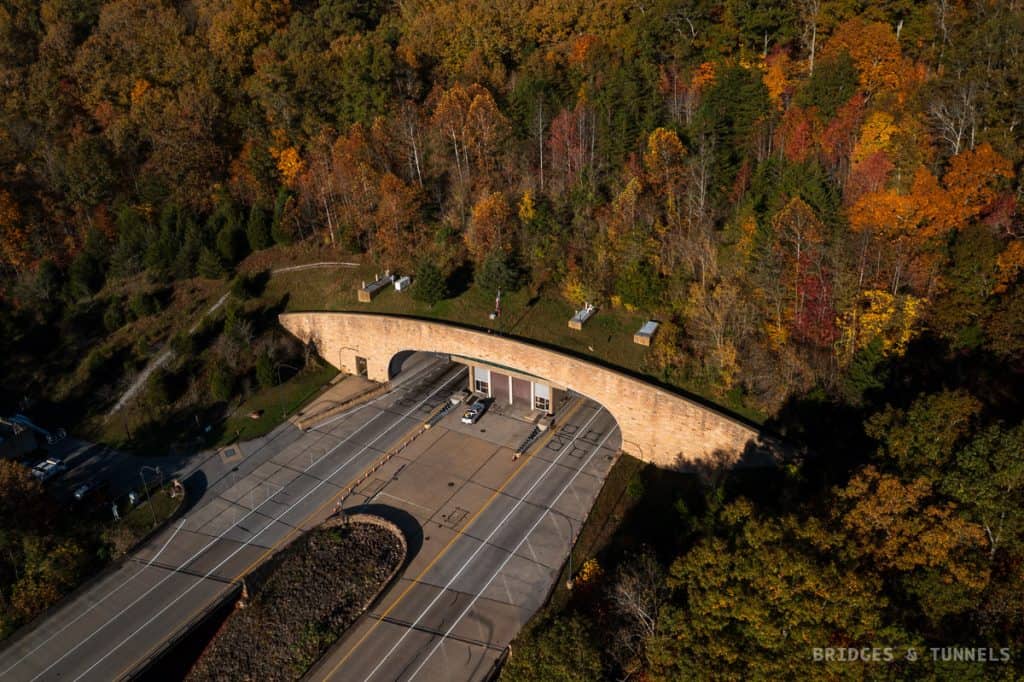
The Cumberland Gap Tunnel did more than move traffic underground. It helped give a historic mountain pass back its landscape. The twin-bore tunnel carries U.S. Route 25E for about 4,600 feet beneath Cumberland Mountain between Kentucky and Tennessee. It opened in 1996, replacing the old road over Cumberland Gap. After traffic moved underground, crews removed the former highway and restored the pass to resemble its earlier terrain. That makes this one of the rare highway projects where the most interesting part may be what disappeared above it. Drivers get a modern four-lane route through the mountain, while visitors to Cumberland Gap National Historical Park can experience the historic pass without a highway running through the middle of it.
Blue Ridge Tunnel, Virginia
©Wikimedia Commons
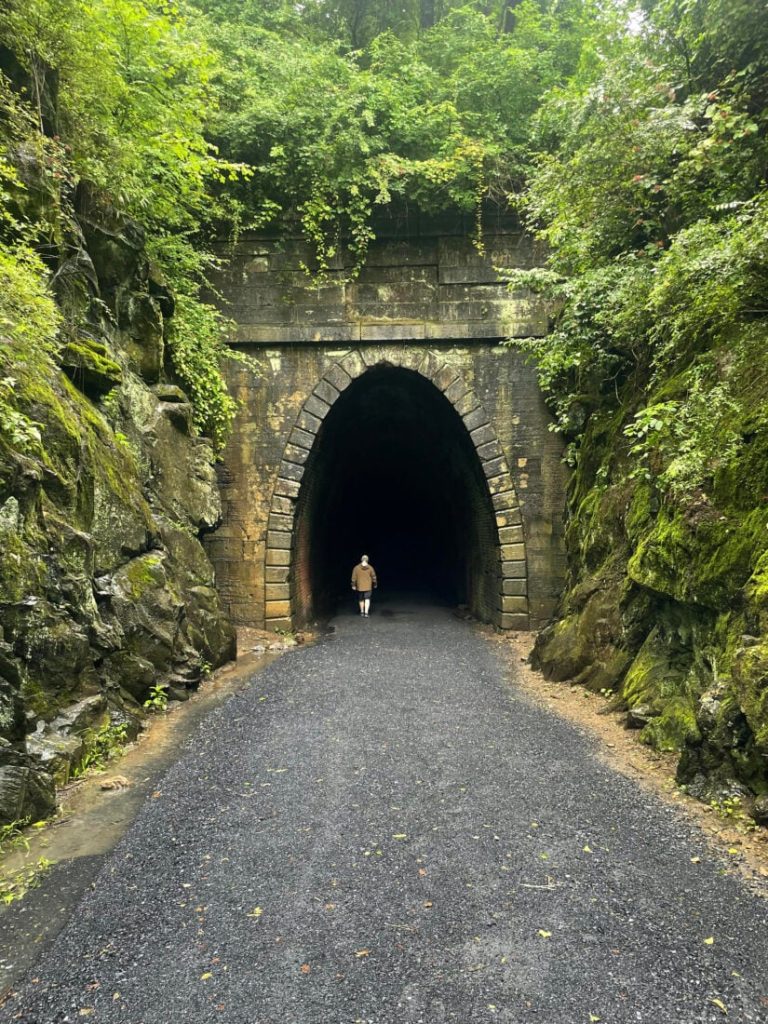
The Blue Ridge Tunnel was ambitious even before power tools entered the conversation. Engineer Claudius Crozet designed the 4,273-foot passage through Afton Mountain, and workers dug it largely by hand with drilling and black-powder blasting between 1850 and 1857. It opened to rail traffic in 1858, more than 500 feet below Rockfish Gap. A larger parallel tunnel replaced it in 1944, but the original did not disappear. The historic bore was restored and opened to hikers and cyclists in 2020 as the centerpiece of a recreational trail. Inside, the rough stone and brickwork make the age of the tunnel impossible to miss. Bring a light. Nineteenth-century railroad engineers did not leave much room in the budget for mood lighting.
Chesapeake Bay Bridge-Tunnel, Virginia
©Wikimedia Commons
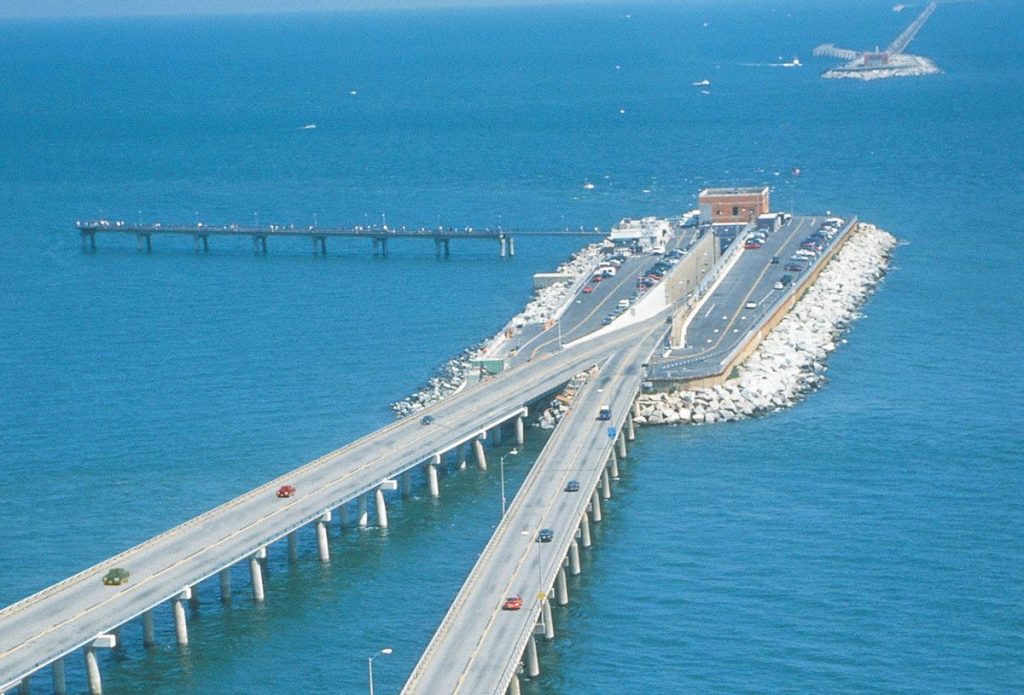
The Chesapeake Bay Bridge-Tunnel is the rare road trip where the highway seems to fall into the water on purpose. The crossing opened in 1964 and stretches 17.6 miles from shore to shore between Virginia’s Eastern Shore and the Virginia Beach side of the bay. Most of the route runs on bridges and trestles, but twice the roadway drops onto manmade islands and disappears into tunnels roughly a mile long beneath major navigation channels. The design lets large ships pass overhead while cars travel underneath the bay. Add bridges, causeways, islands, and open-water views, and this is much more than a tunnel. It is a 1960s engineering solution that still feels slightly ridiculous when you see the road vanish below the horizon.
Paw Paw Tunnel, Maryland
©"Paw Paw Tunnel - Maryland" by Dougtone is licensed under BY-SA 2.0. - Original / License
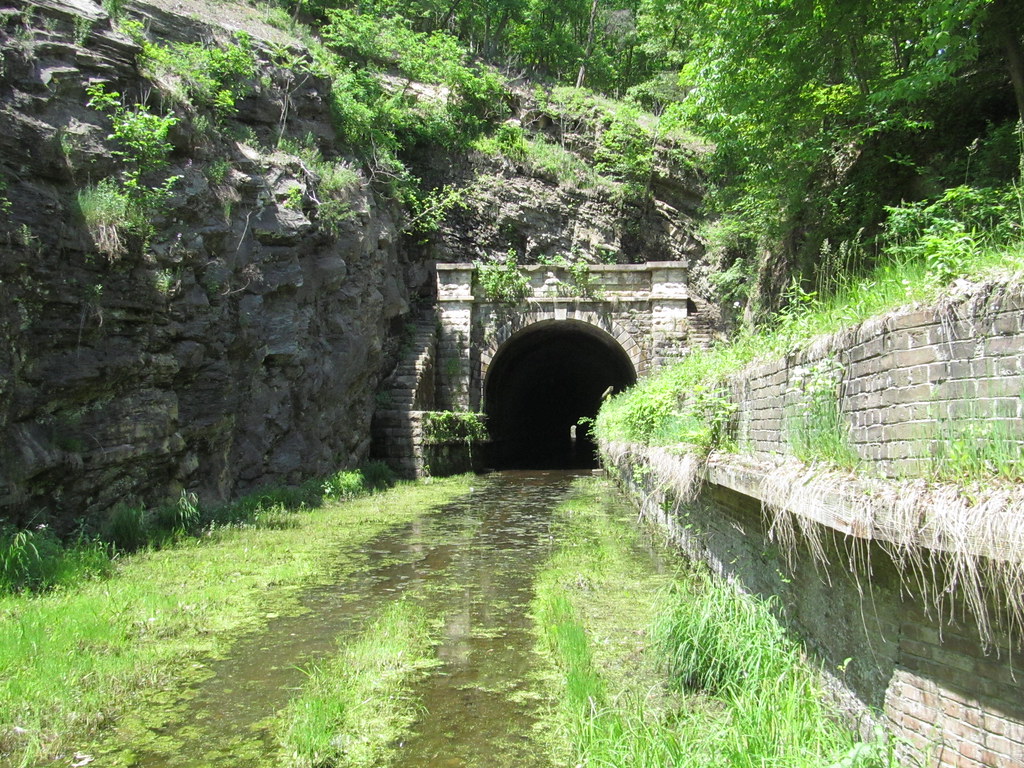
The Paw Paw Tunnel was supposed to be the easy option. Instead of following six winding miles of the Potomac River, the Chesapeake and Ohio Canal Company decided to bore 3,118 feet through a ridge in western Maryland. Construction began in 1836 with hopes of finishing in two years. It took 14. The tunnel finally opened in 1850 after labor disputes, funding problems, collapses, and the stubborn reality of digging through unstable rock. More than six million bricks line the passage. Today the old canal towpath still runs through it as part of Chesapeake and Ohio Canal National Historical Park, and visitors can walk through with a flashlight. The rope marks, brickwork, and darkness do a fine job of making 1850 feel considerably closer than it is.
Fort McHenry Tunnel, Maryland
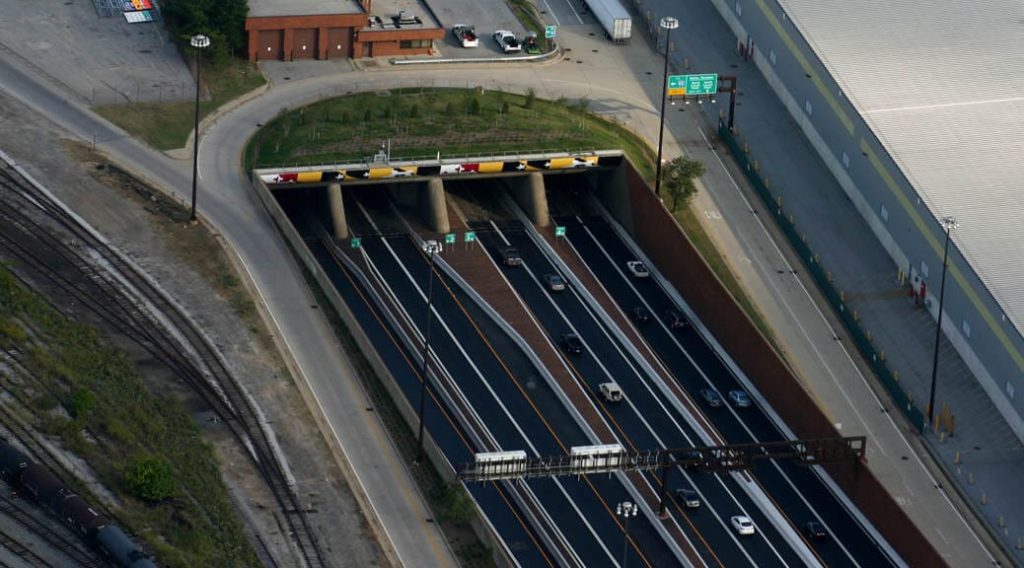
©Creative Commons
Baltimore’s Fort McHenry Tunnel hides a major piece of Interstate 95 beneath the Patapsco River. The eight-lane tunnel opened in 1985 and runs nearly 1.4 miles between the Locust Point and Canton areas. Engineers built it using prefabricated immersed-tube sections that were floated into the harbor and lowered into a trench. The Maryland Transportation Authority says the project required the world’s first tunnel sections designed to curve both vertically and horizontally. The tunnel also allowed I-95 to cross the harbor without putting a large bridge next to historic Fort McHenry. Millions of drivers use it as ordinary interstate infrastructure, which is probably the ultimate compliment to a project that involved sinking giant highway sections into Baltimore Harbor.
Holland Tunnel, New York and New Jersey
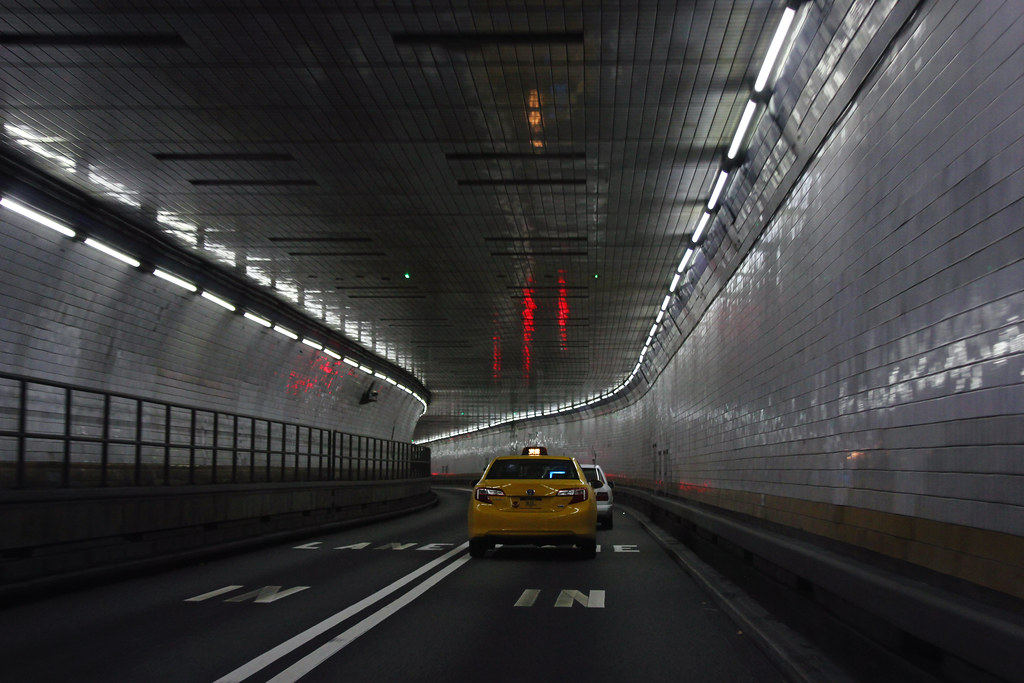
©"Holland Tunnel" by Fire At Will [Photography] is licensed under BY-SA 2.0. - Original / License
The Holland Tunnel solved a problem early automobile engineers had barely figured out how to ask: how do you put thousands of gasoline-powered cars under a river without filling the tunnel with exhaust? Built between 1920 and 1927 beneath the Hudson River, the twin-tube crossing became the world’s first long underwater tunnel designed specifically for motor vehicles. Its breakthrough was a massive mechanical ventilation system using supply and exhaust fans to continually replace the air. That basic approach influenced later road tunnels around the world. The engineering is easy to take for granted now because ventilation is exactly the sort of tunnel feature nobody wants to think about. In the 1920s, however, it was the part that made the whole idea practical.
Hugh L. Carey Tunnel, New York
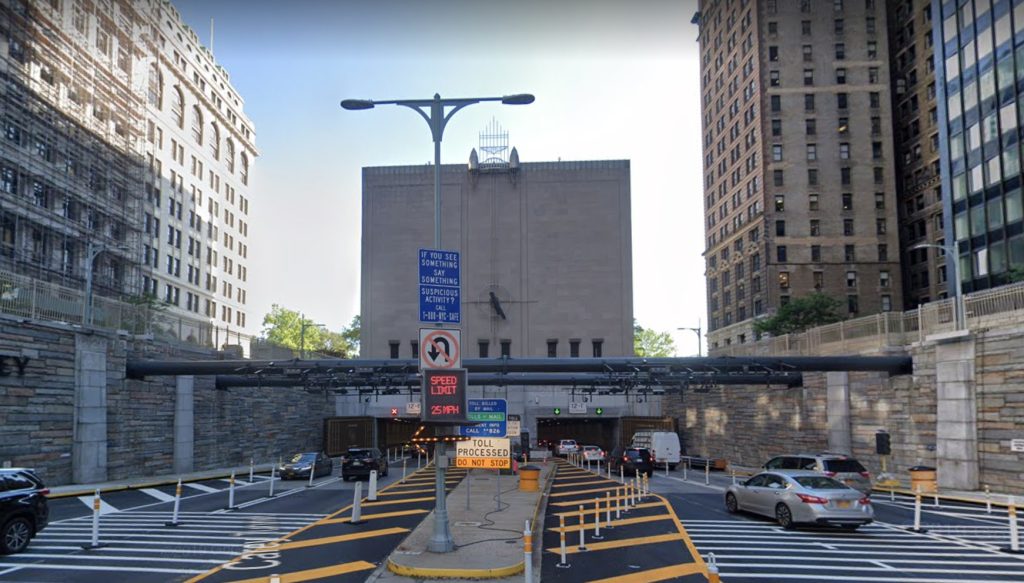
©Wikimedia Commons
The Hugh L. Carey Tunnel, better known for decades as the Brooklyn-Battery Tunnel, is not a quick hop under the East River. Its twin tubes run 9,117 feet between Lower Manhattan and Brooklyn, making it the longest continuous underwater vehicular tunnel in North America, according to New York’s Metropolitan Transportation Authority. Completed in 1950, each tube carries two lanes of traffic beneath New York Harbor. Four ventilation buildings and dozens of supply and exhaust fans keep air moving through the structure. The tunnel’s scale is hard to appreciate from a car because there is not much to look at beyond tiled walls and traffic. Then you remember that almost the entire drive is happening beneath the harbor, and the mundane commute gets considerably stranger.
Detroit-Windsor Tunnel, Michigan
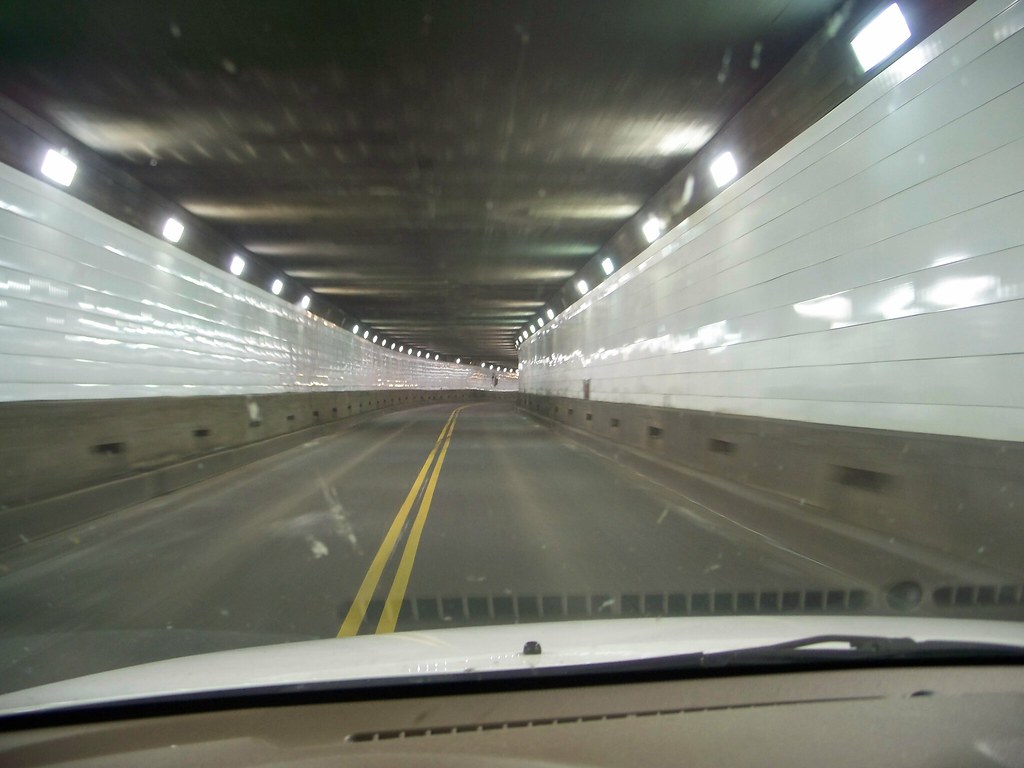
©"Detroit-Windsor Tunnel" by rawmustard is licensed under BY-SA 2.0. - Original / License
The Detroit-Windsor Tunnel manages to cross a river, an international border, and a century of engineering history in just over 5,000 feet. The 5,160-foot roadway runs beneath the Detroit River between downtown Detroit and Windsor, Ontario. Completed in 1930, it was built using a combination of cut-and-cover construction, shield tunneling, and immersed-tube sections. The American Society of Civil Engineers notes that the project also marked the first use of arc welding in tunneling history. Even the location of the border is unusual: drivers cross from the United States into Canada while they are underground. There are flashier ways to enter another country, but few are more memorable than doing it beneath a river.

