

Airport security is one of those things almost every frequent flyer thinks they understand until a bag gets pulled aside or a checkpoint rule seems different from the last airport. TSA officers are screening for threats to aviation, but the details around scanners, food, IDs, medications, and prohibited items are easy to misunderstand.
TSA rules are strict, but many of the most common assumptions about them are either outdated or only half right. Seattle Travel is breaking down some of the biggest myths travelers still hear about airport security, from what body scanners actually display to what happens when a prohibited item turns up in your bag. Knowing the real rules can save time, prevent a headache at the checkpoint, and keep you from learning them the hard way.
Using current TSA and Department of Homeland Security guidance, along with federal rules governing aviation security, here are some of the most common misconceptions travelers have about TSA screening and what actually happens at the checkpoint.
Myth: TSA Scanners Can See Through Your Clothes

©"TSA Security Official Photo i081 by Grant Wickes" by Grant Wickes is licensed under BY 2.0. - Original / License
Modern TSA advanced imaging technology is designed to detect items concealed under clothing, but officers are not looking at a detailed image of each passenger’s body. Current systems use automatic target recognition software and display alarms on a generic outline of a person. TSA checkpoint guidance says that generic figure is used to show officers where an alarm occurred while protecting passenger privacy.
Myth: You Can’t Bring Any Food Through Security

©"snack bags" by heatherehammond is licensed under BY 2.0. - Original / License
Solid food is generally allowed through TSA checkpoints in carry-on baggage, although officers may ask you to separate food if it makes the X-ray image harder to read. The 3-1-1 rule applies to liquids, gels, creams, pastes, and similar foods in carry-on bags: containers generally must be 3.4 ounces, or 100 milliliters, or smaller and fit in one quart-size bag. There are exceptions for medically necessary liquids and certain baby and toddler foods, so the rule is not simply that anything over 3.4 ounces gets taken away.
Myth: TSA Is Always Looking for Drugs

©"marijuana 2" by katherine_hitt is licensed under BY-ND 2.0. - Original / License
TSA screening is focused on aviation security, not searching for illegal drugs. If officers discover a substance they suspect is illegal while screening a person or bag, TSA says the matter is referred to law enforcement. The checkpoint search is designed to find weapons, explosives, and other security threats, but suspected contraband discovered along the way can still become a law-enforcement issue.
Myth: TSA Keeps All the Stuff They Confiscate
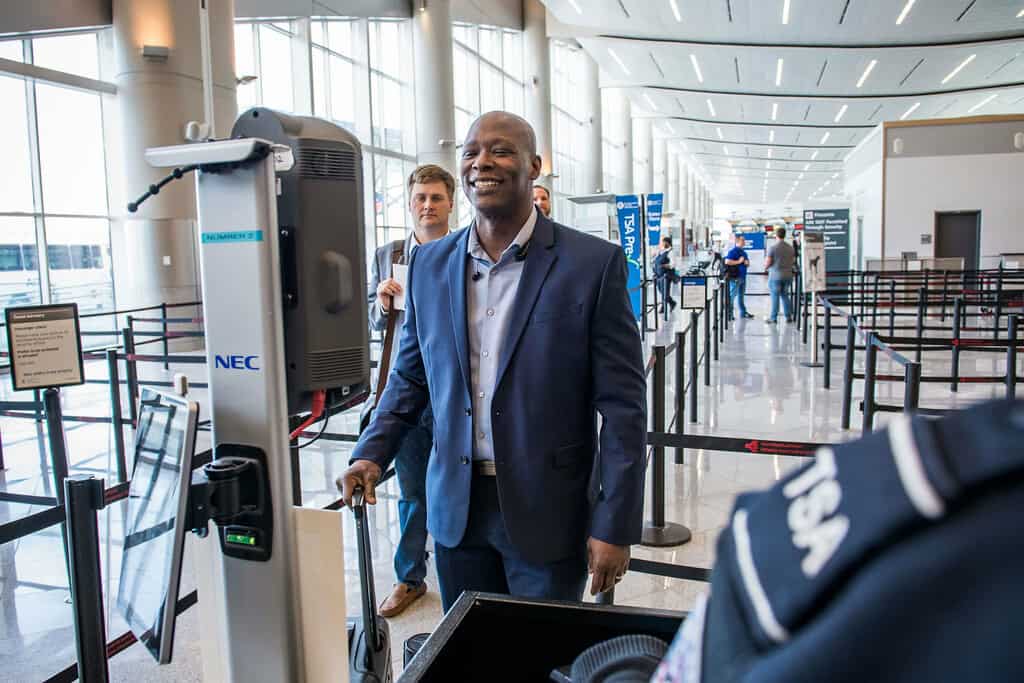
©"Customer uses facial recognition as identification at TSA security checkpoint" by DeltaNewsHub is licensed under BY 2.0. - Original / License
TSA does not treat a prohibited item as a souvenir for the officer who finds it. Travelers may be given options such as disposing of the item or returning it to a vehicle, depending on the item and checkpoint circumstances. Property voluntarily abandoned to TSA becomes federal property and is handled under government disposition rules; some items can be transferred, donated, sold as surplus, recycled, or destroyed. Firearms are different: TSA has explicitly said law enforcement, not TSA, confiscates them.
Myth: TSA Officers Are Trying to Delay You

©"Security" by quinn.anya is licensed under BY-SA 2.0. - Original / License
Long lines are frustrating, but there is no basis for the idea that TSA officers are supposed to slow travelers down for fun. TSA job guidance calls for officers to maintain effective and efficient screening, and checkpoint supervisors evaluate passenger flow to determine when lanes should open or close. Waits can still grow because of passenger volume, staffing, equipment, bag checks, and security procedures, so cutting your arrival time close is still a gamble.
Myth: You Don’t Need ID for Domestic Flights

©"Customer drops off checked bag using facial recognition option" by DeltaNewsHub is licensed under BY 2.0. - Original / License
Adults 18 and older generally need an acceptable form of identification at the TSA checkpoint. Since May 7, 2025, a standard state-issued license or ID that is not REAL ID-compliant is no longer accepted for this purpose, but REAL ID is far from the only option: passports, passport cards, military IDs, permanent resident cards, certain trusted-traveler cards, and other TSA-approved IDs can qualify. As of February 1, 2026, travelers who arrive without an acceptable ID can choose TSA ConfirmID, a $45 identity-verification process that is valid for up to 10 days of travel. Verification is not guaranteed, and travelers whose identity cannot be confirmed may be denied access to the checkpoint.
Myth: The TSA Is a For-Profit Entity

©"Customer checks in at self-service kiosk using facial recognition option" by DeltaNewsHub is licensed under BY 2.0. - Original / License
TSA is not a private company. It is a federal agency within the U.S. Department of Homeland Security. Its aviation-security operations are financed through federal funding and fees, including the September 11th Security Fee collected from airline passengers. TSA does not operate for profit or make money by selling airline tickets or keeping prohibited property.
Myth: TSA Screening Officers Can Arrest You

©"John Wayne Airport Security Line Photo i102 by Grant Wickes" by Grant Wickes is licensed under BY 2.0. - Original / License
Transportation Security Officers working checkpoint lanes are screeners, not police officers, and they do not perform ordinary law-enforcement arrests. If screening uncovers a suspected crime or a situation requiring an arrest, local or other law enforcement can be called. TSA does employ separate law-enforcement personnel, including Federal Air Marshals and criminal investigators, who have federal arrest authority, so the distinction is between checkpoint screening officers and TSA’s law-enforcement officers.
Myth: TSA Can Confiscate Your Medications

©"Baltimore-Washington International Thurgood Marshall Airport, Maryland" by Ken Lund is licensed under BY-SA 2.0. - Original / License
Medication is allowed through TSA screening, including pills and other solid forms, but it still has to be screened. TSA recommends labeling medication but generally does not require it. Medically necessary liquids, medications, and creams can exceed the usual 3.4-ounce carry-on limit; travelers should tell the TSA officer and present them for separate screening. Some medical supplies have additional instructions, so travelers carrying anything unusual should check current TSA guidance before flying.
Myth: TSA Scanners Can Damage Your Electronics

©"Morning at the Dublin airport" by Anna & Michal is licensed under BY-SA 2.0. - Original / License
Airport baggage X-ray systems are not expected to damage ordinary electronic devices such as laptops, phones, tablets, or digital cameras. The FDA says the X-ray dose from cabinet security-screening systems will not harm electronic equipment. Photographic film is the exception travelers should think about: TSA recommends carrying undeveloped film with you and asking for a hand inspection because X-ray exposure can damage some film.
Myth: TSA Has No Access to Your Flight Information

©"Customer uses facial recognition to board flight" by DeltaNewsHub is licensed under BY 2.0. - Original / License
At many checkpoints, TSA’s Credential Authentication Technology does more than verify that an ID is authentic. The system checks a passenger’s Secure Flight status and can validate flight reservation status in near real time. So the blanket claim that TSA has no access to your flight information is wrong. That does not mean every officer is studying your full itinerary; the information is used to confirm identity, vetting status, and valid travel status at the checkpoint.
Myth: TSA Agents Can Deny Boarding

©"Kansas City International Airport" by FHKE is licensed under BY-SA 2.0. - Original / License
TSA does not operate airline ticket counters or make the airline’s commercial boarding decisions, but it can absolutely prevent you from getting to the gate. TSA may deny access to the checkpoint if your identity cannot be verified, and security issues or prohibited items can trigger additional screening or law-enforcement involvement. Airlines separately control their own boarding decisions. In practical terms, failing to clear TSA can stop your trip even if your ticket itself is still valid.
Myth: All Airports Have the Exact Same TSA Rules

©"Concourse in the Boston Logan International Airport" by Chris Rycroft is licensed under BY 2.0. - Original / License
TSA operates under national federal security standards, so the core rules are not reinvented airport by airport. What can differ is the checkpoint layout, the screening technology in use, lane configuration, staffing, and which expedited options are operating. That is why screening can feel different from one airport to the next even when the underlying federal rules are the same.
Myth: TSA PreCheck Guarantees a Fast Line

©"I do so like TSA Precheck..." by dionhinchcliffe is licensed under BY-SA 2.0. - Original / License
TSA PreCheck is designed to provide expedited screening, but it is not a promise that every trip will come with a short line or the same screening experience. TSA explicitly says no traveler is guaranteed expedited screening and that it uses unpredictable security measures throughout airports. Busy travel periods, checkpoint configuration, and lane availability can still leave PreCheck members waiting, and some travelers may be sent through additional screening. PreCheck can save time, but it is not a force field against airport lines.

