

Seattle is still hard to beat if you want everything a major city offers, but the retirement math can get ugly fast. Census Bureau estimates for 2020-2024 put Seattle’s median owner-occupied home value at $938,600 and median gross rent at $2,030, while just 13.0% of residents are 65 or older. For some perspective, Social Security estimates the average retired-worker benefit at $2,071 a month in January 2026, while the federal SSI payment standard is $994 a month for one person. Those benefit figures are not a complete household budget, but they make it pretty clear why housing can become the deciding factor once the paychecks stop.
Sequim

A beautiful sunset at Sequim Bay
©"Sequim Bay" by Jan Tik is licensed under BY 2.0. - Original / License
Sequim is the clearest retiree town on this list, and the age mix backs that up. Census 2020-2024 estimates show 45.6% of residents are 65 or older, versus 13.0% in Seattle. The median value of an owner-occupied home was $408,700, and the median gross rent was $1,195, compared with $938,600 and $2,030 in Seattle.
That is the kind of housing gap that can change the math for someone living on Social Security, a pension, or portfolio withdrawals. Olympic Medical Center also has primary care, walk-in, orthopedic, rehabilitation, and cancer services in Sequim, which is a practical plus once healthcare starts driving more of the retirement decision.
Port Townsend
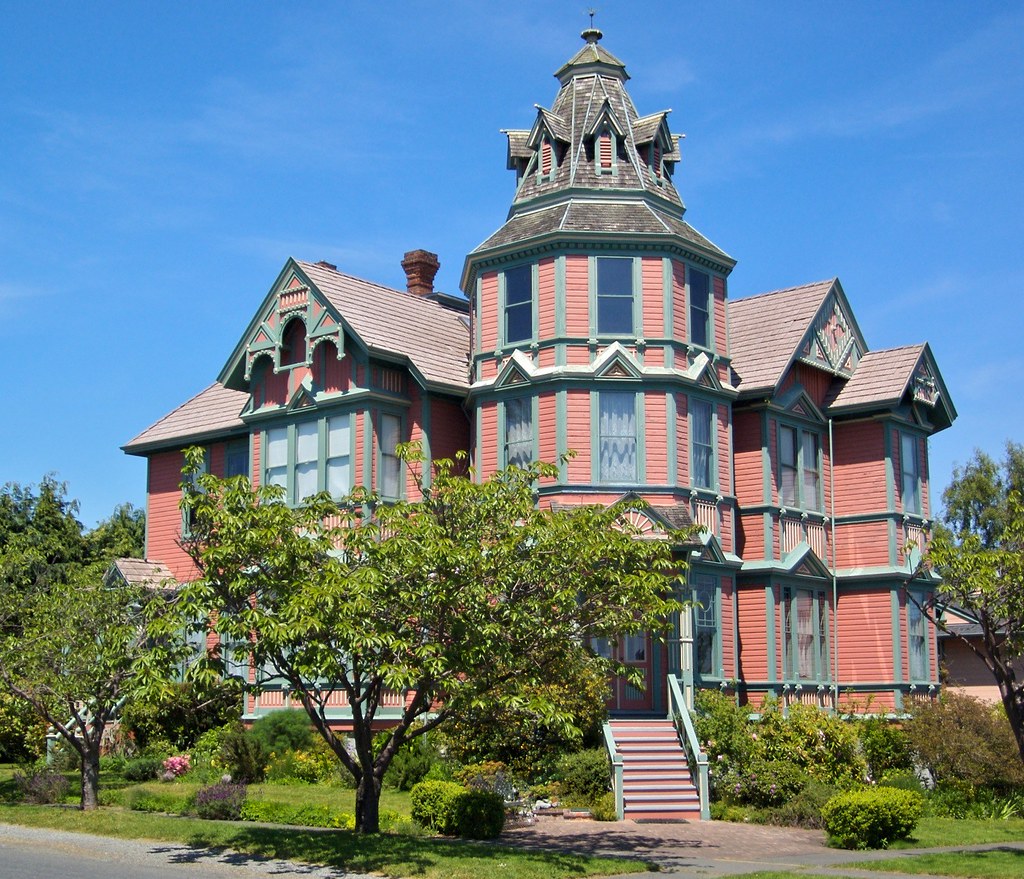
©"The Ann Starrett Mansion! Port Townsend, Wa." by A.Davey is licensed under BY 2.0. - Original / License
Port Townsend is another place where retirees are already a huge part of the community, with 43.6% of residents aged 65 or older. The city’s median owner-occupied home value was $543,400 in 2020-2024, while the median gross rent was $1,578. Those numbers are not cheap, but they are still well below Seattle’s $938,600 home value and $2,030 rent benchmarks.
Its 67.9% owner-occupied rate is also far above Seattle’s 43.7%, so the housing mix is much more owner-heavy. Washington State Ferries operates the Port Townsend/Coupeville route, adding a useful connection for people who want Olympic Peninsula life without giving up regional access.
Port Angeles
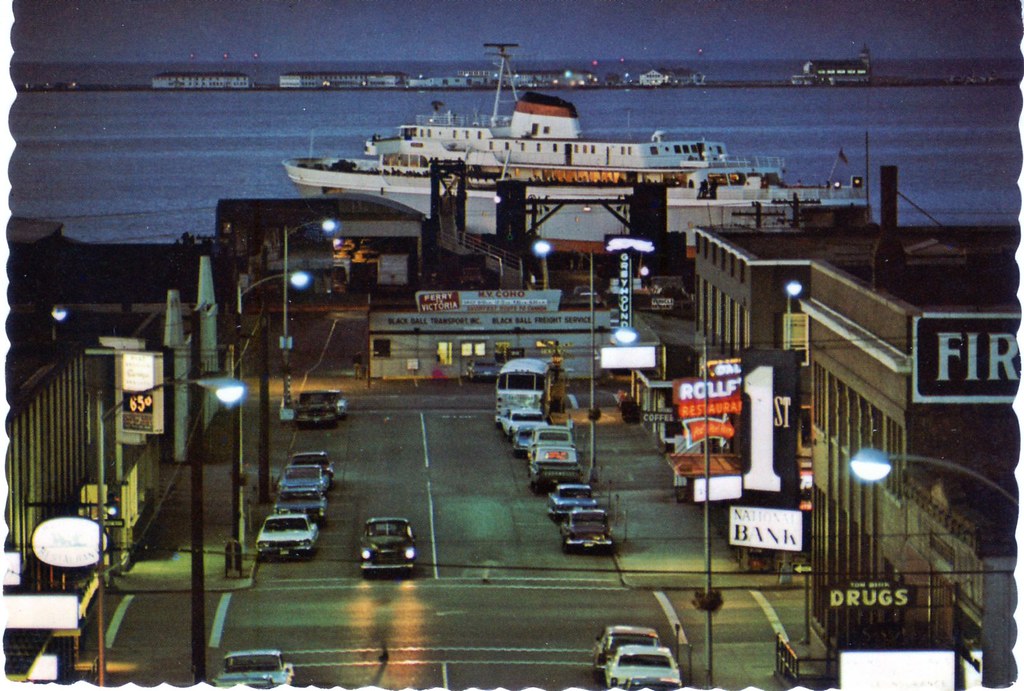
©"Port Angeles, WA" by SportSuburban is licensed under BY 2.0. - Original / License
Port Angeles is one of the strongest pure affordability plays on the Olympic Peninsula. The Census puts its 65-plus share at 22.6%, with a median owner-occupied home value of $370,200 and median gross rent of $1,170. Seattle’s comparable figures were $938,600 and $2,030, so the gap is not subtle.
Port Angeles also has Olympic Medical Center in town, and the National Park Service’s main Olympic National Park Visitor Center is located here. For a retiree who wants lower housing costs without giving up a local hospital and direct access to Olympic National Park, this one deserves a serious look.
Anacortes
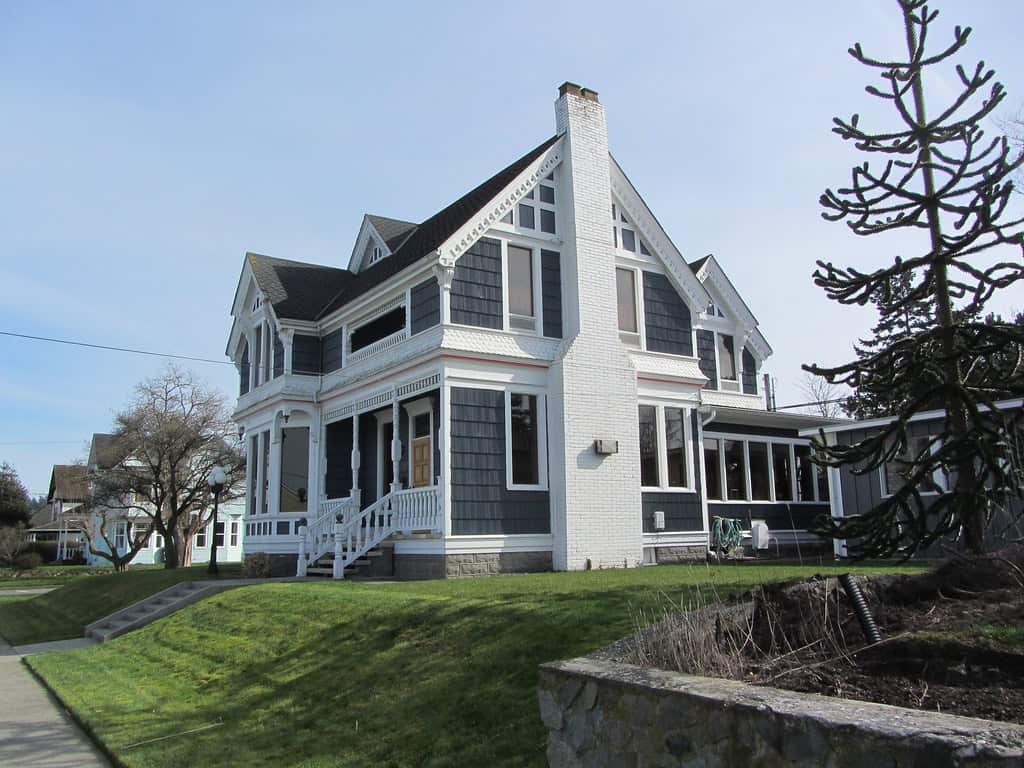
©"Anacortes, Washington" by Hugo-90 is licensed under BY 2.0. - Original / License
Anacortes costs more than most towns on this list, but the retiree profile is hard to ignore. About 32.0% of residents are 65 or older, and 69.9% of occupied housing units are owner-occupied. The median owner-occupied home value was $696,700, and median gross rent was $1,702, both below Seattle, even though this is not a bargain market.
Washington State Ferries runs the Anacortes/San Juan Islands route from here, which gives the town a kind of island access Seattle retirees may value without living in the middle of the city. I would put Anacortes in the “pay for the lifestyle, but still pay less than Seattle” bucket rather than the low-cost bucket.
Olympia
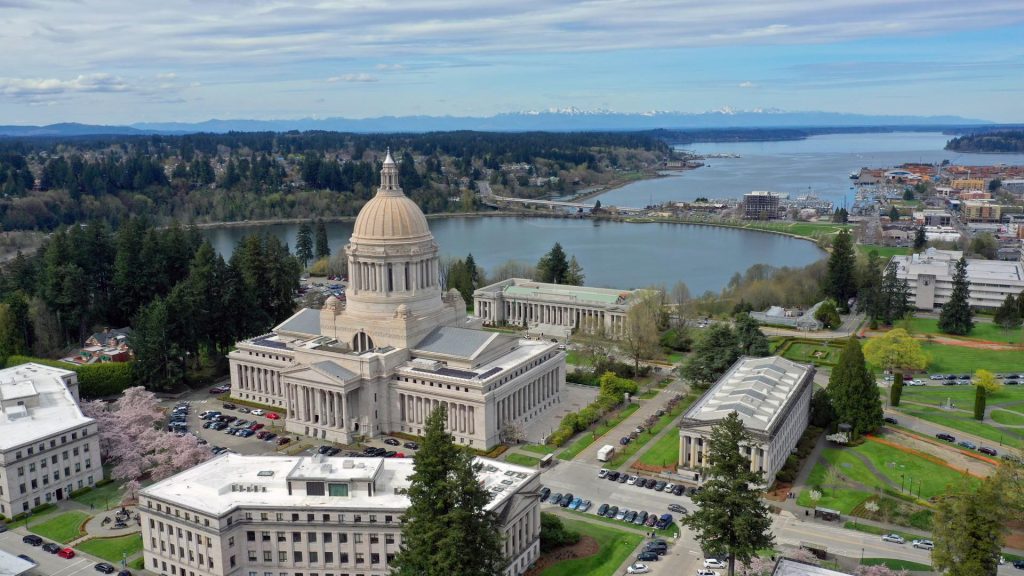
©Wikimedia Commons
Olympia is the middle-ground choice for retirees who are not ready to trade a real city for a tiny town. Its 2025 population estimate was 56,724, and 19.7% of residents were 65 or older in the Census 2020-2024 estimates. Median owner-occupied home value was $486,200 and median gross rent was $1,599, both far below Seattle.
Olympia is also the state capital, so you keep a more urban setting and the activity that comes with a government center without Seattle-scale housing numbers. For someone who still wants day-to-day city convenience close by, Olympia is one of the easier Seattle alternatives to picture.
Bellingham
©Yelp Reviews
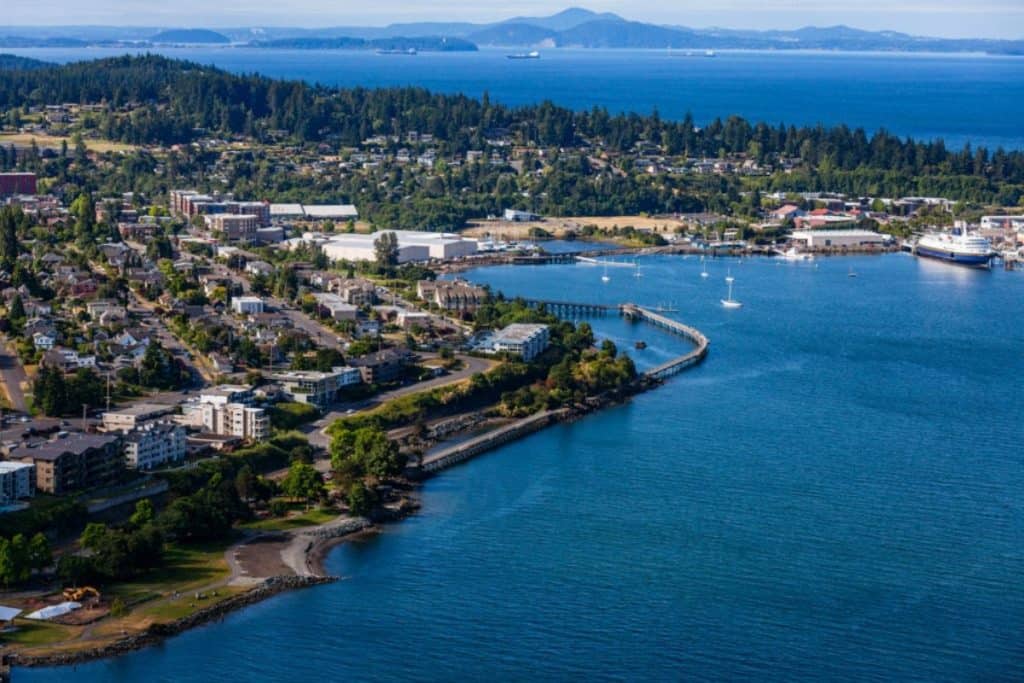
Bellingham is not the cheapest retirement move in Washington, but it gives up less of the city feel than most towns on this list. Census data show 16.5% of residents are 65 or older, with a 2025 population estimate of 96,395. The median owner-occupied home value was $627,500 and median gross rent was $1,577, still below Seattle’s $938,600 and $2,030.
PeaceHealth St. Joseph Medical Center is in Bellingham and operates 24 hours, which matters if access to hospital care is high on your retirement checklist. I like this one more for retirees who want a smaller northwest Washington city than for someone chasing the absolute lowest cost.
Wenatchee

©"Amtrak Wenatchee Station" by Loco Steve is licensed under BY 2.0. - Original / License
Wenatchee is where the numbers start to look especially interesting for someone trying to make retirement income last. The city’s 65-plus share was 18.0%, while the median owner-occupied home value was $433,700 and median gross rent was $1,248. For homeowners without a mortgage, median selected monthly owner costs were $557, less than half of Seattle’s $1,166 figure.
The 2025 population estimate was 35,547, so this is not a remote dot on the map even though it is far smaller than Seattle. If housing is the expense you most want to shrink in retirement, Wenatchee gives you a lot more breathing room on the Census numbers.
Walla Walla

©Walla Walla City
Walla Walla has one of the better combinations of age mix and housing costs in southeastern Washington. Census estimates put 18.9% of residents at 65 or older, compared with Seattle’s 13.0%. Its median owner-occupied home value was $393,600, and median gross rent was $1,323, both dramatically below Seattle’s benchmarks.
Providence St. Mary Medical Center is located in Walla Walla, so retirees are not trading lower housing costs for a town with no hospital. For someone who wants a smaller city, local healthcare, and a retirement budget that is not fighting Seattle housing prices every month, Walla Walla makes a strong case.
Spokane
©"Downtown Spokane WA" by SportSuburban is licensed under BY 2.0. - Original / License
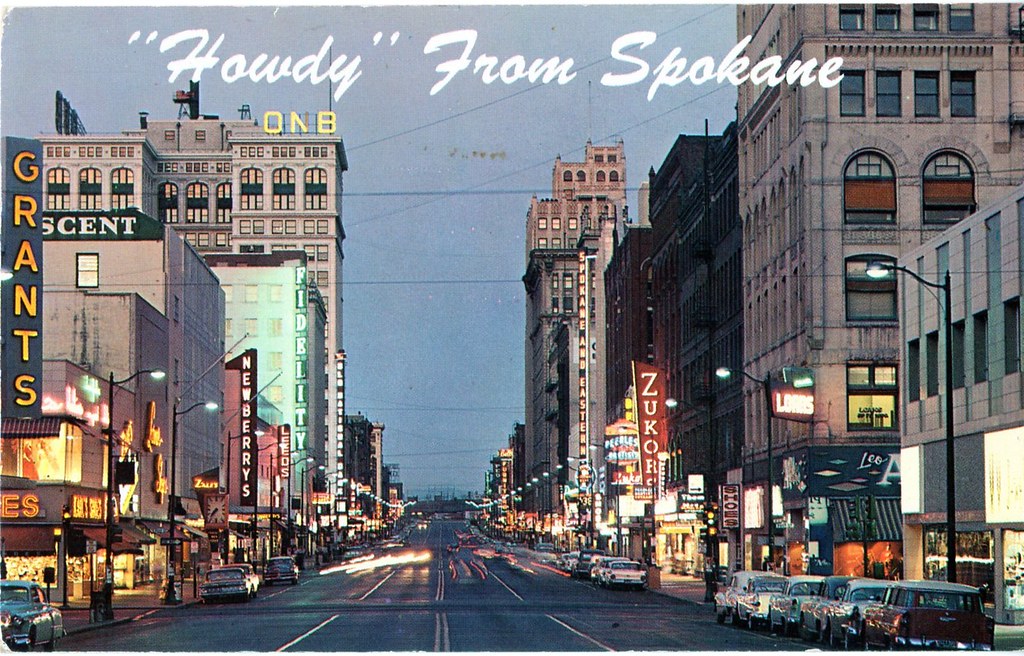
Spokane is the outlier here because it is not a small town at all, and that is exactly why some retirees should look at it. The 2025 population estimate was 230,783, yet the median owner-occupied home value was $363,500 and the median gross rent was $1,215. Its 65-plus share was 16.6%, modestly above Seattle’s 13.0%.
Providence Sacred Heart Medical Center is a major regional medical center in Spokane with specialty services including cancer and transplant care. If you want a much lower housing benchmark but do not want to give up large-city scale and regional hospital access, Spokane is probably the strongest option on this list.
Vancouver

©"Vancouver Skyline" by Jaykhuang is licensed under BY 2.0. - Original / License
Vancouver works for a retiree who wants to stay in a sizable city rather than disappear into a small town. Census estimates show 16.7% of residents are 65 or older, and the 2025 population estimate was 199,698. Median owner-occupied home value was $462,400, and median gross rent was $1,702, both below Seattle’s figures.
PeaceHealth Southwest Medical Center is in Vancouver, and its emergency department operates a Level II Trauma Center. This is less about finding Washington’s cheapest town and more about cutting the Seattle housing premium while keeping a large-city footprint and a major hospital nearby.

