
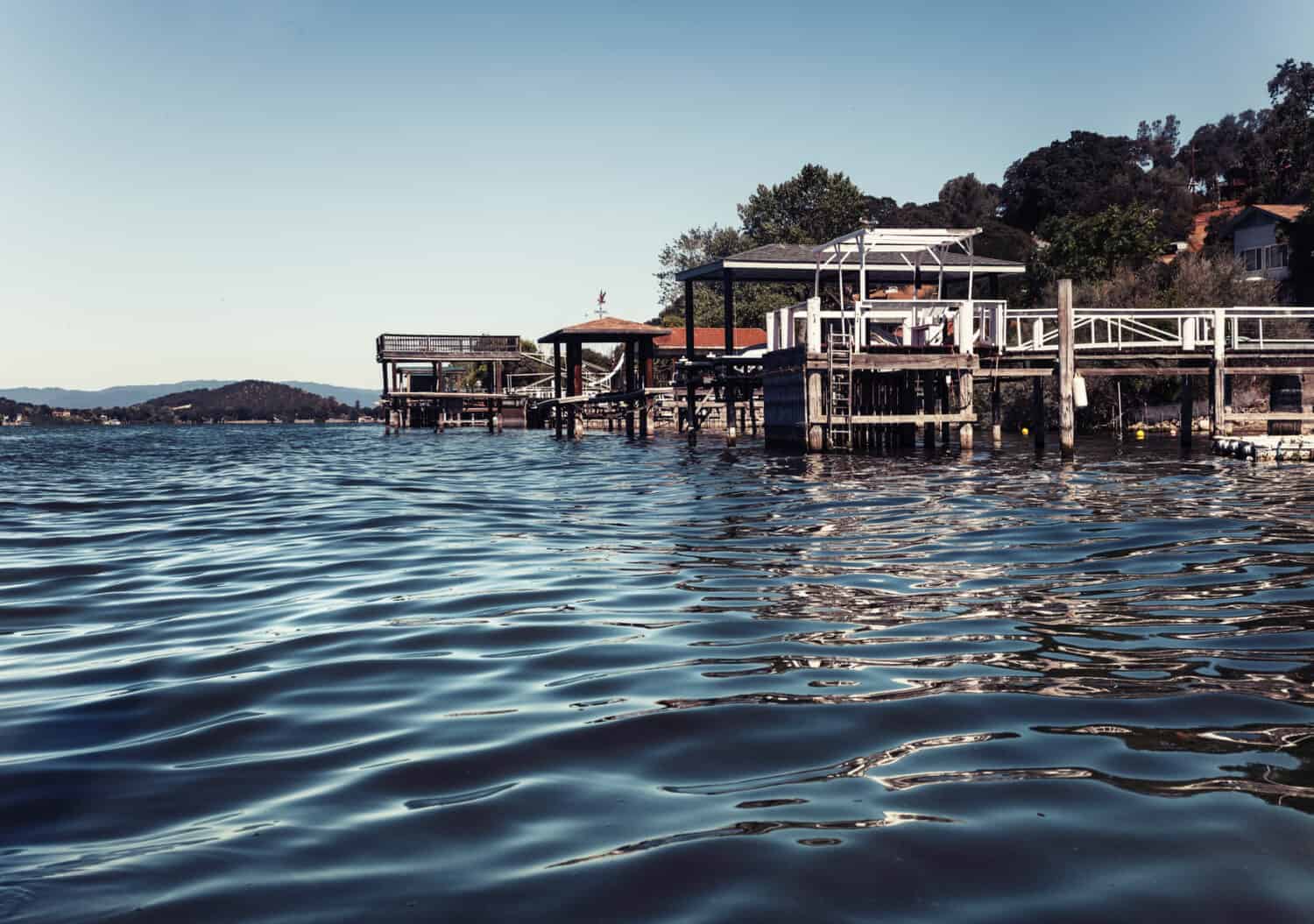
There are lakes all across the Pacific Northwest that look almost too good to be real. Clear blue water, steep mountains, evergreen forests, and shorelines that seem built for postcards. Then you start asking around. Beneath some of those lakes are flooded buildings and the remains of abandoned communities. Others come with Indigenous oral traditions, true-crime cases, volcanic destruction, or generations of monster stories that have become nearly as famous as the water itself.
The trick is separating documented history from folklore. Some of the strangest stories below are completely real. Others are legends that have changed with each retelling, and a few sit somewhere in the murky territory between the two. Either way, the next time you’re standing on a dock somewhere in Washington, Oregon, or Idaho, there may be a lot more going on beneath that peaceful-looking surface than the scenery suggests.
Lake Crescent, Washington
©"Lake Crescent at Olympic NP in WA" by Landscapes in The West is licensed under PDM 1.0. - Original / License
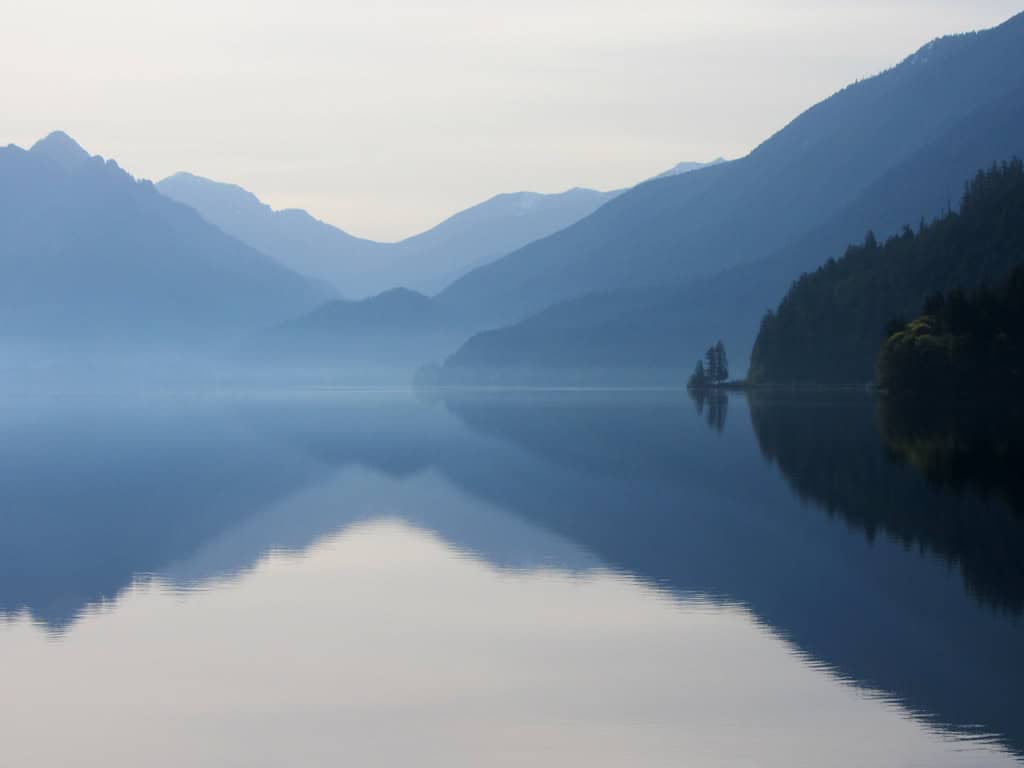
Lake Crescent on the Olympic Peninsula is cold, exceptionally clear, and much deeper than it looks from shore. The National Park Service puts its maximum depth at 624 feet and says visibility can reach roughly 60 feet in some places because the water contains so little nitrogen that relatively little phytoplankton grows there. Beautiful as it is, the lake is also tied to one of the Olympic Peninsula’s most enduring true-crime stories.
Hallie Latham Illingworth disappeared shortly before Christmas in 1937. On July 6, 1940, two fishermen discovered a woman’s body floating in Lake Crescent, wrapped in blankets and tied with heavy rope. The cold water had helped preserve the remains, while body tissue had undergone saponification, creating the waxy, soap-like material that inspired the nickname “Lady of the Lake.” Investigators eventually identified Illingworth through a distinctive dental plate. Her husband, Montgomery “Monty” Illingworth, was convicted of second-degree murder in 1942 and sentenced to life in prison.
The lake had strange stories long before that case. A creation story preserved by the National Park Service describes a violent battle between Klallam and Quileute warriors near the valley. In the story, an angered mountain spirit hurls a huge rock into the battlefield, killing the warriors and damming the river to create the lake. Geology provides its own connection: glaciers carved the basin, and a massive landslide later helped separate Lake Crescent from neighboring Lake Sutherland. Lake Crescent also had a local reputation for rarely returning the bodies of people who died in its deep water, which made Illingworth’s reappearance nearly three years after her death even more haunting.
Lake Chelan, Washington
©"Sunset over Lake Chelan" by pfly is licensed under BY-SA 2.0. - Original / License
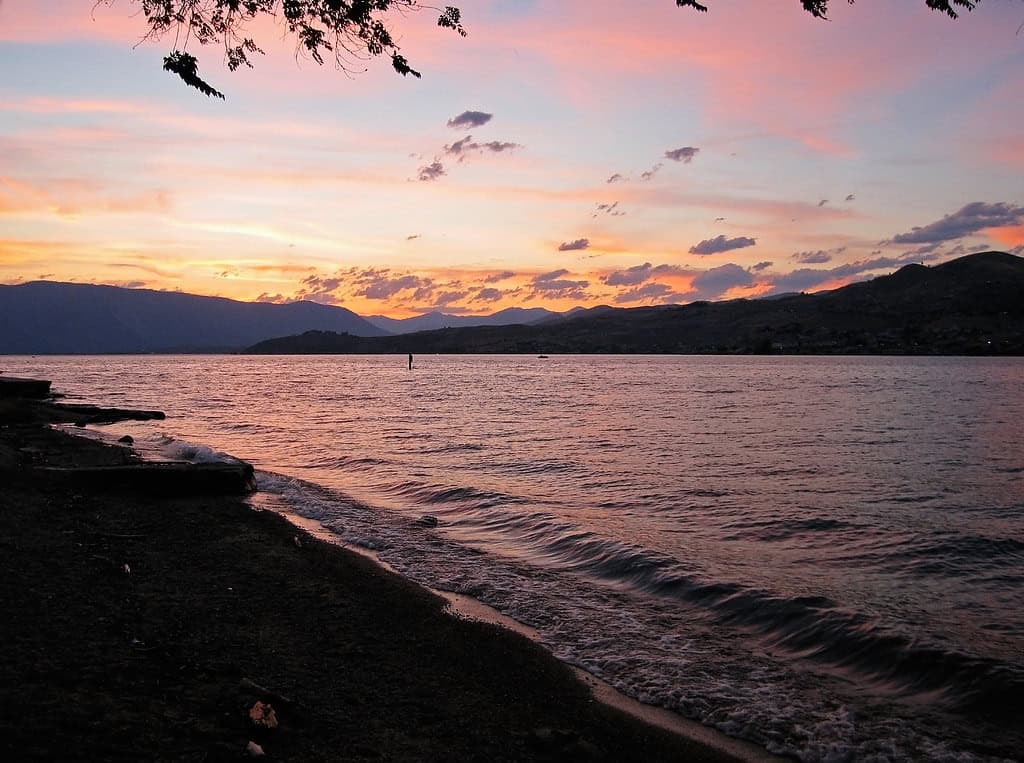
Lake Chelan does not need a monster story to feel a little mysterious. The long, narrow lake drops to 1,486 feet at its deepest point, making it the third-deepest natural lake in the United States. Its upper end reaches into the North Cascades, where the roadless community of Stehekin sits between mountains and water. With that much dark water beneath a boat, it is not particularly surprising that generations of residents have found room for a few stories about what might be down there.
The best-known modern creature is usually called Tsilly, a lake monster that has become part of the Chelan Valley’s local folklore and even appears in community events and scavenger hunts. Monster stories connected to the lake have accumulated plenty of details over the years, but the historical trail becomes much less tidy the farther back you go. One wonderfully strange newspaper account circulated in 1892 claiming that three travelers encountered an amphibious creature while one of the men was bathing in Lake Chelan. The story described something with an alligator-like body, a serpent’s head, and wings that supposedly carried the unlucky swimmer away. It makes for excellent lake-monster material, but there is no evidence that the creature itself was anything more than a sensational story.
What is verifiable is the lake’s depth, scale, and ability to keep the imagination busy. Lake Chelan is more than 50 miles long, and much of its deepest northern basin is surrounded by steep, rugged terrain. Tsilly has survived as folklore precisely because a lake this large leaves plenty of visual room for wakes, shadows, floating debris, wildlife, and the occasional story that improves every time somebody tells it around a fire.
Spirit Lake, Washington
©"Backcountry Ranger Viewing Spirit Lake and Mt St Helens, Gifford Pinchot National Forest" by Forest Service Pacific Northwest Region is licensed under PDM 1.0. - Original / License
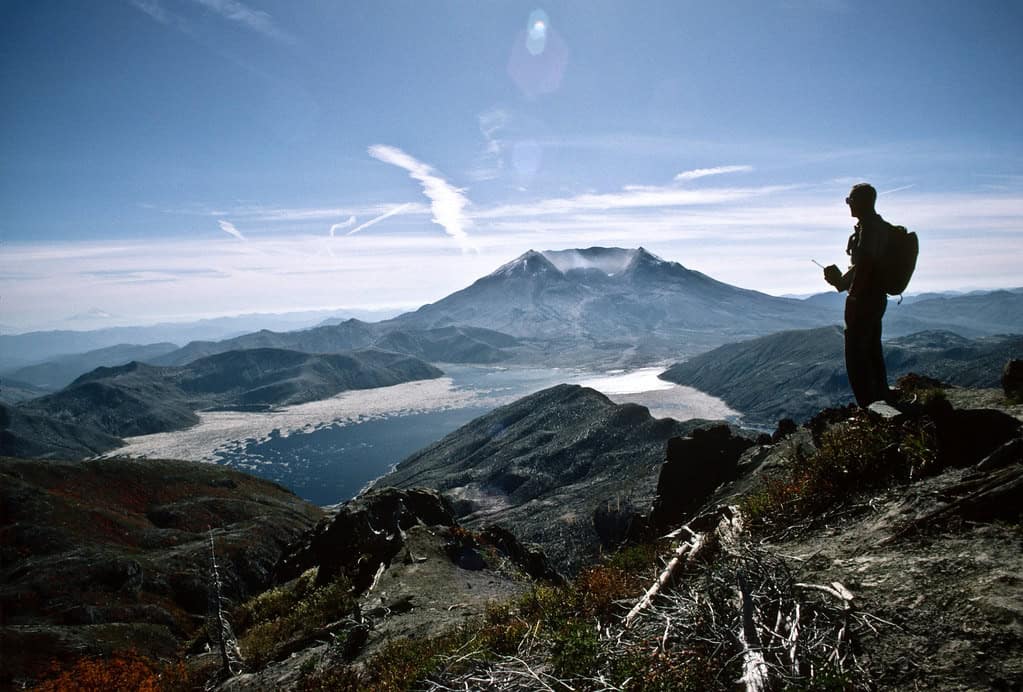
Nothing supernatural is required to make Spirit Lake unsettling. At 8:32 a.m. on May 18, 1980, a magnitude 5.1 earthquake triggered the collapse of Mount St. Helens’ bulging north flank. The resulting debris avalanche was the largest subaerial landslide in recorded history. Part of that enormous mass slammed into Spirit Lake, temporarily pushing the water out of its basin. USGS research found that the displaced water surged as high as about 850 feet above the lake’s former level on the surrounding slopes. Debris also blocked the natural outlet and permanently raised the lake’s surface by roughly 200 feet.
The eruption and landslide stripped trees from the surrounding landscape and dumped an enormous amount of wood into the lake. According to NASA, floating logs covered more than 70 percent of Spirit Lake immediately after the eruption. Many eventually sank, but roughly 20 percent of the surface was still covered by the floating log mat more than four decades later. The whole mass moves with the wind, sometimes spreading apart and sometimes packing tightly together on one side of the lake.
Scientists now study the logs as part of Spirit Lake’s recovering ecosystem, which makes this one of the rare entries where the eerie thing beneath and across the water is better documented than almost any legend could be. The landscape visitors see today is not simply a damaged version of the old lake. The eruption reshaped its basin, changed its drainage, raised its water level, and created an ecosystem that has been rebuilding itself ever since.
Lake Cushman, Washington
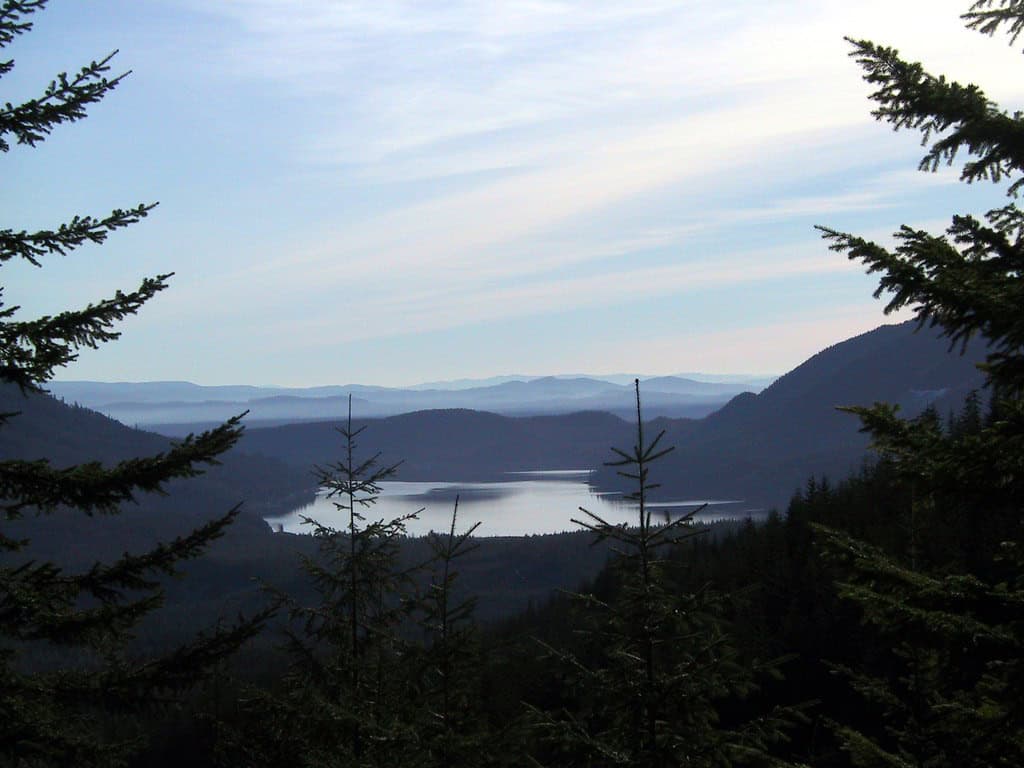
©"Lake Cushman" by Mom the Barbarian is licensed under BY 2.0. - Original / License
Lake Cushman looks natural because there was a lake here long before anybody built a dam. The version visitors see today, however, is dramatically larger than the original. The National Park Service estimates that the old Lake Cushman was only about one-fifth the size of the modern reservoir. By the late 1800s and early 1900s, resorts had appeared around its shore, attracting visitors headed toward the Olympic Mountains. Among them were the Cushman House and the elaborate Antlers resort.
That landscape changed when Tacoma developed the Cushman hydroelectric project. Cushman Dam No. 1 was completed in 1926, backing water several miles farther up the North Fork Skokomish River and flooding former shoreline property. The Antlers has inspired especially persistent stories about a hotel sitting intact beneath the lake, but the actual history is stranger in a different way. Tacoma Public Library records show that the lodge was deliberately burned on Nov. 18, 1925, as the basin was being cleared before inundation. Its former site now lies beneath roughly 160 feet of water.
So there is no perfectly preserved Victorian hotel waiting below for somebody to open the front door. What the expanded lake did cover were former resort grounds, homesteads, roads, and pieces of a landscape that had existed around the much smaller original lake. That is enough to give Lake Cushman a legitimate underwater history without needing to improve the story. The lake people camp and boat on today quite literally occupies more territory than the lake their great-grandparents would have recognized.
Crater Lake, Oregon
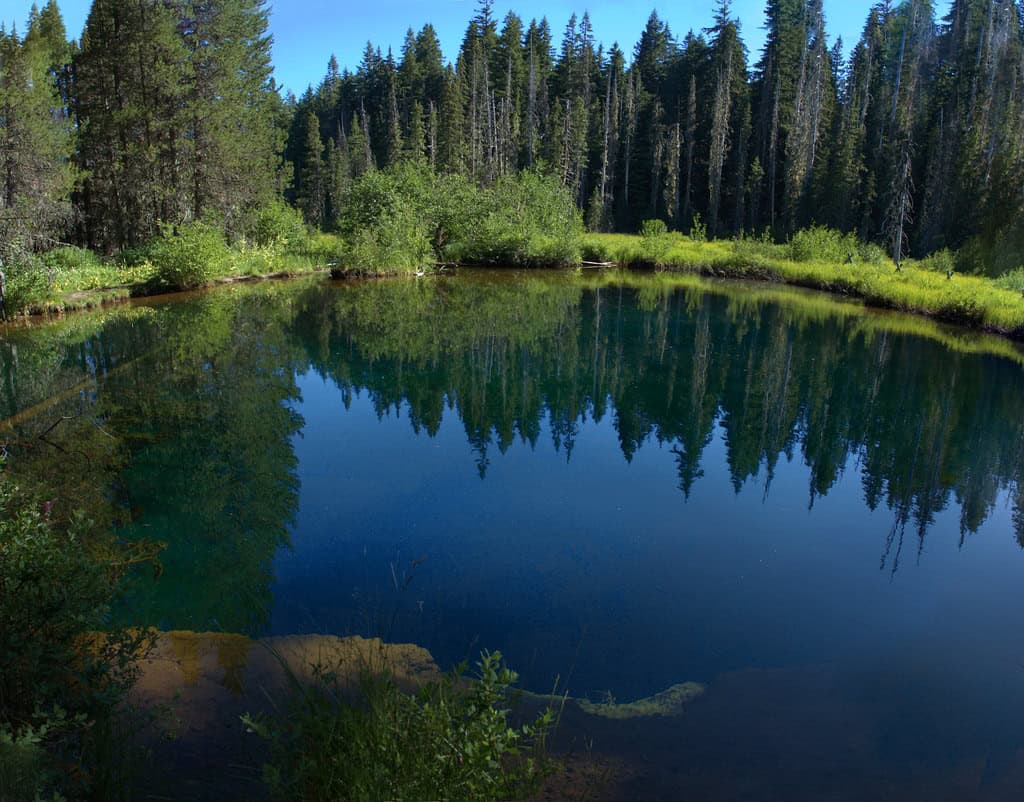
©"Little Crater Lake, Oregon" by Bonnie Moreland (free images) is licensed under PDM 1.0. - Original / License
At 1,943 feet deep, Crater Lake is the deepest lake in the United States. Its intense blue water fills the caldera left behind when Mount Mazama experienced a massive eruption and collapsed about 7,700 years ago. Archaeological evidence shows that people were living in the region before that eruption, and oral traditions of the Klamath Tribes preserve memories associated with the destruction of Mount Mazama. The National Park Service notes that there are several versions of those traditions rather than one single definitive telling.
In one Klamath account shared by the National Park Service, Llao, the Chief of the Below World, lived within Mount Mazama. After a chief’s daughter rejected him, Llao threatened her people and battled Skell, the Chief of the Above World. Two holy men ultimately sacrificed themselves by entering the fiery mountain, and Skell drove Llao back beneath the earth. By the next morning the great mountain had collapsed, leaving a vast hole that later filled with water. The story parallels the broad outline of a geological event that scientists now know people in the region could have witnessed.
The lake remained a sacred place. According to the National Park Service, the Makalak people, ancestors of today’s Klamath Tribes, held a belief that the place was so holy that looking upon it could bring death. That helps explain why early Euro-American explorers did not simply hear about the lake from Native residents despite communities having lived in the wider region for thousands of years. Crater Lake’s actual geology is spectacular enough on its own, but knowing that human stories connected to its formation survived for thousands of years adds another layer to the view from the rim.
Rattlesnake Lake, Washington
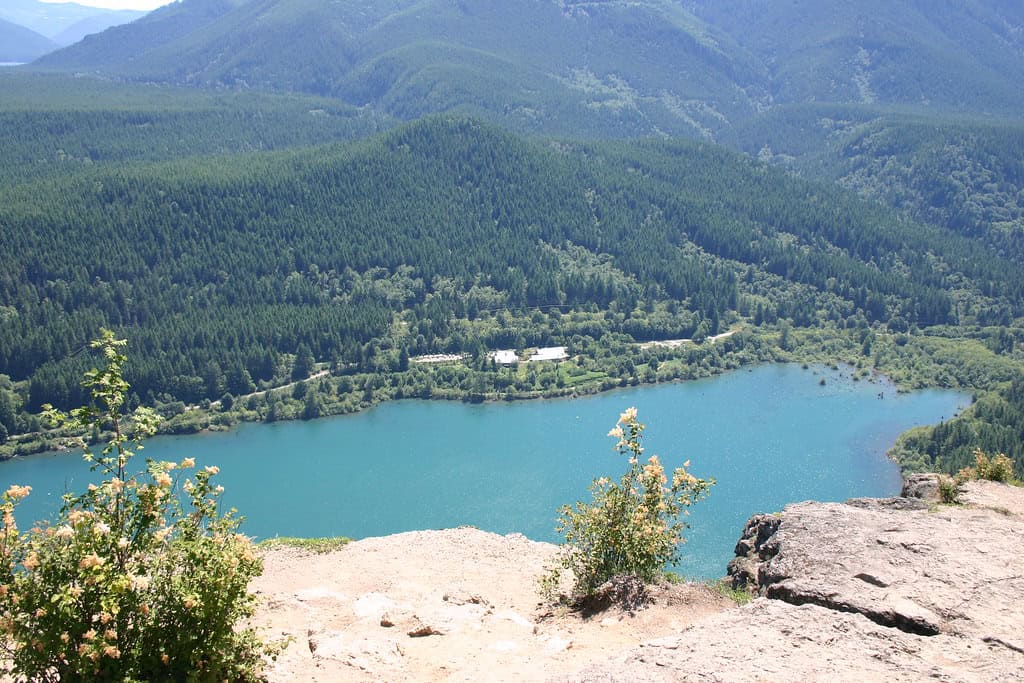
©"Rattlesnake Lake" by brianteutsch is licensed under BY 2.0. - Original / License
Rattlesnake Lake near North Bend is now a popular place for swimming, paddling, fishing, and hiking up to Rattlesnake Ledge. A little more than a century ago, however, more than 200 people lived in a community called Moncton on what was then known as Rainy Season Lake. The town had a school, stores, a hotel, a restaurant, a saloon, and homes for workers connected to nearby railroad and water projects. By 1912, the railroad depot had officially been renamed Cedar Falls, although residents continued using the Moncton name.
The town’s end came in 1915 as Seattle filled a new reservoir behind Masonry Dam on the Cedar River. Water seeped through the porous glacial moraine separating the reservoir from the Moncton area, causing Rattlesnake Lake to rise. Seattle Municipal Archives photographs from June 1915 show houses standing in floodwater as residents were forced out. The flooding created the larger Rattlesnake Lake visitors recognize today, and Seattle Public Utilities still describes Moncton as a town flooded by the creation of Masonry Dam.
Unlike plenty of “sunken town” stories, this one is not folklore. The old photographs, municipal records, and surviving archaeological traces make the history unusually well documented. Very little of Moncton remains visible today, but the story is buried in the landscape around the lake. Rattlesnake Lake itself is outside the protected hydrologic boundary of Seattle’s municipal watershed and is currently open for swimming, fishing, and non-gas-powered boating, making it a surprisingly accessible place to spend a day above what used to be somebody else’s neighborhood.
Devils Lake, Oregon
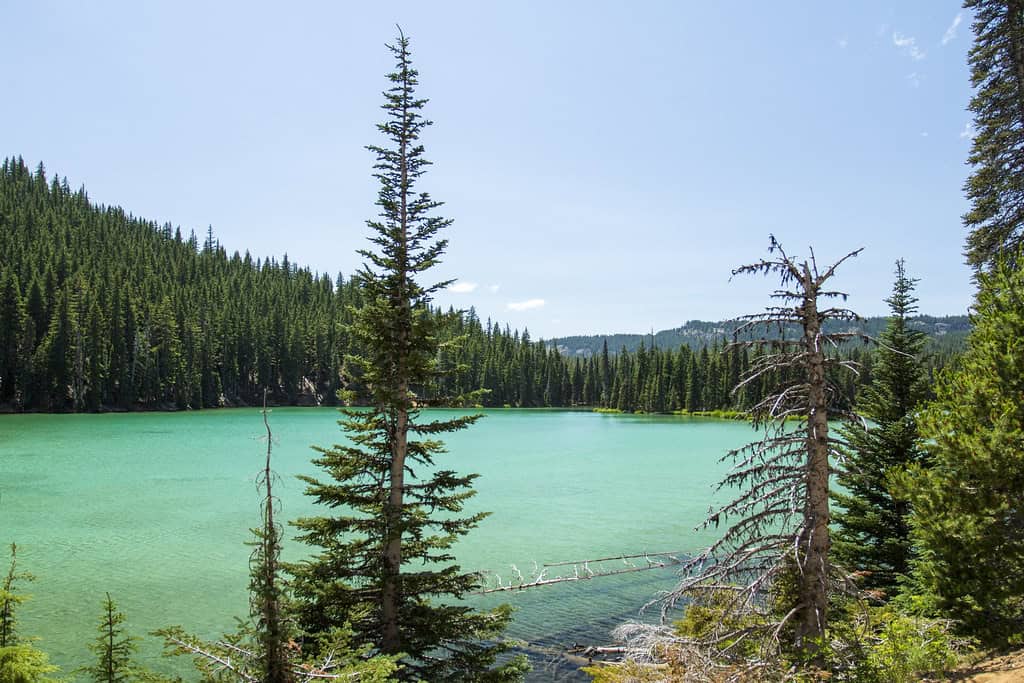
©"Devil's Lake in summer, Oregon" by Bonnie Moreland (free images) is licensed under PDM 1.0. - Original / License
Devils Lake sits immediately east of Lincoln City on the Oregon Coast and looks harmless enough. It is a popular spot for boating, paddling, fishing, and camping, with homes and vacation properties lining much of the shore. Its name, however, has been associated with a much older story. Oregon State Parks says the name is thought to come from an Indigenous legend involving a serpent or spirit believed to inhabit the lake.
The details become much harder to pin down once modern retellings take over. Some versions turn the lake’s spirit into a gigantic tentacled creature that attacks a canoe full of warriors, while others describe something closer to an enormous serpent. Those stories have been repeated for years, but the official state history is more careful and does not present one elaborate version as the definitive traditional account. That distinction matters with oral traditions, especially when later storytellers have had more than a century to add a few extra teeth and tentacles.
Even the punctuation has a history. The lake itself is commonly written as “Devils Lake” on maps and signs, while Oregon State Parks officially calls its campground Devil’s Lake State Recreation Area. The agency says old deeds and historical records included the apostrophe, while mapmakers commonly dropped punctuation to save space. So the most verifiable mystery here is not whether something enormous is waiting under your kayak. It is how a local serpent or spirit tradition became attached to the lake strongly enough that the name survived into the present.
Lake Pend Oreille, Idaho
©Jeffrey T. Kreulen/Shutterstock.com
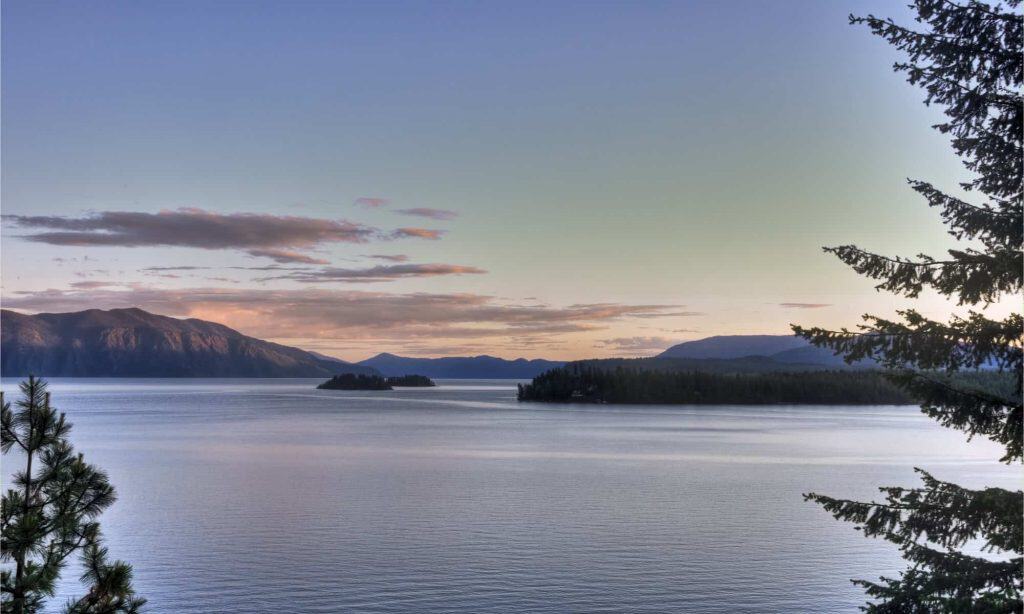
Lake Pend Oreille in northern Idaho is enormous, stretching about 43 miles and reaching roughly 1,158 feet at its deepest point. Idaho Fish and Game identifies it as the fifth-deepest lake in the United States. The U.S. Navy also uses the lake for real underwater research. Its Acoustic Research Detachment at Bayview evaluates large-scale submarine and surface-ship models because the lake’s deep, quiet southern basin provides unusually good conditions for acoustic testing.
That real military activity has mixed beautifully with local monster folklore. Reports of an unknown creature in the lake date to at least 1944, but the name “Pend Oreille Paddler” came later. In 1977, a tabloid published a supposed photograph connected to a story about a young girl encountering the creature near Sandpoint City Beach. A later investigation traced the monster in that photograph to a 12-foot papier-mâché catfish that had been used in a Sandpoint play in 1974. The monster was fake. The name, unfortunately for the monster, was excellent and stuck anyway.
Other reports continued, describing gray or dark objects moving through the water, and theories have ranged from floating logs to military test vehicles. Giant sturgeon have also been suggested, although Idaho Fish and Game’s Panhandle fisheries manager told Sandpoint Magazine in 2025 that the agency has never documented a sturgeon in Lake Pend Oreille. There is still no evidence that a giant unknown animal lives there. Then again, the Navy really does test submarine models in a lake more than 1,100 feet deep, which is already strange enough without helping the Paddler’s public-relations team.
Payette Lake, Idaho
©"Payette Lake North Shore Sunrise" by Knowles Gallery is licensed under BY 2.0. - Original / License
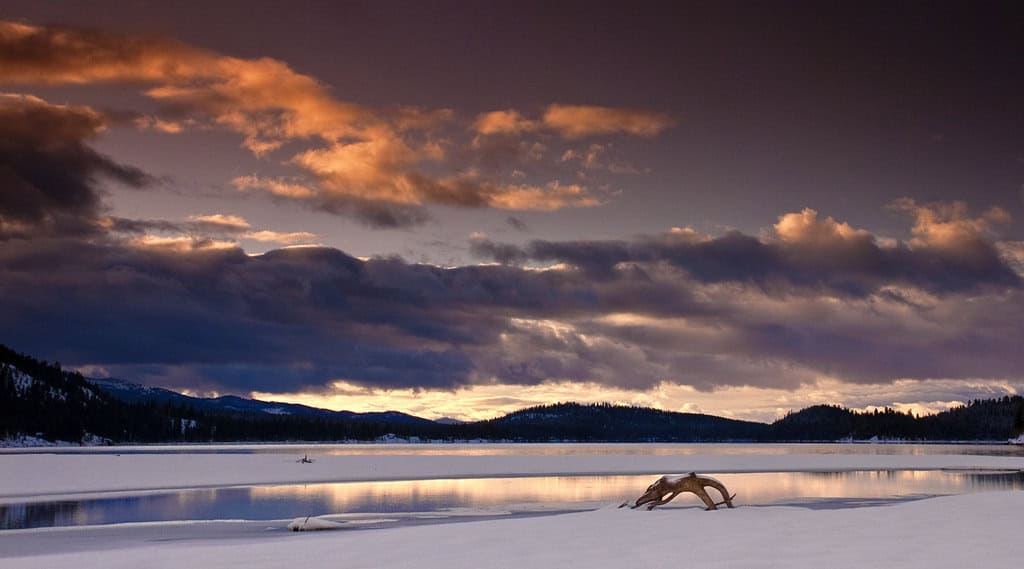
Payette Lake borders McCall in central Idaho, covering more than 5,000 acres and reaching a maximum depth of about 392 feet. Glaciers helped carve the basin thousands of years ago, leaving a mountain lake surrounded by forest. Local tradition also gave the water a darker reputation. Historical folklore summarized by the McCall area’s tourism organization says Native people who spent summers in Long Valley were said to fear the lake’s deep water and tell of a dangerous spirit lurking beneath the surface.
The creature eventually evolved into one of Idaho’s best-known lake monsters. Reports of something large moving through Payette Lake attracted considerable attention during the 1940s. In September 1946, one widely repeated account involved a group of witnesses who described an object or animal roughly 30 to 40 feet long repeatedly diving and leaving a wake behind it. The creature did not yet have its familiar name. That arrived in 1954, when Star-News editor A. Boone McCallum held a contest to replace the less flattering nickname “Slimy Slim.” The winning entry was “Sharlie.”
Sharlie sightings continued to be reported for decades, but there has never been physical evidence establishing that an unknown giant animal inhabits Payette Lake. That has not hurt the story much. McCall now treats Sharlie as an unofficial local symbol, and the legend has become part of the lake’s personality rather than a serious zoological claim. A deep glacial lake, a few unexplained wakes, and several generations of enthusiastic storytellers were more than enough to keep this particular monster afloat.
Soap Lake, Washington
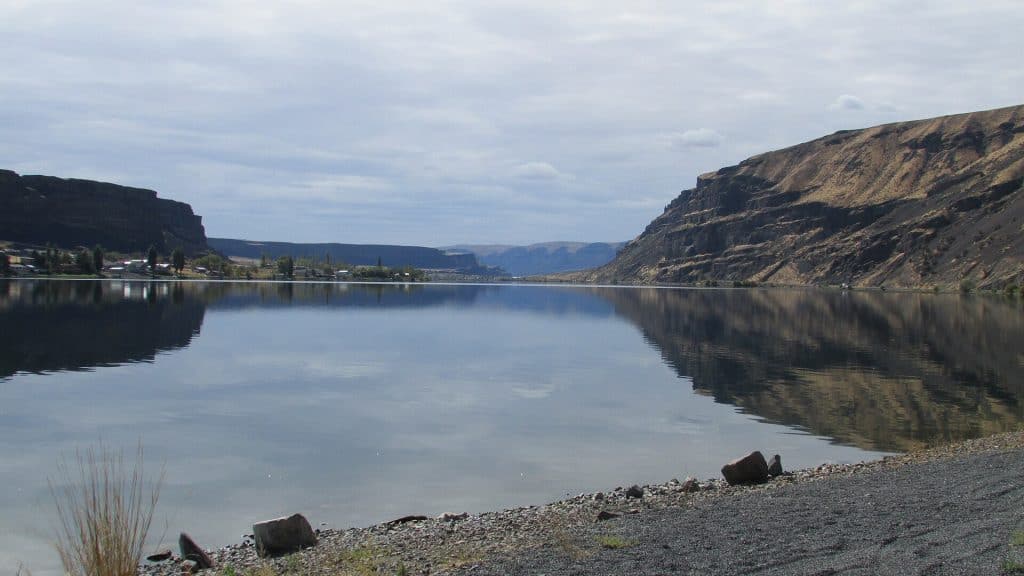
Soap Lake in central Washington does not need a monster. The water itself is strange enough. Washington’s Department of Ecology classifies it as a meromictic lake, meaning its deeper and shallower water layers remain chemically distinct instead of fully mixing. The deeper layer contains a much higher concentration of dissolved salts. Ecology says the lake may have maintained this unusual stratification for thousands of years, creating extreme conditions that support specialized microorganisms.
The lake gets its modern name from its chemistry. The U.S. Geological Survey describes the water as highly alkaline and saline, with a noticeably soapy feel. When wind creates choppy conditions, froth can accumulate along the shoreline. The salinity is high enough that fish do not live in the lake, although brine shrimp do. Evaporation in central Washington’s dry climate concentrates salts because Soap Lake has no surface outlet.
Its reputation as a healing place also goes back much farther than the modern town. Washington’s state arts agency says Indigenous people knew the soda waters for centuries, built steam huts along the shore, and observed truces while visiting the area. The lake was known as Smokiam and later drew non-Native visitors who believed its mineral-rich water and mud could treat medical conditions. Those historical beliefs are part of Soap Lake’s identity, not evidence that the water cures disease. The scientifically documented chemistry is plenty unusual on its own. Few lakes in Washington can produce natural shoreline foam while maintaining water layers that have resisted mixing for thousands of years.

