
Washington gets a lot of credit for its mountains, but some of the state’s most striking scenery is on the water. These lakes range from glacially fed reservoirs tinted turquoise by suspended rock flour to high alpine basins framed by granite, forests, and snowfields. Some can be viewed from roadside overlooks, while others require several miles of hiking. In the right light, their colors and reflections can look almost unreal.
Diablo Lake
©"Diablo Lake" by Paul Schultz is licensed under BY 2.0. - Original / License
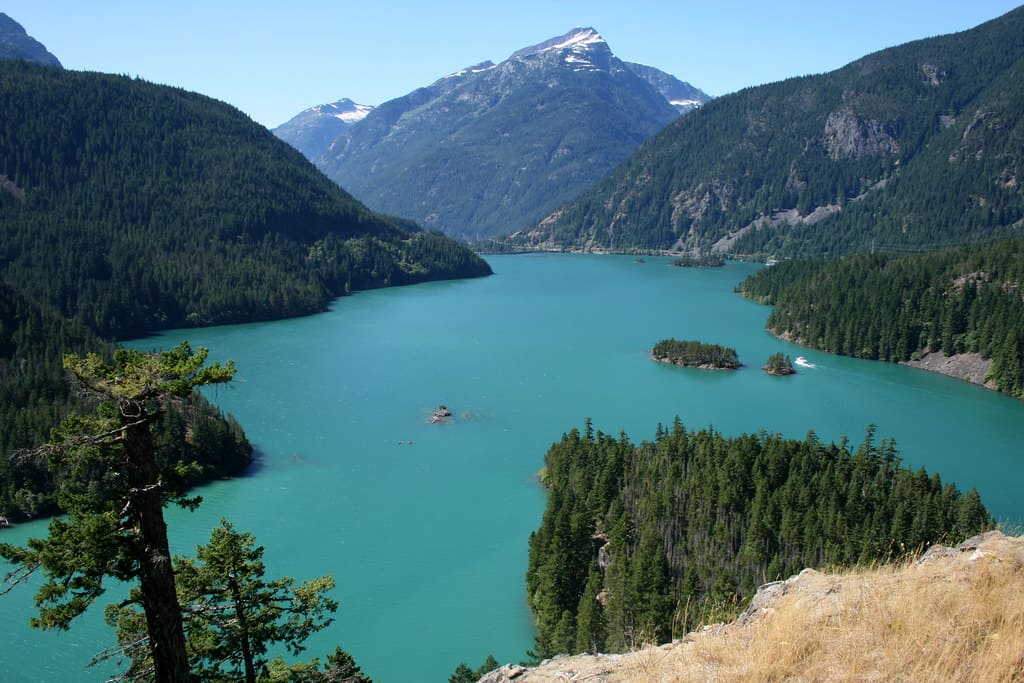
The color is the first thing that stops people. Diablo Lake can turn a vivid turquoise in summer, the kind of blue-green that makes you assume the photo has been filtered. The National Park Service says the color comes from glacial flour, fine rock particles ground down by ice and carried into the lake by glacial streams. Suspended in the water, those particles scatter sunlight and create the lake’s distinctive hue.
You can see the lake from the Diablo Lake Overlook along State Route 20 at mile 131.7, no hiking required. The overlook also gives you a view toward historic Diablo Dam. The color is usually most vivid on sunny days in July, August, and September, when seasonal glacial melt sends more rock flour into the water.
Colchuck Lake
©"Enchantments - Colchuck Lake" by laffertyryan is licensed under BY 2.0. - Original / License
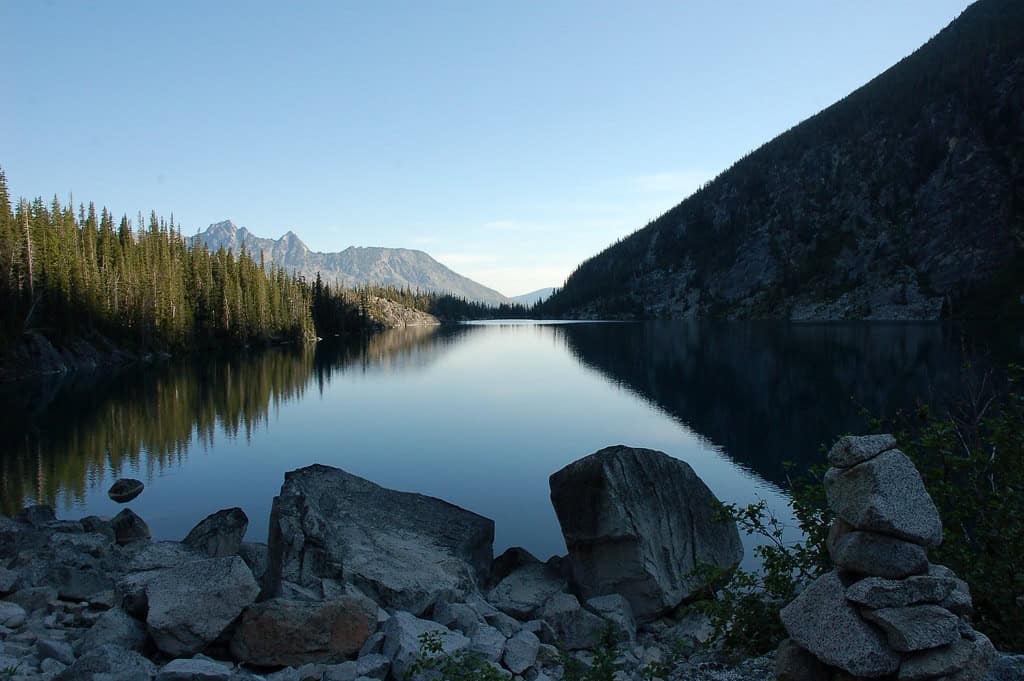
Colchuck Lake sits in the Alpine Lakes Wilderness near Leavenworth, beneath the steep faces of Dragontail and Colchuck peaks. The water can shift from deep blue in the shade to bright aquamarine in direct sunlight, with granite and larches framing the shoreline.
Getting there takes about 8 miles round trip with 2,280 feet of elevation gain. Colchuck is one of the main gateways to the Enchantments, but the permit rules depend on how you visit. From May 15 through October 31, day hikers fill out a free day-use permit at the trailhead, while overnight camping in the Colchuck Lake Zone requires a quota permit. A valid recreation pass is also required for parking at the Stuart Lake Trailhead.
Reflection Lakes
©"Mt. Ranier Reflection Lakes" by Me in ME is licensed under BY 2.0. - Original / License
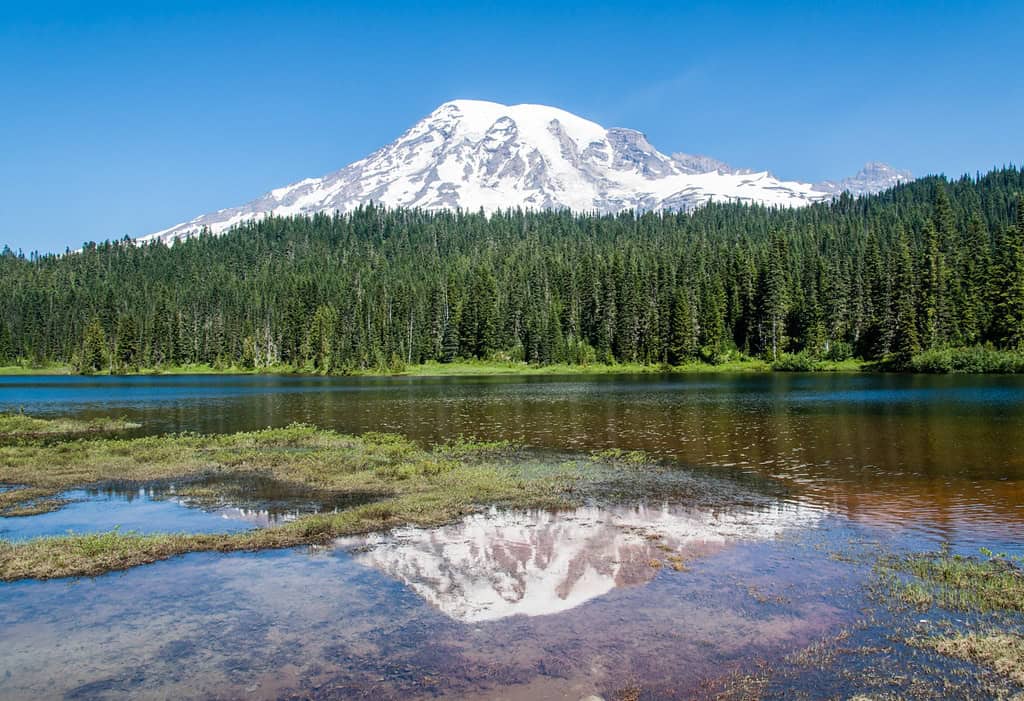
The lakes themselves aren’t large. They are a small group of subalpine lakes along Stevens Canyon Road, about three miles east of Paradise in Mount Rainier National Park. But when the air and water are still, they produce the classic view that gave them their name: Mount Rainier reflected across the surface.
The National Park Service notes that the reflection is usually best in the early morning, before wind disturbs the water. Reflection Lakes can be reached by car when Stevens Canyon Road is open for the summer season, typically from late June into September, although snow and road conditions can change that schedule.
Lake Chelan
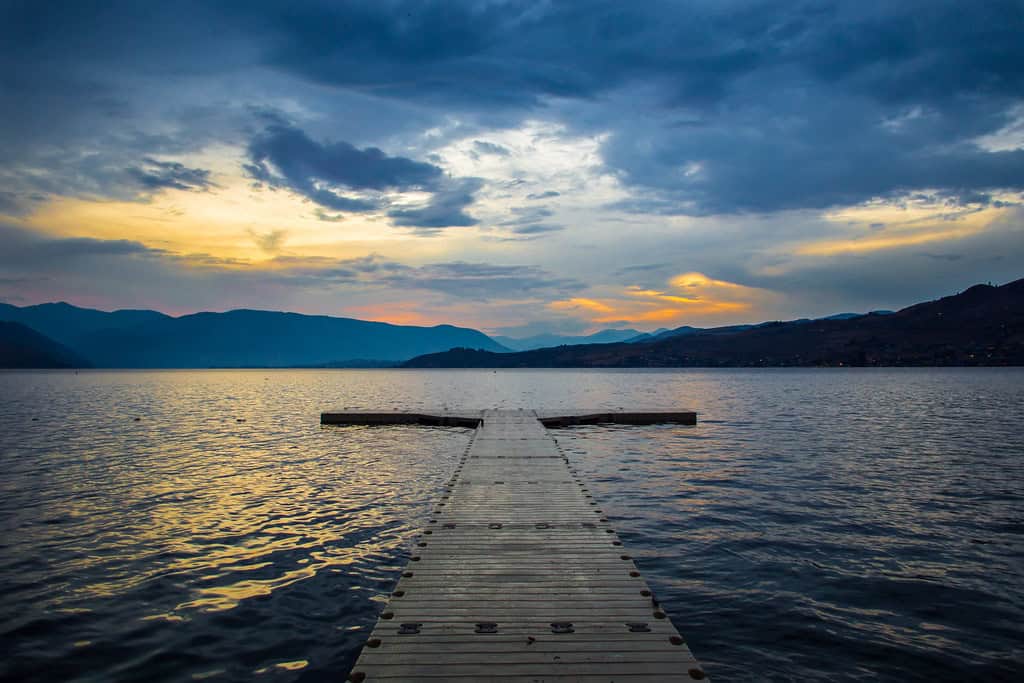
©"Lake Chelan" by TomCollins is licensed under BY-ND 2.0. - Original / License
Lake Chelan is the third-deepest natural lake in the United States, reaching 1,486 feet at its deepest point. Its long basin was shaped by glaciers, and Washington’s Department of Natural Resources describes its water as crystal clear. The lake is fed by the Stehekin River and numerous streams draining the surrounding Cascades.
Lake Chelan extends about 50.4 miles from the outlet near the city of Chelan to the Stehekin River at its upper end. The Stehekin area is especially remote: no outside road connects it to the rest of Washington. Visitors reach Stehekin by foot, boat, or plane, although local roads and shuttle service operate within the valley.
Ingalls Lake
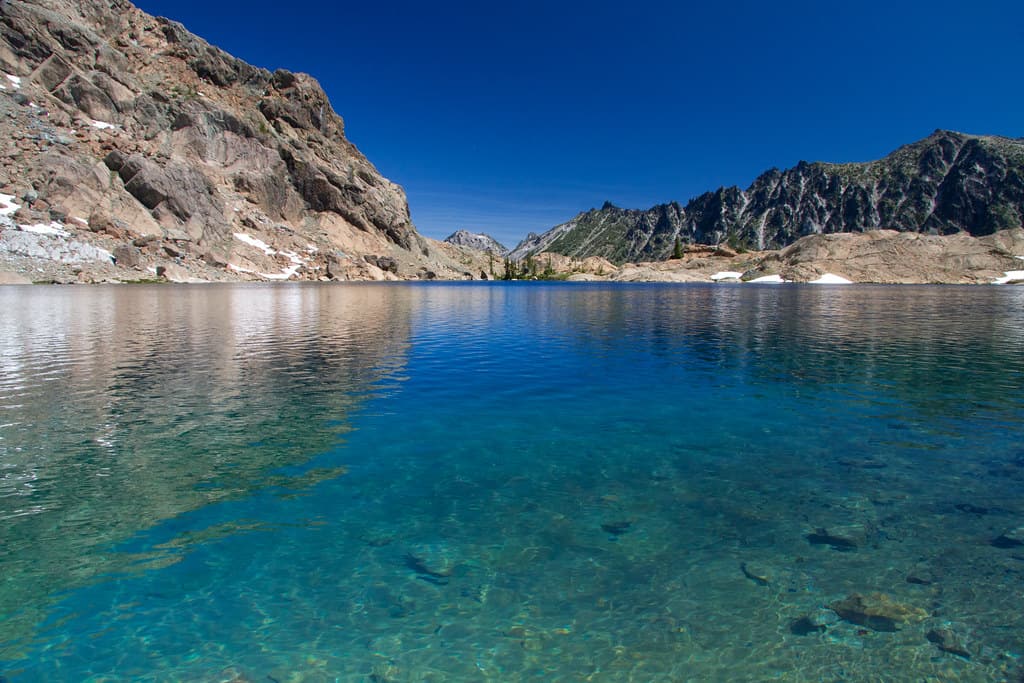
©"Ingalls Lake" by Thales is licensed under BY 2.0. - Original / License
Ingalls Lake sits at roughly 6,500 feet in the Stuart Range near Cle Elum, surrounded by granite peaks and high alpine terrain. The water can shift from pale blue-green to deeper blue depending on the light, with Mount Stuart providing one of the hike’s signature backdrops. There’s no road access to the lake. The standard route is about 9 miles round trip with 2,500 feet of elevation gain.
The route climbs from forest into increasingly open terrain, so hikers should be prepared for strong sun, exposed sections, and rapidly changing mountain weather.
As of late August 2026, the Lake Ingalls route is closed. The U.S. Forest Service’s Three Queens Fire closure includes the Esmeralda Trailhead used to access Ingalls Way. The closure order took effect Aug. 24 and is scheduled to remain in place through Oct. 31, 2026, unless it is rescinded sooner. Check current Forest Service conditions before planning a trip.
Chain Lakes
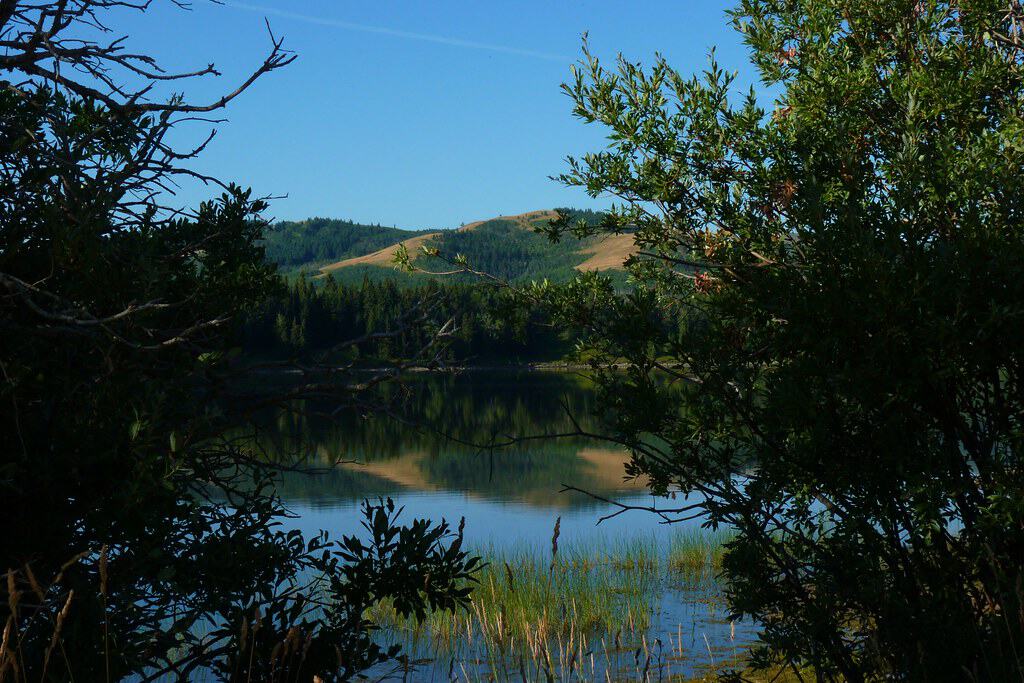
©"Chain Lakes" by FancyLady is licensed under BY-ND 2.0. - Original / License
The Chain Lakes Loop near Mount Baker passes through the Heather Meadows area and a string of alpine lakes, including Mazama, Iceberg, and Hayes lakes. The route also delivers broad views of Mount Baker, Mount Shuksan, and the surrounding North Cascades when the weather cooperates.
The full loop is about 6.5 miles with roughly 1,820 feet of elevation gain. It can be started from the Artist Point or Heather Meadows area, depending on the route you choose. Access is seasonal because the final stretch of State Route 542 to Artist Point closes for winter. As of late August 2026, the Washington State Department of Transportation lists the road to Artist Point as open for the summer season.
Ross Lake
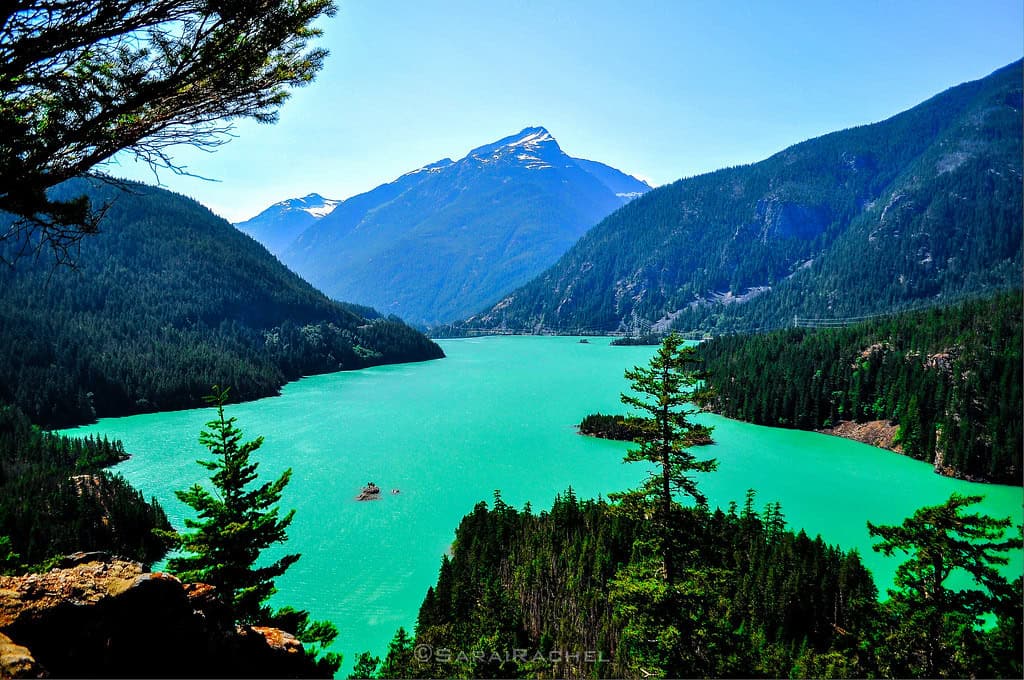
©"Greetings From Northern Washington (Ross Lake)" by Jitabebe is licensed under BY 2.0. - Original / License
Ross Lake is a large mountain reservoir in Ross Lake National Recreation Area, extending nearly 23 miles through western Washington and about another mile into British Columbia. Steep forested slopes and peaks rise above long stretches of blue-green water, giving the reservoir a much wilder appearance than its hydroelectric origins might suggest.
There is no road access to Ross Lake from State Route 20. From the highway, visitors can hike toward the lake or reach it by boating across Diablo Lake and portaging around Ross Dam. The only vehicle route to the Ross Lake shoreline normally comes from Hope, British Columbia, via the gravel Silver-Skagit Road to Hozomeen. However, the National Park Service currently says the Hozomeen gate is closed and vehicle and foot traffic across the U.S.-Canada border there is prohibited, so that route should not be used unless the park announces a change.

