
With its towering evergreens, rainy western winters, and long autumn nights, Washington has always looked ready for a ghost story. The state also has an infamous history of serial killers with local roots, while filmmakers and authors have repeatedly used Washington as a setting for eerie fiction. The 2002 American version of The Ring was set around Seattle and filmed at multiple Washington locations; David Lynch’s Twin Peaks turned the Snoqualmie Valley into its fictional Washington town, and Stephenie Meyer’s Twilight saga made Forks famous as the home of vampires and werewolves.
In reality, Washington has no shortage of towns, buildings, and landmarks with long-running haunting legends. The supernatural claims in these stories are largely folklore, guest accounts, or reports from paranormal investigators, not events that can be independently proven. From ghost towns and cemeteries to historic houses, theaters, and pubs, below are 10 Washington places where documented history and ghost lore have become closely intertwined.
Monte Cristo Ghost Town
Located in eastern Snohomish County in the Cascade Mountains, Monte Cristo was a gold-and-silver mining town founded in 1889 and 1890. Its remote location made transportation difficult, and repeated floods damaged the railroad and other access routes. The devastating November 1897 washout destroyed rail access and helped end the original mining boom; later efforts to revive mining and tourism never restored the town to its former size.
Today, visitors generally reach the historic townsite by hiking or biking along the old road and can see remnants of the former mining community. Its abandoned setting has also inspired stories about miners and other former residents lingering as ghosts. Those accounts are part of local folklore rather than documented historical events.
The Oxford Saloon
The Oxford Saloon occupies the former A. M. Blackman store at 913 First Street in Snohomish. Historical records place the building’s origins around 1890, when Arthur M. Blackman opened a large grocery and general store there. During Prohibition it operated as the Oxford Pool Room, and HistoryLink notes that it was not used as a drinking establishment until World War II. Paranormal groups have investigated the property, and the saloon itself promotes stories of alleged electronic voice phenomena and other unexplained activity.
The best-known legend concerns a policeman identified only as Henry, who is said to have been fatally stabbed while breaking up a fight. According to the saloon’s own ghost lore, his apparition has been reported near the basement stairs and in the women’s restroom. Other stories describe a man in a bowler hat and two female figures upstairs. These details are longstanding paranormal lore associated with the building, not independently verified historical events.
Kells Irish Restaurant & Pub

Kells Irish Restaurant & Pub opened in 1983 and occupies part of Seattle’s historic Butterworth Building at Pike Place Market. The building itself was constructed in 1903 for E. R. Butterworth & Sons as Seattle’s first purpose-built modern mortuary. The funeral business moved out in 1923, long before Kells arrived, but the building’s unusual past has helped make the pub one of Seattle’s better-known ghost-story destinations.
The mortuary history is real, although some stories about exactly what happened in the present-day pub space have been exaggerated over time. A 1904 description of the building placed the heating plant, stables, and funeral-wagon storage at the Post Alley basement level. The paranormal side is harder to prove: staff, patrons, and ghost hunters have reported apparitions, unexplained voices, objects moving, glasses falling, and mirrors breaking. The building was also featured on Ghost Adventures, adding to its haunted reputation.
Mount Baker Theatre
Mount Baker Theatre in Bellingham opened on April 29, 1927, as a grand movie palace built for film and live entertainment. The restored theater is listed on the National Register of Historic Places, and its own public tours explicitly include the building’s ghost stories alongside its architecture and performance history. That does not establish a haunting, but it does show how firmly the paranormal lore has become part of the venue’s identity.
Local legend centers on a female spirit usually called Judy. Over the years, employees, visitors, and paranormal investigators have attributed unexplained sounds, cold spots, voices, lights, and occasional touches to her or to other supposed spirits in the building. Claims that the theater contains a specific number of ghosts cannot be verified, so the stories are best understood as part of Mount Baker Theatre’s long-running folklore.
The Campbell House
Built in 1898 in Spokane’s Browne’s Addition, Campbell House was designed by noted architect Kirtland K. Cutter for mining businessman Amasa B. Campbell, his wife Grace, and their daughter Helen. The documented family history is very different from the darker legends sometimes attached to the house. After Grace died in 1924, Helen gave the home to the Eastern Washington State Historical Society in her mother’s memory.
Today, Campbell House operates as a house museum connected to the Northwest Museum of Arts and Culture. Its spooky reputation comes from later visitor lore rather than a documented murder or kidnapping at the property. One recurring story holds that the eyes in a portrait of Amasa Campbell seem to follow visitors as they move through the room, a tale that has become part of the house’s paranormal lore.
Greenwood Cemetery
Greenwood Cemetery, now Greenwood Memorial Terrace, was established in Spokane in 1888. Its best-known piece of folklore surrounds the overgrown staircase nicknamed the “1,000 Steps.” There are actually only about 60-some steps. The staircase dates to the late 1890s and was associated with an Elks burial section and mausoleum on the cemetery’s upper terrace.
According to local legend, ghosts prevent people from reaching the top, while other versions of the story describe faces, cries, or the sensation of rain on clear nights. Those are urban legends, not documented phenomena. The staircase itself is old and deteriorated, and cemetery representatives have said it is not maintained. Visitors are asked to explore the cemetery during daylight hours and respect the grounds.
Northern State Hospital
Located near Sedro-Woolley, Northern State Hospital opened in 1912 as Washington’s third state psychiatric hospital and closed in 1973. At its peak in the 1950s, the hospital served about 2,200 patients with a staff of roughly 415. The former campus is now divided among several uses: the Port of Skagit owns the SWIFT Center portion, while Skagit County’s Northern State Recreation Area includes much of the former hospital farm.
The hospital’s cemetery is a real and somber part of the site’s history. More than 1,600 former patients are believed to have been buried or interred there or elsewhere in the Skagit Valley, and most surviving markers bear only initials and numbers, with many now sunk below the soil. The site’s history has inspired stories of voices, shadowy figures, cold spots, and a nurse pushing a wheelchair, but those are paranormal accounts rather than established facts. Visitors to the recreation area should also note that Skagit County prohibits entry into the historic structures.
Fort Vancouver National Historic Site
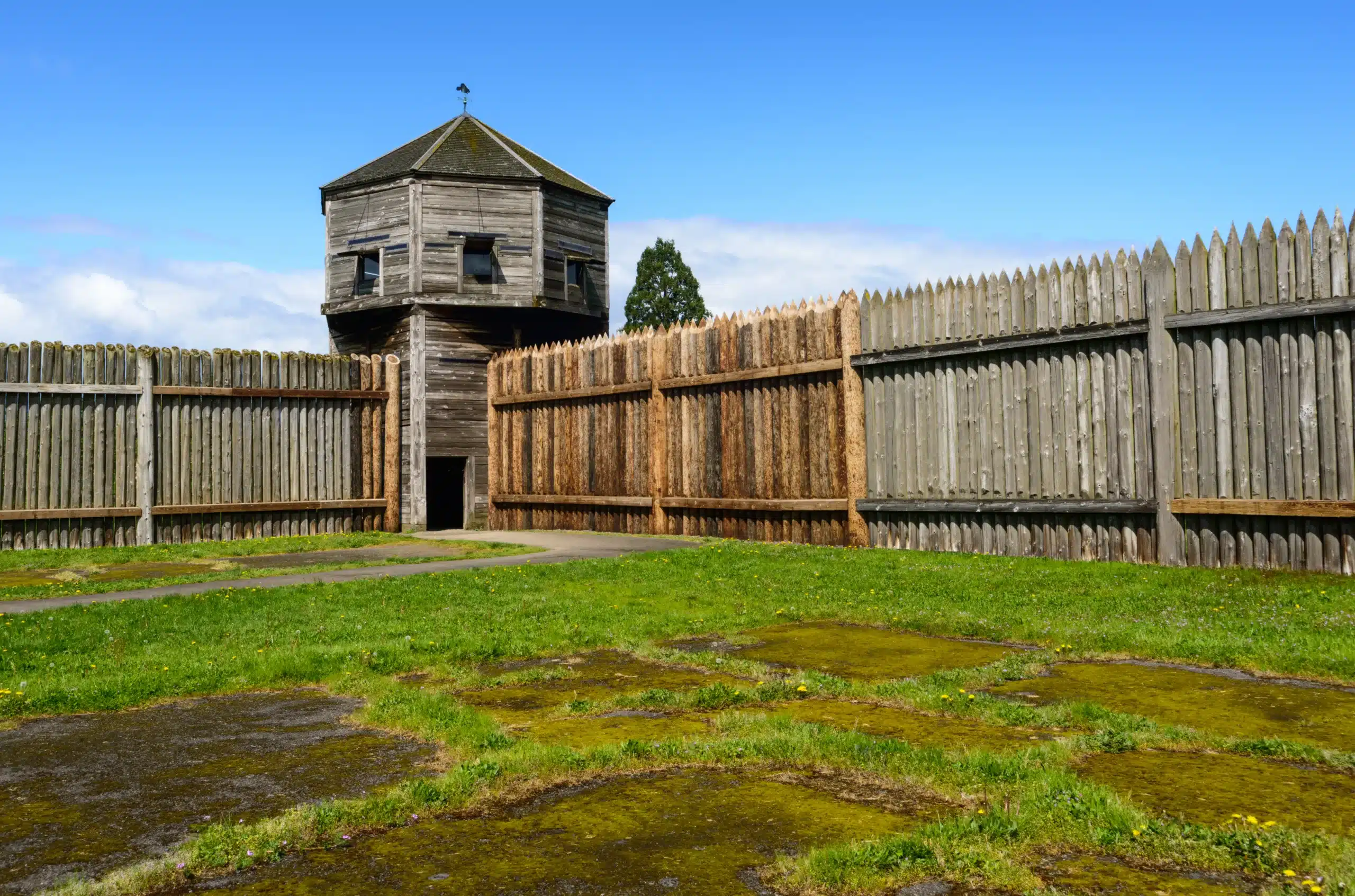
Watch Tower looking over Fort Vancouver (Image Source: Shutterstock/ Zack Frank)
©Zack Frank/Shutterstock.com
Fort Vancouver was established by the Hudson’s Bay Company in 1825 and became the headquarters of the company’s vast Columbia Department. The U.S. Army established the neighboring post that became Vancouver Barracks in 1849. Much of the area’s paranormal lore centers not on the reconstructed stockade itself but on Officers’ Row, especially the Grant House, which was built in 1849 and stands adjacent to Fort Vancouver National Historic Site.
The Grant House was originally the commanding officer’s residence. Despite its name, Ulysses S. Grant never lived there; the house was later named in his honor and is now owned by the City of Vancouver. Local ghost stories often identify a supposed resident spirit as “Sully,” usually linked to Army officer Alfred Sully, and past staff and visitors have reported footsteps, unexplained sounds, and apparitions. Those stories are local lore rather than documented paranormal events.
Black Diamond Cemetery
Black Diamond Cemetery is a city-owned historic cemetery founded in 1884 at 24431 Morgan Street. It contains more than 1,200 graves and reflects the mining town’s diverse immigrant history, with residents from Wales, Italy, Australia, Russia, Germany, and elsewhere buried there. The cemetery was added to the National Register of Historic Places in April 2000.
Local ghost stories describe disembodied voices, whistling, shadowy figures, and lantern-like lights among the graves, especially on foggy nights. The documented history is haunting enough on its own: miners killed in several local explosions are buried here, and eight of the 16 men killed in the Nov. 6, 1910 Lawson Mine disaster were interred together in one grave. The paranormal sightings remain folklore rather than verified events.
Lighthouse Oceanfront Resort
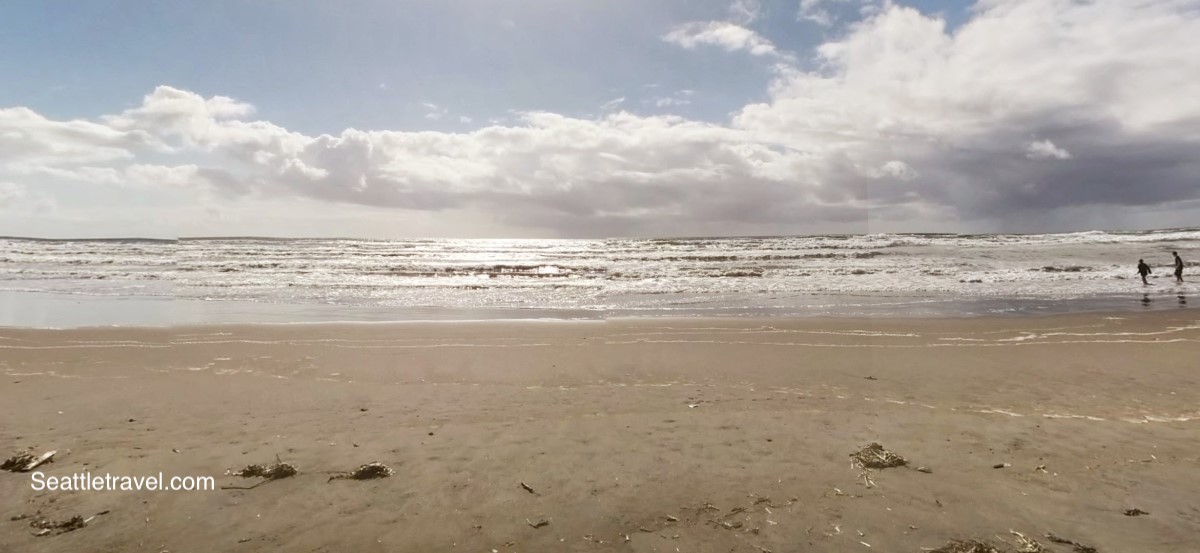
The Lighthouse Oceanfront Resort is still operating at 12417 Pacific Way in Long Beach, near the Pacific Ocean. Its oldest ridge cottages date to the 1950s, and the resort itself openly acknowledges the ghost stories that guests have attached to those rooms over the decades. The property says it has roughly 30 years of guest journals containing memories of stays, including tales of supposedly supernatural sights and sounds.
Older local tourism and haunted-location accounts have singled out units 101 and 105, while guest stories describe furniture apparently moving, televisions turning on or off, rocking chairs moving, doors opening, and whispers. The resort encourages the journal tradition, but these entries are personal accounts rather than verified evidence of paranormal activity. The cottages remain bookable accommodations, not abandoned haunted-house attractions.

