

The Pacific Northwest has always carried a reputation for the unexplained. Old-growth forests, volcanic peaks, remote coastlines, and a long aviation and maritime history fit that reputation far too well. Some of the stories below are genuine unsolved cases, while others are legends or once-mysterious discoveries that later research has partly explained. What they have in common is that important pieces of the story are still missing, disputed, or impossible to prove.
D.B. Cooper’s Disappearing Act
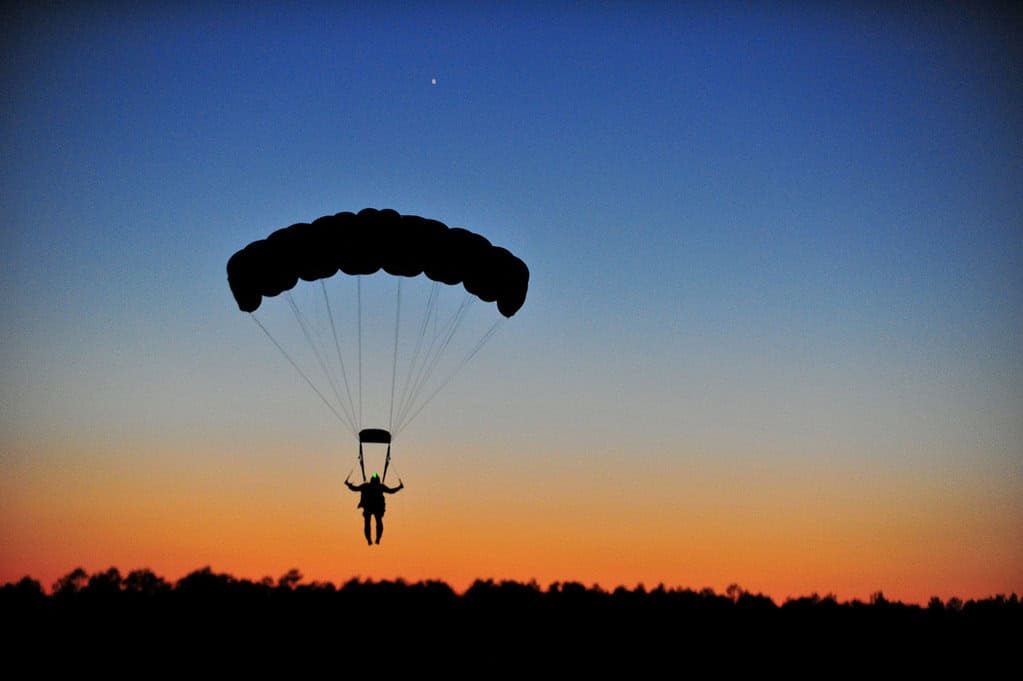
©"Emerald Warrior 2012 [Image 2 of 32]" by DVIDSHUB is licensed under BY 2.0. - Original / License
On November 24, 1971, a man calling himself Dan Cooper bought a one-way ticket on Northwest Orient Airlines Flight 305 from Portland to Seattle. Shortly after takeoff, he handed a flight attendant a note indicating that he had a bomb and demanded $200,000 in $20 bills along with four parachutes.
When the plane landed in Seattle, Cooper exchanged the 36 passengers for the ransom money and parachutes while keeping several crew members aboard. The plane took off again under orders to head toward Mexico City. A little after 8 p.m., somewhere between Seattle and Reno, Cooper parachuted from the rear of the Boeing 727 with the money. He was never found, and his exact landing point and fate remain unknown.
The FBI investigated the case for decades under the code name NORJAK before redirecting its investigative resources in 2016. In 1980, eight-year-old Brian Ingram found $5,800 of the ransom money on a sandbar along the Columbia River, the only physical evidence the FBI says was recovered after Cooper jumped from the plane. None of the many suspects or tips has produced proof of the hijacker’s identity, leaving both his name and his fate unresolved.
The Sighting Above Mount Rainier
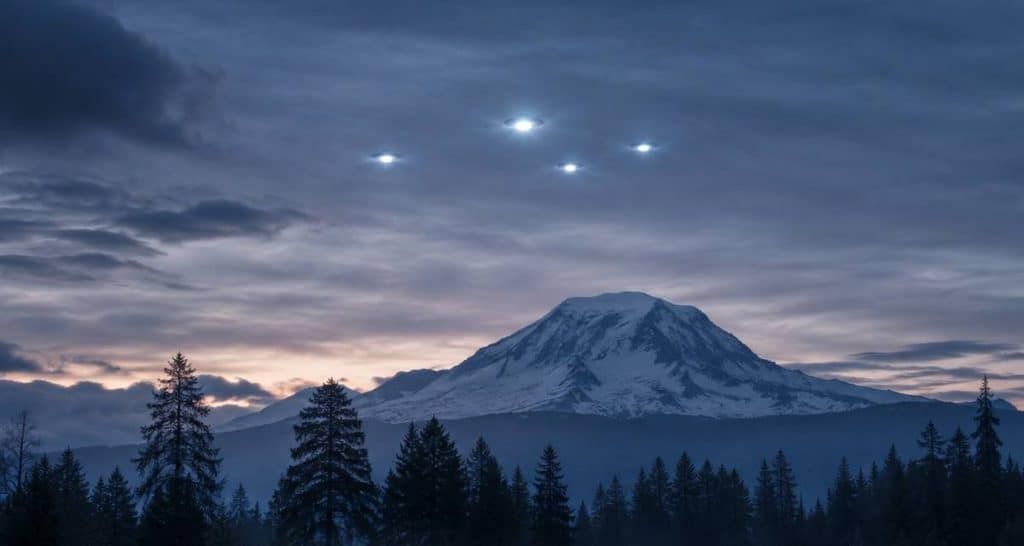
On June 24, 1947, private pilot Kenneth Arnold was flying near Mount Rainier while searching for a downed U.S. Marine Corps transport plane when he reported seeing nine unusual objects moving through the sky. Arnold estimated their speed at roughly 1,700 miles per hour and later described their motion to reporters as similar to saucers skipping across water. News coverage shortened that description to “flying saucers,” helping popularize the phrase and turning Arnold’s report into a landmark moment in modern UFO history.
Arnold’s account is preserved in the National Archives among records from the U.S. Air Force’s investigations of unidentified flying objects. His extraordinary speed figure was his own estimate, not an independently measured velocity. The Air Force later investigated thousands of UFO reports and said it found no evidence that unexplained sightings represented technology beyond modern scientific knowledge or extraterrestrial vehicles. What Arnold actually saw over Washington that day, however, has never been established with certainty.
The Ancient One of the Columbia River
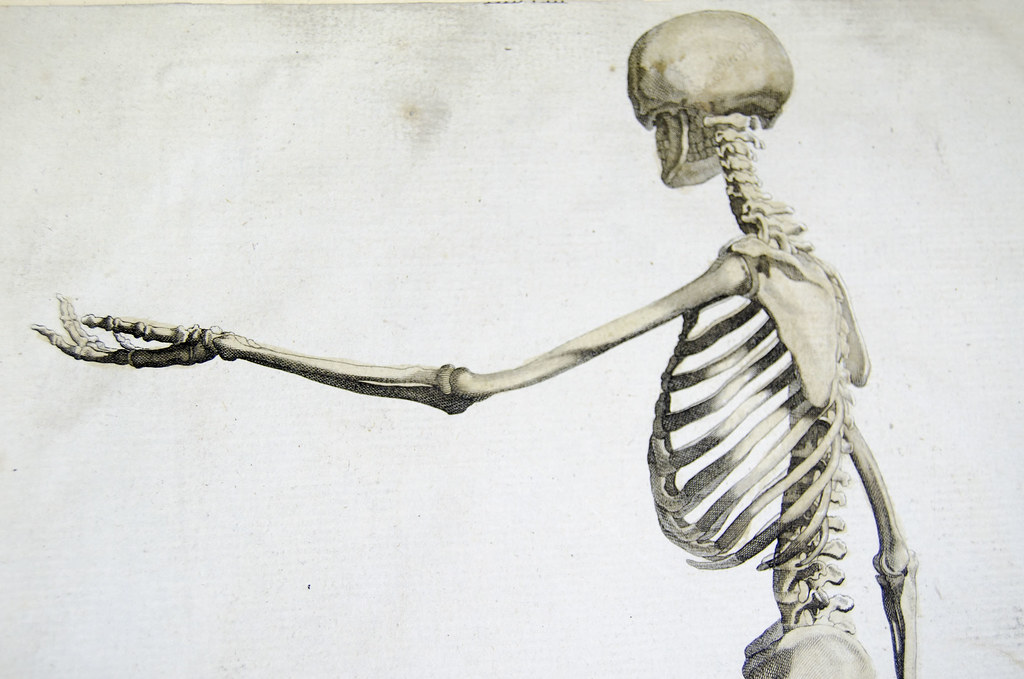
©"Upper skeleton from Andrew Bell's Anatomia Britannica (1770s-1780s)" by liverpoolhls is licensed under BY-SA 2.0. - Original / License
In July 1996, two men discovered human skeletal remains along the Columbia River near Kennewick, Washington, on land managed by the U.S. Army Corps of Engineers. The nearly complete skeleton, commonly called Kennewick Man and known to regional tribes as the Ancient One, was dated to roughly 8,500 years ago. The Army Corps describes the remains as one of the oldest and most complete skeletons discovered in North America.
The discovery led to years of legal and scientific disputes over whether the remains should be studied or returned to five Columbia River Plateau tribes that sought repatriation. A 2015 genome study found that the Ancient One was genetically closer to modern Native Americans than to any other population worldwide. In 2016, after reviewing the DNA and other evidence, the U.S. Army Corps of Engineers formally determined that the remains were Native American.
On February 17, 2017, the remains were repatriated to the Colville, Yakama, Nez Perce, Umatilla, and Wanapum tribes and were reburied the following morning at an undisclosed location on the Columbia Plateau. The DNA evidence resolved a major part of the ancestry debate, but questions about the Ancient One’s individual life and the broader movements of ancient populations through the Americas remain subjects of scientific research.
The Beeswax Wreck’s Remaining Mystery
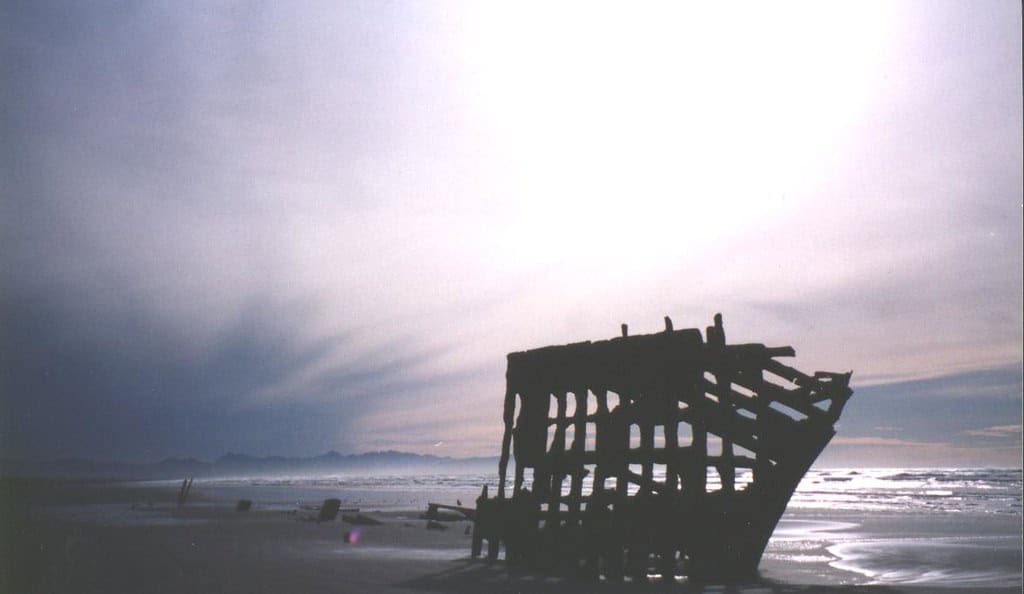
©"Shipwreck" by RodneyRamsey is licensed under BY 2.0. - Original / License
For generations, blocks of beeswax, pieces of Chinese porcelain, and other wreck-related artifacts have been found around Nehalem Spit and Nehalem Bay on the northern Oregon Coast. Written accounts of the beeswax go back to the early 1800s, while Native oral traditions described a large shipwreck that had occurred long before Euro-American settlement.
Researchers have since narrowed the identity of the wreck considerably. Archaeological, geological, and archival evidence indicates that it was most likely the Santo Cristo de Burgos, a Spanish Manila galleon that left the Philippines in 1693 carrying Asian trade goods and a large cargo of beeswax bound for Acapulco. Spanish shippers’ marks on some wax blocks, Chinese porcelain, and dating evidence all support that identification.
In June 2022, timbers from a cove just north of Neahkahnie Mountain were recovered for further study, and initial testing dated them to the period of the Santo Cristo de Burgos. The larger wreck site has still not been conclusively located, and the exact circumstances of the disaster, including what happened to the people aboard, remain uncertain. The mystery today is less about the ship’s likely identity than about exactly where and how it was lost.
The Legend of Mel’s Hole
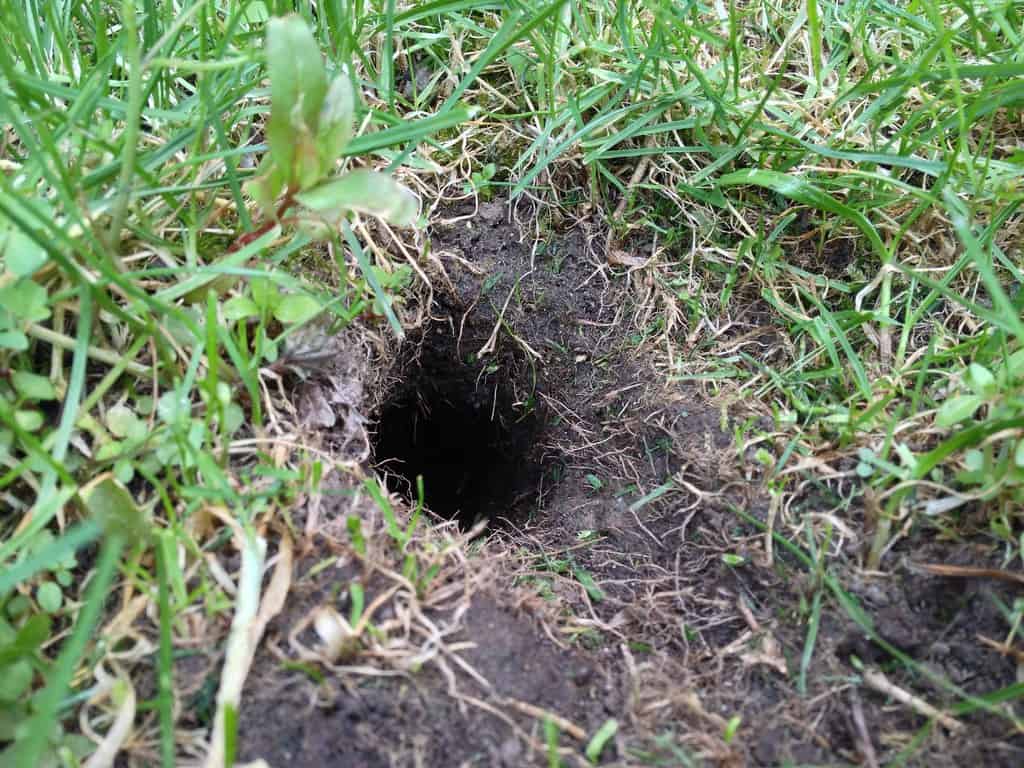
©"vole holes" by mccun934 is licensed under BY 2.0. - Original / License
On February 21, 1997, a caller identifying himself as Mel Waters appeared on Art Bell’s late-night radio program Coast to Coast AM with a story about a supposed hole on property along Manastash Ridge near Ellensburg. Waters described it as about nine feet wide and claimed he had lowered roughly 80,000 feet, or about 15 miles, of fishing line into it without reaching the bottom.
The story only became stranger. Waters relayed a local tale about a dead hunting dog supposedly being thrown into the hole and later being seen alive again. On a follow-up appearance, he also claimed that the military had taken control of his property and blocked his access. Those were stories told by Waters on the radio; no independent evidence established that either event happened.
Contemporary reporting found no telephone listing for a Mel Waters and no Kittitas County property records showing anyone by that name owning land in the area. Later searches also failed to produce verifiable evidence of the supposed bottomless pit. Mel’s Hole has endured as a piece of Pacific Northwest folklore, but it is better described as an unverified legend or possible hoax than as a confirmed geological mystery.
The Ape Canyon Story
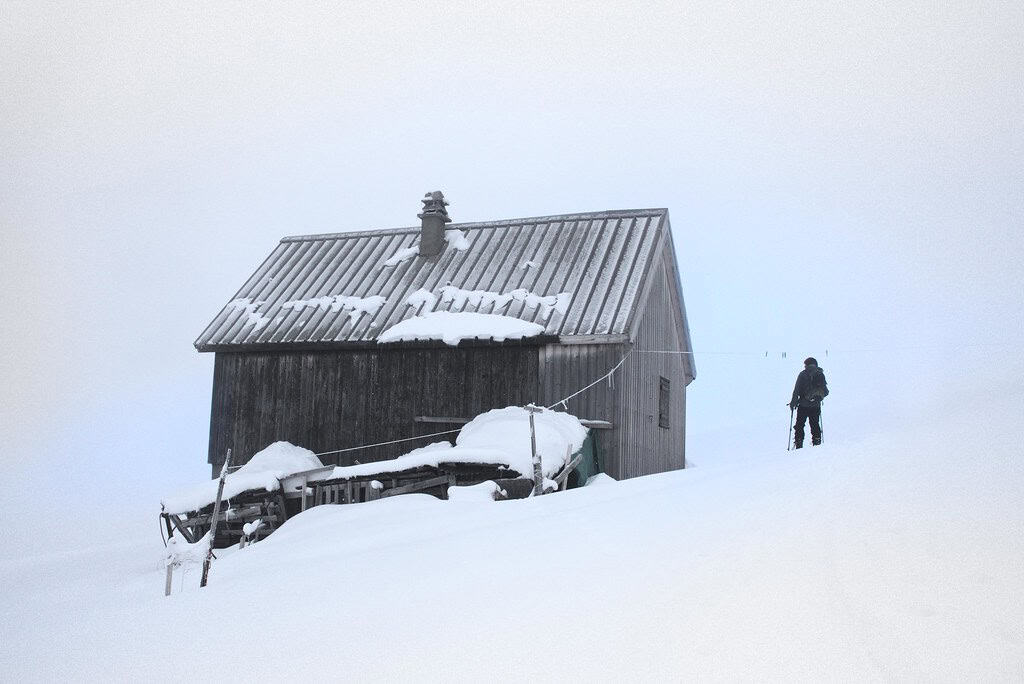
©"Cabin in the fog" by Gael Varoquaux is licensed under BY 2.0. - Original / License
In July 1924, a group of miners and prospectors working near Mount St. Helens told newspapers that they had encountered large, hairy, ape-like creatures near their remote cabin. Fred Beck was among the men who later described seeing one of the figures, and members of the party said they fired at one during a daytime encounter.
The miners said that rocks struck the cabin repeatedly during the night and that they fled the area the following morning. Their account appeared in newspapers in 1924 and helped turn the episode into an enduring part of Mount St. Helens folklore. Contemporary reporting also included skeptical accounts, and investigators found no conclusive evidence of unknown ape-like animals. The story became closely associated with the nearby place now known as Ape Canyon, but the alleged creatures themselves were never verified.
The Sea Serpent of the Salish Sea
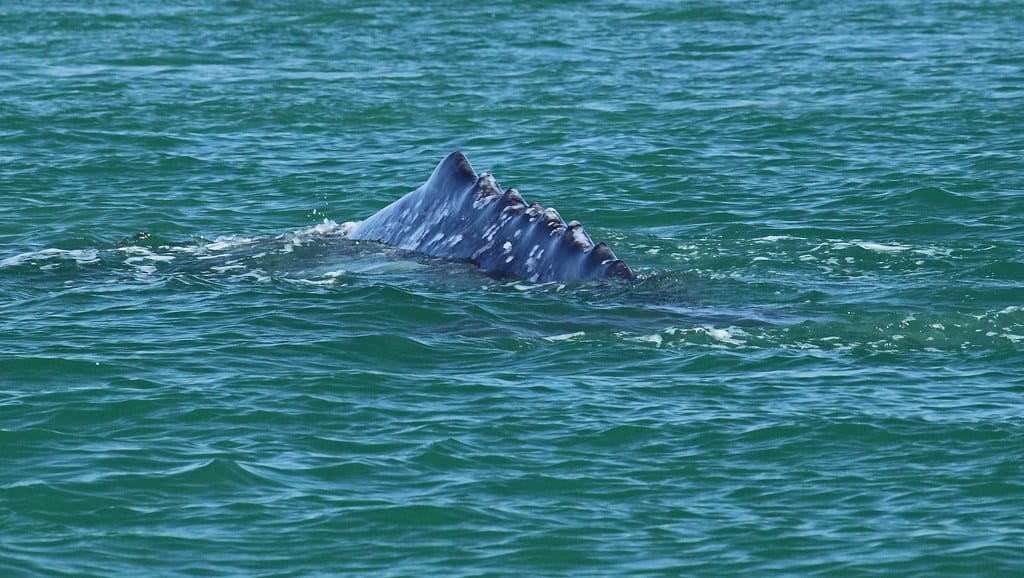
©"'Knuckles' of a Grey Whale - Eschrichtius robustus" by jpmckenna - Plotting 2020 Adventures is licensed under BY 2.0. - Original / License
Stories and reported sightings of long, serpentine marine animals have circulated for decades along the coast of British Columbia and the broader Pacific Northwest. The best-known version is nicknamed Cadborosaurus, or “Caddy,” after Cadboro Bay near Victoria, British Columbia. Witness accounts typically describe a long-necked or serpent-like animal, sometimes with a horse-like head and humps or coils visible above the water.
No preserved specimen has established that Cadborosaurus is a distinct, previously unknown animal. Various known marine animals and misidentifications have been proposed to explain individual reports, while a small number of cryptozoology researchers have argued that the accumulated sightings deserve further study. Without a verifiable specimen, the existence of a separate species remains unproven.
One of the story’s most famous pieces of evidence dates to 1937, when workers at the Naden Harbour whaling station in British Columbia recovered and photographed an unusual carcass from the stomach of a sperm whale. Francis Kermode, then director of the Provincial Museum, identified the remains as a fetal baleen whale, while later Cadborosaurus proponents argued that the photographs showed something different. The specimen was not preserved for modern testing, so linking it to an unknown sea creature remains unproven.

