
The Washington mountains have consumed many dreams. In the years between the 1870s and the early 1900s, the gold and silver rushes led thousands of miners to the Cascades and North Cascades, valley lands that flood every fall and passes that stayed under snow for six months of the year. Towns with hotels, saloons, post offices, and sawmills emerged everywhere, only to be abandoned as generations passed and the ores dried up.
Not all of these are listed on tour maps. The ruins range from a couple of standing log buildings to just a carved sign and rusting iron in the brush. If you want to explore, make sure you have an up-to-date trail report with you and don’t expect a parking lot or any kind of tour guide.
Blewett
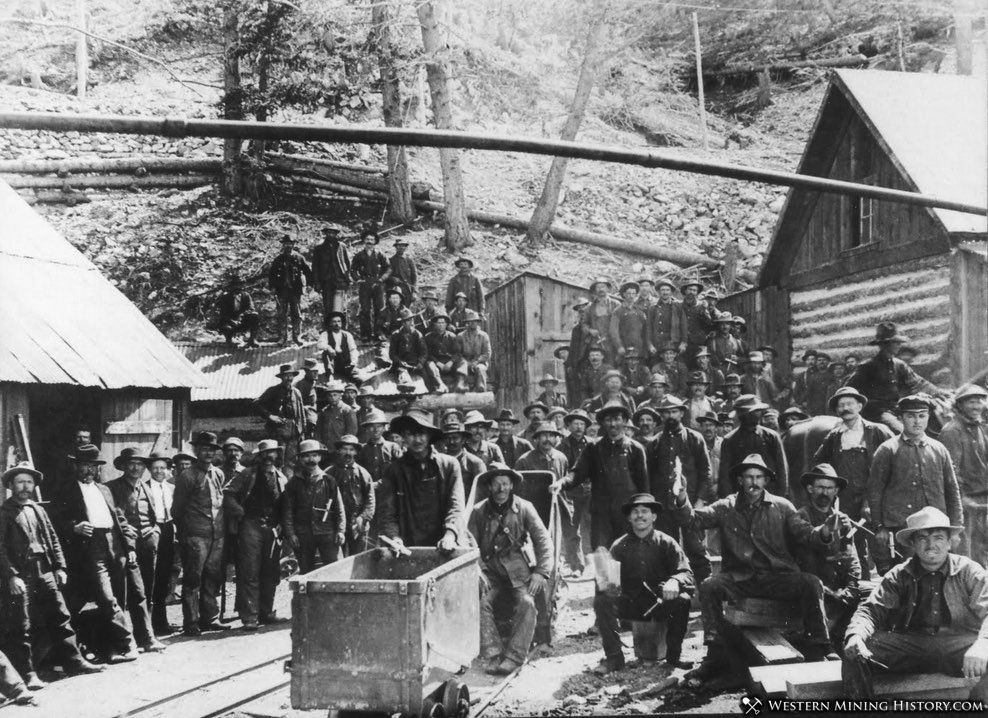
In the foothills of the Wenatchee Mountains, Chelan County, just off State Route 97, you’ll find Blewett. This mining camp was one of the most chaotic and violent places in the area during the 1890s. A hotel, a saloon, an assay office, a blacksmith, and a school were built up in one mountain depression with a documented reputation for rough characters. The ore veins ran out around 1910, and the whole town went with them.
Fires and decades of unrelenting weather conditions finished off the town. All that can be seen now are openings in the rock where the mine shafts were, as well as a crumbling foundation of the former stamp mill. The site has no marked trails and no informational signs. Tourists don’t usually come here, and that’s part of what makes the visit worth it.
Galena
Galena was platted in December 1891, in the drainage of the North Fork Skykomish River in Snohomish County, northeast of Index.
The town even had its own weekly mining newspaper until the editor packed up and left over a disagreement with the readership. It was a real town, briefly, with real infrastructure. Then it wasn’t. Silver and lead deposits drove the initial rush, but by the early 1900s, the metals were mostly gone, and people moved on.
You can reach this ghost town by driving down the Index-Galena Road, which goes through quite heavy mountain terrain. This road was closed in 2006 due to a flood and only reopened in November 2023 thanks to a $29 million reconstruction project. There’s little left of the town on the surface except for some ruins of cabin foundations and an ore mill. It doesn’t make its way onto many ghost town roundups. Nearly two decades of road closures kept it that way.
Monte Cristo
Monte Cristo is the most popular ghost town in the Washington Cascades, and rightly so. It lies at an elevation of about 2,900 feet within the boundaries of Snohomish County, and it is surrounded by Silvertip Peak and Cadet Peak. It takes a hike of four miles along a road that can no longer be driven, starting from Barlow Pass.

Miners came to the area in 1889 as gold and silver deposits were discovered, and the town developed quickly enough to attract some substantial investments. New York financiers, namely Charles Colby and Colgate Hoyt, with the backing of John D. Rockefeller, acquired a controlling interest in the primary mines and funded a railroad from Everett.
During the 1890s, a hotel and alleged brothel was run in Monte Cristo by Frederick Trump, the grandfather of Donald Trump.
Mining operations ceased for good by 1907. Today, you’ll find red cabins, rusted machinery, interpretive plaques, and an open mine shaft that you are advised not to come close to. The site has been preserved by the U.S. Forest Service and a group of volunteers. Visit between June and September. Crossing the river at the end of the trail can be done on a log, but the water is chilly, and the footing is uneven, so waterproof boots matter.
Mineral City
Located four miles upstream on Silver Creek from Galena, Mineral City was established much earlier than Galena itself. The settlement called Silver City was established in 1873, which makes this place one of the oldest mining areas in the western Cascades. The town as it stood in 1892 had two hotels, two saloons, two stores, and not much else, so it wasn’t a huge town to begin with. The Gold Rush in Alaska and the repeal of the Sherman Silver Purchase Act took place a few years later, leaving it practically abandoned by 1900.
Mineral City can be reached by driving to the road-washout closure point and hiking on a rough footpath through Silver Creek for about seven miles. The trail goes past several washed-out bridges and has horizontal mine adits directly cut into the rock faces above the creek. The Silver Creek valley can be explored as part of a Galena trip, though the miles add up quickly.
Silverton
On the map, Silverton is shown as a wide spot in the road on the Mountain Loop Highway in Snohomish County to the east of Granite Falls. It is mostly driven past without a care, as drivers are usually headed to Monte Cristo, the final destination. It got its name because of the discovery of silver ore by prospector James Hall in 1890. By the 1890s, it was already a true supply center for the Monte Cristo mining area. There was a hotel, school, general store, and a post office that operated until 1945. The old Everett and Monte Cristo Railroad ran ore cars through here on the same route hikers now drive past on weekends.
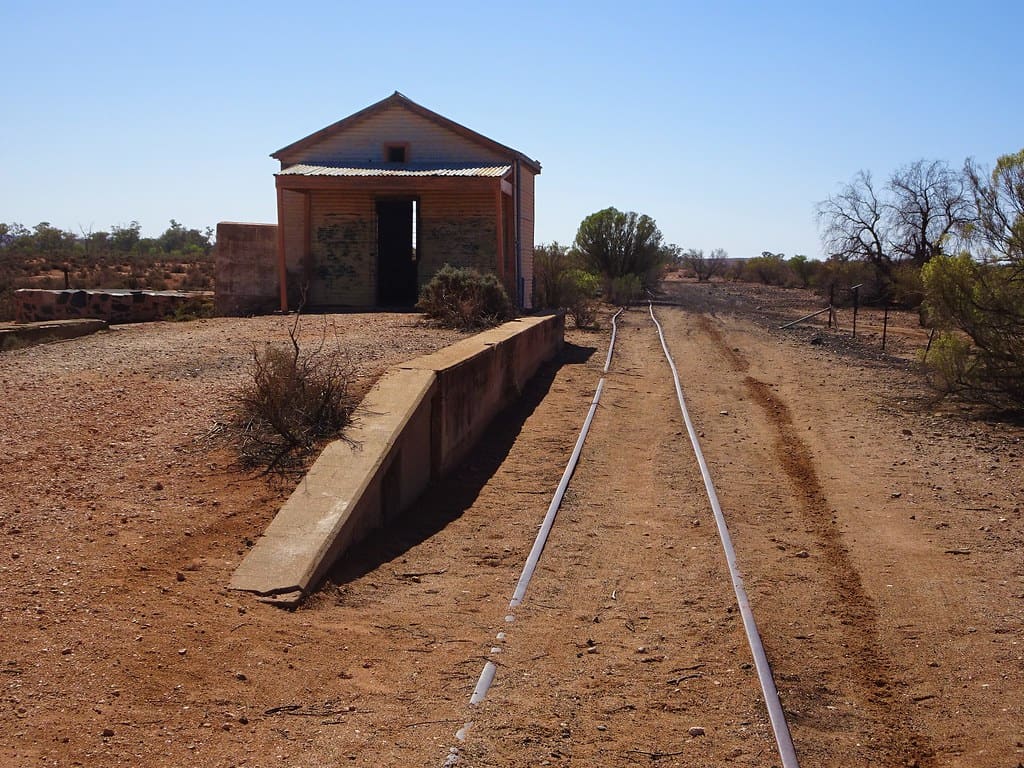
©"Silverton ghost town. Old railway to Broken Hill. Ran 1887 to 1969. This is the ticket office, well and railway station ." by denisbin is licensed under BY-ND 2.0. – Original / License
The Depression finished off what the mining bust had started, and now Silverton is certainly quiet enough that it barely registers as a ghost town in the dramatic sense. It is all there if you look for it, though. The ruins are right next to the road. Most visitors speed past them.
Chancellor
Chancellor is some 15 miles east of Harts Pass within Whatcom County in the North Cascades on Slate and Canyon Creeks. Its population was estimated to have reached 3,000 during the mid-1890s in the greater Harts Pass area. That’s hard to envision today, but the village had a hotel, a barber shop, a blacksmith, a sawmill, a general store, a saloon, and a power plant built in 1905 by the Chancellor Gold Mining Company.
The gold that made it all possible turned out to be more difficult to mine profitably than originally thought, and with the opening of the Klondike in 1898 and 1899, most miners departed for easier pickings. By 1907, the power plant had shut down, and Chancellor was no more. The ruins of the power plant and cabins, however, are still accessible today via the Chancellor Trail from Mazama.
The site is on the east side of the mountain range through the Methow Valley, so it’s usually not covered by Seattle travel guides. If you’re planning to visit, do so in the summertime since reaching Mazama is easy, but the trail stays muddy until mid-June.

