
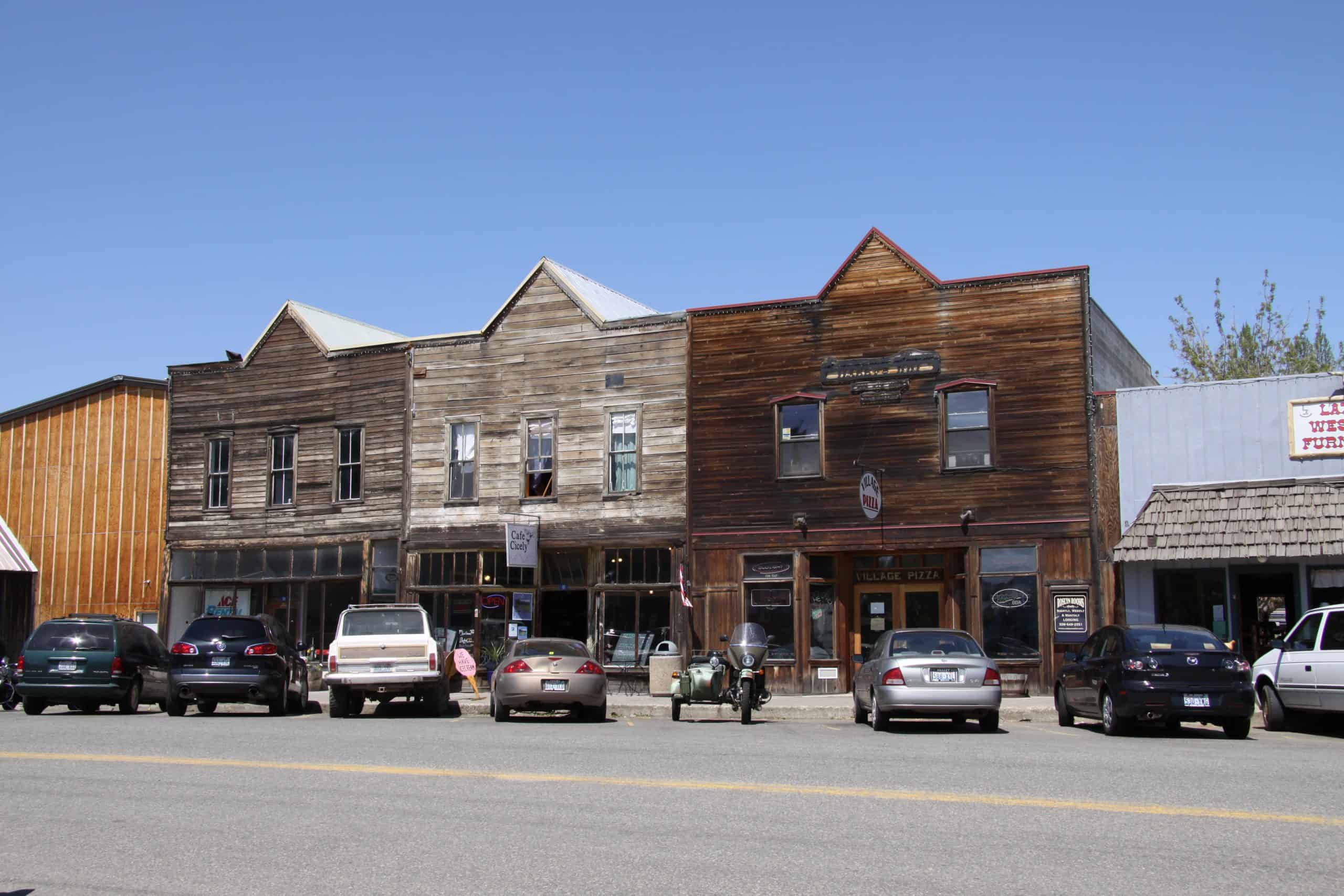
Some Washington towns seem to have moved through the last century at their own pace. A railroad went somewhere else, a mill shut down, a mining boom faded, or growth simply passed by. What remains are places where Victorian storefronts, old company houses, historic churches, former mining roads, and waterfront buildings are still part of everyday life.
These are not towns that recently dressed themselves up to look old. Their history is still visible because so much of it survived. In some cases, that happened through deliberate preservation. In others, there was simply never enough development pressure to replace what was already there. Either way, these 10 small Washington towns still feel like places where the past never completely left.
Port Townsend
©Dene' Miles/Shutterstock.com
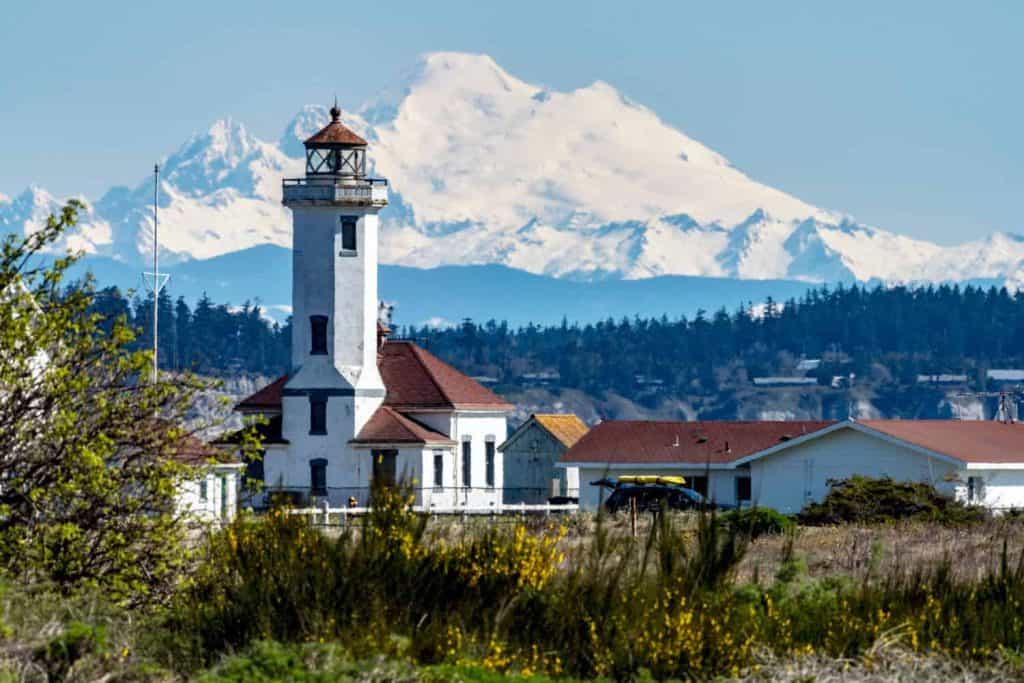
Investors poured into Port Townsend during the 1880s, putting up ornate commercial buildings along Water Street and grand Victorian homes on the bluff above town. The expectation was that the railroad would arrive and turn the port into a major Northwest city. Instead, the rail connection went elsewhere, the boom collapsed, and Port Townsend never became quite what its boosters imagined.
That unfinished boom is a big reason so much survived. Downtown’s Victorian buildings remain remarkably intact, and the historic district is now a National Historic Landmark. The brick storefronts from the late 19th century are not reconstructions. They are the real thing. Summer brings plenty of visitors, especially with the Coupeville ferry nearby, but outside the busiest months the town can feel surprisingly quiet. Come when the fog rolls in off the water and the whole place leans even harder into its old-port atmosphere.
Coupeville
©"Coupeville, WA - Front Street businesses 03" by Joe Mabel is licensed under BY-SA 3.0. - Original / License
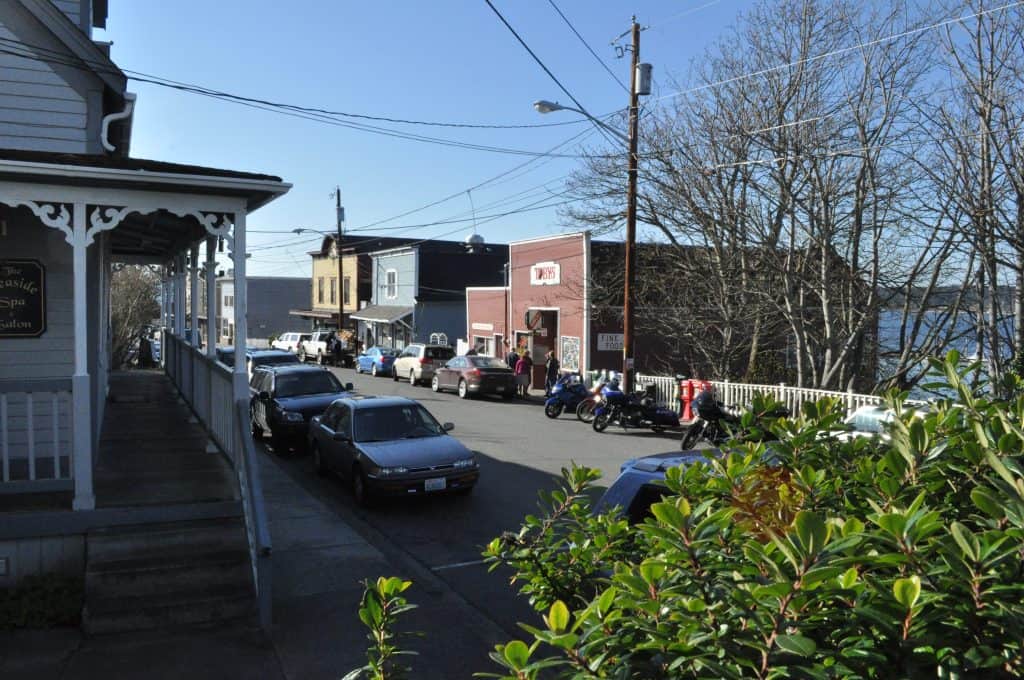
Coupeville was established in the 1850s as sea captains and farmers settled around sheltered Penn Cove on Whidbey Island. More than a century and a half later, the waterfront still carries that history. Front Street is lined with old commercial buildings, the wharf stretches into the cove, and working farmland begins almost as soon as town ends. Coupeville is often described as Washington’s second-oldest town, but what matters when you visit is how little the setting feels separated from its past. The surrounding area is protected as part of Ebey’s Landing National Historical Reserve, helping preserve the farms, shoreline, and historic landscape around town.
Spring and fall are especially good times to visit if you want the atmosphere without the heaviest crowds. Fans of Practical Magic still make the trip because parts of the 1998 Sandra Bullock film were shot on Whidbey Island, but Coupeville does not need Hollywood to sell the mood. Front Street manages that just fine on its own.
Roslyn

©"2009-05-23, Roslyn, Washington, 115006" by Steven Pavlov is licensed under BY-SA 4.0. - Original / License
Roslyn sits east of the Cascades near Cle Elum and has been a National Historic District since 1978. Founded in 1886 by the Northern Pacific Railroad, the community grew around coal mining and attracted workers from many parts of Europe. One of the clearest reminders of that history is the town cemetery, which contains 26 sections associated with different fraternal and ethnic organizations. It is one of those pieces of Washington history that feels almost too interesting to be sitting quietly on a hillside outside a small town.
Downtown has held onto much of its old brick character. The Brick, a saloon dating to 1889, still has its famous running-water spittoon, while the Coal Mines Trail traces the landscape shaped by the industry that built Roslyn. Plenty of visitors recognize the town from Northern Exposure, but the real story here is coal, immigration, labor, and the community that remained after the boom years ended. The Roslyn Historical Museum fills in the details.
Steilacoom
©"Steilacoom, WA - Steilacoom Tribal Cultural Center 01" by Joe Mabel is licensed under BY-SA 3.0. - Original / License
Plenty of travelers pass through Steilacoom on the way to the Anderson Island ferry without realizing how much history they are driving past. Incorporated in 1854, 35 years before Washington became a state, Steilacoom was the first incorporated town in Washington Territory. Buildings from the community’s early years still remain, including an 1855 church tied to some of the earliest non-Indigenous settlement in the region.
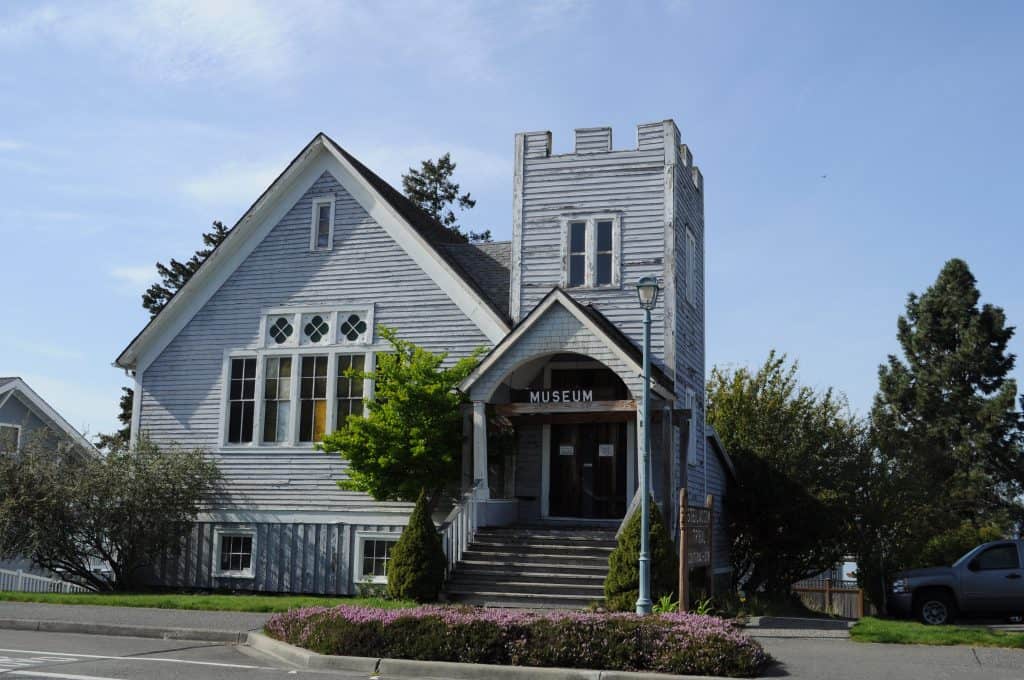
Steilacoom sits along the Pierce County shoreline roughly 40 miles south of Seattle, close enough for an easy day trip but quiet enough to feel much farther away. The Steilacoom Tribal Cultural Center, housed in a former church, adds a much deeper layer to the story by exploring the history of the Steilacoom Tribe, whose connection to the area predates the town itself by generations.
Port Gamble
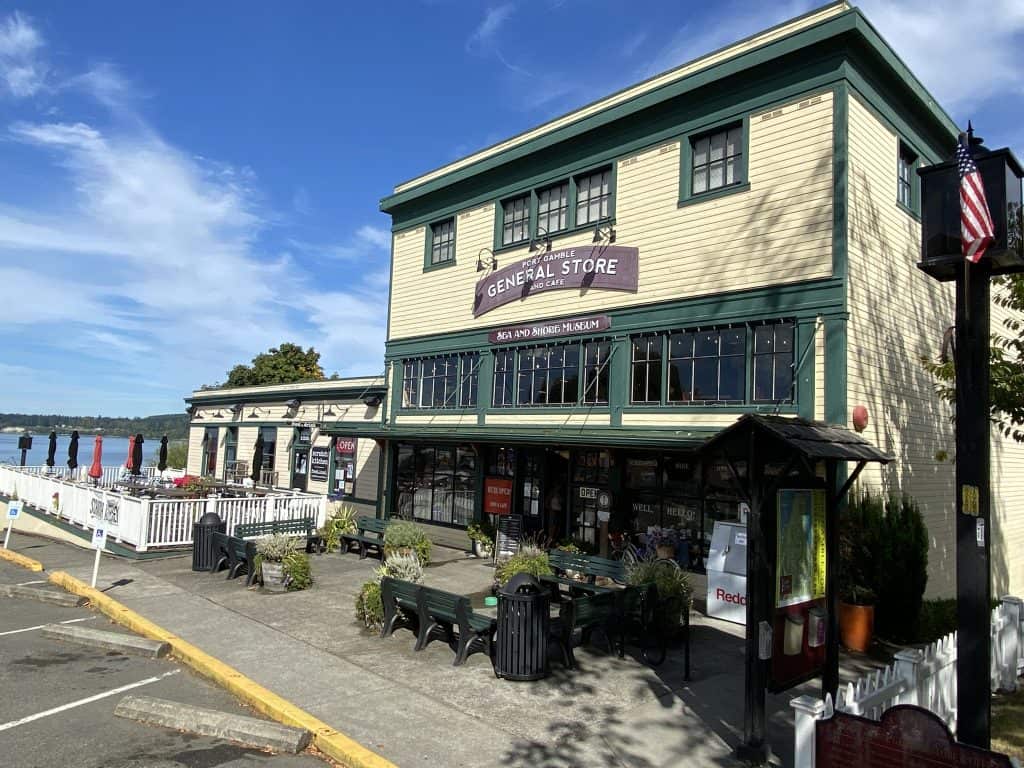
©"General store and seating in the Port Gamble Historic District" by Washington Our Home is licensed under BY-SA 4.0. - Original / License
The Puget Mill Company established Port Gamble in 1853 as a New England-style company town on the Kitsap Peninsula. Its sawmill operated for 142 years before closing in 1995, leaving behind an unusually intact collection of company houses and community buildings. White clapboard homes, broad lawns, a church, and the old general-store building give Port Gamble the strange feeling of a town where somebody forgot to replace the 19th century. The historic district is a National Historic Landmark.
Port Gamble is also easy enough to reach from Seattle by traveling through the Kingston ferry route, making it a practical day trip rather than an expedition. The Port Gamble Historic Museum covers the town’s mill and company history in more detail, and the stop fits naturally into a longer drive toward Poulsbo, Hood Canal, or the Olympic Peninsula.
Oysterville
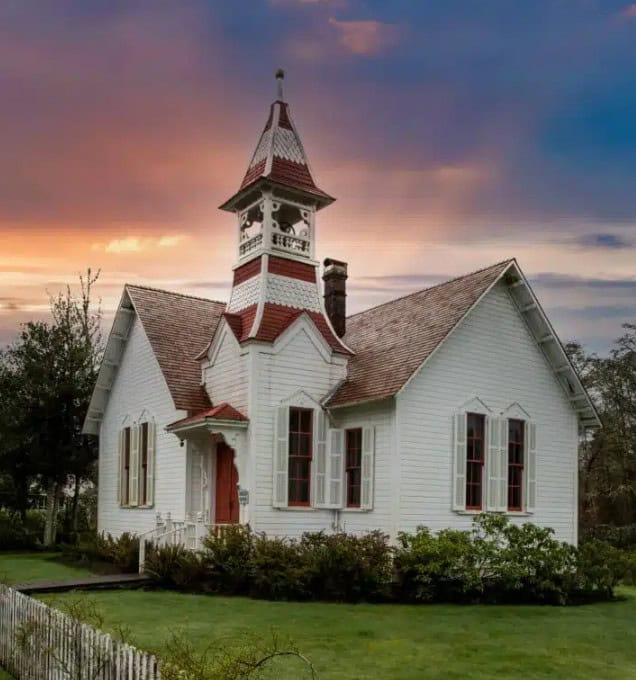
Oysterville sits near the northern end of the Long Beach Peninsula along Willapa Bay, and simply reaching it helps create the feeling that you have gone somewhere else. The road continues north through cranberry country and oyster operations before arriving at a tiny collection of 19th-century buildings near the bay. There is little through traffic and not much reason to accidentally end up here. You come because Oysterville is the destination.
Robert Hamilton Espy and Isaac Clark founded the community in 1854, and Oysterville later served for a time as the Pacific County seat. The oyster boom faded and the center of activity shifted elsewhere, but many historic structures survived, including the 1892 church and old schoolhouse. The Oysterville Historic District is listed on the National Register of Historic Places. If you are already exploring the Long Beach Peninsula, this is one detour that earns the extra miles.
Dayton
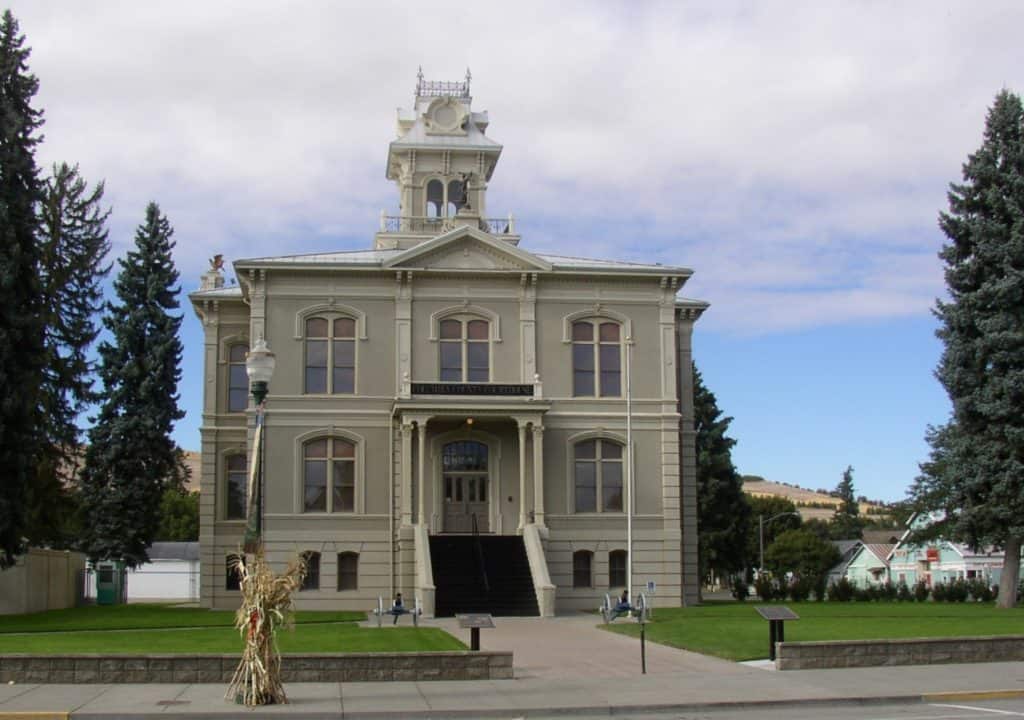
©"Historic Courthouse Dayton Washington" by Williamborg is licensed under BY-SA 3.0. - Original / License
Dayton sits in southeastern Washington, roughly 30 miles northeast of Walla Walla, and has managed to hold onto an impressive amount of its late-19th-century architecture. The 1881 Dayton Depot is the oldest surviving railroad depot in Washington State.
The Columbia County Courthouse, completed in 1887, remains another centerpiece of downtown. Historic homes and commercial buildings spread through several districts, many dating to Dayton’s prosperous years in the 1880s and 1890s. Italianate and Queen Anne architecture still shows up throughout town rather than being confined to a single restored block.
Agriculture kept Dayton alive without bringing the kind of explosive growth that might have erased its older buildings. The result is a place that still looks surprisingly connected to the era that built it. Walla Walla gets considerably more tourism attention, but Dayton is close enough for an easy side trip, and the restored Weinhard Hotel gives visitors an appropriately historic place to stay if a few hours does not feel like enough.
Liberty
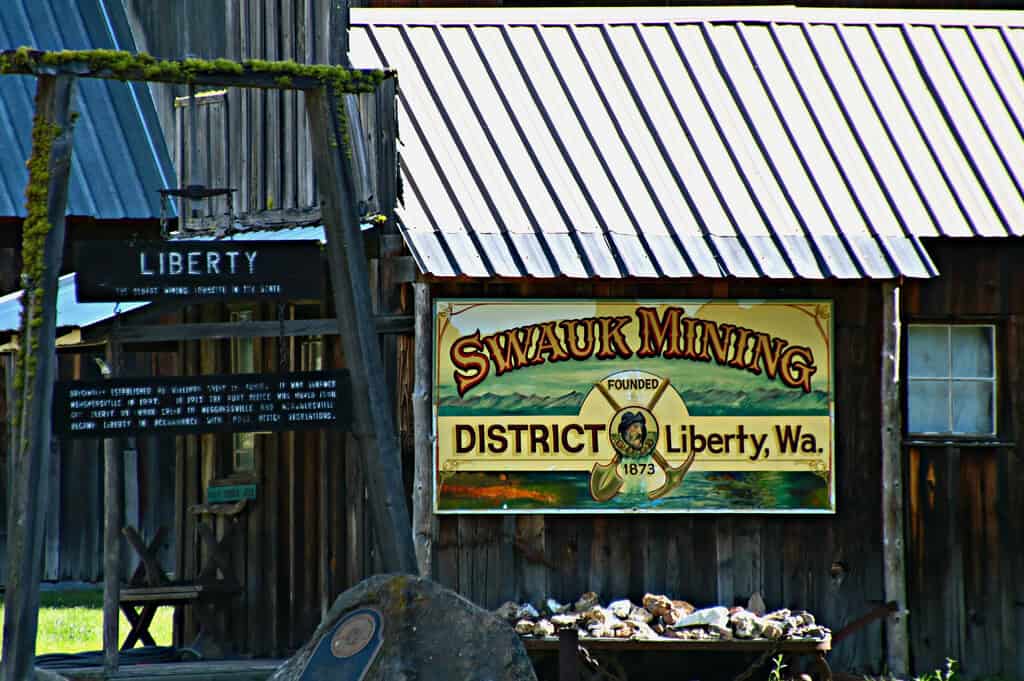
©"Liberty WA Mining.jpg" by revjett is licensed under BY 2.0. - Original / License
Liberty is an old mining community east of Cle Elum in the Swauk Mining District, and it still feels more like a surviving piece of Washington’s gold-rush history than a conventional town. Gold was discovered along Swauk Creek in the 1870s, bringing miners into the area before the boom eventually faded. A small community remained, and historic cabins, mining equipment, and other remnants of those years are still scattered through the area.
What makes Liberty different is how little effort has been made to turn it into a polished attraction. There are few services, the surrounding roads can be rough, and the old mining landscape has not been wrapped in a visitor-center experience. You are largely seeing the place as it is. For anyone interested in Washington’s mining history, that lack of polish is exactly why Liberty is worth finding.
Stehekin
©"Stehekin, WA" by JBColorado is licensed under BY-ND 2.0. - Original / License
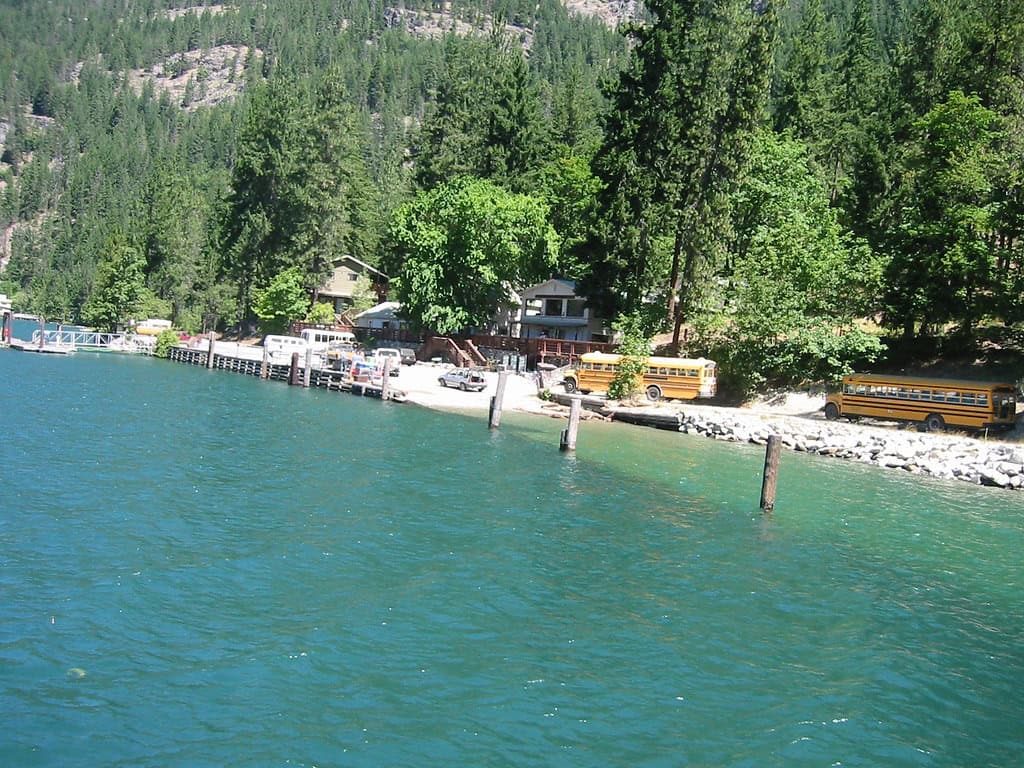
There is still no road into Stehekin. Visitors arrive by ferry across Lake Chelan, floatplane, or on foot through the surrounding mountains. The community has only a small year-round population, no traffic lights, no chain businesses, and limited cell service. Historic cabins and the old one-room school remain part of the valley, surrounded by the Stehekin River, Lake Chelan, and the North Cascades.
The isolation does most of the work here. Modern development never had much opportunity to reshape Stehekin because getting there has never been simple. A day trip is possible, but staying overnight gives you time to actually settle into the pace of the valley rather than watching the ferry schedule all afternoon. Stehekin Valley Ranch is one option for lodging and meals once you are there.
Metaline Falls
©"Metaline falls" by Ruthven78 (talk) is licensed under BY-SA 3.0. - Original / License
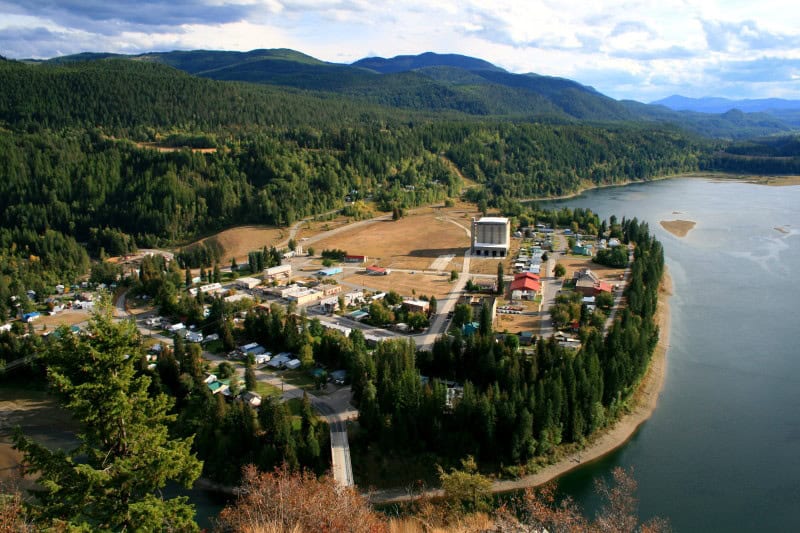
Metaline Falls sits deep in northeastern Washington in Pend Oreille County, close to the Canadian border and far from the state’s major population centers. Mining and logging drove much of its early-20th-century growth, but the town never experienced the redevelopment that transformed many larger communities. A surprising amount of that old townscape is still visible.
The setting only adds to the feeling. The Selkirk Mountains rise nearby, the Pend Oreille River runs through the region, and the nearest major city feels a long way away. Crawford State Park and Gardner Cave sit north of town, while the International Selkirk Loop passes through some of the most remote country in this part of Washington. Getting here requires a little intention, which is probably one reason Metaline Falls still feels so removed from the rest of the state.
The Washington Hotel dates to 1910 and is listed on the National Register of Historic Places. Nearby, the Cutter Theatre occupies a 1912 building designed by Kirtland Cutter, the architect also associated with Spokane’s Davenport Hotel. The former school now operates as a community arts center and includes a rural schools museum. Together, the buildings are remnants of an early mining town that never had much reason to tear down its past and start over.

