
Some travel destinations are famous for beaches, architecture, food or scenery. Others come with stories about buried Roman coins, sunken Spanish treasure, Viking silver, lost wartime gold and fortunes that may still be hidden somewhere nearby. In a few cases, the treasure has already been found and can now be seen in museums. In others, the mystery is part of what keeps travelers and treasure hunters coming back.
These stories stretch from the fields of England and Scotland to the waters off Florida, the jungles of the Philippines and remote islands in the Pacific. Some of the locations are easy to visit, while others are protected archaeological sites or places where digging without permission could land you in considerably more trouble than the treasure is worth.
For Seattle Travel, we’re looking at 15 remarkable treasure stories connected to real destinations around the world. Some involve confirmed archaeological discoveries worth millions. Others are famous legends that have never been proven. Either way, they add another layer of history and mystery to places travelers can still explore today.
The Hoxne Hoard, England (1992)
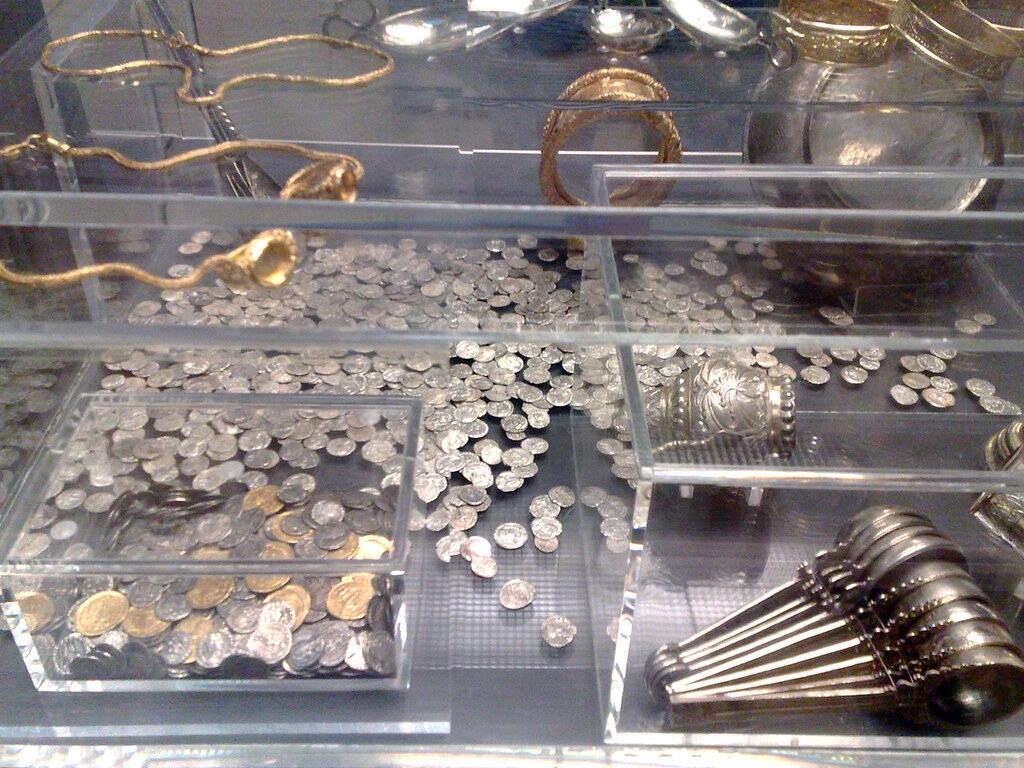
©"British Museum Hoxne Hoard box layout as found" by Ahala is licensed under BY 2.0. - Original / License
The Hoxne Hoard proves that searching for one lost object can occasionally lead to something considerably better. In 1992, metal detectorist Eric Lawes was helping his friend Peter Whatling look for a hammer that had gone missing in a field near Hoxne, Suffolk. Instead, Lawes began finding Roman coins. Archaeologists were called in, and the search eventually revealed roughly 15,000 Roman coins along with gold jewelry, silver tableware and other precious objects.
The treasure had been buried during the final years of Roman rule in Britain, probably in the early fifth century. Why its owner never returned for it remains unknown. The British Museum now calls Hoxne the richest treasure find from Roman Britain, and many of its most impressive pieces can be seen in the museum’s Roman Britain galleries. The lost hammer was eventually found too, although by that point it had become a pretty minor part of the story.
The Saddle Ridge Hoard, California (2013)
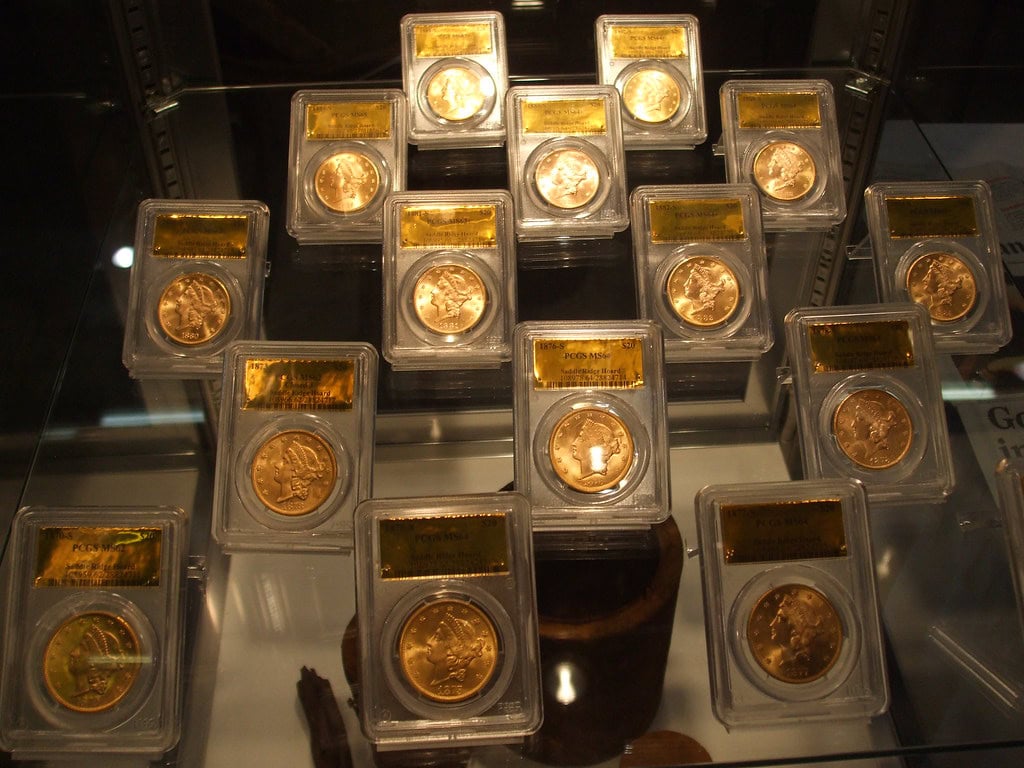
©"Saddle Ridge Hoard" by Michel Curi is licensed under BY 2.0. - Original / License
A routine dog walk turned into one of the greatest buried-coin discoveries in American history in 2013. An anonymous couple walking across their property in California’s Gold Country noticed the top of a rusted metal can sticking out of the ground. Further digging uncovered eight cans containing 1,427 U.S. gold coins dating from 1847 through 1894.
Many were $20 double eagles from the San Francisco Mint, and several were exceptionally rare or unusually well preserved. Coin experts estimated the collection’s value at around $10 million, making it the most valuable known land-buried gold coin hoard discovered in the United States. Who buried the cans remains a mystery. Theories have circulated for years, but no convincing connection to a robbery, bank or previous owner has ever been established.
The Staffordshire Hoard, England (2009)
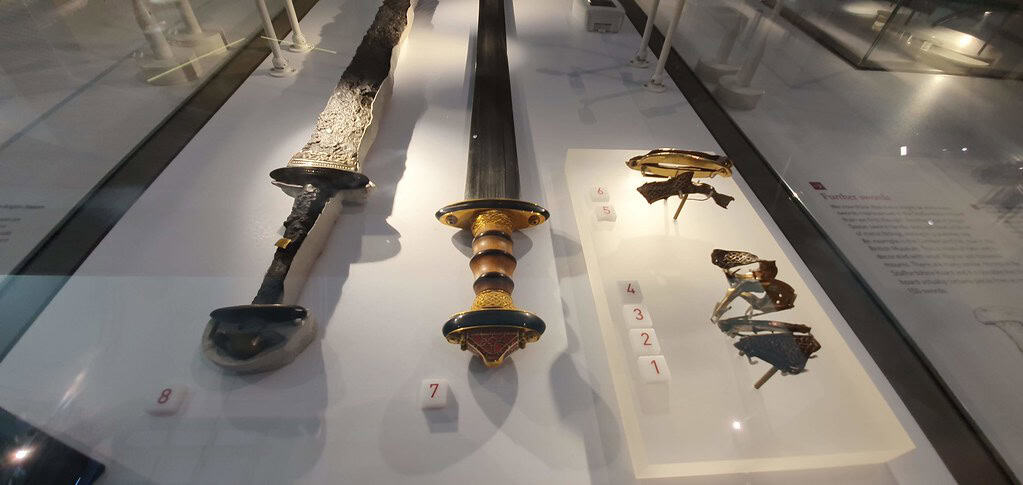
©"Staffordshire Hoard" by foundin_a_attic is licensed under BY 2.0. - Original / License
Metal detectorist Terry Herbert was searching farmland near Hammerwich in Staffordshire in July 2009 when he began pulling pieces of Anglo-Saxon gold from the soil. Archaeologists soon took over, revealing the largest collection of Anglo-Saxon gold and silver metalwork ever discovered.
The Staffordshire Hoard contains roughly 4,000 objects and fragments, many associated with weapons and high-status military equipment from the seventh century. Researchers have identified sword fittings, crosses and pieces belonging to an elaborate helmet. The hoard was valued at £3.285 million in 2009 and acquired jointly for Birmingham Museum and Art Gallery and the Potteries Museum & Art Gallery in Stoke-on-Trent. More than a decade of conservation and research has continued to reveal how sophisticated Anglo-Saxon metalworking could be.
The Cuerdale Hoard, England (1840)
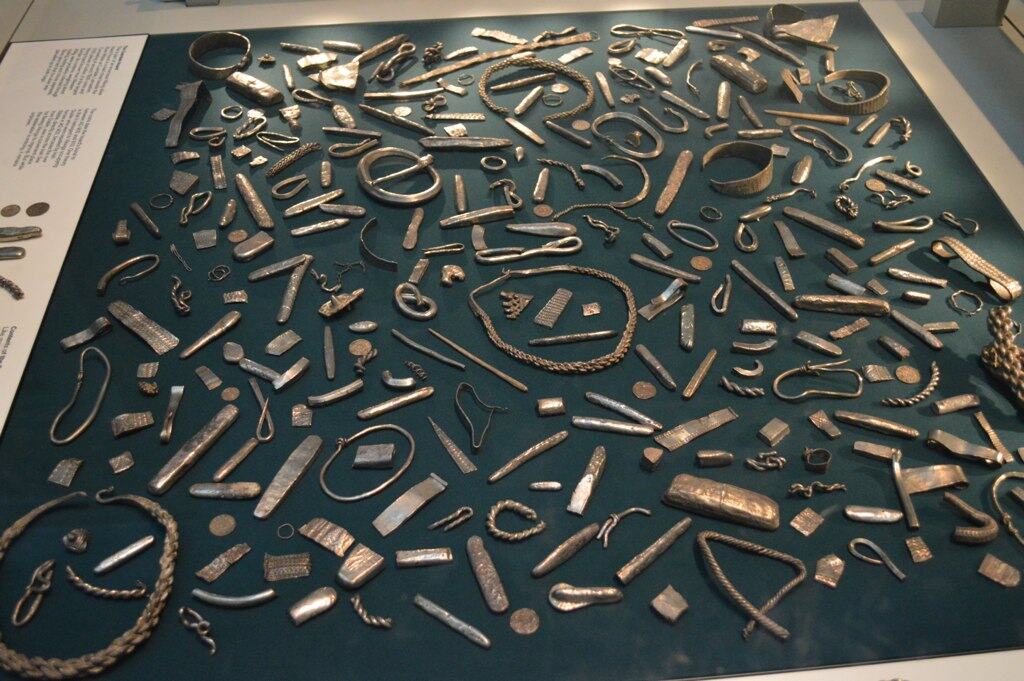
©"The Cuerdale Hoard" by Matt From London is licensed under BY 2.0. - Original / License
The Cuerdale Hoard is not a modern discovery, but it remains one of Europe’s great real-life treasure stories. Workers repairing the bank of the River Ribble near Cuerdale, Lancashire, uncovered the enormous silver hoard in 1840. It contained more than 8,000 objects, including coins, silver ingots and pieces of cut silver known as hacksilver.
The treasure appears to have been buried around 905 to 910, during the Viking Age. Some of its coins came from Viking-controlled England, while others originated in continental Europe and the Islamic world, showing just how far trade networks stretched. One theory links the hoard to Vikings expelled from Dublin in 902, but the British Museum stresses that the explanation remains unproven. Large portions of the Cuerdale Hoard can still be seen at the British Museum today.
The Caesarea Gold Coins, Israel (2015)
©"Fishpool gold coins" by Lawrence OP is licensed under BY 2.0. - Original / License
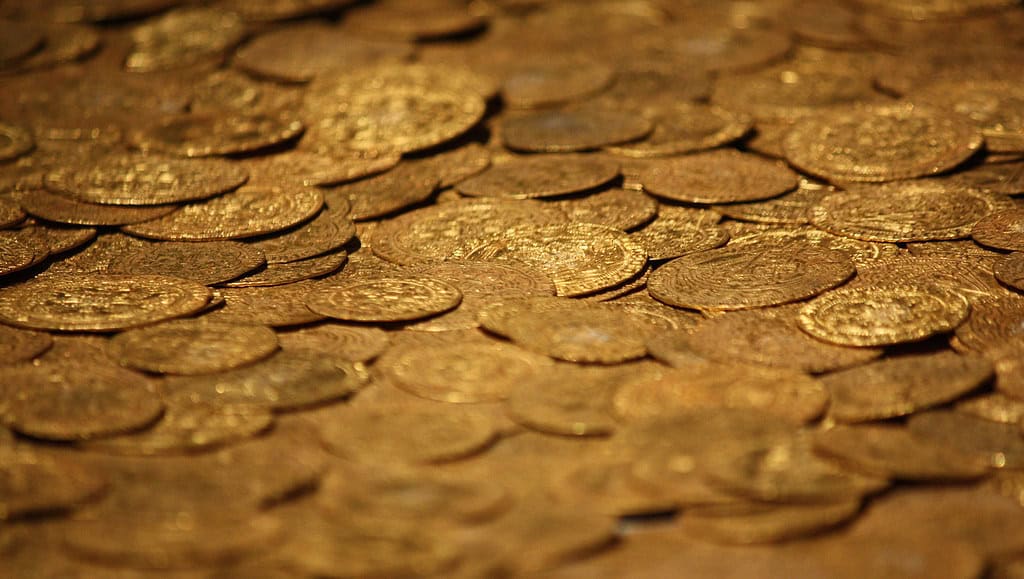
A group of scuba divers exploring near the ancient harbor of Caesarea in 2015 noticed what they initially thought were toy coins on the seafloor. They turned out to be very real. The divers contacted authorities, and a follow-up search by the Israel Antiquities Authority recovered more than 2,000 gold coins weighing roughly six kilograms.
The coins had spent about 1,000 years underwater and circulated during the Fatimid period. Archaeologists believe they may have come from a ship carrying tax revenue, military pay or commercial funds, although the vessel and exact circumstances of the sinking have never been established. Remarkably, the gold coins survived in such good condition that they required little conservation after their recovery.
The Środa Treasure, Poland (1985 to 1988)
©"Sroda Treasure 2022 P01 female crown" by Fallaner is licensed under BY-SA 4.0. - Original / License
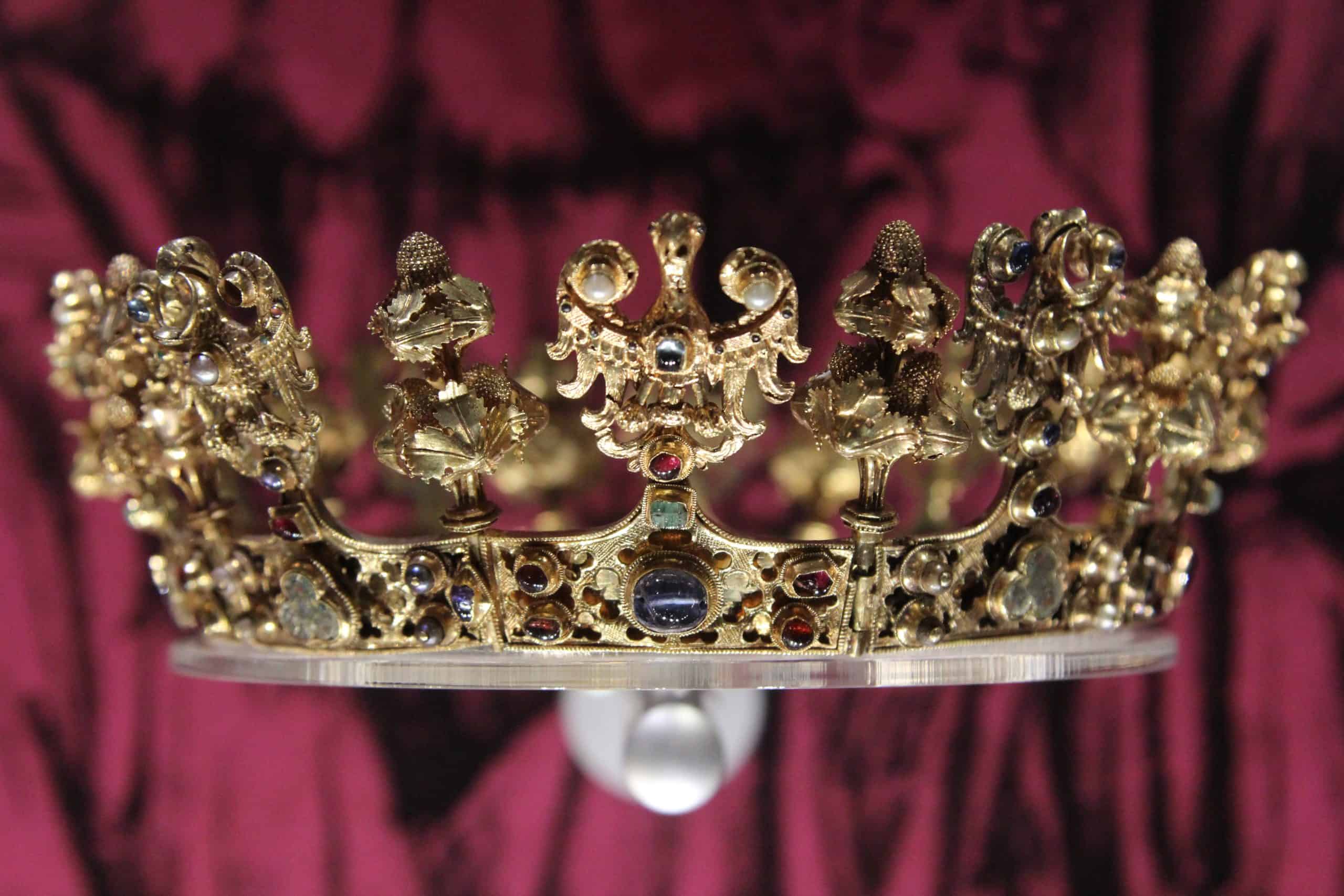
The Środa Treasure emerged in stages rather than in one dramatic discovery. Construction work in Środa Śląska uncovered a cache of medieval silver coins in 1985. Three years later, another project nearby exposed gold and silver coins, jewelry and pieces of royal regalia. Some rubble had already been taken to a municipal dump, triggering an impromptu treasure hunt and scattering parts of the collection into private hands.
Authorities spent years recovering missing pieces. In 2005, investigators recovered additional parts of the famous gold crown along with other objects that had disappeared after the original finds. The treasure has been connected to the royal court of Charles IV and includes thousands of medieval coins, gold jewelry and a rare woman’s crown. Much of the collection is associated with the National Museum in Wrocław and the Regional Museum in Środa Śląska.
The Black Swan Treasure, Atlantic Ocean (2007)
©"El Galeón replica of the 17th century Spanish Galleon ship Yorktown Virginia" by watts_photos is licensed under BY 2.0. - Original / License
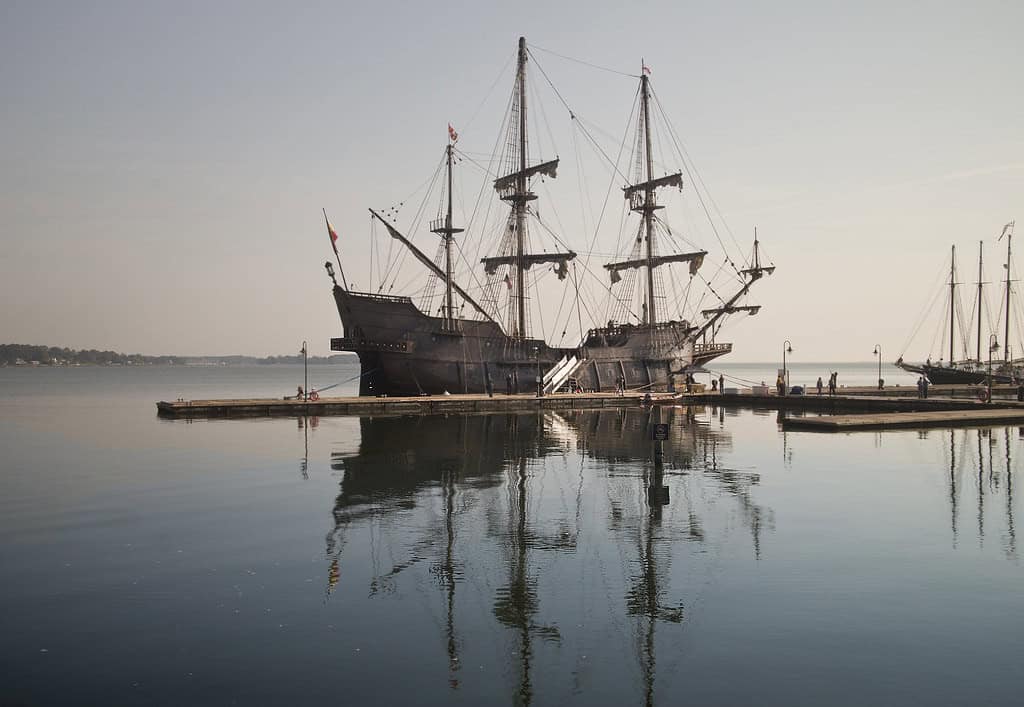
When Florida-based Odyssey Marine Exploration announced its secretive “Black Swan” recovery in 2007, the company said it had brought roughly 500,000 gold and silver coins to the United States. The haul was widely estimated to be worth hundreds of millions of dollars, instantly making it one of the most famous modern shipwreck recoveries.
The mystery did not last. Evidence tied the coins to the Nuestra Señora de las Mercedes, a Spanish naval frigate that exploded and sank during a battle with British ships in 1804. Spain argued that the wreck and its cargo were protected sovereign property. After years of litigation in U.S. courts, Spain prevailed, and the recovered coins were returned in 2012. The story became almost as important for maritime law as it was for treasure hunting.
The Galloway Hoard, Scotland (2014)
©"WSJ2007 Elements (Earth) - Metal detector" by Superchilum is licensed under BY-SA 3.0. - Original / License
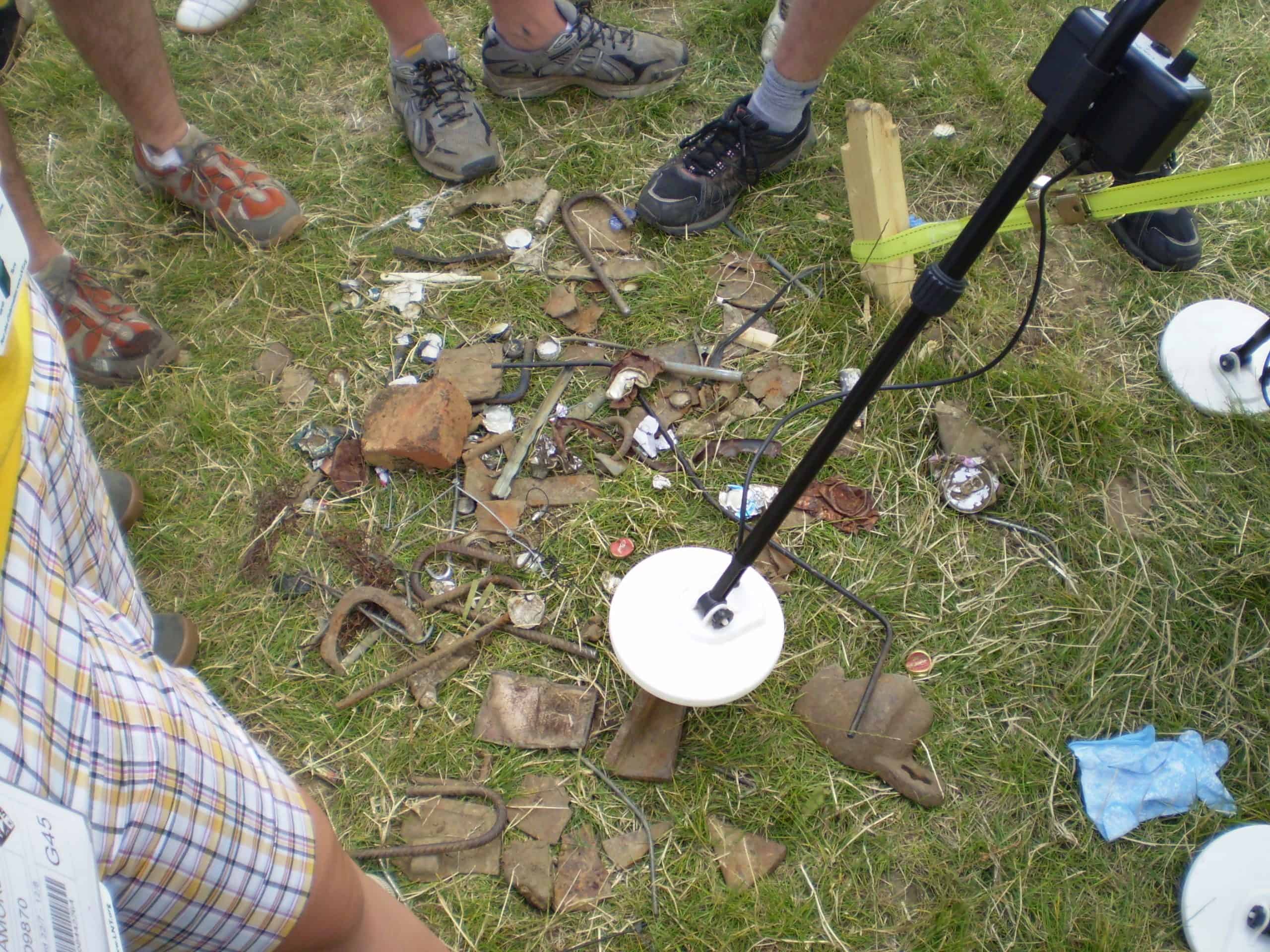
In 2014, a metal detectorist searching land in southwest Scotland discovered what National Museums Scotland now describes as the richest collection of rare and unique Viking-age objects ever found in Britain or Ireland. The Galloway Hoard had been buried around the year 900 and contains more than 100 objects.
Along with silver arm rings and ingots, archaeologists found gold, jewelry, textiles, leather and objects with connections stretching far beyond Scotland. Some materials appear to have originated as far away as Asia. National Museums Scotland raised £1.98 million to acquire the collection in 2017, and continuing conservation work has revealed details that remained hidden beneath corrosion and wrapping for more than a thousand years.
The Lost Flor de la Mar, Off Sumatra (1511)
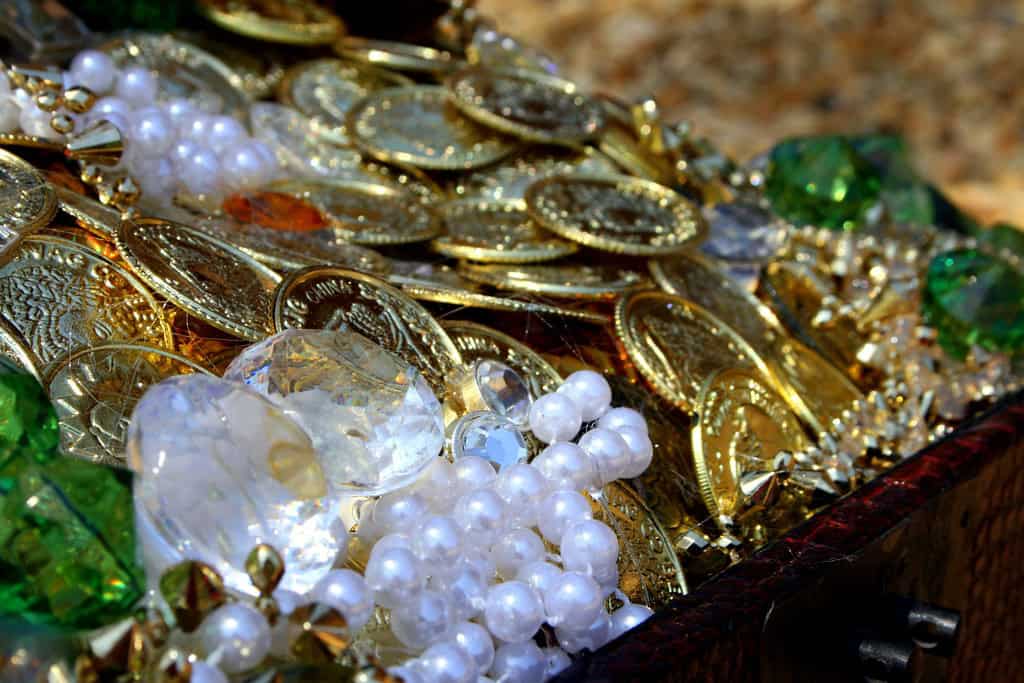
©"treasure chest" by leigh49137 is licensed under BY-ND 2.0. - Original / License
The Portuguese carrack Flor de la Mar participated in some of Portugal’s most important early campaigns in the Indian Ocean. In 1511, after the Portuguese capture of Malacca, the ship departed carrying valuable cargo associated with the conquest and Portuguese commander Afonso de Albuquerque.
It never made it home. The ship was caught in bad weather and wrecked off the coast of Sumatra near the Strait of Malacca. Albuquerque survived, but much of the cargo was lost. Modern stories routinely assign billion-dollar values to the missing treasure, but there is no reliable inventory that allows that kind of precision. The wreck itself has never been conclusively identified, leaving the Flor de la Mar one of the world’s most famous genuinely lost treasure ships.
Yamashita’s Gold, Philippines (Unverified Legend)
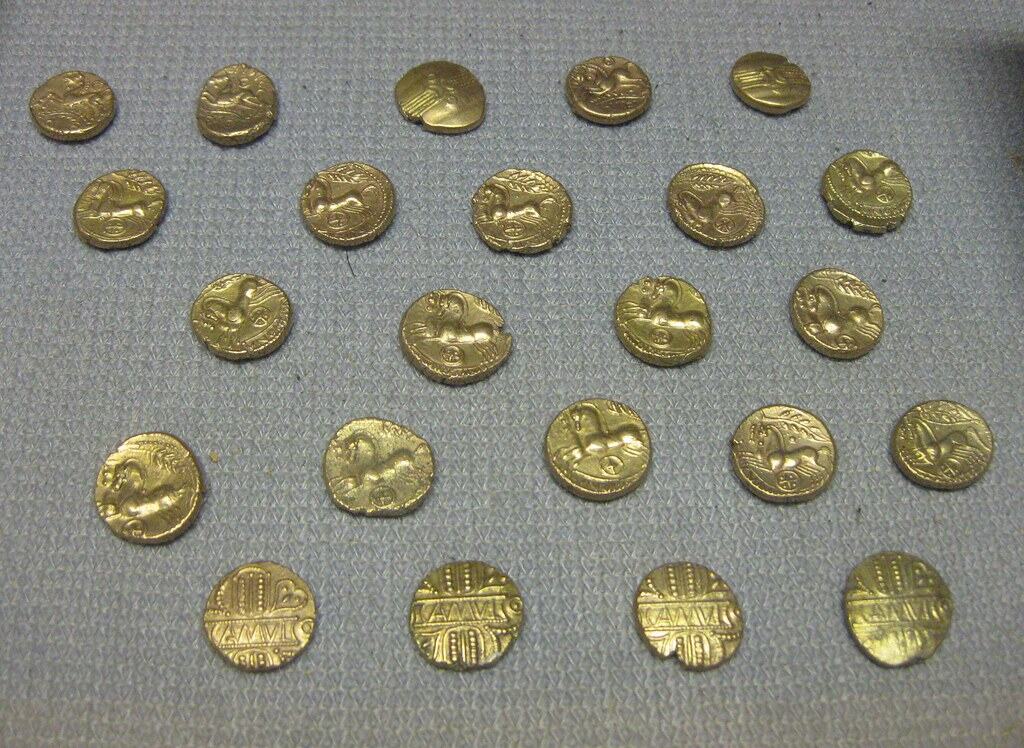
©"Gold coins in a muesum in essex" by metal213 is licensed under BY 2.0. - Original / License
Few treasure stories have inspired more digging than Yamashita’s Gold. According to the legend, Japanese forces looted enormous quantities of gold and valuables across Southeast Asia during World War II and concealed them in caves, tunnels and underground chambers in the Philippines as Japan’s defeat approached.
The story has been repeated for decades and even became entangled with allegations involving former Philippine President Ferdinand Marcos. What it lacks is convincing historical evidence for the enormous treasure network described in popular versions of the tale. Scholars have characterized Yamashita’s Gold as a persistent myth rather than an established wartime cache. Smaller hidden valuables from the war are certainly possible, but claims of billions in secret Japanese gold remain unverified.
The Treasure of Lima, Cocos Island (Legend)

©"Coco Island" by Stephane Enten is licensed under BY-ND 2.0. - Original / License
Cocos Island sits hundreds of miles off Costa Rica’s Pacific coast and has attracted treasure hunters for generations. Its most famous story is the Treasure of Lima, a supposed fortune in gold, silver, jewels and church valuables that was allegedly removed from Lima around 1820 as independence forces threatened Spanish control.
In the popular version, the valuables were entrusted to British captain William Thompson, whose crew stole the cargo and buried it on Cocos Island. Countless searches followed, but nothing remotely resembling the legendary treasure has been found, and the historical documentation behind parts of the story is shaky. Today Cocos Island is a heavily protected Costa Rican national park and UNESCO World Heritage Site, better known among travelers for world-class diving and enormous schools of sharks than for people digging holes in search of Spanish gold.
The Victorio Peak Treasure, New Mexico (Unverified)
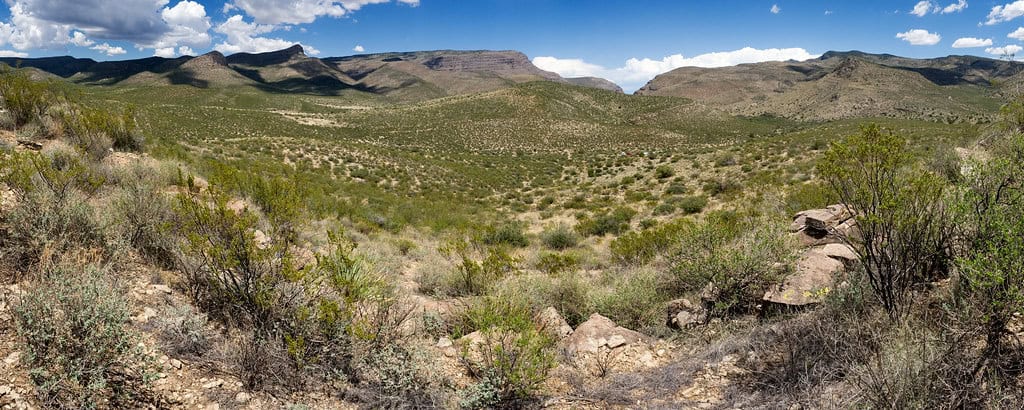
©"Hembrillo Canyon" by aspidoscelis is licensed under CC0 1.0. - Original / License
The legend of Victorio Peak began with prospector Milton “Doc” Noss, who said he discovered a cavern filled with gold bars, coins and other valuables in southern New Mexico in 1937. According to the story, attempts to widen the entrance accidentally sealed the chamber before most of the supposed treasure could be removed.
The peak later became part of White Sands Missile Range, adding government secrecy to a story that already had everything a treasure legend needs. Searches have taken place over the years, but no enormous gold cache has ever been officially documented at Victorio Peak. Claims placing its value at hundreds of millions or billions of dollars are therefore speculation built on an unverified original story.
The Nazi Gold Train, Poland (Still Unverified)
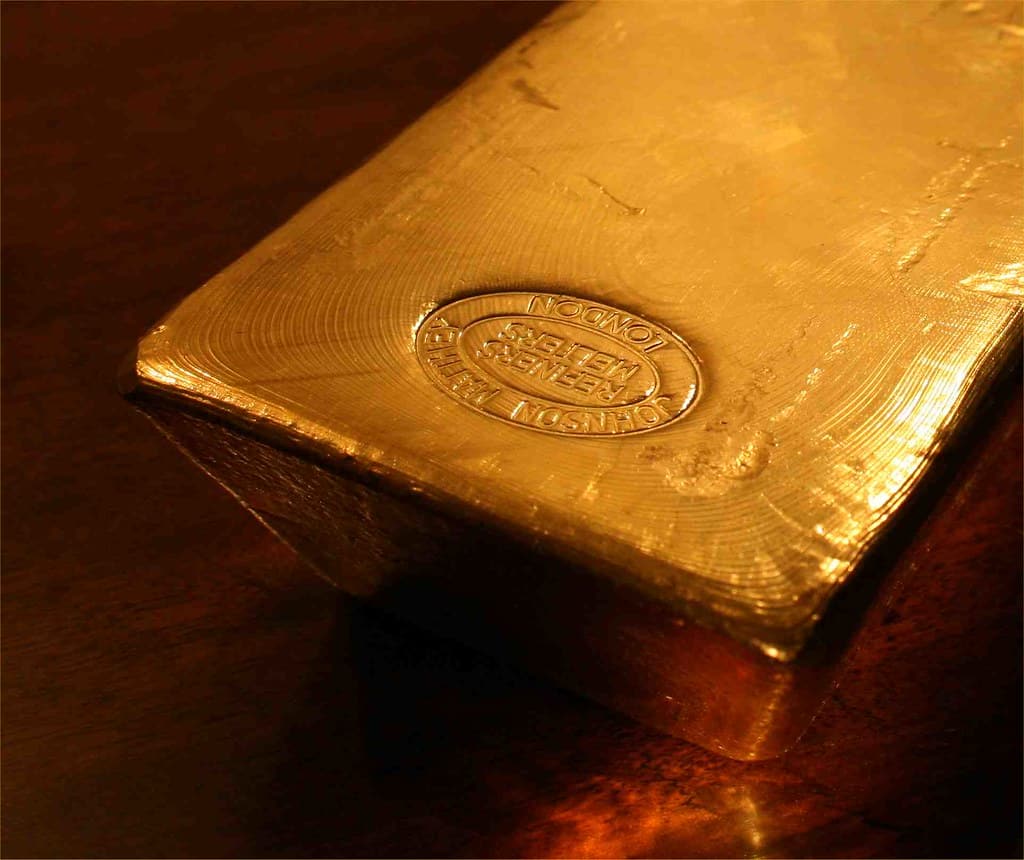
©"Fat gold bar end" by BullionVault is licensed under BY-ND 2.0. - Original / License
For decades, stories around the Polish city of Wałbrzych have claimed that retreating German forces hid a train loaded with gold, valuables or stolen art in tunnels as World War II came to an end. The legend exploded internationally in 2015 when two treasure hunters said ground-penetrating radar had revealed a train-shaped object underground.
Experts from AGH University of Science and Technology later surveyed the area and found no evidence of a train. The treasure hunters received permission to excavate anyway, but a 2016 dig failed to uncover a tunnel, railway tracks or train. New claims periodically revive the story, but no Nazi treasure train has ever been verified. The region’s real wartime tunnel complexes are fascinating enough without adding several hundred tons of imaginary gold.
The 1715 Treasure Fleet, Florida (Ongoing Discoveries)
©"sanc1356" by NOAA Photo Library is licensed under BY 2.0. - Original / License
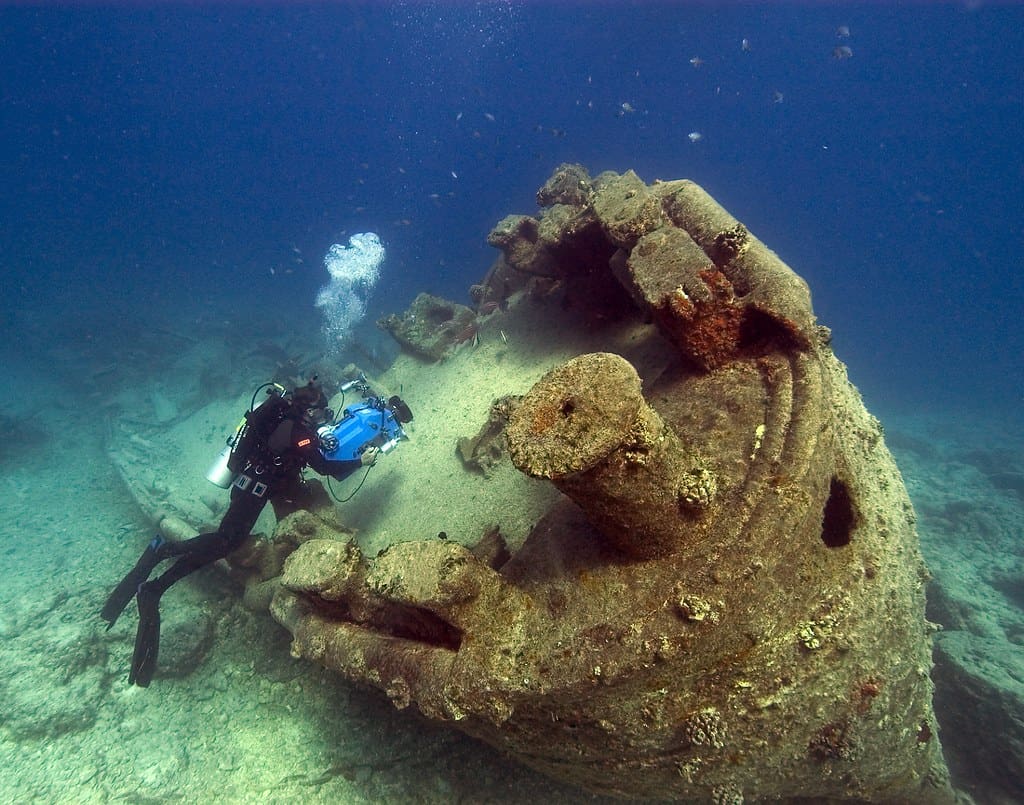
Florida’s Treasure Coast did not get its name from a marketing committee. In July 1715, a hurricane struck a Spanish fleet carrying gold, silver and other cargo north along Florida’s Atlantic coast. Eleven ships were lost, scattering valuables across the seabed. Salvage began soon afterward, but pieces of the fleet’s cargo are still being recovered more than 300 years later.
During the summer of 2025, a permitted salvage crew working the wreck sites recovered more than 1,000 silver reales, five gold escudos and additional gold artifacts. The recovery was estimated at about $1 million. Florida tightly regulates work on the wrecks, and unauthorized removal of archaeological material from state waters can bring serious legal trouble. For travelers, the safer treasure hunt is on the beaches after rough surf, where small coins and artifacts from old wrecks have occasionally washed ashore.
Forrest Fenn’s Treasure, Wyoming (Found in 2020)
©"Metal detector" by (Imagine) 2.0 is licensed under BY 2.0. - Original / License
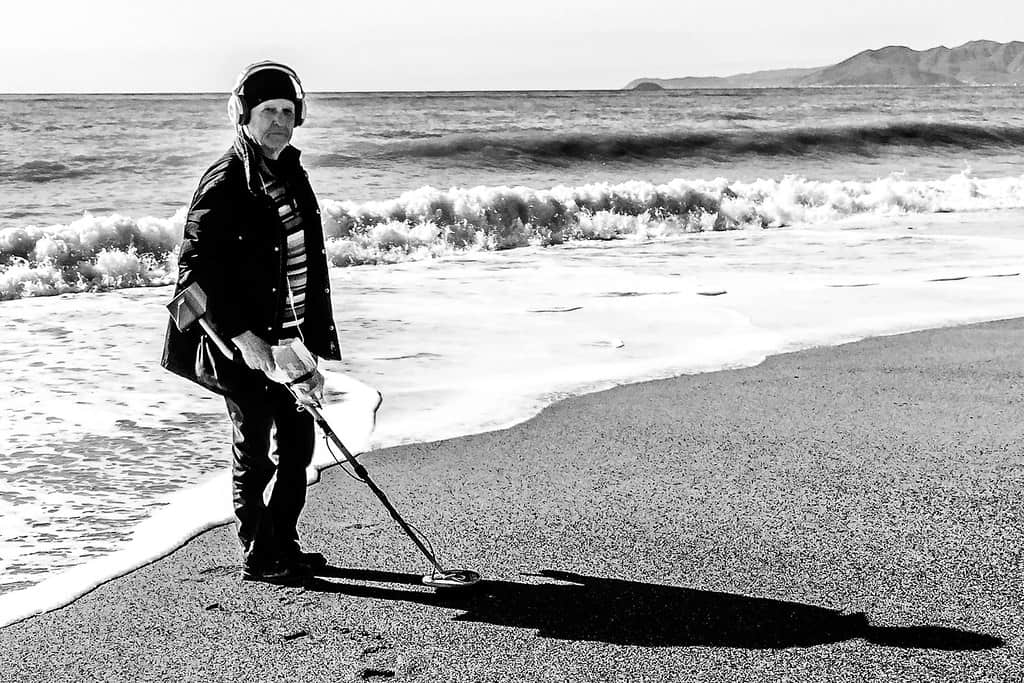
Not every great treasure needs to be hundreds of years old. Santa Fe art and antiquities dealer Forrest Fenn intentionally hid a bronze chest filled with gold coins, nuggets, jewelry and other valuables somewhere in the Rocky Mountains. In his 2010 memoir The Thrill of the Chase, Fenn published a poem containing clues to its location.
The hunt became a national obsession. Thousands of people searched across New Mexico, Colorado, Wyoming and Montana before Jack Stuef finally found the chest in Wyoming in June 2020. Its contents were generally estimated at more than $1 million, although the exact hiding spot has never been publicly revealed. Unlike most stories involving secret chambers and lost gold trains, this treasure turned out to be exactly where its creator said it was.

