

The Pacific Northwest is famous for towering mountains, dense forests, rugged coastlines, and wildlife that sometimes gets considerably bigger than visitors expect. Most wild animals in Washington, Oregon, and Idaho want nothing to do with people, and serious attacks are rare. Still, the region is home to several animals capable of badly injuring or even killing a person under the wrong circumstances.
There is no reliable database that neatly ranks Pacific Northwest animals by the number of people they kill, so this is not a literal annual body-count countdown. Instead, Seattle Travel looked at animals with a documented ability to cause fatal injuries through attacks, venom, allergic reactions, or collisions, along with how likely travelers are to actually encounter them.
Some of the names are obvious. Others might surprise you. Here are 10 of the deadliest animals found in the Pacific Northwest and where you are most likely to cross paths with them.
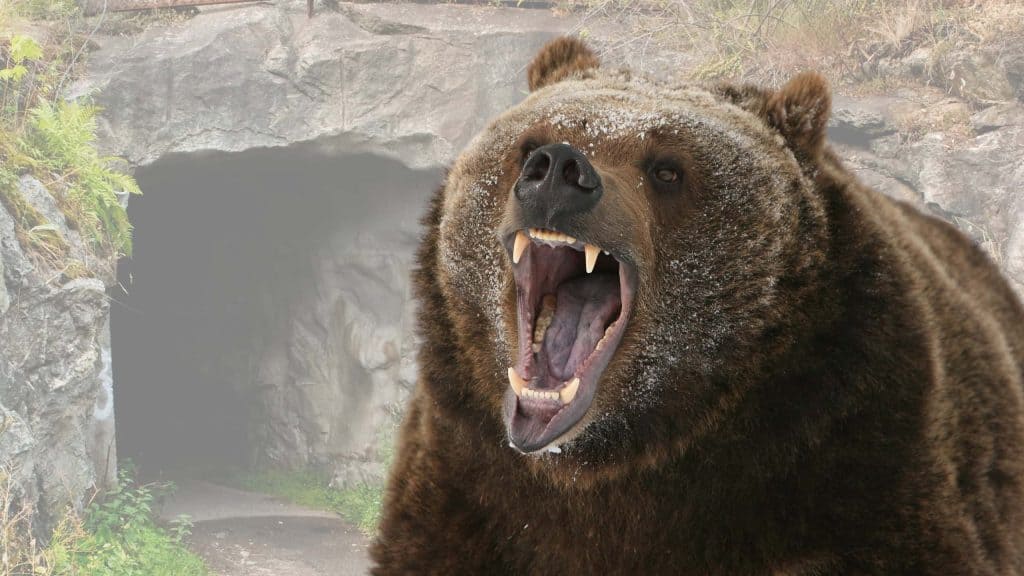
1. Grizzly Bear
©through-my-lens from Getty Images and SimpleFoto/ via Canva.com
Where You’ll Find Them: Northern and eastern Idaho and very rarely northeastern Washington.
If you are looking for the most intimidating land animal on this list, the grizzly has a pretty convincing case. These enormous bears can inflict devastating injuries with their claws and jaws, particularly when surprised at close range, defending cubs, or protecting a food source.
That does not mean grizzlies are roaming everywhere in the Pacific Northwest. Idaho Fish and Game says they are primarily found in northern Idaho, including the Selkirk and Cabinet-Yaak ecosystems, and in eastern Idaho near the Greater Yellowstone Ecosystem. Washington has a small population in the Selkirk Mountains of the northeast, with occasional documented grizzlies in the Okanogan Highlands and North Cascades. Oregon does not currently have a resident grizzly population.
Anyone hiking in known grizzly country should carry accessible bear spray, make noise in areas with limited visibility, properly store food, and give any bear plenty of room.
2. Cougar

©Geoffrey Kuchera/Shutterstock.com
Where You’ll Find Them: Forests, mountains, canyons, and other suitable habitat throughout Washington, Oregon, and Idaho.
Cougars, also called mountain lions, are far more widespread in the Pacific Northwest than grizzly bears. They are stealthy ambush predators capable of taking down deer and elk, although attacks on people remain extremely rare.
Rare does not mean impossible. Oregon recorded a fatal cougar attack near Mount Hood in 2018, while Washington has also documented fatal cougar attacks. The animals occupy suitable habitat across all three states, particularly forests, mountains, foothills, and areas with healthy deer populations.
If a cougar approaches, wildlife officials recommend staying upright, making yourself look larger, making noise, and never running. If one attacks, fight back aggressively.
3. Moose

©Tom Tietz/Shutterstock.com
Where You’ll Find Them: Idaho, northeastern Washington, and a small portion of northeastern Oregon.
Moose do not have the teeth or claws of a predator, but an animal weighing hundreds of pounds hardly needs them. A large bull can exceed 1,000 pounds, and a defensive moose can charge, knock a person down, and strike repeatedly with its hooves.
Washington’s largest concentration is in the northeastern part of the state, particularly Pend Oreille, Stevens, Ferry, and Spokane counties, with smaller numbers elsewhere. Moose are much more established across parts of Idaho, especially the Panhandle and mountain regions. Oregon has only a small population, concentrated mainly in the northeastern corner of the state.
Cows can be particularly defensive around calves, while bulls deserve extra room during the fall breeding season. Dogs can also provoke a defensive response, so keeping pets under control around moose is especially important.
4. Black Bear

Where You’ll Find Them: Forested areas across most of Washington and throughout much of Oregon and Idaho.
For most Pacific Northwest travelers, a black bear is considerably more likely to cross their path than a grizzly. Black bears are widespread across the region and can turn up in forests, mountain communities, campgrounds, and occasionally neighborhoods bordering wild habitat.
Black bears generally avoid people, but trouble can start when they gain access to garbage, pet food, coolers, campsites, or other human food sources. Once a bear associates people with food, it may become increasingly comfortable returning to developed areas.
Give black bears plenty of space and never intentionally feed one. Wildlife officials also recommend securing food and garbage anywhere bears are active. If a black bear physically attacks, the usual guidance is to fight back rather than play dead.
5. Elk

©Roy Nelson/Shutterstock.com
Where You’ll Find Them: Across much of Washington, Oregon, and Idaho, including coastal forests, the Cascades, Olympic Peninsula, eastern Washington, eastern Oregon, and Idaho’s mountain country.
An elk quietly grazing beside the road can look harmless until you remember just how large these animals are. Roosevelt elk are the largest subspecies, with big bulls sometimes approaching or exceeding 1,000 pounds. Add antlers, speed, and a willingness to charge when threatened, and suddenly that roadside photo opportunity deserves a little more distance.
Roosevelt elk are concentrated west of the Cascades in Oregon and Washington, including the Olympic Peninsula and coastal regions. Rocky Mountain elk are widespread throughout much of the interior, including eastern Oregon, eastern Washington, and Idaho.
Cows can aggressively defend calves, while bulls become particularly unpredictable during the fall rut. Vehicle collisions are another serious concern anywhere elk regularly cross highways.
6. Western Rattlesnake

©iStock.com/HRossD
Where You’ll Find Them: Mostly east of the Cascades in Washington, Southern and Eastern Oregon, and much of southern and western Idaho.
The Pacific Northwest does not have a huge assortment of dangerously venomous snakes, but it does have rattlesnakes. Western rattlesnakes are the primary venomous snake travelers are likely to encounter across much of the region’s dry interior.
In Washington, rattlesnakes are widespread east of the Cascade Mountains, including parts of the Columbia Basin, Okanogan region, and Blue Mountains. Oregon populations are concentrated primarily in Southern and Eastern Oregon. Idaho also has rattlesnakes across large portions of the southern and western parts of the state.
Rattlesnakes generally want nothing to do with people. Bites are more likely when a snake is accidentally stepped on, cornered, handled, or harassed. Give one room to escape and there is usually no reason for either side to have a bad afternoon.
7. Yellowjackets, Wasps, and Bees

©Witsawat.S/Shutterstock.com
Where You’ll Find Them: Nearly everywhere in the Pacific Northwest, including backyards, forests, campgrounds, gardens, parks, and picnic areas.
The smallest animals on this list may also be among the most underestimated. For most people, a sting means pain, swelling, and an unpleasant few hours. For someone with a severe allergy, however, venom from a bee, wasp, or hornet can trigger life-threatening anaphylaxis.
CDC mortality data recorded 788 U.S. deaths from hornet, wasp, and bee stings between 2011 and 2021, an average of roughly 72 deaths per year nationwide. That figure is not specific to the Pacific Northwest, but it shows why stinging insects belong in a discussion of animals capable of killing people.
Yellowjackets are common throughout the region and often become especially noticeable in late summer and early fall. Some species build nests underground, which can make them surprisingly easy for hikers, gardeners, or pets to disturb.
8. Mountain Goat

©iStock.com/fremme
Where You’ll Find Them: The Washington Cascades, northern and central Idaho, portions of southeastern Idaho, and mountain ranges in northeastern Oregon.
Mountain goats look like they belong on the cover of an outdoor magazine. They are also muscular wild animals armed with sharp horns, and individuals that become too comfortable around people can be dangerous.
Washington’s native mountain goats are found primarily in the Cascades. Idaho populations occur in several rugged mountain regions, while smaller populations are found in northeastern Oregon. Mountain goats once lived in large numbers in Olympic National Park after being introduced there, but the National Park Service later removed the nonnative population.
The danger is not theoretical. In 2010, an aggressive male mountain goat fatally gored a hiker near Klahhane Ridge in Olympic National Park. Wildlife officials recommend giving mountain goats substantial space and never approaching or feeding them.
9. White Shark

©Alessandro De Maddalena/Shutterstock.com
Where You’ll Find Them: Pacific Ocean waters off the Oregon and Washington coasts.
The chances of encountering a white shark while visiting the Pacific Northwest coast are extremely small. Still, these massive predators do occur offshore, which earns them a spot on a list focused on potential lethality rather than everyday risk.
White sharks have been documented in waters off both Oregon and Washington. Encounters with people are exceptionally rare compared with places such as California, and shark bites in the Northwest remain unusual enough to make headlines when they happen.
In other words, the Pacific Northwest ocean is not secretly packed with white sharks waiting for swimmers. You are overwhelmingly likely to finish a beach trip without ever seeing one. But among animals physically capable of killing a person in the region, a large white shark certainly qualifies.
10. Deer

©Signature Message/Shutterstock.com
Where You’ll Find Them: Almost everywhere, including forests, farmland, mountains, suburbs, parks, and roadsides throughout Washington, Oregon, and Idaho.
Deer may be the biggest surprise on this list because the greatest danger usually is not an attack. It is encountering one while driving at highway speed.
Mule deer, black-tailed deer, and white-tailed deer occur across different portions of the Pacific Northwest, and their ranges overlap thousands of miles of highways and rural roads. Deer are the wildlife species most commonly involved in serious wildlife-vehicle collisions in the United States.
Direct attacks are possible too, particularly when deer have become accustomed to being fed by people. Does can become defensive around fawns, while bucks may become aggressive during the fall rut. Still, the roadway is where these familiar animals pose the much larger threat. Slow down around dawn and dusk, watch both shoulders, and remember that when one deer crosses the road, another may be close behind.

