

West Coast sailings are all about the famous stops. Seasoned cruisers know these stops well. Sometimes too well. The problem is how cruise itineraries get planned. People research the headliners, book excursions for the headliners, and treat everything in between as recovery time. A day at sea becomes a gift. A smaller port becomes a sleep-in.
Some of the best days of a Pacific Coast or Alaska cruise are spent at the ports that people don’t bother planning around. The ones that haven’t been rebuilt around cruise tourism yet. Here’s a list of ten places that deserve spending a day on, instead of sleeping through.
Wrangell, Alaska
There is no other cruise terminal quite like the one at Wrangell. Instead, the ship docks right in the very middle of town on Front Street, placing passengers just steps from a community of about 2,500 residents.
You will not find rows of jewelry stores or flashy tourist traps here. Instead, local children often sell garnets they mined themselves near the port, giving the stop a much more personal feel. Petroglyph Beach, home to ancient rock carvings dating back about 8,000 years, is an easy one-mile walk from the shore and is best visited at low tide. Both Holland America and Princess Cruises call here, making Wrangell a mainstream stop that many travelers still skip in favor of another sea day.
Prince Rupert, British Columbia
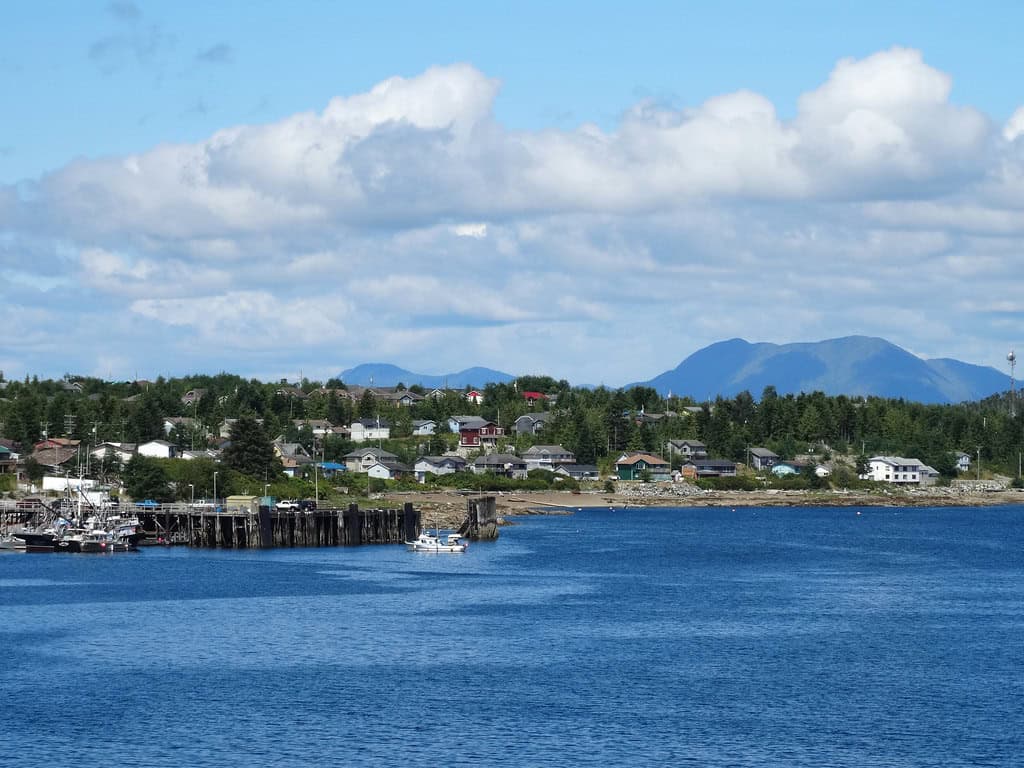
©"View of Bella Bella Waterfront from Passing Ferry – Inside Passage en route to Prince Rupert – British Columbia – Canada" by Adam Jones, Ph.D. – Global Photo Archive is licensed under BY-SA 2.0. – Original / License
Prince Rupert, British Columbia
Prince Rupert has been appearing on more Alaska cruise itineraries lately, but it still feels far removed from the region’s busiest ports. The Cow Bay district is within easy walking distance of the dock, with nothing resembling a crowded tourist trail or five-ships-a-day congestion. This is a working fishing town, home to the Museum of Northern British Columbia, which houses one of the coast’s stronger collections of Indigenous art and cultural artifacts. Prince Rupert receives more than 100 inches of rain in an average year, putting it among the wettest places in Canada, so waterproof layers are essential. Locals call it the City of Rainbows for good reason.
Petersburg, Alaska
Norwegian fishermen founded Petersburg in the 1890s, and it remains a fishing town through and through. That working waterfront is the main reason to visit. You will not see massive cruise ships here, only smaller vessels calling at a port that offers an operational harbor rather than one staged for tourists. Just beyond the town center, a wooden boardwalk crosses the muskeg and opens to mountain views on clear days. The Sons of Norway Hall and the annual Little Norway Festival in May are genuine local traditions and two reasons the town has proudly been known as Little Norway for more than a century. The Clausen Memorial Museum also covers Petersburg’s fishing history.
Astoria, Oregon
Astoria is the oldest permanent American settlement west of the Rocky Mountains, and its appearance still reflects that long history. Victorian homes climb the hills above the Columbia River, while the 125-foot Astoria Column offers a spiral staircase and sweeping views from the top. The Columbia River Maritime Museum is one of the town’s strongest attractions and fully earns its name, with exhibits on shipwrecks, fishing, navigation, and the dangerous river bar. Astoria has also developed into a major craft beer destination, with nearly a dozen breweries packed into a historic downtown compact enough to explore comfortably on foot from end to end in a single afternoon.
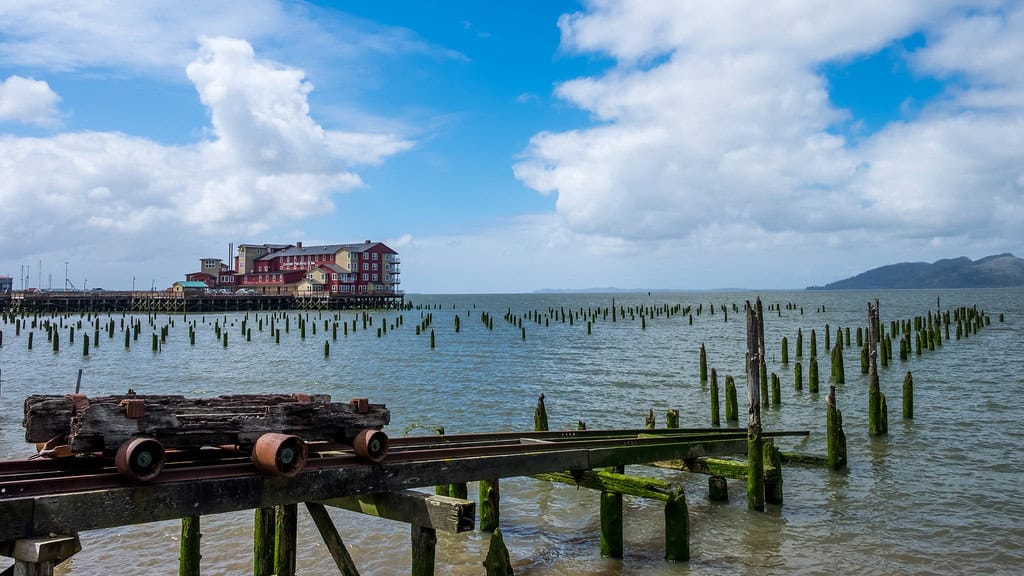
©"Astoria, Oregon" by TomCollins is licensed under BY-ND 2.0. – Original / License
There’s a caveat. Astoria is no secret, as Princess, Celebrity, and Holland America all have articles touting the port’s virtues. The pace makes it worth a visit, though, since a day here moves much more slowly than in Seattle or San Francisco.
Santa Barbara, California
Santa Barbara’s reputation as the “American Riviera” is well-earned due to its Spanish Colonial architecture and its renowned wine and food culture. It is a tender port, which means that smaller vessels will carry passengers from the ship to shore rather than landing at the port itself. That logistical consideration puts a practical cap on how many visitors there are on any particular day. Sitting in the middle of a trip itinerary between Los Angeles and San Francisco, it’s a port that most people treat as a breather. Try treating it as the destination instead.
Ensenada, Mexico
Ensenada earns a reputation as the “starter” port in Mexico, the one on short four-day cruises that are presumed to be merely a port of call before arriving at the actual Mexican Riviera ports. But Ensenada is responsible for most of the wine produced in Mexico, and the wine country region of Guadalupe Valley sits close enough for a half-day tour. La Bufadora, a blowhole in the coastal rock, is a short drive from the pier and shoots water up to 100 feet in the air.
Kake, Alaska
Kake is the extreme version of ‘off the itinerary.’ There is no road linking it with anywhere — you access it by small aircraft, a twice-monthly ferry, or a small-ship line like Alaskan Dream Cruises. The third-tallest totem pole in the world stands here, erected as a deliberate act of cultural healing after the original totems were destroyed decades ago. The Tlingit community of about 550 members runs its own cultural programming instead of outsourcing it to a tour operator.
Loreto, Mexico
Loreto is not on the radar of most travelers planning a standard one-week cruise trip. It’s a former Jesuit mission town on the Sea of Cortez side of Baja. And this mission itself, established in 1697, is generally considered the first mission in the series that eventually stretched up the California coast. The core of the historical mission is still protected as a heritage district, rather than turned into tourist-oriented development.
Just offshore, Isla Carmen and the surrounding waters are part of a protected marine park, with sea lion colonies and reef fish swimming through crystal clear waters. Loreto only pops up on itineraries of ten nights or more, so check your cruise length before booking.
La Paz, Mexico
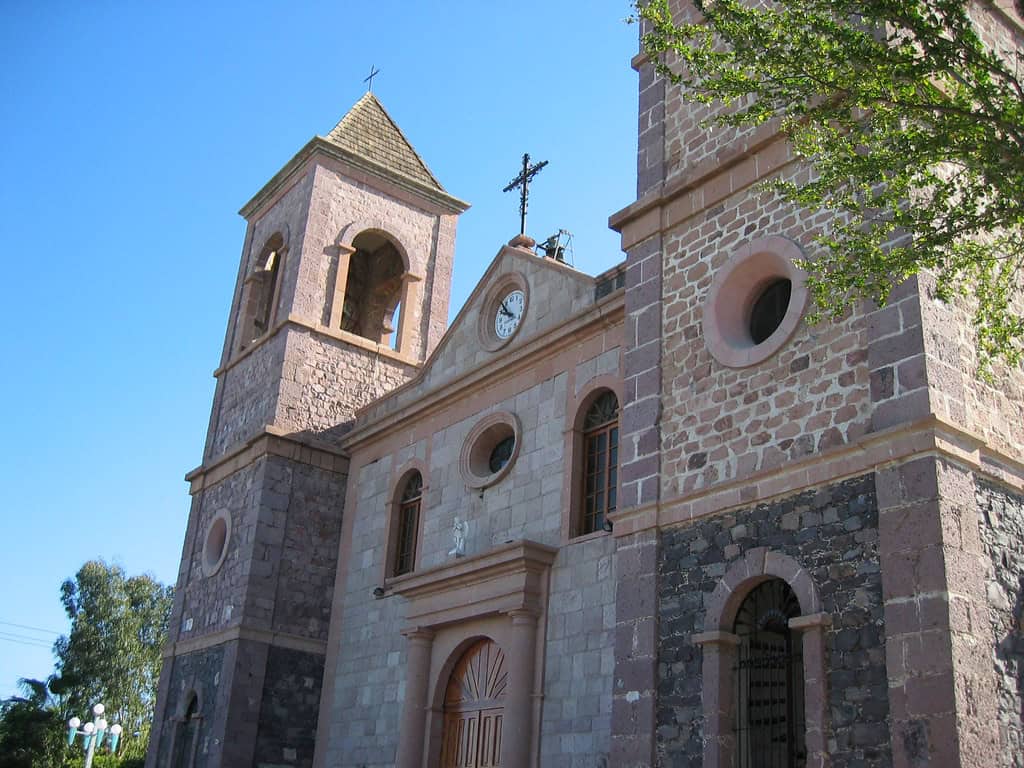
©"La Paz, Mexico" by Ryan Leighty is licensed under BY 2.0. – Original / License
La Paz offers you an actual capital city with a three-mile seaside malecón and a restored 1910 city hall now functioning as a cultural center. The water is clear enough to swim with sea lions and, seasonally, whale sharks. La Paz has gained recognition in cruise itineraries even as its neighbor, Ensenada, has lost ground. And while it is true that La Paz has more crime than the refined resorts, it happens off the beaten path of cruisers. Stick to the malecón, the historic center, or an organized excursion.
Sitka, Alaska
Unlike other destinations on the Inside Passage, Sitka is located on the coast of Baranof Island in the Pacific Ocean, a detour most itineraries don’t bother making. That’s why it has kept its unique character with art galleries operating and onion-domed Russian churches, a reminder of its era as the capital of Russian America.
Most big vessels anchor or dock at a distance of six miles from the city, so you’d better allow extra time for shuttle transport. Whale watching out of Sitka Sound is some of the most reliable in Southeast Alaska.

