
Washington has no shortage of impressive mountains. From the snow-covered volcanoes of the Cascades to the rugged peaks of the Olympics, some of the state’s most memorable scenery can be found well above sea level. Mount Rainier and Mount St. Helens get plenty of attention, and for good reason, but they’re only part of the story.
Some of Washington’s mountains are easy to admire from a scenic highway or established trail. Others are tucked deep in the wilderness, where reaching the summit takes considerable experience, specialized equipment, and more than a little determination. Whether you’re planning a road trip, looking for a rewarding hike, or simply curious about the landscape, these 20 mountains show just how varied Washington’s terrain can be.
Keep in mind that conditions change with the weather and season. Some trails are inaccessible for much of the year, and many summit routes are intended for experienced climbers rather than casual hikers. Check current access restrictions, trail conditions, and permit requirements before heading out.
1. Mount Deception
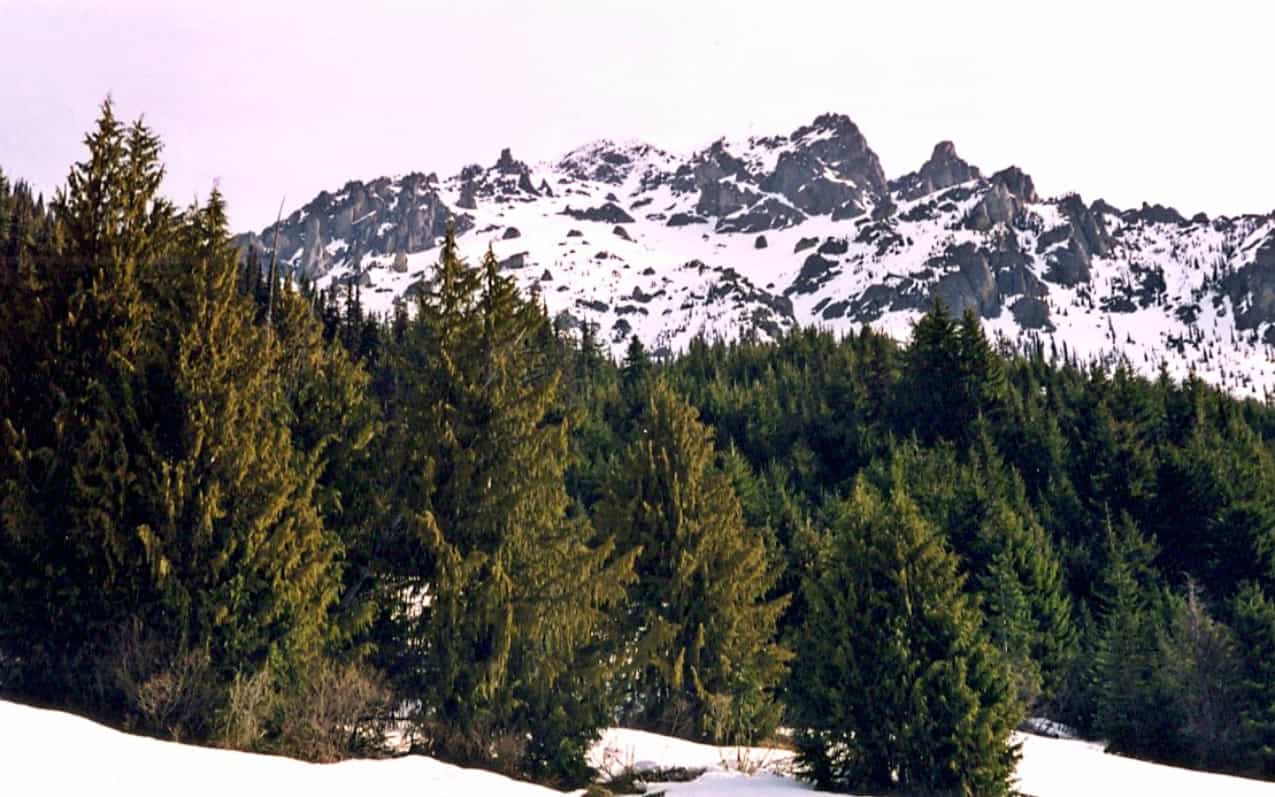
©"Mount Deception from Deception Creek" by Ron Clausen is licensed under BY-SA 4.0. - Original / License
Standing approximately 7,788 feet tall, Mount Deception is the second-highest summit in the Olympic Mountains. Located within Olympic National Park near Royal Basin, it rises above a landscape of rugged ridges, alpine lakes, and steep valleys. Unlike some of Washington’s more familiar peaks, Mount Deception isn’t easily visible from Seattle, and getting close to it requires a trip deep into the Olympic wilderness. The mountain’s name is fitting, considering the challenges it presents to climbers. Although the standard ascent doesn’t necessarily involve advanced technical climbing, steep slopes, loose rock, exposed terrain, and lingering snow can make it dangerous. Fatal accidents have occurred here, and the National Park Service recommends experience with route-finding, rock climbing, and self-arrest techniques. For most visitors, exploring Royal Basin is a more practical way to appreciate the surrounding scenery.
2. Pinnacle Mountain
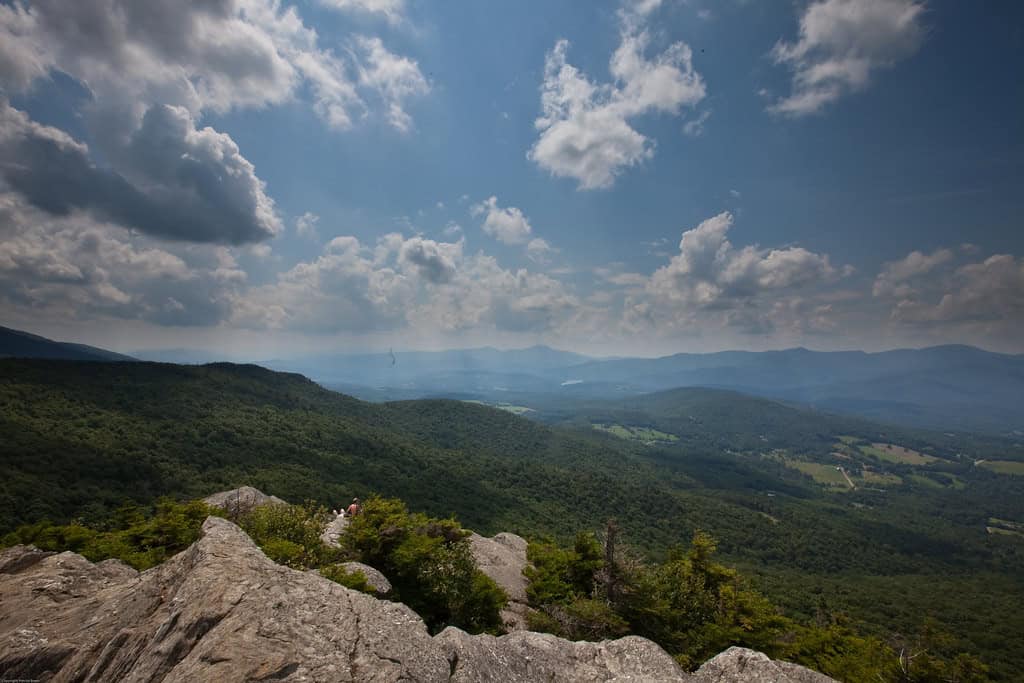
©"Pinnacle Mountain Hike" by pdbreen is licensed under BY 2.0. - Original / License
Pinnacle Mountain rises to approximately 8,402 feet in the Chelan Mountains of north-central Washington. Its rugged appearance comes from the intrusive igneous rocks associated with the Cardinal Peak pluton, including granodiorite and related formations. Those rocks help give the mountain its dramatic ridges and steep, rocky slopes. Pinnacle Mountain lies in a remote section of the Glacier Peak Wilderness, within the Okanogan-Wenatchee National Forest, where visitors are more likely to encounter experienced backpackers than casual sightseers. There isn’t an established hiking trail all the way to the summit, and reaching the top involves significant elevation gain, off-trail navigation, and potentially challenging terrain. The surrounding wilderness offers impressive alpine scenery, but anyone planning a summit attempt should arrive with proper equipment, route-finding experience, and a realistic understanding of the conditions.
3. Goode Mountain
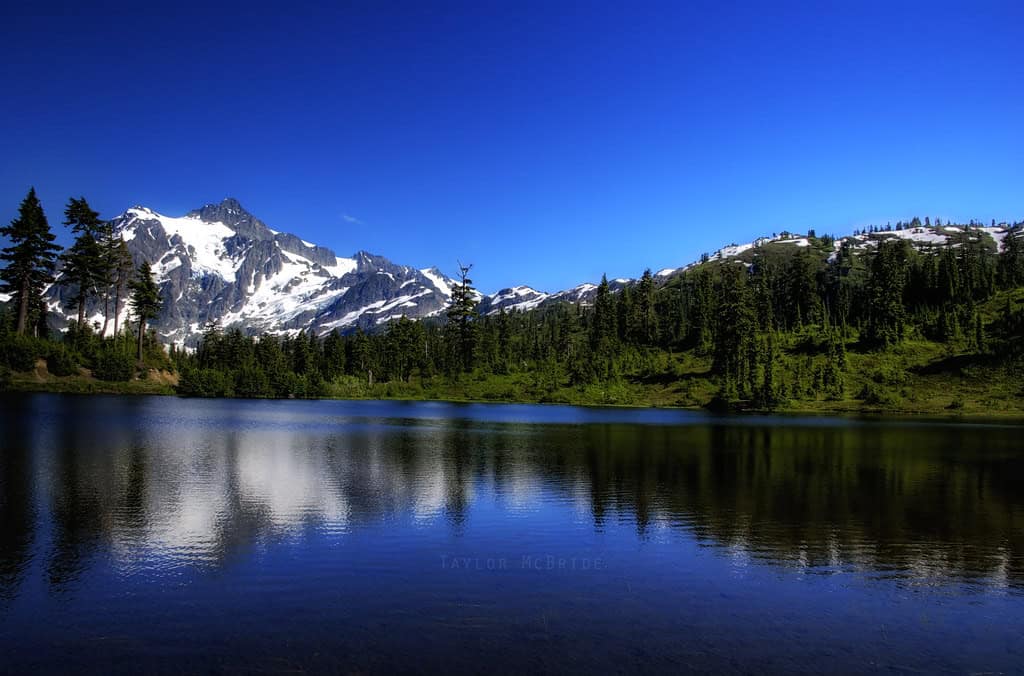
©"(explored and front page!!)" by Taylor.McBride™ is licensed under BY 2.0. - Original / License
Goode Mountain is one of the most formidable peaks in Washington’s North Cascades. At approximately 9,200 feet, it is the highest summit entirely within North Cascades National Park and one of the tallest nonvolcanic mountains in the state. Named for U.S. Geological Survey topographer Richard Urquhart Goode, the mountain stands in a particularly remote section of the park near the upper reaches of the Stehekin River watershed. Its isolation is part of what makes it so impressive, but it also creates significant challenges for climbers. Reaching the summit generally requires a long wilderness approach followed by exposed technical climbing, making this an objective for experienced mountaineers. There are no convenient roadside viewpoints comparable to those at Mount Rainier or Mount Baker. Instead, Goode Mountain represents the wilder side of Washington, where dramatic scenery comes with considerable effort.
4. Mount Constance

©"Washington state ferry and Mount Constance" by Ron Clausen is licensed under BY-SA 4.0. - Original / License
Mount Constance is one of the defining landmarks of the eastern Olympic Mountains, rising approximately 7,743 feet above sea level. It’s the third-highest summit in the Olympic Range and particularly recognizable from communities around Puget Sound, where its rocky profile dominates the western horizon. The mountain was named in the 19th century by surveyor George Davidson in honor of Constance Fauntleroy, a member of the family into which he later married. Today, much of Mount Constance lies within Olympic National Park, while nearby wilderness areas offer additional opportunities to explore the surrounding landscape. Lake Constance is a notable destination, although reaching it involves an exceptionally steep and demanding trail. Climbing the mountain itself is considerably more serious, requiring technical experience and careful attention to rockfall, exposure, and changing alpine conditions. It’s an impressive mountain to admire from a distance, but not one to underestimate.
5. Glacier Peak
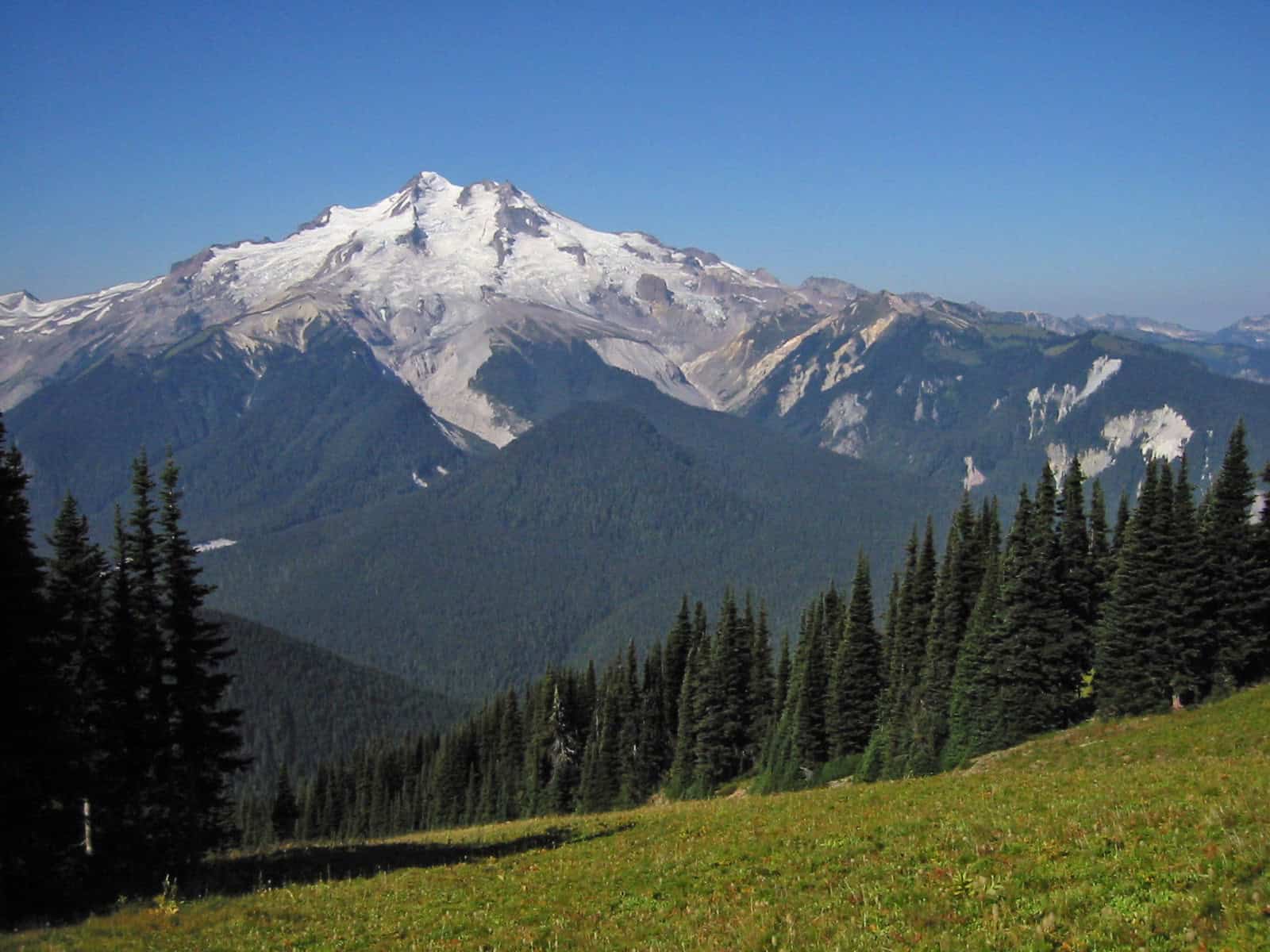
©"Glacier Peak 7137b" by Walter Siegmund is licensed under BY 2.5. - Original / License
Glacier Peak may not be as famous as Mount Rainier or Mount St. Helens, but it’s one of Washington’s five major active volcanoes. Rising approximately 10,541 feet in the North Cascades, the remote stratovolcano sits within the Glacier Peak Wilderness and has a history of powerful eruptions. According to the U.S. Geological Survey, Glacier Peak and Mount St. Helens are the only Washington volcanoes known to have produced large explosive eruptions during the past 15,000 years. Glacier Peak’s most recent eruptive activity occurred roughly 300 years ago, making it geologically active even though it has remained quiet in modern times. Despite being relatively close to Seattle, its location among other tall mountains makes it less conspicuous than Rainier. Reaching Glacier Peak requires a substantial wilderness journey, and summit routes involve glacier travel and mountaineering skills. Its isolation has helped preserve some spectacular high-country scenery.
6. Crater Mountain
©Wikimedia Commons
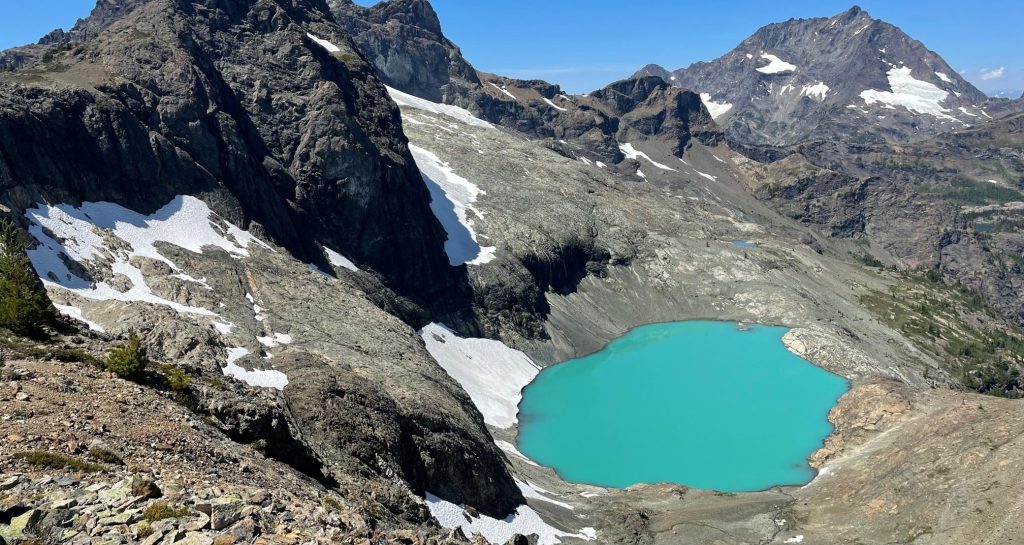
Crater Mountain is a rugged summit in Washington’s North Cascades, located near the North Cascades Highway and the Ross Lake National Recreation Area. Despite its name and crater-like appearance, the mountain isn’t a volcano. Its distinctive summit and steep rocky slopes are the products of geological processes and erosion rather than a volcanic eruption. The mountain is known for ancient metamorphosed rocks, including greenstone, that tell part of the region’s complicated geological history. Its profile is particularly striking from certain stretches of the highway and nearby backcountry routes, where the surrounding peaks create one of Washington’s most dramatic mountain landscapes. While the area offers plenty of sightseeing opportunities, climbing Crater Mountain is considerably more demanding than simply stopping at a roadside viewpoint. Anyone attempting the summit should be prepared for off-trail travel, difficult terrain, and rapidly changing mountain weather.
7. Oval Peak
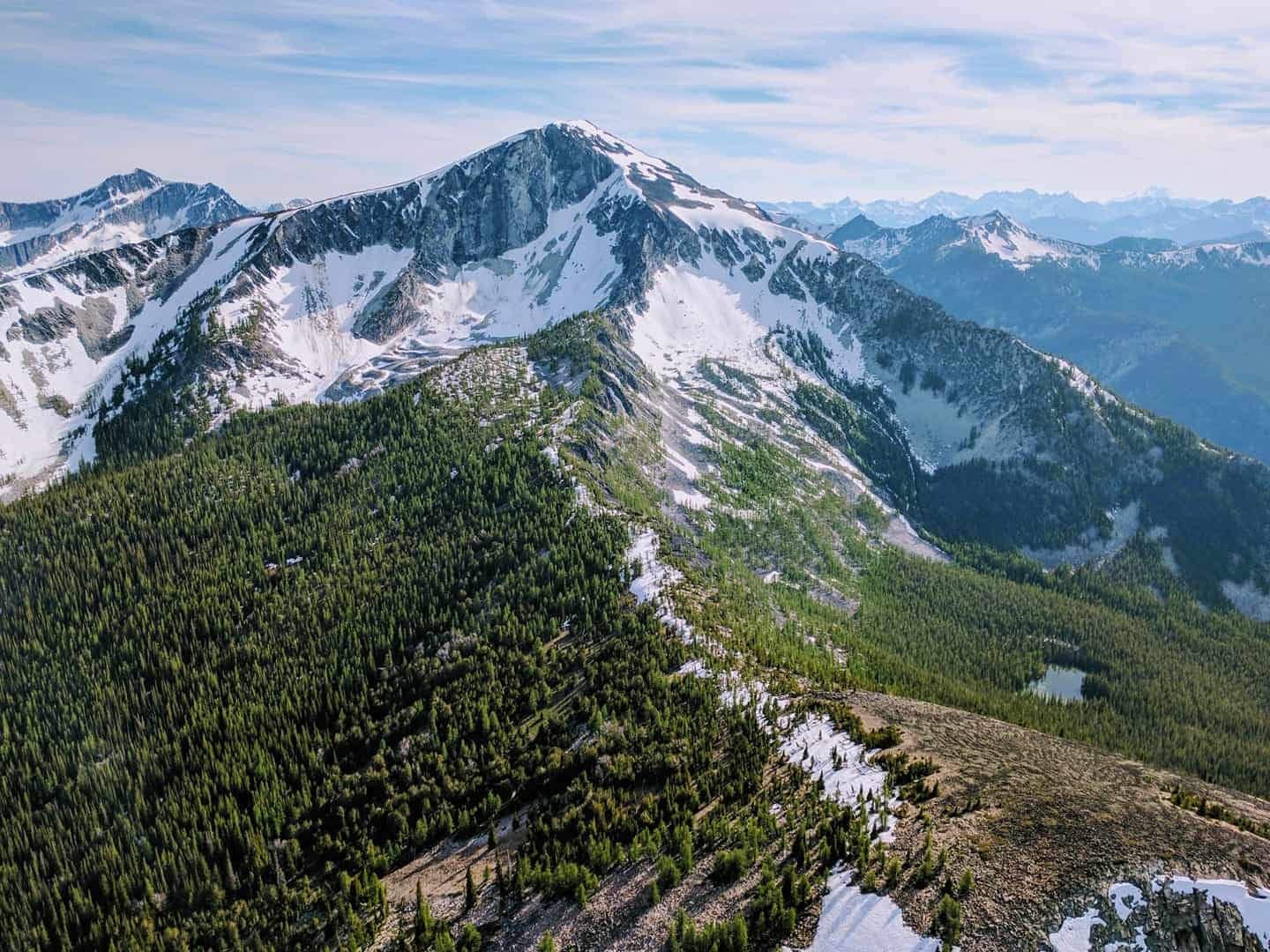
©"Oval Peak" by Flightbit is licensed under BY-SA 4.0. - Original / License
Oval Peak rises approximately 8,800 feet in the Methow Mountains of north-central Washington, making it one of the tallest summits in the Lake Chelan-Sawtooth Wilderness. The mountain gets its name from its broad, rounded profile, which stands out from many of the sharper peaks in the North Cascades. Its slopes feature extensive fields of loose rock and alpine terrain, including a small rock glacier. During the warmer months, experienced hikers and climbers can approach the summit from nearby wilderness routes, but the trip involves considerable elevation gain and challenging footing. Snow can linger into summer, while early autumn storms may bring winterlike conditions surprisingly quickly. The surrounding wilderness is known for its expansive mountain views and relatively remote setting, making Oval Peak a rewarding destination for those comfortable traveling in rugged backcountry terrain.
8. Mount Adams
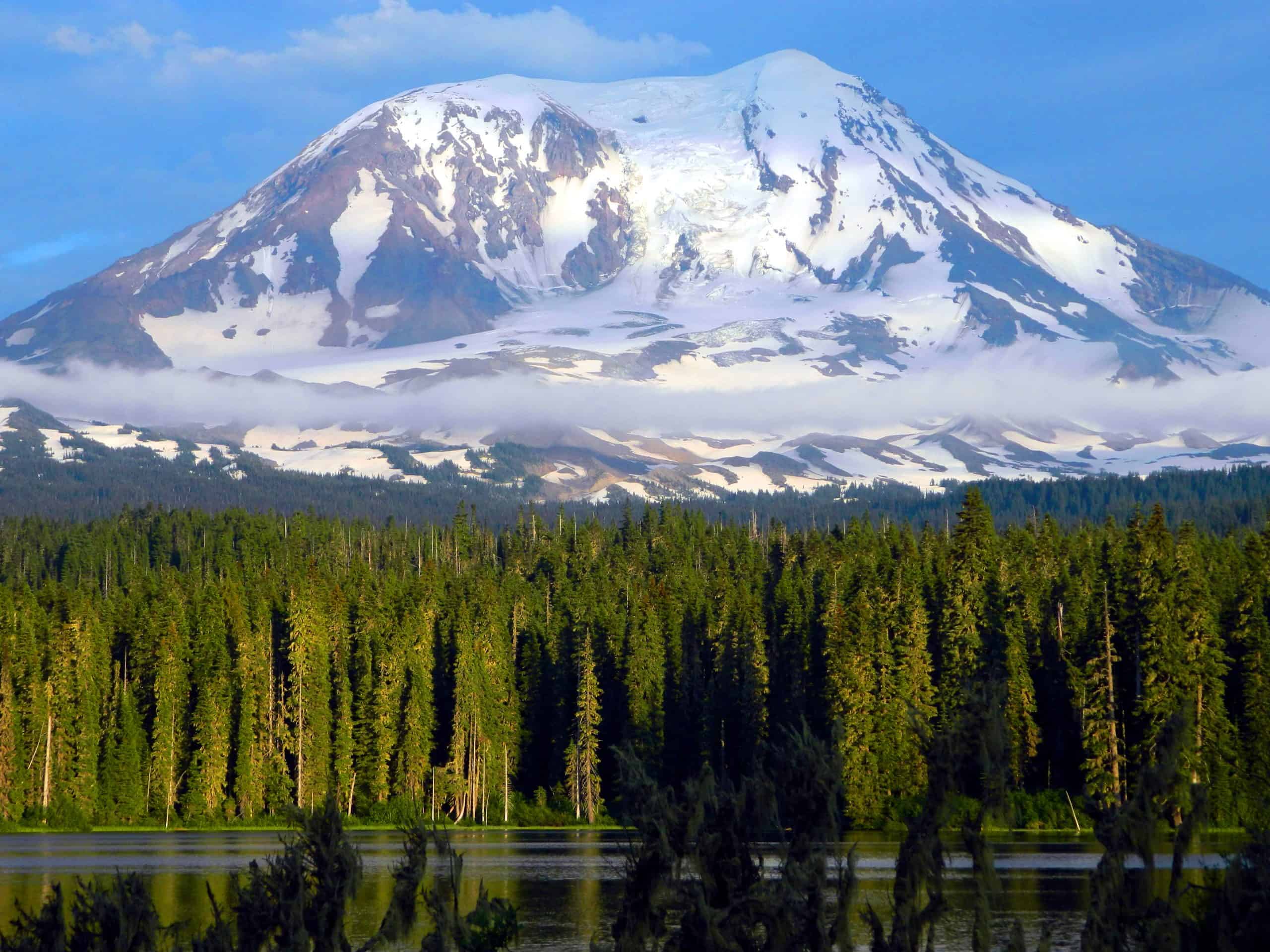
©"Majestic Mount Adams" by File:Majestic Mount Adams.png: AdorableFluttershy conversion to jpg: Hike395 is licensed under BY-SA 3.0. - Original / License
At approximately 12,281 feet, Mount Adams is Washington’s second-highest mountain, surpassed only by Mount Rainier. Known to the Yakama people as Pahto, this enormous stratovolcano rises above the southern Cascade Range and remains a potentially active volcano, despite having experienced no confirmed eruption in roughly a thousand years. Much of the mountain’s western side lies within the Mount Adams Wilderness, while significant portions of its eastern and southern slopes are part of the Yakama Nation Reservation. Its broad, snow-covered summit makes it a distinctive landmark visible across a large section of southern Washington. Mount Adams is also a popular mountaineering destination, with the South Climb among the better-known summit routes. However, the high elevation, snowfields, and rapidly changing conditions mean even the commonly used routes demand preparation. Access rules, permits, and tribal land restrictions should be checked before planning a trip.
9. Mount Rainier

©"Mount Rainier, Washington State" by Harold Litwiler, Poppy is licensed under BY-ND 2.0. - Original / License
Mount Rainier is Washington’s tallest mountain, rising approximately 14,410 feet above sea level, and arguably its most recognizable natural landmark. The active stratovolcano dominates the skyline on clear days around Seattle and Tacoma, while its surrounding national park attracts visitors with forests, wildflower meadows, waterfalls, and dramatic glacier-covered scenery. Rainier is also one of the most heavily glaciated peaks in the contiguous United States. Its beauty comes with real geological risks, including the potential for volcanic mudflows known as lahars that could affect communities far beyond the national park. Fortunately, visitors don’t need to attempt the summit to appreciate the mountain. Popular destinations such as Paradise and Sunrise provide memorable views and access to hiking trails of varying difficulty. Reaching the summit, however, is a serious mountaineering undertaking requiring glacier-travel skills, appropriate equipment, and a climbing permit.
10. Mount St. Helens
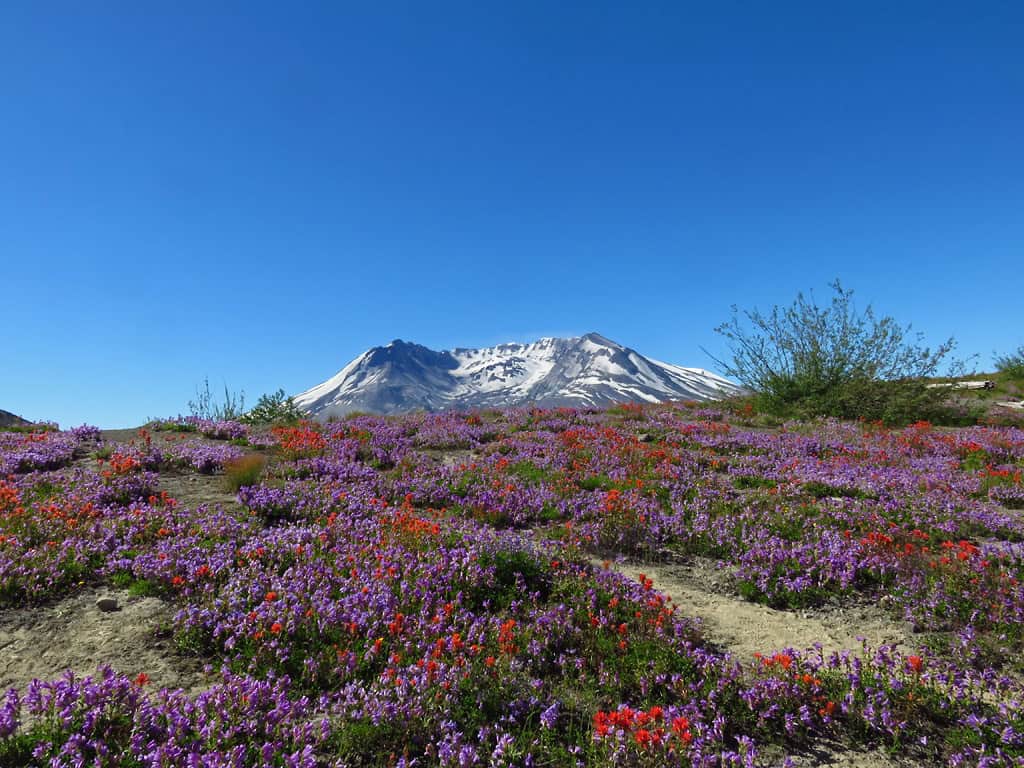
©"Wildflowers at Mt. St. Helens NM in Washington" by Landscapes in The West is licensed under PDM 1.0. - Original / License
Few mountains in Washington have a history as dramatic as Mount St. Helens. On May 18, 1980, the volcano erupted catastrophically, triggering an enormous landslide, flattening surrounding forests, and killing 57 people. The eruption removed roughly 1,300 feet from the mountain’s summit and left behind the massive horseshoe-shaped crater visible today. Mount St. Helens continued experiencing eruptive activity during the following decades, most recently from 2004 to 2008. The surrounding area became Mount St. Helens National Volcanic Monument in 1982, preserving the landscape as a place for scientific research, education, and recreation. Visitors can explore numerous trails and viewpoints, although access varies with seasonal conditions, road closures, and ongoing management restrictions. Climbing to the crater rim is also possible when conditions permit, but climbers need the required permit and must stay outside restricted areas. The crater remains an extraordinary reminder of how dramatically volcanic activity can reshape a landscape.
11. Three Fingers
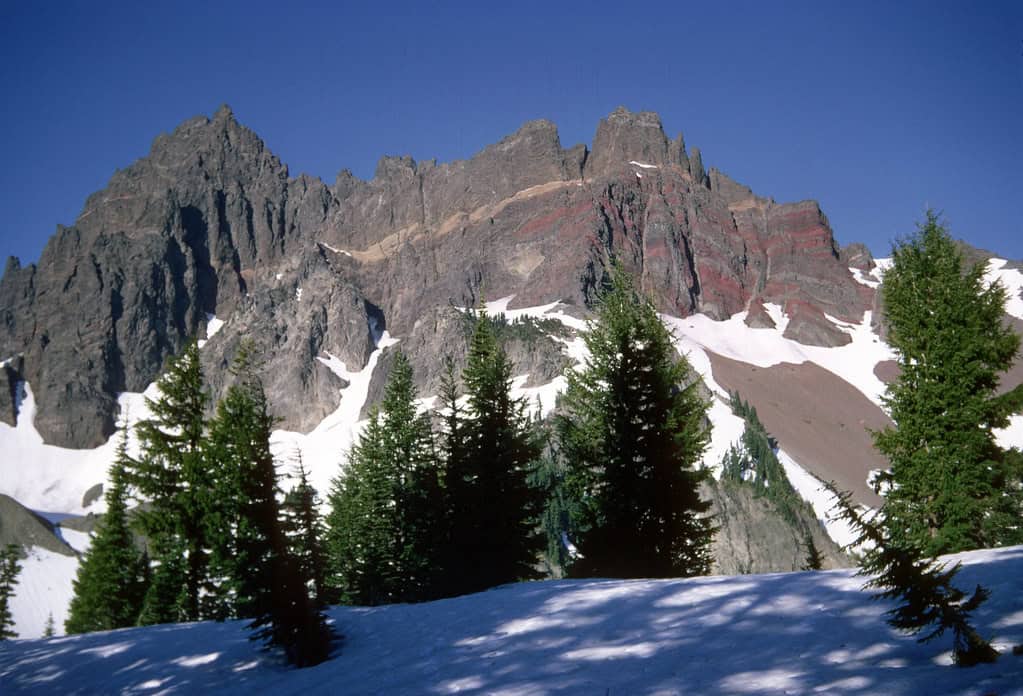
©"Three Finger Jack, Mt Jefferson Wilderness, Deschutes National Forest.jpg" by Forest Service Pacific Northwest Region is licensed under PDM 1.0. - Original / License
Three Fingers is one of the most recognizable mountains in Washington’s northern Cascades, named for the three prominent summits that create its distinctive silhouette. Located in Snohomish County, the mountain rises approximately 6,850 feet and is especially famous for the historic fire lookout perched on its southern summit. Built in the 1930s, the lookout is listed on the National Register of Historic Places and occupies one of the most dramatic locations imaginable for a small wooden structure. Reaching it, however, is no ordinary day hike. The approach can involve a long trek, steep exposed sections, snow travel, and difficult route-finding, depending on conditions. The mountain’s remote location and rugged terrain mean road access and trail conditions can also complicate the journey. For experienced adventurers, Three Fingers offers a combination of mountaineering history and extraordinary views across the surrounding Cascade peaks.
12. Mount Olympus
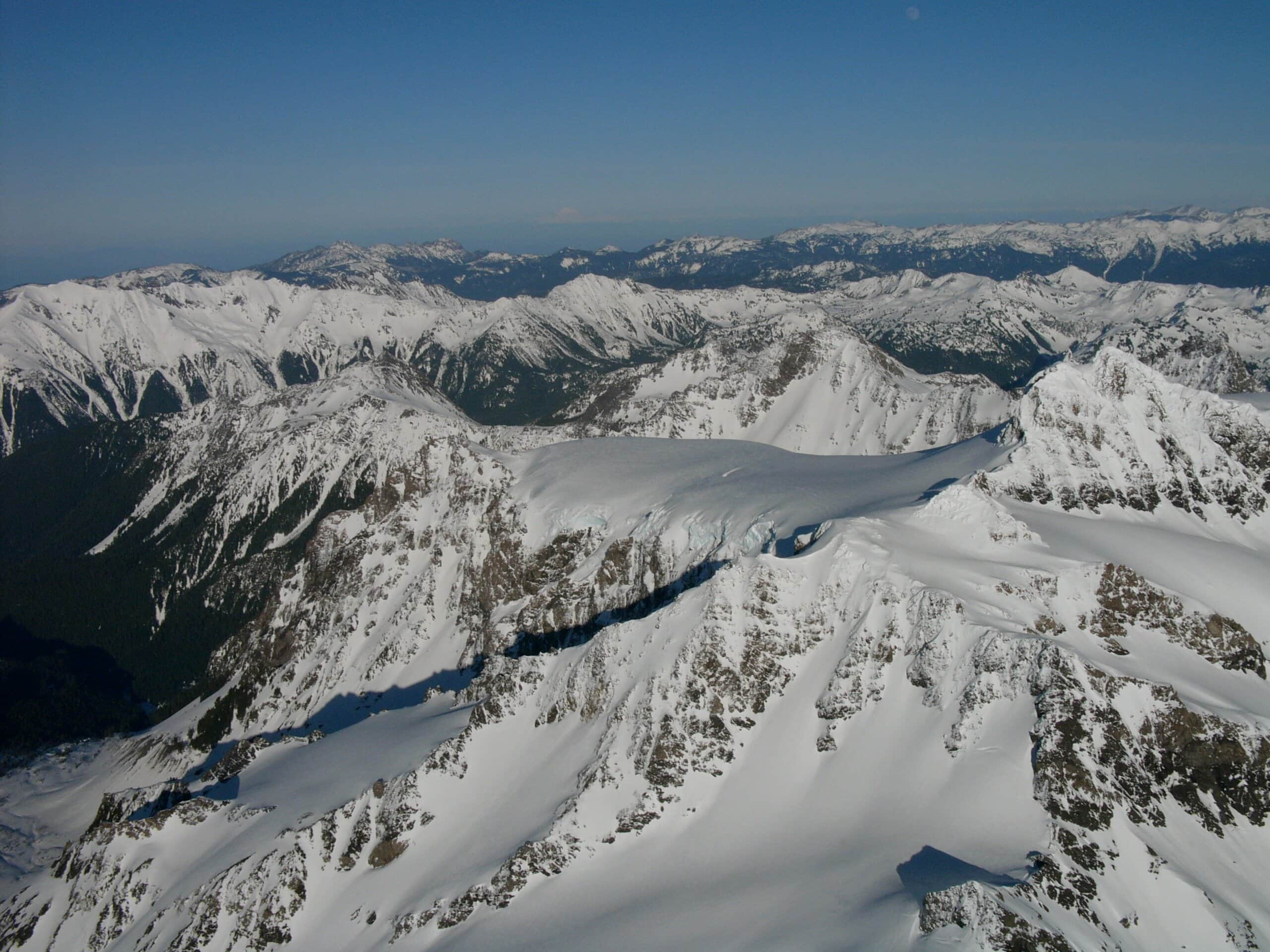
©"Mount Olympus, Washington - panoramio" by Sam Beebe/Ecotrust is licensed under BY-SA 3.0. - Original / License
Mount Olympus is the highest peak in Washington’s Olympic Mountains, reaching approximately 7,980 feet within Olympic National Park. Although considerably shorter than the state’s major Cascade volcanoes, the mountain receives tremendous amounts of precipitation and supports an impressive collection of glaciers. Its remote location in the heart of the Olympic Peninsula makes it a challenging destination for mountaineers, with summit approaches typically involving lengthy backpacking routes, glacier travel, and technical climbing. The mountain was named by British explorer John Meares in 1788, long before Olympic National Park was established in 1938. The park later received UNESCO World Heritage recognition for its remarkable natural features and ecological diversity. Mount Olympus is surrounded by some of the Pacific Northwest’s most distinctive landscapes, where temperate rainforests, alpine terrain, and extensive icefields exist within a relatively small geographic area.
13. Chopaka Mountain
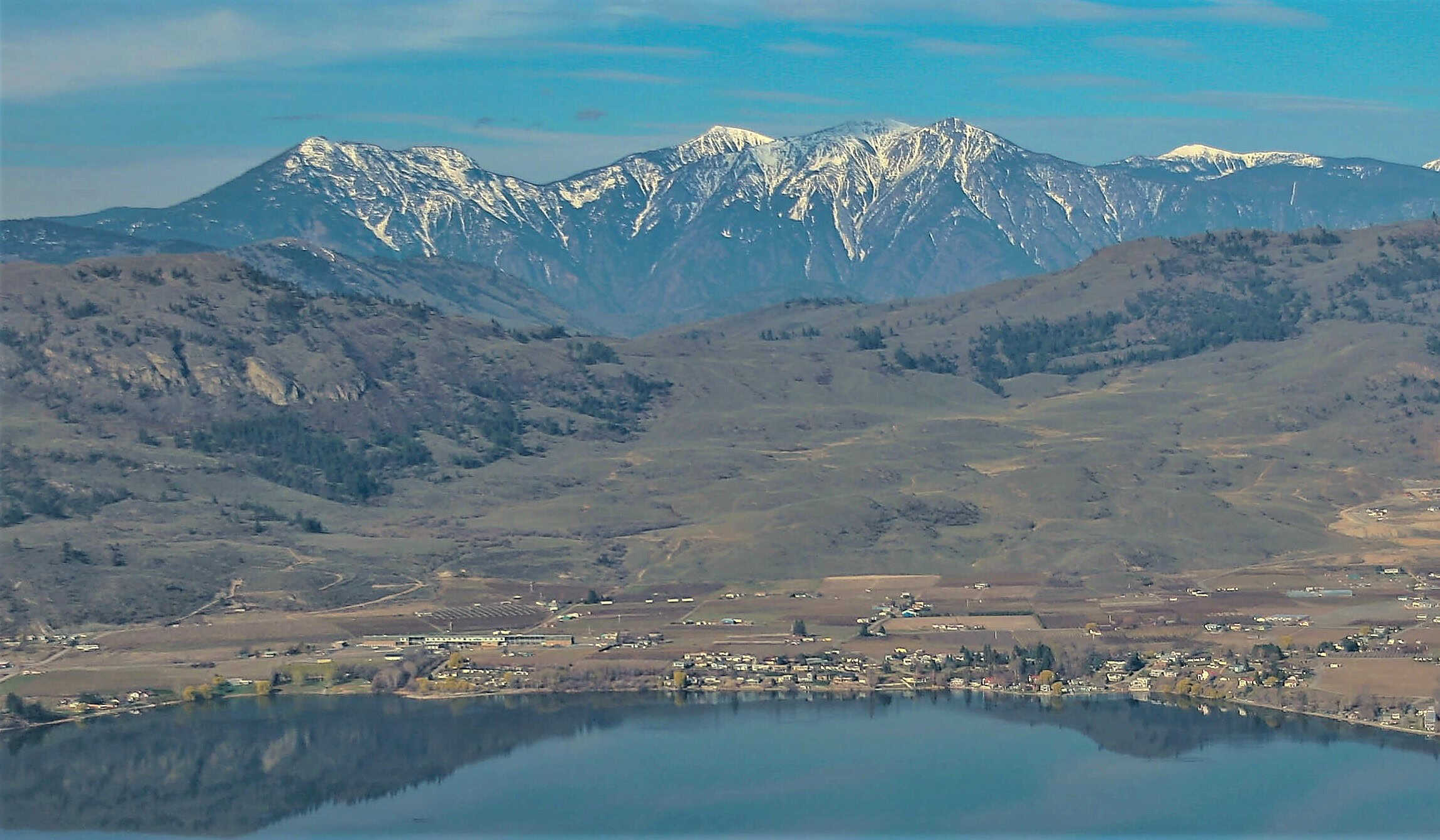
©"Chopaka Mountain" by Murray Foubister is licensed under BY-SA 2.0. - Original / License
Chopaka Mountain rises near the Canadian border in Okanogan County, overlooking a remote landscape of forests, rocky slopes, and dry valleys. The mountain is part of the Okanogan Highlands, with its summit area protected as a Washington state natural area preserve. This protection helps conserve rare plant communities and important wildlife habitat in a region where mountain forests meet the drier landscapes of north-central Washington. Chopaka Mountain also has a complicated cultural and natural history, including its historical association with native bighorn sheep populations. Nearby Chopaka Lake is considerably more accessible than the mountain’s summit and is well known among anglers for its rainbow trout fishing. The combination of dramatic scenery, unusual ecosystems, and remote surroundings gives this part of Washington a distinctly different character from the glacier-covered peaks farther west.
14. Gypsy Peak
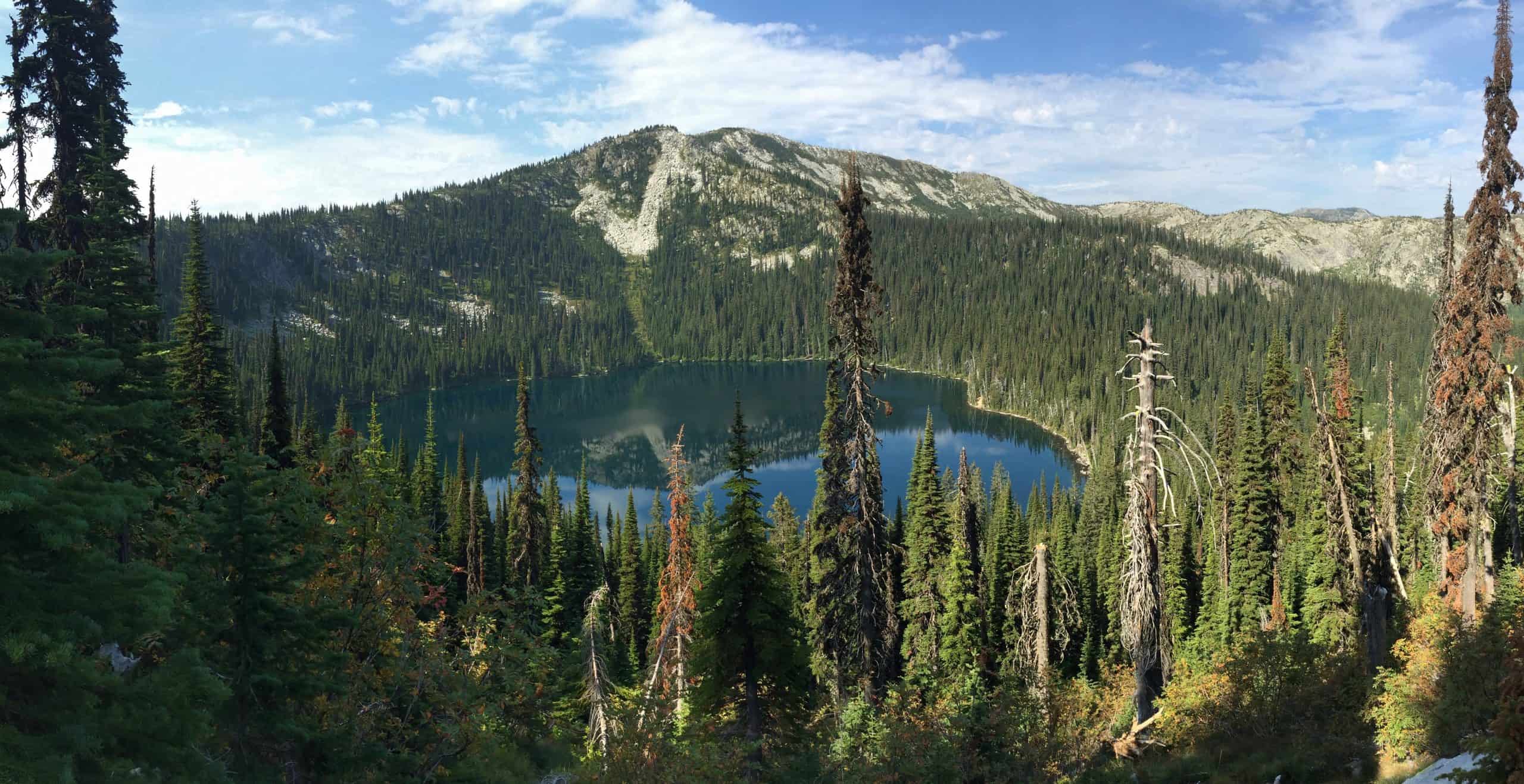
©"Hidden Lake in Selkirk Mountains, Idaho (29099805720)" by David Taylor from Coeur d Alene, United States is licensed under BY 2.0. - Original / License
Gypsy Peak, at approximately 7,309 feet, is the highest mountain in eastern Washington. Located in the Selkirk Mountains near the Canadian border, it offers expansive views across northeastern Washington and into neighboring Idaho and British Columbia. Unlike the volcanic peaks of the Cascades, Gypsy Peak sits in a rugged landscape of forested ridges, open alpine slopes, and remote wilderness. The summit is accessible by challenging backcountry routes, including an approach along Crowell Ridge that requires off-trail navigation and experience traveling through remote terrain. The Washington Trails Association describes the route as an advanced outing, with a lengthy round trip and limited opportunities to replenish water. Wildlife in the surrounding region includes black bears, grizzly bears, and other mountain species. Visitors should be prepared for changing conditions, carry appropriate navigation equipment, and understand that this is a demanding backcountry trip rather than a casual sightseeing hike.
15. Mount Baker
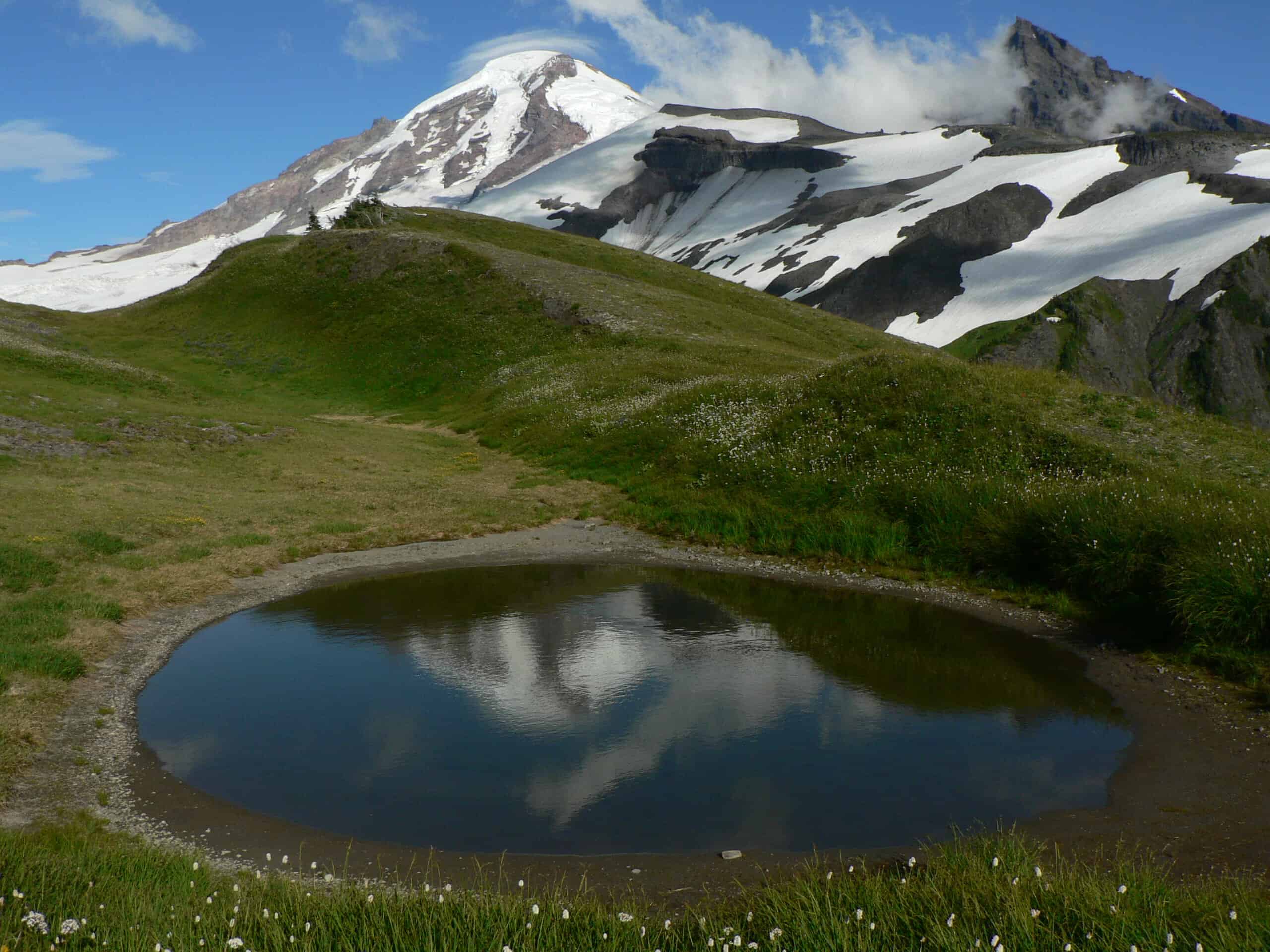
©"Mount Baker 22101" by Walter Siegmund (talk) is licensed under BY 2.5. - Original / License
Mount Baker rises approximately 10,781 feet in northern Washington, making it the state’s third-highest mountain and one of the most impressive volcanoes in the Cascade Range. Also known as Koma Kulshan, the mountain is covered by extensive glaciers and surrounded by an area famous for heavy snowfall. Baker remains an active stratovolcano, with volcanic gases and geothermal activity providing reminders of the heat beneath its surface. Its snowy summit is visible from parts of the Puget Sound region, while nearby Artist Point offers spectacular views of both Mount Baker and Mount Shuksan when the seasonal highway is open. One important distinction for visitors is that the popular Mount Baker Ski Area isn’t actually located on the volcano itself. Instead, the resort operates on nearby mountains closer to Mount Shuksan. Climbing Baker requires glacier-travel experience, but visitors can enjoy remarkable scenery without setting foot on the summit routes.
16. Crystal Mountain
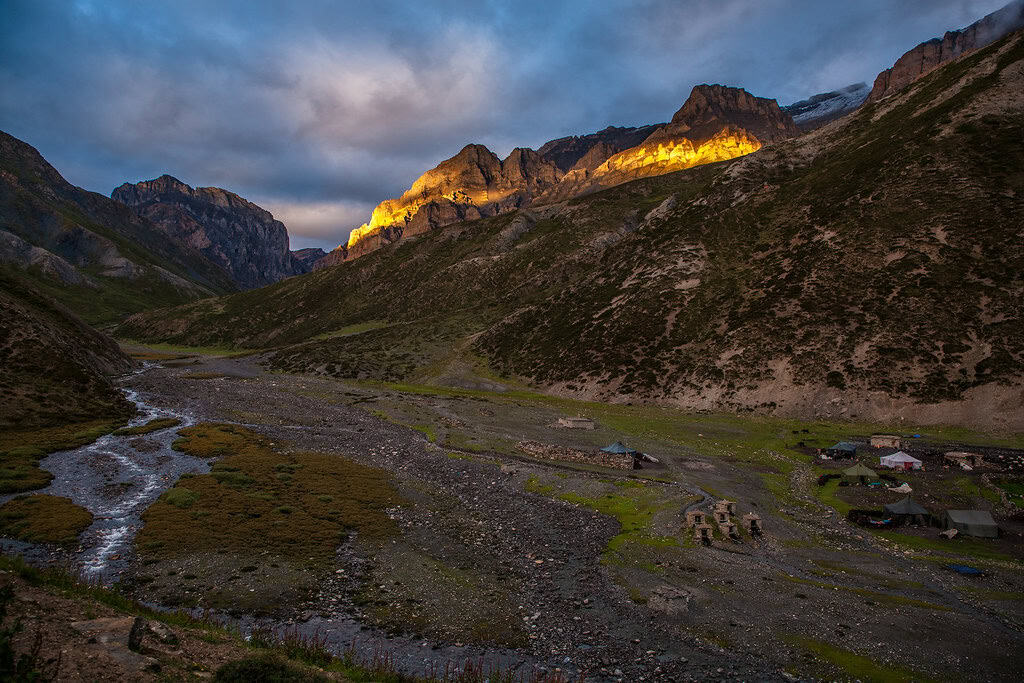
©"Crystal Mountain" by ::ErWin is licensed under BY-ND 2.0. - Original / License
Crystal Mountain is one of Washington’s best-known mountain recreation destinations, located northeast of Mount Rainier in the Cascade Range. Its ski resort is the largest in the state by skiable terrain, attracting winter visitors with chairlifts, challenging runs, and spectacular views of the surrounding mountains. However, Crystal Mountain has become a popular destination outside ski season as well. During its summer operating period, the resort offers scenic gondola rides, hiking, disc golf, dining, and additional family-friendly activities. The gondola is particularly popular because it provides an opportunity to enjoy high-elevation views without completing a strenuous climb. From the summit area, visitors can look toward Mount Rainier and the surrounding Cascade peaks. Operations vary by season and weather conditions, so checking the resort’s current schedule is important before making the trip, especially during spring and autumn when some facilities may be closed.
17. Gilbert Peak
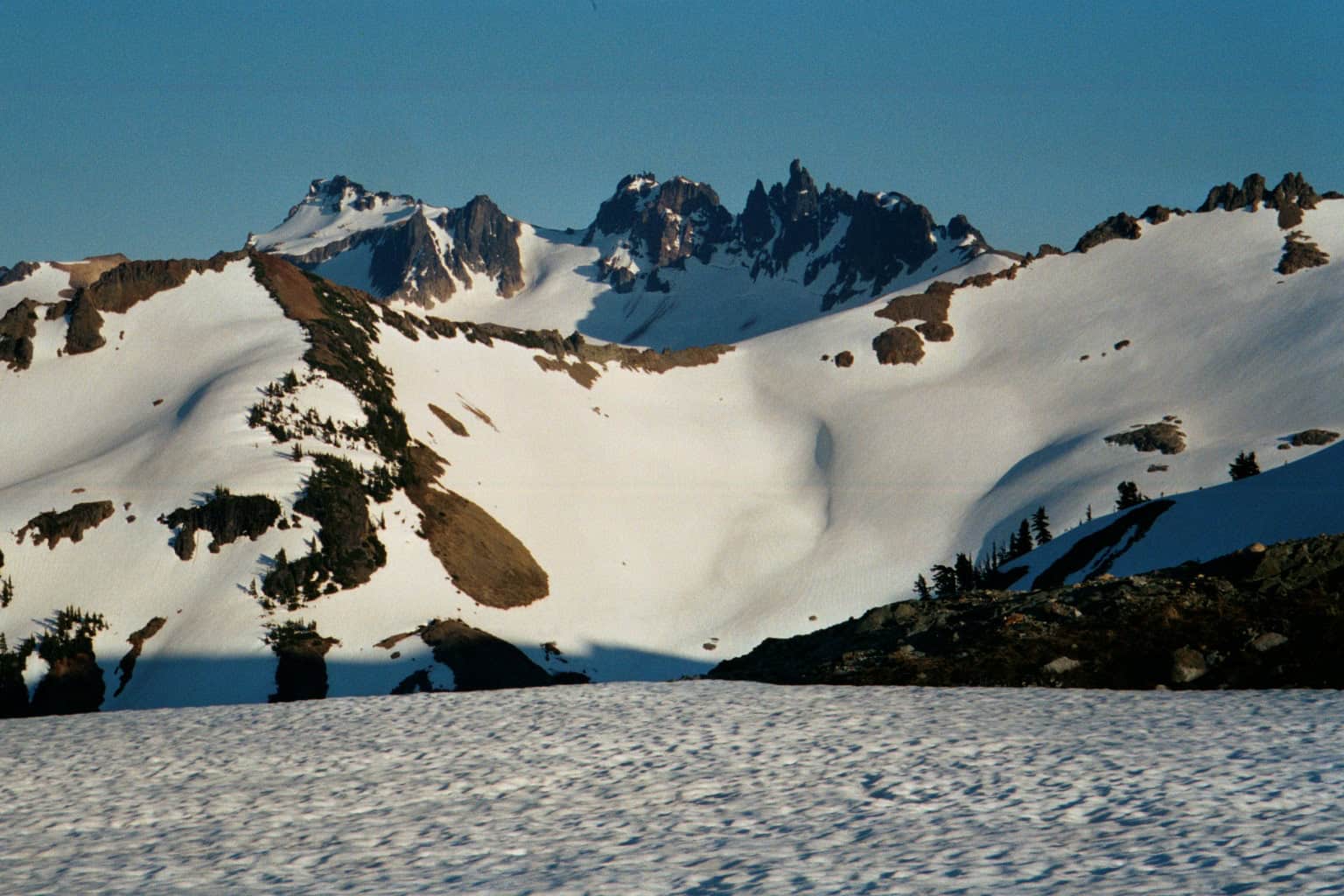
©"Gilbert 14A" by No machine-readable author provided. Wsiegmund assumed (based on copyright claims). is licensed under BY 2.5. - Original / License
Gilbert Peak is the highest summit in the Goat Rocks, a rugged mountain area in southern Washington formed from the remains of an ancient, heavily eroded volcano. Rising approximately 8,184 feet, it stands within the Goat Rocks Wilderness near the boundary of the Yakama Nation Reservation. The surrounding landscape is known for sharp ridgelines, alpine meadows, and remnants of the glaciers that once covered much more of the area. Gilbert Peak offers outstanding views across southern Washington, including Mount Rainier, Mount Adams, and other prominent Cascade landmarks when conditions are clear. However, reaching the summit involves steep, exposed terrain and loose rock, making it an objective best suited to experienced hikers and climbers. The broader Goat Rocks Wilderness provides additional opportunities to enjoy the scenery, particularly along portions of the Pacific Crest Trail that pass through the region.
18. Abercrombie Mountain
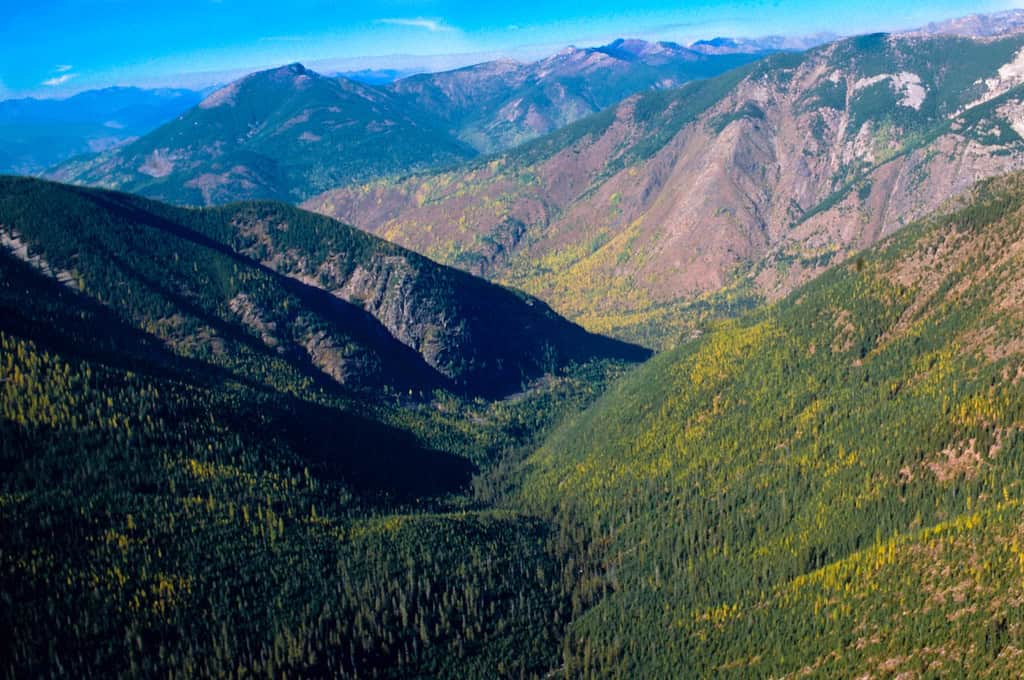
©"Salmo-Priest Wilderness-Colville National Forest" by Forest Service Pacific Northwest Region is licensed under PDM 1.0. - Original / License
Abercrombie Mountain rises to approximately 7,300 feet in northeastern Washington’s Selkirk Mountains, making it the highest point in Stevens County. Located within the Colville National Forest, the mountain is notable for its topographic prominence, meaning it rises substantially above the surrounding landscape. On a clear day, visitors approaching the summit can enjoy sweeping views across the forests and mountains of northeastern Washington, with neighboring Idaho and Canada also visible from some vantage points. The mountain was named for U.S. Army officer William R. Abercrombie, who explored parts of the region during the 19th century. Compared with many of Washington’s more technical alpine peaks, Abercrombie offers a relatively approachable summit hike during favorable conditions, although the trail still involves substantial elevation gain. Its remote setting and expansive views make it a worthwhile destination for hikers interested in exploring Washington beyond the Cascades.
19. Unicorn Peak
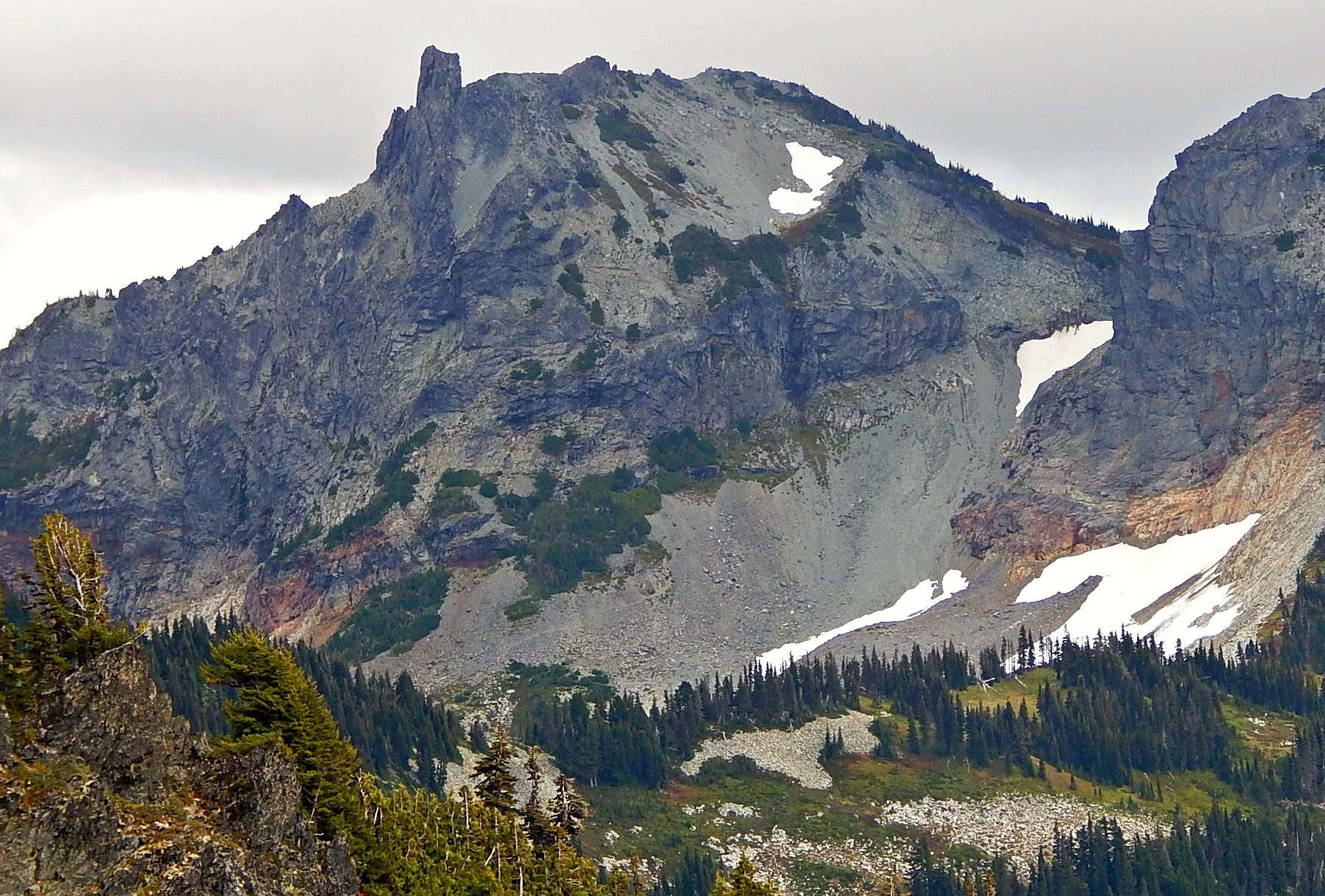
©"Unicorn Peak Mount Rainier National Park 2016" by Ron Clausen is licensed under BY-SA 4.0. - Original / License
Unicorn Peak may sound like something from a fantasy novel, but it’s a real mountain in Mount Rainier National Park. Rising approximately 6,971 feet, it’s the highest summit in the Tatoosh Range, a collection of dramatic peaks located south of Mount Rainier. The mountain gets its name from its distinctive rocky summit, which resembles a horn rising above the surrounding ridgelines. Although Unicorn Peak is much shorter than Rainier, it offers outstanding alpine scenery and rewarding views of the park’s enormous volcanic centerpiece. The surrounding area is popular with hikers, particularly around Snow Lake and the Tatoosh Range, but reaching Unicorn Peak’s summit is a different matter. The final ascent involves exposed scrambling and technical rock-climbing terrain, so visitors should not confuse the summit route with the nearby established hiking trails. Those looking for a less demanding experience can still enjoy impressive views from the surrounding trails.
20. Mount Stuart
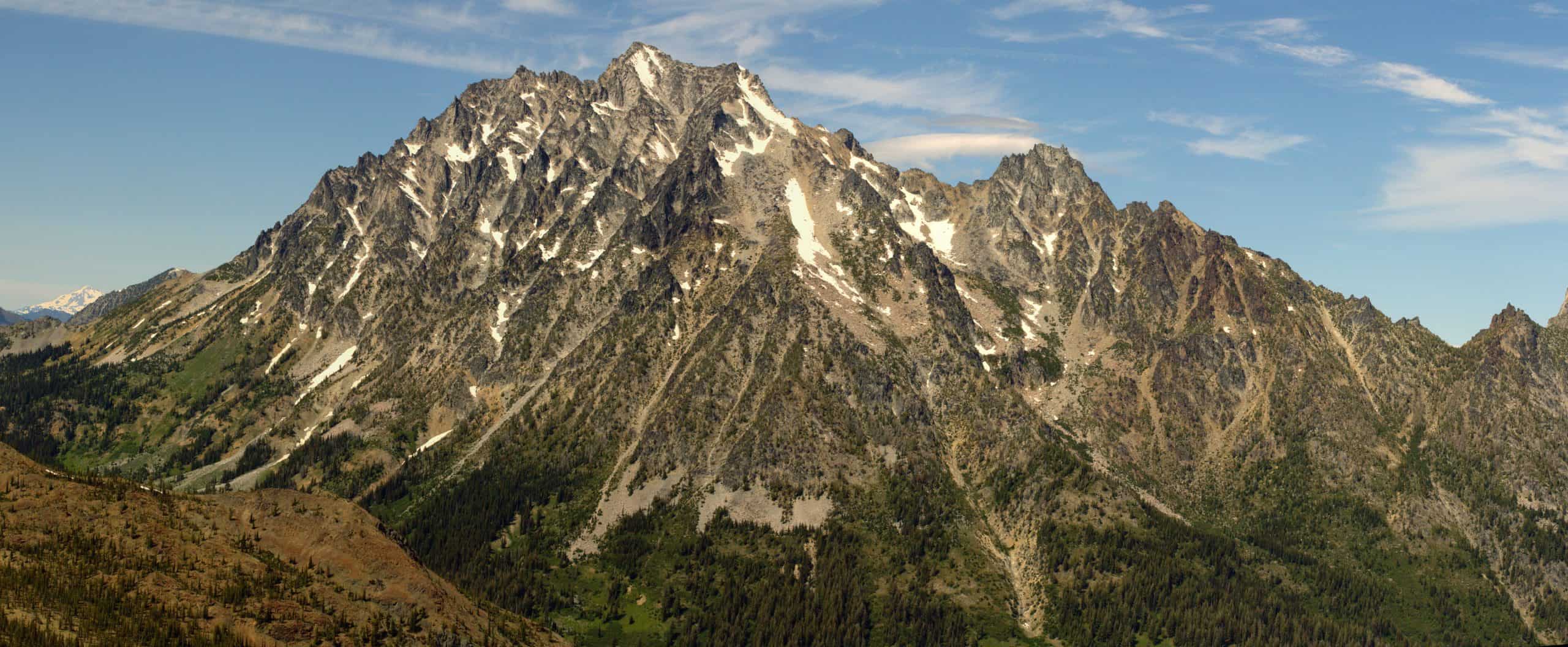
©"Mount Stuart 7814p" by Walter Siegmund (talk) is licensed under BY-SA 3.0. - Original / License
Mount Stuart stands approximately 9,415 feet tall in central Washington, making it one of the state’s highest nonvolcanic mountains. Located in the Alpine Lakes Wilderness near the town of Cle Elum and the popular Enchantments region, it is the highest summit in the Stuart Range and a major landmark in the central Cascades. The mountain is especially recognizable for its enormous granite faces, steep ridges, and imposing profile. Mount Stuart was named in memory of Jimmie Stuart, a member of an early surveying party who was killed in 1851. Today, the mountain attracts experienced climbers looking for challenging alpine routes, while hikers can enjoy the surrounding scenery from destinations such as Lake Stuart and nearby wilderness trails. The commonly used Cascadian Couloir route is still a strenuous mountaineering undertaking involving loose rock and considerable elevation gain. For most visitors, the views from nearby trails provide a memorable experience without the hazards of a summit attempt.

