
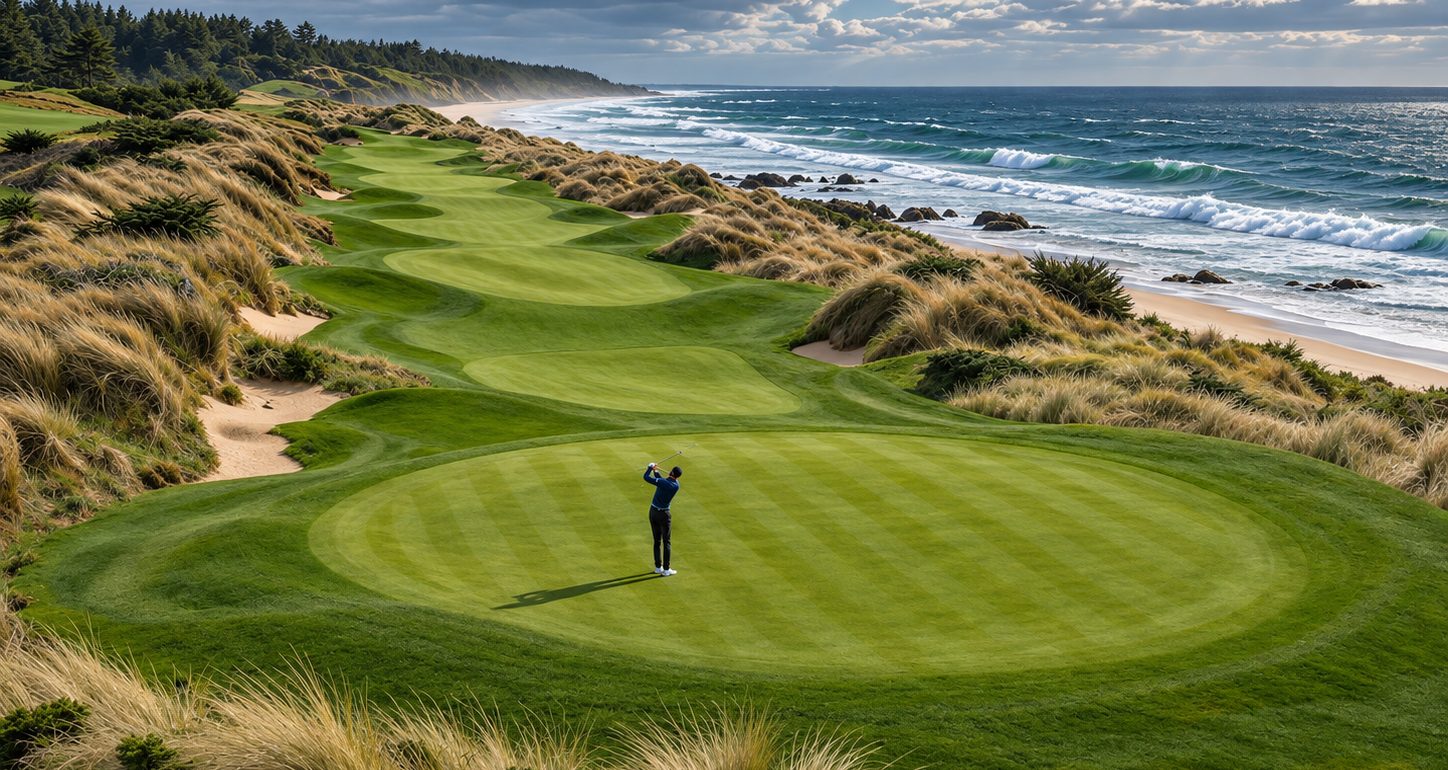
The Pacific Northwest makes a pretty convincing case for building a vacation around a round of golf. One day you can play above the Pacific with the wind coming off the water, the next day, you might be surrounded by Douglas firs, high-desert lava rock, or the open hills of Eastern Washington. Courses across Washington, Oregon, and Idaho make the most of those very different landscapes.
There is serious golf here, too. Several courses have hosted national championships, while others have become destinations because of their design, scenery, or both. You do not have to be a professional to appreciate them, but you should pay attention to how they operate. Some are public, some require a resort stay, and a few are private clubs where access is limited to members and their guests.
These 12 courses offer a cross-section of what makes golf in the Pacific Northwest so interesting. Whether you are planning a dedicated golf trip or adding a round to a longer getaway, check seasonal schedules and tee-time rules before making the drive. A beautiful course is not much use if you cannot get onto it.
1. Chambers Bay – University Place, Washington
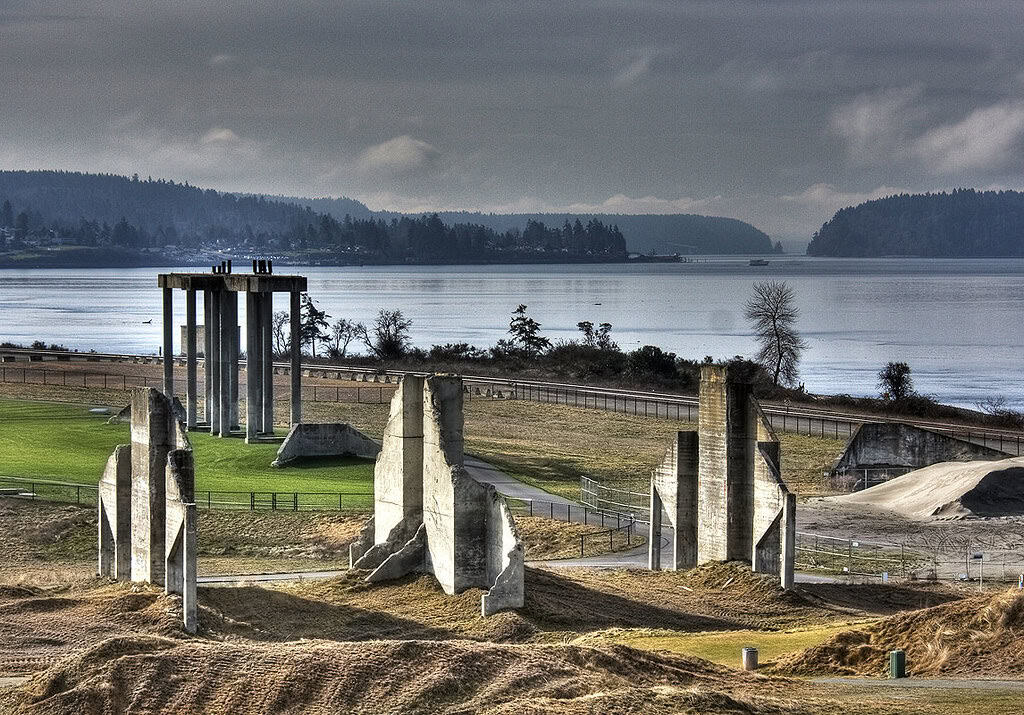
©"Ruins at Chambers Bay Golf Course" by Michael & Sherry Martin is licensed under BY-ND 2.0. - Original / License
If an old gravel pit sounds like an unlikely place to build a championship golf course, Chambers Bay will change your mind. The Robert Trent Jones II design opened in 2007 on a former sand-and-gravel mine overlooking Puget Sound. Wide fairways, steep contours, and an exposed setting give it a links-style feel, even though you are nowhere near Scotland. The course hosted the 2015 U.S. Open, won by Jordan Spieth, but it is also open to the public. One thing to know before booking: Chambers Bay is walking-only, and those dramatic hills make 18 holes a workout. Bring comfortable shoes and be ready to use the ground game when the wind picks up.
2. Coeur d’Alene Resort Golf Course – Coeur d’Alene, Idaho
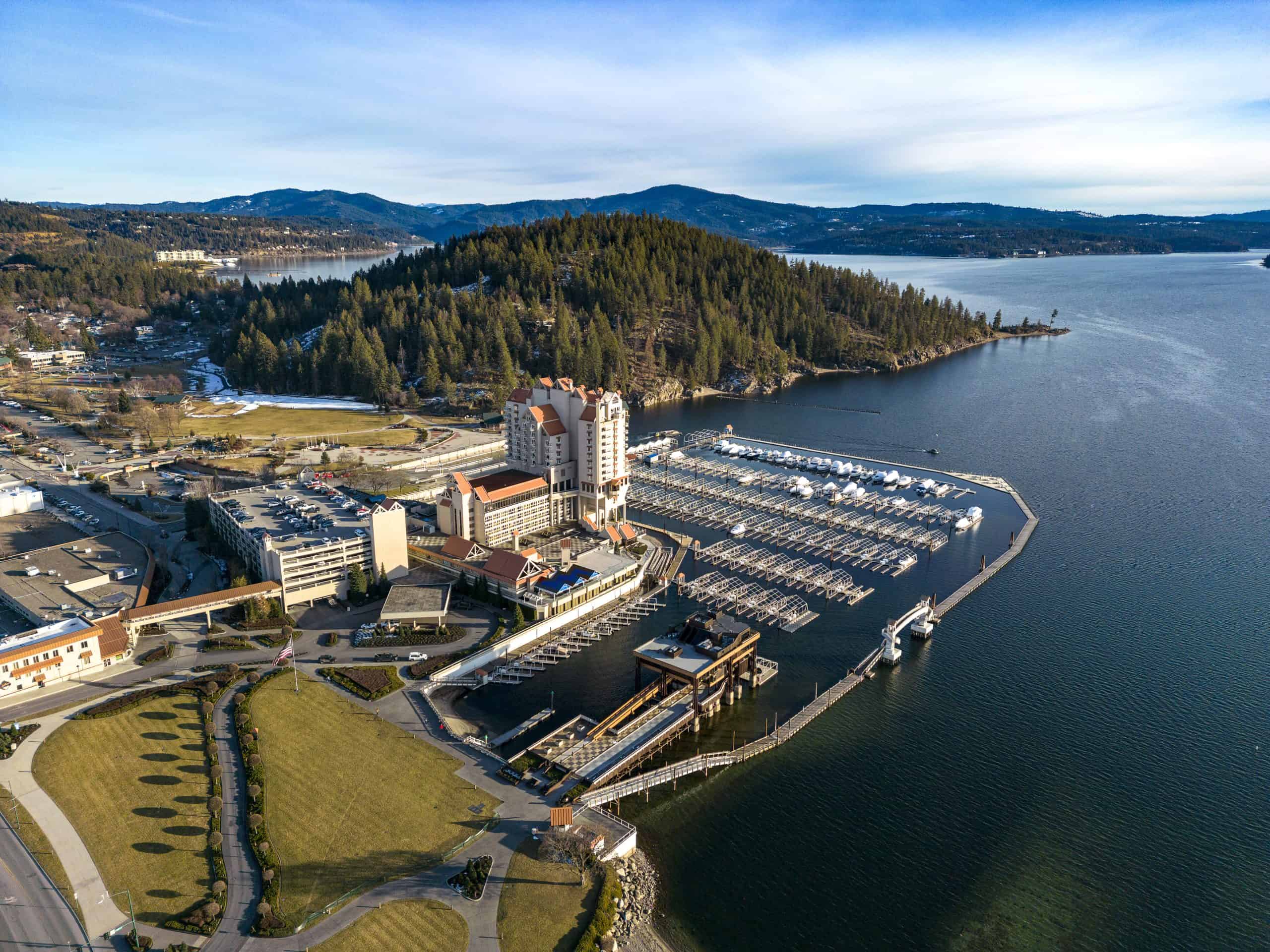
©"Coeur d'Alene Resort (Main hotel; Facing southeast; 2023-02-16)" by Locke Cole is licensed under BY-SA 4.0. - Original / License
Most golf trips do not begin with a boat ride. At the Coeur d’Alene Resort, you can take a seven-minute mahogany water taxi across the lake before playing a course designed by Scott Miller. The real conversation starter is the par-3 14th, home to a 2,200-ton floating green that moves using an underwater cable system. Depending on the tee and daily setup, the shot can play from roughly 90 to 220 yards. A separate boat takes golfers out to the green to finish the hole. The rest of the course has plenty going for it, too, including lake views, carefully maintained fairways, and forecaddie service. This is as much a resort experience as a round of golf.
3. Tetherow Golf Club – Bend, Oregon
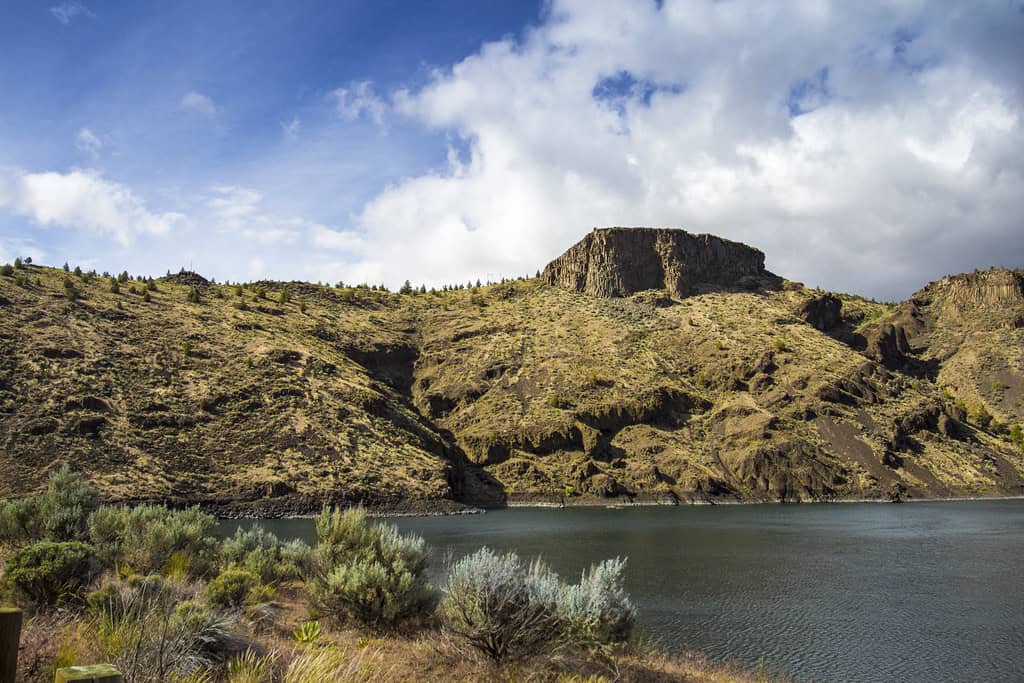
©"Prineville Reservoir, Oregon" by Bonnie Moreland (free images) is licensed under PDM 1.0. - Original / License
Bend is a long way from the ocean, but Tetherow borrows some of the best ideas from seaside golf. David McLay Kidd designed this 18-hole course around rolling terrain, big contours, and approach shots that reward a little imagination. Its blend of fine fescue and Colonial bentgrass helps create firm playing conditions, so running the ball toward a green can be just as useful as flying it there. Cascade Mountain views and the surrounding high desert give the course its own identity, and on-site lodging makes it easy to build a trip around a few rounds. Public tee times are available, but golf is seasonal here, generally running from spring into fall.
4. Wine Valley Golf Club – Walla Walla, Washington
©"Palouse hills northeast of Walla Walla" by Lynn Suckow from Walla Walla, WA, USA is licensed under BY-SA 2.0. - Original / License
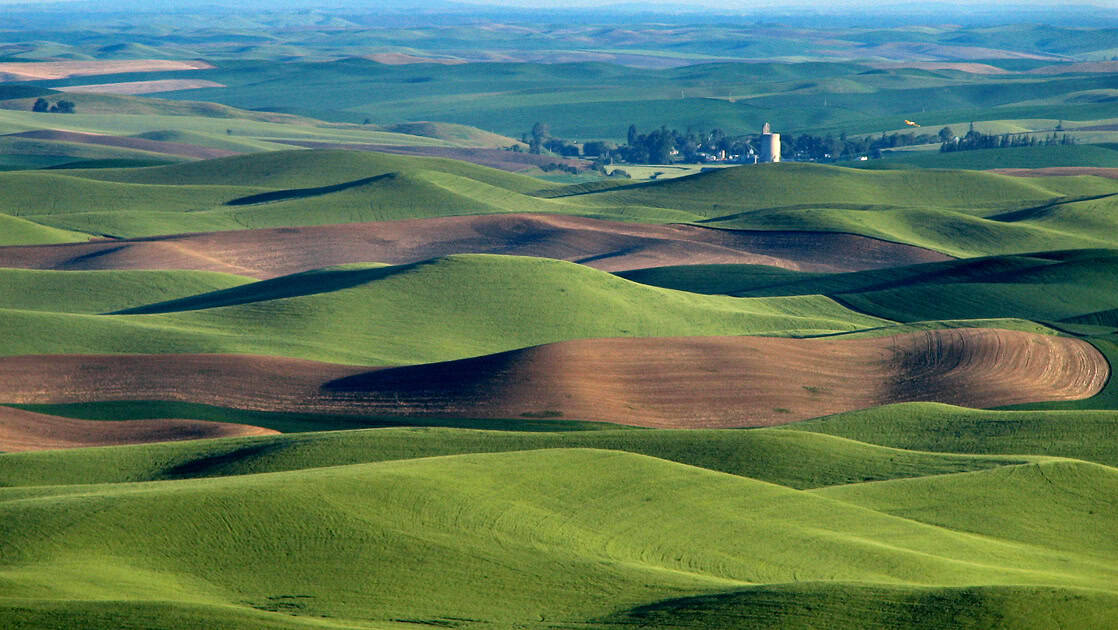
Walla Walla has more to offer than wine tasting. A few miles west of town, Wine Valley Golf Club stretches across open prairie, with long sightlines and rolling ground that make you think about where to place each shot. Designed by Dan Hixson and opened in 2009, the course favors strategic angles and creative approaches rather than narrow corridors lined with trees. Wind can be a real factor, but the generous playing areas keep it from feeling unnecessarily punishing. Wine Valley is open to the public and has a strong competitive resume, including hosting a U.S. Open Final Qualifier in 2025. Play a round in the afternoon and you still have time to enjoy Walla Walla’s restaurants and wineries afterward.
5. Crosswater Club – Sunriver, Oregon
©"Last of the Day" by Kirt Edblom is licensed under BY-SA 2.0. - Original / License
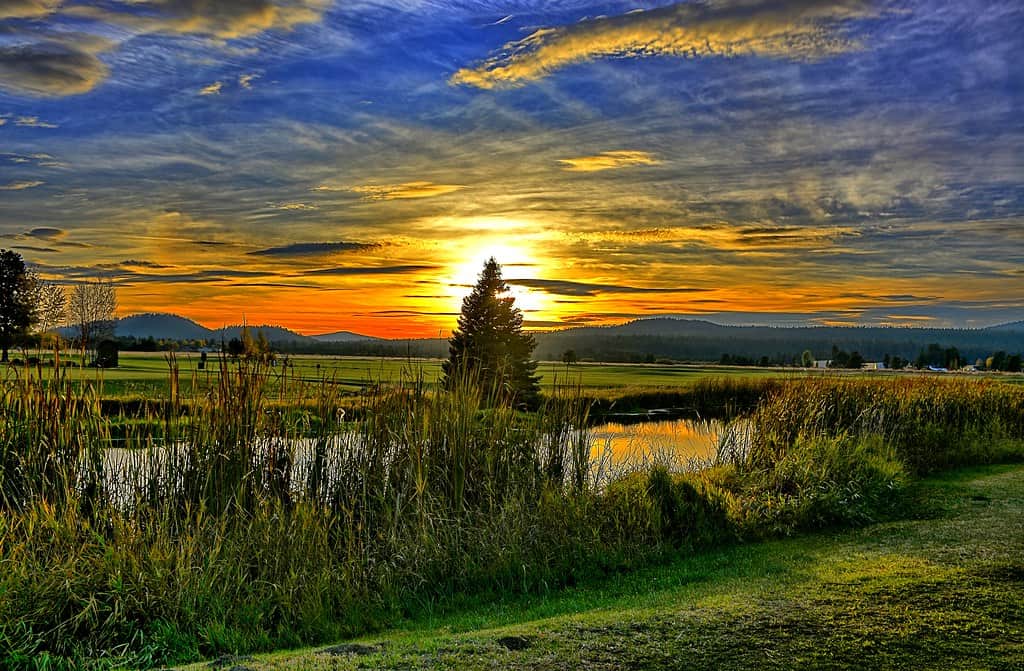
Crosswater is a good reminder that some of the region’s best golf requires more planning than simply picking a tee time online. The Bob Cupp-designed course sits at Sunriver Resort on roughly 600 acres of woodland, wetlands, and open ground. The Deschutes and Little Deschutes rivers can come into play as many as seven times, depending on which tees you choose. Between the water, broad fairways, and Central Oregon scenery, the course offers a very different experience from the coast’s dune-lined layouts. Crosswater is private, but registered Sunriver Resort guests can play alongside club members. If this is the course that brings you to Sunriver, arrange the lodging and golf reservation together.
6. Gamble Sands – Brewster, Washington
©"Columbia River near Brewster, WA. (36656000600)" by Robert Ashworth from Bellingham, WA., USA is licensed under BY 2.0. - Original / License
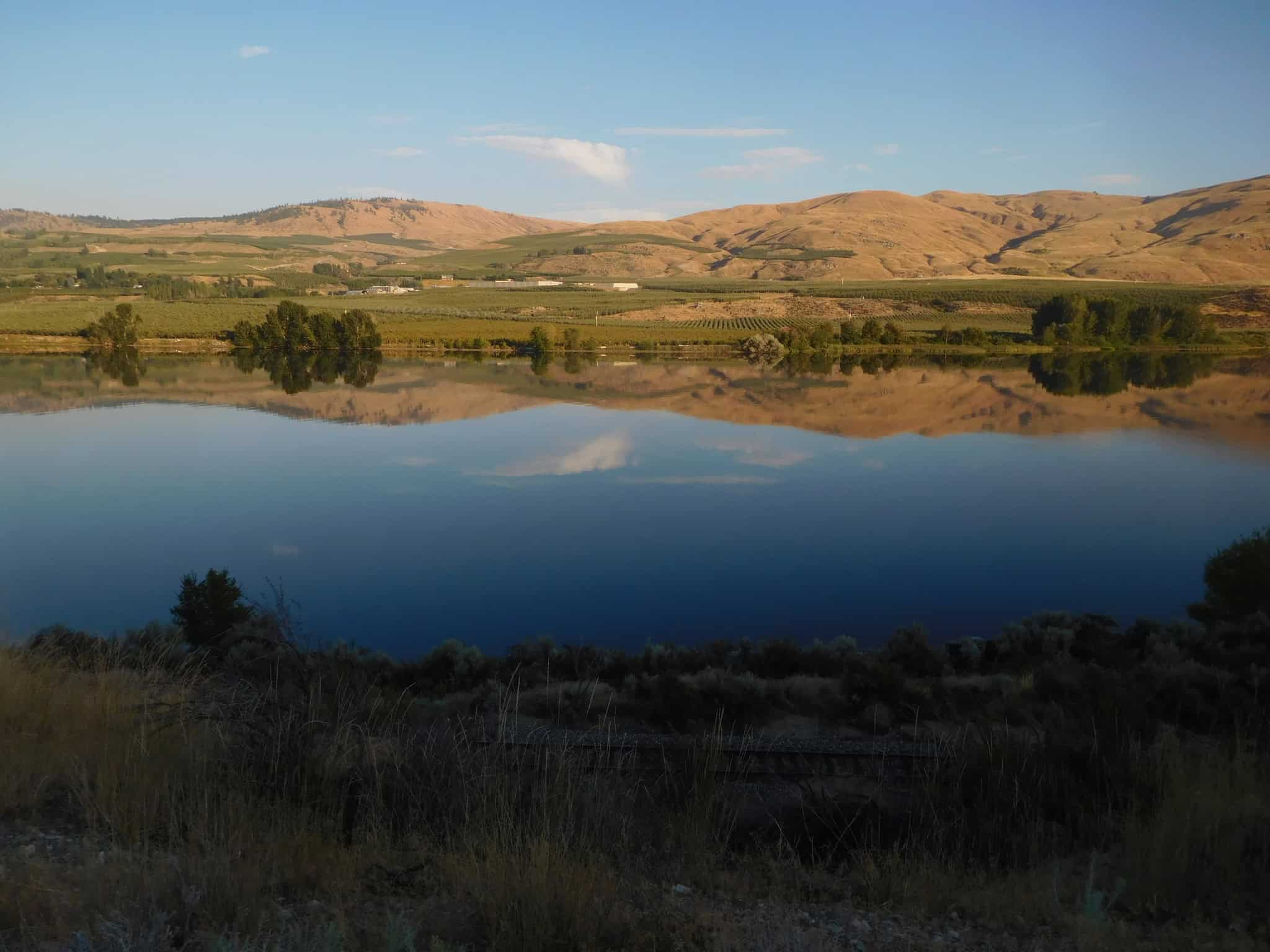
Gamble Sands has become more than a one-course stop above the Columbia River. Its original David McLay Kidd design opened in 2014, using wide fairways, firm turf, and strategic angles to make golf approachable without making it predictable. The resort later added Quicksands, a 14-hole short course, and in 2025 opened Scarecrow, a second full-length course designed by Kidd with Nick Schaan. That gives visiting golfers two 18-hole options plus a shorter round, all with the wide-open scenery of the Columbia River Valley. There is lodging on-site, too, which is useful because once you see the terrain, playing just one round might seem like a missed opportunity.
7. Salish Cliffs Golf Club – Shelton, Washington

©"Golf - Retired" by aag_photos is licensed under BY-SA 2.0. - Original / License
Salish Cliffs trades ocean views for the kind of forest scenery that feels unmistakably Northwest. Near Shelton, the Gene Bates-designed course moves through wooded hills with major elevation changes and views across the Kamilche Valley. It opened in 2011 and is owned by the Squaxin Island Tribe, with Little Creek Casino Resort next door. The course reaches 7,269 yards from its championship tees, though golfers can choose a shorter setup. Salish Cliffs also has an environmental distinction: in 2012 it became the first golf course in the world to receive Salmon-Safe certification. Check the club rules before arriving, since the course currently requires carts rather than walking.
8. Pumpkin Ridge Golf Club – North Plains, Oregon
©"IMG_2889" by greenjacket88 is licensed under BY-SA 2.0. - Original / License
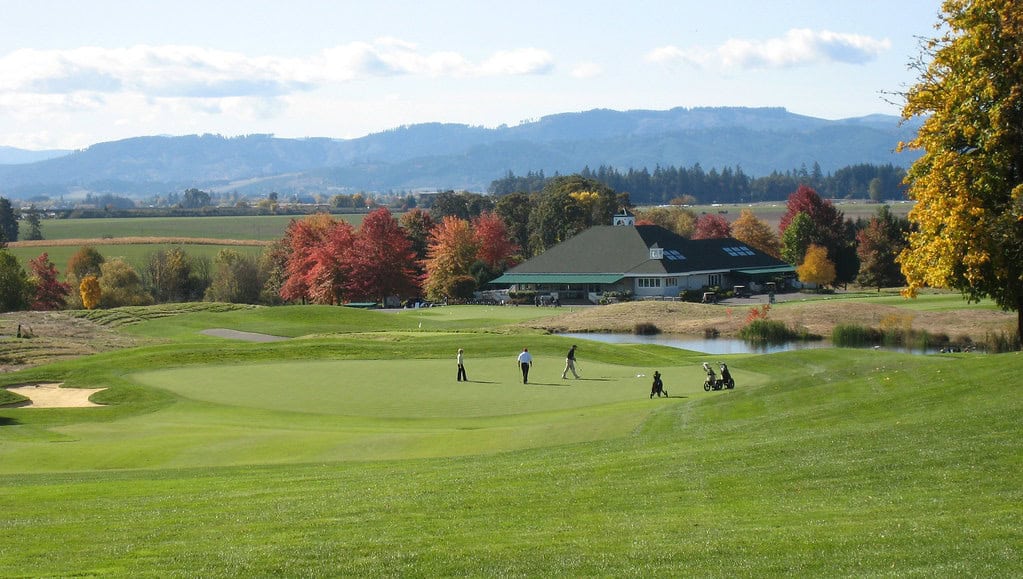
Pumpkin Ridge has the kind of tournament history that makes golf fans recognize the name immediately. Its two Bob Cupp courses sit outside Portland, but access is different at each one. Ghost Creek is open to the public, while Witch Hollow is reserved for members and their guests. Witch Hollow hosted the 1996 U.S. Amateur, where Tiger Woods won his third straight title after an extraordinary comeback against Steve Scott. The property has also hosted multiple U.S. Women’s Opens and other major events. For most traveling golfers, Ghost Creek is the course to book. Its rolling terrain, trees, bunkers, and water hazards still give you a taste of a venue with a serious championship pedigree.
9. Pronghorn Golf Club – Bend, Oregon
©Mike Albright Photography/Shutterstock.com
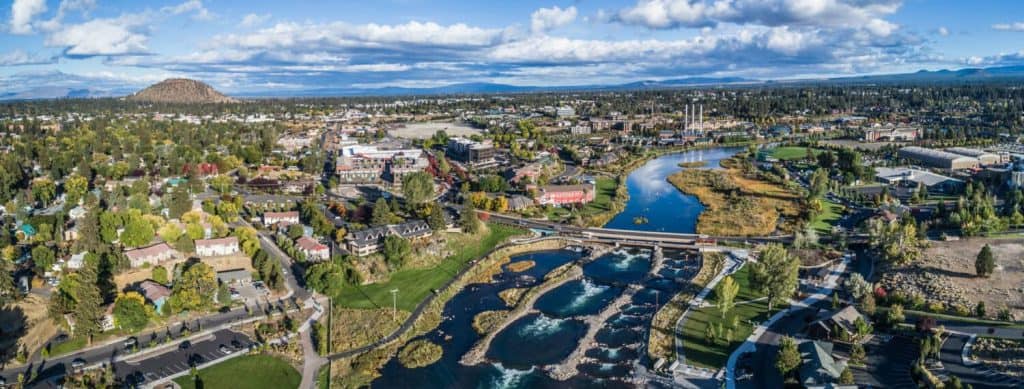
Pronghorn looks and feels different from the tree-lined courses many people associate with the Northwest. Part of Juniper Preserve near Bend, it sits among juniper trees, old lava-rock formations, and sweeping high-desert views. The Jack Nicklaus Signature Course is the main option for resort guests and visiting golfers, with its mix of strategy and playability. There is also a Tom Fazio Championship Course, including a par-3 eighth hole featuring an exposed lava tube and a 45-foot canyon, but access is more restricted. The Fazio course is generally members-only, although selected resort packages have offered opportunities to play it. Before booking a golf getaway here, confirm which course your reservation includes.
10. Sahalee Country Club – Sammamish, Washington
©"Villa Marina and Lake Sammamish from the sky on a quiet Saturday morning" by Marty the Adventurer is licensed under BY 2.0. - Original / License
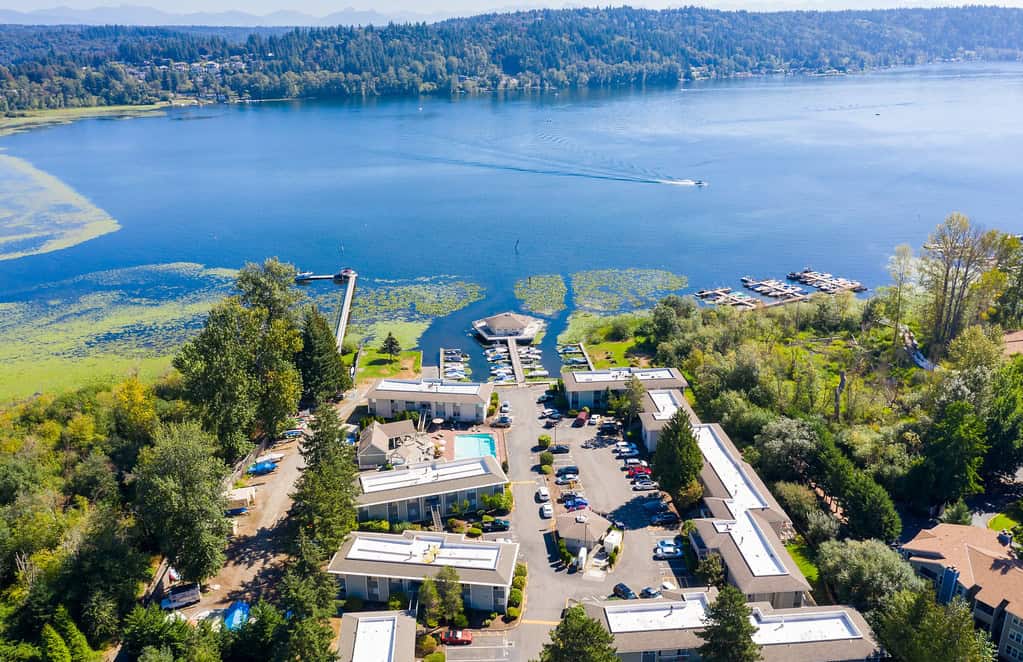
If you enjoy trying to thread a tee shot between towering cedars and Douglas firs, Sahalee should have your attention. This private Sammamish club has 27 holes originally designed by Ted Robinson, with later updates by Rees Jones. Its narrow playing corridors reward accuracy more than brute strength. Sahalee hosted the 1998 PGA Championship, the 2010 U.S. Senior Open, and the KPMG Women’s PGA Championship in both 2016 and 2024. Those events helped establish its reputation as one of the region’s major championship venues. There is an important catch for travelers, though: Sahalee is open only to members and their guests. Admire the course and its history, but do not count on booking a public tee time.
11. The Reserve Vineyards & Golf Club – Hillsboro, Oregon
©"File:The Reserve Golf Club clubhouse - Oregon.JPG" by M.O. Stevens is licensed under BY-SA 3.0. - Original / License
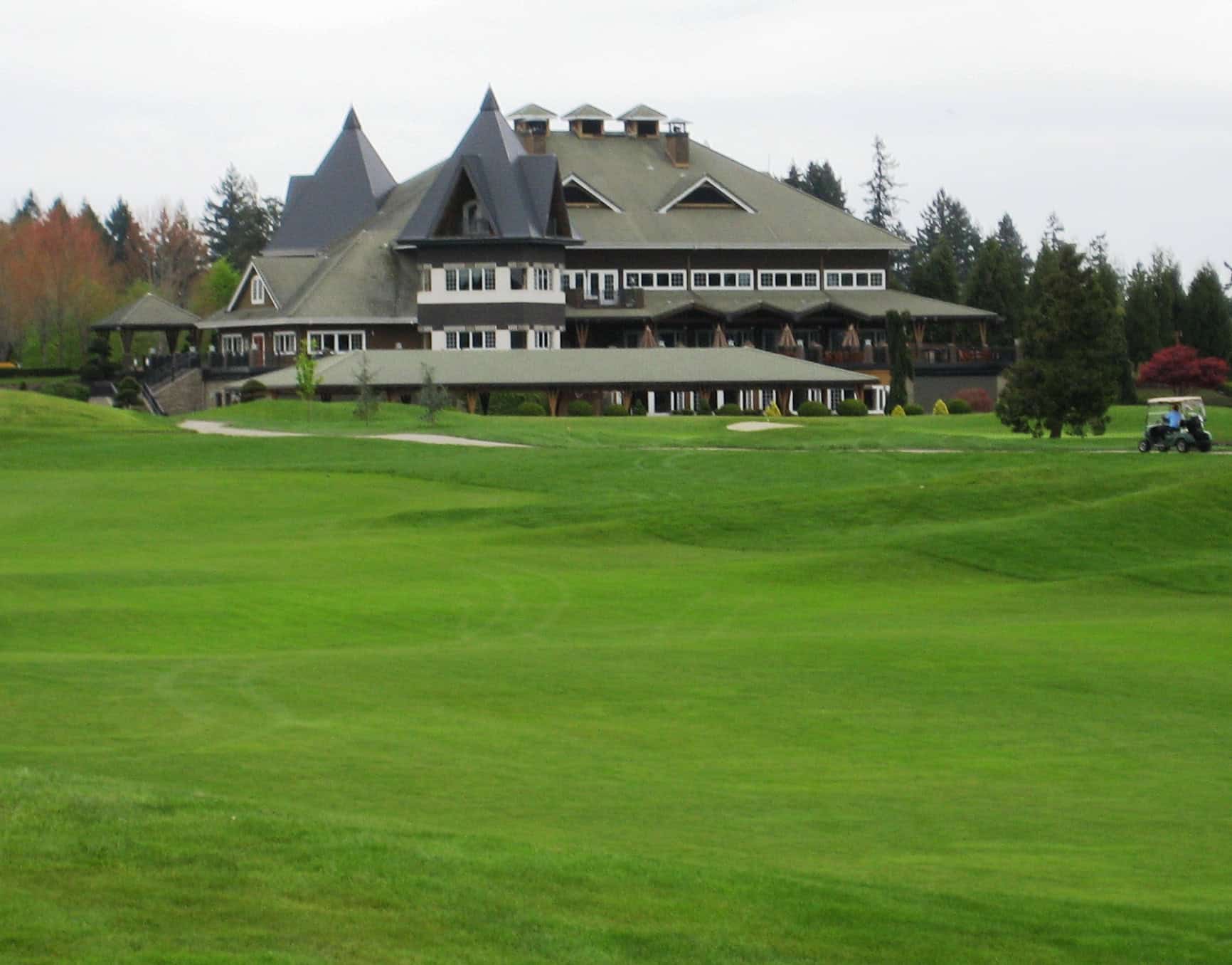
The Reserve gives golfers two distinct courses without requiring a drive deep into the mountains or out to the coast. In Hillsboro, west of Portland, Bob Cupp’s North Course features open, links-inspired shaping, while John Fought’s South Course is more traditional, with mature trees, rolling fairways, and plenty of bunkers. The club rotates which course is available to public players during the month, so check the schedule if you have your heart set on one design. The Reserve has also hosted events including the JELD-WEN Tradition, a PGA Tour Champions major, and it offers a large practice facility. For visitors staying around Portland, it is an easy course to work into the trip.
12. Bandon Dunes Golf Resort – Bandon, Oregon
©"File:Bandon Dunes Resort-1.jpg" by Visitor7 is licensed under BY-SA 3.0. - Original / License
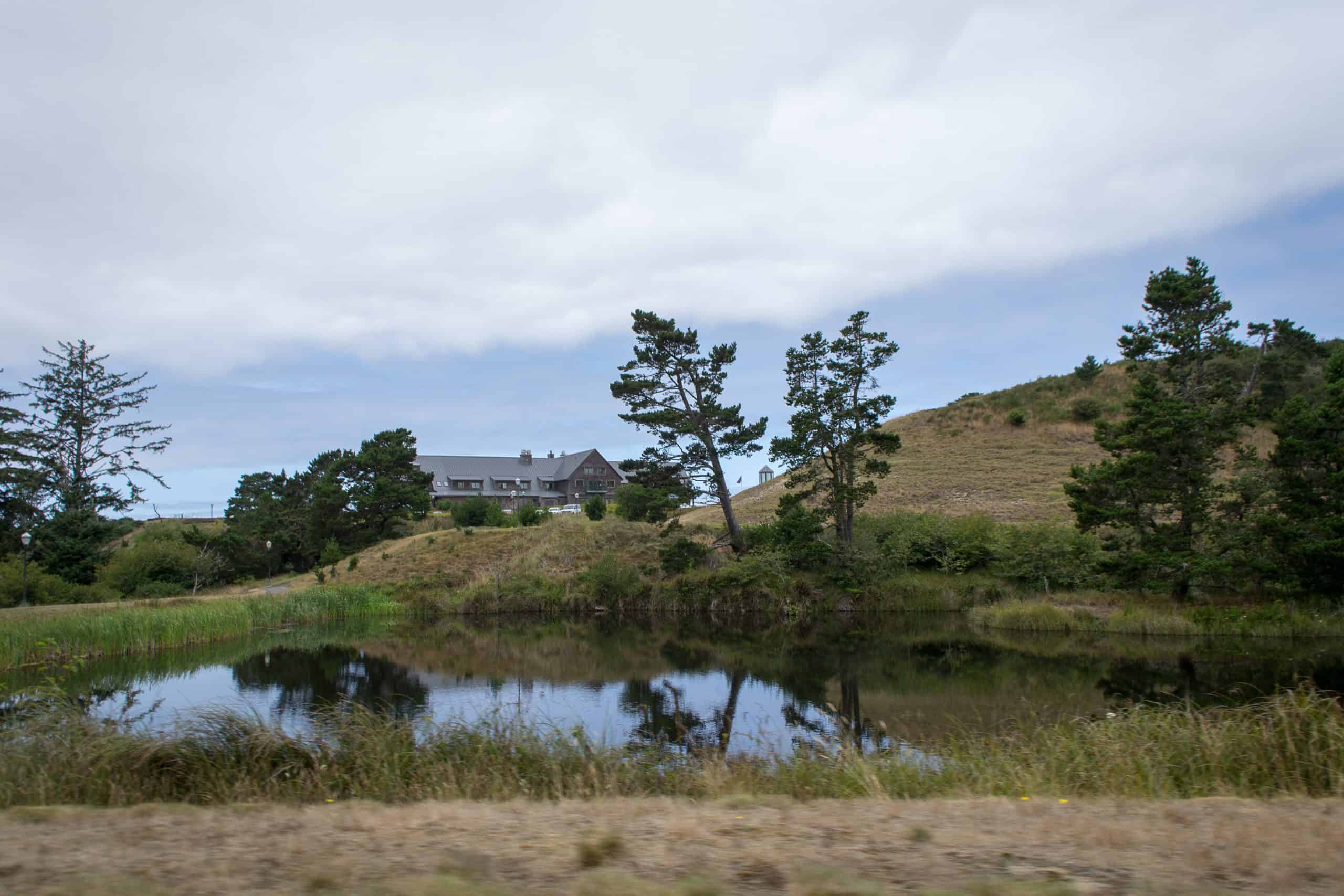
There is a reason Bandon Dunes has become a destination in its own right. The resort opened its first course, designed by David McLay Kidd, in 1999 and now offers seven distinct layouts along the Southern Oregon coast. Five are full-length 18-hole courses, while Bandon Preserve and Shorty’s provide shorter par-3 rounds. That distinction matters when you are planning how much golf to fit into a stay. Across the property, expect wind, dunes, firm turf, ocean views, and plenty of opportunities to play the ball along the ground. Walking is central to the Bandon experience, and the resort has hosted major amateur events, including the U.S. Amateur and U.S. Women’s Amateur. Pack for changing weather and leave some room in the schedule for another round.

