
There are beautiful lakes all across the Pacific Northwest that feel like they belong in a movie or a postcard. Crystal clear, frigidly cold, and surrounded by evergreen forests. But if you talk to anyone who has lived in the region for any length of time, every lake seems to have its own secret or urban legend. There are sunken towns, mythical monsters, and even a body that turned to soap. Sometimes, the line between myth and reality gets blurred. Stories that have been told for so many years that no one remembers their origins.
The next time you’re out on the dock somewhere in Washington, Oregon, or Idaho, you won’t just have a great sight to look at, you’ll have the uncanny stories beneath the surface.
Lake Crescent, Washington
©"Lake Crescent at Olympic NP in WA" by Landscapes in The West is licensed under PDM 1.0. - Original / License
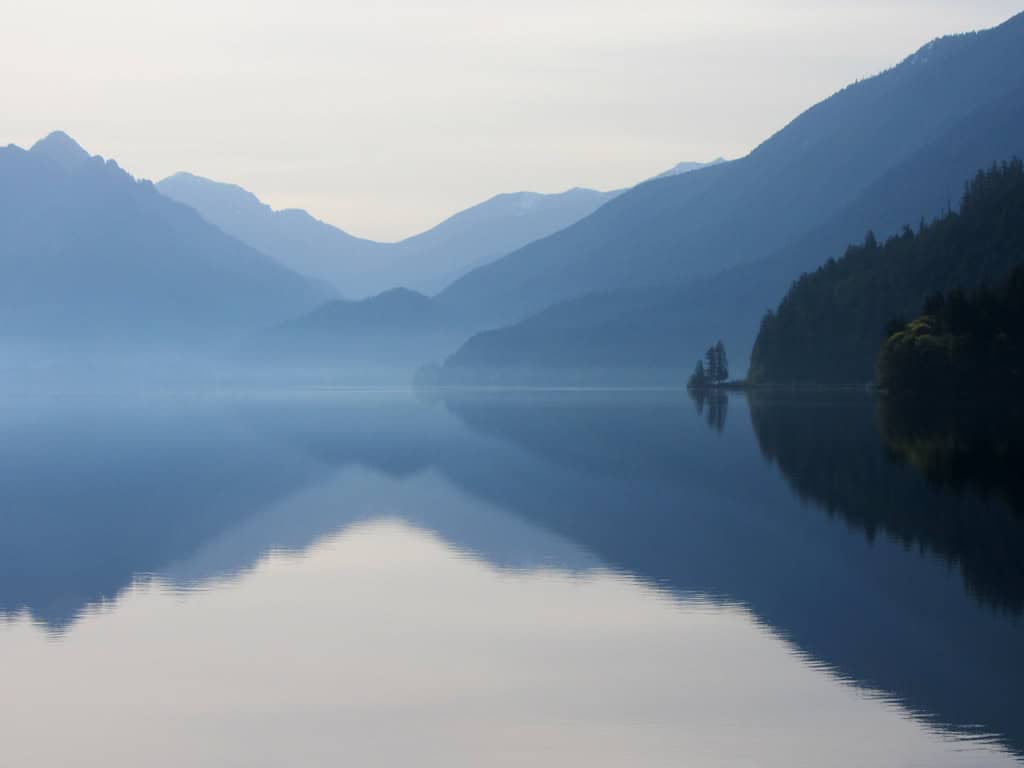
Lake Crescent on the Olympic Peninsula ranks among the most beautiful lakes in Washington State, where the water is crystal clear and deep blue, making the entire scene appear almost unreal. This location has also been the setting for one of the most notorious true crime cases in the area.
In 1940, the body of a woman wrapped in blankets and bound with ropes was discovered in the lake. The combination of the cold water and minerals in the lake made her skin turn into a soap-like substance, hence earning her the nickname of “Lady of the Lake.” Her husband was eventually convicted of the murder.
Years before this incident, the Klallam and Quileute peoples told their own story about how the lake was formed: a mythical battle near Mount Storm King so violent the mountain itself broke apart, dammed the valley, and created the lake. The locals claimed that the lake “never gave up its dead,” making it all the stranger that Hallie Illingworth’s body resurfaced years later.
Lake Chelan, Washington
©"Sunset over Lake Chelan" by pfly is licensed under BY-SA 2.0. - Original / License
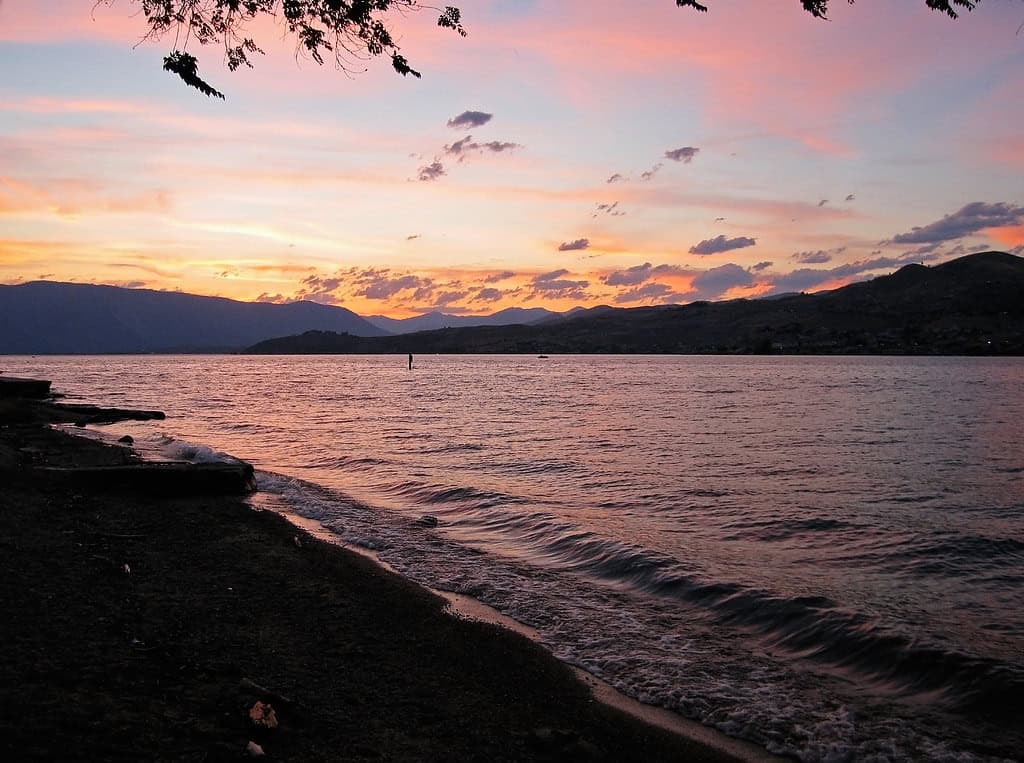
Lake Chelan is the third deepest lake in the country, with depths reaching up to 1,500 feet, and for generations, people swore it had no bottom at all. It is also believed that during World War II, the Navy attempted to find the depth of the lake using sonar testing but failed to do so.
Even before sonar testing could have been conducted, the Chelan Salish tribe had already shared tales about a monster known as N’hah’hahat’q, also called Tsilly, which is supposed to look like a snake with bat-like wings. According to the legends, it dwells deep in the waters of the lake. Early settlers also told a tale where a creature pulled a swimmer by the leg in 1892. Whatever’s actually down there, the lake’s depth alone is uncanny, and it’s the reason the legends stuck around.
Spirit Lake, Washington
©"Backcountry Ranger Viewing Spirit Lake and Mt St Helens, Gifford Pinchot National Forest" by Forest Service Pacific Northwest Region is licensed under PDM 1.0. - Original / License
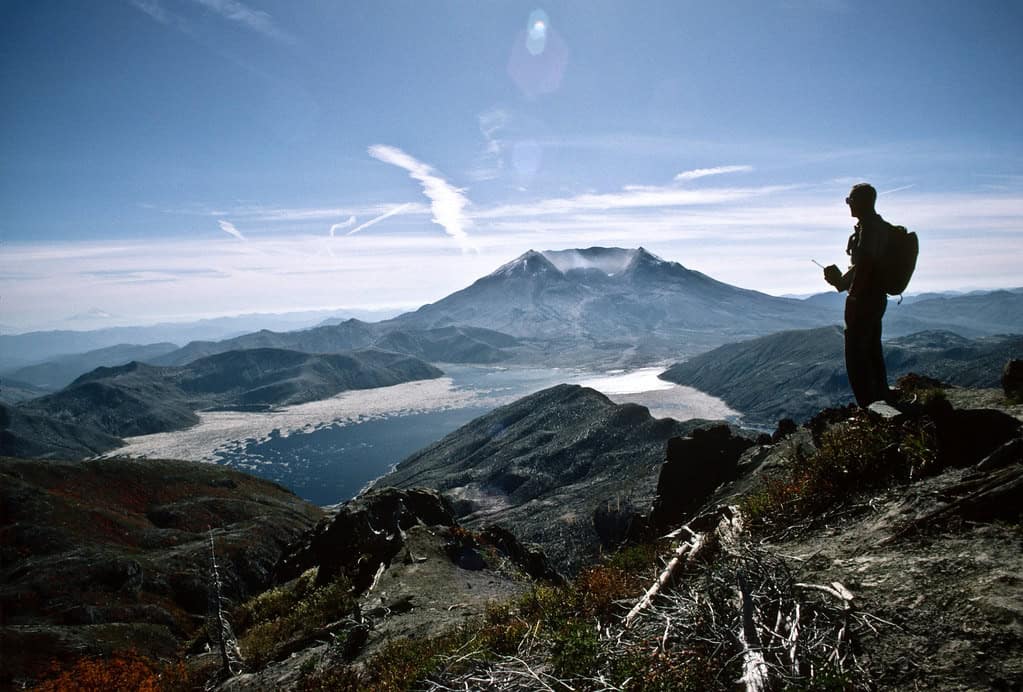
Before May 18, 1980, Spirit Lake was a pristine lake on the northern flank of Mount St. Helens. When the volcano’s north flank collapsed in the largest-known landslide in recorded history, the resulting eruption displaced the lake’s water entirely, sending a wave up to 850 feet up the opposing hillside and tearing out a million trees that were dragged back into the lake.
The floating trees initially covered 70 percent of the lake’s surface area. More than four decades after the disaster, that number has dropped to roughly 20 percent. The log mat, as it’s known, floats freely across the lake depending on which way the wind blows. Scientists now study it as part of the lake’s recovering ecosystem, but the logs are a visual reminder of what happened here.
Lake Cushman, Washington
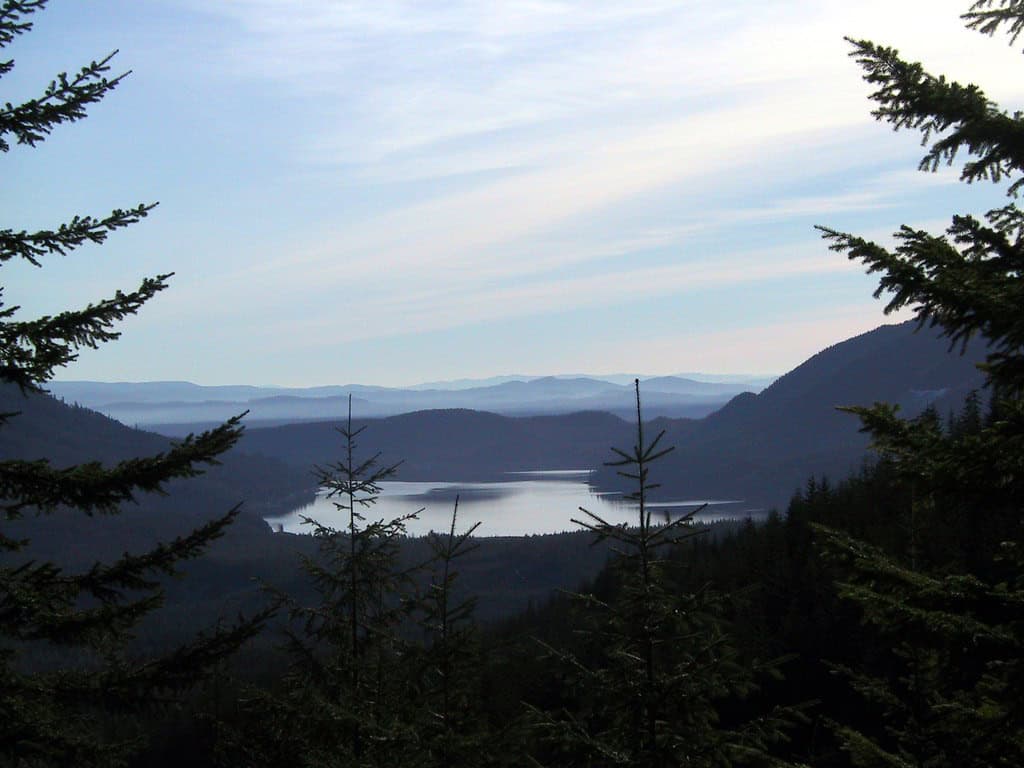
©"Lake Cushman" by Mom the Barbarian is licensed under BY 2.0. - Original / License
Lake Cushman, located on the Olympic Peninsula, is a great place for camping and boating. But before a dam raised the water level in the 1920s, the area was home to a resort and other structures built for visitors heading into the Olympics. There are many tales about what’s below the surface. Freedivers and recreational divers still make the trip out to explore what’s down there, and the stories they bring back have become part of the lake’s identity, passed around campfires at the water’s edge long after the sun goes down.
Crater Lake, Oregon
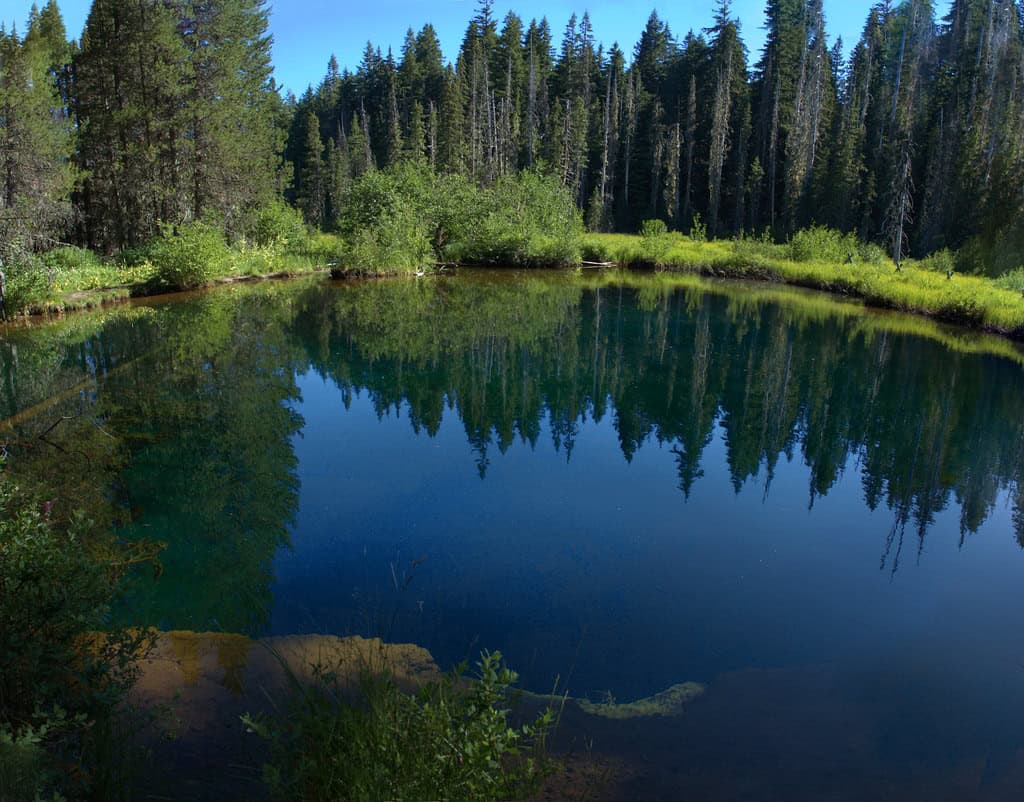
©"Little Crater Lake, Oregon" by Bonnie Moreland (free images) is licensed under PDM 1.0. - Original / License
Crater Lake has a unique, deep blue that looks almost artificial, which is already a good enough reason to visit. But there’s more. The Klamath tribe tells of a legend that explains how the lake was created in the first place. According to the tale, there was a fight between the spirits Llao, the chief of the underworld who lived under Mount Mazama, and Skell, the chief of the sky. Both sides suffered terrible losses before Skell finally drove Llao back underground, the mountain collapsed in on itself, and rain filled the crater to form the lake.
The Klamath people themselves were historically forbidden by shamans from even looking at the lake, believing that the sight of it could cause death. That prohibition lasted generations.
Rattlesnake Lake, Washington
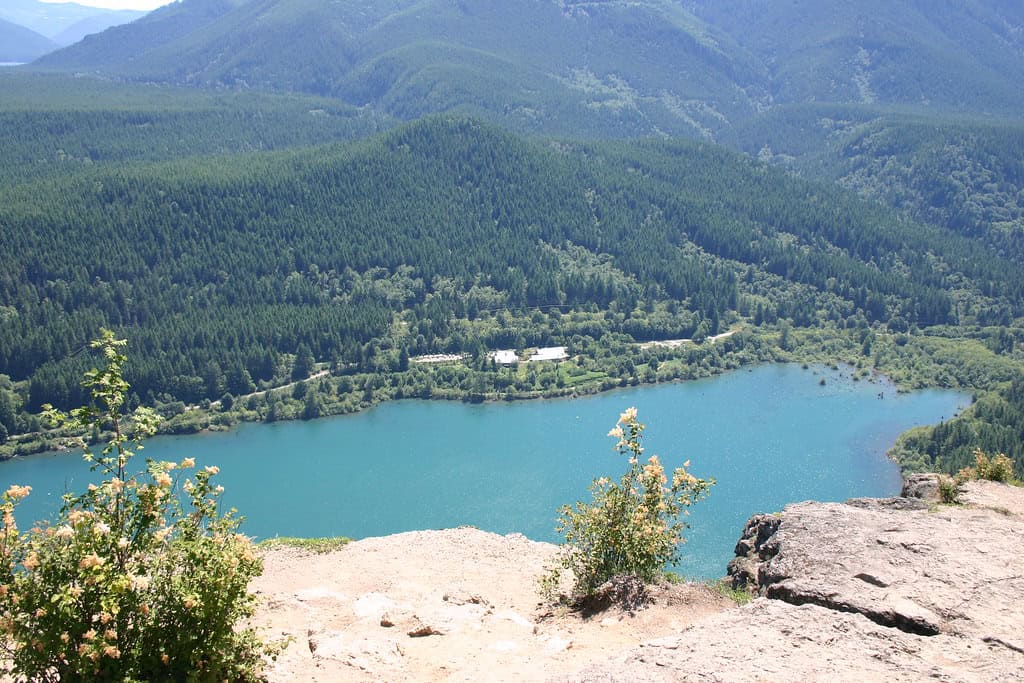
©"Rattlesnake Lake" by brianteutsch is licensed under BY 2.0. - Original / License
The Rattlesnake Lake area near North Bend seems like an ordinary place. It’s a common destination for swimmers, and it’s also the starting point for hiking Rattlesnake Ledge. But few know that a town called Moncton once stood here, where over 200 people lived. That town is submerged in the lake. When a new masonry dam was built uphill in 1915, the lake began to rise, slowly swallowing the town over the course of that summer. When the water is low, traces of the town foundations can be seen from shore. Since scuba diving is forbidden in the watershed, most people only find out about what’s underwater from word of mouth.
Devils Lake, Oregon
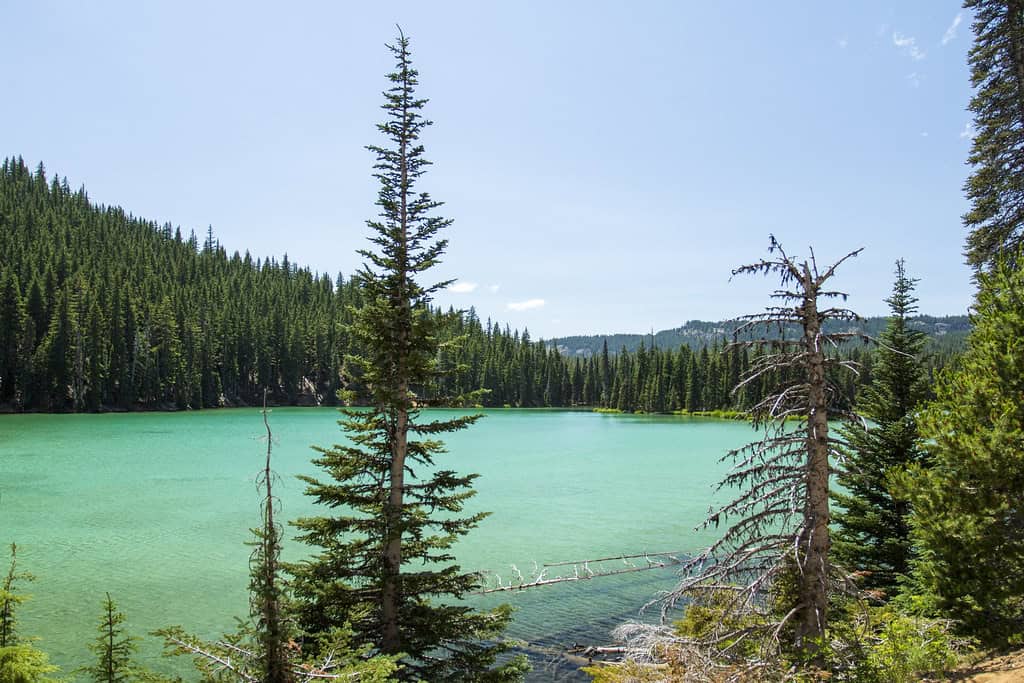
©"Devil's Lake in summer, Oregon" by Bonnie Moreland (free images) is licensed under PDM 1.0. - Original / License
Devils Lake can be found just to the east of Lincoln City along the coast of Oregon, and it is a calm, shallow body of water where paddlers and fishermen can be frequently spotted. But Native Americans tell the tale of the Devil’s Lake monster, which is depicted as having a massive tentacled body with an enormous head. According to the story, the monster once dragged a canoe loaded with warriors into the depths of the lake. Some residents even began leaving offerings at the shore as a means to appease the mythical creature. The Devil’s Lake legend is one of the oldest on this list and the one that has the most impact on the town surrounding it.
Lake Pend Oreille, Idaho
©Jeffrey T. Kreulen/Shutterstock.com
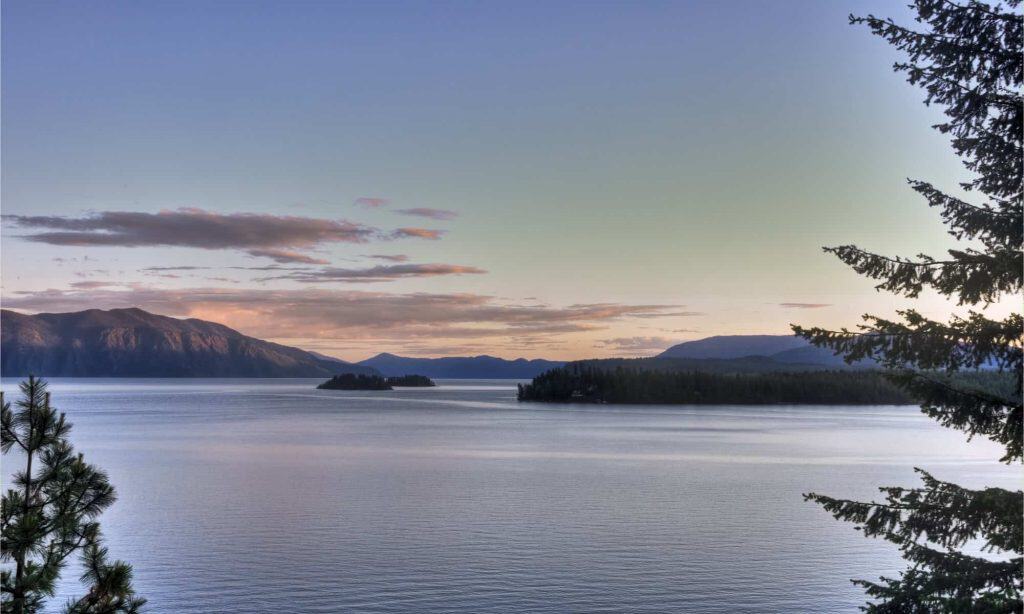
Lake Pend Oreille is the fifth deepest lake in America and sits in the panhandle of Idaho. It is said to be home to its very own resident monster, nicknamed “Paddler” since the 1940s. The creature is described as being gray, hump-backed, and moving in undulating patterns across the surface. Initial sightings coincided with the opening of a Navy submarine testing facility on the lake, so most researchers assume that the Paddler sightings were actually submarines, large sturgeons, or both.
One of the most popular sightings of the monster ended up being nothing more than a twelve-foot papier-mache catfish from a play that took place nearby. But the reputation stuck, and today, the Paddler is as much a landmark in Sandpoint as Lake Pend Oreille itself.
Payette Lake, Idaho
©"Payette Lake North Shore Sunrise" by Knowles Gallery is licensed under BY 2.0. - Original / License
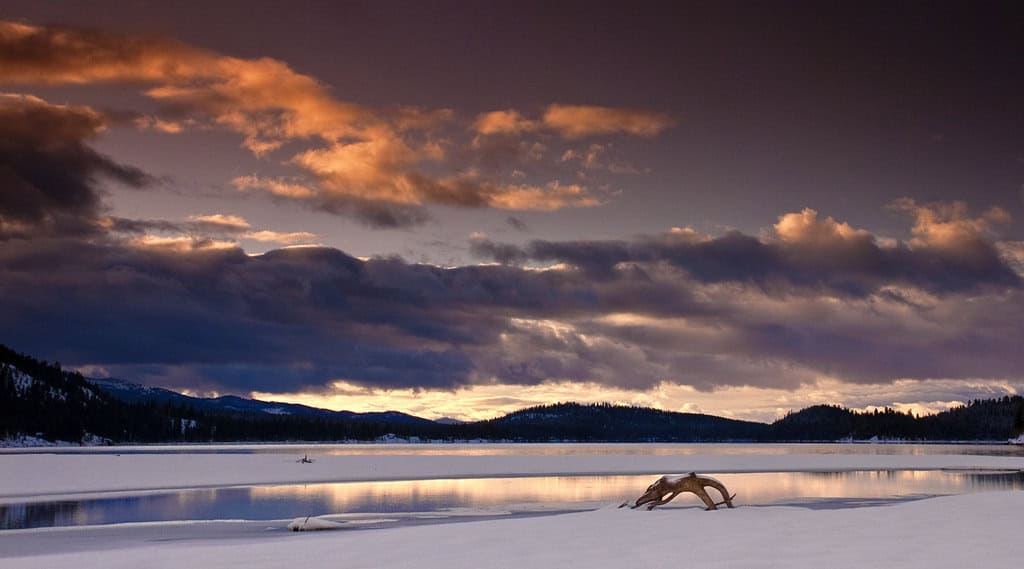
Payette Lake is right outside McCall in Idaho. It’s a lake formed by glaciers and it goes as deep as 400 feet below the surface. Long before settlers arrived, Native Americans in the area reportedly avoided its waters, believing an evil spirit lived there.
Today’s legend about the creature, called “Sharlie,” which was named through a competition in 1954, still lives on. It is said to be a 30 to 35-foot-long creature with a dinosaur-like head and a series of humps on its back. The creature was sighted from the 1950s to the end of the 1990s. Though there are a number of theories behind the sightings, one being that it is nothing more than a large sturgeon, Sharlie has become something close to a mascot for the town. There’s even a burger named after her at a local restaurant.
Soap Lake, Washington
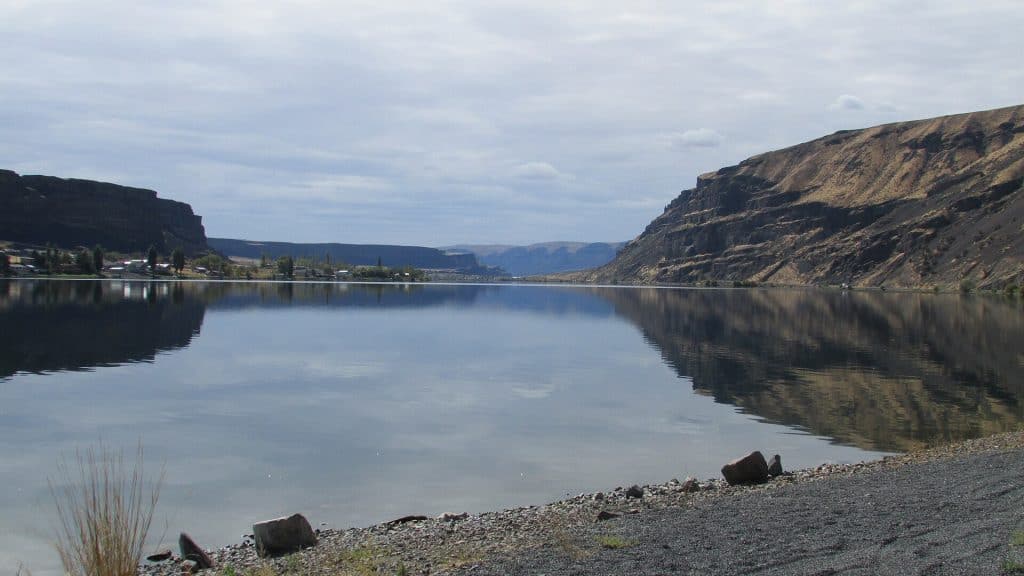
Although there is no monster or ghost legend at Soap Lake in Eastern Washington, this might easily be the most peculiar lake on this list, all due to some pretty remarkable natural features. Soap Lake is a meromictic soda lake with one of the highest mineral diversities of any lake on the planet, resulting in the foaming characteristic that lends the lake its name.
Local native tribes knew the lake as Smokiam, or “healing waters,” and opposing tribes would even stop fighting whenever they came to the lake to take advantage of its healing properties. At the beginning of the 20th century, the lake became a place where people suffering from various skin diseases came for treatment, and nowadays the town is marketed as “Washington’s Health Resort.” The lake’s chemistry is what makes it strange, not its history.

