
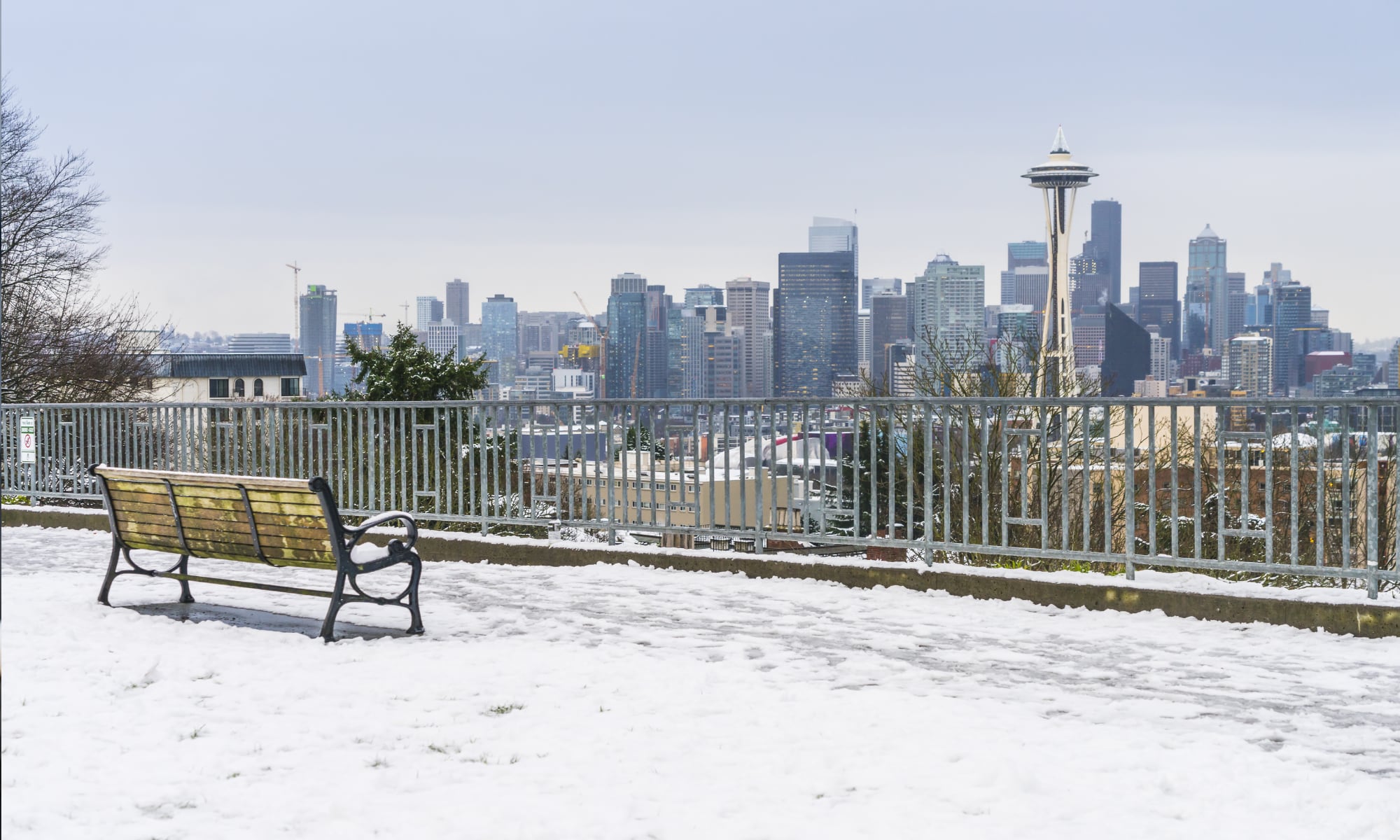
Winter is on the way. As we flip the calendar to November, the chance of snowfall in Seattle becomes very real. On average, the city sees measurable snow in November about once every five years. That is not a heavy snow record by any means, but it is also not unusual for a significant storm to strike early in the season.
Take 2010 for instance. On November 22, Seattle was hit with 2.5 inches of snow, enough to bring the city to a standstill. Cars were abandoned on the Interstate, buses struggled to move, and Sea-Tac Airport experienced major delays as the region tried to cope with the weather.
Once December arrives, the stakes get even higher. The biggest and most memorable snowstorms in Seattle’s history have almost all occurred in the heart of winter. With that in mind, let’s take a closer look at the largest snowstorms ever recorded in Seattle and how they shaped the city.
1. The Winter of 1968 to 1969

The winter of 1968-1969 saw an incredible 67.5 inches of snow (measured at Sea-Tac Airport). Several storms passed through. On December 31, 1968, 9.3 inches of snowfall was recorded in a day and then less than a month later on January 27, 1969, the city recorded 14.9 inches.
Seattle historian Paul Dorpat notes that the storms at the time were so extreme that one in every three drivers was “fishtailing” on the Mercer Street exit and hitting guard rails. Meanwhile, the Evergreen Point Floating Bridge was also extremely hazardous and filled with black ice.
2. The Winter of 1949 to 1950

1949 to 1950 came close to the snow record, hitting 63.6 inches in one winter. The biggest snowfall came on January 13, 1950, when 21.4 inches fell (other reports claim 20 inches). However, less than two weeks later the city was socked with another 10 inches on January 26, 1950.
Incredibly, that means that two of the snowiest days since World War 2 happened in just a two-week period. The winter of 1949-50 didn’t just have a lot of snow, it was also the coldest winter on record.
3. Winter of 1880 to 1881
There aren’t official records from this time, but a reported 64 inches fell during the winter season. As you can imagine, building standards weren’t as robust at the time and the winter saw several roofs collapse throughout the city.
The storm caused damage across the Northwest as it cut in from the Oregon Coast and moved inland. Portland saw gusts of up to 70 miles per hour, while Port Townsend reported more than 4 feet of snow accumulation. In Vancouver, Washington it was reported that 25% of trees were blown down by fierce wind gusts and snow drifts.
4. The Winter of 1915 to 1916
The most notable event in the winter of 1616-17 came on February 1, 1916, when a single-day record of 21.5 inches of snow dropped on Seattle. Across two days the total reached 38 inches.
The St. James Cathedral – which we rank as one of Seattle’s Most Famous Buildings – was nearly destroyed in the storm. Its roof collapsed under the intense snowfall.
5. The Winter of 2018-2019
Finally, we end with a snowstorm that became known as “Snowpocalypse” throughout Seattle. The two largest storms of the 21st century came in the winters of 2008-2009 and 2018-2019.
The winter of 2018-2019 saw about 21 inches throughout the winter while 2008-2009 saw 23 inches across the season. We’re adding the winter of 2018-2019 as more extreme because it featured most of its snowfall during February, which became the city’s snowiest month in 50 years.

