
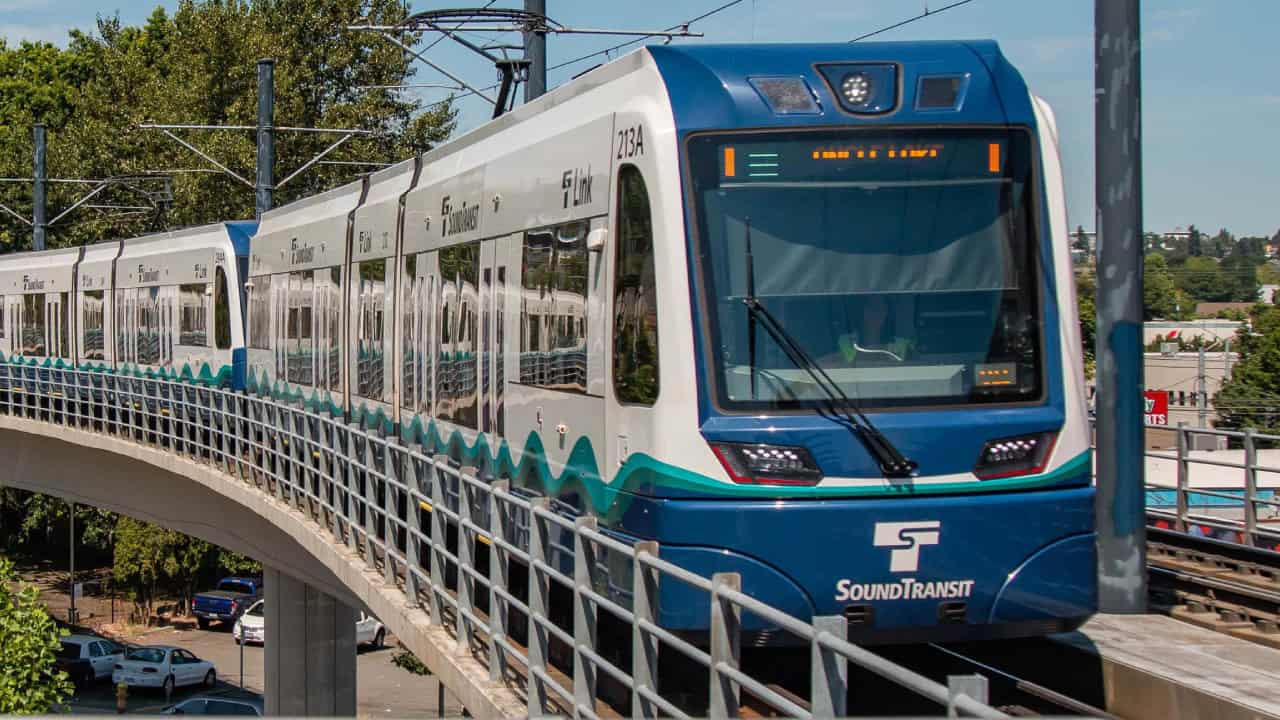
Seattle has never been shy about treating difficult geography as an engineering challenge. The city built around hills, waterways and stubborn traffic now has another distinction: the first passenger light rail service anywhere in the world to cross a floating bridge.
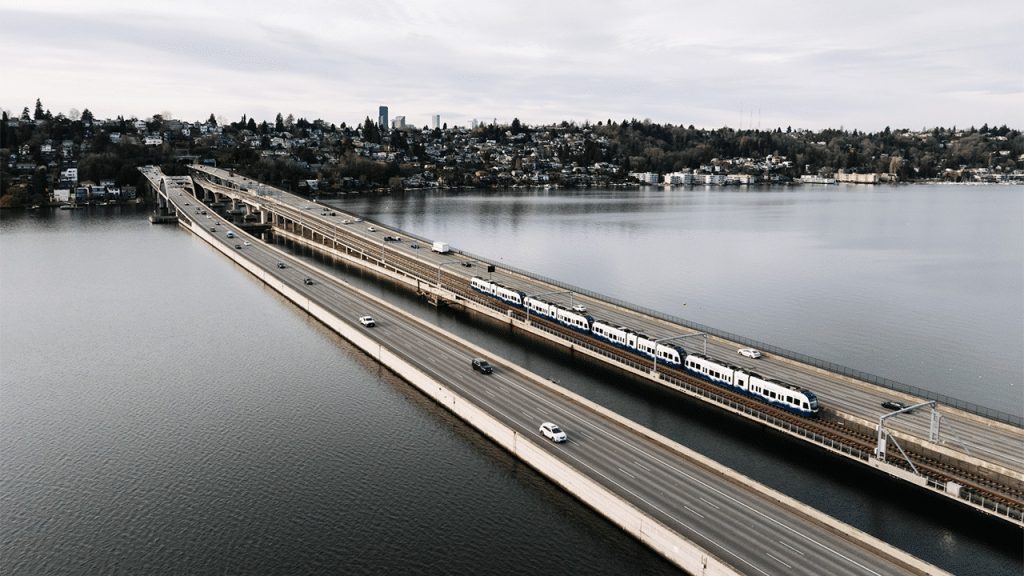
Sound Transit’s Crosslake Connection opened on March 28, 2026, carrying 2 Line trains across Lake Washington on the Homer M. Hadley Memorial Bridge. The opening finally joined Seattle and the Eastside by rail, giving riders a traffic-free route between downtown Seattle, Mercer Island, Bellevue and Redmond.
That alone would make it a major transportation story. The engineering beneath the tracks, the years of delays and the possibilities for car-free travel make it one of the most interesting new things to experience around Seattle.
©Seattle Municipal Archives
The Train Route Seattle Waited Decades to See
The seven-mile Crosslake Connection filled the missing piece between Seattle and the existing Eastside portion of the 2 Line. It added stations at Judkins Park and Mercer Island, then connected with stations in South Bellevue, downtown Bellevue, the BelRed neighborhood, the Microsoft campus and downtown Redmond. On the Seattle side, the 2 Line shares downtown tracks with the 1 Line and continues north to Lynnwood.
For locals, the opening finally turned the Eastside’s separate rail segment into part of a regional network. For visitors, it created a much easier way to explore both sides of Lake Washington without renting a car or gambling on I-90 traffic. A morning around Pike Place Market can now lead to lunch in Bellevue or an afternoon in Redmond without searching for parking.
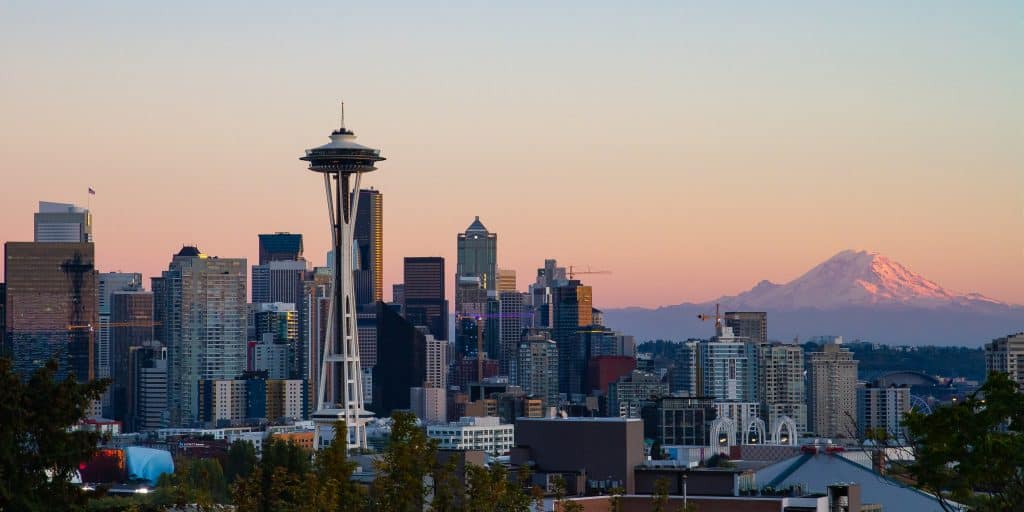
The ride also doubles as an inexpensive sightseeing trip. Once the train emerges from the Mount Baker Tunnel, passengers get open views across Lake Washington, with the surrounding hills, skylines and Mount Rainier appearing when the Northwest weather decides to cooperate.
How Engineers Put Train Tracks on a Moving Bridge
Running a train across a floating bridge is far more complicated than laying rails beside an existing highway. The Homer Hadley Bridge rises, falls and twists as Lake Washington responds to wind, waves and changing water levels. The fixed approaches do not move in the same way, meaning ordinary rails could not simply be stretched from shore to shore.
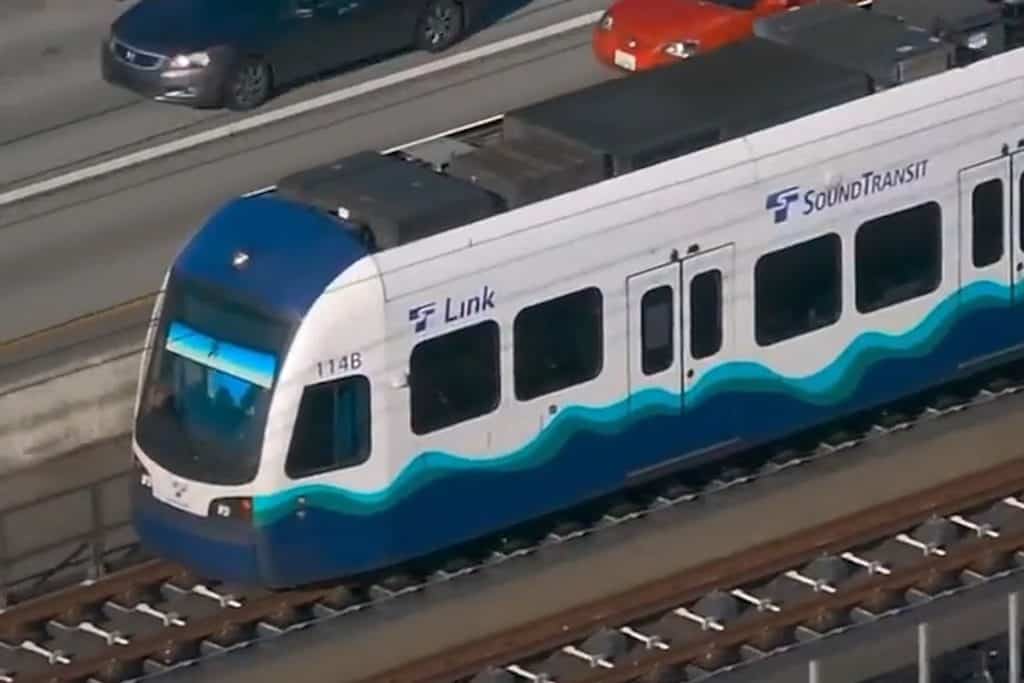
Engineers developed eight specialized “track bridges” that allow trains to transition between the stationary approaches and the floating portion. According to Sound Transit’s engineering overview, the equipment was designed to accommodate six different ranges of bridge movement. A full-size prototype was tested in Colorado before installation and met the requirements for trains traveling at speeds of up to 55 mph.
©Seattle Municipal Archives
Crews also strengthened the bridge’s concrete pontoons with high-tension steel strands and installed nearly 9,000 lightweight concrete track supports. Those supports help keep the rails properly aligned while insulating the bridge from stray electrical current that could accelerate corrosion.
The most impressive part may be how normal the finished ride feels. Years of engineering went into allowing passengers to sit with a coffee, look out at the lake and barely notice that the railroad beneath them is moving with the water.
What the New Line Changes for Visitors and Locals
Sound Transit says a trip between downtown Seattle and downtown Redmond takes about 40 minutes. Trains generally operate from around 5 a.m. until midnight, seven days a week. Service at the new stations runs approximately every eight minutes during peak periods and every 10 to 15 minutes during the rest of the day.
The current adult Link fare is $3, regardless of distance. Riders 65 and older and qualifying riders with disabilities pay $1 with a Regional Reduced Fare Permit, while passengers 18 and younger ride free. Visitors can pay with an ORCA card, a ticket from a station machine, the Transit GO app or a contactless debit or credit card.
The line is especially useful for travelers staying in Bellevue or Redmond who want to reach downtown Seattle, Capitol Hill or the University District without driving. Reaching Seattle-Tacoma International Airport requires a transfer to the southbound 1 Line at International District/Chinatown Station. The same station places riders within walking distance of Lumen Field, T-Mobile Park and the Chinatown-International District.
Judkins Park Station also creates a new entrance to the Central District. The Northwest African American Museum, Jimi Hendrix Park, neighborhood cafés and several parks are within roughly a mile, making the station useful for more than commuting.
©"Seattle Kerry Park Skyline" by CommunistSquared is licensed under CC0 1.0. – Original / License
A Historic Opening With a Complicated Backstory
The celebration came with a sizable backlog of frustration. Voters approved the East Link project as part of the Sound Transit 2 package in 2008, and the project’s formal baseline later called for service to begin in June 2023. Instead, the full connection arrived in March 2026.
Pandemic disruptions and a regional concrete-delivery strike contributed to the delay, but construction problems also played a major role. Sound Transit discovered quality and durability issues involving the concrete plinths that support portions of the I-90 tracks. The affected supports had to be replaced, extending construction, testing and oversight. In January 2026, the agency increased the authorized East Link budget to $3.817 billion.
It is fair to celebrate the engineering achievement while remembering why some locals wondered whether opening day would ever arrive. Both stories belong here.
Now that trains are running, the potential payoff extends beyond shorter commutes. Easier access can bring more customers to restaurants, museums, shops and entertainment districts on both sides of the lake. It can also widen access to Eastside jobs and give visitors more places to explore without adding another rental car to the freeway.
Seattle did not simply open another stretch of track. It turned one of the region’s biggest natural barriers into part of the journey, and somehow made crossing Lake Washington feel both historic and pleasantly routine.

