
Some airports are far more challenging than others. While most are built for routine takeoffs and landings, a few sit in places where geography and weather make every approach more complicated. Narrow runways, sudden wind shifts, steep descents, nearby mountains, ocean drop-offs, and limited room for error can turn an ordinary landing into a serious test of skill.
At these airports, pilots may need special training, extra certifications, or very specific weather conditions before they are cleared to land. Some are tucked into mountain valleys, while others are surrounded by water, cliffs, or dense urban areas that leave little margin for mistakes. For travelers, that can make the final approach feel just as memorable as the destination itself.
From remote island runways to airports squeezed between mountains and coastlines, these are some of the trickiest airports in the world to land. Each one shows how much planning, precision, and experience can go into getting passengers safely back on the ground.
Fasten your seatbelt and prepare for a white-knuckle journey as we explore some of the scariest and most dangerous airports on Earth, where landing safely is never guaranteed and every arrival is an adrenaline rush.
1. Paro Airport
©soniya.jangid/Shutterstock.com
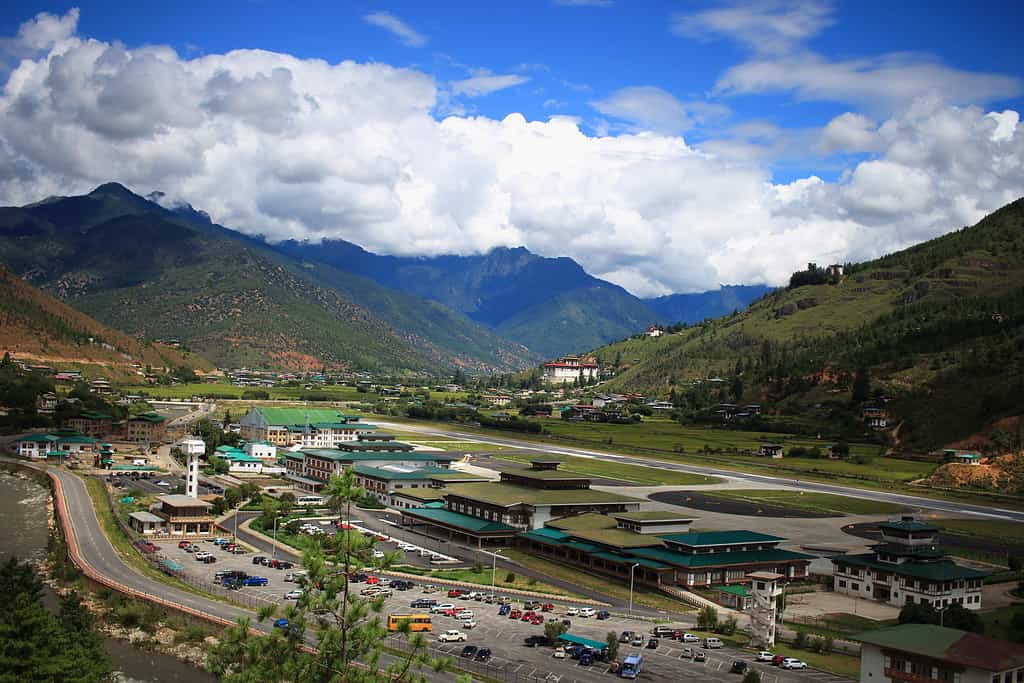
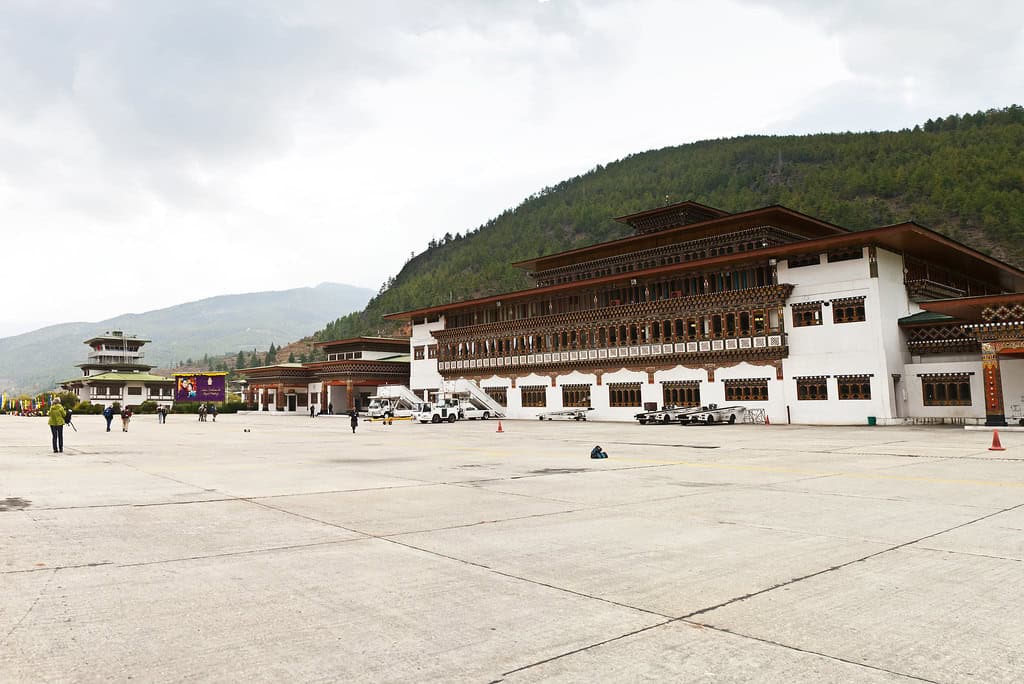
Only 17 licensed pilots are permitted to land at the airport designed in the style of a temple in Bhutan. Imposing 18,000-foot mountain peaks encircle the runway. As a result, arrivals and departures are only permitted on the 6,500-foot runway during daylight.
1. Paro Airport
©"Bhutan - Paro Airport" by Göran Höglund (Kartläsarn) is licensed under BY 2.0. - Original / License
The pilots are utterly unaware of the stunning descent to the runway as they navigate at a 45-degree angle between mountains befit’s-descending swiftly into the runway. One red cliffside residence serves as the primary focal point for pilots as they approach at one point when the bottom of the plane comes alarmingly close to mountainside homes.
The passengers’ cheering upon landing is definitely well-deserved!
2. Lukla Airport
©Daniel Prudek/Shutterstock.com
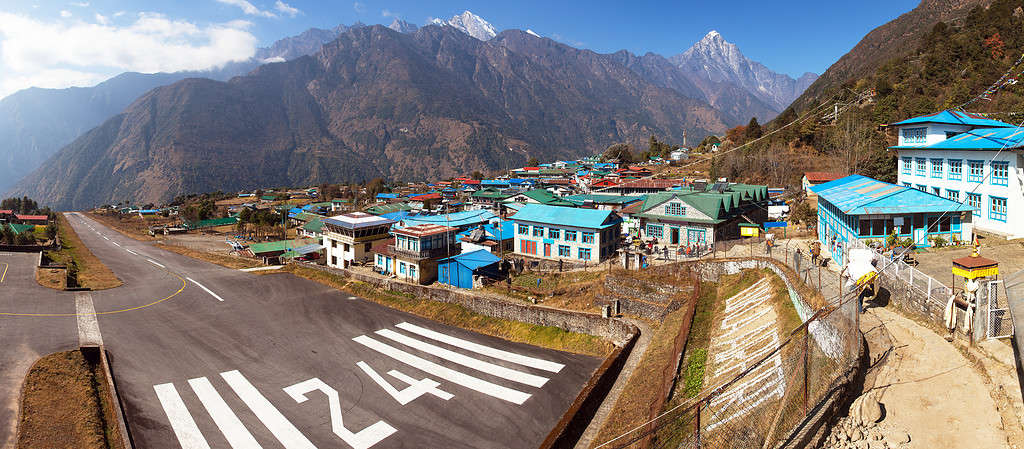
The primary airport for people traveling to Mount Everest is Lukla Airport in Nepal, which is accessible over frigid terrain. The landing can be as spectacular as the ascent to the renowned mountain because it is situated between mountains and has a very limited runway.
2. Lukla Airport
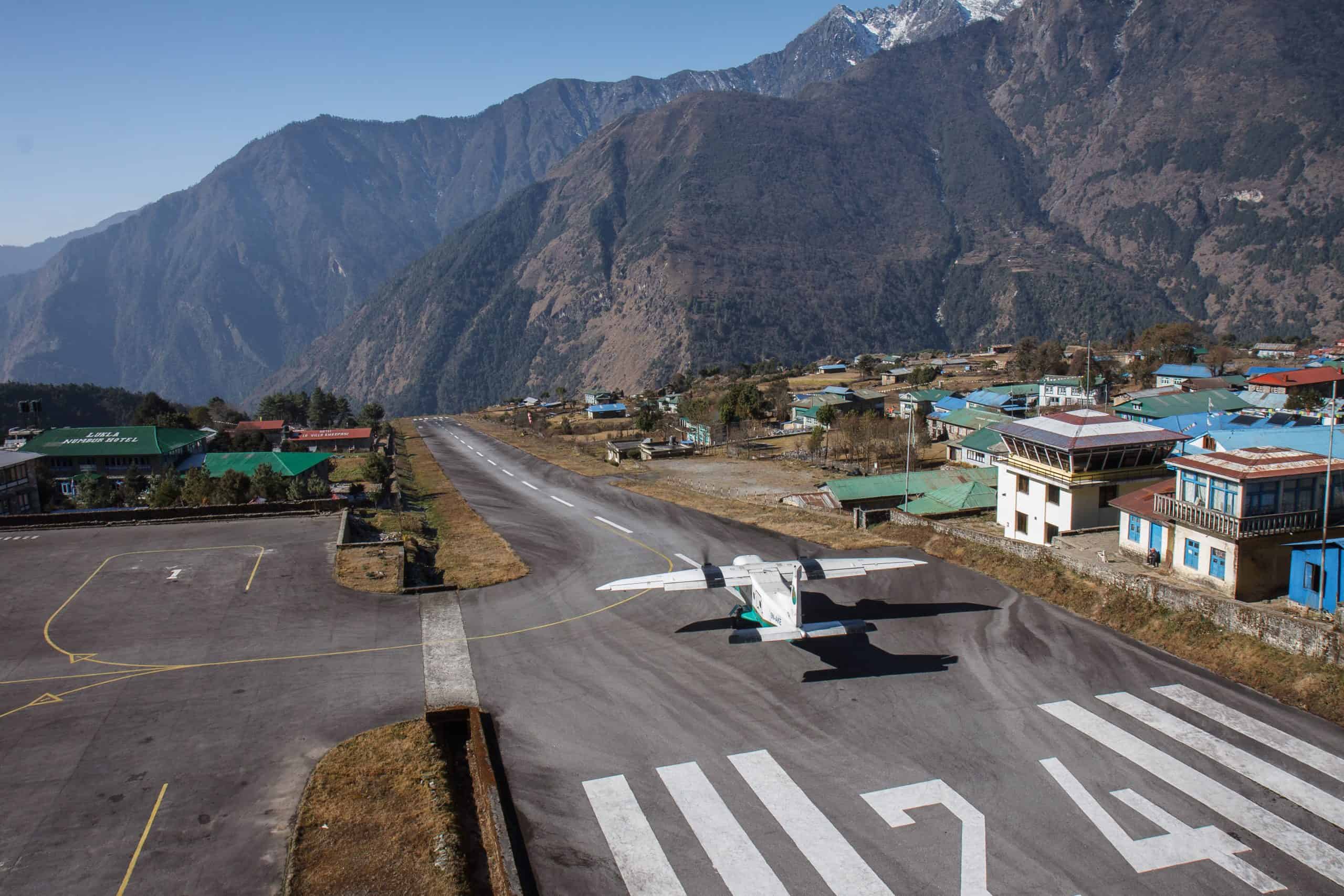
©"2015-12-19 Lukla airport" by Petr Meissner is licensed under BY 2.0. - Original / License
The pilots must stay in continual contact with the air controllers during the landing because there may occasionally be no electricity at the airport. The most well-liked resting place for hikers visiting the area is the 9,325-foot-high Tenzing airport. It is located in the Himalayan highlands and was named after the first couple of climbers to reach Mount Everest.
The airport is on a mountainside and has a tiny 1,600-foot-long, one-way runway with extreme slopes and angles. The runway has a mountain wall at one end and a dramatic 2,000-foot drop into a ravine at the other.
3. Wellington International Airport
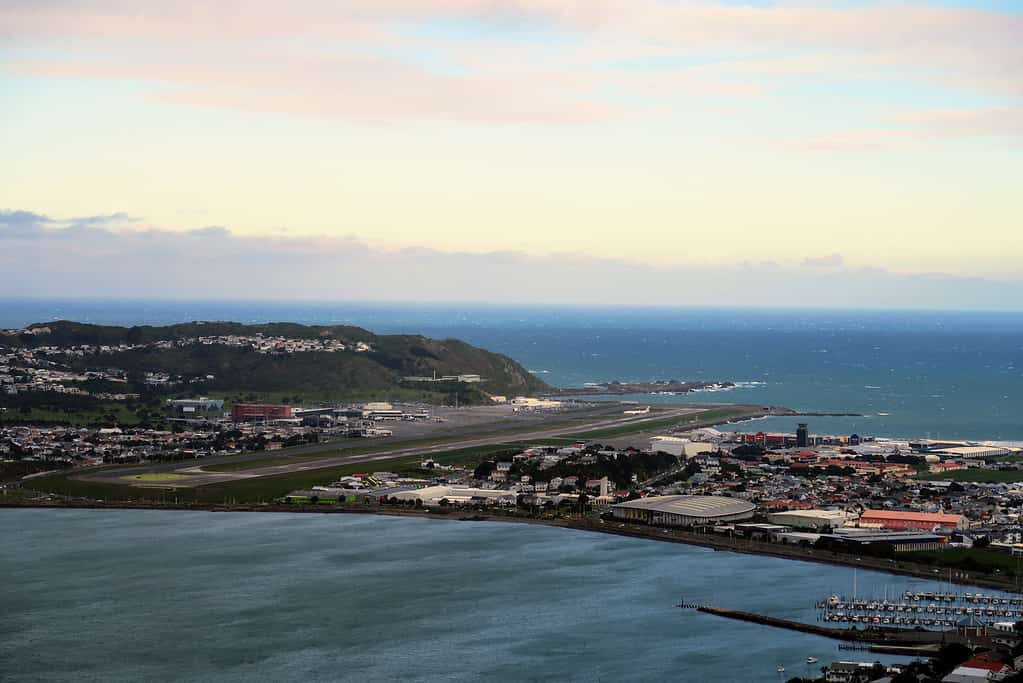
©Natsuki H/Shutterstock.com
One of the most difficult airports to land at is Wellington International Airport, in New Zealand. The runway is 6,350 feet long, and both ends seem to begin and terminate in the water.
Pilots encounter additional difficulties when approaching the airport because it is in a mountainous region of the nation famous for its blustery winds. This makes landing maneuvers even more challenging. Strong winds can knock passengers from their feet even after landing. Even yet, there haven’t been many safety-related occurrences.
4. McMurdo Station
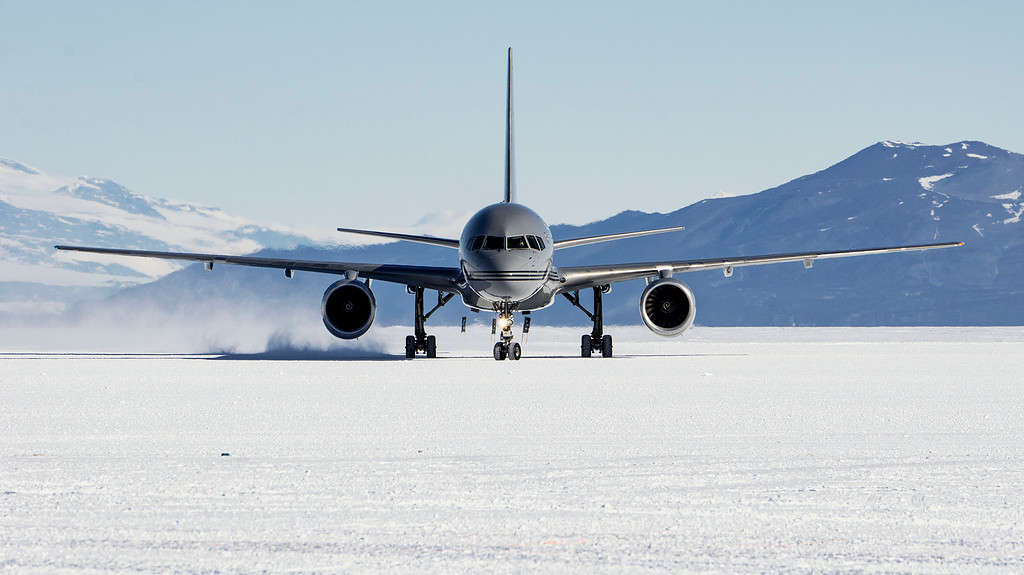
©Colin Harnish/Shutterstock.com
On the exposed volcanic rock of Hut Point Peninsula on Ross Island, this Ice Runway was constructed with a tarmac made entirely of multiple inches of ice and snow. The Ice Runway, which is adjacent to McMurdo Station, is utilized by the US Antarctic Program during the summer.
The sole major airport on the continent is located at this military post, and during the winter, the area is completely dark at all hours. Pilots are taught to land in the dark and in a whiteout when there is no lighting on the runway. It definitely is one of the scariest airports in the world!
5. Gibraltar International Airport
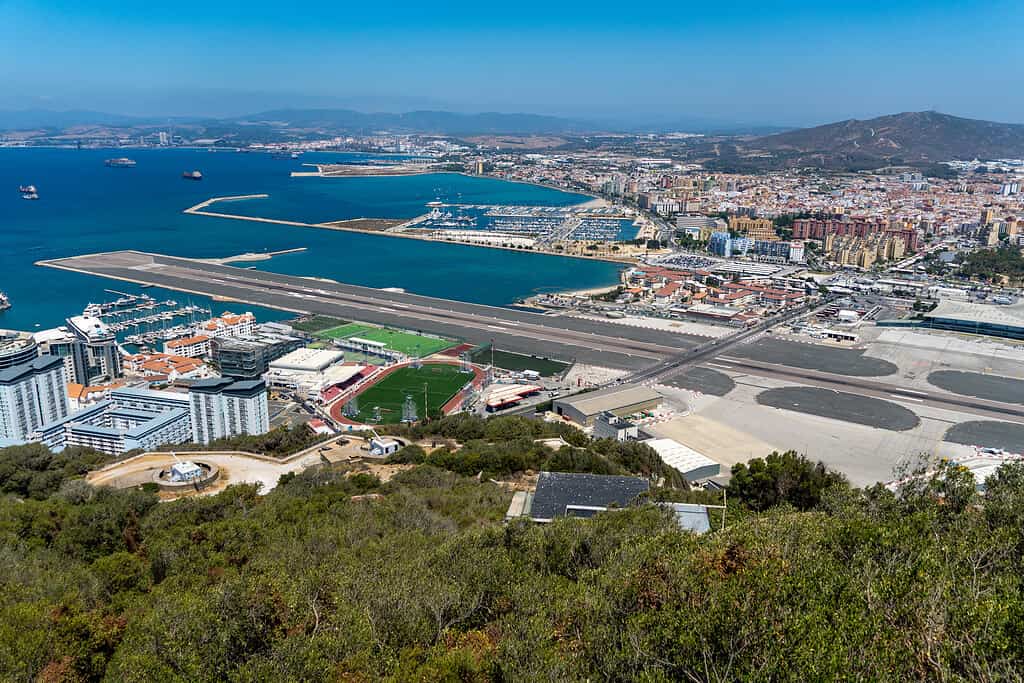
©Isaac Muns/Shutterstock.com
The oddest airport in southern Europe is definitely Gibraltar International Airport, Spain. The runway isn’t difficult to land on, but an intriguing design element makes it perhaps hazardous.
When a jet wants to land, Winston Churchill Avenue, the major thoroughfare of the city, must be shut down. There is a stoplight on the road that signals drivers to stop. However, there have been close encounters at the airport in the past. Moreover, the small runway ends abruptly at the water on both ends, requiring pilots to come to a complete stop just after landing.
6. Toncontin Airport
©Sebastian Delgado C/Shutterstock.com
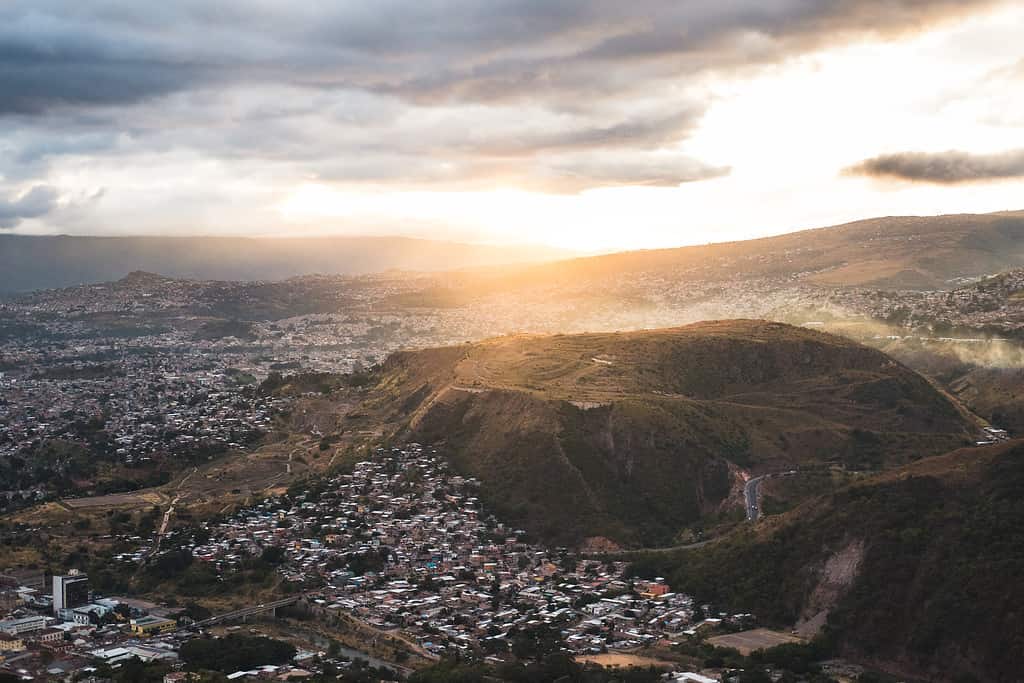
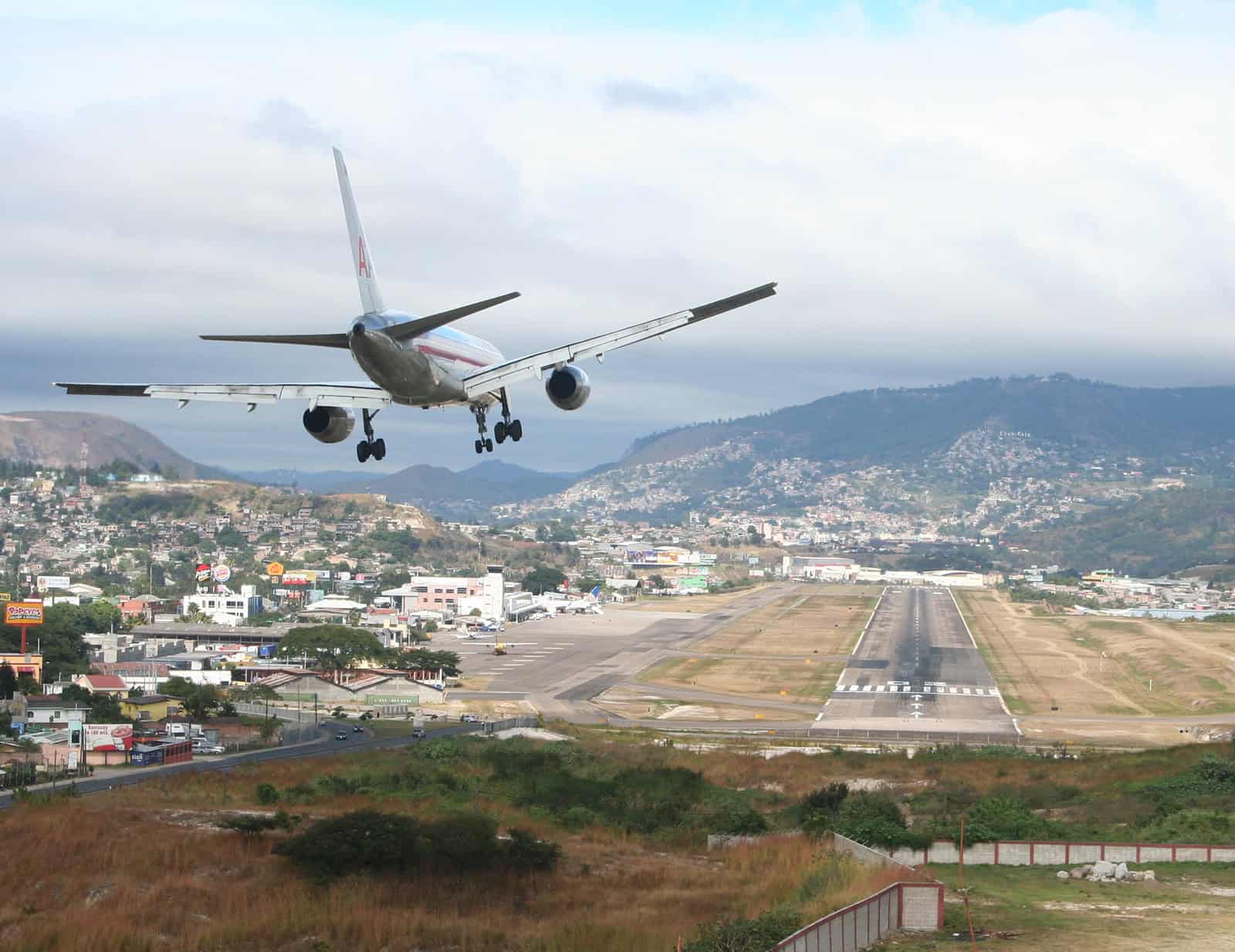
Landing at this airport in Honduras is exceedingly difficult because of the runway’s low width and proximity to mountains. The sensation of landing near the valley, which necessitates a dramatic quick turn, is very similar to landing on a Navy ship.
6. Toncontin Airport
©"757landing-toncontin" by enrique galeano morales is licensed under BY 2.0. - Original / License
Having firsthand experience with the runway’s wind gusts and bad weather makes it difficult for pilots to perform direct head-on landings, with the major concern being that a big plane might miss the runway if not landed precisely on target. Machine gun-wielding security officers meet passengers as they disembark, heightening the impact of their spectacular landing.
7. Madeira Airport
©lusia83/Shutterstock.com
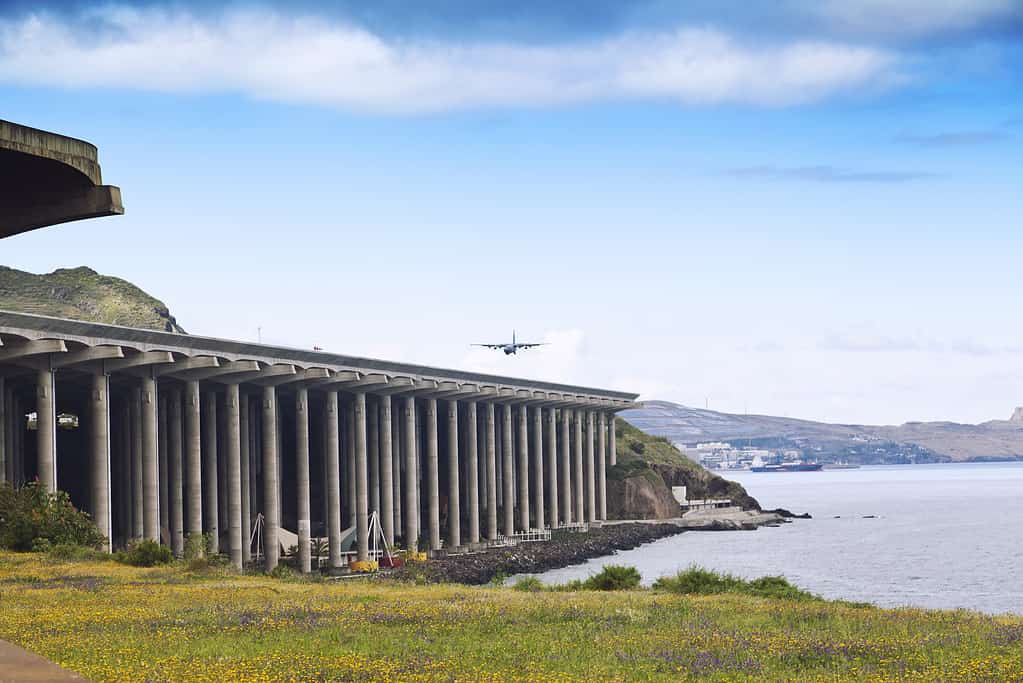
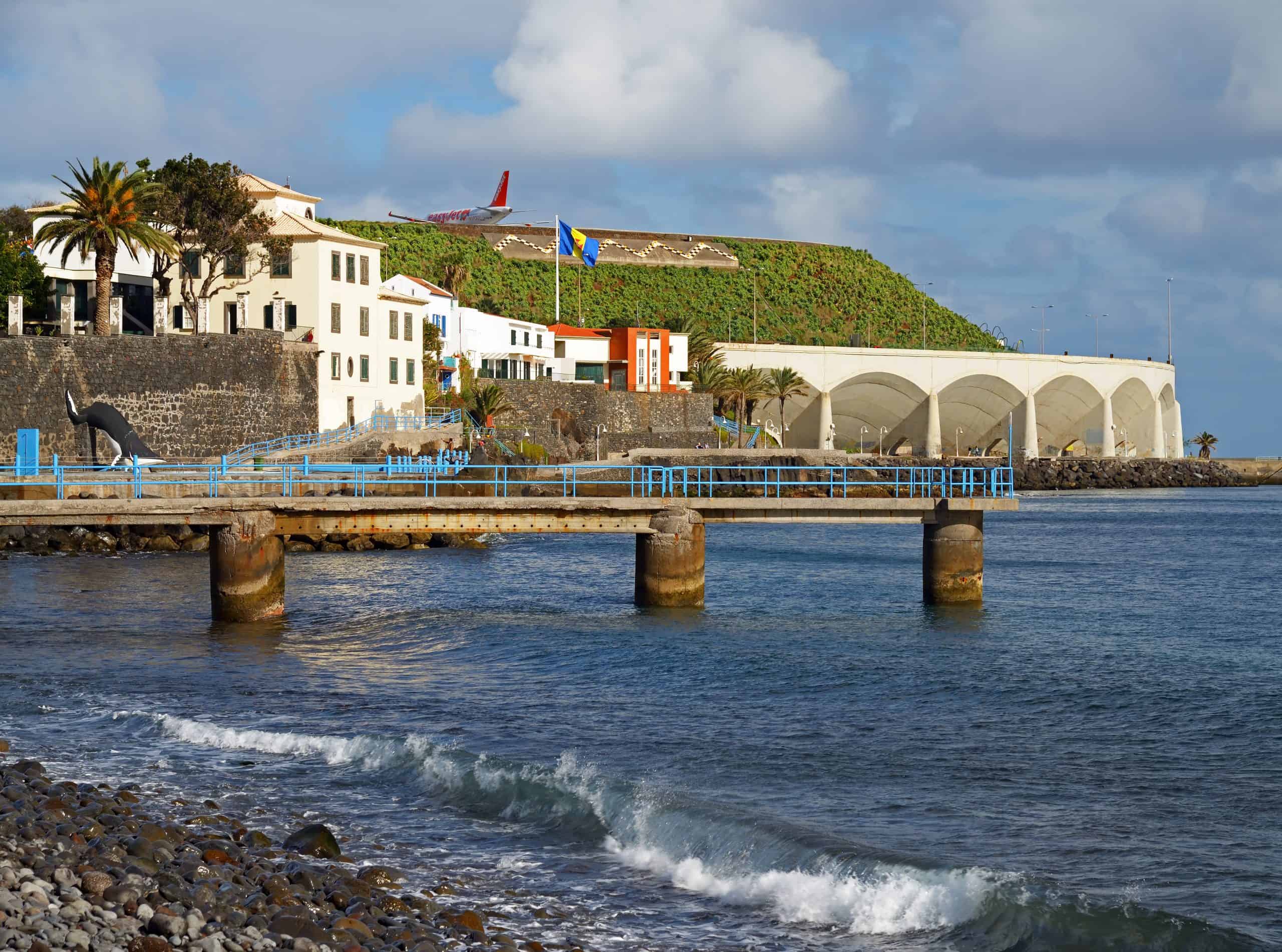
Madeira Airport, Portugal, is one of the rare airports in the world where engineers constructed a platform to extend the runway between bluffs and the ocean’s edge.
On an artificial island, engineers erected several platforms to extend the airstrip. More than 180 columns support the runway, and they must endure the impact of landings.
7. Madeira Airport
©"View of Madeira Airport from Santa Cruz. Portugal" by Ввласенко is licensed under BY-SA 3.0. - Original / License
Pilots rarely land by instrument alone; they must identify landmarks to navigate their approach. Strong gusts, tall mountains, and the ocean on the other side add to the difficulty.
8. Princess Juliana International Airport
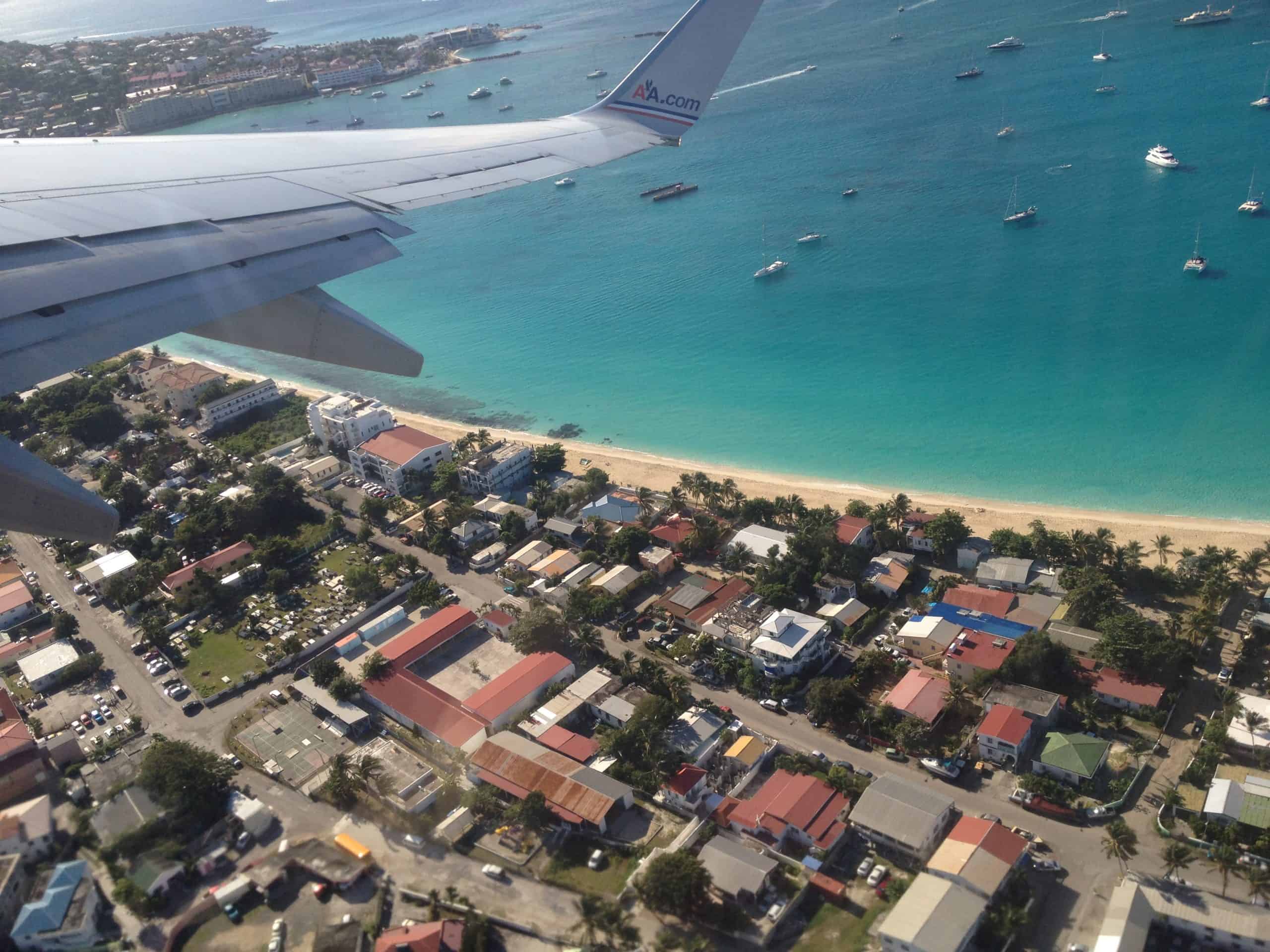
©"Taking off at Princess Juliana International Airport SXM, Sint Maarten - panoramio" by David Broad is licensed under BY 3.0. - Original / License
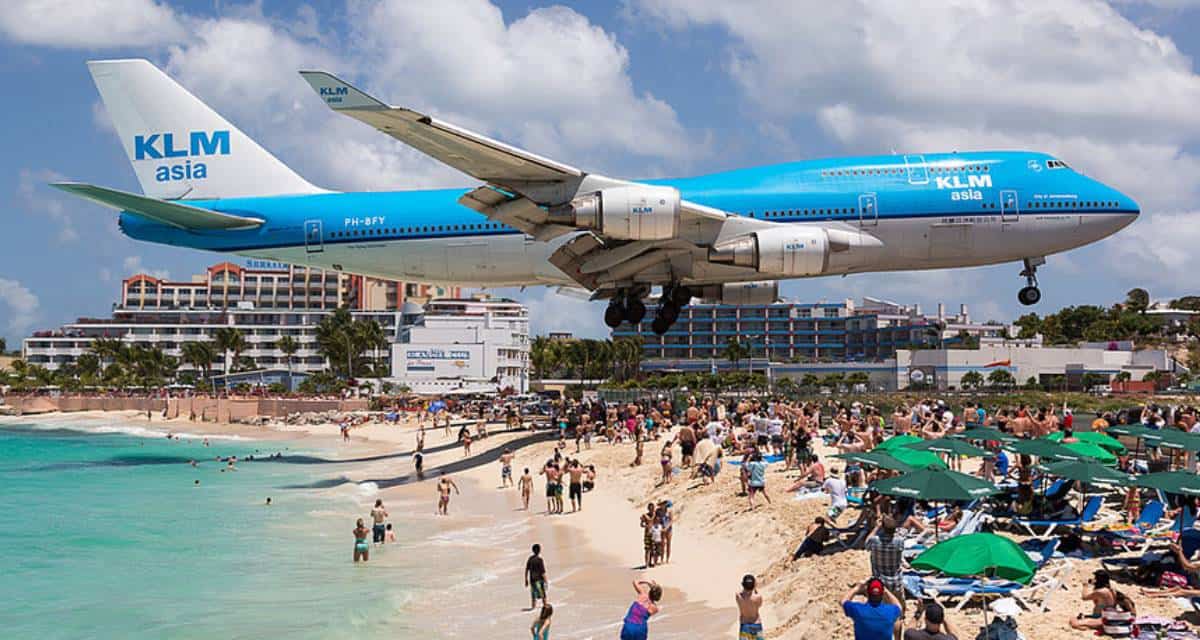
This airport of Saint Maarten is named after Queen Juliana of the Netherlands, who arrived there in 1944, the year it was opened. The runway’s proximity to the shore and Maho Beach necessitates very low flyover landing approaches at the airport.
8. Princess Juliana International Airport
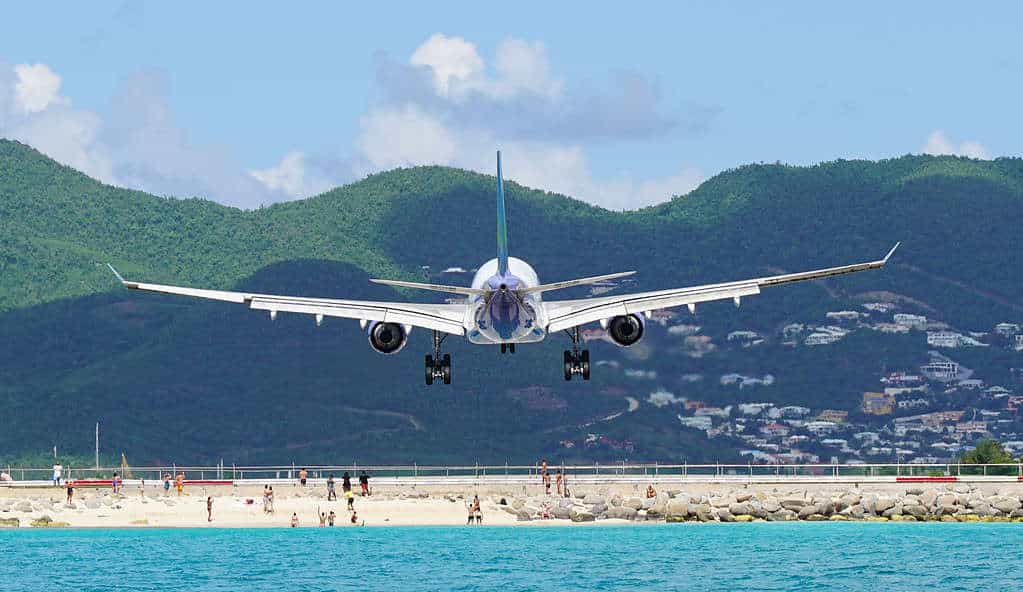
©Matthew Zuech/Shutterstock.com
When a plane lands at this airport in the Caribbean, it does so low over a public beach, giving beachgoers a decent blast of wind and sand every time.
8. Princess Juliana International Airport
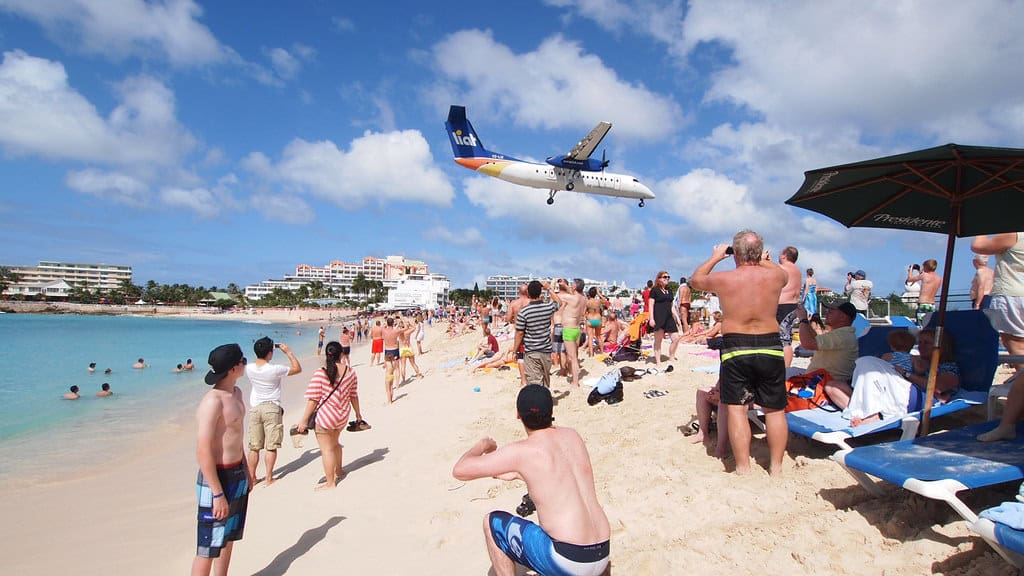
©"Maho Beach Princess Juliana International Airport" by Wilson Hui is licensed under BY 2.0. - Original / License
Tourists will specifically stand near the beach and take photos and videos of planes landing. While many airports don’t allow people to do this for security purposes, it’s encouraged here. Despite how it looks, Princess Juliana has never had a landing mishap, according to its profile on the Aviation Safety Network.
9. Courchevel Altiport
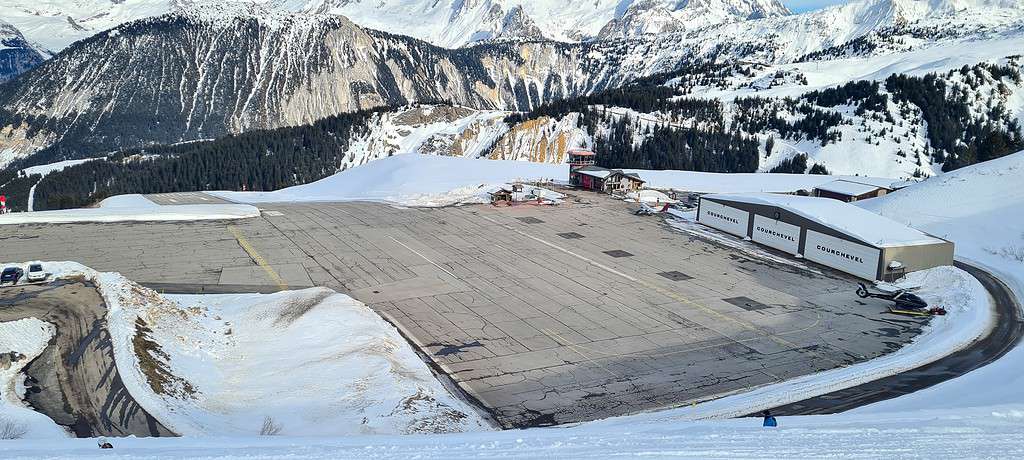
©LuCreator/Shutterstock.com
The runway at Courchevel Altiport, a small airport in the French Alps, is just 1,762 feet long and has a pronounced 18.6 percent uphill grade. As a result, pilots need to meet specific requirements in order to use the airfield, including completing a test administered by a mountain flight instructor and maintaining their certification by flying there at a minimum every six months. Flying Journal states, “Caution, dedicated training, and careful planning are key to enjoying this runway cradled in the Alps.”
10. Telluride Regional Airport
©Yaya Ernst/Shutterstock.com
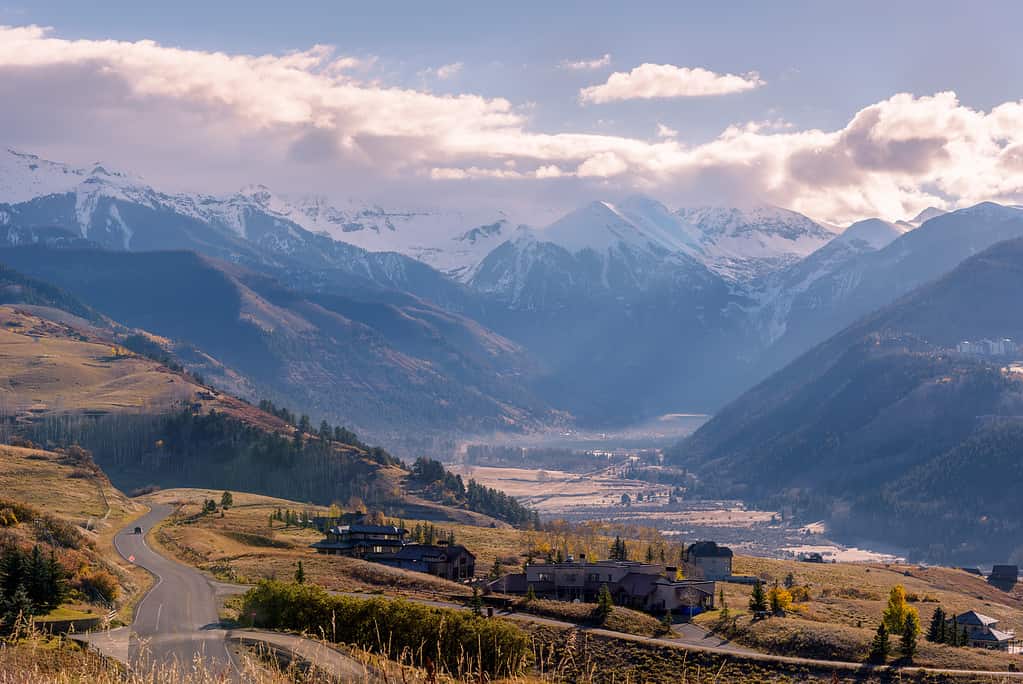
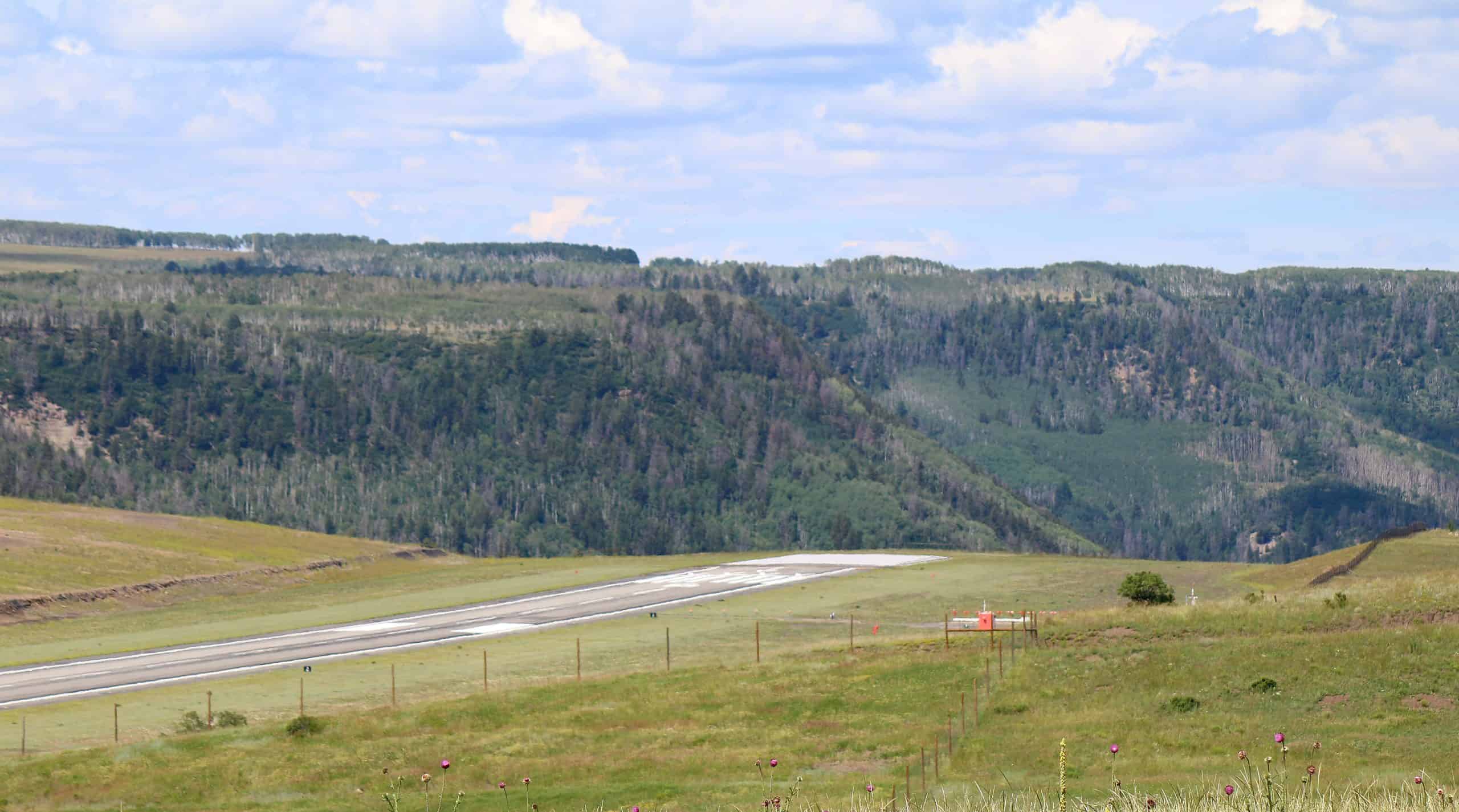
Southwest Colorado’s Telluride Regional Airport is one of the world’s most terrifying airports when it comes to landing a plane. It is one of the highest airports in America at 9,070 feet.
10. Telluride Regional Airport
©"Telluride Regional Airport runway" by Jeffrey Beall is licensed under BY 4.0. - Original / License
Although it is actually quite safe, the approach might be somewhat tense. It is on a narrow plateau, with 1,000-foot sheer cliffs at either end of the runway. In the winter, mountain winds cause solid vertical turbulence that pilots and passengers must endure. Moreover, the runway has a dip since each end is somewhat higher than the center. However, this was lessened during a 2009 repair. Nevertheless, several travelers who have taken the voyage will attest that is one of the scariest airports in the world!

